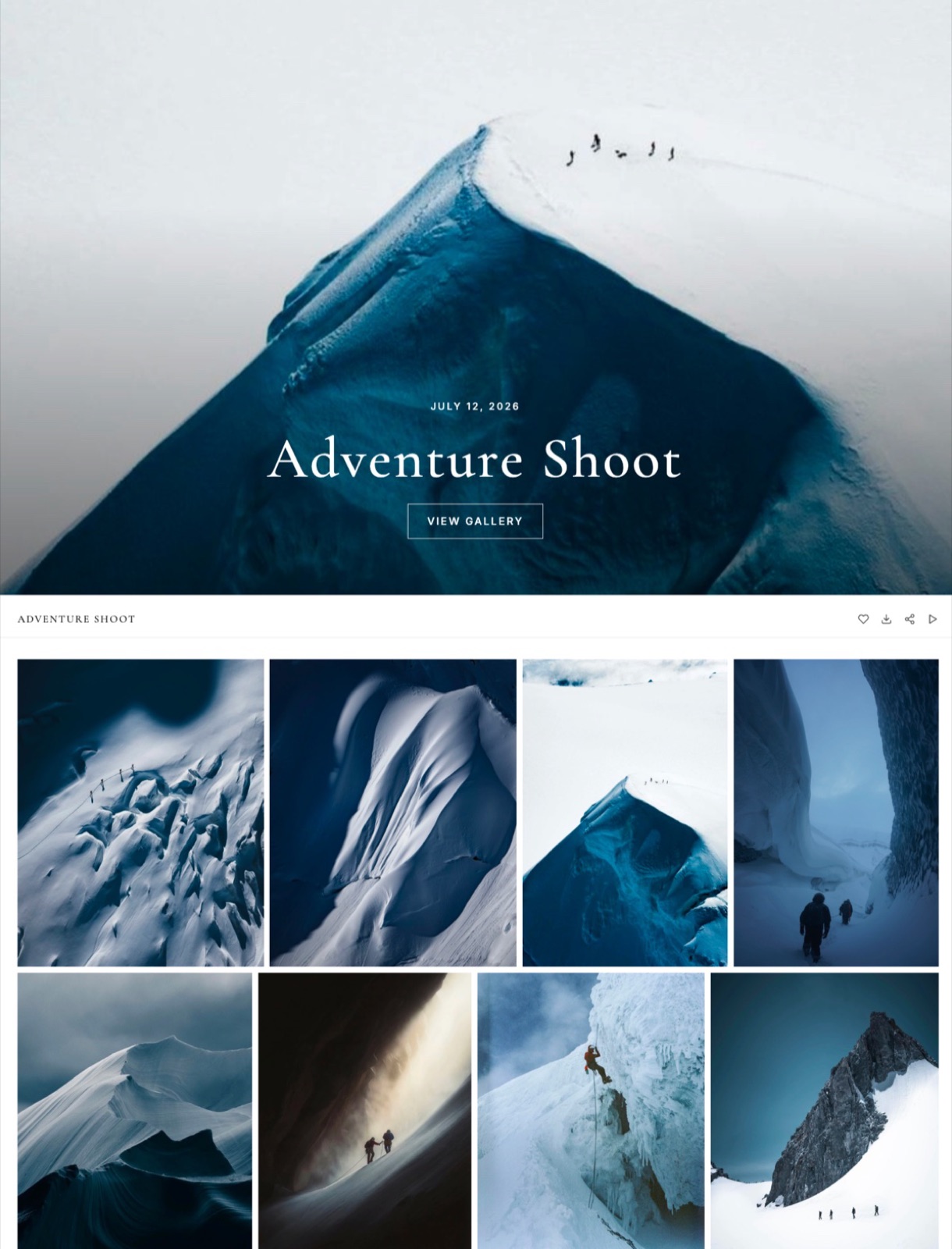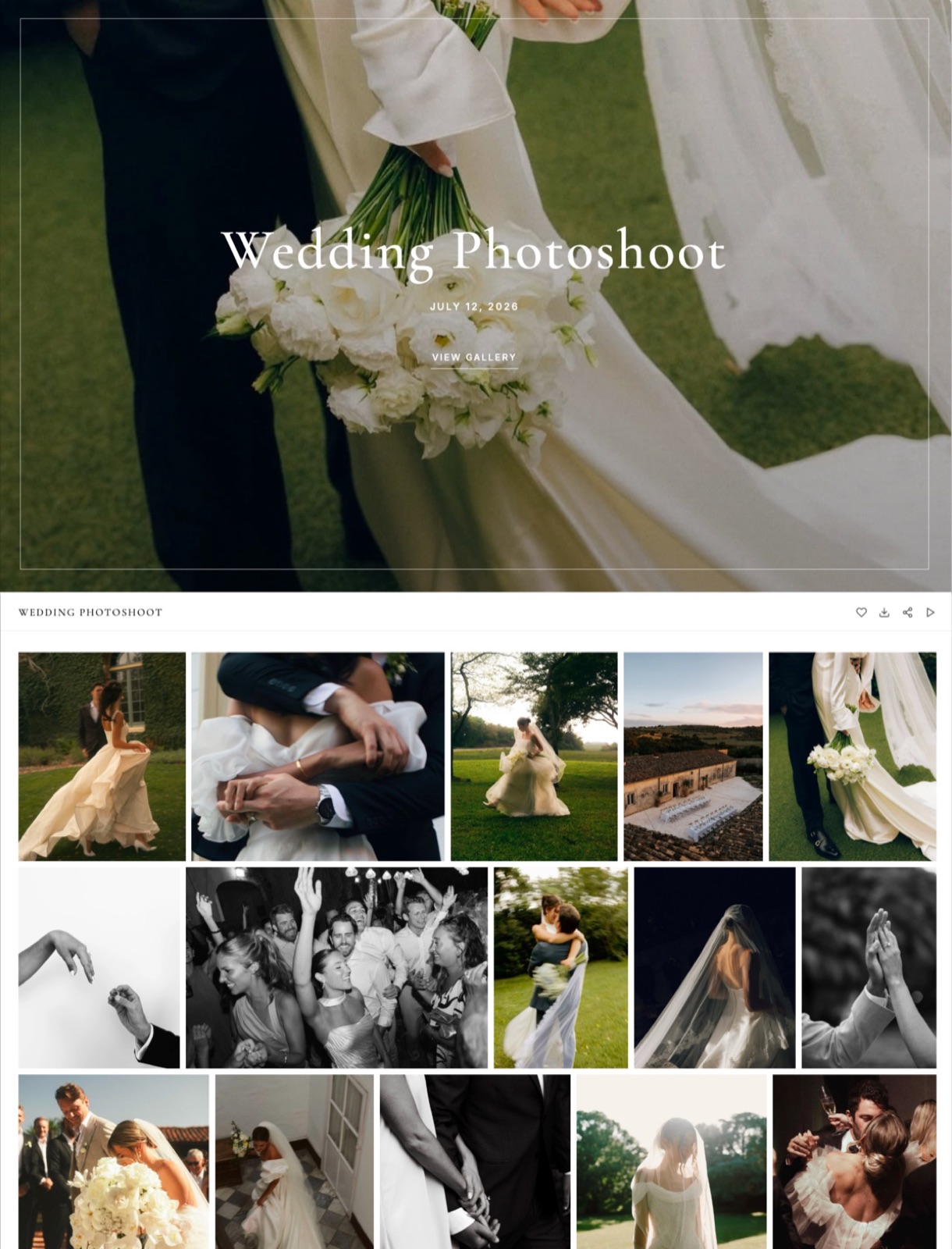
Framekit templates
Start from a designer-made template
 Use template
 Use template
 Use template
 Use template
 Use template
 Use template
 Use template
 Use template
Autumn mini-sessions go live in three weeks. You have 5,000 people on the list, most collected from a print giveaway two summers ago, and you are about to send four emails: announcement, reminder, last call, sold out.
Then you open the billing page. Mailchimp wants $100 a month for those 5,000 contacts on Standard. That is $1,200 a year for forty-eight emails, about $25 a send.
Most email marketing tools for photographers price exactly like this: by how many addresses you store, not how many you actually send.
The list is not the problem. Photography lists are seasonal by nature - they sit quiet for four months and then earn a year of income in a fortnight.
Brevo will move the same four campaigns to the same 5,000 people for $32 a month, or $384 a year. Same list, same emails, $816 a year of difference.
You are not paying for email. You are paying rent on names.
An email marketing tool is software that stores a list of subscribers, sends designed campaigns and automated sequences to them, and reports who opened and clicked, so a studio can announce sessions, sell prints, and stay in front of past clients without touching an inbox by hand.
The list has to come from somewhere, and that is the half we make. Framekit builds the portfolio and session pages the signup form sits on, so the names arrive through a site you own rather than a rented profile.
It sends no campaigns and stores no subscribers, so the sending tool comes from the ranking below.
The best email marketing tool for photographers in 2026 is MailerLite, because it is the cheapest platform that still gives you real automations, unlimited sends on its Power tier, and a billing model that stops charging you the moment someone unsubscribes - $19 a month at 1,000 subscribers and $179 at 25,000.
The honest trade-off: MailerLite gutted its free plan in June 2026 down to 250 subscribers and 2,500 monthly emails, so there is no serious free ride here.
Kit is the better pick if you want a genuinely free tier (up to 10,000 subscribers), Brevo is the cheapest at scale because it bills by emails sent rather than list size, and Flodesk still makes the best-looking email a photographer can send without a designer.
Everything below is priced from each vendor's own published pricing in August 2026, at the three list sizes that actually decide your bill.
Framekit's side of the workflow was re-verified against its live pricing page in September 2026, and the email vendors keep their August figures, which this category revises often enough to be worth a glance before you commit.
How We Compared These Email Platforms
Eleven tools, one scenario, held constant the whole way down: a two-person portrait studio with a list that grows from 1,000 to 5,000 to 25,000 subscribers, sending four emails a month - a three-part mini-session launch plus one newsletter - with two or three full-width photographs in each.
That send pattern matters, because it is the thing that separates the tools that bill by list size from the tools that bill by volume.
Cost at three list sizes. We read the price at exactly 1,000, 5,000 and 25,000 subscribers off each vendor's own pricing calculator, on monthly billing, in USD, in August 2026.
Annual discounts are noted separately rather than blended in, because most studios start monthly.
What counts as a subscriber. Whether unsubscribes, bounces and never-confirmed contacts keep counting toward your tier is worth more than a few dollars of headline price. On some platforms a list you cleaned last year is still on the invoice.
Sending limits versus contact limits. Several tools cap contacts and sends independently.
A 5,000-contact plan with a 10x monthly send allowance is a different product from one with unlimited sends, and seasonal senders hit those ceilings during launch week, not in February.
Deliverability. Specifically, whether you can authenticate your own sending domain with DKIM, and on which plan.
Gmail and Yahoo have required authenticated bulk sending since February 2024, and a studio emailing from a shared platform domain is borrowing someone else's reputation.
Exit cost. What happens to the list, the automations and the archive if you stop paying, and how painful the CSV export is.
Three kinds of finding, kept apart. Hands-on: building and sending image-heavy campaigns, importing lists, running the export.
Verified from primary sources without paying for every tier: all pricing, counting rules and send caps, read from each vendor's pricing page and help centre in August 2026 and linked inline.
Community sentiment rather than our own result: recurring reviewer complaints, always labelled as such.
We paid for MailerLite, Kit and Flodesk; beehiiv, Buttondown, Ghost and Brevo ran on trials or free tiers; Klaviyo, Mailchimp, Substack and Squarespace Email Campaigns were priced and previewed rather than run for a full season.
What Pricing 11 Email Tools Revealed
Opinions are cheap. These are the figures behind the ranking, each read from the vendor's own published pricing in August 2026 and reconciled against the tables below.
- 8 of 11 tools price by subscriber count, so your bill grows with a list whether or not that list buys anything. Only Brevo and Squarespace Email Campaigns bill by emails sent, and only Ghost charges a flat fee regardless of list size.
- The spread at 25,000 subscribers is 12x: Klaviyo charges $400 a month, Brevo charges $82 for the same four campaigns, and Ghost charges $29 a month on annual billing.
- 1 of 11 counts unsubscribed and non-subscribed contacts toward your bill until you manually archive them (Mailchimp). MailerLite and Klaviyo both stop billing for suppressed contacts automatically.
- 2 of 11 have a free tier a working studio could actually launch a season on: Kit (10,000 subscribers) and beehiiv (2,500 subscribers with unlimited sends).
- Flodesk's free plan sends zero emails. It is a form and landing-page tool until you pay.
- 3 of 11 cut you off mid-season rather than billing overage: Mailchimp, MailerLite and Squarespace all pause sending when you cross a plan limit.
- The cheapest credible path from 1,000 to 25,000 subscribers is Brevo at roughly $9, $32 and $82 a month; the most expensive is Klaviyo at $30, $100 and $400.
For a pick shaped to how you shoot, skip to the decision guide. First, the full comparison.
The 11 Best Email Marketing Tools for Photographers: Full Comparison
Every tool here was scored on five criteria, weighted by what actually decides a photography studio's bill rather than by feature count: cost at scale 30%, subscriber-counting rules and send caps 20%, design and image handling 20%, automation depth 15%, deliverability and domain control 15%.
Cost at scale carries the heaviest weight on purpose, because a photography list is a slow-burning asset that earns in bursts, so the platform that charges least to hold names you email eight times a year beats the one with the better dashboard.
That is why MailerLite's 9.2 is not five perfect scores - it takes a 10 on cost and counting rules but only a 7 on design, where Flodesk is plainly better. Nothing here scored a 10 across the board.
| Tool | Best for | Free tier | Billed by | Our rating |
|---|---|---|---|---|
| MailerLite | Best overall for studios | 250 subs, 2,500 emails | Subscribers | 9.2/10 |
| Kit | The best genuinely free tier | 10,000 subscribers | Subscribers | 9.0/10 |
| Brevo | Cheapest at 25,000 subscribers | 300 emails a day | Emails sent | 8.8/10 |
| Flodesk | The best-looking photo emails | Forms only, no sending | Subscribers | 8.5/10 |
| beehiiv | Free tier plus a real website | 2,500 subscribers | Subscribers | 8.3/10 |
| Ghost | Flat pricing at any list size | Trial only | Flat per plan | 8.0/10 |
| Buttondown | Small lists and plain text | 100 subscribers | Subscribers | 7.6/10 |
| Squarespace Email Campaigns | Existing Squarespace studios | Trial only | Emails sent | 7.2/10 |
| Mailchimp | Integrations you already use | 250 contacts | Contacts | 6.8/10 |
| Klaviyo | Studios running a real store | 250 profiles | Active profiles | 6.5/10 |
| Substack | Free publishing, rented audience | Unlimited | 10% of paid subs | 6.0/10 |
The hard cost table at 1,000, 5,000 and 25,000 subscribers
This is the table the rest of the article argues with. Every figure is the monthly-billing price of the cheapest plan that includes automations, read from each vendor's published pricing in August 2026. Annual billing knocks 10 to 20 percent off most of these.
| Tool (plan) | 1,000 subs | 5,000 subs | 25,000 subs |
|---|---|---|---|
| Brevo (Starter, by sends) | $9 | $32 | $82 |
| Ghost (Publisher, annual) | $29 | $29 | $29 |
| MailerLite (Comfort) | $19 | $49 | $179 |
| Flodesk (Pro) | $28 | $59 | $169 |
| Kit (Creator) | $39 | $89 | $199 |
| beehiiv (Scale) | $49 | $89 | $169 |
| Buttondown (base) | $9 | $29 | $239 |
| Mailchimp (Standard) | $45 | $100 | $310 |
| Klaviyo (email) | $30 | $100 | $400 |
| Substack | $0 | $0 | $0 |
| Squarespace Email Campaigns | Send-tier based, $8 to $118 a month on annual billing |
Brevo's figures assume four campaigns a month, so 4,000, 20,000 and 100,000 emails respectively. Mailchimp's 1,000-subscriber figure is its 501-to-1,500 contact band.
Ghost's Starter plan is cheaper at $18 a month but caps at 1,000 members, so Publisher is the honest comparison. Buttondown's price excludes the automation add-on. Confirm every number on the vendor's own page before you commit.
Counting rules, send caps and domain control
Price is half the story. This is the half that bites in month three.
| Tool | Do unsubscribes still cost you | Monthly send cap | Custom sending domain |
|---|---|---|---|
| MailerLite | No, unsubscribed and bounced are excluded | 10x subscribers on Comfort, unlimited on Power | Yes, on paid plans |
| Kit | No, billed on active unique subscribers | Unlimited | Yes, once you send 5,000 a month |
| Brevo | Contacts are not the billing unit | You buy the send volume | Yes |
| Flodesk | No, billed on active subscribers | Unlimited on paid plans | Yes, DKIM on a domain you own |
| beehiiv | No | Unlimited on every plan | Yes, including the free tier |
| Ghost | No | Unlimited | Yes |
| Buttondown | No, billed on active subscribers | Unlimited | Yes, in the base price |
| Mailchimp | Yes, until you manually archive them | 10x to 15x contacts by plan | Yes |
| Klaviyo | No, suppressed profiles drop off billing | Tied to your profile tier | Yes |
| Substack | Not applicable | Unlimited | Yes, with a custom domain |
| Squarespace | Contacts are unlimited and free | Hard cap by plan, sending pauses | Yes |
1. MailerLite: Best Overall for Photography Studios
Our rating: 9.2/10
MailerLite costs the least while still behaving like a real marketing platform, and for a studio that emails in bursts that combination is the whole game.
The editor is quick, the drag-and-drop blocks handle full-bleed photographs without fighting you, and the automation builder is genuinely visual rather than a list of rules pretending to be a flowchart.
What you feel in week one is how little ceremony there is: import a CSV, wait for the approval check, send. What you feel in month six is an invoice that stays boring.
On the MailerLite pricing page the Comfort plan runs $19 a month at 1,000 subscribers, $49 at 5,000 and $179 at 25,000, and unsubscribed or bounced contacts drop off the billable count without you doing anything.
Best forStudios that want the lowest credible monthly cost with automations, segmentation and a decent editor, and who will pay for a plan rather than chase a free tier.
The real numberat 5,000 subscribers sending four campaigns a month, Comfort costs $588 a year against $1,200 on Mailchimp Standard for the same list and the same sends.
Comfort's send allowance is 10x your subscriber count, so 50,000 monthly emails at 5,000 subscribers - two and a half times what our launch month uses.
The gotchaMailerLite cut its free plan on 16 June 2026 from 500 subscribers and 12,000 monthly emails down to 250 subscribers and 2,500 monthly emails, and raised paid prices across every tier at the same time.
Cross either limit and campaigns and automations pause rather than overage-billing you. Free-plan feature caps of three automations, three forms and one landing page start being enforced in August 2026.
Treat MailerLite as a paid tool and you are fine; treat it as a free one and you get stopped mid-launch.
Skip it ifyou want the emails themselves to be the differentiator. MailerLite's templates are clean but generic, and a wedding photographer whose brand lives on typography will find Flodesk's output noticeably more designed.
What reviewers say elsewhereMailerLite holds 4.7 out of 5 from 2,322 reviews on Capterra, with the recurring complaint being slow, inflexible domain authentication and account approval rather than the product itself.
Verdict: MailerLite is the right default for almost every working studio in 2026, because it wins on the number that compounds without asking you to give up automations to get there. If you are still assembling the rest of the stack around it, our best photography business tools guide covers the neighbours. Visit MailerLite
2. Kit: The Best Genuinely Free Tier
Our rating: 9.0/10
Kit, formerly ConvertKit, does something no other serious platform does: its free Newsletter plan carries up to 10,000 subscribers, with unlimited sends, unlimited forms and landing pages, tagging and segmentation, one email sequence and one basic visual automation, all at zero.
For a photographer building a list slowly off gallery downloads and print giveaways, that covers years.
Kit is also built around selling, which suits a studio with presets or an education product. Products, subscriptions and checkout are native rather than bolted on.
The editor is deliberately plain - Kit's house style is text-forward email that looks like a letter - which is either a feature or a problem depending on whether your brand is your typography or your photographs.
Best forPhotographers who want to grow a list to five figures without paying a cent, and who eventually want to sell digital products from the same tool.
The real numberthe free plan is real, but it is paid for by advertising. Kit runs one managed Recommendation slot on the Newsletter plan and keeps the earnings from it.
Turning that off means upgrading.
Creator runs $39 a month at 1,000 subscribers, $89 at 5,000 and $199 at 25,000 on the Kit pricing page, with 17 percent off annually, so the free-to-paid step at 5,000 subscribers is $1,068 a year.
The standout detailKit's Verified Sending Domain, which is how you get DKIM on a domain you own, is not simply switched on. Kit gates it behind sending at least 5,000 messages a month with a 20 percent average open rate.
A studio emailing 1,000 people four times a year will not qualify, so you send from Kit's shared infrastructure until your volume grows.
It is the single most consequential line in Kit's help centre for seasonal senders and nobody mentions it.
Skip it ifyour emails are meant to look like your portfolio. Kit's templates are the plainest here by design, and reviewers say so.
What reviewers say elsewhereKit sits at 4.6 out of 5 across 243 reviews on Capterra, where the two most repeated complaints are limited template flexibility and prices that climb with subscriber count while the feature set stays the same.
Verdict: Kit is the best pick if free matters more than beautiful, and the only tool here where a 9,000-person photography list costs nothing to hold. Pay for it when you want the Recommendation slot gone. If the plan is to turn that list into bookings rather than opens, read how to get clients from your website. Visit Kit
3. Brevo: Cheapest at 25,000 Subscribers
Our rating: 8.8/10
Brevo is the only major platform here whose pricing model actually fits how photographers send. You do not pay for contacts.
You buy a monthly email volume, and the contacts come along free - the Starter tier includes 500,000 of them once you are past the entry step.
For a studio holding 25,000 names it emails four times a month, that inversion is worth thousands of dollars a year.
The product itself is a competent all-rounder rather than a beauty.
The editor is fine, the automation builder on Standard is genuinely capable, and there is transactional email and SMS in the same account if you want booking confirmations sent programmatically.
It feels like business software and does not pretend otherwise.
Best forStudios with large, slow-moving lists - anyone who collected thousands of addresses from years of galleries and emails them a handful of times a year.
The real numberon the Brevo pricing page the Starter plan is $9 a month for 5,000 emails, $32 for 20,000 and $82 for 100,000, with 10 percent off annually.
Our 25,000-subscriber studio sending four campaigns needs 100,000 emails, so $82 a month, or $984 a year. Klaviyo charges $400 a month for the same list - $3,816 a year of difference for identical sends.
The gotchaStarter does not include marketing automation. To run a welcome sequence or a lapsed-client flow you need Standard, which starts at $18 a month at the base volume, so budget roughly nine dollars a month above the Starter figures.
Brevo's free tier is also a daily cap rather than a monthly one: 300 emails a day, which means a 1,000-person announcement takes four days to go out.
Skip it ifyou want the email to look like it came from a designer. Brevo is the most utilitarian tool in the top half of this list.
What reviewers say elsewherethe Brevo Marketing Platform scores 4.5 out of 5 across 2,619 reviews on G2, where ease of use and value for money are the most consistently praised attributes.
Verdict: Brevo is the money pick, and the tool to move to the moment your list crosses ten thousand names you email infrequently. It loses on design and on the free tier, and it will never be the platform you show a client. It will be the one that stops your email bill from tracking your list growth. If your list came off Instagram, our guide to moving from Instagram to your own website covers where to point the signup form. Visit Brevo
4. Flodesk: The Best-Looking Photo Emails
Our rating: 8.5/10
Flodesk is the only tool on this list a photographer would choose for aesthetic reasons and be right to.
The templates are editorial, the type choices are actually good, and full-width imagery renders the way you intended without you nudging padding values.
If your brand is the reason people booked you, Flodesk protects it better than anything else here.
What changed, and what most comparison pages have not caught up with, is the money. Flodesk built its reputation on one flat monthly fee for unlimited subscribers.
That plan was retired in December 2025, pricing now scales with active subscriber count like everyone else's, and the Flodesk pricing page has since been reshuffled again to show Free, Pro and Everything.
Best forWedding, portrait and brand photographers whose email is a piece of the portfolio and who will pay for it to look that way.
The real numberPro runs $28 a month at 1,000 subscribers, $59 at 5,000 and $169 at 25,000 on monthly billing, or $25, $54 and $155 annually. Everything, which adds unlimited checkouts and sales pages, runs $54, $107 and $257 monthly. The ceiling on both is 255,000 subscribers.
The gotchathe Flodesk free plan cannot send email. It is a forms and landing-pages tier, full stop - you can collect subscribers on it indefinitely and never mail them.
During the trial, sends are capped at 500 recipients a day, so a 2,000-person announcement is a four-day drip before you have even paid.
Skip it ifyou are cost-sensitive and your list is growing. The old flat-rate deal is gone, and at 25,000 subscribers Flodesk Pro costs roughly twice what Brevo does for the same sends.
What reviewers say elsewhereFlodesk holds 4.5 out of 5 from 167 reviews on Capterra, scoring highest on ease of use (4.7) and lowest on customer service (4.4).
Verdict: Flodesk is worth the premium if the email is part of the work rather than an announcement about the work, and it is the one tool here where a client might compliment the newsletter itself. It is no longer the value play it was two years ago. For the visual side of the equation, see what makes a good photography portfolio. Visit Flodesk
5. beehiiv: Free Tier Plus a Real Website
Our rating: 8.3/10
beehiiv was built for newsletter publishers and it shows, in good ways and in mismatched ones.
The free Launch plan carries 2,500 subscribers with unlimited sends and a custom domain included, which is the most generous free tier here after Kit's, and it comes with a hosted website and a link-in-bio page attached.
For a photographer the mismatch is the surrounding machinery: ad networks, sponsorship storefronts, referral programmes and recommendation swaps are all pointed at people whose product is the newsletter.
If your product is a session fee, most of that is furniture. What survives the translation is a fast editor, clean archives, and sending that does not meter you.
Best forPhotographers who genuinely publish - a monthly behind-the-scenes letter, a personal project diary - rather than only announcing sessions.
The real numberon the beehiiv pricing page the Scale plan is $49 a month at 1,000 subscribers, $89 at 5,000 and $169 at 25,000 on monthly billing, dropping to $43, $78 and $149 annually.
Max, which removes beehiiv branding, runs $109, $169 and $289 monthly.
The gotchabeehiiv branding stays on your emails until you reach the Max tier. At 5,000 subscribers that is $169 a month to send an email that does not advertise your email platform to your clients - roughly three and a half times MailerLite's Comfort price at the same list size.
Skip it ifyour list is purely transactional. Paying newsletter-platform prices for four session announcements a year is the wrong shape.
Verdict: beehiiv earns its place on the strength of a free tier that a real studio could launch a season on, and loses ground the moment you want your own branding on the email. It is the best pick if you write as well as shoot. If the website side is what tempts you, compare it against the field in best website builders for photographers. Visit beehiiv
6. Ghost: Flat Pricing at Any List Size
Our rating: 8.0/10
Ghost is the outlier that makes the rest of this list look strange. Its Publisher plan is $29 a month on annual billing whether you have 1,000 members or 100,000, and Business is $199 a month across the same range.
Nothing else here holds its price flat as your list grows, and for a photographer whose subscriber count climbs faster than their email revenue that is a genuinely different deal.
You are buying a publishing platform, not a marketing suite. Ghost gives you a site, a members system, paid subscriptions with no transaction fee, and email sending to those members.
Segmentation and automation are thinner than MailerLite's, and the whole thing assumes you want a blog with a newsletter attached rather than a campaign tool.
Best forPhotographers who want the site, the archive and the list in one owned place, and who plan to grow past ten thousand subscribers.
The real numberat 25,000 subscribers Ghost Publisher is $348 a year on annual billing. Kit Creator at the same list size is $2,388 a year and Klaviyo is $4,800.
Ghost's Starter plan is cheaper still at $18 a month but caps at 1,000 members, which is why Publisher is the fair comparison.
Ghost is also open source, so self-hosting is free if you are willing to run it and pay a sending provider yourself.
The gotchaGhost is a publishing tool wearing an email hat. There is no visual automation builder to speak of, no drag-and-drop image grid, and the editor is deliberately spare. Building a three-part mini-session launch here means scheduling three posts, not drawing a flow.
Skip it ifautomations are the reason you are shopping. Ghost will frustrate anyone who wants branching sequences.
Verdict: Ghost is the pick for the photographer who thinks in terms of a body of work rather than a campaign calendar, and its flat pricing is the single best deal on this page at 25,000 subscribers. It does not do marketing automation and will not pretend to. Visit Ghost
7. Buttondown: Small Lists and Plain Text
Our rating: 7.6/10
Buttondown is a one-person operation with an unusually honest pricing page, and for a list under a couple of thousand it is the cheapest credible option that still lets you send from your own domain.
Free to 100 subscribers, then $9 a month to 1,000 and $29 a month to 5,000, with 18 percent off annually and custom-domain sending included at every level.
The philosophy is a la carte. The base price buys you an editor, archives and sending. Everything else is a switch: tagging and segmentation +$9 a month, analytics +$9, paid subscriptions +$9, automations +$29, whitelabelling +$79.
That is refreshing at small scale and expensive once you want a real setup.
Best forPhotographers with a small, personal list who write more than they design and want a tool that does not upsell them.
The real numberat 5,000 subscribers the base is $29 a month, but a studio running a welcome sequence and wanting open rates pays $29 plus $29 for automations plus $9 for analytics, which is $67 a month, or $804 a year - above MailerLite's $588 for a broader product.
The gotchathe curve gets steep fast.
On the Buttondown pricing page the base runs $9 at 1,000 subscribers and $29 at 5,000, then $239 at 25,000 - a jump that makes it the third most expensive tool here at the top of our range, having been the cheapest at the bottom.
Verdict: Buttondown is a lovely tool for a small list and the wrong tool for a growing one, and its markdown-first editor will frustrate anyone whose emails are image-led. The trade-off is a la carte pricing that flatters you early and punishes you late. Visit Buttondown
8. Squarespace Email Campaigns: For Studios Already on Squarespace

Our rating: 7.2/10
Squarespace Email Campaigns is the convenience option, and its one real virtue is that contacts are unlimited and free on every tier. You pay purely for monthly send volume, which puts it in the same rational camp as Brevo.
The templates inherit your site's fonts and colours automatically, which is a genuine time-saver if your portfolio already lives there.
It is also, unavoidably, a bolt-on. The automation suite is basic next to MailerLite's, the segmentation is shallow, and it exists to keep Squarespace customers from leaving rather than to win a comparison like this one.
The real numberten volume tiers, from $8 a month for 500 sends up to $118 a month for 500,000, on annual billing. Month-to-month those endpoints are $12 and $169. You do not need a Squarespace website subscription to buy it.
The gotchatwo of them, both in Squarespace's own billing documentation.
Hit your monthly send limit and you cannot send campaigns for the rest of the usage period - no overage, no grace, just stopped, which is a bad thing to discover during a mini-session launch.
And on the entry 500-send plan you cannot remove the "Powered by Squarespace" line from the footer.
Verdict: Squarespace Email Campaigns is a sensible add-on and a poor standalone. The unlimited-contacts model is better for photographers than most of the tools ranked above it, but it does not have the automation depth to be your only marketing tool, and there is no reason to choose it if your site lives elsewhere. Visit Squarespace
9. Mailchimp: The Default Nobody Should Default To
Our rating: 6.8/10
Mailchimp is where most photographers start, usually because a web developer set it up in 2019, and it is now the most expensive way to send a small number of emails to a medium-sized list.
It has the deepest integration catalogue here and the most familiar interface, and neither of those is worth what it costs.
The pricing is the problem, and so is the counting. Mailchimp bills on contacts, and its definition of a contact is generous to Mailchimp.
The real numberon the Mailchimp pricing page the Standard plan is $45 a month for the 501-to-1,500 contact band, $100 at 5,000 and $310 at 25,000.
Essentials, which drops most automation, is $27, $75 and $270. The free plan is 250 contacts and 500 sends a month, capped at 250 a day, and sending pauses if you exceed either.
The gotchaunsubscribed and non-subscribed contacts count toward your bill until you manually archive them. Only cleaned, pending, archived and deleted contacts fall off.
A studio that has been collecting addresses for six years is paying for every person who ever opted out, unless someone has been archiving them by hand. It is the single most expensive default setting in this entire comparison.
Verdict: Mailchimp is not for photographers in 2026. At 25,000 subscribers it costs $3,720 a year against Brevo's $984 for the same four monthly campaigns, it counts contacts in the way least favourable to you, and its promotional prices renew higher after twelve months. If you are on it, export and move - our studio management tools guide covers what should sit next to whatever you replace it with. Visit Mailchimp
10. Klaviyo: Only If You Run a Real Store
Our rating: 6.5/10
Klaviyo is superb software aimed at somebody else.
It is built for ecommerce brands with product catalogues, browse-abandonment data and revenue attribution per email, and if you sell presets, LUTs or print packs in real volume it will make you more money than anything else here.
If you sell sessions, you are buying a combine harvester to mow a lawn.
The segmentation is the best in this comparison by a distance, and so is the reporting. The price reflects both.
The real numberon the Klaviyo pricing page email-only plans run $30 a month at 1,000 active profiles with 10,000 monthly sends, $100 at 5,000 with 50,000 sends, and $400 at 25,000 with 250,000 sends.
The free tier is 250 profiles and 500 emails a month.
The gotchathe send allowance is bundled with the profile tier, and both climb together whether or not you use either. Our studio at 25,000 subscribers sending 100,000 emails pays $400 a month for a 250,000-email allowance it will never touch.
To Klaviyo's credit, suppressed and unsubscribed profiles do drop off the billable count once processed, which is more than Mailchimp does.
Verdict: Klaviyo is the most capable tool on this list and the worst value for a photography studio, which is a trade-off rather than a flaw. If your revenue is session fees, the behavioural machinery has nothing to chew on. It is the right answer only if you are already an ecommerce business that happens to hold a camera - if that is you, start with how to start selling digital products. Visit Klaviyo
11. Substack: Free Publishing on Rented Land
Our rating: 6.0/10
Substack costs nothing to publish, has no subscriber limit and no send limit, and takes 10 percent of paid subscription revenue plus Stripe's processing if you ever charge.
For a photographer who wants to write a personal letter and never think about billing, that is an unbeatable offer on its face.
The catch is structural rather than financial. Your archive lives on Substack's domain, your readers are visible to Substack's recommendation network, and the platform's identity sits on top of yours. It is the same trade you already made once on Instagram.
The real number$0 for a free newsletter of any size. If you turn on paid subscriptions, Substack takes 10 percent of gross and Stripe takes roughly 2.9 percent plus 30 cents per transaction, so you keep about 87 percent.
The gotchathere are no marketing automations. No welcome sequence, no lapsed-client flow, no tag-based segmentation of past clients versus prospects. For a studio whose entire email strategy is emailing the people who booked last autumn, that absence is disqualifying.
Verdict: Substack is the honest free option for writing and the wrong home for a client list, and it will not run the one automation a photography studio actually needs. Read website versus Instagram for creatives before you make a platform your primary address. Visit Substack
What a Photography List Actually Costs Over Three Years
In one linethe subscription is the number you see, but the number that compounds is price-per-subscriber, and on eight of these eleven tools your bill grows every time someone downloads a gallery whether or not they ever book.
Model it forward. Say the studio adds 8,000 subscribers a year from gallery downloads and a print giveaway, starting at 1,000 and reaching 25,000 in year three, and sends four campaigns a month throughout.
| Tool | Year 1 (1,000 subs) | Year 2 (5,000 subs) | Year 3 (25,000 subs) | Three-year total |
|---|---|---|---|---|
| Ghost (Publisher, annual) | $348 | $348 | $348 | $1,044 |
| Brevo (Starter) | $108 | $384 | $984 | $1,476 |
| MailerLite (Comfort) | $228 | $588 | $2,148 | $2,964 |
| Flodesk (Pro) | $336 | $708 | $2,028 | $3,072 |
| Kit (Creator) | $468 | $1,068 | $2,388 | $3,924 |
| Mailchimp (Standard) | $540 | $1,200 | $3,720 | $5,460 |
| Klaviyo (email) | $360 | $1,200 | $4,800 | $6,360 |
Same photographs, same clients, same forty-eight emails a year. The gap between the cheapest and the most expensive path is $5,316 over three years, which is a lens and a body.
Two mechanisms explain almost all of that spread. The first is what you are billed for: Ghost charges a flat fee, Brevo charges for sends, everybody else charges for names.
The second is what counts as a name - if unsubscribes stay on the meter, which on Mailchimp they do until you archive them by hand, you are paying a subscription to store people who explicitly told you to stop emailing them.
There is a third cost nobody quotes: the plan that stops mid-campaign.
Mailchimp pauses sending when you cross the contact or send limit, MailerLite pauses campaigns and automations, and Squarespace blocks sends for the rest of the usage period. None of them bill an overage and carry on.
They stop, on the day the mini-session announcement goes out.
Deliverability and Image Weight, the Two Things Photographers Get Wrong
In one lineauthenticate a sending domain you own before you send anything that matters, and remember that Gmail clips on HTML weight rather than image weight, so the fix is fewer elements, not smaller photographs.
Since February 2024, Gmail and Yahoo have required bulk senders to authenticate with SPF, DKIM and DMARC. Every platform here supports a custom sending domain, but the conditions differ in ways that matter to a seasonal sender.
Flodesk requires a domain you actually control before DKIM can be configured at all. beehiiv includes custom domains on the free Launch plan.
Kit gates its Verified Sending Domain behind 5,000 messages a month at a 20 percent average open rate, which a studio emailing quarterly will not clear for a long time.
The consequence is worth stating plainly: if you cannot authenticate your own domain, your deliverability rides on the shared reputation of every other sender on that platform, and one announcement a year carries your booking calendar.
Then there is weight, and this is where photographers reliably guess wrong. Gmail clips a message when its HTML exceeds roughly 102KB, and that limit applies to the code, not to the images.
Your photographs are referenced by URL and downloaded separately, so a beautiful 400KB hero shot does not push you toward the clip.
What pushes you there is markup: nested tables, long tracking URLs, inline styles, and every extra block in the template. A ten-image grid clips sooner than three full-bleed photographs, because it is thirty more elements of HTML.
Two rules follow. Compress your images anyway, to somewhere around 100KB to 200KB each, because nobody is pixel-peeping a newsletter on a phone.
And keep the template structurally simple, because when Gmail clips it hides the bottom of the email behind a link, and the bottom of the email is where your booking button is.
What Happens to Your List If You Stop Paying
In one lineon every tool here your subscribers remain exportable, but your automations, forms and archive usually do not survive the downgrade, so the switching cost is the sequences you rebuilt, not the CSV.
The export itself is rarely the problem. Kit exports subscribers with their tags to a CSV that lands in your inbox, though the download link expires after five days.
MailerLite, Flodesk, beehiiv, Brevo and Buttondown all offer CSV export on every plan, including free tiers. Klaviyo and Mailchimp export profiles with their engagement history, Substack exports email addresses, Ghost exports members.
Nobody holds your addresses hostage.
What does not come with you is everything around the addresses. Automation flows are proprietary logic and do not export in any usable form. Forms and landing pages stay behind.
Segments have to be rebuilt from tags that may not map cleanly onto the new tool's model.
On most platforms a downgrade to free also disables the automations you built while paying, so a welcome sequence simply stops firing and nobody tells you.
The archive is the sharpest version of this.
If your newsletter archive lives on a platform subdomain, everything you published accrues to their domain, and leaving means either abandoning those pages or redirecting them and losing whatever they had earned.
That applies to Substack, beehiiv and Ghost by default, and it is why the archive question belongs in the buying decision rather than the leaving one.
The gotchacancelling is not the same as deleting, and deleting is not reversible. Kit permanently deletes account data within 24 to 48 hours of an account-deletion request. Export first, confirm the file opens, then cancel. Never in the other order.
The Piece Most of These Tools Assume You Already Have
Every platform above starts at the same place: a form somewhere that collects an email address. None of them will tell you where that form should live, because it is not their problem.
It is entirely yours, and it is the decision that determines whether the list you spend three years and several thousand dollars maintaining is actually an asset.
If the form lives on a rented profile - a link-in-bio page, a social account, a marketplace listing - then the traffic, the referrer data, the SEO and the second visit all accrue to somebody else.
You are renting the audience and paying for the list.
If it lives on your own site, on your own domain, next to the portfolio that convinced people to sign up in the first place, then every subscriber arrives having already seen the work, and every campaign you send has somewhere real to send them.
Framekit is an AI website builder for photographers, filmmakers and creators, and it exists for exactly that half of the job: the portfolio, the signup page, the client galleries, and the store, all on a domain you own.
It does not send email. It has no newsletter product and nothing on this page is a Framekit feature, which is why it is not in the ranking above - use MailerLite, Kit or Brevo for the sending and let the site do what a site does.
What that separation buys you is durability. The email tool is replaceable and you will probably replace it, because prices change and lists outgrow tiers.
The site and the domain are not, and everything that points at them keeps compounding.
Our guides on getting clients from your website and why a website beats Instagram for creatives go deeper on the mechanics of turning that traffic into bookings.
Run This Test on Your Own List
Open your platform's billing page and write down three figures: your current monthly price, your total contact count, and the number of emails you actually sent in the last twelve months.
Divide the annual cost by the number of sends to get your true cost per campaign - our example studio pays $25 a send on Mailchimp Standard and $8 on MailerLite Comfort for the same list.
Then filter your audience for unsubscribed and never-opened contacts and check whether they are still on the meter.
If your cost per campaign is above $15, or if more than 20 percent of your billable contacts have not opened anything in eighteen months, you are paying a subscription to store people rather than to reach them, and moving to a send-priced tool will pay for the migration in one season.
The Decision Guide
Most photographers pick an email tool by asking which one looks nicest, which is the last question that should be asked rather than the first. Work through these in order and stop at the first branch that describes you.
Start here. Is your list under 1,000 subscribers and likely to stay there for a year or more?
- Yes, it is small and slow. Use Kit's free Newsletter plan and pay nothing at all, or Buttondown at $9 a month if you want the Kit Recommendation slot gone and prefer a plainer tool. Stop here; do not pay for a platform yet.
- No, it is bigger or growing fast. Next question.
Do you email more than twice a month?
- No, I send in seasonal bursts. Go to a send-priced tool: Brevo at $9 to $82 a month depending on volume, or Squarespace Email Campaigns if your site is already there. This is where most portrait and wedding studios belong and where most of them are overpaying.
- Yes, I publish regularly. Next question.
Is the design of the email part of your brand promise?
- Yes, clients judge me on it. Flodesk, at $28 to $169 a month on Pro. Nothing else here comes close on output, and you should accept that you are paying a premium for it.
- No, clean and clear is fine. MailerLite Comfort, at $19 to $179. Cheapest credible product with real automations, and unsubscribes stop costing you money automatically.
Two overrides worth knowing.
If your list will pass 25,000 subscribers, price Ghost Publisher first - $29 a month flat at any size up to 100,000 members is not something the rest of this market offers, and the trade is that you give up automation depth.
And if you genuinely run a digital-product store with hundreds of orders a month, Klaviyo's segmentation will earn back its $400 at 25,000 profiles, though for everyone else that number is simply the most expensive line on this page.
Frequently Asked Questions
What is the best email marketing tool for photographers in 2026?
MailerLite is the best email marketing tool for photographers in 2026, because it is the cheapest platform that still offers real visual automations and segmentation, at $19 a month for 1,000 subscribers, $49 for 5,000 and $179 for 25,000, and it stops billing you for contacts who unsubscribe or bounce.
The trade-off is that MailerLite cut its free plan to 250 subscribers and 2,500 monthly emails in June 2026, so it is a paid tool.
Kit is the better choice if you want a free tier that holds up to 10,000 subscribers, and Brevo is cheaper than anything else once your list passes ten thousand names.
Which email tool is cheapest at 25,000 subscribers?
Ghost is cheapest at 25,000 subscribers at $29 a month on annual billing, because its Publisher plan charges a flat fee up to 100,000 members regardless of list size.
Among conventional marketing platforms, Brevo is cheapest at roughly $82 a month for 100,000 monthly emails, since it bills by send volume rather than contact count.
The most expensive at that list size is Klaviyo at $400 a month, followed by Mailchimp Standard at $310. The spread between Ghost and Klaviyo at 25,000 subscribers is more than $4,400 a year for identical sends.
Do unsubscribed contacts still count toward my bill?
On Mailchimp, yes.
Mailchimp counts subscribed, unsubscribed and non-subscribed contacts toward your monthly contact limit, and only cleaned, pending, archived and deleted contacts fall off, so you keep paying for people who opted out until you manually archive them.
MailerLite excludes unsubscribed and bounced contacts from billing automatically. Klaviyo drops suppressed and unsubscribed profiles from the billable active-profile count once they are processed. Kit bills on active unique subscribers.
If you are on Mailchimp, archiving your unsubscribes is the single fastest way to cut your bill.
Is Flodesk still unlimited for one flat price?
No. Flodesk retired its flat unlimited-subscriber plan in December 2025 and now prices by active subscriber count like every other platform.
Flodesk Pro runs $28 a month at 1,000 subscribers, $59 at 5,000 and $169 at 25,000 on monthly billing, with a ceiling of 255,000 subscribers.
The Flodesk free plan also cannot send email at all - it is a forms and landing-pages tier only - so any photographer who signed up expecting to mail their list for free will need a paid plan before the first campaign goes out.
Can I send emails for free as a photographer?
Yes, on two platforms that a working studio could genuinely use.
Kit's free Newsletter plan carries up to 10,000 subscribers with unlimited sends, in exchange for Kit running one managed Recommendation slot and keeping the earnings from it. beehiiv's free Launch plan carries 2,500 subscribers with unlimited sends and a custom domain, with beehiiv branding on the emails.
Substack is free at any list size with no send limit but has no marketing automations. Mailchimp, MailerLite and Klaviyo all cap their free tiers at 250 contacts, which is not enough for a studio.
MailerLite vs Kit: which is better for a photography studio?
Kit is better if you want free, and MailerLite is better if you are paying.
Kit's free plan holds 10,000 subscribers, which no other serious platform matches, but its paid Creator tier costs $39, $89 and $199 a month at 1,000, 5,000 and 25,000 subscribers against MailerLite Comfort's $19, $49 and $179.
MailerLite also has the better visual automation builder and a less restrictive path to authenticating your own sending domain, since Kit gates its Verified Sending Domain behind sending 5,000 messages a month at a 20 percent open rate.
Kit wins on selling digital products natively.
What happens to my list and automations if I stop paying?
Your subscribers stay exportable on every tool in this comparison, but your automations usually do not survive a downgrade.
Kit, MailerLite, Flodesk, beehiiv, Brevo, Buttondown, Klaviyo, Mailchimp, Ghost and Substack all offer CSV export of your list.
What you lose on downgrade is the flows, the forms, the landing pages and often the hosted archive, none of which export in a usable form.
Export your list first and confirm the file opens before you cancel anything - Kit permanently deletes account data within 24 to 48 hours of an account-deletion request.
Do image-heavy emails hurt deliverability for photographers?
Not in the way most photographers assume. Gmail clips a message when its HTML exceeds roughly 102KB, and that limit applies to the code rather than to your image files, which are downloaded separately by URL.
A dense ten-image grid clips sooner than three full-bleed photographs because it carries far more markup.
Compress photographs to roughly 100KB to 200KB each anyway so the email renders comfortably on a phone, keep the template structurally simple, and put your booking link above the point where a clip would hide it.
Do I need a custom sending domain, and which plans include it?
Yes.
Gmail and Yahoo have required bulk senders to authenticate with SPF, DKIM and DMARC since February 2024, so sending from an unauthenticated address puts your announcement at real risk of the spam folder. beehiiv includes custom domains on its free plan.
Buttondown includes custom-domain sending in its base price. MailerLite, Flodesk, Brevo, Ghost, Klaviyo, Mailchimp and Squarespace all support it on paid plans.
Kit is the exception worth planning around: its Verified Sending Domain requires you to send at least 5,000 messages a month with a 20 percent average open rate.
What is the cheapest way to email 5,000 subscribers four times a month?
Ghost Publisher at $29 a month on annual billing, or Brevo Starter at $32 a month for the 20,000 monthly emails that pattern requires. Both beat MailerLite Comfort at $49, Flodesk Pro at $59, and Kit Creator and beehiiv Scale at $89.
Mailchimp Standard and Klaviyo both charge $100 a month for the same work.
The reason Ghost and Brevo win is structural rather than promotional: Ghost charges a flat fee regardless of list size and Brevo charges for sends rather than for stored contacts, so neither punishes you for a list that only converts twice a year.
Final Verdict: The Best Email Tool for a Photography Studio
After pricing eleven platforms at three list sizes, the pattern is blunt. Most email tools are built for daily publishers and sold to seasonal businesses, and the mismatch shows up as a bill that grows with your list instead of with your revenue.
MailerLite is the best email marketing tool for photographers in 2026.
It is the cheapest platform that still does the job properly - visual automations, segmentation, a decent editor, unlimited sends on Power - and it stops charging you for people who leave, which sounds like a small thing until you total three years of it.
Where MailerLite loses: it is not free in any meaningful sense any more, and if you want a zero-cost list of five or nine thousand names, Kit is simply better and we say so.
It does not make the prettiest email either - Flodesk does, comfortably.
And at 25,000 subscribers MailerLite costs $2,148 a year against Brevo's $984 and Ghost's $348, so if your list is large and quiet, MailerLite is the wrong shape and we would not defend it.
Kit is the free-tier winner, Brevo is the money pick at scale, Ghost is the flat-rate outlier that nobody talks about, and Flodesk is the one your clients will notice.
Whichever you pick, put the signup form on a site you own, because the tool is replaceable and the audience is not.
For more, read our guides to the best photography business tools, how to get photography clients, the best free tools for photographers, and if you deliver work digitally, the best client gallery platforms.
The free tiers in this category differ by a factor of ten, which we set out in the 11 best lead magnet tools for creators.