Framekit templates
Start from a designer-made template
 Use template
 Use template
 Use template
 Use template
 Use template
 Use template
 Use template
 Use template
Most photographers shopping for the best HoneyBook alternatives in 2026 compare the subscription line: HoneyBook Essentials at $49 a month billed yearly against Dubsado at $525 a year, and call it roughly even.
The bigger number is the one neither pricing card leads with.
A wedding photographer running 25 weddings a year at a $3,500 average collects $87,500, and moving that money through HoneyBook's built-in card processing costs $2,550 a year, more than four times the software itself.
That processing line is where the real ranking happens.
A HoneyBook alternative is a client management platform that runs the paperwork side of a solo creative business: contracts with e-signatures, invoices and payment plans, a scheduler, lead capture forms, and a pipeline tracking each client from inquiry to final payment.
The six tools below all do that job; what separates them is what they charge to exist and what they skim, or let a processor skim, from every dollar a client pays.
None of them builds the portfolio that wins the enquiry or delivers the finished photos afterwards, which is the half Framekit covers and the reason it appears here without a rank.
The best HoneyBook alternative in 2026 is Dubsado, because a flat $525 a year buys unlimited projects with no platform markup on payments, and its Stripe-powered ACH fee is 0.8% capped at $5 per transaction, which cuts our carried photographer's bank-transfer cost from $1,312.50 inside HoneyBook to $250.
The trade-off is setup: Dubsado is a blank canvas that takes real evenings before it saves you anything.
Studio Ninja is the photographer-specific pick at $270 a year with free data migration, 17hats fits multi-service solo businesses, and a spreadsheet plus Stripe Invoicing is the honest $0-software route.
One disclosure before the ranking: we build Framekit, which is not a CRM and is not ranked below.
It handles the client-facing half of a photography business, the portfolio site and gallery delivery, and we cover exactly where it fits, and where it does not, near the end.
That section's plan figures were re-verified on 19 September 2026 and checked once more on 20 September 2026.
How We Compared These HoneyBook Alternatives
Every price, plan limit, and processing rate in this guide was verified in July 2026 against each vendor's published pricing page or help documentation, with the highest-weight numbers linked inline to those primary sources.
This is a comparison built from published pricing, docs, and community reports, not a fresh hands-on test of all seven products; where a claim is community sentiment rather than a documented fact, we say so in the sentence itself.
The carried example. One business runs through every table and worked figure here: a wedding photographer shooting 25 weddings a year at a $3,500 average package, collected as a retainer and a balance payment, so 50 payments of $1,750 and $87,500 through the books annually.
What we weighted. Total annual cost including processing 30%, contract and invoicing depth by tier 25%, automations and scheduling 20%, photographer fit and migration path 15%, client-side payment and signing experience 10%.
Cost carries the biggest weight because it is the only criterion that compounds: a workflow you dislike is rebuilt once, but a percentage of collected revenue is charged again every season you grow.
The baseline. HoneyBook's own current numbers, from its pricing page: Starter $29, Essentials $49, and Premium $109 per month billed yearly, a 30-day free trial, a 60-day money-back guarantee, and built-in processing with ACH at 1.5%.
Card rates appear on that page two ways, a headline "start at 2.7% plus 10 cents" and a plan-grid "starting at 2.9% plus 25 cents"; model your costs on the higher line and treat the lower as upside.
Six Alternatives by the Numbers
Countable facts first, before any opinions, all checked during July 2026 against the vendors' published pages; the reviews below explain what each number costs or saves in practice.
- 5 of 6 ranked tools let you bring your own payment processor; HoneyBook does not, and its 1.5% ACH rate is the most expensive bank-transfer route in this guide.
- The cheapest full CRM software line is Bonsai at $228 a year; the most expensive is Sprout Studio at $792, the only one with client galleries built in.
- On the carried $87,500, annual processing runs from $250 (capped ACH through Dubsado) to $2,552.50 (cards at 2.9% plus 30 cents): a $2,302.50 gap on identical revenue.
- 2 of 6 have a $0 entry point you can run indefinitely: 17hats' free CRM tier (4 invoices a quarter) and the DIY Stripe stack; every ranked paid tool offers a card-free trial of 7 to 30 days.
- 1 of 6 includes free done-for-you data migration on every plan: Studio Ninja.
Comparison Table: HoneyBook Alternatives at a Glance
The ratings follow the weighting published above; HoneyBook itself sits in the table unranked, because the honest question is never just "which alternative" but "is leaving worth it".
| Tool | Best for | Software cost (billed yearly) | Processing route | Rating |
|---|---|---|---|---|
| Dubsado | Lowest total cost at volume | $335 Starter / $525 Premier | Your Stripe, Square, or PayPal; ACH 0.8% capped $5 | 9.0/10 |
| Studio Ninja | Photographers specifically | $160 / $270 / $400 | Your Stripe | 8.6/10 |
| 17hats | Multi-service solo businesses | $600 (one plan; $300 first year) | Your Stripe or Square | 8.0/10 |
| Bonsai | Cheapest real contract stack | $228 (Essentials) | Bonsai Payments: cards 2.9% + 30c, ACH 1% | 7.9/10 |
| Sprout Studio | CRM with galleries built in | $792 (Pro, billed monthly) | Your Stripe, Square, or PayPal | 7.6/10 |
| Spreadsheet + Stripe Invoicing | Under 15 clients a year | $0 | Stripe direct; 0.4% invoice fee capped $2 | 6.8/10 |
| HoneyBook (the incumbent) | Staying put with AI tooling | $348 / $588 / $1,308 | Built in only; ACH 1.5% | unranked |
Every software figure is the vendor's published yearly-billing price as of July 2026; month-to-month billing runs higher on all of them (HoneyBook's own toggle says annual saves up to 18%).
1. Dubsado: Best Overall HoneyBook Alternative
Our rating: 9.0/10
Dubsado wins this comparison on the two numbers that keep charging you after setup week is forgotten: a flat subscription and an uncapped-versus-capped processing spread.
Per Dubsado's pricing page, Starter is $335 a year and Premier is $525, both with unlimited projects and clients; Premier adds the scheduler, automated workflows, public proposals, and unlimited lead capture forms, which for a working photographer makes it the real plan.
There is no per-client metering anywhere, so a 40-wedding year costs the same software dollar as a 12-wedding one.
The payments architecture is the quiet headline.
Dubsado's help docs state plainly that it does not charge any additional payment fees: you connect Dubsado Payments (powered by Stripe), Square, or PayPal and pay only the processor.
Through the Stripe-powered route, ACH runs 0.8% capped at $5 per transaction.
On our carried photographer's 50 payments of $1,750, every one hits the cap: $250 a year to move $87,500, where the same revenue by ACH inside HoneyBook, at its published 1.5%, is $1,312.50.
That $1,062.50 annual difference is bigger than Dubsado's entire Premier subscription.
The honest gotchaDubsado charges you in time up front. It ships close to empty, and the canned emails, form templates, contract packets, and workflow triggers that make it hum are all yours to build.
Community sentiment consistently puts real-world setup at days to weeks of evenings, a reputation earned enough that a cottage industry of paid Dubsado setup specialists exists.
The 21-day free trial, full Premier access with no card, is the honest way to find out which side of that curve you are on.
Skip it ifyou want software that is configured on day one, or your clients resist bank transfer and you will run cards regardless, which shrinks Dubsado's fee advantage to roughly nothing against HoneyBook's card rates.
Verdict: Dubsado is the best HoneyBook alternative of 2026 for a photographer willing to trade setup evenings for the lowest recurring total in this guide: $775 a year all-in on the carried example, against $1,900.50 staying on HoneyBook Essentials with ACH. The fee math never gets tired; the setup only hurts once. Visit Dubsado
2. Studio Ninja: Best for Photographers Specifically
Our rating: 8.6/10
Studio Ninja is the only tool in this ranking built for photographers and nobody else, and it shows in details generic CRMs never bother with: jobs instead of projects, Pic-Time, ShootProof, Fundy, and ProSelect integrations on every plan, and sample contracts written for shoots rather than consulting engagements.
Per its pricing page, USD plans run Starter $16 a month ($160 a year), Pro $27 ($270 a year), and Master $40 ($400 a year), with yearly billing saving about 17%.
Read the Starter fine print before celebrating the $160: it caps you at 5 active jobs and one contact form, with no booking forms or automations.
A photographer with 25 weddings on the books needs Pro, and even then $270 a year undercuts HoneyBook Essentials' $588 by $318 while covering the same contract, invoice, questionnaire, and workflow ground.
Payments run through your own Stripe account at Stripe's standard rates, with no markup in the middle.
The standout detailmigration is done for you, free, on every plan.
Studio Ninja's pricing page commits to migrating your current and future jobs at no additional cost, plus free 1-on-1 training, which directly attacks the real reason most photographers stay on software they grumble about.
The 7-day trial needs no card.
The honest gotchathe ceiling. Multiple brands and unlimited users arrive only on Master, and a photographer who also runs a design side-business or sells services outside photography will feel the photography-shaped walls quickly.
Skip it ifphotography is not your only business line; 17hats or Dubsado flex across services in a way Studio Ninja does not try to.
Verdict: Studio Ninja is the easiest exit from HoneyBook in this guide: $270 a year, free migration of existing jobs, and gallery-platform integrations the generic tools lack. It loses the top spot only because Dubsado's capped ACH saves more money at wedding-package prices. Visit Studio Ninja
3. 17hats: Best for Multi-Service Solo Businesses
Our rating: 8.0/10
17hats sells one all-inclusive plan rather than a tier ladder, and that single decision removes the feature-hostage game every other vendor here plays with automations and schedulers.
Per 17hats' pricing page, the plan runs $60 a month billed monthly, $600 a year, or $800 for two years, with the first year discounted 50% at the time of verification.
Contracts, invoicing, online scheduling, lead capture, and workflow automation are all in the box, with Stripe and Square handling payments at their standard rates.
The number that makes 17hats interesting to a cautious switcher is $0: its free CRM tier carries unlimited contacts and projects but only 4 invoices a quarter.
That is not a plan to run a wedding season on; it is a pressure-free way to move your contact list in and feel the interface before committing, which no other full CRM here offers.
The honest gotchathe sticker. At the full $600 a year, 17hats costs more than double Studio Ninja Pro and $75 more than Dubsado Premier, and the first-year 50% discount is a promotion, not a price, so budget year two at full rate before deciding.
Community sentiment also flags the interface as dated next to HoneyBook's, which we note without having measured it.
Skip it ifyou are a photographer and nothing else; Studio Ninja does the photography-shaped version of this job for $330 a year less.
Verdict: 17hats is the right HoneyBook alternative for the planner-photographer, the designer who also consults, the solo business wearing the several hats that named the product: one plan, every feature, no tier anxiety, as long as you budget the year-two price. Visit 17hats
4. Bonsai: Cheapest Real Contract-and-Invoice Stack
Our rating: 7.9/10
Bonsai comes at this market from the freelancer side rather than the photography side, and its pricing is the sharpest software number in this guide.
Per Bonsai's pricing page, Essentials, the tier that actually includes invoicing, payments, proposals, contracts, forms, scheduling, and a client portal, runs $19 per user per month billed annually ($228 a year) or $25 billed monthly.
The $9 Basic tier is a decoy for this audience: it carries CRM and projects but not the contract and invoice stack a client business exists on, so price Essentials or nothing.
Processing runs through Bonsai Payments rather than your own processor account: its payments page lists cards at 2.9% plus 30 cents and ACH "as low as 1%".
On the carried $87,500 that ACH rate is $875 a year, comfortably better than HoneyBook's uncapped 1.5% and comfortably worse than capped Stripe ACH through Dubsado.
Total stack on the ACH route: $1,103 a year, second-cheapest full CRM in this guide.
The honest gotchaBonsai's DNA is contracts, time tracking, and tax-season tidiness for freelancers, not shoot workflows. There are no questionnaires shaped for wedding timelines, no gallery integrations, and the templates speak fluent consultant.
Photographers make it work; it never feels made for them.
Skip it ifyour business runs on elaborate client workflows and questionnaires; Dubsado and Studio Ninja both out-build it there.
Verdict: Bonsai is the value pick for a lean operator who wants airtight contracts, clean invoices, and the lowest software line of any real CRM here, and who does not need their software to know what a second shooter is. Visit Bonsai
5. Sprout Studio: Best If You Want Galleries Inside the CRM
Our rating: 7.6/10
Sprout Studio is the one tool in this ranking that tries to be the whole studio: CRM, contracts, invoices, scheduling, email marketing, design proofing, and client galleries in a single subscription.
Per its pricing page, USD plans run Lite $24 a month (10 active shoots, 50GB), Basic $46 (20 active shoots, 100GB), Pro $66 (unlimited shoots, 200GB), and Unlimited $89, with a 30-day free trial, the longest here, and no card required.
Payments connect to your own Stripe, Square, or PayPal, with no commission of Sprout's own on orders.
For the carried photographer, Pro is the realistic tier: 25 weddings a year with galleries attached will outgrow Basic's 20 active shoots mid-season.
That is $792 a year billed monthly, the most expensive software line in this guide, but it buys two products: a HoneyBook-class CRM and a gallery platform that would otherwise be its own subscription.
Judged as one bill for both jobs, the price is defensible; judged purely as a CRM, it is the costliest seat in the room.
The honest gotchaall-in-one pricing means all-in-one switching costs.
Leave Sprout Studio in three years and you are migrating your CRM workflows and your gallery archive at the same time, which is exactly the compounding lock-in this article is helping you escape from HoneyBook.
Our client gallery platform comparison ranks the standalone delivery tools if you would rather keep the halves separate.
Skip it ifcost is the reason you are leaving HoneyBook, or you already have a gallery workflow you like.
Verdict: Sprout Studio is the right pick for the photographer who genuinely wants one login for shoots, paperwork, and galleries; everyone else is paying for a second product they already own elsewhere. Visit Sprout Studio
6. A Spreadsheet Plus Stripe Invoicing: The Honest DIY Option
Our rating: 6.8/10
Nobody sells this stack, which is exactly why it belongs in a ranking built on total cost: a spreadsheet for the pipeline, a calendar for the schedule, and Stripe Invoicing for the money.
Stripe's post-payment invoices cost 0.4% capped at $2 per paid invoice on top of processing, there is no subscription, and the client experience, a clean branded invoice payable by card, bank transfer, Apple Pay, or Google Pay, is better than what several paid CRMs here send.
The math is almost embarrassing for the incumbents.
Our carried photographer's 50 invoices of $1,750 each hit the $2 invoice-fee cap every time: $100 a year in invoicing fees, and with ACH processing the whole financial stack lands at $350 a year on $87,500 collected.
Even taking every payment by card, the stack runs $2,652.50 with $0 of software. Our Stripe fees for creators guide itemizes the rest, refunds and disputes included.
The honest gotcha, and it is a real onethis stack has no contracts. Stripe signs nothing, a spreadsheet enforces nothing, and a wedding photographer working without a signed contract is running uninsured in the rain.
You will bolt on an e-signature tool, template your own agreements, and chase your own leads, because no automation will. Those hours recur, and they are the reason CRMs exist.
Skip it ifyou book more than roughly 15 clients a year, at which point the admin hours cost more than Studio Ninja's $270.
Verdict: the spreadsheet-plus-Stripe stack is the correct starting point for a first- or second-year photographer with more time than revenue, and a false economy the moment volume arrives. It also sets the benchmark every CRM above must beat: what exactly am I getting for the difference?
The Processing-Fee Spread on $87,500
In one linethe software subscription is the visible cost and the processing route is the dominant one, and only some of these tools let you choose your route at all.
Card processing is nearly a constant across this market: 2.9% plus a fixed few cents, whether HoneyBook's built-in rate (2.9% plus 25 cents per its plan grid, $2,550 a year on the carried example) or Stripe and Square standard (2.9% plus 30 cents, $2,552.50).
HoneyBook's headline "start at 2.7% plus 10 cents" would bring its figure down to $2,367.50 if your account qualifies. ACH is where the routes diverge, because wedding-sized payments make percentage caps matter enormously:
| Stack (realistic tier) | Software a year | Cards on $87,500 | ACH on $87,500 | Cheapest honest total |
|---|---|---|---|---|
| Spreadsheet + Stripe Invoicing | $0 | $2,652.50 (incl. $100 invoice fees) | $350.00 (incl. $100 invoice fees) | $350.00 |
| Dubsado Premier | $525 | $2,552.50 | $250.00 | $775.00 |
| Bonsai Essentials | $228 | $2,552.50 | $875.00 | $1,103.00 |
| HoneyBook Essentials | $588 | $2,550.00 | $1,312.50 | $1,900.50 |
| Studio Ninja Pro | $270 | $2,552.50 | not published; card route shown | $2,822.50 |
| 17hats | $600 | $2,552.50 | not published; card route shown | $3,152.50 |
| Sprout Studio Pro | $792 | $2,552.50 | not published; card route shown | $3,344.50 |
Where a tool's ACH support is not published on the pages we verified, the table takes the card route rather than guessing; if your processor account inside those tools supports bank debits, your real total lands lower.
The mechanism to remember: a 1.5% ACH fee on a $1,750 payment is $26.25, a capped fee is $5, and that $21.25 difference recurs on all 50 payments, every year, at every price increase you ever make.
Run this on your own business. Take last year's collected revenue, multiply by 0.029, and add 25 to 30 cents per payment: your card-route cost.
Now multiply the same revenue by 0.015 for HoneyBook ACH, and count your payments times $5 for capped Stripe ACH.
The gap between those two ACH numbers is what your CRM's payment architecture is worth annually, before any subscription is counted.
Contracts, E-Signatures, and What Each Tier Withholds
In one lineevery ranked tool signs contracts on its cheapest paid plan, so the tier game is played with automations, schedulers, and lead forms instead, and that is where cheap plans quietly stop fitting real businesses.
Contracts with e-signatures are table stakes on every tool here.
What the entry tiers withhold is the machinery around the signature: HoneyBook Starter has no scheduler and no automations and keeps "Powered by HoneyBook" on your client-facing pages, Dubsado Starter holds back the scheduler, workflows, and all but one lead capture form, Studio Ninja Starter caps you at 5 active jobs with no booking forms or automations, and Bonsai's sub-$19 tier drops the contract stack entirely.
The pattern to price against: the plan each vendor advertises is rarely the plan a 25-wedding photographer can run, so budget for HoneyBook Essentials, Dubsado Premier, Studio Ninja Pro, Bonsai Essentials, or Sprout Pro, which is what every table in this guide does.
And because signed contracts are legal records you keep for years, export every signed PDF and invoice to your own storage before canceling anything; a canceled login is a terrible filing cabinet.
Migration Pain, Measured in Evenings
In one linethe cost of switching is rebuilding workflows rather than moving data, which is why the tools that rebuild for you, or ship pre-built, exit HoneyBook fastest.
Contacts and files move easily everywhere; CSV export is universal. What does not move is the invisible structure: email templates, questionnaire flows, payment schedules, and automation logic.
Studio Ninja is the standout, with free done-for-you migration plus free 1-on-1 training on every plan; HoneyBook plays the same card on the way in with free file setup, which tells you both vendors know where switchers bleed. 17hats' free CRM tier lets you move contacts before paying, and Dubsado's 21-day Premier trial is generous, but everything you build there is yours to build.
Two rules shorten any move: switch in your off-season and run both tools through one real booking before canceling anything, and rebuild only the automations that actually fired last year, since community sentiment from switchers consistently says half the workflows people rebuild were never triggering in the first place.
When Staying on HoneyBook Is the Right Call
In one lineHoneyBook remains the most polished client experience in this market with the deepest AI tooling, and a photographer whose clients pay by card anyway gives up little by staying.
An honest alternatives guide says who should not switch.
HoneyBook's current build includes an AI chat and automations builder, email drafting, a meeting notetaker with prep summaries, lead enrichment, and priority-lead flagging on every plan including the $29 Starter, and none of the six tools above matches that AI surface today; the 60-day money-back guarantee and free file setup also make it the least risky adoption in the category.
Critically, the fee spread is an ACH story: if your clients pay by card no matter what you offer, HoneyBook's card rate is effectively the same bill as everyone's Stripe rate, and the decision collapses back to software price and taste, where the $588 Essentials plan is mid-pack, not an outlier.
The Client-Facing Half No CRM Covers
In one lineevery tool above manages clients you already won, and none of them builds the public site that wins clients or delivers their photos, which is the half we build.
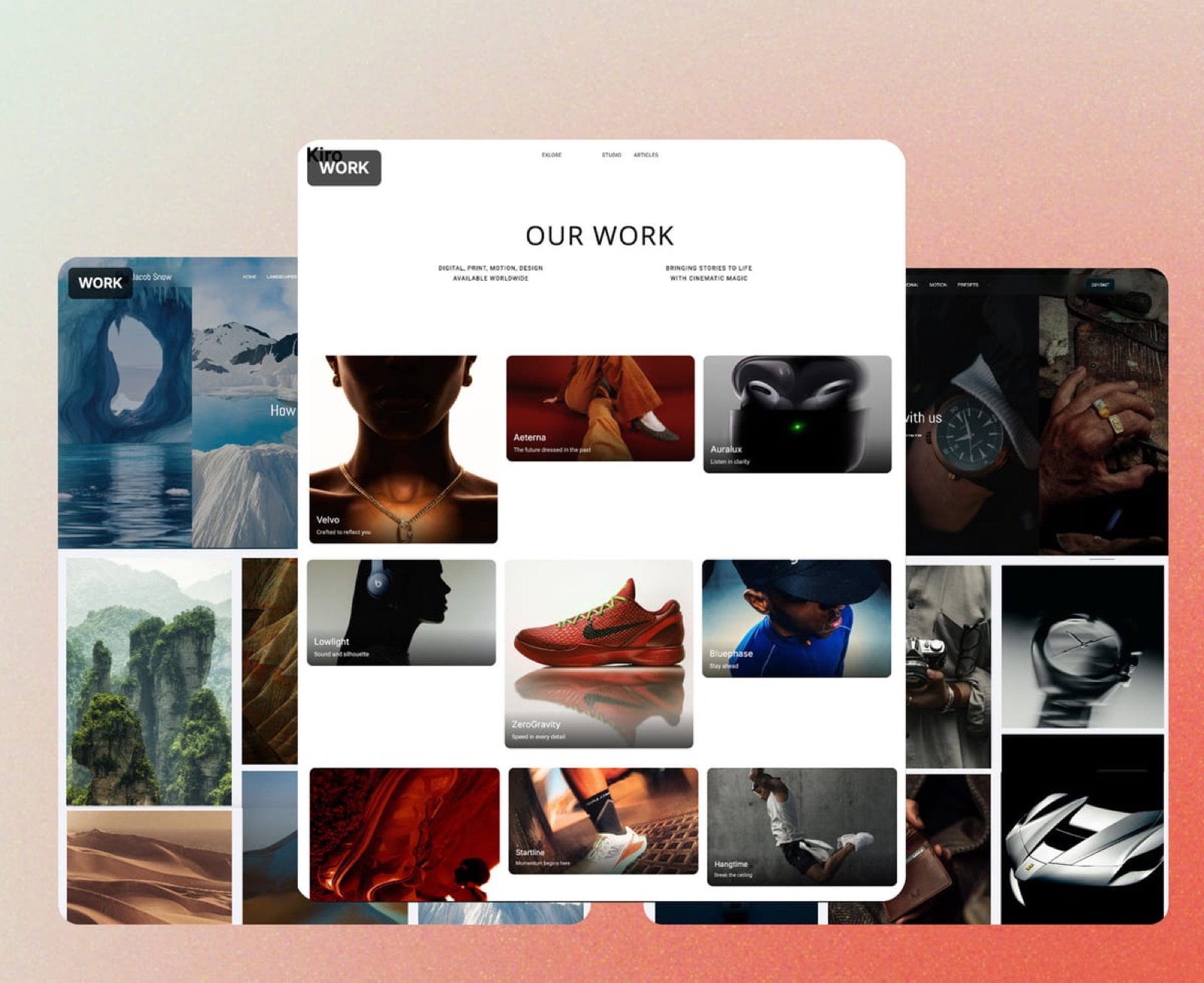
Framekit is an AI website builder for photographers, filmmakers, and other creatives that generates the portfolio site clients find you through, and includes client galleries on every plan: unlimited galleries with password and PIN protection, watermarking, favorites, per-gallery download controls, and ZIP delivery, served from your own domain.
It is not a CRM: it will not send a contract, chase an invoice, or automate a lead pipeline, which is exactly why it is not in the ranking above.
The pairing is the point. A wedding photographer's stack in 2026 is realistically a CRM from this list for paperwork and payments plus a portfolio site with gallery delivery for the client-facing work.
Framekit's free plan covers that second layer with a live site and a 10GB storage pool shared by the site and galleries, without asking for a card, growing to 2TB on the $39 Business plan, and it pairs identically well with Dubsado, Studio Ninja, or a spreadsheet; if the delivery half is your gap, start with our wedding photographer website guide.
Which HoneyBook Alternative Should You Pick?
Answer these four questions in order and stop at the first yes, because each one outranks everything after it: volume decides whether you need a CRM at all, and payment mix decides which one pays for itself.
Do fewer than 15 clients a year pay you? Yes: run the spreadsheet-plus-Stripe stack, add a standalone e-signature tool, and spend the savings on marketing. No: continue.
Will your clients pay by bank transfer if the invoice makes it the easy default? Yes: Dubsado Premier, whose $5-capped ACH shrinks the biggest cost line in this guide to pocket change, is worth its setup weeks.
No, cards only: continue, and stop weighting processing.
Is photography your only business line? Yes: Studio Ninja Pro at $270 with free migration is the shortest path out. No: 17hats for workflows across services, or Bonsai's $228 stack for the lowest bill.
Do you want galleries inside the same tool? Yes: Sprout Studio Pro, priced knowing it replaces two subscriptions. No: pair your pick with a dedicated gallery platform or a Framekit site, and keep the halves independently replaceable.
Still tied between staying and going: reread the fee table, because on ACH-friendly clients the gap between HoneyBook Essentials and Dubsado Premier is $1,125.50 a year, and on card-only clients it is roughly $60.
Frequently Asked Questions
What is the best HoneyBook alternative in 2026?
The best HoneyBook alternative in 2026 is Dubsado for most established solo client businesses: $525 a year for the Premier plan with unlimited projects, no platform fee on payments, and Stripe-powered ACH capped at $5 per transaction, which put our carried 25-wedding photographer at $775 all-in against $1,900.50 staying on HoneyBook Essentials with ACH.
Studio Ninja is the better pick for photography-only businesses, and 17hats for multi-service solo businesses.
Is HoneyBook worth $109 a month?
HoneyBook Premium at $109 a month billed yearly ($1,308 a year) is worth it mainly for teams: its additions over the $49 Essentials plan are unlimited team members, priority support, multiple companies, and unlimited lead forms.
A solo photographer already gets contracts, invoicing, scheduler, automations, and HoneyBook's AI tools on Essentials, so Premium mostly buys capacity one person cannot use, at roughly quadruple Dubsado's or Studio Ninja's annual price.
HoneyBook vs Dubsado for photographers: which is better?
Dubsado wins on total cost and payment flexibility, HoneyBook on polish, AI features, and speed to set up.
Dubsado Premier runs $525 a year flat with your own Stripe, Square, or PayPal and capped ACH; HoneyBook Essentials runs $588 with built-in processing only.
A photographer whose clients will pay by bank transfer saves about $1,125 a year on $87,500 collected by choosing Dubsado; one whose clients insist on cards saves roughly $60 and should decide on workflow taste instead.
Which HoneyBook alternative has the cheapest payment processing?
Dubsado and the DIY Stripe Invoicing stack tie for cheapest processing, because both route ACH through Stripe at 0.8% capped at $5 per transaction, which on 50 wedding payments of $1,750 comes to a fifth of what HoneyBook's uncapped 1.5% bank-transfer rate takes from the same revenue.
Bonsai's 1% ACH sits between them at $875. Card processing is nearly identical everywhere at 2.9% plus 25 to 30 cents, so ACH adoption, not card rates, is where the real savings live.
Can I just use Stripe invoicing instead of a CRM like HoneyBook?
Yes, if your volume is small: Stripe Invoicing charges 0.4% capped at $2 per paid invoice with no subscription, so a photographer sending 50 invoices a year pays about $100 in invoicing fees plus processing, and $0 in software.
What Stripe does not do is sign contracts, capture leads, or automate follow-ups, so you are the automation. Under roughly 15 clients a year the trade works; past that, the admin hours cost more than Studio Ninja's $270 annual plan.
Do these tools lock in my signed contracts if I leave?
No tool in this guide advertises withholding signed documents, but access practically ends with your login, so the safe procedure is the same everywhere: download every signed contract PDF and invoice record to storage you control before canceling.
The deeper lock-in is not documents but structure: email templates, workflows, and automations do not export anywhere, and rebuilding them is the true switching cost.
Does HoneyBook let me use my own Stripe account?
No. HoneyBook processes payments through its own built-in system, and its pricing page offers no option to connect an outside processor.
That closed architecture is the single biggest structural difference from Dubsado, Studio Ninja, 17hats, and Sprout Studio, which all connect your own Stripe (and in most cases Square or PayPal) account and add no platform fee of their own.
Can Framekit replace HoneyBook?
No. Framekit is an AI website builder with client galleries, not a CRM: it does not send contracts, invoices, or scheduled emails, and it has no lead pipeline.
It replaces the other half of a photography business that HoneyBook never touched, the public portfolio site and gallery delivery, with unlimited protected galleries on every plan served from your own domain, and it pairs with any CRM in this guide.
Do HoneyBook alternatives charge extra for ACH bank transfers?
The ACH pricing differs sharply by tool: Dubsado's Stripe-powered route charges 0.8% capped at $5 per transaction, Bonsai charges as low as 1% through Bonsai Payments, and HoneyBook charges 1.5% uncapped.
On a single $1,750 wedding payment those come to $5, $17.50, and $26.25 respectively, and the differences multiply by every payment you take. 17hats, Studio Ninja, and Sprout Studio route payments through connected processors; check ACH availability inside your own processor account before counting on it.
Final Verdict: Leaving HoneyBook in 2026
The shape of this market is a triangle: HoneyBook sells polish and AI on top of closed payments, Dubsado and the bring-your-own-processor tools sell open payments with more setup, and the photography-native tools sell fit.
Where you land depends on the number most comparisons skip: how your clients pay.
Dubsado is our overall pick because its advantages compound: a flat $525 that never meters your growth, and a capped ACH rate that turns this guide's largest cost line into its smallest.
Studio Ninja is the pick when photography is the whole business and you want the move done for you, 17hats and Bonsai are the multi-service and budget answers, Sprout Studio is the all-in-one for photographers who want galleries in the same login, and the spreadsheet-plus-Stripe stack is the disciplined start nobody profits from recommending.
And the concession an honest guide owes: Dubsado is not the better fit for a card-paying clientele or a setup-averse owner, HoneyBook's AI tooling and 60-day money-back guarantee make staying a defensible choice, and Framekit will not replace any of these tools; it is not a CRM and does not try to be one.
Framekit's job is the half they all ignore: the portfolio that wins the inquiry and the galleries that deliver the work, on a domain you own, free to start.
Related reading: our client gallery platform comparison, the best studio management tools for photographers, the best website builders for wedding photographers, and the full Stripe fees breakdown for creators.
Every price and processing rate above was verified during July 2026 against each vendor's published pricing page or help documentation; plans and promotional discounts change, so confirm the current number before you commit.