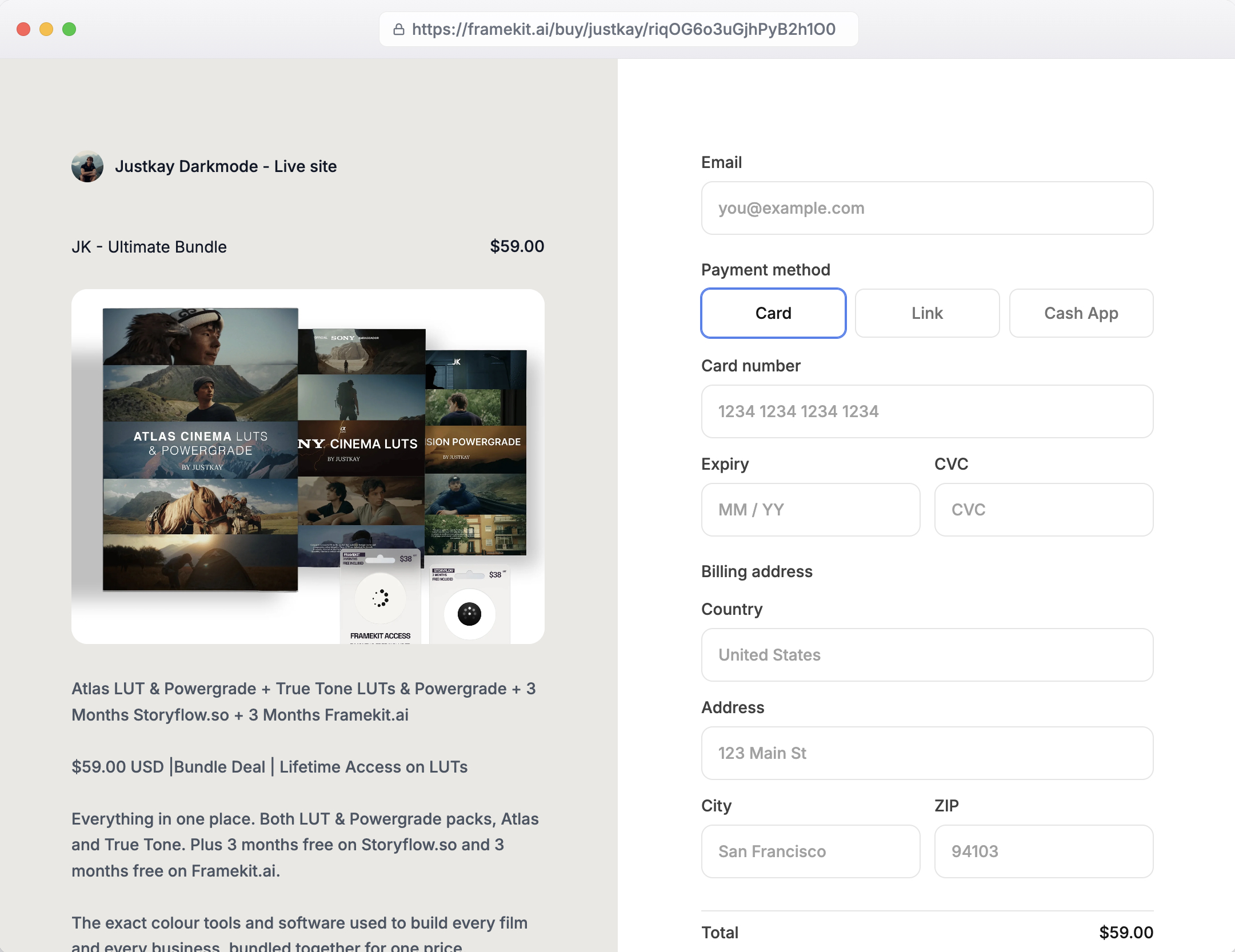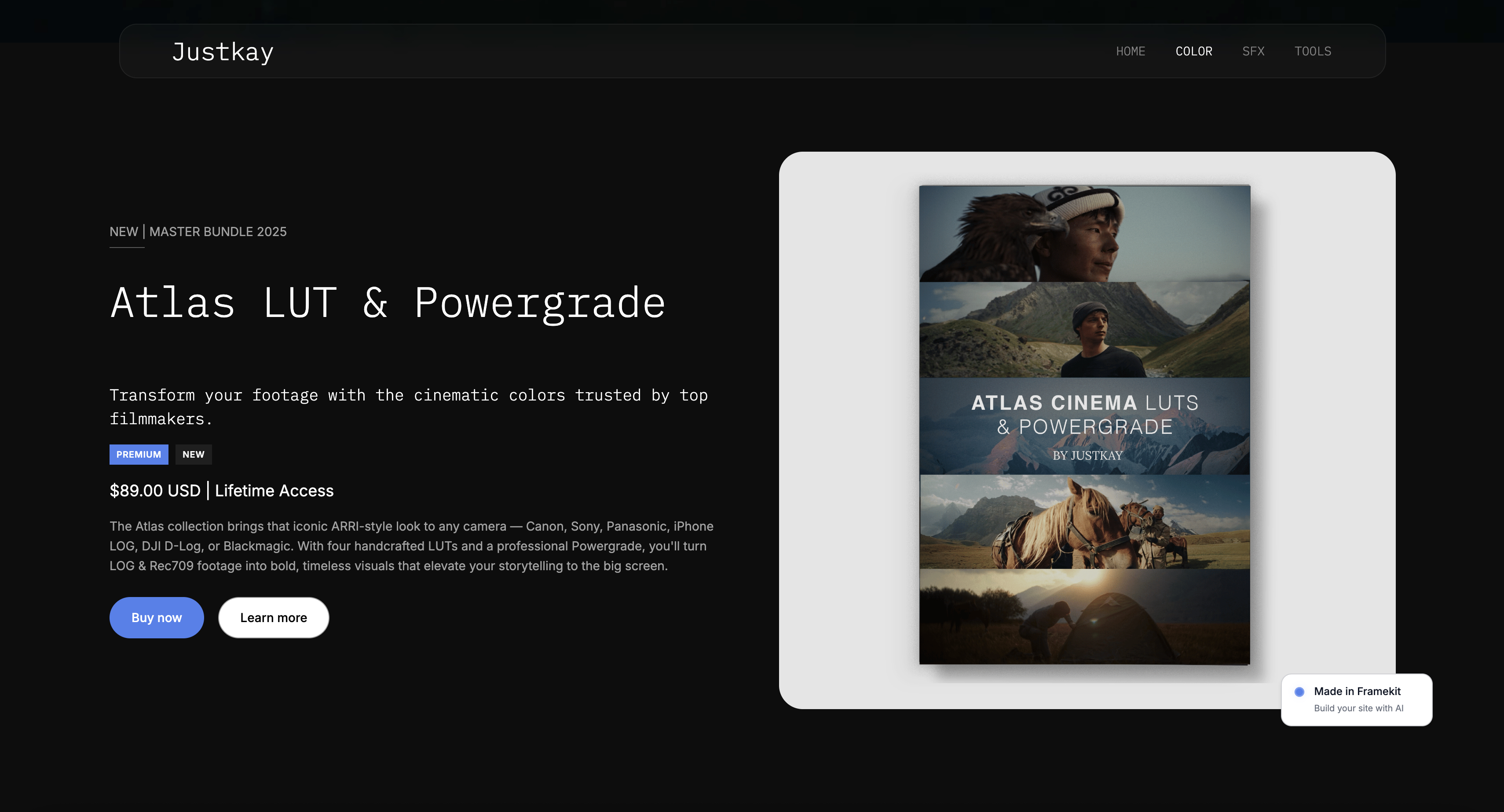
Framekit templates
Start from a designer-made template
 Use template
 Use template
 Use template
 Use template
 Use template
 Use template
 Use template
 Use template
Substack's deal is the cleanest pitch in publishing: everything is free until you turn on paid subscriptions, and from then on the platform keeps 10% of every payment, every month, for as long as each subscription renews.
On a newsletter grossing $1,600 a month from paid readers, that is $160 a month and $1,920 a year, before Stripe's processing takes its separate cut.
The 10% never expires.
This guide ranks the best Substack alternatives for 2026 for writers who have done that arithmetic: six platforms compared on fees, ownership, growth tooling, and what it actually takes to move.
A Substack alternative is a platform that hosts your email list, publishes your writing to the web, and bills your paid subscribers, the job Substack does, priced differently. Three of the six take 0% of paid revenue.
Framekit, which we make, is not one of them and is not ranked below, because it has no newsletter at all; what it does for a writer is sell the ebook, template pack or paid guide an issue points at, from a checkout link you can paste into the email.
The best Substack alternative in 2026 is Ghost, because your paid newsletter becomes a real website you own - your domain, your SEO, your subscriber billing in a Stripe account under your name - and Ghost takes 0% of subscription revenue, per its published pricing.
The structural trade is the honest headline of this comparison: Ghost charges by audience size, so a big free list costs real money that Substack hosts for $0. beehiiv is the growth pick (free to 2,500 subscribers, an ad network, 0% on paid revenue), Kit is the spreadsheet winner under 10,000 subscribers, and Patreon fits creators selling community rather than essays, despite charging the same 10% as Substack.
How We Compared These Substack Alternatives
We priced one newsletter across all six platforms and Substack itself, rather than paraphrasing feature pages: a culture-and-craft publication with 5,000 free readers plus 200 paid subscribers at $8 a month, $1,600 a month and $19,200 a year gross.
Every cost figure in this guide is that same newsletter.
Verified from primary sources, July 2026. Every fee and plan price below was checked this month against each vendor's published pricing page or help documentation and linked inline where it carries the most weight.
Where a platform prices by list size on a calculator, we state the published base rates exactly and mark mid-size calculator figures as approximate; confirm your own band before committing.
Not a hands-on test. We did not run live paid newsletters on these six platforms this month.
This comparison is built from published pricing, official migration documentation, and product mechanics as each vendor documents them, which is why no review below contains a usage anecdote we cannot back.
Reported as community sentiment. Recurring creator reports, mostly about deliverability and support response, are flagged as sentiment wherever they appear.
Where we stand. We make Framekit, a website builder for creatives with a digital-download store but no newsletter, membership or subscription product, so nothing we sell appears in this ranking.
Framekit's own store terms were re-verified on 19 September 2026 and confirmed again on 20 September 2026.
What the Fee Audit Found
Before the reviews, here are the countable facts a decision can rest on, every one of them checked against vendor pricing pages and help documentation during July 2026 rather than repeated from other roundups.
- 3 of 6 take 0% of paid-subscription revenue: Ghost, beehiiv, and Buttondown. Kit charges 3.5% plus 30 cents all-in. Patreon charges 10%, the same rate you are leaving.
- 2 of 6 can adopt your existing Substack billing so paid readers never re-enter a card: Ghost and beehiiv, both via the same Stripe account Substack uses.
- 4 of 6 have a $0 tier, but only 1 lets you charge for subscriptions on it: Kit, free to 10,000 subscribers.
- On the carried newsletter, Substack's stack costs $266.40 a month between the 10% and Stripe processing; the cheapest alternative, Kit, is $116 all-in.
- 0 of 6 replicate Substack's recommendations network at scale. That concession is real, and it gets its own section below.
The 6 Best Substack Alternatives in 2026: Comparison
How the ratings work: fees and net revenue 30%, list and billing ownership 25%, growth and discovery 15%, publishing and design control 15%, migration ease 15%.
Ownership is weighted second because it is the reason most writers leave: a paid reader who must re-enter a card is a reader who can decide not to, so locked billing turns every future move into a churn event.
The ranking is not a sweep for anyone: Ghost, our overall pick, scores a visibly sub-top 6 on growth and discovery, because it ships no network at all.
| Platform | Best for | Cut of paid revenue | Price for the carried newsletter | Our rating |
|---|---|---|---|---|
| Ghost | A paid publication you fully own | 0% | about $63 a month (Publisher, annual billing) | 9.0/10 |
| beehiiv | Growth and sponsorship revenue | 0% | about $77 a month (Scale, annual billing) | 8.6/10 |
| Kit | Lowest total cost under 10,000 subscribers | 3.5% + 30c, includes processing | $0 a month plus the fee | 8.4/10 |
| Buttondown | Minimalists on their own Stripe | 0% | $79 a month at this list size | 7.9/10 |
| Patreon | Community and perks, not essays | 10% | $0 a month plus the cut | 7.3/10 |
| MailerLite | Budget email marketing with a newsletter attached | none advertised | from $25 a month, scales with list | 7.0/10 |
Prices are July 2026 rates from each vendor's published pricing; the carried newsletter is 5,200 total subscribers, which matters on platforms that price by band.
1. Ghost: Best Overall Substack Alternative
Our rating: 9.0/10
Ghost is what Substack looks like when the publication, not the network, is the product: an open-source publishing platform with a hosted service, Ghost(Pro), that gives you a full website - custom domain as standard, real themes, structured SEO control, member management, and paid subscriptions billed through a Stripe account that belongs to you.
Per Ghost's pricing, the platform takes 0% of subscription revenue; you pay a flat plan price and Stripe's processing, and nothing else scales with your success.
The plan structure has one trap and one curve worth reading twice. The trap: Starter, at $18 a month billed yearly, does not support paid subscriptions at all, so a paid newsletter starts on Publisher at $29 a month billed yearly.
The curve: that $29 covers your first 1,000 members, and the price climbs with list size on Ghost's calculator, about $63 a month at 5,000 members and about $88 at 10,000 on yearly billing; Business at $199 a month billed yearly adds team scale.
The migration mechanics, from the primary source. Ghost's Substack migration guide has one load-bearing instruction: connect the same Stripe account your Substack uses, and existing paid subscriptions carry over without re-billing anyone.
The same doc is candid that Substack keeps charging its 10% until the switch completes, and reminds you to change the Stripe statement descriptor so card statements stop saying Substack.
The standout detailGhost is open source. If Ghost(Pro)'s pricing ever stops making sense, you can self-host the identical software and keep the site, theme, members, and billing. No other platform here has an exit that complete.
The honest gotchathe flat fee is a tax on free readers. Substack hosts 5,000 non-paying subscribers for $0; Ghost charges about $63 a month for the privilege, and the bigger your free list relative to paid revenue, the worse that arithmetic gets.
Skip it ifyour growth still depends on being discovered. Ghost ships no recommendations network, no marketplace, no feed. You bring the audience.
Verdict: Ghost is the best Substack alternative for a writer whose paid newsletter is a business: 0% of revenue, billing in your own Stripe account, and a website that ranks under your own domain. On the carried newsletter it nets $1,431 a month against Substack's $1,334, about $1,164 a year back, and the gap widens every time you raise prices or add paying readers. Visit Ghost
2. beehiiv: Best for Growth and Sponsorship Revenue
Our rating: 8.6/10
beehiiv was built by early Morning Brew employees, and it shows in what the product optimizes for: subscriber acquisition and advertising revenue, not just publishing.
It is the platform here that most resembles Substack's ambitions, a network of newsletters with growth machinery between them, except the machinery is priced as software instead of a revenue cut.
The numbers, per beehiiv's pricing: the Launch plan is free up to 2,500 subscribers with unlimited sends, and Scale, where monetization lives, starts at $43 a month on annual billing ($517 a year) and steps up by subscriber band, about $77 a month at 5,000 subscribers and roughly $85 to $99 at 10,000, topping out at $290 a month on annual billing at 100,000.
On paid subscriptions the pricing page is unambiguous: "beehiiv takes 0% of your paid newsletter revenue. You keep everything you earn, minus Stripe's standard processing fee."
What the fee buys that Substack does not offeran ad network that places sponsors into your sends, Boosts (paid cross-newsletter recommendations, the closest thing anywhere to Substack's network but with money attached), and a built-in referral program.
For a newsletter running on sponsorship plus subscriptions, that stack is the actual product.
The migration detail nobody expectsbeehiiv's paid-subscriber import recreates your Substack subscriptions from your existing Stripe account, keeps every price and renewal date, and parks each subscriber on a temporary trial until their normal billing day so nobody is charged twice.
The catch is in the same doc: the tool does not cancel the old subscriptions, so you must switch off Substack-side billing yourself or readers pay both.
The honest gotchathe free plan cannot charge anyone. Paid subscriptions require Scale, so the real entry price for a paid newsletter is $43 a month, not $0, and the 2,500-subscriber free tier is a runway, not a home.
Skip it ifyou want a quiet essay publication. beehiiv is tuned for operators who check open-rate dashboards; writers who find that exhausting are happier on Ghost or Buttondown.
Verdict: beehiiv is the right Substack alternative for the writer running a media business, with sponsorships, referral loops, and paid growth. On the carried newsletter it nets about $1,417 a month versus Substack's $1,334, and the ad tooling can widen that gap in a way no fee table captures. Visit beehiiv

3. Kit: Cheapest Total Stack Under 10,000 Subscribers
Our rating: 8.4/10
Kit, formerly ConvertKit, comes at the newsletter from the creator-business side: automations, tagging, landing pages, and a commerce layer for selling digital products.
Its 2026 pricing contains the most surprising number in this comparison: per Kit's pricing page, the free Newsletter plan runs to 10,000 subscribers, and paid subscriptions work on it.
The fee structure is different in kind from everything above.
Kit charges 3.5% plus 30 cents per transaction on paid subscriptions and digital products, and the pricing page states the fee is inclusive of card processing, with Kit's own share at 0.6%.
Ghost and beehiiv charge 0% but you still pay Stripe roughly 2.9% plus 30 cents, so Kit's all-in take on an $8 subscription is 58 cents against roughly 53 cents of pure processing elsewhere: about a nickel per charge, on a plan that costs $0 until your list crosses 10,000.
The real numberthe carried newsletter pays Kit $116 a month total, no plan fee, no separate Stripe bill, and nets $1,484 a month, which is $150 a month and $1,800 a year more than on Substack and the best net figure in this guide at this size.
Paid plans, needed for advanced automations and lists past 10,000, start at $33 a month billed yearly at 1,000 subscribers.
The honest gotchabilling runs through Kit's commerce system, not a Stripe account you control, which is how the fee can include processing.
The consequence lands the day you leave: the CSV exports cleanly, but there is no documented equivalent of the same-Stripe handoff Ghost and beehiiv use, so ask Kit's migration team what happens to live subscriptions before building a five-figure newsletter on it.
Ownership is why you are leaving Substack; do not hand it back for a nickel.
Skip it ifdesign matters to you. Kit's hosted pages are functional and conversion-minded, not beautiful, and its web archive is the weakest publishing surface in the top four.
Verdict: Kit is the value pick and the right choice for a writer who sells things: presets, guides, workshops, templates, with the newsletter as the engine. If that is you, run the fee math next to a store you own with our Gumroad fees breakdown before deciding where the products live. Visit Kit
4. Buttondown: Best for Minimalists on Their Own Stripe
Our rating: 7.9/10
Buttondown is a small, deliberately plain newsletter tool with a markdown editor, a fast web archive, and a pricing page written like a promise: free for your first 100 subscribers, then flat tiers that track list size, $9 a month at up to 1,000 subscribers, $29 at up to 5,000, and $79 at up to 10,000, with automations unlocking from the $29 tier.
On paid subscriptions, Buttondown's documentation is as short as the product: billing runs through a Stripe account you connect and own, and "you'll keep all of the money you make."
The carried newsletter hits an instructive edge here: 5,200 total subscribers is past the 5,000 tier, so the price is $79 a month, not $29, and the net comes to about $1,415.
A slightly smaller list pays less than half as much, which is the double edge of tier pricing: predictable, and occasionally cliff-shaped.
The standout detailone newsletter, one Stripe account, connected directly, nothing pooled or intermediated. With plain-text ownership of everything else, Buttondown is arguably the most portable platform here after Ghost's self-host option.
The honest gotchait is a small company with a famously hands-on founder, which the indie web counts as a feature and a risk in the same breath. Community sentiment praises the support; keep exports current anyway, as you should anywhere.
Skip it ifyou want growth tooling, a network, or a designed magazine-style site. Buttondown sends beautiful plain email and stays out of the way; that is the whole pitch.
Verdict: Buttondown is the best Substack alternative for a writer who wants the smallest possible tool that still owns its own billing: flat price, 0% cut, your Stripe, markdown in, email out. Visit Buttondown

5. Patreon: Best for Community-First Creators
Our rating: 7.3/10
Patreon belongs in this list for a specific kind of Substack refugee: the one whose readers are really members, paying for access, community, bonus material, and proximity rather than for essays in an inbox.
Its membership machinery, tiers, member-only posts and audio, Discord roles, chat, runs deeper than anything Substack ships, and its fee, per Patreon's pricing, is a flat 10% of earnings plus payment processing, currency conversion, and payout fees.
On fees alone, then, Patreon is not an upgrade from Substack at all: the carried newsletter pays the same $160 a month cut plus processing, with payout fees on top, so it nets slightly less than the $1,334 Substack figure. You would move here for the product, never for the price.
The honest gotchaownership runs the wrong way. Members subscribe through Patreon's checkout on Patreon's billing, with no mechanism to carry those subscriptions to your own Stripe account later; leaving means asking every member to sign up again.
The list exports, but the payment relationship is the platform's, and the web presence is a profile page, not a site that ranks for anything you write.
Skip it ifthe newsletter is the product. A writer selling essays should keep the essays and the billing on an owned domain and let a 0% platform carry the revenue.
Verdict: Patreon is the better fit when perks, community, and membership are what people pay you for, and the wrong fit when they pay you to read. Weighing it seriously? Our best Patreon alternatives guide runs this arithmetic from the other direction. Visit Patreon
6. MailerLite: The Budget Email Platform Option
Our rating: 7.0/10
MailerLite is the one entry here that is an email-marketing platform first and a newsletter product second, and it earns its place on price and machinery rather than on publishing.
Per MailerLite's pricing, the free tier covers 250 subscribers and 2,500 monthly emails, with paid plans from $12 a month (Comfort) and $25 a month (Power) at the smallest list size, repricing with subscriber count on its calculator.
Paid newsletter subscriptions run through its Stripe integration on the upper plans, with no revenue share advertised on top: the cost is the plan plus Stripe's processing.
The case for it is the machinery at the price: automation workflows, landing pages, pop-ups, and sequences that Substack simply does not have.
The case against it is everything else in this guide: a 250-subscriber free tier against Kit's 10,000, a generic web archive, no network, and a paid-newsletter feature buried in a tool designed for campaigns, not publications.
We could not pin its price for the carried 5,200-subscriber newsletter from a published table, so it sits out the net-revenue table below rather than being guessed at.
Skip it ifthe newsletter is the whole operation. This is a tool for a writer who also runs product launches, an audience funnel, or client email, and wants one inexpensive system doing all of it.
Verdict: MailerLite is a defensible budget choice for an automation-heavy operation with a small paid newsletter attached, and the wrong home for a publication. Visit MailerLite
What Leaving Substack Actually Saves
In one lineon the carried newsletter, every serious alternative nets more than Substack, the spread is $81 to $150 a month, and the entire difference is the 10%.
Here is the same publication, 5,000 free readers, 200 paid at $8 a month, $1,600 gross, monthly, on each platform.
Processing is modeled at Stripe's standard 2.9% plus 30 cents per charge; Kit's line needs no processing added because its fee includes it.
Stripe's recurring-billing surcharge and currency fees land on top wherever they apply, including on Substack, which bills through Stripe; our Stripe fees guide for creators itemizes those extras.
| Platform | Plan cost | Platform cut | Processing | You net monthly |
|---|---|---|---|---|
| Substack | $0 | $160.00 | $106.40 | $1,333.60 |
| Ghost Publisher | about $63 | $0 | $106.40 | about $1,430.60 |
| beehiiv Scale | about $77 | $0 | $106.40 | about $1,416.60 |
| Kit (free plan) | $0 | $116.00 all-in | included | $1,484.00 |
| Buttondown | $79 | $0 | $106.40 | $1,414.60 |
| Patreon | $0 | $160.00 | $106.40 | $1,333.60 minus payout fees |
MailerLite is omitted because its price at this exact list size comes from a calculator we could not verify against a published table, and we do not print numbers we could not check.
Two readings matter.
Kit nets the most at this size because its fee barely exceeds raw card processing and the plan is free, but Ghost's $1,164-a-year advantage is the durable one: it survives any subscriber cap and widens as paid revenue grows, because 10% of more is more while $63 stays $63.
Run this on your own newsletter. Multiply last month's paid gross by 0.10; that is what Substack kept. Look up one alternative's price at your list size.
The first number minus the second, times twelve, is the annual case for moving, or, if negative, for staying. No adjective in this guide beats that subtraction.

The Cost Curve: Where Flat Fees Beat the 10%
In one lineSubstack prices your revenue and the alternatives price your audience, so a fat free list with thin paid revenue favors Substack, and healthy paid conversion favors everyone else.
This is the structural tension of the whole market, and it deserves numbers instead of vibes.
Hold the same 200 paid subscribers at $8 and grow only the free list: Substack's take never moves, because the 10% only touches revenue, while the flat-fee platforms reprice as the list grows, because every subscriber costs sending capacity whether they pay or not.
| Total list size | Substack cut | Ghost Publisher | beehiiv Scale | Buttondown | Kit |
|---|---|---|---|---|---|
| 1,000 | $160 | $29 | $43 | $9 | $116 all-in |
| 5,000 | $160 | about $63 | about $77 | $29 | $116 all-in |
| 10,000 | $160 | about $88 | $85 to $99 | $79 | $116 all-in |
Monthly figures, July 2026, annual-billing rates where offered; calculator-based mid-band prices marked about. Kit's column is its transaction fee, which includes processing the other columns exclude; its plan stays $0 through 10,000 subscribers.
Follow each column down and the shape of the market appears. With $1,600 a month of paid revenue, every alternative beats the $160 cut at every checkpoint.
Run the same table with 40 paid subscribers ($320 gross, a $32 cut) and it inverts: Ghost at 10,000 subscribers would cost about $88 a month to save a $32 fee.
The crossover is one division: when 10% of monthly paid gross exceeds the alternative's price at your list size, the flat fee wins; until then, Substack's free-until-paid model is genuinely the better deal, which is exactly why it works.
The corollary: a free list that balloons without converting drags every flat-fee price up while adding nothing to revenue, so prune cold addresses before migrating; each one is now a line item.
Who Owns the List, the Billing, and the Domain
In one lineeveryone lets you export the CSV, but the list is only one of three assets, and the billing relationship and the domain are where platforms actually differ.
The list. Every platform in this guide, Substack included, exports subscribers as CSV. That is the floor of ownership, not the ceiling.
The billing. This is the asset most writers forget until it is too late.
Substack bills through a Stripe account connected to you, which is what makes real migration possible: Ghost has you connect that same Stripe account so subscriptions carry over untouched, and beehiiv recreates them with renewal dates intact.
Patreon sits at the opposite pole, with subscriptions that live and die inside its own checkout, and Kit runs billing through its own commerce layer, cheap on the way in, unclear on the way out.
When you rank alternatives yourself, put "whose name is on the Stripe account" above almost everything else.
The domain. On Substack you publish at yourname.substack.com unless you pay a one-time $50 fee for a custom domain, the single best $50 a Substack writer can spend: every link, share, and search result then accrues to an address you can point anywhere later.
Ghost includes custom domains as standard; the other four support them on paid tiers. A publication on a rented subdomain starts its SEO from zero the day it moves; one on its own domain redirects and keeps most of what it earned.
If the website half matters to you, see our guide to the best website builders for writers.
The Recommendations Network: What You Give Up
In one lineSubstack's discovery network is the real moat, none of these six replaces it, and the honest question is what share of your growth it actually drives.
Concede it plainly: Substack's recommendations, Notes, and reader app form a discovery machine that no alternative matches.
Publications recommend each other, readers arrive with payment details already stored, and a writer with zero distribution can be found.
Ghost, Buttondown, and MailerLite ship nothing comparable; beehiiv's Boosts is the nearest analog, and it is paid acquisition, not organic serendipity.
Community sentiment among writers who left is consistent: the money math improves and the top of the funnel gets quieter.
So measure yours before deciding. Substack's dashboard attributes signups by source; look at the share arriving from Substack's own surfaces over the last quarter, because that share is what the 10% is actually buying.
If it is a third of your growth, the fee is an acquisition channel priced like one, and you should probably stay.
If it is a rounding error while growth comes from your writing and search, you are paying network prices for a network you are not using, and the tables above price that: $1,164 a year against Ghost on the carried newsletter alone.
Where Framekit Fits: Selling the Guide Beside the Newsletter
In one lineFramekit does not run paid newsletters, but its store is a cheap way to sell the one-off products a newsletter audience buys, such as an ebook, a template pack or a paid guide, without handing Substack or a marketplace a cut of those too.
Framekit is an AI website builder with a digital-download store built in, and it sits beside whichever platform above hosts your list.
Each product gets a direct buy link to a hosted checkout page, so you can drop it into an issue and sell without a website at all, and buyers get an instant download they can come back to.
Free products work as lead magnets that collect an email address. The fee is 5% on the free plan, 3% on Pro and 0% on the $39 Business plan, plus Stripe processing, paid into your own Stripe account.
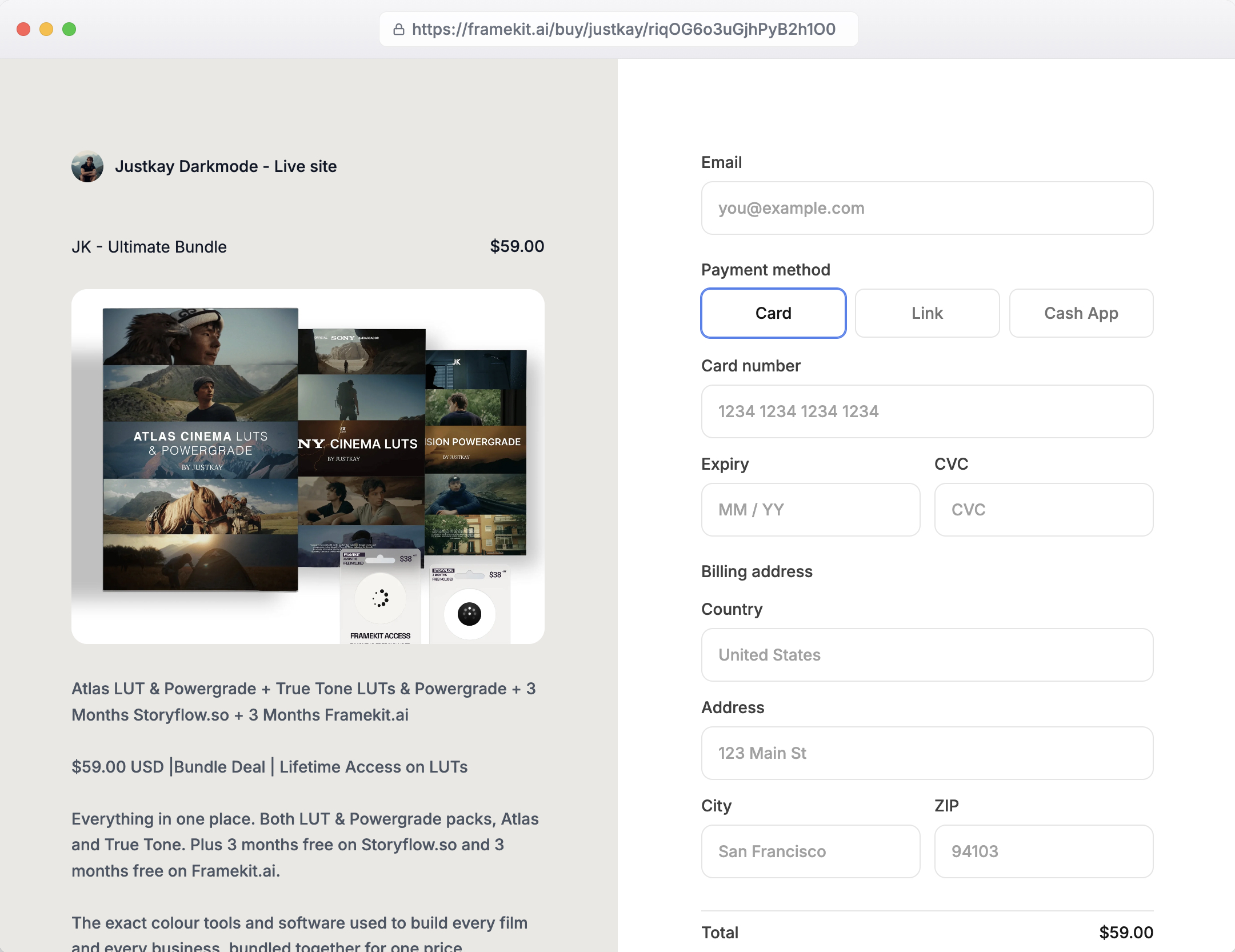
The limits matter here more than anywhere: Framekit has no subscriptions, memberships or recurring billing, so it cannot replace the paid tier of a newsletter, and it does not collect or remit VAT for you.
Pick one of the six above for the newsletter, and use Framekit only for the products.
How to Choose Your Substack Alternative
Work down these questions in order and stop at the first branch that matches your newsletter today, because they are sequenced so the expensive mistakes get caught before the preferences do.
Is your paid gross under about $500 a month?
- Yes: stay on Substack, or start on Kit's free plan. At $500 gross the 10% is $50 a month, and most alternatives cost comparable money at a real list size while subtracting the network.
- No: continue.
Does a meaningful share of new subscribers come from Substack's recommendations, app, or Notes (check your dashboard, last 90 days)?
- Yes: stay; the 10% is your acquisition budget and it is working. Buy the $50 custom domain today so a future move keeps your SEO.
- No: continue.
Should the newsletter be a real website you own, with SEO, design control, and billing in your own Stripe account?
- Yes: Ghost. It is the only answer that gets you all three plus a self-host exit.
- Not the priority: continue.
Is sponsorship and paid growth the business model?
- Yes: beehiiv, for the ad network, Boosts, and referral tooling that turn a list into inventory.
- No: continue.
Do you sell digital products or courses alongside the writing?
- Yes: Kit, and keep the total-cost advantage until 10,000 subscribers.
- No: one more question.
Are readers paying for community and perks rather than for the writing itself?
- Yes: Patreon, eyes open about the 10% and the locked billing.
- No: Buttondown on your own Stripe if you want minimal, MailerLite if the newsletter is one part of a wider email operation.
Frequently Asked Questions
What is the best Substack alternative in 2026?
The best Substack alternative in 2026 is Ghost, which takes 0% of paid-subscription revenue, bills readers through a Stripe account you own, and turns the newsletter into a real website on your domain; Publisher starts at $29 a month billed yearly at 1,000 members. beehiiv is the growth pick with an ad network and 0% on paid revenue, Kit is the cheapest total stack under 10,000 subscribers, and Buttondown is the minimalist pick from $9 a month.
What does Substack actually cost once Stripe fees are counted?
Substack charges no subscription and takes 10% of paid-subscription revenue, with Stripe's processing on top.
On a newsletter grossing $1,600 a month from 200 subscribers at $8, that is $160 to Substack plus about $106 of processing, roughly 16.7% of gross all-in, netting about $1,334.
Free publications pay nothing, which is the model's honest strength: costs start only when revenue does.
Does Ghost or beehiiv really take 0% of paid subscriptions?
Yes, both.
Ghost's pricing states it processes premium-subscription payments with no additional transaction fee from Ghost, and beehiiv's pricing page says it takes 0% of paid newsletter revenue; in both cases you still pay Stripe's standard processing, roughly 2.9% plus 30 cents per charge.
The platforms make their money on the plan price instead, which is why both reprice as your list grows: you are buying capacity, not sharing revenue.
Can I move my Substack paid subscribers without making them re-subscribe?
Yes, to Ghost or beehiiv.
Both connect to the same Stripe account your Substack billing runs through: Ghost carries existing subscriptions over unchanged, and beehiiv's importer preserves each subscriber's price and renewal date, bridging with a temporary trial so nobody is double-billed.
You must cancel the Substack-side billing yourself afterward. Patreon cannot adopt outside Stripe subscriptions at all, and moves into Kit run through Kit's own commerce billing, so ask its migration team before committing.
Which Substack alternative is cheapest at 10,000 free subscribers?
Kit, whose free Newsletter plan runs to 10,000 subscribers with paid subscriptions enabled at 3.5% plus 30 cents per charge, processing included; with no paid revenue it costs $0 outright. Substack also hosts 10,000 free readers for $0.
Among flat-fee tools at that size, Buttondown is $79 a month, Ghost Publisher about $88 on yearly billing, and beehiiv Scale roughly $85 to $99, so a big list that earns nothing yet should sit on Kit or Substack until it converts.
Is Substack's 10% worth it for the recommendations network?
It depends on one measurable number: the share of new subscribers arriving from Substack's own surfaces, which your dashboard attributes.
If recommendations, Notes, and the app drive a large fraction of growth, the 10% is acquisition spend and usually worth it; no alternative replicates that network.
If growth comes from search, social, and word of mouth, the same 10% buys little: on a $1,600-a-month newsletter it is $1,920 a year that a 0% platform would leave with you.
Do I lose my SEO if I leave Substack?
If you published on a free substack.com subdomain, mostly yes: the authority belongs to Substack's domain and does not travel, so your new site starts near zero and old links keep pointing at the platform.
If you paid Substack's one-time $50 custom-domain fee, mostly no: the domain moves with you and redirects preserve most link equity.
That asymmetry is why buying the custom domain early is cheap insurance even for writers who never plan to leave.
Do I keep my email list if I leave Substack?
Yes. Substack exports your full subscriber list as CSV, free and paid, and every platform in this guide imports it.
The list is the smallest of the three assets in play, though: billing only transfers to platforms that can adopt your existing Stripe subscriptions (Ghost and beehiiv), and your web presence transfers only if you own the domain.
Export the CSV quarterly regardless of any migration plans.
Ghost vs beehiiv: which is the better Substack alternative?
Ghost for a publication, beehiiv for a media operation.
Ghost gives you a real owned website, standard custom domains, open-source portability, and 0% fees from $29 a month billed yearly; beehiiv gives you growth machinery Ghost refuses to build - an ad network, Boosts, referral tooling - also at 0%, from $43 a month on annual billing.
On the carried newsletter they net within about $14 a month of each other, so choose on product, not price.
Is Patreon a good Substack alternative for a paid newsletter?
Only when readers are paying for membership rather than writing.
Patreon's tiers and community tooling outclass Substack's, but its fee is the same 10% plus processing and payout fees, and its billing is fully platform-owned, with no way to carry subscriptions to your own Stripe account later.
A writer selling essays nets more and owns more on Ghost, beehiiv, or Buttondown; a creator selling access and perks is who Patreon is built for.
Can I run a paid newsletter for free on any of these platforms?
Yes, on Kit: its free plan supports paid subscriptions to 10,000 subscribers, costing only the 3.5% plus 30 cents per transaction, card processing included.
Nowhere else: beehiiv's free tier cannot charge subscribers (paid subscriptions require Scale), Buttondown's free 100-subscriber tier needs a paid plan for subscriptions, Ghost has no free tier at all, and MailerLite's free plan lacks the feature.
Substack itself remains free until it takes its 10%.
Can I sell ebooks or guides to my newsletter readers without Substack taking 10%?
You can sell ebooks, templates and guides outside Substack through a separate digital-download store and link to it from your issues.
Framekit's store does this with a direct buy link and instant downloads, at 5% on its free plan falling to 0% on the $39 Business plan plus Stripe processing, though it has no subscriptions, so the paid newsletter itself stays on Ghost, beehiiv, Kit, Buttondown or Substack.
Should a small newsletter leave Substack at all?
Usually not yet. Below about $500 a month in paid gross, Substack's cut is under $50 while serious alternatives cost real plan money at a real list size, and Substack's network still offers free discovery a small publication needs most.
The two moves worth making early are cheap: pay the one-time $50 for a custom domain so your links and SEO become portable, and export your subscriber CSV on a schedule.
Leave when the 10% durably exceeds what an alternative charges at your size.
Final Verdict: The Best Substack Alternative in 2026
The market sorts cleanly once you see the two pricing philosophies. Substack and Patreon price your revenue: free to stand on, 10% forever once money moves.
Ghost, beehiiv, Buttondown, and effectively Kit price your audience: flat costs that rise with list size and take nothing, or nearly nothing, from the revenue itself.
Which side you belong on is arithmetic, not ideology, and the carried newsletter, $1,334 a month on Substack against $1,431 on Ghost and $1,484 on Kit, shows the answer when paid conversion is healthy.
Ghost is our pick because it alone converts a newsletter into all three owned assets at once: the list, the billing in your own Stripe account, and a website on your own domain, at 0% of revenue with an open-source exit behind it. beehiiv is the pick when growth and sponsorship are the business, Kit when the newsletter funds a catalog of products, Buttondown when you want the smallest honest tool, and Patreon when community is the product.
Where the alternatives lose, plainly: none of them replaces Substack's recommendations network, and a writer whose growth genuinely comes from that network is not overpaying at 10%; they are buying distribution that would cost more to buy anywhere else.
Small newsletters and unconverted lists belong on Substack's free-until-paid model or Kit's free plan, not on a flat fee.
One note on where we sit, since this is our blog: Framekit is an AI website builder for creatives with no newsletter or membership product, so it does not belong in the ranking above and we have not put it there.
Where it fits writers is the one-off side of the income: ebooks, guides, and templates sold as digital downloads from a site you own, at a fee that starts at 5% free and drops to 0% on the $39 a month Business plan.
It will not host your paid newsletter; pick one of the six above for that, and see how to start selling digital products if the product side is next.
Related reading: our Stripe fees guide for creators, the best Patreon alternatives, the best website builders for writers, and Gumroad's fees explained.
Every fee and price in this guide was verified during July 2026 against each platform's published pricing page or help documentation; calculator-based prices at specific list sizes are marked approximate, and all of them change, so confirm your own numbers before you migrate.