Framekit templates
Start from a designer-made template
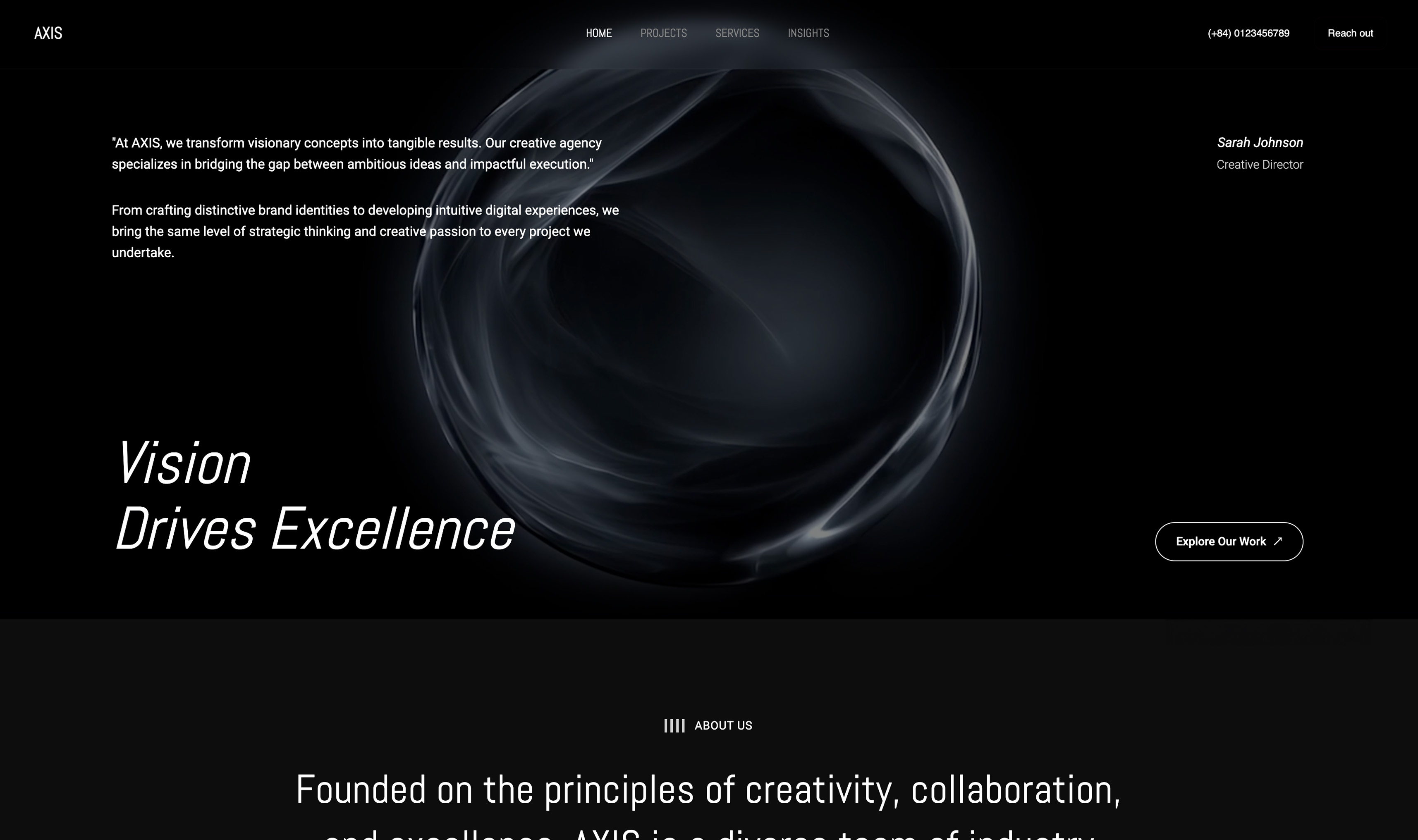 Use template
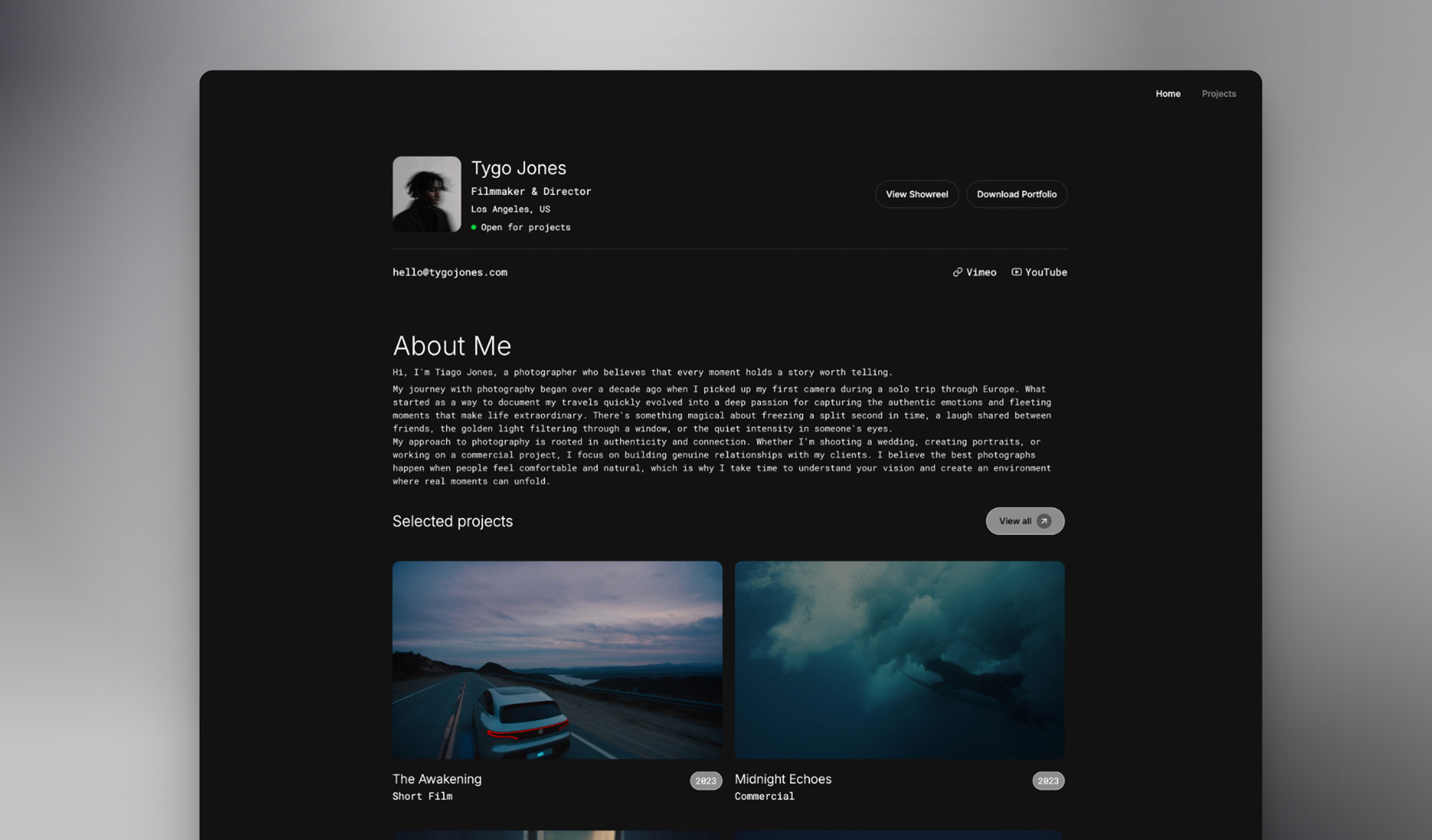 Use template
 Use template
 Use template
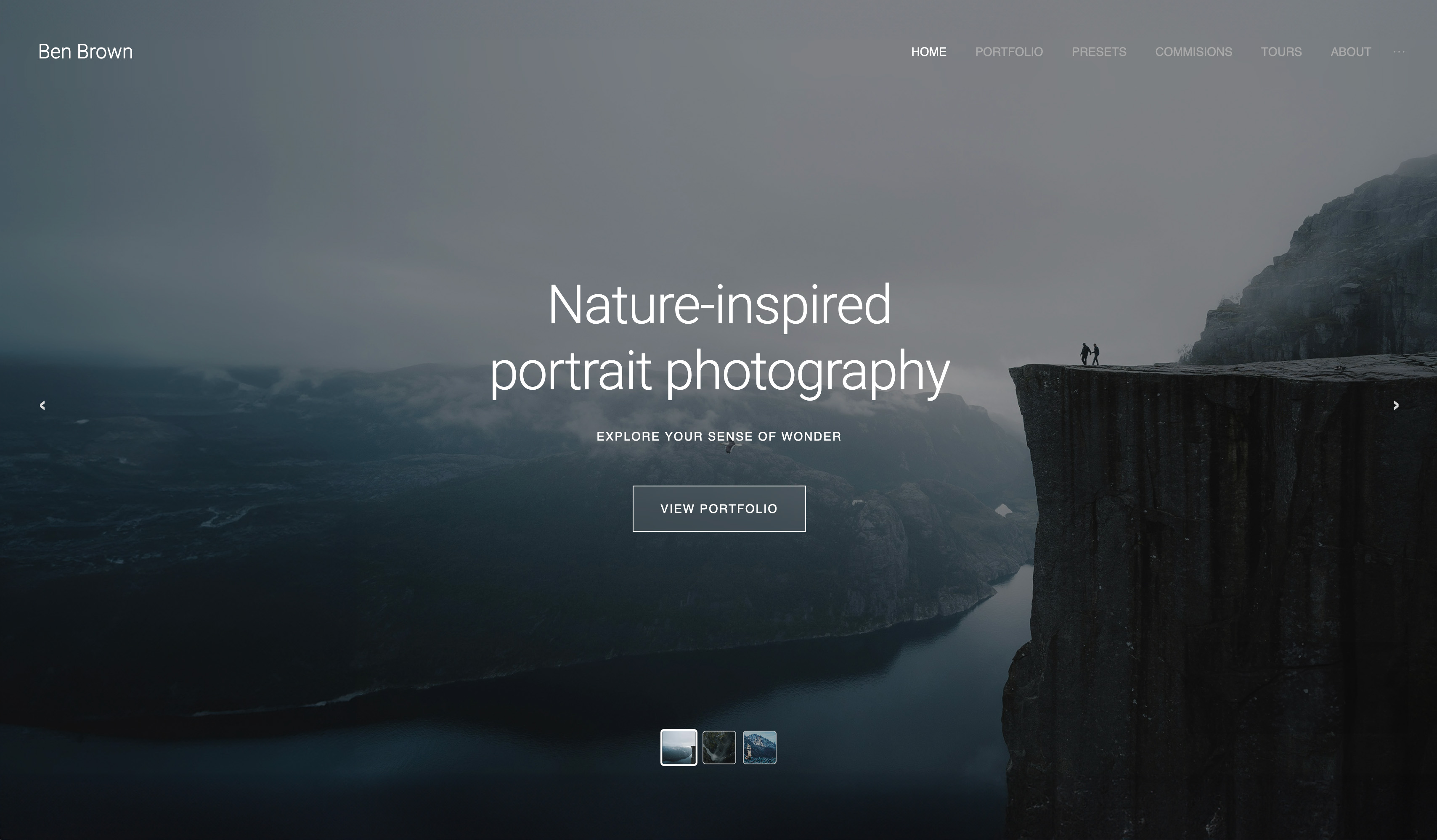 Use template
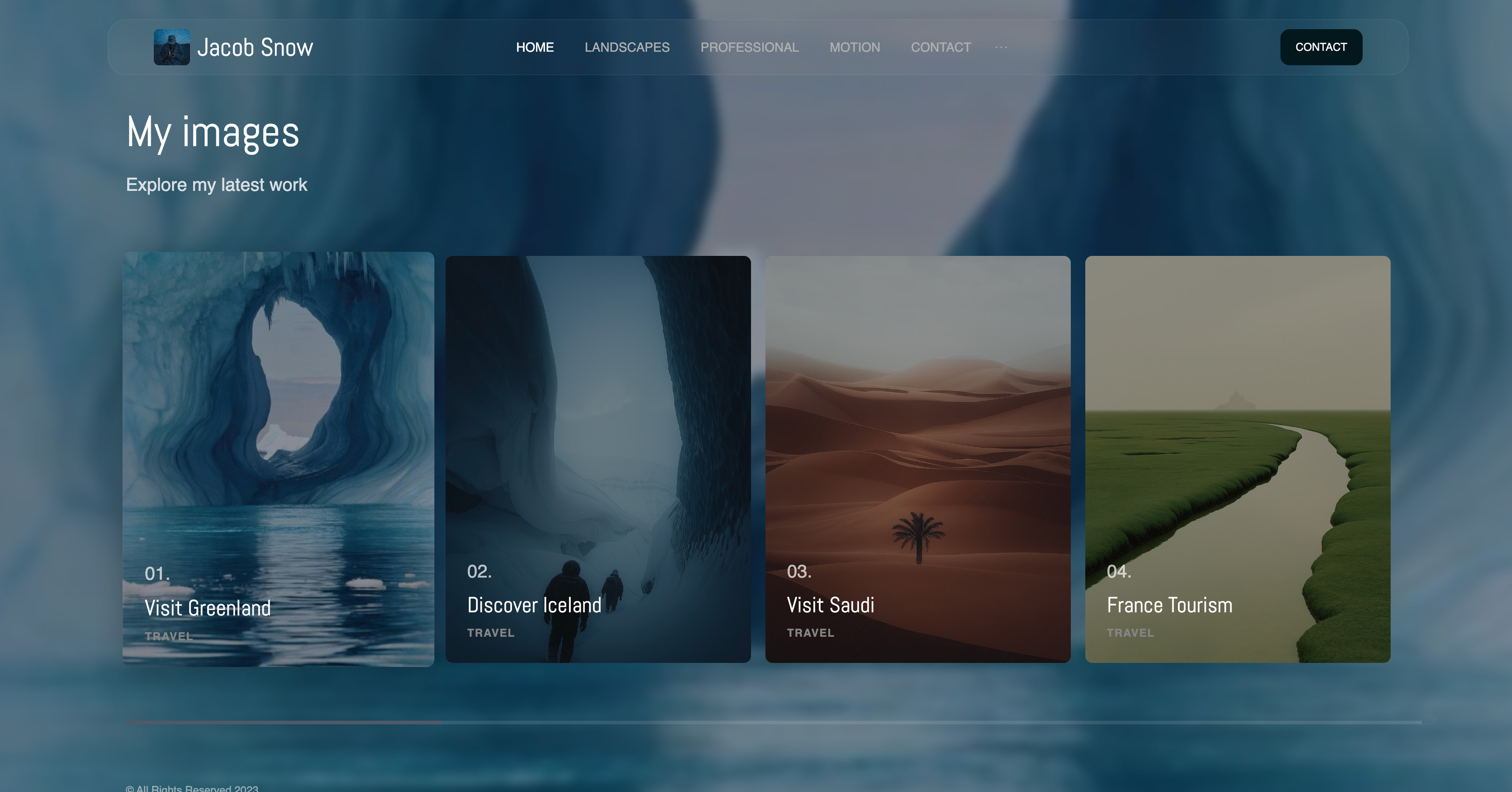 Use template
 Use template
 Use template
A designer who wanted to get her website cited by AI did the opposite by accident.
She read that AI companies were training on scraped work, found a snippet of robots.txt in a forum thread, pasted it in, and blocked every AI user agent she could find a name for.
Six months later a prospective client asked ChatGPT for wedding photographers in her city, and she was not among the names it returned or cited.
She had not opted out of training. She had opted out of being an answer.
Those are two different crawlers with two different names, and every major AI company runs both. OpenAI's training crawler is GPTBot and its search crawler is OAI-SearchBot. Anthropic's are ClaudeBot and Claude-SearchBot.
Perplexity's PerplexityBot exists to surface and link sites and is explicitly not used for training. Google's Google-Extended controls Gemini training and, in Google's own words, does not affect Search inclusion or ranking at all.
Getting cited by AI is the practice of making a website legible to the crawlers that feed AI answer engines, so that when somebody asks an assistant a question your work answers, your page is the one it quotes and links.
Some of that your builder does for you.
Framekit, which we make, emits canonical tags, a sitemap and structured data without being asked, gives every page an editable title and description, and serves private client galleries with noindex so they never enter an index.
It also cannot edit robots.txt, which is the one instruction in this article our own product fails, and the builder section below sets that out in full.
Separate the two decisions.
If you want to appear in AI answers, allow the search crawlers: OAI-SearchBot, Claude-SearchBot, and PerplexityBot. If you want to opt out of model training, block the training crawlers by name: GPTBot, ClaudeBot, and Google-Extended.
Blocking everything with one broad rule is the single most common mistake and it costs you the answers, not the training. Then check whether your website builder even lets you edit robots.txt, because several popular ones do not.
Full disclosure: Framekit is our own website builder and it generates robots.txt automatically rather than letting you edit it, so on the specific instruction in this article our own product cannot follow it. We say so plainly in the builder section below, along with which competitors can. Every crawler token here was read from each company's own published documentation in August 2026, and we re-verified our own builder's behaviour on 20 September 2026: robots.txt is still generated rather than editable.
The Crawlers That Decide Whether You Appear
In one lineeach AI company runs a training crawler, a search crawler, and a user-triggered fetcher under three different names, and only the middle one determines whether you show up in answers.
Every token below is quoted from the vendor's own published documentation, read in August 2026.
| Company | Search crawler | Training crawler | User-triggered fetcher |
|---|---|---|---|
| OpenAI | OAI-SearchBot | GPTBot | ChatGPT-User |
| Anthropic | Claude-SearchBot | ClaudeBot | Claude-User |
| Perplexity | PerplexityBot | None for training | Perplexity-User |
| Googlebot | Google-Extended | Not applicable |
OpenAI. Its bot documentation lists OAI-SearchBot for search indexing in ChatGPT's search features, GPTBot for training generative AI foundation models, OAI-AdsBot for ad safety validation which is used for neither training nor search, and ChatGPT-User for user-initiated fetching when somebody asks ChatGPT a question.
The documentation notes that robots.txt rules may not apply to ChatGPT-User, because it acts on a user's instruction rather than crawling automatically.
Anthropic. Its crawler documentation lists three: ClaudeBot, which collects web content to improve the utility and safety of its models; Claude-SearchBot, which navigates the web to improve search result quality; and Claude-User, which supports users who direct Claude to a page during a conversation.
It also advises that blocking by IP address may not work correctly or persistently, and that editing robots.txt is the recommended approach.
Perplexity. Its bot documentation states that PerplexityBot is designed to surface and link websites in Perplexity search results and is not used for training AI models, and that Perplexity-User supports user actions and generally ignores robots.txt because a person initiated the request.
Google. Its crawler documentation describes Google-Extended as a token publishers use to manage whether crawled content may be used for training future Gemini models and for grounding in Gemini applications and Vertex AI.
It states explicitly that Google-Extended does not impact a site's inclusion in Google Search and is not used as a ranking signal.
In one lineblocking GPTBot does not remove you from ChatGPT's answers, and blocking OAI-SearchBot does.
The Mistake Almost Everyone Makes
In one linea single broad disallow aimed at AI blocks the search crawlers along with the training ones, which is the opposite of what most creative businesses want.
The pattern goes like this. Someone reads about AI training on scraped work, which is a legitimate concern for photographers and illustrators in particular. They look for a way to opt out. What they find is a list of AI user agents, and they block all of them.
The result is a site that is still fully crawled by Google for regular search, still findable through a browser, and absent from the AI answer layer that increasingly sits above search. Nobody sends a notification when this happens.
There is no warning in an analytics dashboard. You find out when a client mentions that they asked an assistant for recommendations and did not see you.
What you probably want instead, if you are a working creative, is the split:
Allow OAI-SearchBot, Claude-SearchBot, and PerplexityBot, because these are how you get named and linked when someone asks a question your work answers.
Block, if you object to training, GPTBot, ClaudeBot, and Google-Extended, remembering Google's own statement that Google-Extended has no effect on Search.
Understand that the user-triggered fetchers are a different case. ChatGPT-User, Claude-User, and Perplexity-User act when a person pastes your link or asks an assistant to look at your page.
Both OpenAI and Perplexity note in their own documentation that robots.txt may not govern these, because the request came from a user rather than a crawler.
In practice this means that if someone deliberately sends an assistant to your site, it will generally get there.
A caveat worth stating plainlythis is a decision with a real trade-off, and reasonable people land in different places.
If your position is that no AI system should train on your images under any circumstances, blocking training crawlers is coherent and you should do it knowingly.
What is not coherent is blocking the search crawlers by accident while intending to do only the first thing.
Can Your Website Builder Even Do This?
In one linethe entire instruction above assumes you can edit robots.txt, and several popular website builders do not let you.
This is the part that turns a general SEO article into a specific one for creatives, because the answer depends on a product decision your builder made for you.
| Builder | robots.txt | Custom structured data | Notes |
|---|---|---|---|
| Wix | Editable | Editable JSON-LD | The most complete of the mainstream builders |
| Webflow | Editable | Via custom head code | Also has bulk CSV redirects |
| Framer | Replaceable via static files | Via custom code | Can also serve an llms.txt |
| WordPress.com | Depends on plan | Via plugin, Business plan | Plugins start at $25/mo |
| Squarespace | View only | Not possible | Structured data cannot be edited or removed |
| Framekit | Generated, not editable | Generated automatically | Our own product; see below |
| Google Sites | Not available | Not available | No meaningful controls |
Wix provides a robots.txt editor in its SEO dashboard and lets you edit structured data markup directly in JSON-LD along with the robots meta tag, which is more control than most people expect from it.
Webflow gives access to robots.txt from the SEO tab of site settings, plus custom code in the head, which is where you would place your own schema.
Framer generates robots.txt automatically and lets you replace it by uploading your own through Static Files, and the same feature will serve an llms.txt at a fixed URL.
Squarespace is the hard limit. Its documentation states that it generates structured data automatically and that it is not possible to edit or remove it, and its robots.txt can be viewed rather than edited.
If controlling AI crawler access matters to you, Squarespace currently does not offer the controls to do it.
Our own product. Framekit is an AI website builder for photographers, filmmakers, designers, and illustrators, and it generates robots.txt and sitemap.xml automatically without exposing either for editing.
Every page gets an editable SEO title and description, canonical tags are emitted, hreflang links are emitted across published locales, and private client galleries are served with noindex so they never enter an index.
But you cannot currently write your own robots rules or author your own structured data on a Framekit site, which means the crawler-splitting advice in this article cannot be implemented on our platform today.
That is a real gap and we would rather name it here than let you discover it.

What Actually Gets a Page Quoted
In one lineno vendor publishes how answers are selected, so this section is reasoning from how retrieval works rather than a formula, and it is labelled as such.
We are going to be careful here, because this is where most articles on this subject stop being honest. Nobody outside these companies knows how a specific source is chosen for a specific answer.
There is no published ranking algorithm for AI citations, no dashboard, and no verified checklist. Anyone telling you otherwise is guessing with more confidence than the evidence supports.
What can be said, from how retrieval-augmented systems generally work, is that they extract passages rather than pages. That has some practical consequences that are worth acting on regardless of the specific system.
Answer the question in the first two sentences of the section that addresses it. A passage that contains the whole answer can be lifted intact. A passage that builds toward an answer over four paragraphs cannot.
Write self-contained sentences. If a sentence depends on the previous paragraph to make sense, it becomes useless when extracted. Name the subject in the sentence: "Framekit's Starter plan costs $9 a month" survives extraction and "it costs $9 a month" does not.
Include a plain definition. Sentences of the form "a client gallery is a..." are unusually quotable, because they answer a question directly and completely.
Put comparable facts in tables. Prices, limits, and specifications in a table are easier to extract accurately than the same facts scattered through prose, and misextraction is a real risk when they are not.
Use question-shaped headings for questions. An FAQ section where each heading is the literal question someone would type, followed by a complete answer in the first sentence, is the most extractable structure on a web page.
Give specific numbers rather than adjectives. "Roughly a fifth of what a marketplace charges" cannot be quoted usefully. "5 percent rather than 30 percent" can.
In one linewrite so that any single paragraph, removed from the page, would still be true, attributable, and useful.
The llms.txt Question
In one linellms.txt is a proposed convention, not a standard anybody is required to honour, and it costs almost nothing to serve if your platform allows it.
The idea is a plain-text file at a fixed path that tells AI systems what a site contains and where the important pages are, in the way robots.txt tells crawlers what they may fetch.
Two honest points about it. First, no major AI vendor has published a commitment to read it, so anyone claiming it will get you cited is overstating what is known. Second, serving one is close to free if you can put a file at a fixed URL, and there is no obvious downside.
Among the builders here, Framer explicitly supports serving one through its Static Files feature. Webflow's custom code and hosting give you a route. Most of the others, including ours, do not let you serve an arbitrary file at an arbitrary path, so the question does not arise.
Our positiontreat it as cheap insurance if you can serve it, and ignore anyone who sells it as a strategy.
What Does Not Work
In one linethe things being marketed hardest in this space are the things with the least evidence behind them.
Keyword stuffing for AI. Repeating a phrase does not make a passage more extractable and makes it worse to read, which harms the human half of the audience that actually hires you.
Submitting your site to AI engines. There is no submission process equivalent to a search console for the assistant products discussed here. Being crawlable and being linked from places that are crawled is the mechanism.
Paying for guaranteed AI citations. Nobody can guarantee this. The selection process is not published and not purchasable.
Blocking everything and hoping. Covered above, and it is the most expensive mistake in the article.
Assuming your SEO work is wasted. It is not. The pages that get quoted are overwhelmingly pages that are already indexed, already linked, and already answer a question clearly.
Everything in our guide to website builders for SEO still applies, and the AI layer largely rewards the same things search does.
The Checklist
In one linesix things to do, in order, most of which take less than an hour and one of which depends entirely on your platform.
- Decide the training question deliberately. Do you object to your work being used to train models? Answer that first, because it determines the next step and it is a values question rather than a marketing one.
- Edit robots.txt to reflect that decision precisely. Allow OAI-SearchBot, Claude-SearchBot, and PerplexityBot if you want to appear in answers. Block GPTBot, ClaudeBot, and Google-Extended if you have opted out of training. Do not use one broad rule for both.
- Check whether your builder allows it at all. If you are on Squarespace, Google Sites, or Framekit, you cannot currently edit robots.txt, and that constrains steps 2 and 5.
- Restructure your key pages so each section answers its own question in the first two sentences. This is the highest-value work in the list and it helps human readers identically.
- Add or check structured data if your platform allows it. Wix lets you author JSON-LD directly, Webflow via head code, and Squarespace not at all.
- Keep doing ordinary SEO. Stable URLs, redirects when things move, a clear title on every page, and content worth linking to. The AI layer sits on top of the index, not beside it.
Frequently Asked Questions
How do I get my website cited by ChatGPT?
Allow OAI-SearchBot in robots.txt, which is OpenAI's crawler for search indexing in ChatGPT's search features, and make sure your pages answer questions directly in their opening sentences.
Blocking GPTBot, which is the training crawler, does not remove you from ChatGPT's answers, and blocking OAI-SearchBot does.
What is the difference between GPTBot and OAI-SearchBot?
GPTBot collects content for training generative AI foundation models. OAI-SearchBot indexes content for search inside ChatGPT.
They are separate user agents with separate robots.txt tokens, so you can allow one and block the other, which is what most creative businesses actually want.
Does blocking AI crawlers hurt my Google ranking?
Blocking Google-Extended does not.
Google's own documentation states that Google-Extended does not impact a site's inclusion in Google Search and is not used as a ranking signal, because it governs Gemini training and grounding rather than Search.
Blocking Googlebot itself would remove you from Google Search entirely, which is a different and much more serious action.
How do I stop AI companies training on my images?
Block the training crawlers by name in robots.txt: GPTBot for OpenAI, ClaudeBot for Anthropic, and Google-Extended for Google.
Anthropic's documentation notes that blocking by IP address may not work reliably and recommends robots.txt instead. Note that this does not affect the separate search crawlers, so you can opt out of training while remaining findable.
Can I block AI crawlers on Squarespace?
Not currently. Squarespace's robots.txt can be viewed but not edited, and its structured data is generated automatically with its documentation stating that it is not possible to edit or remove it.
Wix, Webflow, and Framer all allow robots.txt control, so a builder change is the only route if this matters to you.
Does Framekit let me edit robots.txt?
No. Framekit generates robots.txt and sitemap.xml automatically and does not expose them for editing, so the crawler-splitting approach described here cannot be implemented on a Framekit site today.
Per-page SEO titles and descriptions, canonical tags, hreflang across published locales, and noindex on private client galleries are all in place.
What is llms.txt and do I need it?
It is a proposed plain-text file at a fixed path describing what your site contains, intended for AI systems. No major AI vendor has published a commitment to read it, so treat claims about its effect with caution.
If your platform can serve an arbitrary file at a fixed URL, which Framer can through Static Files, it costs almost nothing to add.
Do the user-triggered fetchers respect robots.txt?
Generally not, and both vendors say so.
OpenAI's documentation notes that robots.txt rules may not apply to ChatGPT-User because it acts on a user's request, and Perplexity states that Perplexity-User generally ignores robots.txt for the same reason.
In practice, if a person deliberately sends an assistant to your page, it will usually be able to read it.
How long does it take to appear in AI answers?
Nobody publishes this, and any specific figure you read is an estimate rather than a documented one. What is knowable is the prerequisite: the page has to be crawlable by the relevant search crawler and worth citing. Treat the timeline as unknown and control the inputs.
Is AI search optimisation different from SEO?
Less than the marketing suggests. The pages that get quoted are usually pages that already rank, because both systems reward clear answers, stable URLs, and being linked from credible places.
The genuinely distinct part is the crawler-access decision described in this article, which has no equivalent in traditional SEO.
Should creatives block AI entirely?
That is a values decision rather than a technical one, and it is legitimate either way.
What we would urge is that you make it precisely: block the training crawlers if you object to training, and leave the search crawlers alone unless you also want to be absent from the answers people increasingly use to find professionals like you.
The Honest Summary
The useful part of this article is small and specific: there are two kinds of AI crawler, they have different names, and most people who block AI block both when they meant to block one.
Fixing that takes ten minutes if your platform lets you edit robots.txt, and is impossible if it does not.
Everything after that is ordinary craft. Write pages where each section answers its own question in the first two sentences. Put comparable facts in tables. Use real numbers. Keep your URLs stable and redirect them when they move.
These help human readers and machine readers identically, which is the strongest signal that they are worth doing at all.
Where Framekit falls short. We generate robots.txt automatically and do not let you edit it, and we do not let you author your own structured data.
If controlling AI crawler access is a priority for you today, Wix, Webflow, or Framer can do it and we cannot. We would rather write that in our own guide than have you find out after you have moved.
Related readingthe best website builders for SEO, how to SEO a photography website, and how to get clients from your website.