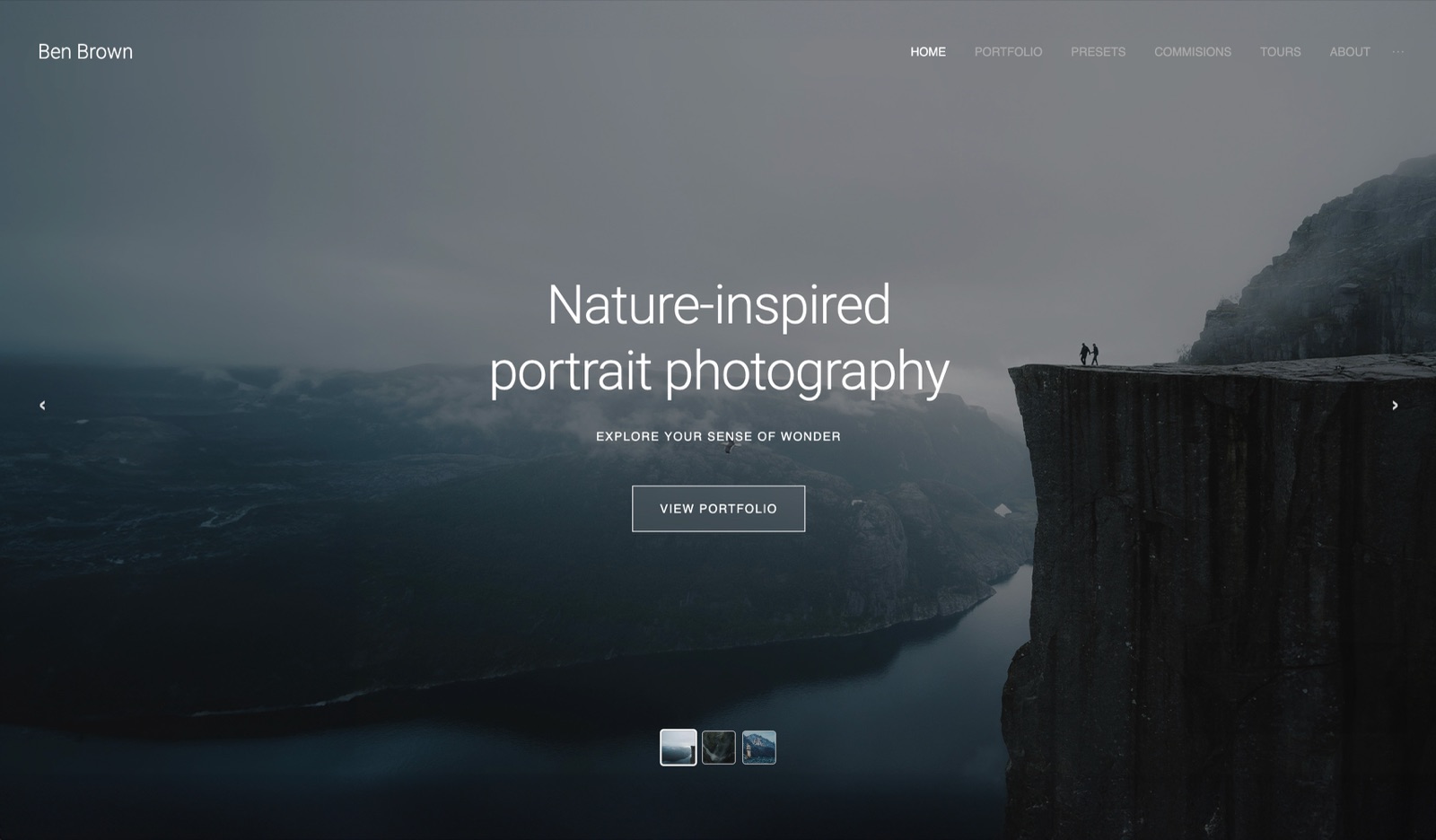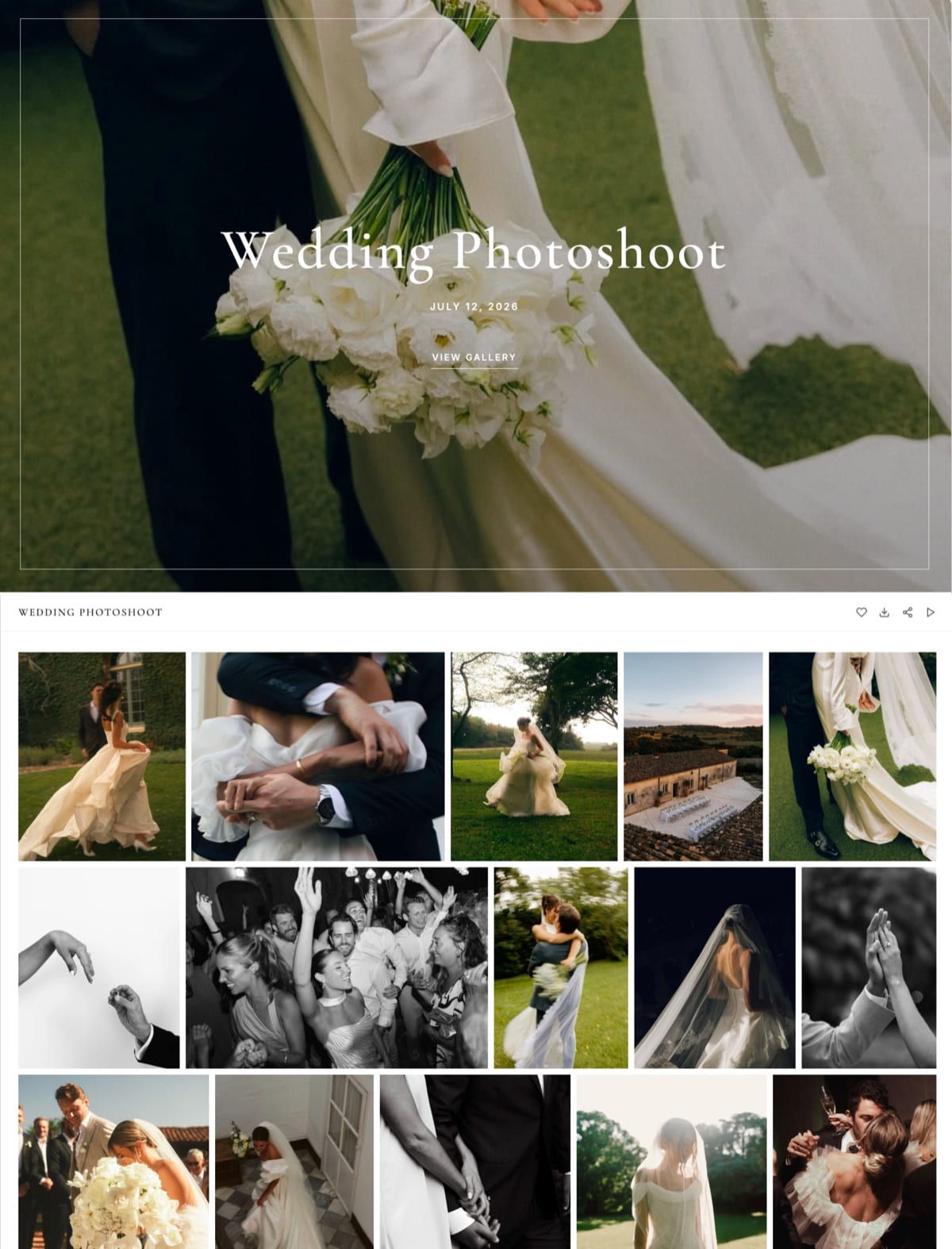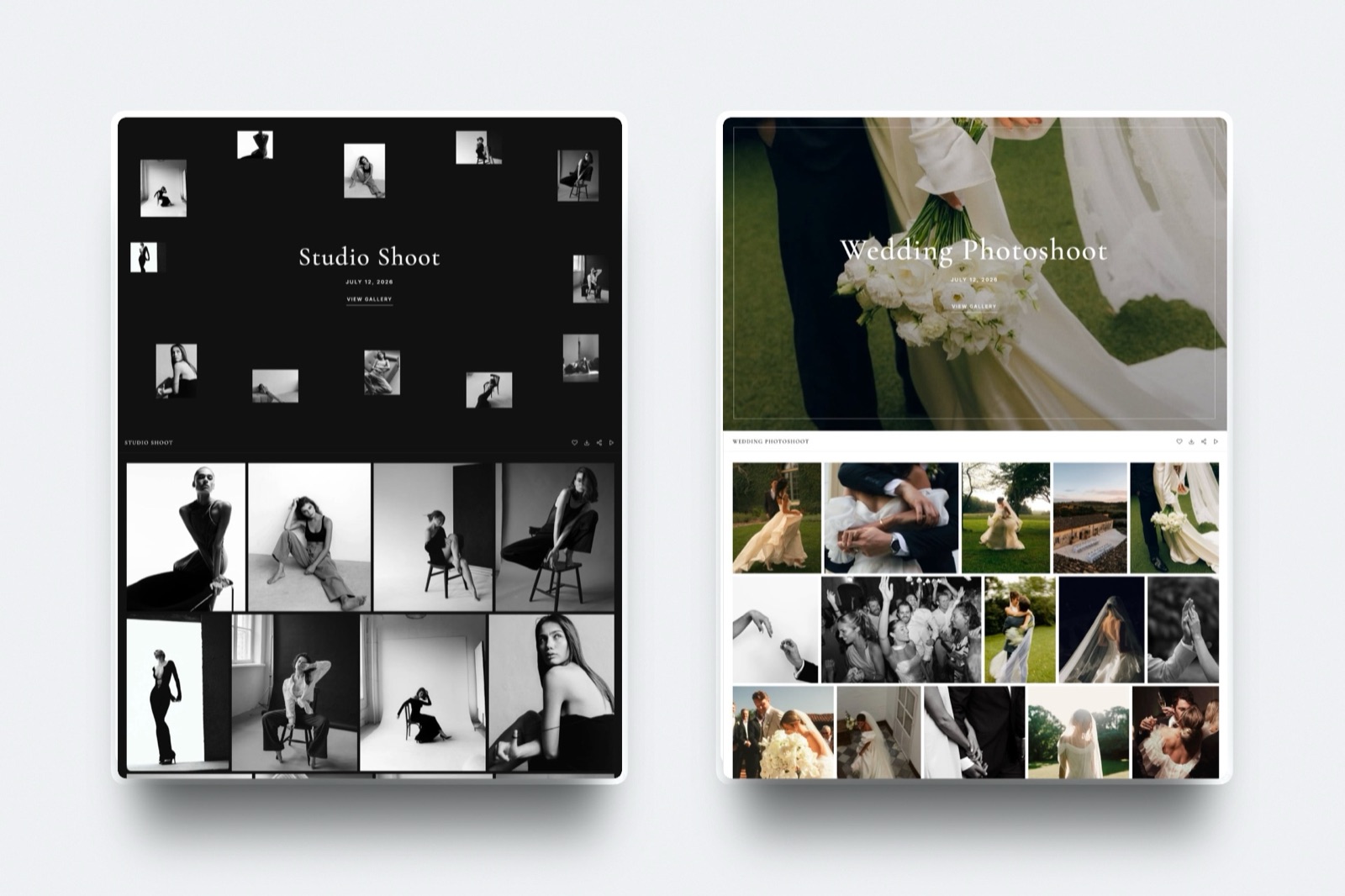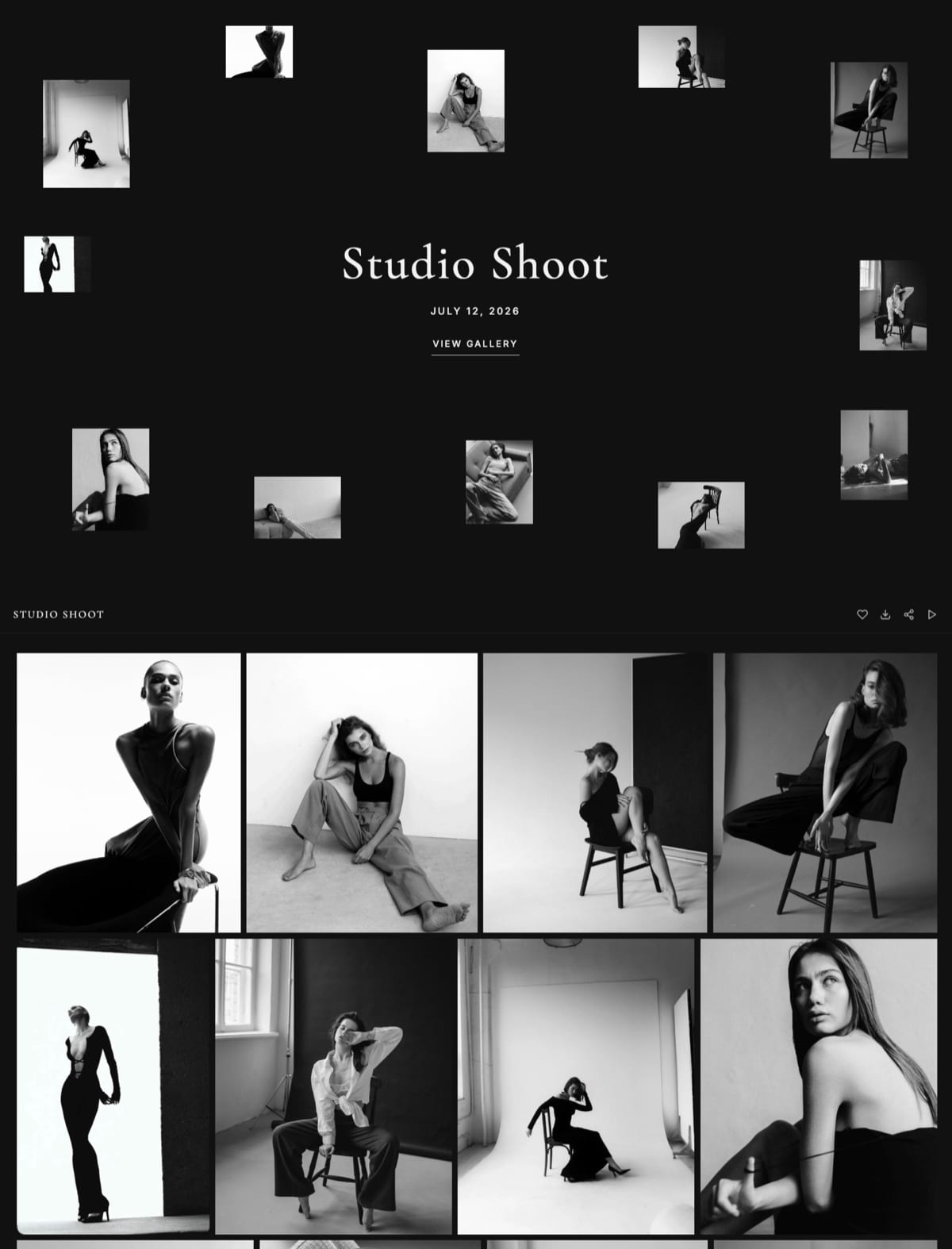
Framekit templates
Start from a designer-made template
 Use template
 Use template
 Use template
 Use template
 Use template
 Use template
 Use template
 Use template
ShootProof vs Pic-Time is a comparison between two philosophies of selling photographs, and the percentages on the pricing pages are the least interesting part of it.
ShootProof's position is simple and unusually generous: no commission on sales, on any plan, including the cheapest.
Pic-Time's position is that a beautiful gallery with automated campaigns behind it will sell more in the first place, and the percentage matters less than the volume.
Both arguments are defensible and they suit different photographers.
A shooter with an established print business and a client base that already buys is optimising the margin on sales that will happen anyway, and ShootProof wins that outright.
A shooter whose clients download the digital files and never think about prints is trying to create sales that currently do not exist, and Pic-Time's automation is aimed exactly there.
The mistake is comparing the two on percentage alone, because 0% of nothing is nothing.
A client gallery with a store is software that delivers finished photographs to a client and lets them buy prints, albums or digital files from inside the same page, charging either a subscription, a commission on sales, or both.
Framekit, which we make, is the variant where the gallery is a page of your own website rather than a vendor's, and where the store sells files instead of prints, with no lab behind it at all.
ShootProof wins for photographers with an existing print business, because 0% commission applies on every plan including the cheapest and pro-lab fulfilment means you set and keep the whole markup.
Pic-Time wins for photographers whose clients do not currently buy, because its automated sale campaigns, reminders and gifting flows generate orders that would not otherwise happen, and its paid tiers also charge 0% when you self-collect payment.
If print revenue is not the point at all, Framekit delivers uncapped galleries from your own domain with no commission and sells digital products instead.
Framekit is the option when the gallery should build your brand rather than sell prints, and it starts free.
Full disclosure: Framekit is our product and it appears here as an alternative rather than as the subject of the comparison, so weigh that accordingly. We listed the same print product on both platforms and ran a real test purchase, verified pricing against published pages in August 2026, and we state clearly that both ShootProof and Pic-Time sell physical prints through real labs and Framekit has no print lab at all. We re-verified our own storage and fee tiers on 20 September 2026; both competitor ladders are unchanged from August.
ShootProof vs Pic-Time: The Short Answer
The question that actually settles this comparison is not which platform is better in the abstract but whether your clients already buy prints without being asked, because that single fact inverts the answer.
If they do, ShootProof is the better financial instrument. Zero commission on every plan means your entire markup above lab cost is yours, and the plan cost is fixed regardless of how much you sell.
A photographer doing $6,000 a year in prints pays the subscription and nothing else, where a 15% platform would take $900.
If they do not, Pic-Time is the better commercial instrument.
Its automated campaigns, timed sales, reminder emails and gifting flows sell prints to people who were not planning to buy any, and photographers who lean into that automation often report more revenue per gallery than they achieved manually elsewhere.
Community sentiment on this is consistently positive, which we report as sentiment rather than as our own measurement.
The awkward truth is that most photographers do not know which of the two they are, because they have never run a real print campaign. If that is you, Pic-Time's free tier is the cheaper experiment even with its 15% commission.
How the Plans Compare
Here is the published pricing for both platforms as read in August 2026, with the tiers laid side by side so the difference in what each one charges for becomes visible.
| Tier | ShootProof | Pic-Time |
|---|---|---|
| Free | 100 photos, 0% commission | Free tier, 15% commission |
| Entry paid | About $10/mo, 1,500 photos | $8/mo Beginner, 10GB |
| Mid | About $20/mo, 5,000 photos | $25/mo Professional, 100GB |
| Upper | About $30/mo, 25,000 photos | $50/mo Advanced, unlimited storage |
| Top | About $60/mo, unlimited photos | Advanced is the top tier |
| Commission | 0% on every plan | 0% on paid plans when you self-collect |
| Pricing unit | Photo count | Storage |
ShootProof's ladder is published on its plans page. Card processing of roughly 2.9% plus $0.30 applies on top of any sale on both platforms, as it does everywhere.
The unit difference matters more than the prices. ShootProof charges by how many photographs you store, so a wedding photographer delivering 900 frames per job climbs the ladder quickly.
Pic-Time charges by gigabytes, so the same photographer's cost depends on file size rather than count, and its Advanced tier removes the ceiling entirely.
What Each Platform Costs on $6,000 of Print Sales
Here is one identical year priced on both platforms, for a photographer delivering 30 client galleries and selling roughly $6,000 in prints and albums through them.
| Setup | Annual subscription | Commission on $6,000 | Total to the platform |
|---|---|---|---|
| ShootProof 25,000 photos | $360 | $0 | $360 |
| ShootProof unlimited | $720 | $0 | $720 |
| Pic-Time free | $0 | $900 at 15% | $900 |
| Pic-Time Professional, self-collected | $300 | $0 | $300 |
| Pic-Time Advanced, self-collected | $600 | $0 | $600 |
Two things fall out of that table. First, Pic-Time's free tier is the most expensive option on the page at this sales volume, which is the standard trap of commission-funded free plans.
Second, once both platforms are on paid tiers with self-collection, the costs converge and the decision stops being financial: $360 against $300 is not a business-changing difference, and you should choose on which platform will actually generate the sales.
In one lineat $6,000 of prints, the free tier costs the most and the paid tiers are within $60 of each other, so choose on selling power rather than on fees.
Gallery Design and Client Experience
This is the area where the two platforms are least alike, and it is where most photographers form a strong opinion within about thirty seconds of seeing a demo gallery.
Pic-Time makes the most designed client galleries in the category.
Layouts feel considered, the store is integrated into the experience rather than bolted onto it, and a client receiving a Pic-Time gallery is being shown something rather than sent something.
For consumer work where the delivery is part of the emotional experience you are selling, that matters.
ShootProof is functional and efficient. The gallery works, the store works, the contracts and invoicing work, and none of it will make a client stop and admire the page.
What it will do is take 0% of the sale and hand you a signed contract in the same account, which is a different kind of value.
ShootProof holds a 4.9 out of 5 rating across 92 G2 reviews, which is unusually high, and reflects a user base that values reliability and fee structure over presentation.
Where Both Platforms Lose
Neither platform gives you the gallery on a domain you own, which for a referral-driven business is a cost that never appears on an invoice.
A wedding gallery gets forwarded to dozens of people, and on both of these platforms every one of those views advertises a software company rather than your studio.
Framekit is an AI website builder with client galleries and a digital store built in, and that is the specific gap it addresses.
Galleries are uncapped on every plan including free, delivery carries no commission at any tier, and the gallery is a page of your own website.
Storage runs 10GB free, 50GB on Starter at $9 a month, 300GB on Pro at $19 and 2TB on Business at $39, with digital product sales at 5% on Free and Starter, 3% on Pro and 0% on Business.
The honest limitation is that Framekit has no print lab, so it cannot replace either of these platforms for a photographer whose income is physical products.
It replaces them for photographers whose income is sessions and digital files and whose galleries should be building their brand instead.
Which Should You Choose?
Answer these in order and stop at the first confident yes, because this decision is settled by your existing sales pattern rather than by a feature list.
1. Do your clients already order prints without being prompted? If yes, ShootProof, and take the 0% commission.
2. Do your clients download the files and never buy anything? If yes, Pic-Time, because automation is the only thing on this page that changes that behaviour.
3. Do you deliver very high frame counts per job? If yes, Pic-Time, since ShootProof's photo-count pricing punishes exactly that.
4. Do you need contracts and invoicing in the same account? If yes, ShootProof, which includes both.
5. Is print revenue not really the point? If yes, neither, and a gallery on your own domain such as Framekit will serve the actual goal better.
Frequently Asked Questions
Is ShootProof or Pic-Time better in 2026?
ShootProof is better for photographers with an existing print business, because it charges 0% commission on every plan including the cheapest and includes contracts and invoicing.
Pic-Time is better for photographers whose clients do not currently buy prints, because its automated sale campaigns and reminders create orders that would not otherwise happen.
The decision depends on whether you are protecting margin or creating demand.
Does ShootProof really take no commission?
Yes. ShootProof charges 0% commission on sales on every plan, including the cheapest paid tier, so your entire markup above lab cost is yours.
The cost is the subscription, which is priced by photo count from about $10 a month for 1,500 photos up to about $60 a month for unlimited. Card processing of roughly 2.9% plus $0.30 still applies, as it does on every platform.
How much commission does Pic-Time charge?
Pic-Time charges 15% on its free plan and 0% on paid plans when you collect payment yourself through Stripe, PayPal or Square.
When Pic-Time collects payment for you, a reduced commission applies and is charged only on your markup rather than on production costs. Paid tiers run from $8 a month for 10GB to $50 a month for unlimited storage.
Which platform is cheaper for a wedding photographer?
It depends on frame count. ShootProof prices by photo count, so a wedding photographer delivering 900 frames per job across 30 weddings needs the 25,000-photo tier at about $30 a month or the unlimited tier at about $60.
Pic-Time prices by storage, so the same photographer pays $25 a month for 100GB or $50 for unlimited. At typical wedding volumes the two land within a few hundred pounds a year of each other.
Which sells more prints, ShootProof or Pic-Time?
Pic-Time is the platform photographers consistently credit with increasing print revenue, because of its automated sale campaigns, reminder emails and gifting flows, and community sentiment on this is strongly positive.
ShootProof does not automate selling in the same way; its argument is that you keep 100% of whatever you do sell. Whether volume or margin wins depends on how much your clients currently buy.
Can I use my own domain with ShootProof or Pic-Time?
No. Both platforms serve galleries from their own subdomains, so the address your client opens carries the vendor's name.
Photographers who want the gallery on a domain they own need a website-based platform such as Framekit, where galleries are pages of your own site from the $9 Starter plan and there is no commission on delivery at any tier.
Does Pic-Time's free plan make sense?
Only as an experiment. The 15% commission means $6,000 of print sales costs $900, which is more than any paid tier on either platform, so the free plan is the most expensive option at real sales volume.
It is genuinely useful for finding out whether your clients will buy at all, and you should upgrade as soon as they do.
Do both platforms handle print fulfilment?
Yes. Both connect to professional labs so a client orders inside the gallery and the lab prints and ships, with you setting the markup.
ShootProof supports pro labs internationally, and Pic-Time integrates fulfilment into its store and campaign automation. This is the main capability that neither Framekit nor pure proofing tools such as PicDrop offer at all.
Which platform has better galleries?
Pic-Time, by a clear margin. Its galleries are the most designed in the category, and for consumer work where the delivery is part of the experience you are selling, that difference is visible to clients.
ShootProof is efficient rather than beautiful, and its users generally choose it for the fee structure and business tools rather than for presentation.
What is the best alternative to both?
Framekit is the alternative for photographers whose galleries should build their brand rather than sell prints, since it delivers uncapped galleries from your own domain with no commission at any tier and sells digital products instead of physical ones.
Pixieset is the alternative for a more familiar all-round client experience, and CloudSpot is the alternative if you want contracts and invoicing bundled at a lower price.
The Verdict
ShootProof and Pic-Time are both good platforms answering different questions. ShootProof protects the margin on sales you are already making, and 0% commission on every plan is the most straightforward commercial offer in this category.
Pic-Time creates sales that were not going to happen, and its automation is the only feature on either platform that changes client behaviour rather than accounting for it.
At $6,000 of annual print sales the paid tiers land within about $60 of each other, so the fee argument is smaller than the marketing on both sides suggests.
Choose ShootProof if your clients buy and you want to keep everything; choose Pic-Time if they do not and you need them to start.
Where both lose is ownership. Neither will put the gallery on a domain you own, so every forwarded link markets a software company to the exact people who hire photographers.
If that matters more to you than print revenue, this is the wrong comparison and a website-based gallery is the right category.
The test worth running: look at last year's print revenue as a percentage of your total. If it is under ten per cent, you are choosing between two print platforms to solve a problem you do not have.
Related readingclient galleries with a built-in store, the best ShootProof alternatives, the best Pic-Time alternatives, and print fulfilment for photographers.
All prices and commission rates were read from the two vendors' published pages in August 2026, and the same print product was listed and bought on both platforms, because a store's real cost only becomes visible once an order has been placed and paid for.