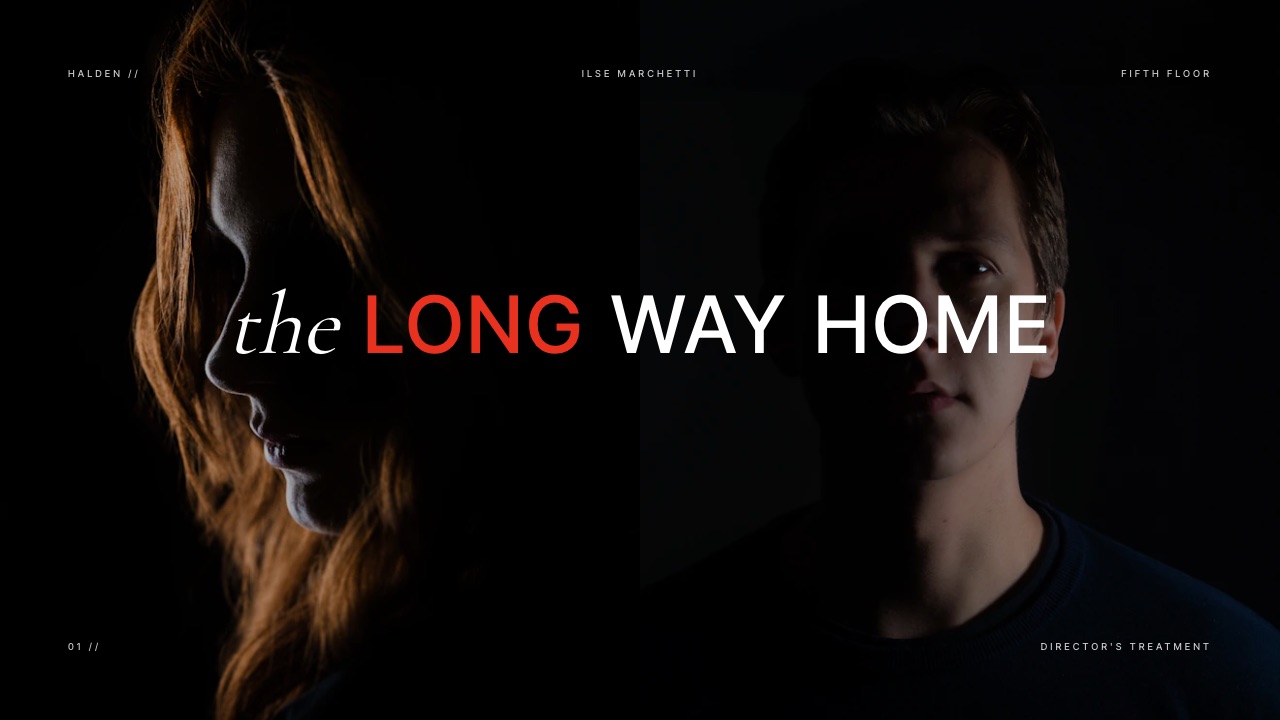
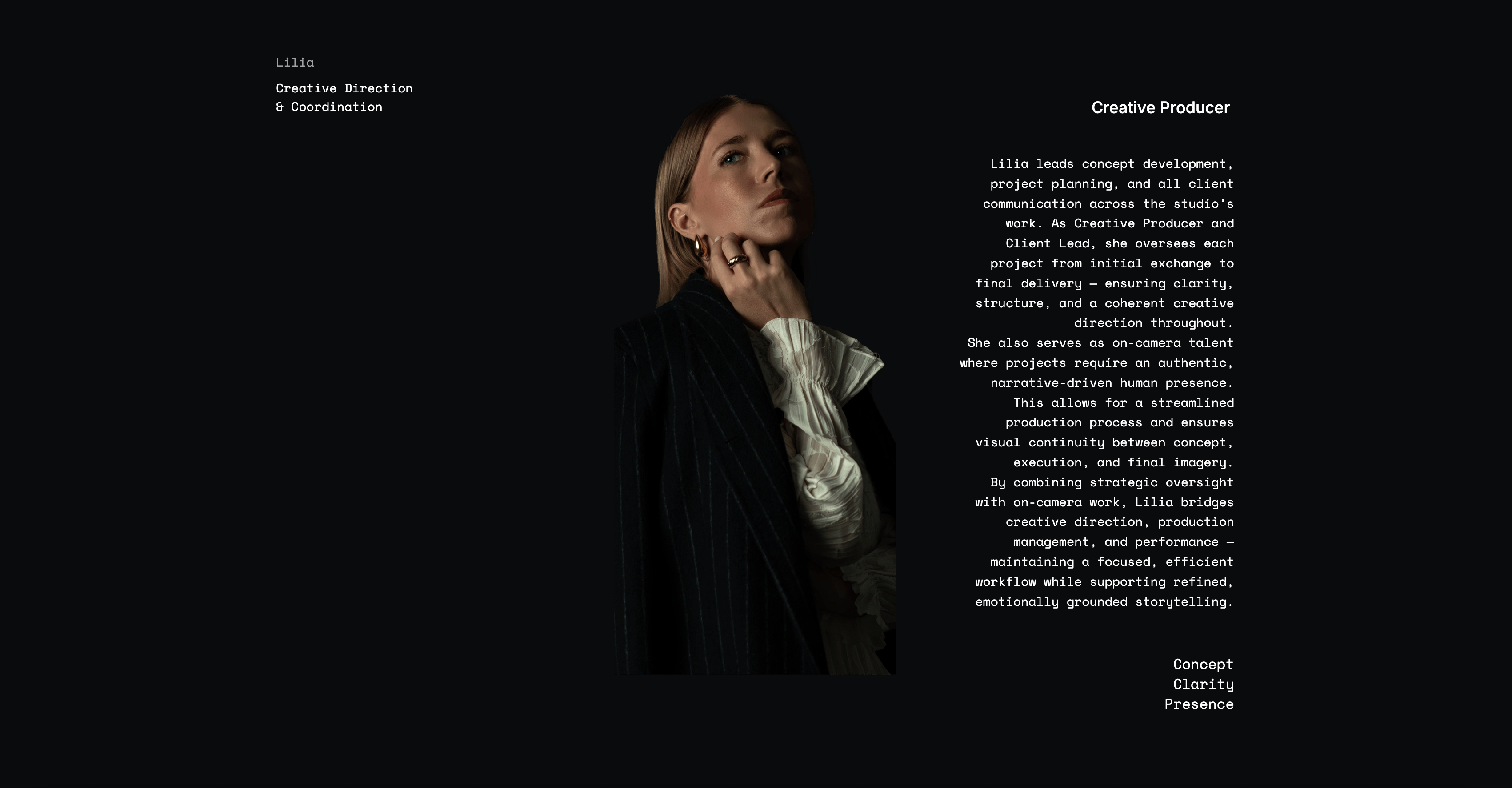
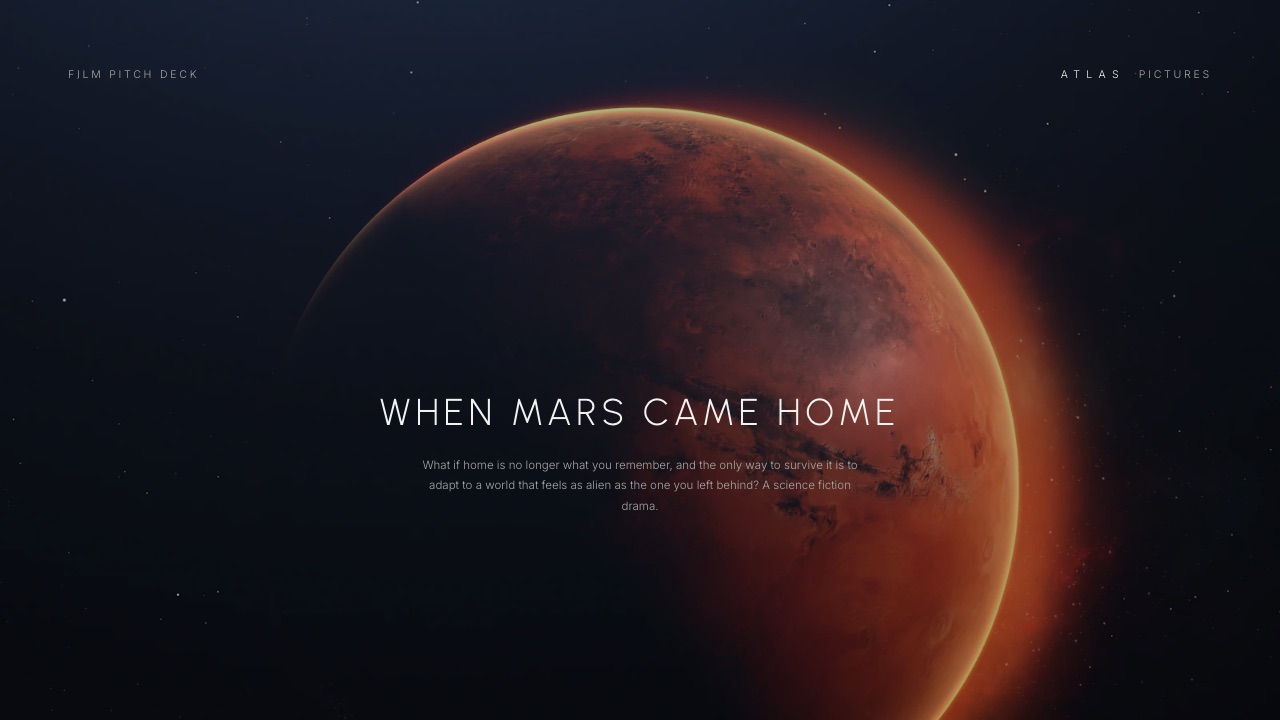
Framekit templates
Start from a designer-made template
 Use template
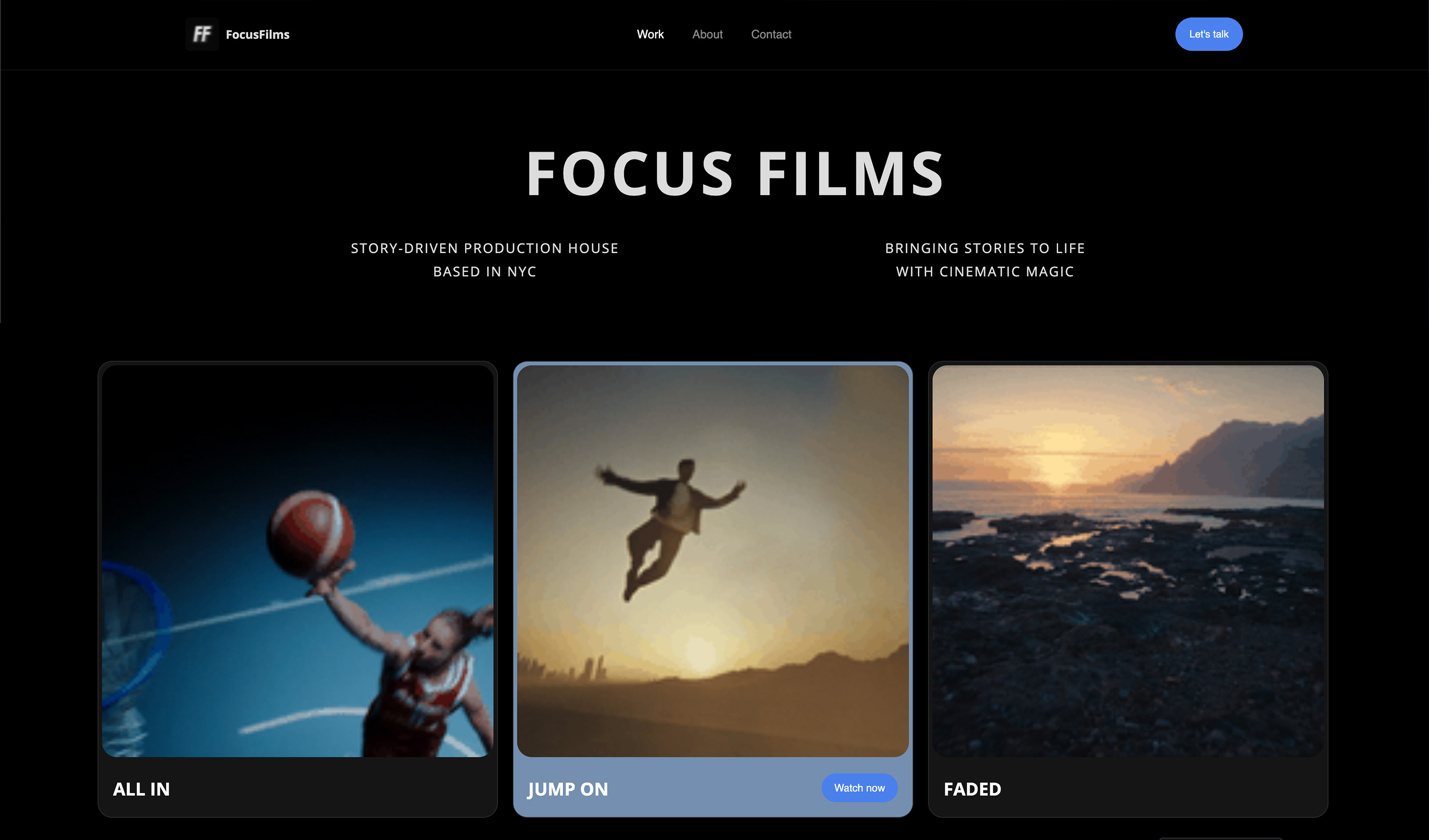 Use template
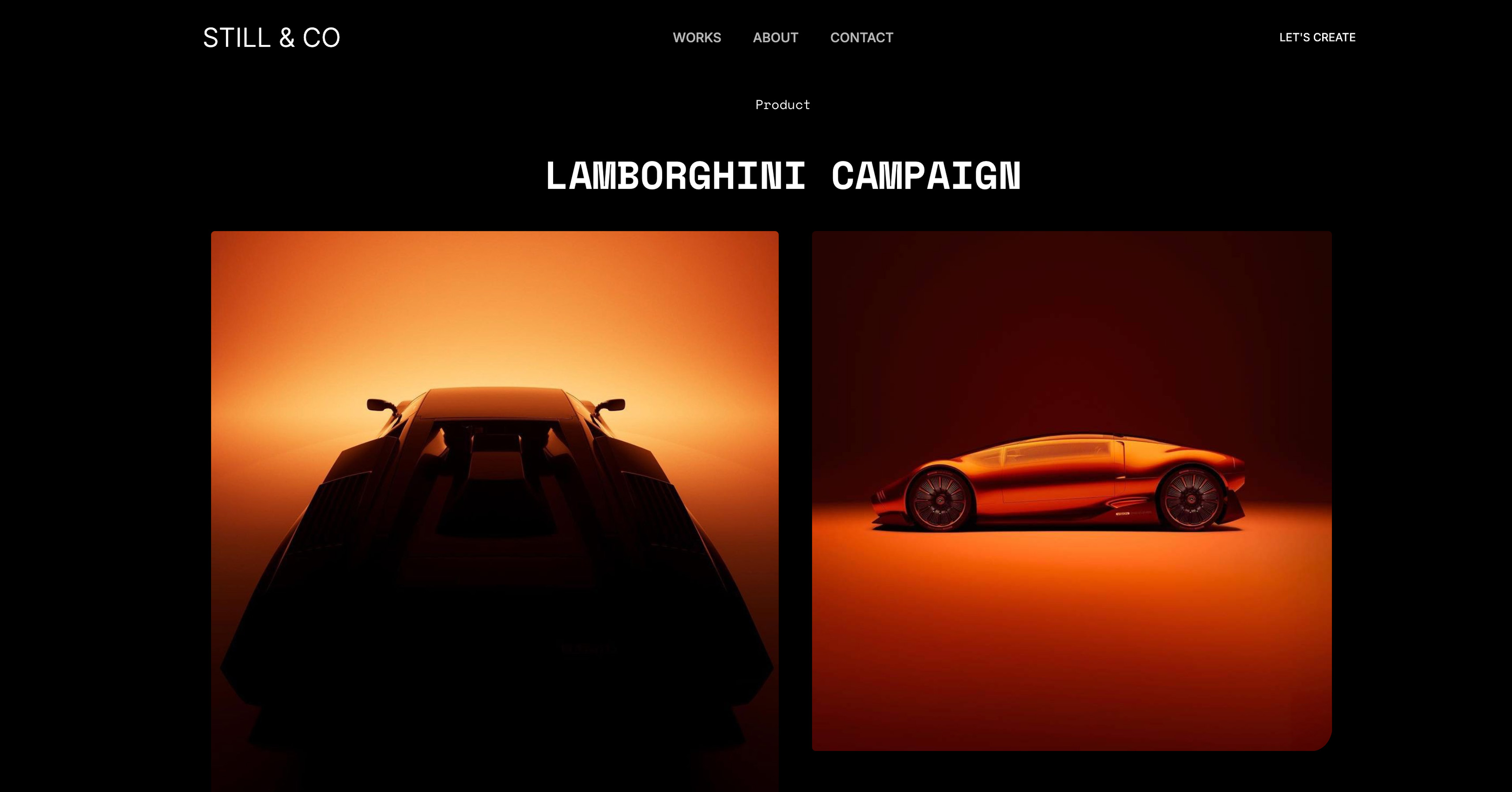 Use template
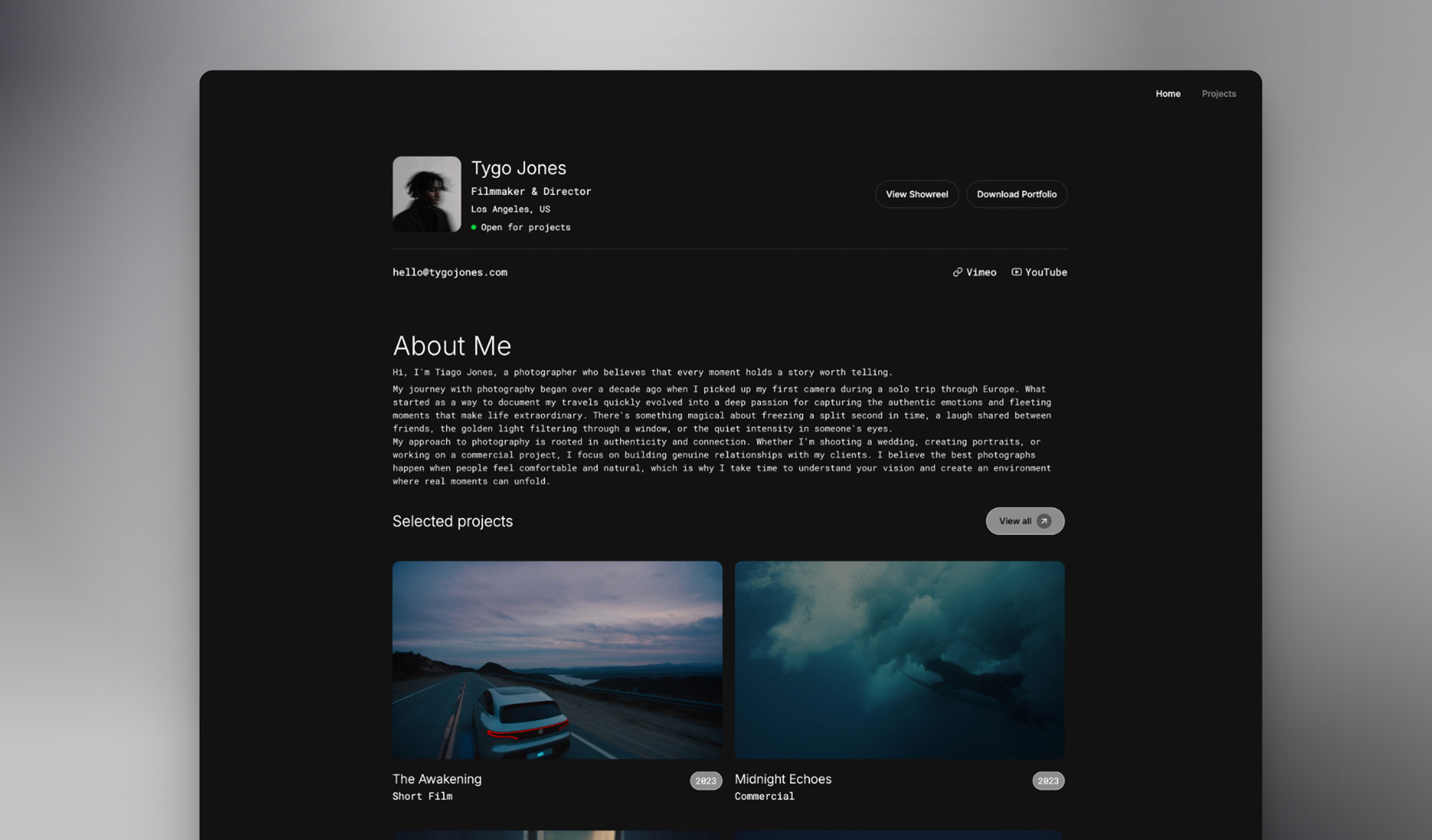 Use template
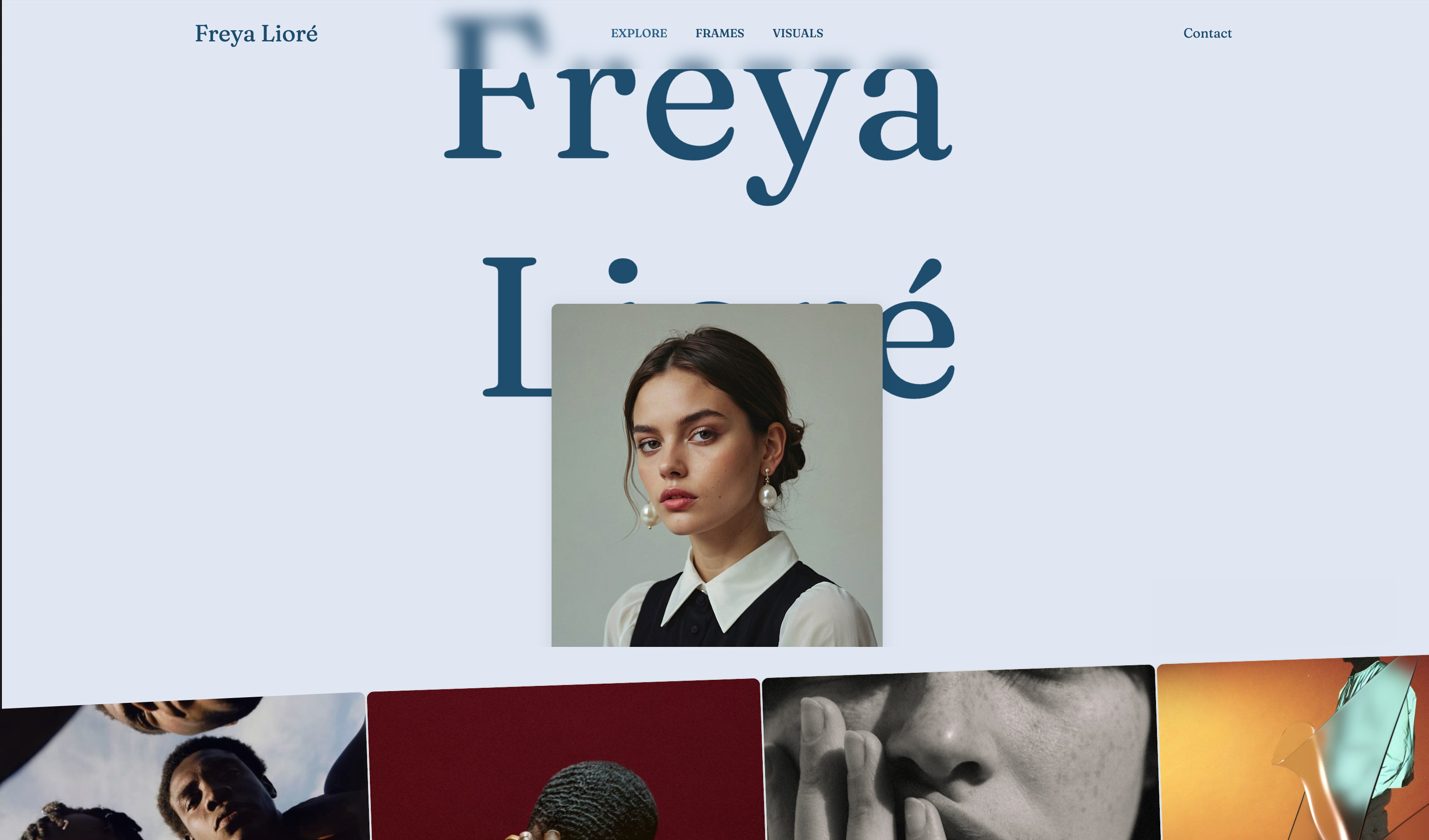 Use template
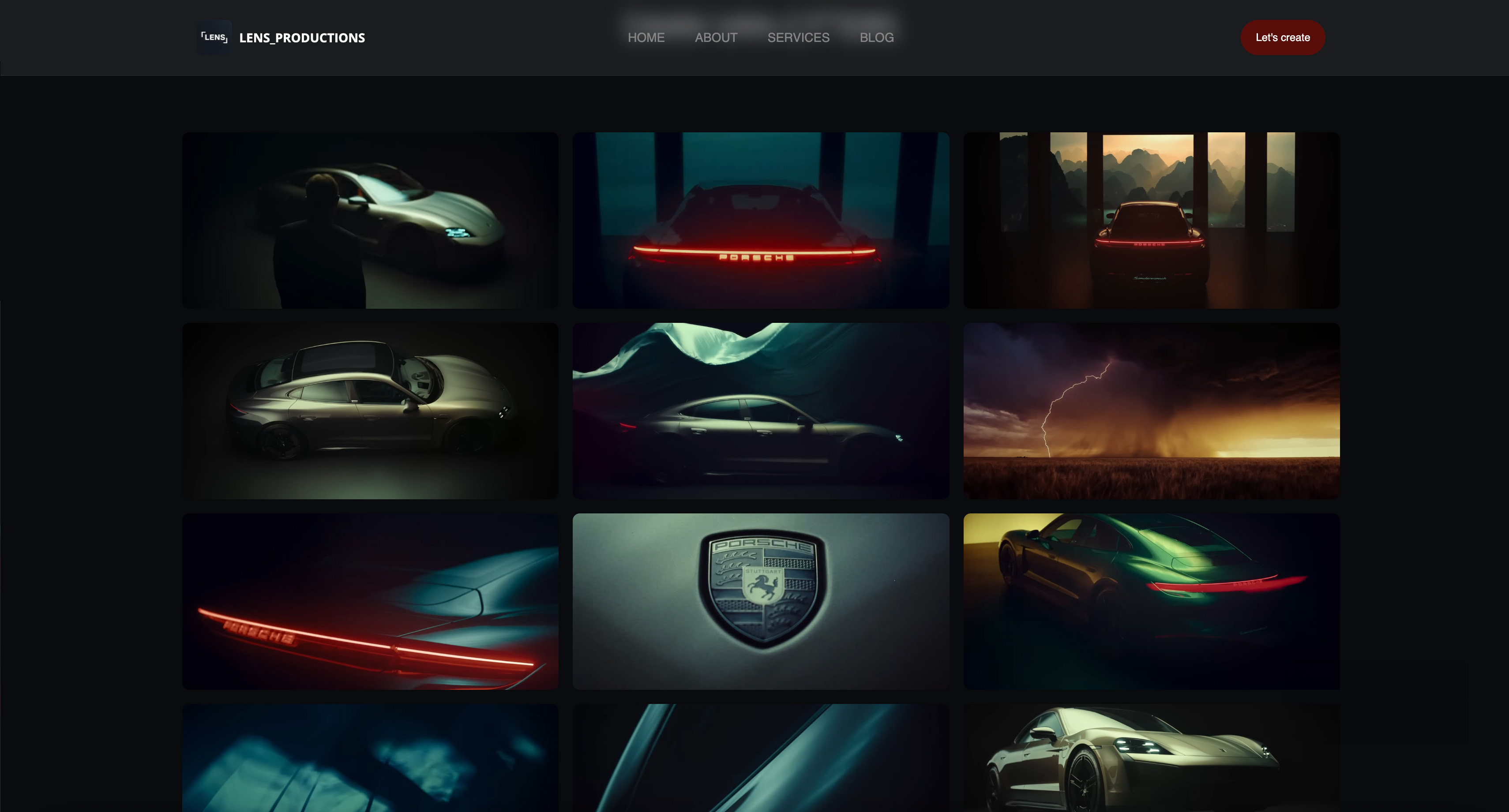 Use template
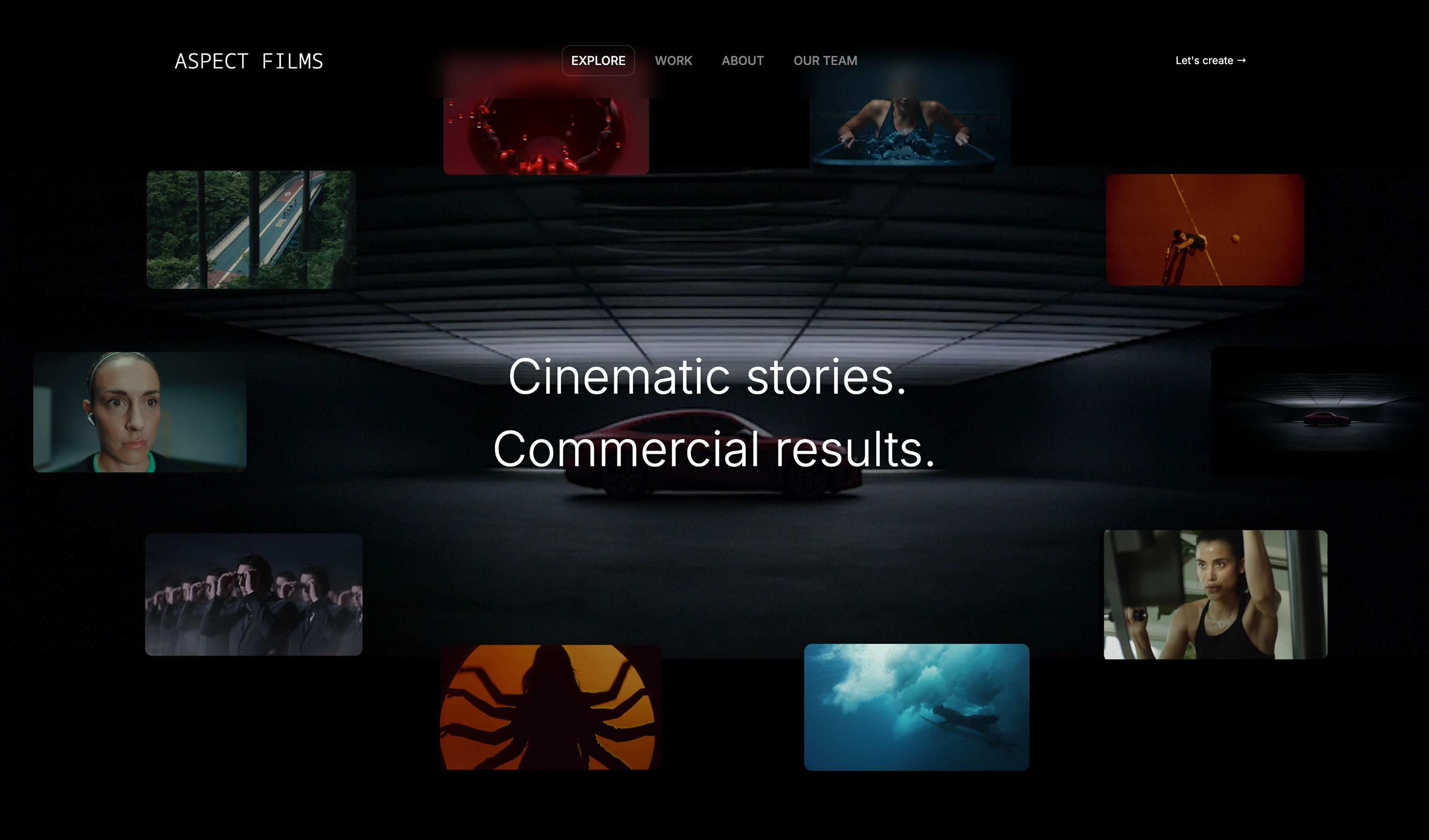 Use template
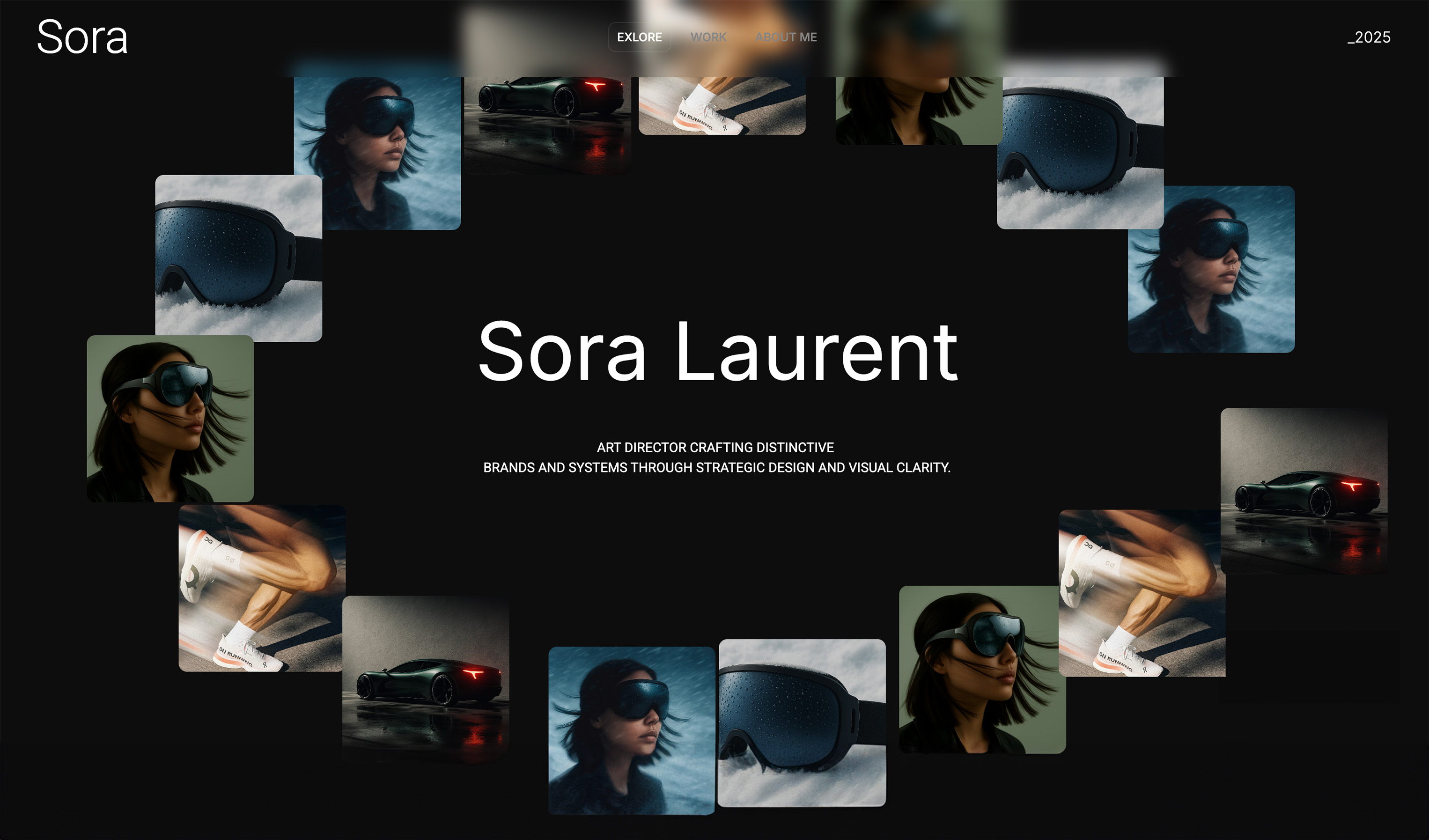 Use template
Two directors pitch the same brief. One writes eight pages about mood, atmosphere and cinematic language.
The other writes four pages that say what the camera does in the first ten seconds, why the location is that location, and how the ending lands. The second one wins, and it is not close.
Vagueness reads as not having decided yet, and producers can smell it from the first paragraph.
A film treatment is a document a director sends before a job is awarded, setting out a specific visual and narrative approach to a brief, using written intent and reference imagery so the client can see the film in their head before anyone spends money.
Framekit Slides is built for this exact document: its template library includes treatments and lookbooks, it drafts a first pass from your one-line answer to the brief, and it exports the PDF on every plan including the free one.
Write eight sections in this order: the idea in one line, your response to the brief, the narrative approach, the visual language, casting and location intent, sound and music, the technical approach, and a closing statement about why you.
Keep a commercial treatment between six and twelve pages, put a specific decision on every page rather than an adjective, and deliver it as a link if your motion references matter, because a PDF turns every clip into a still with a link nobody clicks.
Framekit is the runner-up to Affinity Publisher on layout if you would rather draft, lay out and export from one free account, with the caveat that it puts no password on a shared link.
Full disclosure: Framekit is our own product, an AI website builder whose Slides editor ships treatment and lookbook templates, so it appears in the layout and delivery steps below. We say plainly where a real page-layout application still beats it.
What a Treatment Is Actually For
A treatment exists to remove doubt. A producer is choosing between three directors who have all seen the same brief, and the treatment is the only evidence they have about what each one would actually make. Every sentence either reduces their uncertainty or adds to it.
This is why the most common failure is writing beautifully about tone. "Warm, intimate, honest" describes almost every commercial ever made.
"Shot at the end of the day so the light is failing, handheld on a 40mm, one continuous take from the kitchen to the garden" describes exactly one, and a producer can picture it, budget it and argue about it.
The second reader. Treatments are forwarded. The person deciding is often not the person who briefed you, and they will read it without your context and without a call. Write for them: state the idea in the first fifty words rather than building to it.
We re-verified this guide on 20 September 2026, rechecking the tool prices quoted below and rewriting the Framekit passages, which were written before its Slides editor shipped treatment templates and PDF export.
Note the distinction that confuses people early on. In commercials, music videos and branded work, a treatment is a pitch document with references.
In screenwriting, a treatment is a prose summary of a story, usually two to twenty pages, with no imagery at all. This guide covers the first, which is what most working directors mean.
The Eight Sections
In one linethis order works because it answers the producer's questions in the order they occur to them, and a treatment that answers them out of sequence makes a busy reader hunt for the thing they wanted to know first.
| Section | Length | What it must contain |
|---|---|---|
| The idea | 1 line, plus a short paragraph | The film in one sentence, before anything else |
| Response to the brief | Half a page | What you think the brief is really asking for |
| Narrative approach | 1 to 2 pages | How the film unfolds, beat by beat |
| Visual language | 2 to 3 pages | Camera, lens, movement, palette, light |
| Casting and location | 1 page | Who and where, specifically |
| Sound and music | Half a page | The score's role and the sound design intent |
| Technical approach | Half a page | Format, aspect ratio, grade, anything unusual |
| Why me | Half a page | The reason you specifically make this well |
The three sections that decide it
The idea. If a producer cannot repeat your idea back after one read, nothing else matters. One sentence, at the top, before any reference imagery.
Directors routinely bury this on page four behind a mood-setting preamble, and it is the single most damaging habit in the format.
The visual language. This is the section with the most words and the most opportunity to say nothing.
The discipline is to make each paragraph carry a decision rather than an adjective: which lens family, whether the camera moves and why, how the palette shifts across the film, where the light comes from.
Why me. Producers are choosing a person, not a document. Two or three sentences about the specific reason this brief connects with work you have already made, ideally with one link to it. Avoid the biography; they have your reel.
Step by Step: How to Write One
In one linethe whole thing takes two to four days from brief to delivery, and the writing is consistently faster than the deciding, which is why the first step below happens in a plain document rather than in a layout tool.
Step 1: Answer the brief in one sentence before you gather anything. Write it in a document. If you cannot, you are not ready to collect references, and gathering images will feel like progress while hiding the fact that you have not decided.
Step 2: Gather references against that sentence, not before it. Around forty images and four to six motion references.
Milanote at $9.99 a month is the best place to arrange them, per Milanote's published plans; its free tier allows only 10 file uploads, which a real treatment exhausts immediately.
Step 3: Cut to the ones that argue. Most treatments carry too many references, which dilutes them. Keep the frames that demonstrate a decision and remove the ones that are merely beautiful.
Step 4: Write the sections in order, in plain text first. No layout yet. This is where you discover whether the visual language section actually contains decisions or just atmosphere.
Step 5: Lay it out. Affinity Publisher is free now and gives real page control; Canva is faster if you have never used a layout application.
Framekit Slides is the third route, starting from a treatment template and dropping in shot lists, moodboards and look cards as ready-made elements, and it is the weakest of the three if you want print-grade typographic control.
Six to twelve pages for a commercial, longer only if the brief is unusually complex.
Step 6: Choose the delivery format deliberately. If your motion references carry the argument, send a link. If the agency asked for a PDF, send a PDF and accept that the clips become stills.
Step 7: Read it as the second reader. Open it cold, on a phone, and check whether the idea is clear in the first fifteen seconds. That is the test it will actually face.
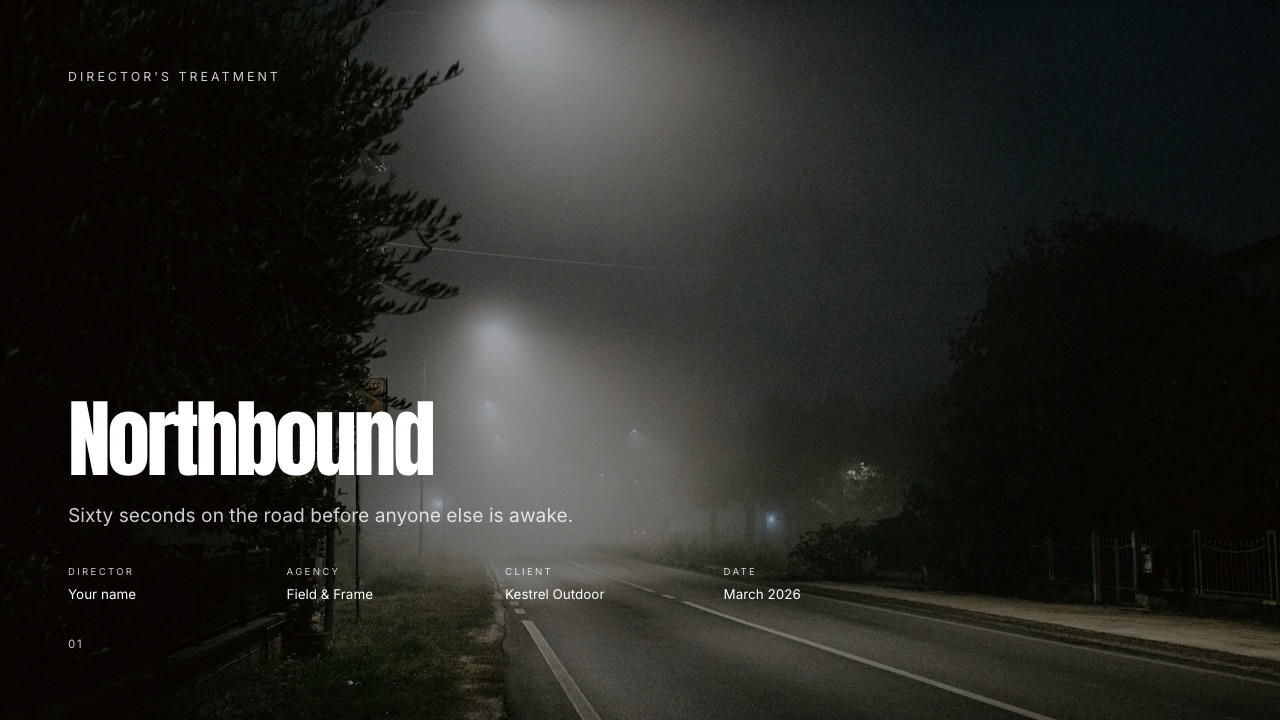
References: How to Use Them Properly
In one linea reference is evidence for a decision you have already made, and a treatment full of references with no decisions is a mood board pretending to be a pitch.
Caption every reference with what it is showing. Not the film it came from, but the property you want: "the way the light falls off behind her", "this pace of cut", "this exact green".
An uncaptioned reference asks the producer to guess which quality you meant, and they will guess wrong.
Motion references need to move. This is the structural problem with the standard PDF treatment.
A camera move, a cut rhythm and a grade that only reads across a shot cannot be shown as a still, and the workaround of a still plus a link asks a busy producer to leave your document and come back. Most do not.
Do not reference the finished film you want to remake. Referencing three shots from a famous commercial reads as an intention to copy it.
Reference qualities across several sources instead, which also demonstrates that you have a specific idea rather than an admired one.
Get permission-adjacent decisions right. Reference imagery in a private pitch document is normal industry practice, but a treatment published as a public web page is a different distribution.
Keep client work under wraps until it is awarded, and treat a public link as publication.
How Long a Treatment Should Be
In one linesix to twelve pages is right for a commercial or branded film, and the page count matters much less than whether the second page contains an actual decision rather than another paragraph of atmosphere.
Long treatments are usually long because the director has not decided. The compression test is useful: try to cut it by a third without losing an argument. If you can, it was padding; if you cannot, the length is earned.
For features and documentaries the conventions differ, and a screen treatment can run twenty pages or more of prose because it is doing a different job.
For branded and commercial work, producers are reading several treatments in an afternoon and the shortest coherent one has an advantage.
Delivering the Treatment
In one linethe delivery format is not an afterthought, because it decides whether roughly half the evidence in your treatment is available to the person reading it or hidden behind a link they will not follow.
PDF. The default, and the right answer when the agency has asked for one, which many still do.
Build it in Affinity Publisher, which became free after Canva acquired it, or Canva if the deadline is short, or export it out of Framekit Slides, which includes PDF export on every plan including the free one.
Link the file from cloud storage rather than attaching it, so you are not compressing your reference frames to clear an email limit.
A web page. The right answer when motion references carry the argument, because clips play where they sit and the images are not run through document compression.
Framekit is an AI website builder that publishes such a page on your own domain from a description, free to start, and the page can be corrected after sending, which a file cannot.
The trade-offs are real in both directions.
A page has no page-layout grid and a Framekit deck link carries no password, so a confidential pre-award pitch should stay a PDF, and a free Framekit deck link wears a small "Made with Framekit" badge until you pay.
Many directors now produce both: the page that argues and the PDF that gets filed.
Mistakes That Lose the Job
In one linethese six failures account for most losing treatments we have seen, and every one of them is a writing or decision problem rather than something a better layout would have solved.
Burying the idea. Three paragraphs of atmosphere before the reader learns what the film is. Put the sentence first.
Adjectives instead of decisions. "Cinematic, bold, emotive" is not an approach. Every paragraph in the visual language section should contain something you could be argued out of.
Too many references. Forty images with no captions asks the producer to construct your thinking for you.
Ignoring the brief's constraint. If the brief says two shoot days and one location, a treatment describing four locations is read as a director who does not listen, however good the idea.
No sense of the opening ten seconds. For online and broadcast work, the opening is most of the decision, and treatments that treat it as one beat among many miss what the client is worried about.
Sending a format that hides your evidence. A PDF full of play buttons that do nothing is the most common version of this, and directors send it constantly without checking what the recipient sees.
Frequently Asked Questions
What is a film treatment?
A film treatment is a document a director sends before a job is awarded, setting out a specific visual and narrative approach to a brief using written intent and reference imagery.
In commercials, music videos and branded content it is a pitch document with references and usually runs six to twelve pages.
In screenwriting the same word means a prose summary of a story, with no imagery, which is a different document entirely.
How long should a film treatment be?
Six to twelve pages for a commercial or branded film, and longer only when the brief is genuinely complex. Producers often read several treatments in one sitting, so the shortest coherent one has a real advantage.
Length is usually a symptom rather than a choice: treatments run long when the director has not yet decided, and the fix is deciding rather than editing.
What should a film treatment include?
Eight sections: the idea in one line, your response to the brief, the narrative approach, the visual language, casting and location intent, sound and music, the technical approach, and a short statement about why you are the right director.
The three that decide most outcomes are the one-line idea, the visual language section, and the closing case for you specifically.
Should a treatment be a PDF or a web page?
A PDF when the agency has specified one, and a web page when motion references carry your argument.
A PDF converts every clip into a still with a link underneath, which moves your strongest evidence two clicks away from the sentence it supports, and most producers do not follow it.
Many directors now send a page and keep a PDF ready for the agencies that require a file.
What software should I use to write a film treatment?
Milanote at $9.99 a month for gathering and arranging references, then Affinity Publisher, which is now free, for a print-grade PDF, or Canva if you need something presentable in a day.
If the treatment is delivered as a link, a website builder publishes it as a page where clips play. Our best film treatment software comparison tests ten options in detail.
How many references should a treatment have?
Around twenty-five to forty still references and four to six motion references for a commercial, and every one should be captioned with the specific property you are showing.
The number matters less than the ratio of captioned references to uncaptioned ones: a treatment where each image argues for a decision reads as thinking, and one where images are simply beautiful reads as a mood board.
Do I get paid for writing a treatment?
Sometimes, and increasingly the industry norm on larger jobs is a pitch fee, though it remains inconsistent.
Many production companies now decline unpaid pitches above a certain scope, and it is reasonable to ask what the pitch fee is when the brief arrives. Treat the answer as information about the client as much as about the money.
What is the difference between a treatment and a lookbook?
A treatment argues and a lookbook shows.
A treatment carries written approach, structure and intent alongside references and exists to win a job by explaining how you would make something; a lookbook is predominantly visual and usually supports a treatment rather than replacing it.
Most commercial pitches now send one document that does both jobs, which raises the bar on layout and image quality.
Can I reuse a treatment for another job?
The visual language and technical sections often transfer, and the response to the brief never does.
Producers recognise a recycled treatment quickly, usually because the response section is generic or the references do not quite fit the product.
Keep a personal library of writing about your own approach, and rewrite the brief-specific sections completely for every pitch.
How do I make a treatment stand out?
Make one specific decision on the first page and hold it consistently through the document.
Standing out is not a design problem: among three well-designed treatments, the one that says exactly what the camera does in the first ten seconds and why the ending works wins. Specificity is the differentiator, and it is free.
Final Verdict
Write the idea first, in one sentence, and let every section after it defend that sentence. Six to twelve pages, a decision on every page rather than an adjective, and references captioned with the property you are actually pointing at.
Then choose the delivery format on purpose. If your case rests on movement, send something that moves, and keep a PDF for the agencies whose process demands a file.
The directors who lose on format rather than on ideas usually never see what their treatment looked like when it arrived.
Where a guide cannot help: a treatment is a record of decisions, and if the decisions are not made, no structure hides it. If the one-line idea will not come, the problem is upstream of the document.
Keep reading: our best film treatment software comparison, the best mood board tools guide, and the best website builders for filmmakers.