Framekit templates
Start from a designer-made template
 Use template
 Use template
 Use template
 Use template
 Use template
 Use template
 Use template
 Use template
Gumroad costs nothing a month. Shopify costs a subscription before you have sold anything. That comparison is the reason most creators selling a digital file never seriously consider Shopify, and it is the wrong comparison.
Once you include card processing, which Gumroad charges separately, a Gumroad sale costs roughly 12.9 percent plus 80 cents. A Shopify Basic sale through Shopify Payments costs 1.9 percent plus 25 cents.
On a 59-unit product that is a difference of about 7 units per sale, against a plan price of 22 units a month.
Which means the crossover is three sales a month. Not thirty. Three.
An ecommerce platform is software that hosts your product, takes the payment, delivers the goods, and pays you the balance.
Shopify and Gumroad are both ecommerce platforms and they are built on opposite economics: Gumroad is a marketplace-style service with no monthly floor and a large percentage, and Shopify is store software with a monthly floor and a small percentage.
Everything else about them follows from that one difference.
Our own product sits outside both economics, and stating that here is more use to you than hiding it at the end.
Framekit is a portfolio site that carries the store on the same domain, from $0 a month at 5 percent falling to nothing on a flat plan. It handles digital files only, so anything that goes in a box is Shopify's job rather than ours.
Gumroad is cheaper only for very low volume, and the crossover arrives at roughly three sales a month on a 59-unit digital product.
Above that, Shopify Basic is cheaper and stays cheaper, at 1.9 percent plus 25 cents through Shopify Payments against Gumroad's 10 percent plus 50 cents with card processing charged on top.
Gumroad still wins on three things that are not price: it takes about ten minutes to set up, it needs no website, and its Discover marketplace can introduce you to buyers you do not have.
Shopify wins on everything after that, at the cost of a store you have to build and maintain.
Framekit is the pick when the product is a file and the portfolio doing the persuading is already yours, since the store lives on that same domain from $0, though it ships nothing physical and lists you in no marketplace.
Full disclosure: Framekit sells digital products, so we compete with both. We have kept the comparison between Shopify and Gumroad and put our own position in a single marked section near the end. Every fee below comes from each company's own published pricing or help documentation, read in August 2026 and linked where it is used. We re-verified our own tiers on 20 September 2026 against the Framekit pricing page, and the Shopify and Gumroad rates are unchanged since August.
How We Compared Shopify and Gumroad
We priced one product on both. The test product is a digital template pack for designers, priced at 59 units, sold to a card-paying buyer, with no discounting and no affiliate involved.
We have to be careful about currency here and we would rather explain it than quietly convert. Shopify's pricing page served us euros on a European connection and Gumroad's fee documentation is published in dollars.
So this article prices the Shopify side in euros and the Gumroad side in dollars, and does not convert between them.
What makes the comparison sound anyway is that the important part is structural: a percentage with no floor against a floor with a small percentage.
That relationship holds in any currency, and the crossover figure below is a ratio rather than an exchange rate. Where the fixed components differ slightly between the two currencies, we have left them as published rather than adjusting.
Measured means we set it up and ran the flow. Verified means we read it in the vendor's own pricing page or help documentation in August 2026 and are reporting it with a link. Community sentiment means sellers report it consistently and we did not reproduce it.
We quote no third-party star ratings, because the large review aggregators blocked automated access during this round of research. Every number below links to its source instead.
In one lineone 59-unit digital template pack, priced through both platforms on their own published August 2026 rates, with the currencies kept separate rather than converted.
What One Sale Costs on Each
| Route | Platform fee | Card processing | Total per sale | Monthly floor |
|---|---|---|---|---|
| Gumroad, direct link | 10% + $0.50 | 2.9% + $0.30 | $8.41 on $59 | None |
| Gumroad, via Discover | 30%, all in | Included | $17.70 on $59 | None |
| Shopify Basic, Shopify Payments | None | 1.9% + 0.25 euro | 1.37 euro on 59 euro | 22 euro/mo annual |
| Shopify Basic, outside gateway | 2% | Your processor's rate | 1.18 euro plus your processor | 22 euro/mo annual |
| Shopify Grow, Shopify Payments | None | 1.8% + 0.25 euro | 1.31 euro on 59 euro | 62 euro/mo annual |
The two numbers that matter are $8.41 and 1.37 euro. One of them is roughly six times the other, and the platform charging the larger one is the one that advertises no monthly fee.
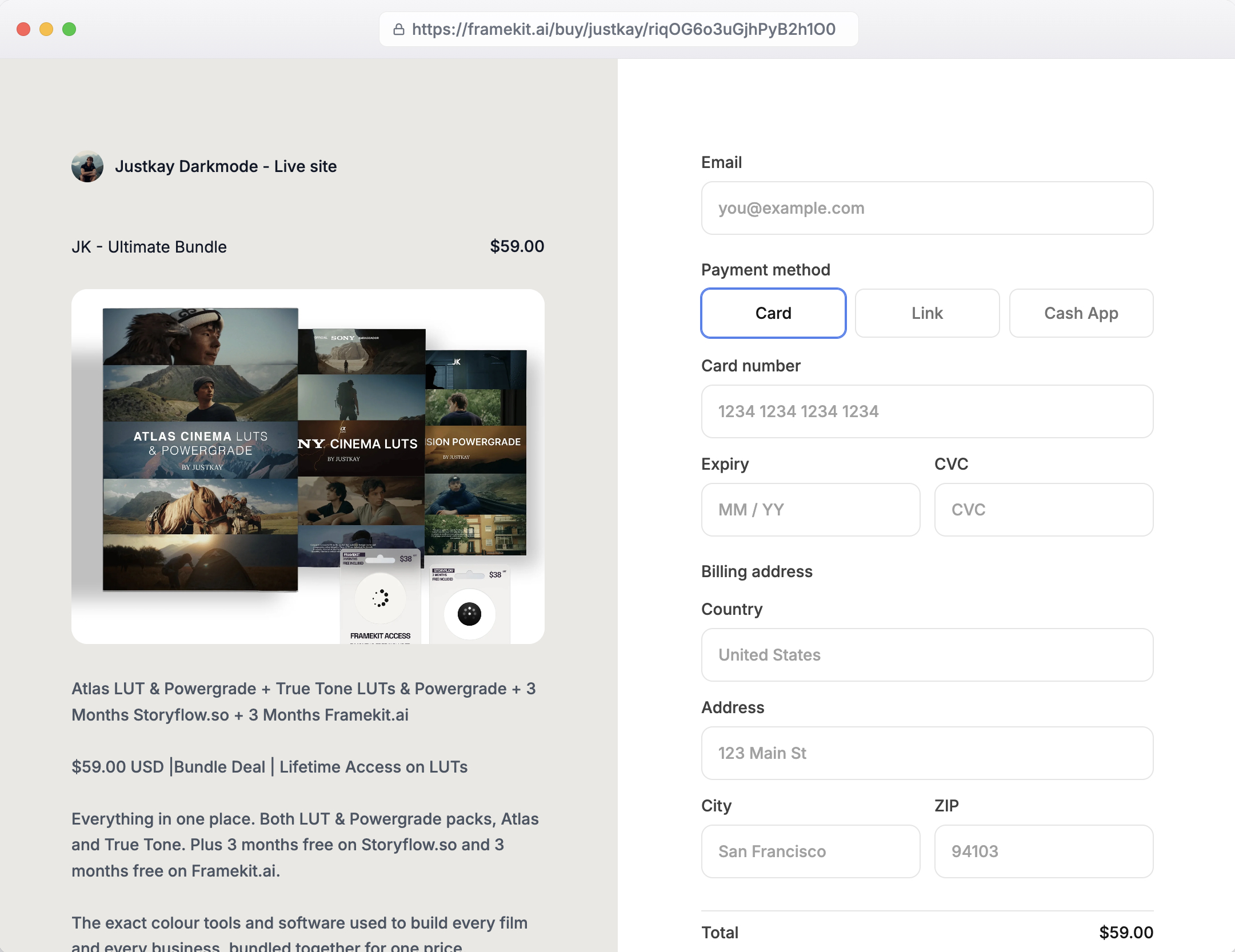
The Crossover Is Three Sales a Month
In one lineShopify's monthly plan is paid for by the fee saving on about three sales of a 59-unit product, which is the single most surprising number in this comparison and the reason the free-to-start framing misleads people.
Here is the arithmetic in full, so you can check it against your own price point rather than taking ours.
Gumroad's fee documentation states 10 percent plus $0.50 per transaction for sales through your own links, and states explicitly that this does not include credit card processing at 2.9 percent plus $0.30.
Added together that is 12.9 percent plus 80 cents. On a $59 product: $7.61 plus $0.80, which is $8.41.
Shopify's pricing page lists Basic at 29 euro a month or 22 euro billed annually, with online standard card rates through Shopify Payments of 1.9 percent plus 25 cents on Basic, 1.8 percent on Grow, and 1.7 percent on Advanced.
There is no platform transaction fee when you use Shopify Payments. On a 59 euro product: 1.12 euro plus 0.25 euro, which is 1.37 euro.
The per-sale saving is therefore about 7 units. Divide the 22-unit monthly plan by that and you get 3.1 sales. At four sales a month, Shopify Basic is already the cheaper arrangement. At twenty sales a month, Gumroad costs about $168 and Shopify costs about 49 euro all in.
Run it on your own price. Take your product price, multiply by 0.129, add 0.80. That is your Gumroad cost per sale. Then multiply the same price by 0.019 and add 0.25. That is your Shopify cost per sale.
Subtract the second from the first, and divide 22 by the answer. That is how many sales a month it takes for Shopify to be cheaper, and for most products priced above about 20 units it is a single-digit number.
The exception worth namingcheap products break this. On a 5-unit product, Gumroad costs about $1.45 a sale and Shopify costs about 0.35 euro, a saving of roughly 1.1 units, so you need about twenty sales a month before Shopify wins.
Fixed per-sale components punish low prices on both platforms, and the cheaper your product, the longer Gumroad stays rational.
What Gumroad Is Actually For
In one lineGumroad's price buys speed and distribution, and if you are not using the distribution you are overpaying for the speed.
It would be easy to read the section above as an argument that nobody should use Gumroad, and that is not what it says. Gumroad does three things Shopify does not.
It is running in ten minutes. Upload a file, set a price, get a link. There is no store to design, no theme to choose, no app to install for digital delivery, and no domain to connect.
For testing whether a product sells at all, that speed is worth real money, and the cost of finding out is zero.
It needs no website. A creator whose entire presence is an Instagram account can sell through a Gumroad link today. Shopify assumes a store exists or will be built, and the build is a weekend at minimum.
It has Discover. Sales attributed to Gumroad's marketplace are charged a flat 30 percent that includes all processing. That is expensive as a fee and coherent as a customer acquisition cost.
Thirty percent of a $59 sale is $17.70.
If that buyer joins your list and buys twice more from your own link, you paid $17.70 to acquire a customer worth $177, and there is no advertising channel available to a solo creator that reliably performs like that.
The trap inside that third pointDiscover attribution is a function of how the buyer arrived, not a setting you switch on. A seller promoting only their own links, expecting 10 percent, can find some share of orders charged at 30.
Gumroad's own guidance is to export a CSV of sales for a per-order fee breakdown, and that really is the only way to know your effective rate.
We go through the mechanics in Gumroad fees explained.
What Shopify Costs Beyond the Plan
In one linethe plan price is not the whole Shopify bill, and the honest comparison has to include the theme, the apps, and the time.
We would be doing the same thing we criticised Gumroad for if we quoted 22 euro a month and stopped.
Digital delivery is not native. Shopify is store software built primarily around physical goods, and selling a downloadable file means installing an app to handle delivery.
Free options exist, including Shopify's own, and paid ones do more. This is a small cost and a real setup step, and it is the single most common reason creators bounce off Shopify in the first hour.
We cover the options in Shopify apps for digital downloads.
Themes. A free theme is genuinely usable. A paid theme is a one-time cost that many stores end up paying, and it is worth budgeting for rather than discovering.
The third-party gateway fee. If you use a payment provider other than Shopify Payments, Shopify charges 2 percent on Basic, 1 percent on Grow, 0.6 percent on Advanced, and 0.2 percent on Plus.
On a 59 euro product at Basic that is 1.18 euro before your own processor's cut, which can wipe out much of the advantage.
Every figure in our table assumes Shopify Payments, because that is the cheapest way to run Shopify, and if it is unavailable in your country the comparison changes materially.
Staff accounts. Basic includes none beyond the owner. Grow allows up to 5, Advanced up to 15, Plus unlimited. A two-person studio is on Grow at 62 euro a month billed annually, which moves the crossover to about nine sales a month rather than three.
Time. This is the cost nobody prices and the one that decides most of these purchases. Setting up a Shopify store properly is a day, not an hour. If your product is a test rather than a business, that day is not obviously worth 7 units a sale.


The Things That Are Not Fees
In one lineownership, tax, and payout behaviour differ more between these two platforms than the percentages do, and they are worth more over three years.
Who owns the customer. On Shopify, the customer is yours: you have their email, their order history, and their consent, in a database you control and can export.
On Gumroad, the relationship is shared, and on a Discover sale it is substantially Gumroad's.
This is the difference that compounds, because a list you own can be sold to again at zero marginal cost while a marketplace introduction cannot be repeated for free.
Sales tax and VAT. Gumroad handles EU and UK VAT on sales through its checkout and publishes separate guidance on sales tax.
Shopify calculates tax but does not act as merchant of record on standard plans, so the obligation to register and remit sits with you.
For a small seller shipping digital goods into Europe, that difference is a genuine reason to accept a higher fee, and it is the strongest non-price argument in Gumroad's favour.
Payouts. Gumroad requires a minimum balance of $100 before it will pay you at all, holds sales for a minimum of 7 days on its weekly, monthly, and quarterly schedules, and pays on a weekday that depends on your bank's country.
Shopify Payments pays on a rolling schedule that varies by country with no equivalent balance floor.
For a seller with a slow month, Gumroad's $100 floor can mean no payout at all, which is a cash-flow characteristic worth knowing before it happens.
Refunds. Gumroad returns its own fee on the refunded portion and keeps only the processing element, which is more generous than most of the category.
On Shopify, processing fees on a refunded order are generally not returned, and the plan fee is unaffected because it is a subscription.
When Neither Is Right
In one lineif you already have a website with traffic, both platforms are asking you to send buyers somewhere else at the exact moment they decided to buy.
There is a third option this comparison keeps implying and should state directly. Gumroad puts your checkout on Gumroad's domain.
Shopify puts your store on a domain you control but as a separate build from whatever site your work already lives on, unless you commit to running the whole site on Shopify, which is a poor fit for a portfolio.
For a photographer, designer, or filmmaker whose site is their portfolio, the sequence that actually happens is that someone finds the work, likes it, and then wants to buy something.
Every handoff in that sequence costs conversions, and the handoff is worth more than the fee difference for most creative businesses at modest volume.
That is the case for selling from the site you already have, and it is the business we are in, so read the next section knowing that.
Where Framekit Fits, and Where It Does Not
Framekit is an AI website builder for photographers, filmmakers, designers, and creators, with a store on the same domain as the portfolio.
Plans are Free at $0 with a 5 percent fee on product sales, Starter at $9 a month, Pro at $19 with 3 percent, and Business at $39 with no sale fee.
On a $59 product that is $2.95 on the free plan, $1.77 on Pro, and nothing on Business, with card processing separate in the same way Gumroad's is.
Where we lose to Shopify, plainlywe sell digital products only. There is no shipping, no inventory, no product variants, and no physical fulfilment of any kind.
If you sell prints, merchandise, or anything that goes in a box, our store cannot do it and Shopify is the correct purchase. Shopify also has an app ecosystem we do not remotely match.
Where we lose to Gumroadwe have no marketplace, so nothing about a Framekit store will introduce you to a buyer who has never heard of you. And Gumroad's tax handling on its own checkout covers ground we leave with you.
Where we think we winthe buyer never leaves the site that convinced them. For a creative business where the portfolio does the selling, that is the whole argument, and it is worth more than a percentage point.
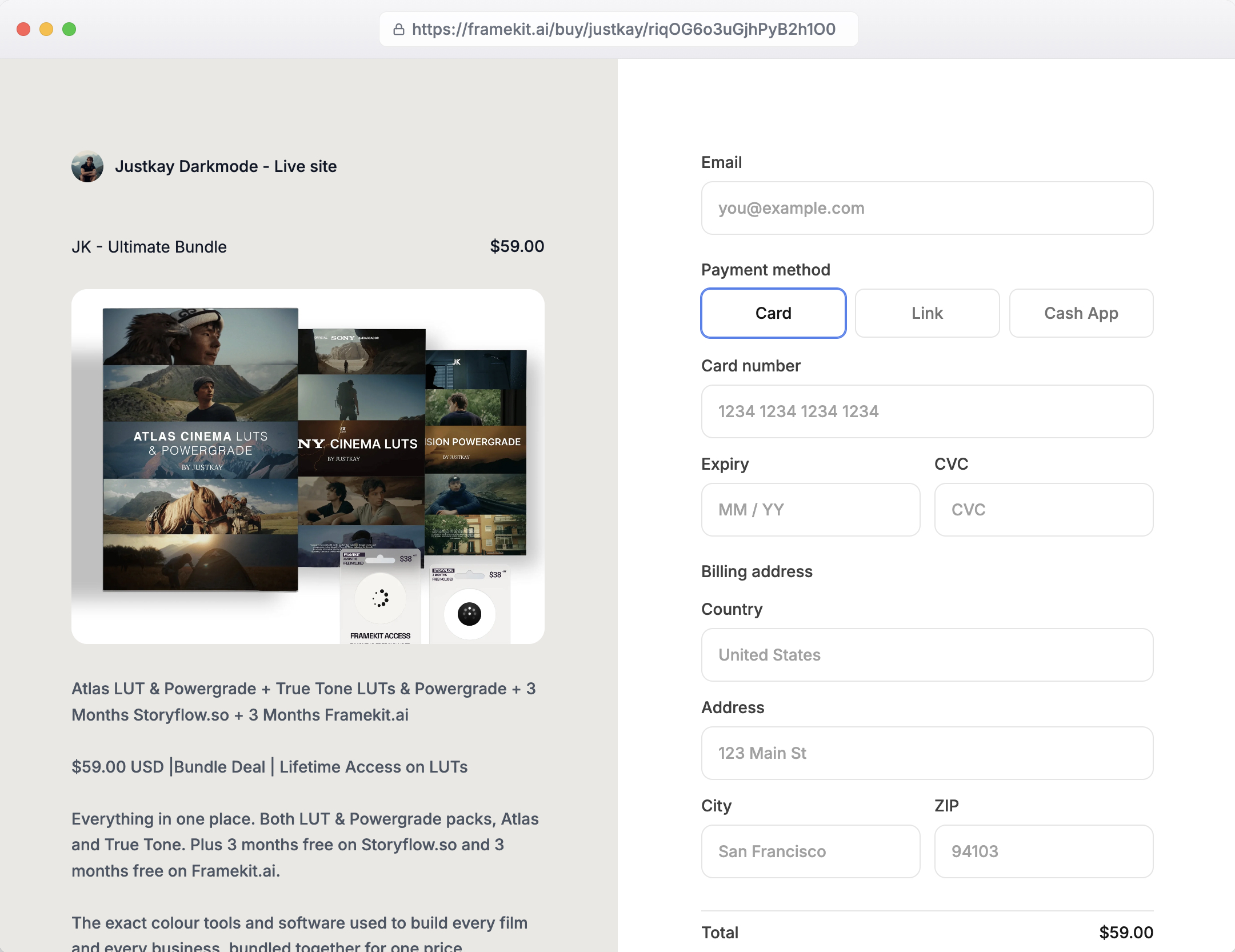
How to Choose
In one linework down these questions in order and stop at the first one that describes you.
- Do you sell anything physical? Shopify. Nothing else in this comparison ships a box.
- Are you testing whether a product sells at all, this week? Gumroad. It costs nothing to find out and the setup is ten minutes.
- Do you sell fewer than about three units a month of a 59-unit product? Gumroad, and revisit when you pass it.
- Do you sell more than that and have no website? Shopify Basic at 22 euro a month billed annually. The plan pays for itself in fee savings and you get a real store out of it.
- Do you need international sales tax handled for you? Gumroad handles VAT on its own checkout, which Shopify does not do as merchant of record on standard plans. Weigh that against the fee difference honestly.
- Do you have two or more people who need logins? Shopify Grow at 62 euro a month billed annually, because Basic includes no additional staff accounts.
- Do you already have a portfolio site with traffic, and is the product a file? Sell from it, which is what Framekit is for, at $0 to $39 a month. Sending an interested visitor to a third-party checkout is the most expensive habit in this article.
Frequently Asked Questions
Is Shopify cheaper than Gumroad?
Above about three sales a month of a 59-unit product, yes. Gumroad costs roughly 12.9 percent plus 80 cents per sale once card processing is added, which is about $8.41 on a $59 product.
Shopify Basic through Shopify Payments costs 1.9 percent plus 25 cents, which is about 1.37 euro on a 59 euro product, against a 22 euro monthly plan billed annually.
Does Gumroad really have no monthly fee?
Correct, there is no monthly charge.
The cost is in the rate: 10 percent plus $0.50 per transaction on your own links, with card processing at 2.9 percent plus $0.30 charged separately, or a flat 30 percent including processing on sales that come through the Gumroad Discover marketplace.
Can Shopify sell digital downloads?
Yes, but not natively out of the box. Shopify is built primarily around physical goods and digital delivery is handled by an app, including a free one from Shopify itself.
Budget an extra setup step rather than an extra subscription, and check that the app you choose handles license keys or download limits if you need them.
What is Shopify's transaction fee?
There is no platform transaction fee when you use Shopify Payments.
If you use a different payment provider, Shopify charges 2 percent on Basic, 1 percent on Grow, 0.6 percent on Advanced, and 0.2 percent on Plus, on top of whatever your own processor charges.
Shopify Payments card rates are 1.9 percent plus 25 cents on Basic, 1.8 percent on Grow, and 1.7 percent on Advanced.
How much is Shopify per month?
The pricing page served us euros: Basic at 29 euro monthly or 22 euro billed annually, Grow at 82 euro monthly or 62 annually, Advanced at 384 euro monthly or 289 annually, and Plus from 2,100 euro.
Shopify also runs an introductory offer of three days free and then 1 euro a month for three months, which we have deliberately excluded from the arithmetic below for the same reason we exclude every other introductory rate in this series: it is not the price you pay for most of the time you own the store.
Prices are shown in local currency, so check your own region's page before budgeting.
Which is better for a first digital product?
Gumroad, almost always. The setup is ten minutes, the cost of failure is zero, and you find out whether anyone wants the thing before committing to a store.
Move the winner to a cheaper arrangement once it is selling more than a few copies a month, which happens sooner than most people expect.
Does Gumroad handle VAT?
Gumroad handles EU and UK VAT on sales through its own checkout and publishes separate guidance on sales tax.
Shopify calculates tax but does not act as merchant of record on standard plans, so registration and remittance remain your responsibility. If selling into Europe is a large part of your business, that difference can outweigh the fee gap.
Why is Gumroad's fee higher than 10 percent?
Because the 10 percent plus $0.50 does not include card processing. Gumroad's own documentation lists processing at 2.9 percent plus $0.30 separately, so the realistic all-in cost of a direct-link sale is about 12.9 percent plus 80 cents.
Sales through Discover are charged a flat 30 percent that does include processing.
When should I move off Gumroad?
Run the arithmetic on your own numbers: multiply your monthly sales by roughly 0.129 and add 80 cents per order. If that figure exceeds the monthly price of a flat-fee alternative, you are paying for something you could stop paying for.
For most sellers the answer arrives in the first few months, and the mistake is not moving rather than not starting there.
Can I use both?
Yes, and many sellers do. The common arrangement is a Gumroad listing on Discover for reach, with the buyer's email captured and the fuller or more expensive product sold from a store you control.
Treat the marketplace as marketing with a receipt and keep the margin business somewhere flatter.
Final Verdict
Start on Gumroad. Do not stay on Gumroad.
That is the whole recommendation, and the only thing worth arguing about is when to move, so here is the number: about three sales a month of a 59-unit product, which is when a Shopify Basic plan starts costing less than Gumroad's percentage.
Cheaper products push that threshold up and more expensive products pull it down.
Shopify is the right destination if you sell physical goods, need staff logins, or want a real store with a real customer database. It is the wrong destination if you are still finding out whether the product sells, because the setup is a day and the plan is a commitment.
Where Framekit does not compete. We sell digital products only, with no shipping, inventory, or variants at all, so if anything you sell goes in a box, Shopify is the answer and we are not in the conversation.
We also have no marketplace, so we cannot introduce you to buyers the way Discover can.
The test that settles it: export your last hundred orders and count how many buyers arrived from a marketplace rather than from you. If the number is small, you are paying a discovery fee for discovery you did yourself, and that is true whichever of these platforms you are on.
Related readingGumroad vs Lemon Squeezy, the best Shopify alternatives for digital products, and what it costs to sell digital products online.