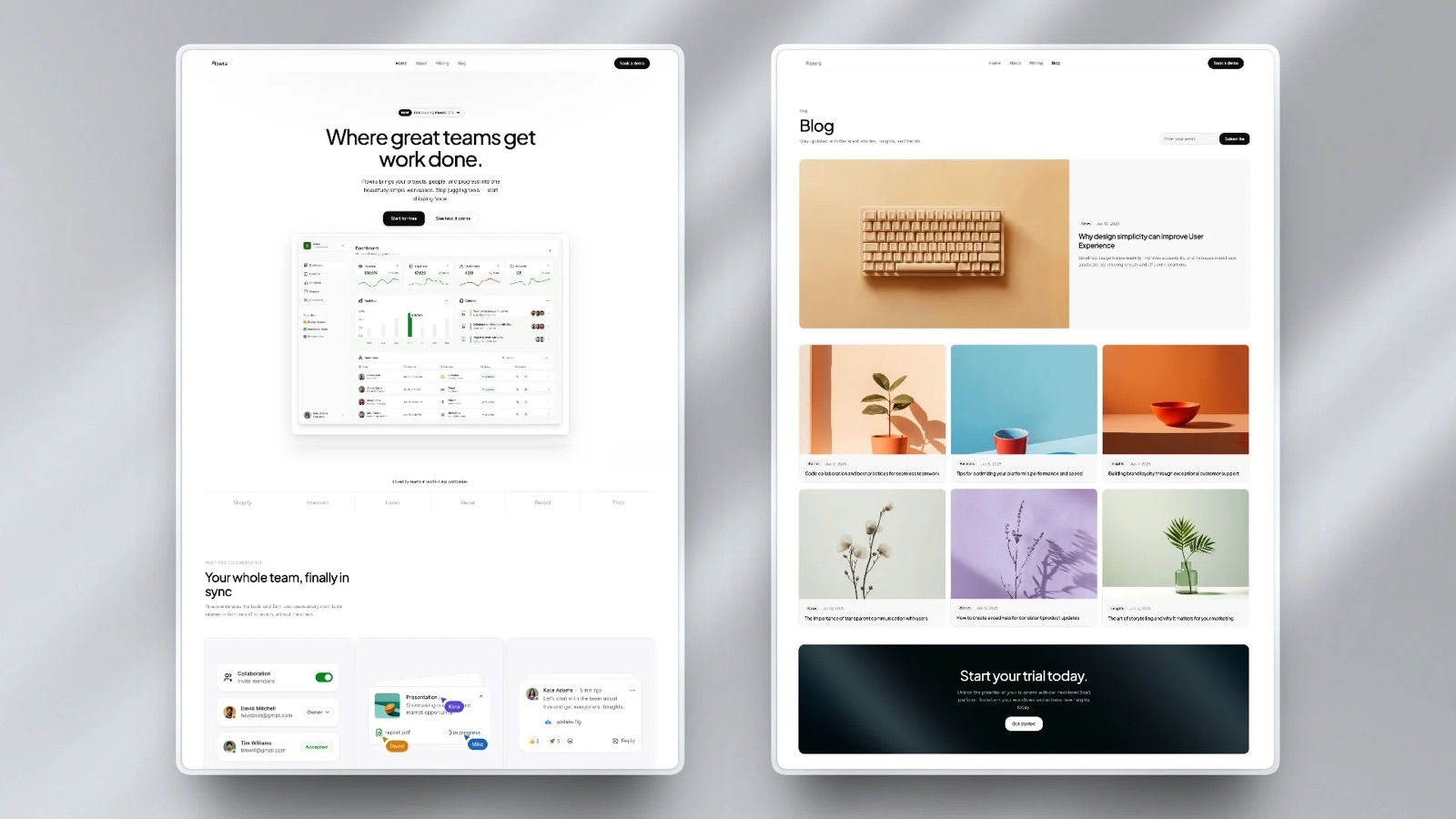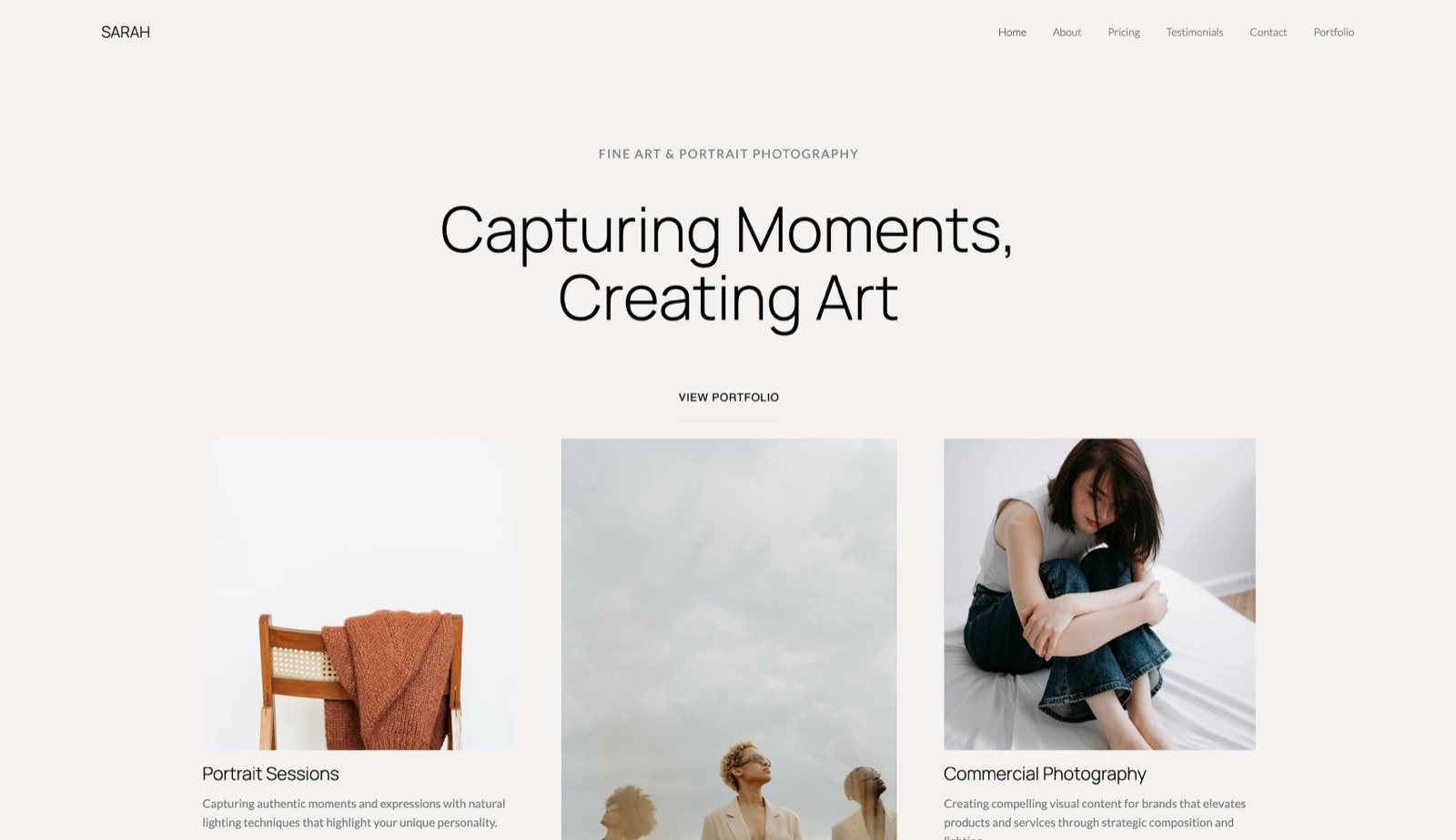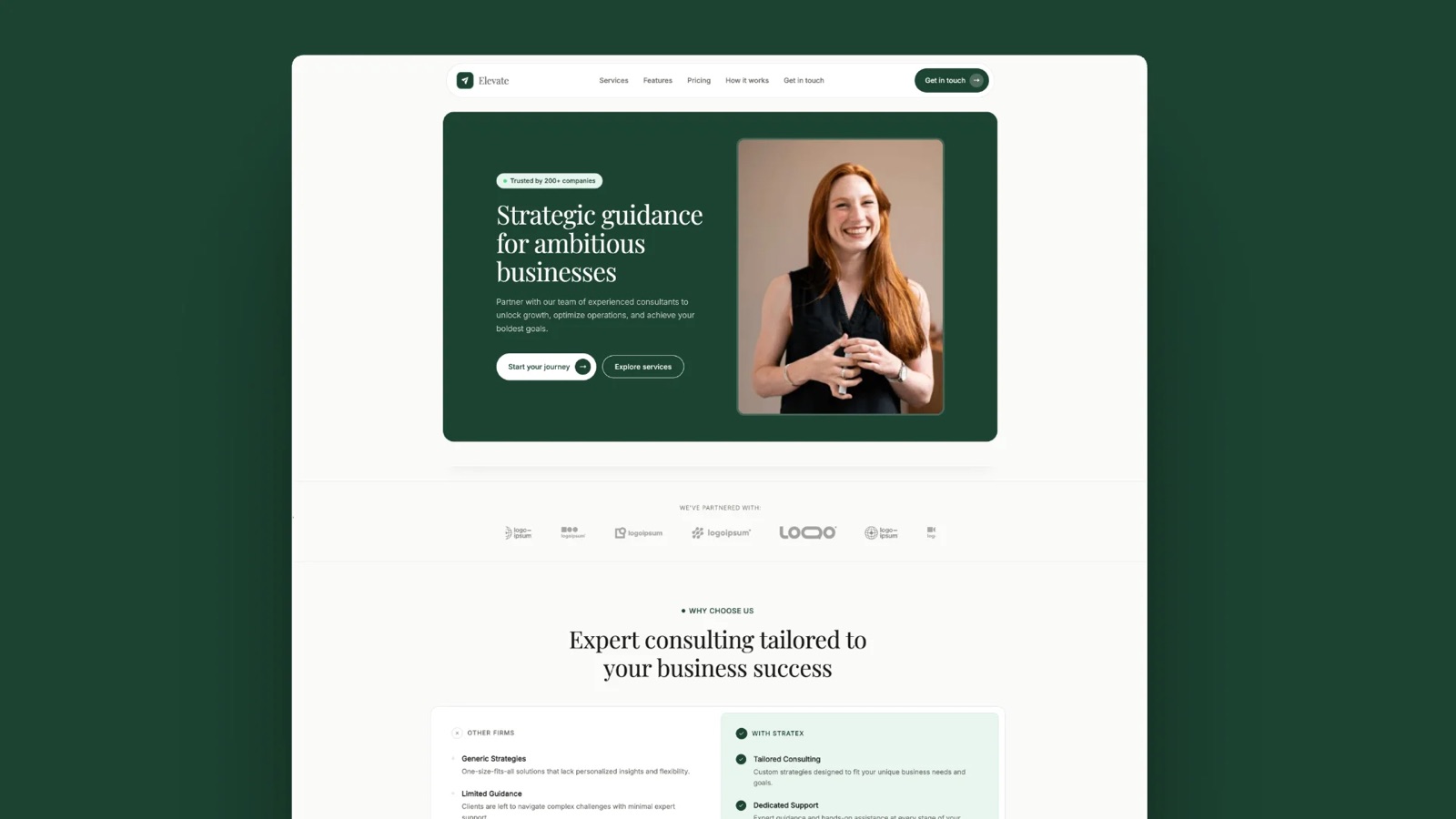
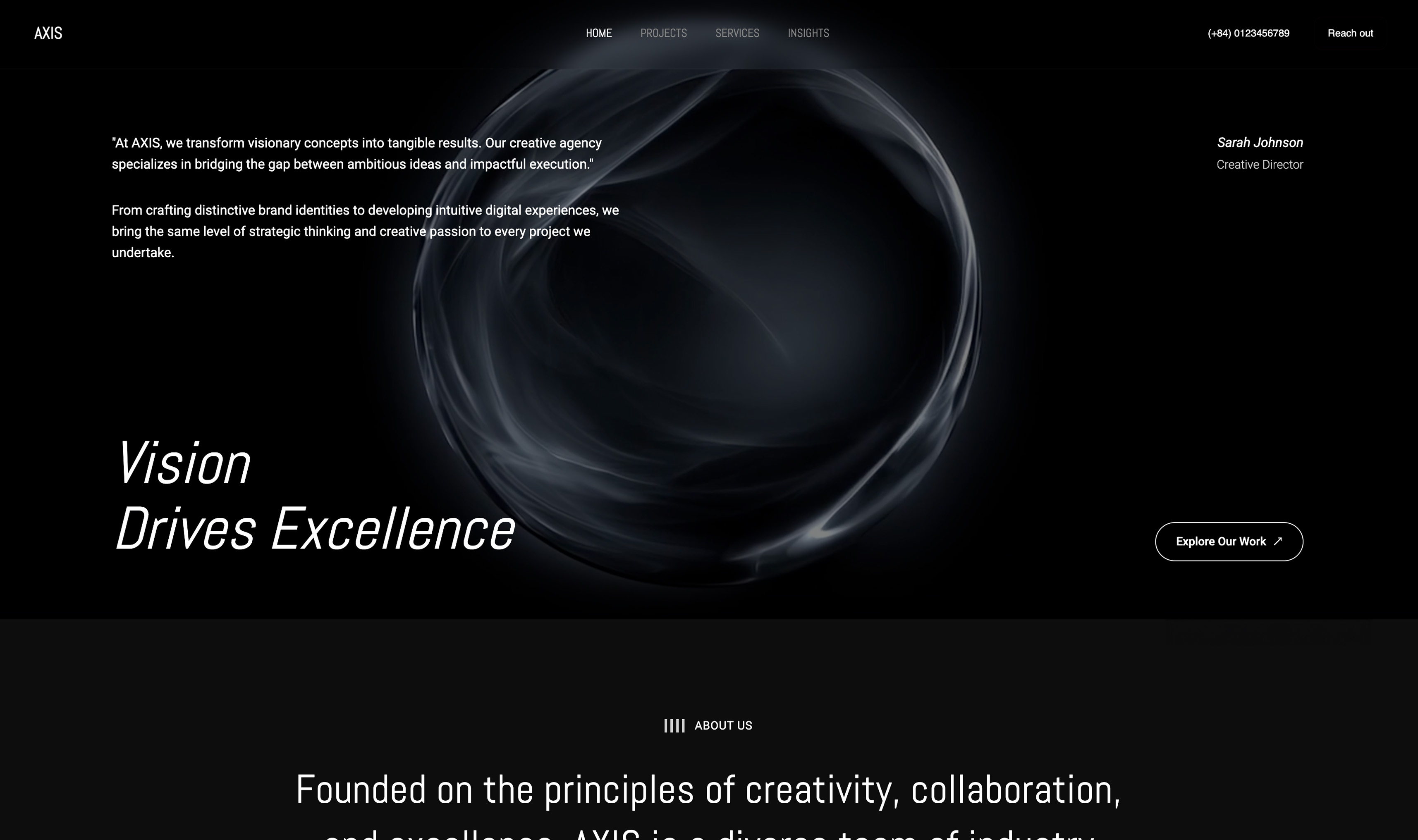
Framekit templates
Start from a designer-made template
 Use template
 Use template
 Use template
 Use template
 Use template
 Use template
 Use template
 Use template
Thinkific vs Teachable is a comparison between two course platforms that charge for opposite things, which is why most guides on the subject reach a muddle.
A course platform is software that hosts lesson content, gates it behind a payment and delivers it to enrolled students, and these two are the defaults in that category.
Teachable taxes your sales at the entry tier and then stops taxing them entirely. Thinkific never takes a cut of a sale at all, and instead charges you to remove its name from your school.
We read both pricing pages in August 2026 and re-verified every plan price and fee against them in September 2026, and which one is cheaper comes down to a single number you can work out in about a minute.
There is also a prior question, which our own product answers: Framekit sells the workbook, the presets and the LUT pack from your own portfolio site, free to start, and hosts no lessons at all, so if the files were the real product you are shopping in the wrong category and the section on that is below.
One caveat before any figure below. Thinkific's pricing page served us euro and Teachable's served us dollars, so these ladders are not directly interchangeable and we have not pretended otherwise.
Where the two are set side by side we say which currency each number is in, because a comparison that quietly converts one into the other is doing the reader a disservice at exactly the point they are trying to decide.
Teachable Builder at 69 dollars a month billed annually is the better deal for most people, because it removes the transaction fee and the platform branding together for less than half what Thinkific charges to remove branding alone.
Thinkific wins if you will stay on its 39 euro Basic plan and genuinely do not mind the badge, because that is the cheapest way to run unlimited courses in this comparison.
Full disclosure: Framekit is our own product and it is not a course platform. It appears below only in the section on whether you need one of these at all and in one FAQ answer, because it does not host courses: there are no lessons, cohorts, drip schedules, certificates or recurring billing.
The two ladders, as published
Both ladders are reproduced here exactly as each company published them, in the currency and billing period its own page presented to us. Thinkific, in euro on annual billing:
- Basic, 39 euro a month. Unlimited courses, one community, five digital products, a custom domain.
- Start, 79 euro a month. Adds cohorts, certificates, memberships and an HTML and CSS editor.
- Grow, 159 euro a month. The tier at which Thinkific's branding comes off your school.
There is no platform transaction fee published on any of those plans.
Teachable, in dollars, with the annual rate second:
- Starter, 39 dollars a month or 29 billed annually. Five products. Carries a 7.5% transaction fee.
- Builder, 89 dollars or 69 billed annually. Ten products. 0% transaction fee when you use Teachable Payments.
- Growth, 189 dollars or 139 billed annually. Fifty products.
Card processing is separate on both platforms. Teachable publishes 2.9% plus 30 cents on US transactions and 3.9% plus 30 cents on international ones.
In one lineThinkific's ladder is priced on capability and Teachable's is priced on how much of your revenue the platform is currently taking, which is why the two feel so different to shop for even though they compete for the same customer.
The number that decides it
Teachable's entry plan costs 29 dollars a month billed annually and takes 7.5% of everything you sell, while Builder costs 69 dollars a month billed annually and takes nothing at all. The gap between them is 40 dollars a month, and 40 divided by 0.075 is 533.
So Teachable Starter is only the cheaper plan below 533 dollars a month in course sales. Above that, the 7.5% costs more than the upgrade, and it keeps costing more every month you grow.
This is the single most useful figure in this comparison and it is not printed on either pricing page.
| Monthly course sales | Teachable Starter, 29 plus 7.5% | Teachable Builder, 69 flat | Thinkific Basic, 39 euro | Thinkific Grow, 159 euro |
|---|---|---|---|---|
| 500 dollars | 66.50 | 69 | 39 euro | 159 euro |
| 1,000 dollars | 104 | 69 | 39 euro | 159 euro |
| 3,000 dollars | 254 | 69 | 39 euro | 159 euro |
| 10,000 dollars | 779 | 69 | 39 euro | 159 euro |
Read the bottom row carefully, because it is where the two philosophies separate completely. At 10,000 dollars a month, Teachable Starter costs 779 dollars and Teachable Builder costs 69.
Anyone left on Starter at that volume is paying more than 8,500 dollars a year for the privilege of not having upgraded, and the platform has no particular incentive to point that out.
Thinkific's columns do not move at all, which is the whole argument for it. A flat monthly price that does not care how much you sell is a genuinely good deal at high volume, and Thinkific Basic at 39 euro is the cheapest way in this comparison to run unlimited courses.
In one lineIf you are on Teachable Starter and selling more than about 533 dollars a month, you are on the wrong plan, and the fix pays for itself immediately.
The branding question, which is where Thinkific loses
Thinkific's branding stays on your school on Basic at 39 euro and on Start at 79 euro, and it is removed only at Grow, which is 159 euro a month on annual billing.
So the badge costs 120 euro a month to remove, and for most people upgrading to Grow, nothing else on that plan is the thing they are actually buying.
Teachable removes both its branding and its transaction fee at Builder, which is 69 dollars a month billed annually.
That is the comparison that matters and it is not close: Teachable reaches the branding-free, fee-free position for less than half what Thinkific charges to reach a branding-free position that was already fee-free.
Whether the badge is worth removing at all is a separate question, and the honest answer is that it depends entirely on who is buying. A hobby course sold to an audience that already follows you loses nothing to a platform logo.
A course sold at professional rates to corporate buyers, or anything positioned as a credential, is undercut by it, because a student who sees the logo learns that the course runs on rented software and roughly which tier of it.
In one linePrice the badge before you pay to remove it, because for a large share of course businesses there is no evidence it is costing a single sale, and 120 euro a month is a lot to spend on a feeling.
Where Thinkific is genuinely better
It would be easy to read the section above as a verdict, and it is not one, because Thinkific is comfortably the stronger course-building product of the two and it is better in several concrete ways that a pricing table cannot show you.
Cohorts and certificates arrive on Start at 79 euro, which matters for anything time-boxed or credentialed.
The HTML and CSS editor on the same plan gives you real control over how the school looks, which is unusual at this price point and is the reason design-conscious educators pick it.
Unlimited courses on the entry plan is more generous than Teachable's five-product limit on Starter or ten on Builder, and product limits are the kind of constraint that only becomes annoying after you have built your catalogue on top of them.
The community feature on Basic is a single community rather than none, and the student experience through the course itself is well regarded. None of this shows up in a fee comparison, which is the limitation of writing about these platforms purely through their pricing pages.
In one lineThinkific is the better school and Teachable is the better deal, and which of those two sentences matters more depends on whether your course needs structure or just needs selling.
Where Teachable is genuinely better
Teachable's advantage is not only the price at Builder, though that is the headline and it is the reason most people switch, and the supporting details are worth reading before you decide the comparison is purely about a monthly figure.
The product limits are the thing to check against your actual catalogue: five on Starter, ten on Builder, fifty on Growth.
For most solo educators, ten products is more than they will ever publish, and the limit that looks stingy on paper never binds in practice.
Teachable also removes its student caps above 10,000 dollars a year in platform sales, so the constraint loosens exactly as the business grows.
The integrated payments story is cleaner too. Teachable Payments is what takes the transaction fee to 0% on Builder, and using it means one relationship rather than two. The trade is that you are on Teachable's processing rather than a rate you negotiated yourself.
In one lineTeachable reaches the position most educators actually want, which is no platform cut and no platform logo, at 69 dollars a month billed annually, and nothing in Thinkific's ladder matches that price.
The cost nobody puts in the headline
Both platforms describe plans with a 0% transaction fee, and on neither platform does that figure include card processing, which is charged separately on every single sale and is large enough to change which plan is actually cheaper.
Teachable publishes 2.9% plus 30 cents for US transactions and 3.9% plus 30 cents for international ones.
That one-point international surcharge is worth checking against where your students actually live, because a course selling mostly outside the US is not paying the rate on the pricing page.
On 3,000 dollars a month, the difference between the two rates is about 30 dollars a month, which is minor. At 10,000 a month it is around 100, which is more than the Builder plan itself.
There is a currency trap underneath this as well, and it is the reason the caveat at the top of this article matters.
If your plan is billed in dollars, your students pay in euro, and your bank converts on both sides, the spread is a real cost that appears on no pricing page and in no comparison table.
Selling in the currency you are billed in removes it where that is possible.
In one lineAdd your realistic processing rate to every 0% claim on both platforms before comparing them, because neither company will do that arithmetic for you.
Tax, VAT and who is the seller
Neither platform acts as your merchant of record, which means the tax obligation on a cross-border digital sale stays with you on both.
This catches educators out more than any fee does, because EU VAT on digital goods applies from the first cross-border sale with no small-seller threshold, and the rate follows the buyer's country rather than yours.
If you are selling a course into the EU from outside it, or across EU borders, that is a registration and filing obligation rather than a checkbox.
The European Commission's guidance on VAT for digital services is the primary source worth reading once before you decide it does not apply to you.
Platforms that act as merchant of record take this over entirely, and neither of these two does. That is not a mark against either of them relative to the other, but it is a real cost of choosing this category, and it belongs in the comparison.
In one lineOn both platforms you are the seller for tax purposes, so budget for the admin or pick a merchant-of-record platform instead, which is a different decision from the one in this article's title.
Do you need either of them
There is a version of this question where both answers are wrong, and it is worth naming because a lot of people paying for a course platform are not using one.
If your course has no cohorts, no drip schedule, no certificates and no progress tracking, then what you have is a set of video files and a workbook sold behind a payment.
A course platform delivers that perfectly well and charges you 39 to 159 a month for enrolment machinery you never switch on. A digital storefront does the same job for less, and several of them charge no percentage at all.
Framekit is an AI website builder that also runs a digital-download store and client galleries from the same account, and it fits this article at the edges of a course rather than in the middle of one. It does not host courses at all.
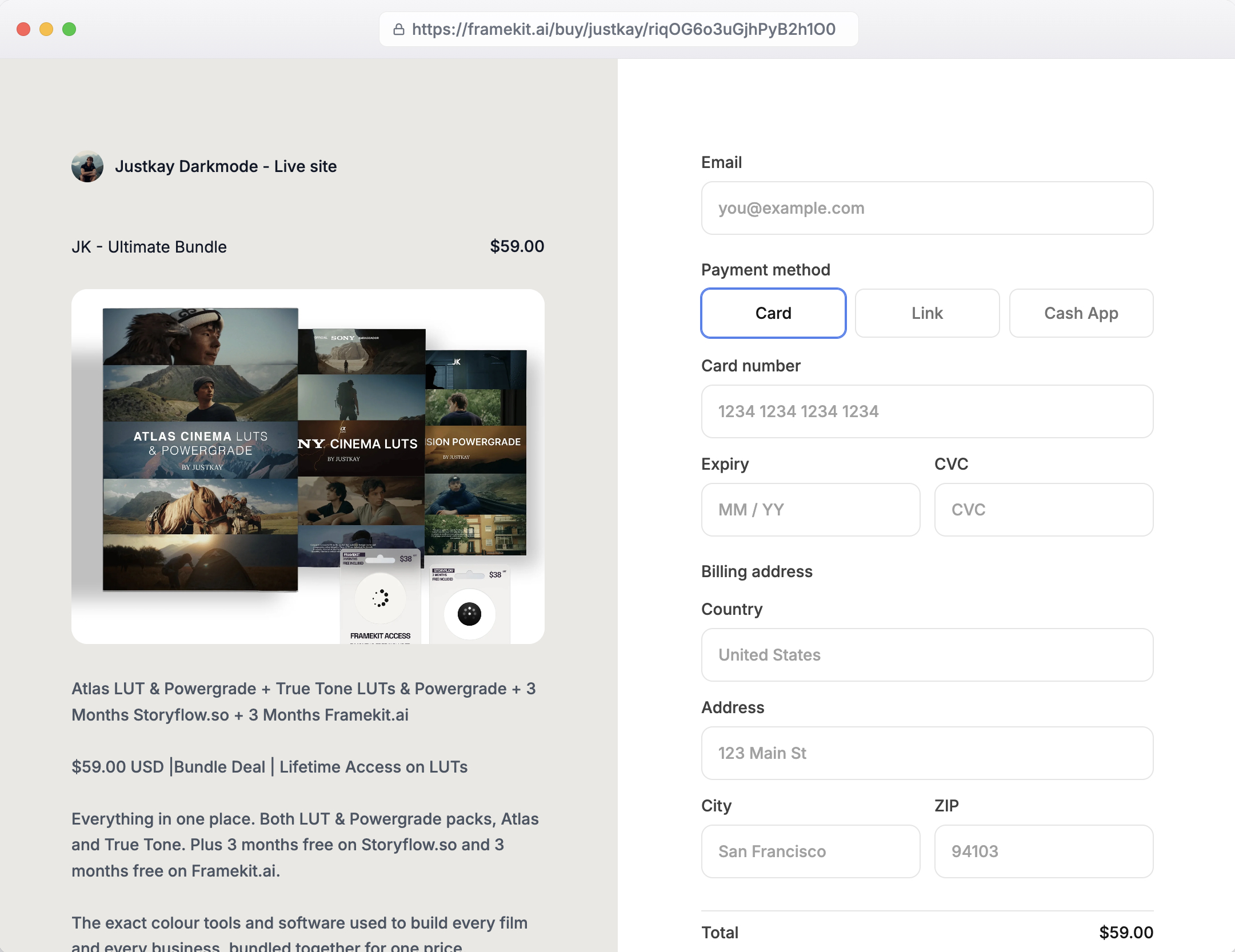
What it sells well is the downloadable part a lot of educators already make: the workbook, the Lightroom presets taught in module three, the LUT pack from a colour-grading lesson, the template bundle.
You can sell those from your own portfolio site or from a hosted buy link, alongside a Teachable or Thinkific school or instead of one when the files were the real product all along.
The fee is 5% on the free plan, 3% on Pro and 0% on the 39 dollar Business plan, so a 49 dollar workbook costs about 2.45 dollars in platform fee on the free plan before Stripe's processing, and nothing on Business.
Past 780 dollars a month in sales Business is the cheaper plan.
The limits are real: no lesson player, no progress tracking, no cohorts or certificates, no subscriptions, and payments go into your own Stripe account, so you remain the seller for VAT exactly as you do on both platforms above.
If your course needs any of the school machinery, keep the school and use a store only for the files.
For the wider field, our comparison of Thinkific alternatives prices ten platforms against the same branding-and-fee trade.
In one lineBuy a school if you are running a school, and buy a shop if you are selling files, because paying school prices for a shop is the most common mistake in this category.

Which should you pick
Work down this list and stop at the first line that matches your situation, because these two platforms genuinely suit different businesses rather than one being better than the other outright.
- You are selling more than about 533 dollars a month and want no platform cut and no platform logo. Teachable Builder at 69 dollars a month billed annually. This is the answer for most readers.
- You will stay on the entry plan and the branding does not bother you. Thinkific Basic at 39 euro, which is the cheapest unlimited-course plan here and takes nothing from your sales.
- You need cohorts or certificates. Thinkific Start at 79 euro, which includes both, or Teachable at the equivalent tier if you prefer its payments story.
- You are launching and have sold nothing yet. Teachable Starter at 29 dollars billed annually, and move to Builder the month you pass 533 dollars in sales.
- You have a large catalogue. Thinkific, because unlimited courses on the entry plan beats Teachable's five and ten product limits.
- Your students are mostly outside the US. Check Teachable's 3.9% international processing rate against your numbers before committing, because it lands on every one of those sales.
- Your course is really just files. Neither, and Framekit sells them from your own portfolio site free to start, with no lesson machinery to pay for. Compare the storefronts instead.
Frequently Asked Questions
Is Teachable cheaper than Thinkific?
At the tier most people end up on, yes. Teachable Builder is 69 dollars a month billed annually with a 0% transaction fee and no platform branding.
Thinkific reaches a branding-free plan only at Grow, which is 159 euro a month on annual billing. Thinkific Basic at 39 euro is cheaper than both, if you accept the branding.
Does Thinkific charge transaction fees?
Not on its paid plans, based on its published pricing, which is genuinely unusual in this category and is the main reason to choose it. What Thinkific charges instead is a substantially higher monthly price at the tier that removes its branding.
What is Teachable's transaction fee?
7.5% on the Starter plan, and 0% on Builder and Growth when you use Teachable Payments. Card processing is separate on every plan at 2.9% plus 30 cents domestically and 3.9% plus 30 cents internationally.When should I upgrade from Teachable Starter to Builder?
At 533 dollars a month in course sales. Builder costs 40 dollars a month more and saves the 7.5% fee, so 40 divided by 0.075 gives the crossover. Below that figure Starter is genuinely cheaper, and above it the fee costs more than the upgrade every single month.
Can I move my course from one to the other?
The content moves easily, because it is video, PDFs and text. The students do not move automatically.
Anyone on a recurring payment must cancel and re-subscribe on the new platform, and a share of them will not, so plan the migration for a month when you are already in contact with your list and can ask them directly.
Which one has better course-building features?
Thinkific, on balance. Cohorts, certificates and an HTML and CSS editor arrive on its 79 euro Start plan, and the entry plan carries unlimited courses rather than a product limit. Teachable's advantage is pricing rather than depth.
Can I sell course workbooks or presets without a course platform?
Yes. If the thing students actually download is a workbook, a template pack or a set of presets, a digital-download store sells it without paying 39 to 159 a month for enrolment tools.
Framekit does this from your own site or a shareable buy link at 5% on its free plan and 0% on its 39 dollar Business plan, but it does not host lessons, cohorts or subscriptions, so it replaces a course platform only when there was no course to run.
Do either of them handle EU VAT?
No. Neither acts as merchant of record, so on a cross-border digital sale you remain the seller and the registration and filing obligation is yours. Platforms that do take this over exist, but they are a different category from these two.
Is a 0% transaction fee really 0%?
No platform here delivers a sale for nothing, because card processing is charged separately on both. Treat a 0% transaction fee as meaning no platform cut on top of processing, and add roughly 3% to every such claim before comparing it with anything else.
The verdict
These two platforms are priced for different beliefs about what a course business is, and both beliefs are defensible.
Thinkific thinks you should keep your revenue and pay for capability, which produces a 39 euro entry plan with unlimited courses and no cut of your sales, and a 159 euro plan to take its name off your school.
Teachable thinks it should take a share until you are established and then stop, which produces a 29 dollar entry plan at 7.5% and a 69 dollar plan at nothing.
For most people reading this, Teachable Builder is the better deal, and the reason is narrow and specific: it reaches the branding-free, fee-free position that educators actually want for less than half what Thinkific charges for branding-free alone.
That is the finding, and no amount of feature comparison changes the arithmetic behind it.
The case for Thinkific is real and it is not the case its own pricing page makes. It is not Grow.
It is Basic at 39 euro, running unlimited courses, taking nothing from your sales, with a badge on the page that most audiences will not care about.
If you can live with the badge, that is the cheapest serious course platform in this comparison, and the 120 euro a month you save by not upgrading is worth considerably more than the logo costs you.