Framekit templates
Start from a designer-made template
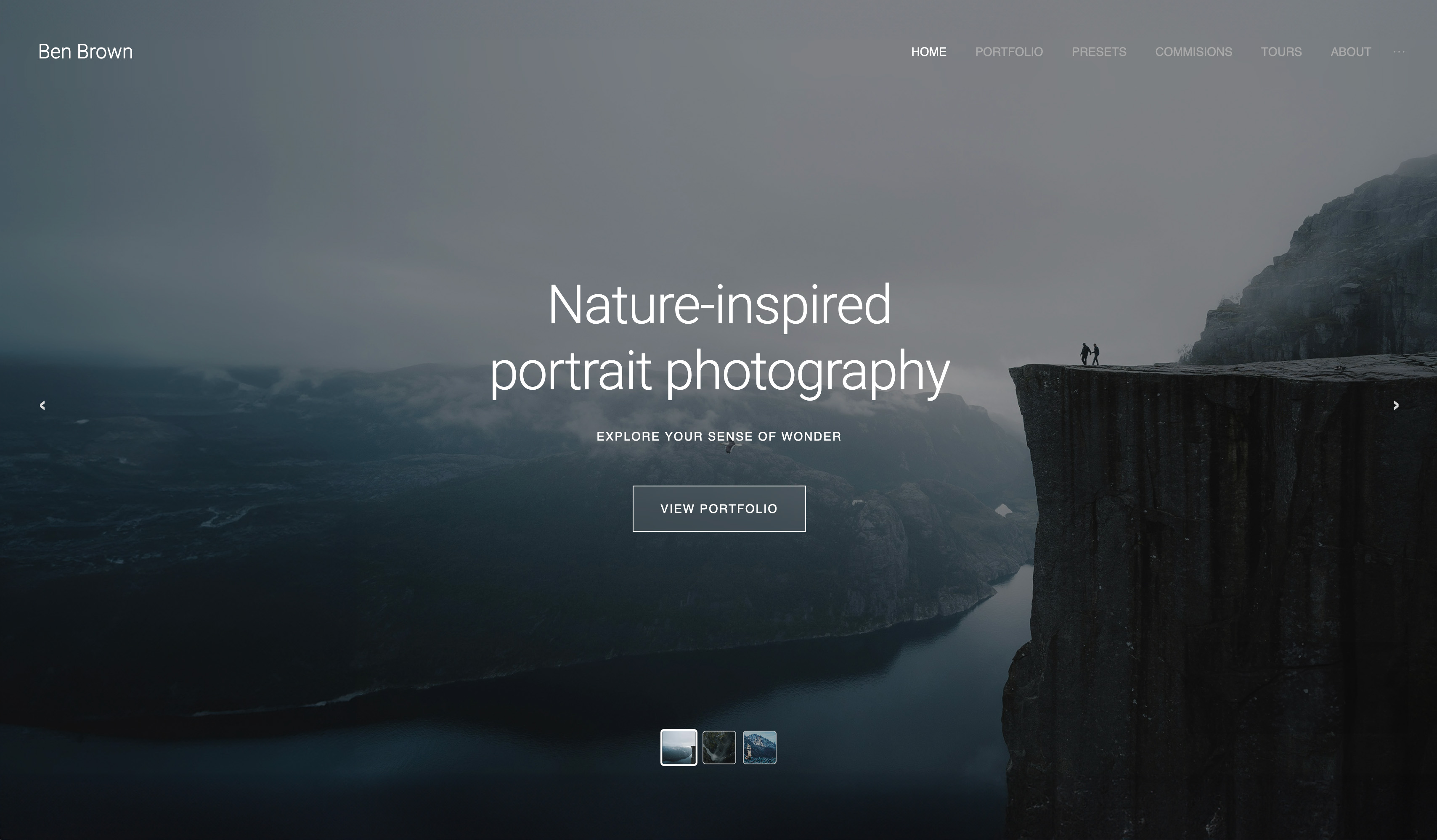 Use template
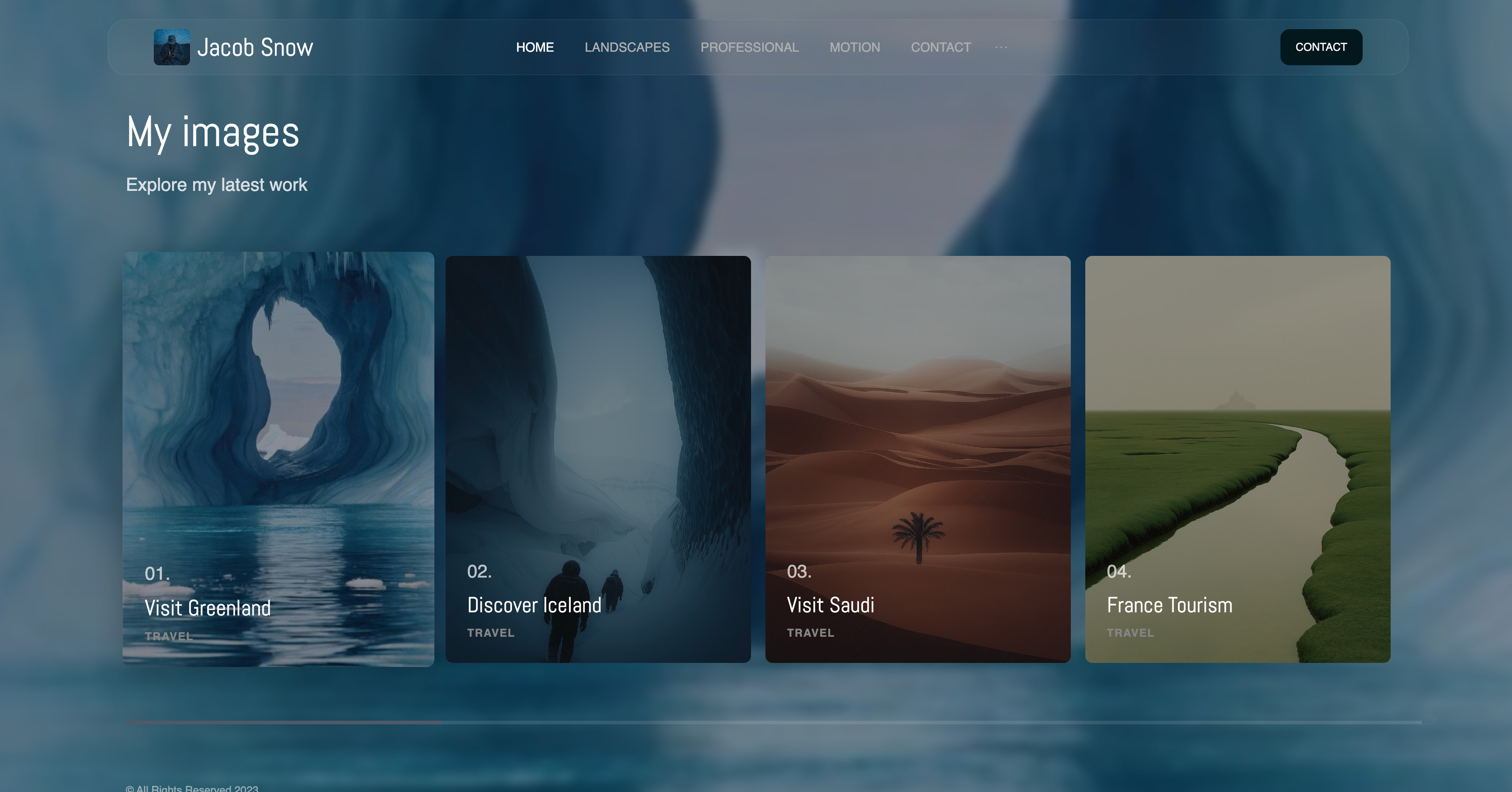 Use template
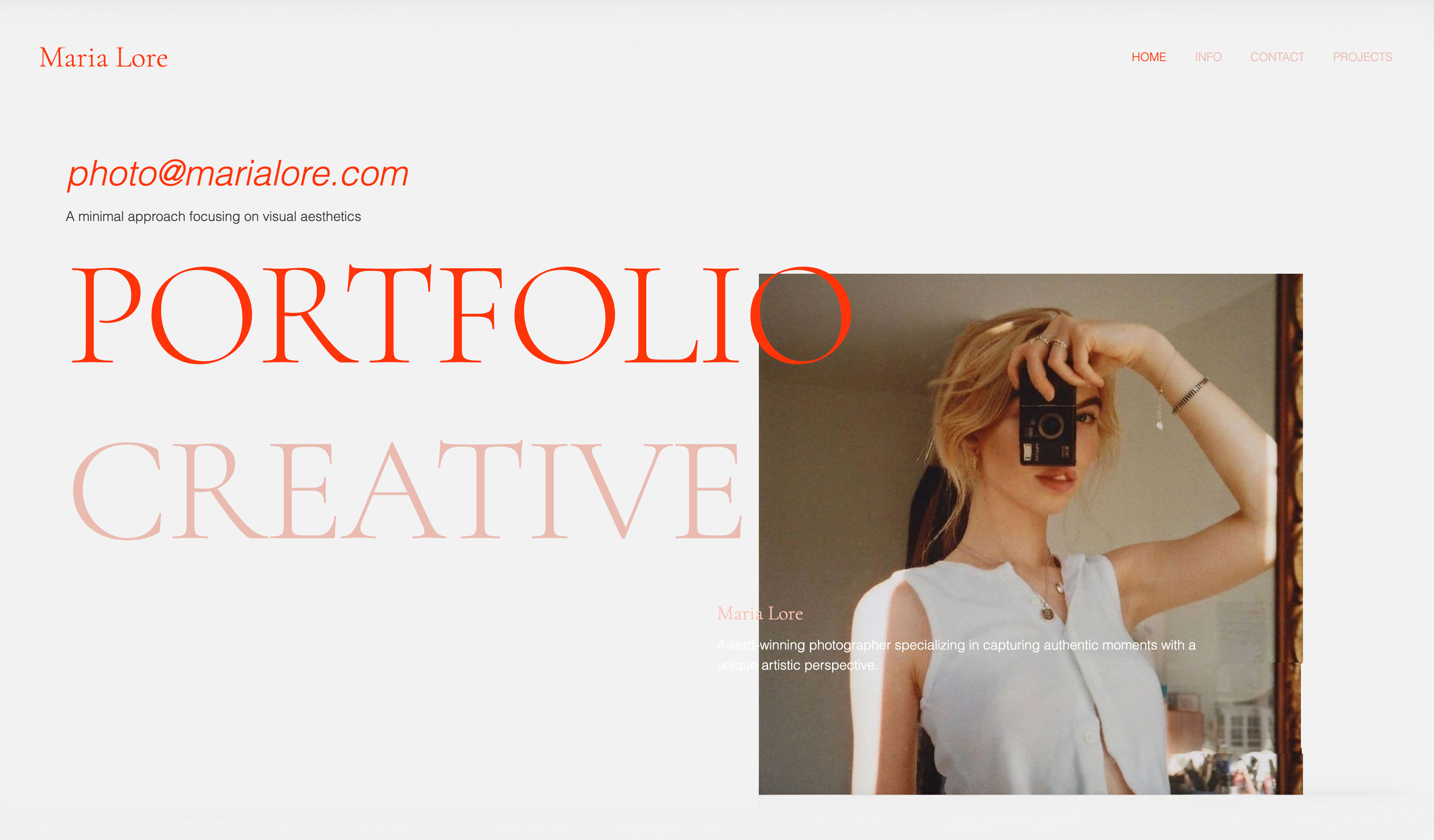 Use template
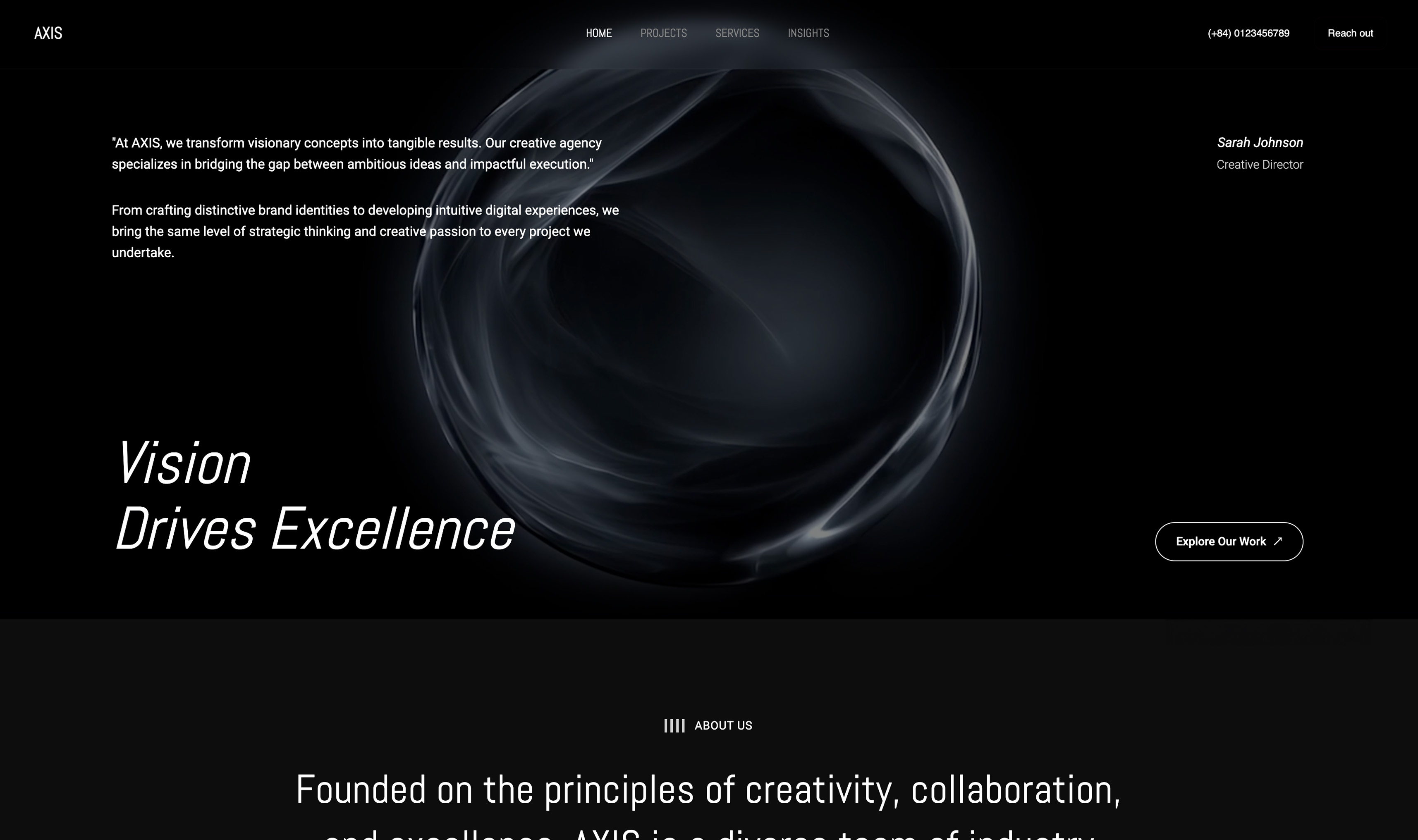 Use template
 Use template
 Use template
 Use template
 Use template
Most photographers looking for GotPhoto alternatives are doing arithmetic rather than complaining.
GotPhoto charges a service fee on every order: 12% on the free tier with 5GB and two users, 9% on the $9.90 Growth plan with 50GB, and 7% on the $49.90 Pro plan with 1TB and five staff seats, all listed on GotPhoto's pricing page with a 2.9% plus $0.30 payment fee on top.
On a $40,000 volume season those percentages are $4,800, $3,600 and $2,800 respectively, and the number does not shrink as you get better at the job.
That is the whole search intent, and it deserves a straight answer rather than a feature parade. The question is not whether GotPhoto is good, because for a multi-photographer school and sports operation it is genuinely well built.
The question is whether a percentage forever is the right shape of cost for the business you now have.
There is a second reason people leave, and it is quieter. Volume platforms are excellent at selling to parents and useless at everything else you do, so the school, club or corporate side of your work has nowhere to live.
A volume photography platform is software that links hundreds of subjects to their own images, sells packages to families, and fulfils prints, usually charging a percentage of every order rather than a flat subscription.
The best GotPhoto alternative in 2026 is PhotoDay, because it keeps access codes and subject matching while dropping the subscription, taking a flat 10% of each order with unlimited storage, which beats GotPhoto's free 12% tier at any volume but loses to its 9% Growth tier above about $12,000 a year.
Framekit is the best pick for everything volume platforms ignore, delivering school, club and corporate galleries from your own domain with uncapped galleries and no commission, though it has no subject matching or parent ordering at all.
ShootProof is the strongest flat-fee option at 0% commission, and Pixieset is the most polished general gallery.
In September 2026 we re-verified every subscription and fee in this guide on the vendors' own pricing pages, and corrected PhotoDay's fee, which an earlier version listed as card processing only.
Framekit handles the half of your work that volume platforms are not built for, free to start.
Full disclosure: Framekit is our product and it is ranked second here rather than first, because volume photography needs subject matching and we have none. We priced a full $40,000 season against every fee model, read all figures from published pricing pages, and we say clearly that PhotoDay and GotPhoto both beat us on picture-day workflow and ShootProof beats us on print revenue.
Why Photographers Leave GotPhoto
Three reasons come up again and again among photographers who have already made the move, and the first of them is not a feature complaint at all, it is simply a spreadsheet.
The fee never reaches zero. Even at the top of the ladder you pay 7% of every order forever.
A flat-subscription platform charging $60 a month costs $720 a year regardless of whether you sell $20,000 or $200,000, and the crossover arrives sooner than most photographers assume.
The tooling is heavy for a solo shooter. Job management and five staff seats are worth paying for when you run crews. When you are one person with four schools, they are process you work around.
It covers one customer. Parents buy packages; principals, athletic directors and corporate clients receive files. GotPhoto is built entirely for the first group.
To be fair about what you would be giving up: GotPhoto's job management, multi-user support and academic-year workflow are the best in this comparison, and the falling fee genuinely rewards growth.
It is a good product with a cost structure that suits some businesses and not others.
How We Compared These GotPhoto Alternatives
We priced every option and tested the competing platforms against one full season rather than one gallery, because volume photography's costs are annual, its workflow is seasonal, and a single-job test would flatter the wrong products.
Framekit, as our own product, is described from its documented features rather than scored as a test result.
The season$40,000 of parent order revenue across 8 jobs, plus 40 organisation-facing deliveries of composites, team files and staff headshots with no store attached.
Total cost of the season, meaning subscription plus fees plus processing, weighted 30%, since this is why people are reading.
Subject matching workflow, weighted 20%, because it is the capability that makes volume work possible at all.
Organisation-facing delivery, weighted 20%, covering the half GotPhoto ignores.
Multi-user support, weighted 15%.
Client and parent experience, weighted 15%.
Claims are separated by origin. Hands-on: publishing, delivering and buying through each client flow.
Verified from primary sources: subscriptions, service fees and commission rates read from published pricing pages in August 2026 and re-checked in September 2026. Community sentiment, always labelled: recurring public review complaints.
What Pricing a Full Season Against 11 Platforms Showed
The numbers below are the ones that genuinely decide this category rather than the ones that appear on a homepage, and the spread between the best and worst of them is unusually stark.
- On $40,000 of parent revenue, platform cost ranges from $720 (ShootProof's flat unlimited plan) to $4,800 (a 12% service fee), a spread of $4,080 in a single season, with card processing on top of both.
- 2 of the 11 alternatives have genuine subject-matching workflows; the rest expect manual folder organisation.
- 4 of the 11 charge no percentage at all on sales, relying entirely on a subscription.
- The crossover point where a flat $60-a-month plan beats a 7% fee arrives at about $10,300 of annual order revenue.
That last figure is the one to check against your own books. Take last season's total parent orders, multiply by 0.07, and compare it with twelve months of a flat-fee plan.
Photographers regularly stay on percentage models years past the point where the arithmetic stopped favouring them.
The 11 Best GotPhoto Alternatives in 2026, Compared
Weighting is stated above and it puts season cost first, because that is the explicit reason for this search.
Framekit ranks second with a 2 on subject matching, the lowest score anywhere in this comparison, because we have no such capability and the ranking would be worthless if we hid it.
| Platform | Fee on sales | Subscription | Subject matching | Our rating |
|---|---|---|---|---|
| PhotoDay | 10% transaction fee | None | Yes, access codes and matching | 9.2/10 |
| Framekit | 0% on delivery | Free, paid from $9/mo | No | 9.0/10 |
| ShootProof | 0% on every plan | From $9.99/mo | No | 8.8/10 |
| Pixieset | 15% free, 0% paid | From $10/mo | No | 8.4/10 |
| Pic-Time | 15% free, 0% self-collected | From $8/mo | No | 8.1/10 |
| CloudSpot | 15% free, 2.5% paid | From $7/mo | No | 7.9/10 |
| SmugMug | ~15% on markup | $20/mo annual | No | 7.5/10 |
| Zenfolio | 7% flat per order | From $9/mo | No | 7.2/10 |
| PicDrop | No store | ~EUR 14.99/mo | No | 7.0/10 |
| Picflow | Varies by storefront | From $21/mo | No | 6.9/10 |
| Dropbox | None, no store | $11.99/mo | No | 6.2/10 |
All fees and prices were re-read from published vendor pricing pages in September 2026, and card processing of roughly 2.9% plus $0.30 applies wherever a parent pays, on every platform including the ones charging no commission.
Find your crossover. Multiply last season's order revenue by 0.07 and compare it with a year of a flat-fee plan. That single sum decides this category more reliably than any feature list.
1. PhotoDay: Best Overall GotPhoto Alternative
Our rating: 9.2/10
PhotoDay is the closest like-for-like replacement, because it keeps the capability that makes volume work possible while removing the subscription.
There is no subscription, no minimum order and no lab bill; you sign up free and, per PhotoDay's pricing page, it takes a 10% transaction fee on each order's subtotal plus card processing of 2.9% and $0.30, with lab costs deducted per order and unlimited storage included.
It also does the hard part properly.
Access codes and a matching workflow get families into the right gallery without an evening of folder sorting, and the parent-facing marketing automation is aimed squarely at the number that decides a volume season, which is what percentage of families actually order.
Best forSolo and small volume operations shooting schools, sports, dance and events who want no fixed cost.
Key features:
- No subscription and no minimums, so quiet months cost nothing
- Access-code and matching workflow built for hundreds of subjects
- Parent-facing marketing automation designed to lift order rates
- Lab integration so orders print and ship without you handling fulfilment
- Purpose-built for the same school, sports and dance markets GotPhoto serves
The real numberon a $10,000 season PhotoDay's 10% is $1,000, against $1,200 on GotPhoto's free tier and $1,019 on Growth once its subscription is counted.
On a $40,000 season the order reverses: PhotoDay's $4,000 is $281 more than GotPhoto Growth and $601 more than Pro. It is the cheaper home for small operators, not for large ones.
Pros:
- Cheaper than every GotPhoto tier below about $12,000 a year in orders, with nothing to pay in a dead month
- Strong matching and access codes, which is the capability that matters most
- Unlimited storage, against 5GB on GotPhoto's free tier
Cons:
- The 10% never falls, so a growing operation eventually pays more than on GotPhoto's paid tiers
- Galleries carry PhotoDay's branding rather than yours
- Built for selling packages, so plain organisation delivery is awkward
- No photographer website, so your portfolio lives elsewhere
- Fewer operational tools than GotPhoto for crews
Skip it ifyou run a crew and need staff seats and job management. That is precisely what GotPhoto is better at, and leaving for PhotoDay would cost you workflow.
Verdict: PhotoDay is the correct move for any volume photographer without staff, and we rank it above our own product because nothing we offer competes with its matching workflow. Visit PhotoDay
2. Framekit: Best for Everything Volume Platforms Ignore

Our rating: 9.0/10
Framekit is an AI website builder that bundles client galleries, video review and a digital-download store into one account with one pool of storage, and it earns a place in a GotPhoto comparison for a reason that has nothing to do with parents.
Every volume photographer runs a second, quieter business: composites for the principal, team files for the athletic director, staff headshots for a company's HR lead.
Nobody in that group buys a package, and GotPhoto has no real home for them.
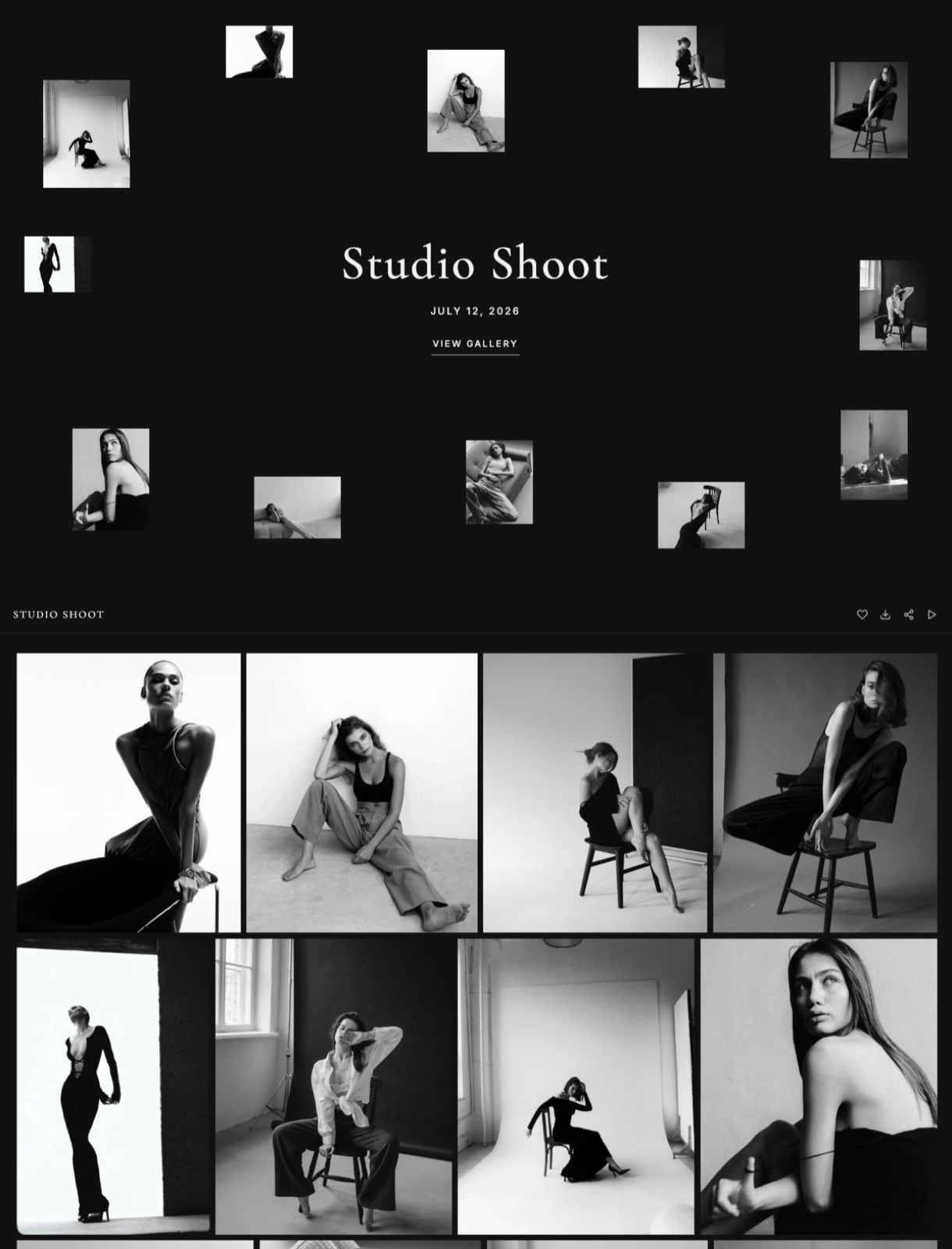
In Framekit, each of those deliveries is an ordinary gallery: upload, choose a cover layout, set a gallery password, optionally add a download PIN so only the named contact can pull full-resolution files, and send the link from Framekit by email.
Recipients do not create an account to view or download, which matters with school IT departments that block sign-ups. A sports-day or graduation clip can sit in the same gallery as the stills, and video is never watermarked.
Best forVolume photographers who also deliver to schools, clubs and companies, and want those deliveries and their portfolio on one domain.
Key features:
- Unlimited galleries on every plan including free
- A portfolio site on the same domain, generated by Cadence, Framekit's own model for creative sites
- Gallery password, download PIN, auto-expiry, photo watermarks, favourites and slideshow
- Photos and video in one gallery; photo files up to 100MB each
- Custom domain from the $9 Starter plan, so school and club contacts bookmark your address
- A digital store for yearbook file bundles or licence packs, at 5% on Free and Starter, 3% on Pro and 0% on Business
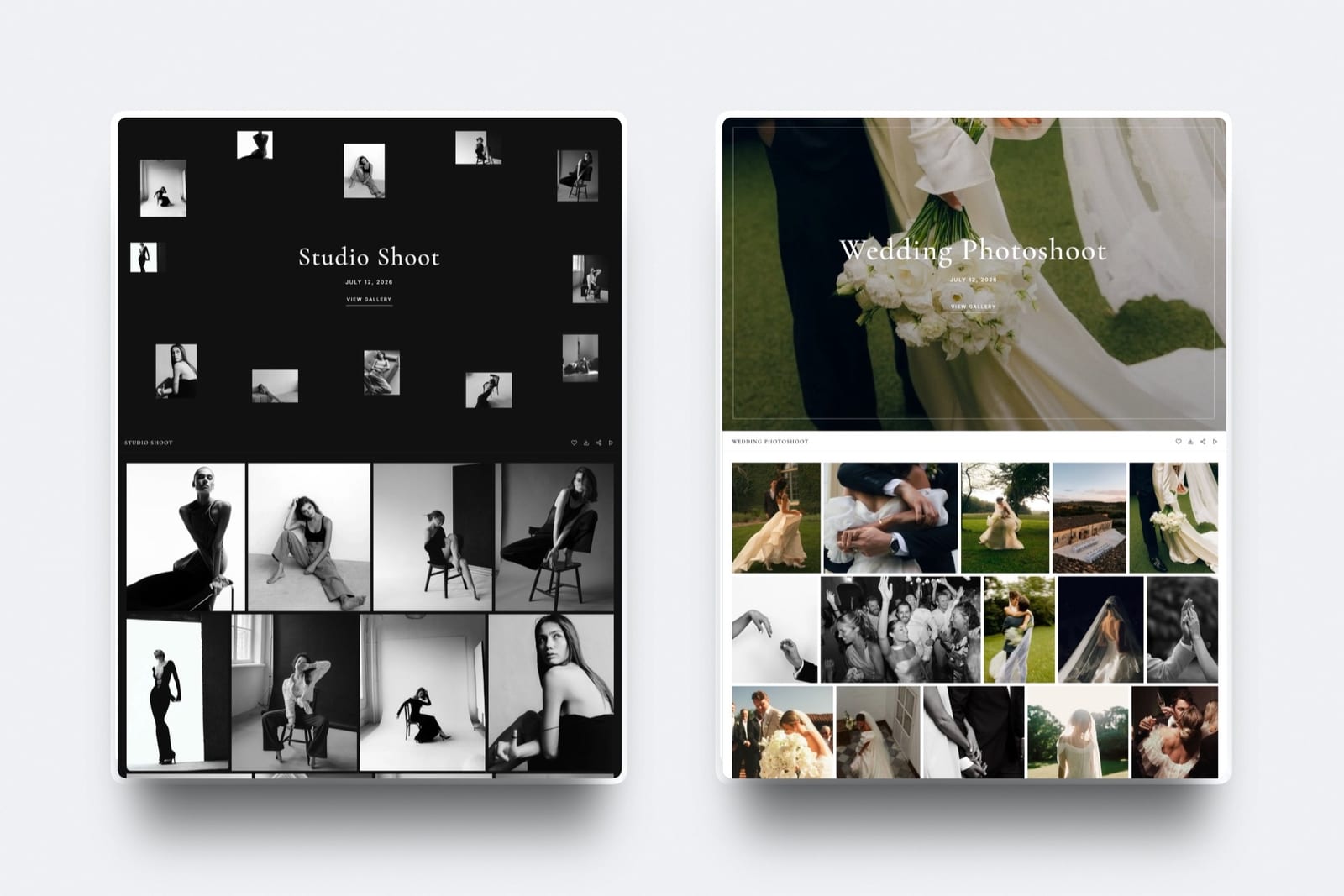
The real numberthe free plan's 10GB and uncapped gallery count already cover composites and staff headshots for a handful of schools at $0.
Putting them on your own domain starts at Starter, $9 a month or $7 billed annually, with 50GB, and Pro at $19 gives 300GB shared by site, galleries and video.
Beside a GotPhoto or PhotoDay account, that is $0 to $228 a year for the half of the season you currently handle by email attachment.
Pros:
- Built for the organisation-facing half of volume work, which the matching platforms are not designed around
- The portfolio that wins contracts and the gallery that services them share one domain
- No commission and no gallery cap, so district-scale delivery costs nothing extra
Cons:
- No subject matching, access codes, student ID lookup or picture-day automation
- No parent package builder, no price sheets, no print lab and no order fulfilment
- No staff seats for a picture-day crew: team members on Pro and Business are site admins, and there is no job management or crew scheduling of the kind GotPhoto is built on
- The 2TB ceiling on Business is small next to PhotoDay's unlimited storage
Skip it ifparent package sales are your entire business. We would slow you down and we would rather tell you than sell to you.
Verdict: Framekit is not a GotPhoto replacement, it is the missing second tool, and running it beside a volume platform costs less than one percentage point of fee on a $40,000 season. See the wider category in our client gallery platforms guide.
3. ShootProof: Best Flat-Fee Alternative
Our rating: 8.8/10
For a volume photographer whose objection is the percentage itself, ShootProof is the cleanest answer available: 0% commission on sales on every plan including the cheapest, with real pro-lab fulfilment, contracts and invoicing.
Plans price by photo count.
The free account covers 100 photos, then 1,500 photos runs $9.99 a month, 5,000 photos $19.99, 25,000 photos $31.99, and unlimited $60, or $50 a month billed annually, per ShootProof's published plans.
At volume you will be on the unlimited tier, which is $720 a year on monthly billing against $2,800 in fees at GotPhoto's best rate on the same season.
Skip it ifsubject matching is the reason you use a volume platform. ShootProof will sell beautifully and sort nothing.
Verdict: ShootProof is the flat-fee escape and the arithmetic is decisive above about $10,300 in annual orders. It carries 4.9 out of 5 across 92 G2 reviews. Our ShootProof alternatives guide covers the field around it.
4. Pixieset: Most Polished General Gallery
Our rating: 8.4/10
Many volume photographers also shoot seniors, families and headshots, and Pixieset covers all of that with the most familiar client experience in the category.
The free plan holds 3GB and takes 15% on store sales; Basic at about $10 a month raises storage to 10GB and removes the commission, and Plus at about $20 gives 100GB.
It carries 4.7 out of 5 across 207 Capterra reviews, the deepest review base in this comparison, and no volume workflow at all.
Skip it ifpicture day is the bulk of your revenue.
Verdict: Pixieset is the general-purpose gallery to run alongside a volume platform, not instead of one. Our Pixieset alternatives guide covers the next hop.
5. Pic-Time: Best for Selling After the Rush
Our rating: 8.1/10
Pic-Time's automated campaigns, reminders and gifting flows are built to keep selling after the initial ordering window closes, which is exactly where volume revenue leaks. Its galleries are also the most designed in this comparison.
The free plan takes 15% commission, Beginner costs $8 a month with 10GB, Professional $25 with 100GB, and Advanced $50 with unlimited storage, and paid tiers charge 0% commission when you collect payment yourself through Stripe, PayPal or Square.
Skip it ifyour bottleneck is matching rather than conversion.
Verdict: Pic-Time is a conversion engine wearing a gallery, and a useful second act for a volume season rather than a replacement for its infrastructure.
6. CloudSpot: Cheapest Bundle With Admin
Our rating: 7.9/10
CloudSpot is the least expensive way here to get contracts, invoicing and scheduling in the same account as your galleries.
Its free plan carries 5GB, a 3-gallery limit and 15% commission; Entry costs $7 a month for 15GB and 15 galleries; Lite at $17 unlocks 100GB, unlimited galleries and the studio suite; Pro is $34 for 500GB and Unlimited is $50, all set out on CloudSpot's pricing page.
Paid tiers replace commission with a 2.5% transaction fee.
Skip it ifyou keep many galleries live and want to stay on a cheap tier.
Verdict: CloudSpot is honest value at Lite and irrelevant below it for volume work. Our CloudSpot alternatives guide covers its edges.
7. SmugMug: Best Multi-Season Archive
Our rating: 7.5/10
Unlimited storage on every plan makes SmugMug the cheapest way to keep a decade of cohorts reachable, which matters when a school asks for a graduating class from six years ago.
Annual billing puts Direct at $20 a month, Portfolio at $23.50 and Pro at $37, with monthly billing at $29, $35.50 and $52, and print sales carry a commission on your markup commonly planned around 15%.
Skip it ifthe buying experience matters. Its Capterra score of 3.5 across 11 reviews reflects a small sample with value-for-money complaints.
Verdict: SmugMug is an archive layer to sit behind a volume platform, not a replacement for one. Our SmugMug alternatives guide has the detail.
8. Zenfolio: A Lower Flat Percentage
Our rating: 7.2/10
Zenfolio is worth naming because its flat 7% per order matches GotPhoto's best rate while costing $9 to $40 a month rather than $49.90, and it bundles a template website and galleries with it. For a photographer wedded to a percentage model, it is a straightforward saving.
Design is the ceiling, and its Capterra rating of 3.9 across 14 reviews rests on a sample too small to weigh heavily.
Skip it ifyou want the percentage gone rather than smaller.
Verdict: Zenfolio is the lateral move that shaves the fee without changing the model. Our Zenfolio alternatives guide covers where people go next.
9. PicDrop: Delivery Only, No Store
Our rating: 7.0/10
PicDrop is for the organisation-facing half of volume work rather than the parent half, offering 500GB on its Pro plan for about EUR 14.99 a month with unlimited galleries and your own branding on client pages.
Free holds 1GB across 3 galleries, and Advanced runs to 1TB at EUR 39.99 with up to four team seats.
New customers moved to this plan structure in May 2026, so older comparisons naming a Lite tier are stale; current figures are on PicDrop's pricing page.
Skip it ifyou need to sell anything at all.
Verdict: PicDrop is a capable delivery component with no commercial layer, and the cheapest large storage in this comparison. Our PicDrop alternatives guide covers what it omits.
10. Picflow: Best for Composite Approval
Our rating: 6.9/10
Picflow earns a place for one specific job: getting a school administrator to approve composites, staff pages and yearbook selections before print.
Per-image comment threads and direct annotation make that traceable in a way volume platforms never attempt, and paid plans from $21 a month include a storefront, invoicing and contracts.
Skip it ifapprovals arrive by email and always have.
Verdict: Picflow is a narrow specialist for the approval stage of volume work. Genuinely useful, never a GotPhoto replacement.
11. Dropbox: Only for the Organisation Handoff
Our rating: 6.2/10
Dropbox appears because a lot of school and club deliveries genuinely happen this way, and it deserves an honest assessment. At $11.99 a month for 2TB it is the cheapest capacity here, filenames and folders survive intact, and a school IT department can sync it directly.
For parent-facing work it is useless: no matching, no ordering, no packages, no branding, and a permissions model that generates support calls.
Skip it ifanyone is buying something.
Verdict: Dropbox is the pipe for institutional handoffs and nothing more. Our Dropbox alternatives for photographers guide covers the client-facing gap.
What a $40,000 Season Costs on Each Model
The table below prices one identical season across every realistic option, including GotPhoto's own three tiers, so that the comparison shows what staying costs as clearly as what leaving costs.
| Setup | Annual subscription | Fees on $40,000 | Total |
|---|---|---|---|
| GotPhoto free (12%) | $0 | $4,800 | $4,800 |
| GotPhoto Growth (9%) | $119 | $3,600 | $3,719 |
| GotPhoto Pro (7%) | $599 | $2,800 | $3,399 |
| Zenfolio Advanced (7%) | $480 | $2,800 | $3,280 |
| PhotoDay (10%) | $0 | $4,000 | $4,000 |
| ShootProof unlimited | $720 | $0 commission | $720 |
| ShootProof unlimited plus Framekit Pro | $948 | $0 commission | $948 |
Two honest caveats. ShootProof's $720 looks decisive but it does no subject matching, so you are buying back an evening of work per job.
And card processing of roughly 2.9% plus $0.30 per order, about $1,160 on this season, applies on top of every row, PhotoDay and GotPhoto included, so it is left out.
At $40,000 the matching platforms land within about $600 of each other and GotPhoto's paid tiers are the cheapest of them; PhotoDay's advantage is the small season and the empty month, and Framekit gets added for the organisation-facing work either way.
In one linebelow about $10,300 in orders a percentage wins, above it a flat fee wins, and either way the school-facing half needs its own tool.
How to Choose Your GotPhoto Replacement
Work down these in order and stop at the first confident yes, since this decision is driven almost entirely by headcount and revenue rather than by features.
1. Do you run picture days with staff? If yes, staying on GotPhoto is defensible, because nothing here matches its multi-user job management and the fee buys real operational tooling.
2. Are you a solo or two-person operation under about $12,000 a year in orders? If yes, PhotoDay, since it removes the subscription and keeps the matching.
Above that, GotPhoto Growth at 9% is cheaper than PhotoDay's 10%, so staying and changing tier may be the right move.
3. Is your order revenue above roughly $10,300 a year? If yes, price ShootProof's flat unlimited plan against your current percentage before doing anything else.
4. Do schools, clubs or companies also receive files from you? If yes, add Framekit for that half, since it costs $108 to $228 a year and covers work you are currently emailing.
5. Do you need multi-year archives kept online? If yes, SmugMug behind whatever you chose.
Frequently Asked Questions
What is the best GotPhoto alternative in 2026?
The best GotPhoto alternative in 2026 is PhotoDay for solo and small volume operations, because it keeps subject matching and access codes while charging no subscription, only a flat 10% per order plus card processing, which undercuts GotPhoto below about $12,000 a year in orders.
ShootProof is the best flat-fee option at 0% commission on every plan, and Framekit is the best addition for the school and club deliveries that volume platforms ignore entirely.
How much does GotPhoto's service fee actually cost?
GotPhoto charges 12% on its free tier, 9% on the $9.90 Growth plan and 7% on the $49.90 Pro plan. On $40,000 of season revenue those are $4,800, $3,600 and $2,800 respectively, before card processing.
Moving from the free tier to Pro costs $599 in subscription and saves $2,000 in fees, a net gain of $1,401 at that volume.
Is PhotoDay cheaper than GotPhoto?
PhotoDay is cheaper than GotPhoto only for smaller operators. PhotoDay has no subscription and takes a flat 10% of each order, so on a $10,000 season it costs $1,000 against $1,200 on GotPhoto's free tier.
On a $40,000 season PhotoDay's $4,000 is more than GotPhoto Growth at $3,719 or Pro at $3,399. Both add card processing of about 2.9% plus $0.30 per order.
When does a flat subscription beat a percentage fee?
At roughly $10,300 of annual order revenue, comparing ShootProof's unlimited plan at about $720 a year against GotPhoto's 7% Pro rate. Below that the percentage is cheaper; above it the flat fee wins and the gap widens every year you grow.
Run the sum on your own books, because photographers routinely stay on percentage models long past their crossover point.
Do any GotPhoto alternatives offer subject matching?
Only PhotoDay among the alternatives we tested offers a comparable access-code and matching workflow.
ShootProof, Pixieset, Pic-Time, CloudSpot, SmugMug, Zenfolio, PicDrop, Picflow, Framekit and Dropbox all expect manual folder organisation, which for a 600-subject picture day is an evening of work.
This single capability is usually what keeps photographers on a percentage model.
Framekit vs GotPhoto: are they competitors?
Not really, and it would be misleading to present them as direct rivals. GotPhoto sells packages to parents and matches hundreds of subjects to galleries, which Framekit cannot do at all.
Framekit delivers school, club and corporate galleries from your own domain with no commission and no gallery cap, which GotPhoto does not attempt. Most volume photographers benefit from running both.
Can I use one platform for both parents and schools?
Rarely well. Volume platforms optimise for parent purchase flows and treat institutional delivery as an afterthought, while gallery platforms optimise for delivery and have no matching workflow.
Running two tools costs between $108 and $228 a year on top of your volume platform and removes the email-attachment habit that most school photographers still rely on for composites and staff files.
What happens to my galleries if I stop paying GotPhoto?
Behaviour varies by plan and it is worth reading the current terms before a season rather than during one. In general, platforms take galleries offline when a subscription lapses and hold data for a grace period.
Since GotPhoto's free tier exists with a higher fee rather than no service, downgrading is usually possible, but you should keep an independent archive regardless of platform.
Which alternative keeps the most of my print revenue?
ShootProof keeps the most, charging 0% commission on every plan including the cheapest, so your entire markup above lab cost is yours.
Percentage models are where volume print revenue quietly disappears: 7% to 12% on GotPhoto, 10% on PhotoDay, 7% on Zenfolio, and 15% on the free tiers of Pixieset, Pic-Time and CloudSpot.
Framekit sells no prints, so it does not belong in this answer.
Is it worth switching volume platforms mid-season?
No. Migrate between seasons, because volume photography's cost is concentrated in a few weeks and a platform change during them risks the ordering window that pays for your year.
Use the quiet period to test the new platform on one small job, verify the matching workflow with real subjects, and keep the old account live until every family has ordered.
Final Verdict
GotPhoto is a well-built operational platform with a cost structure that suits crews and punishes solo operators as they grow.
PhotoDay is the best alternative because it keeps the matching workflow that makes volume work possible while removing the subscription, and for a solo operator under about $12,000 a year it is the cheapest way to do that.
Above that size, the honest answer is often to stay on GotPhoto and move up a tier.
Where Framekit loses. We rank second and we do not compete on the thing this category is about.
Framekit has no subject matching, no access codes, no package builder, no print lab and no crew job management, so if picture-day volume is your business we are not a replacement for anything.
PhotoDay and GotPhoto both beat us decisively there, and ShootProof will make you more print revenue than we can.
What we are best at is the organisation-facing half, delivered from your own domain, and that is a supporting role rather than a starring one. Framekit is not for anyone who wants one tool to run picture day.
Before you change platform, do the crossover sum: last season's order revenue times 0.07, against a year of a flat-fee plan. If the flat fee is lower and you can live without matching, the decision is already made and no comparison guide is needed.
Related readingclient galleries for school photographers, client galleries for sports photographers, client gallery platforms compared, and studio management tools for photographers.
Every subscription, service fee and commission rate was read from the vendors' published pricing pages in August 2026 and re-verified in September 2026, and the same $40,000 season was priced against all eleven models, because volume photography is decided by annual arithmetic rather than by anything visible in a product demo.