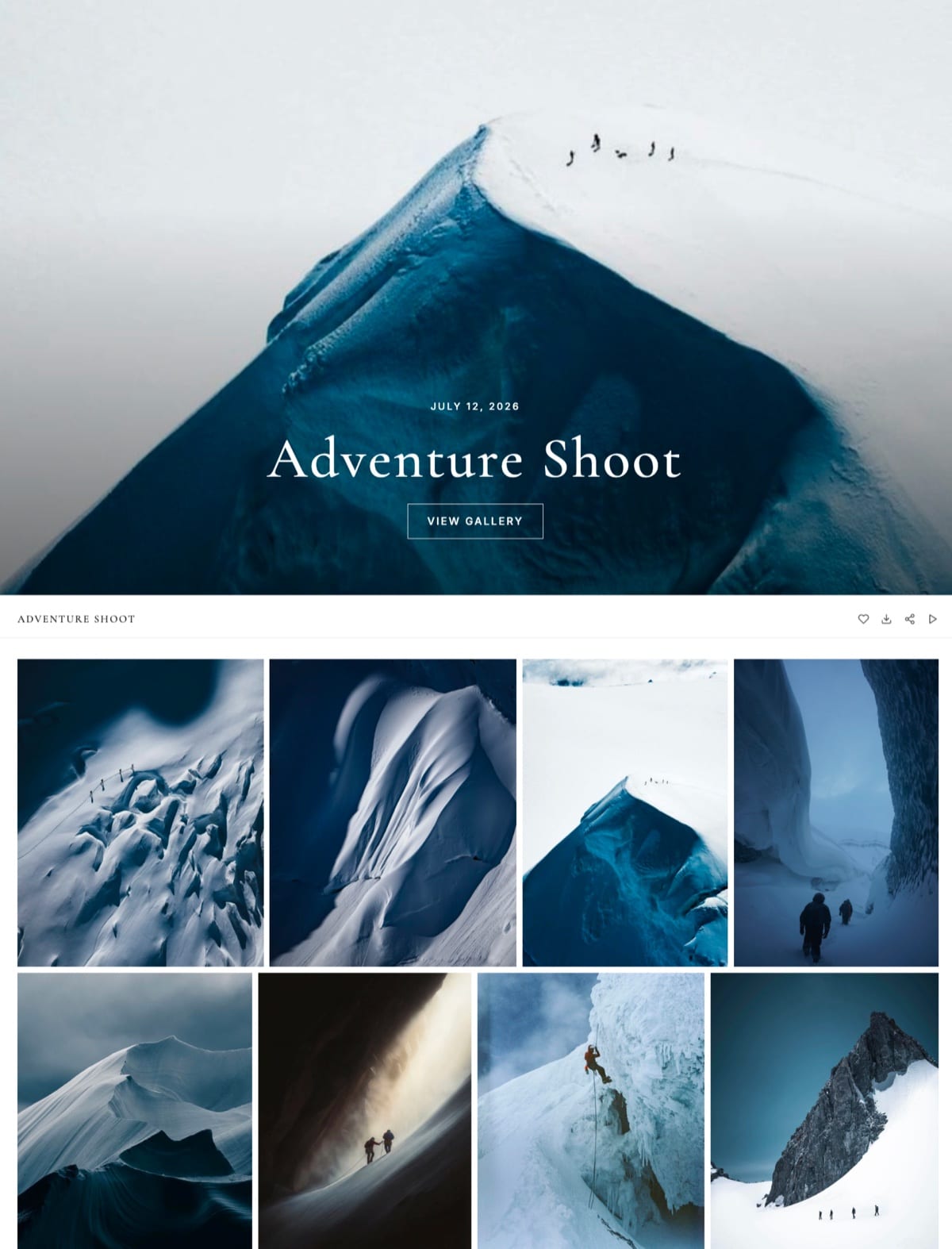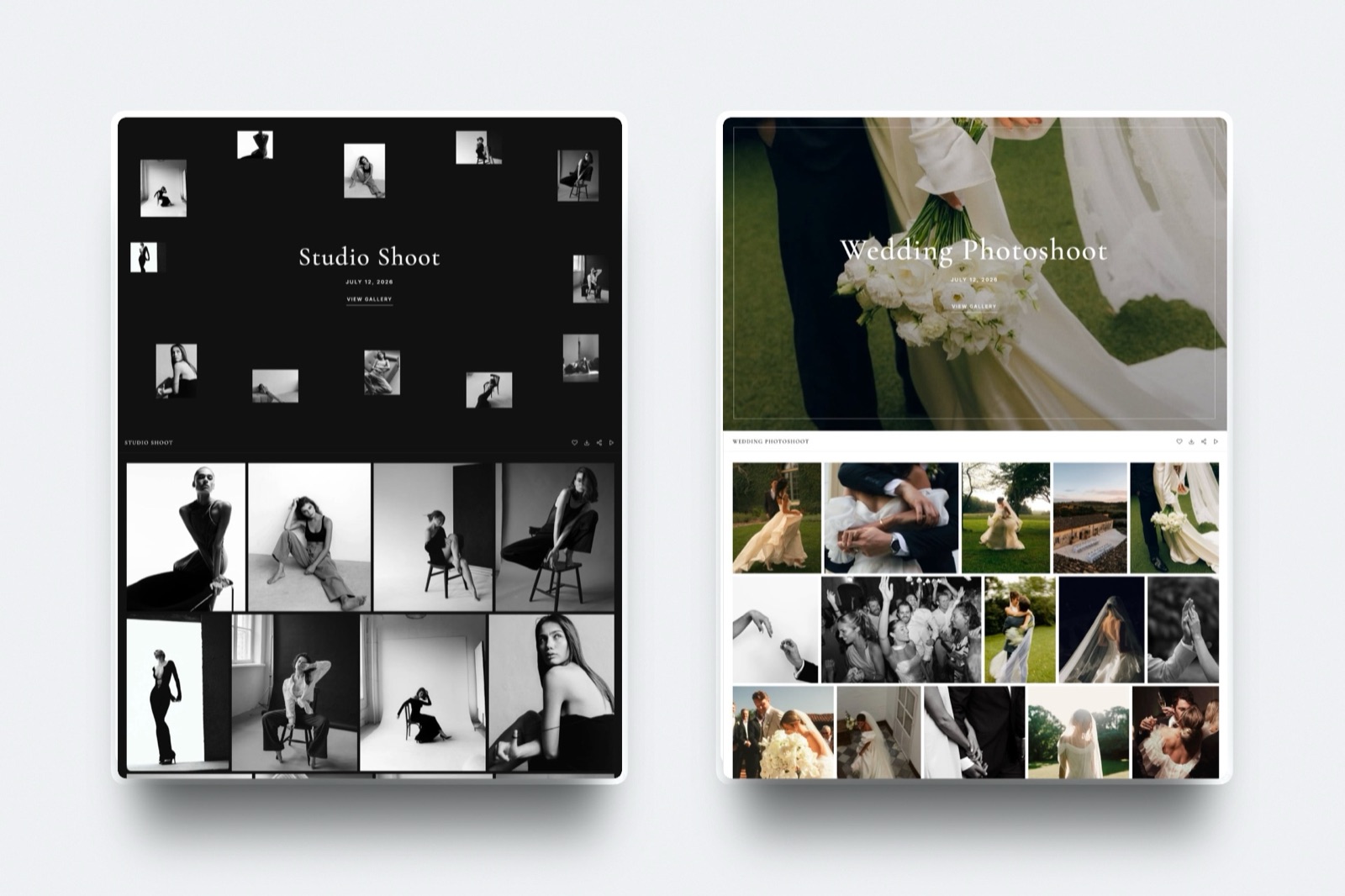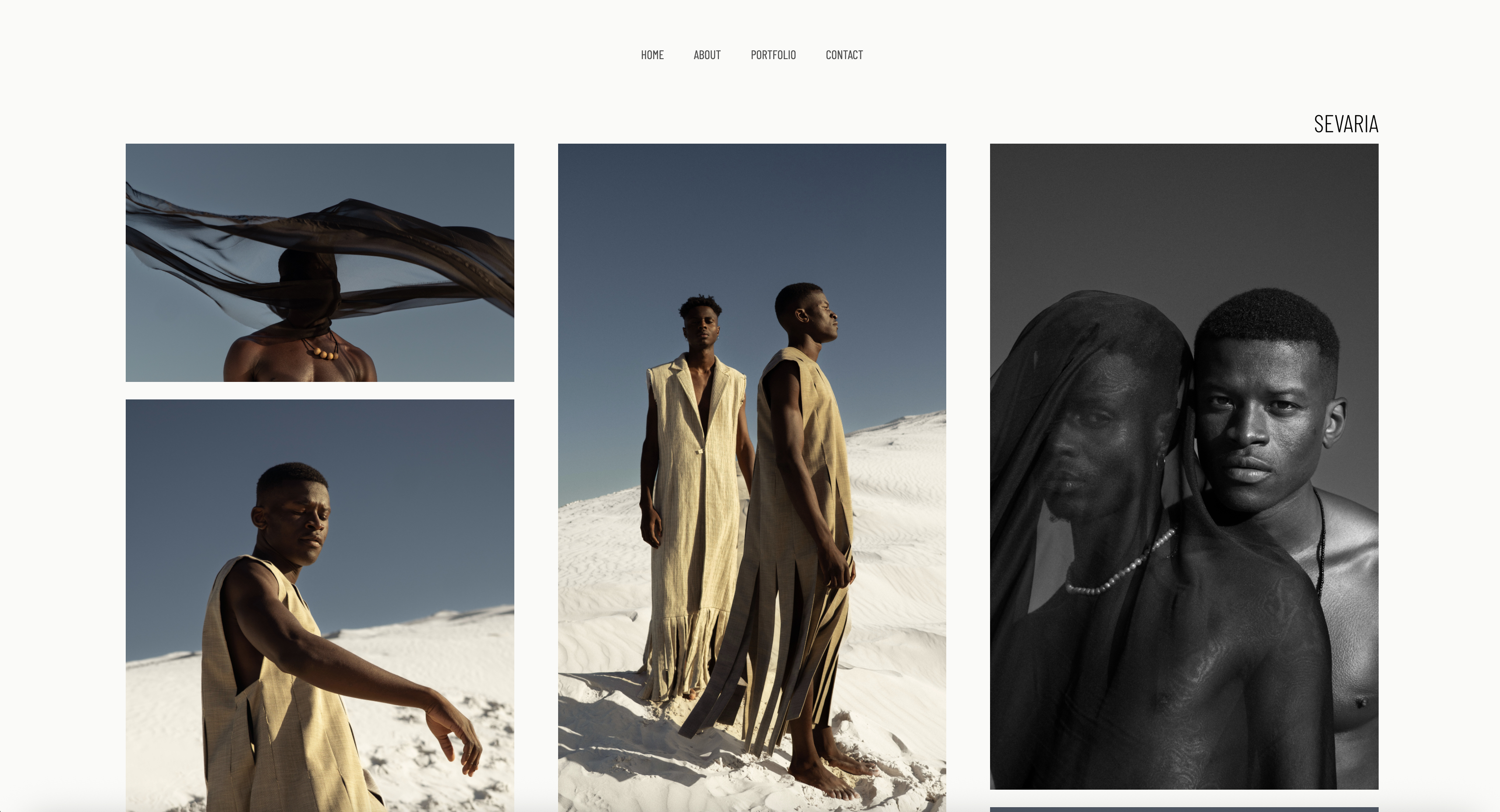
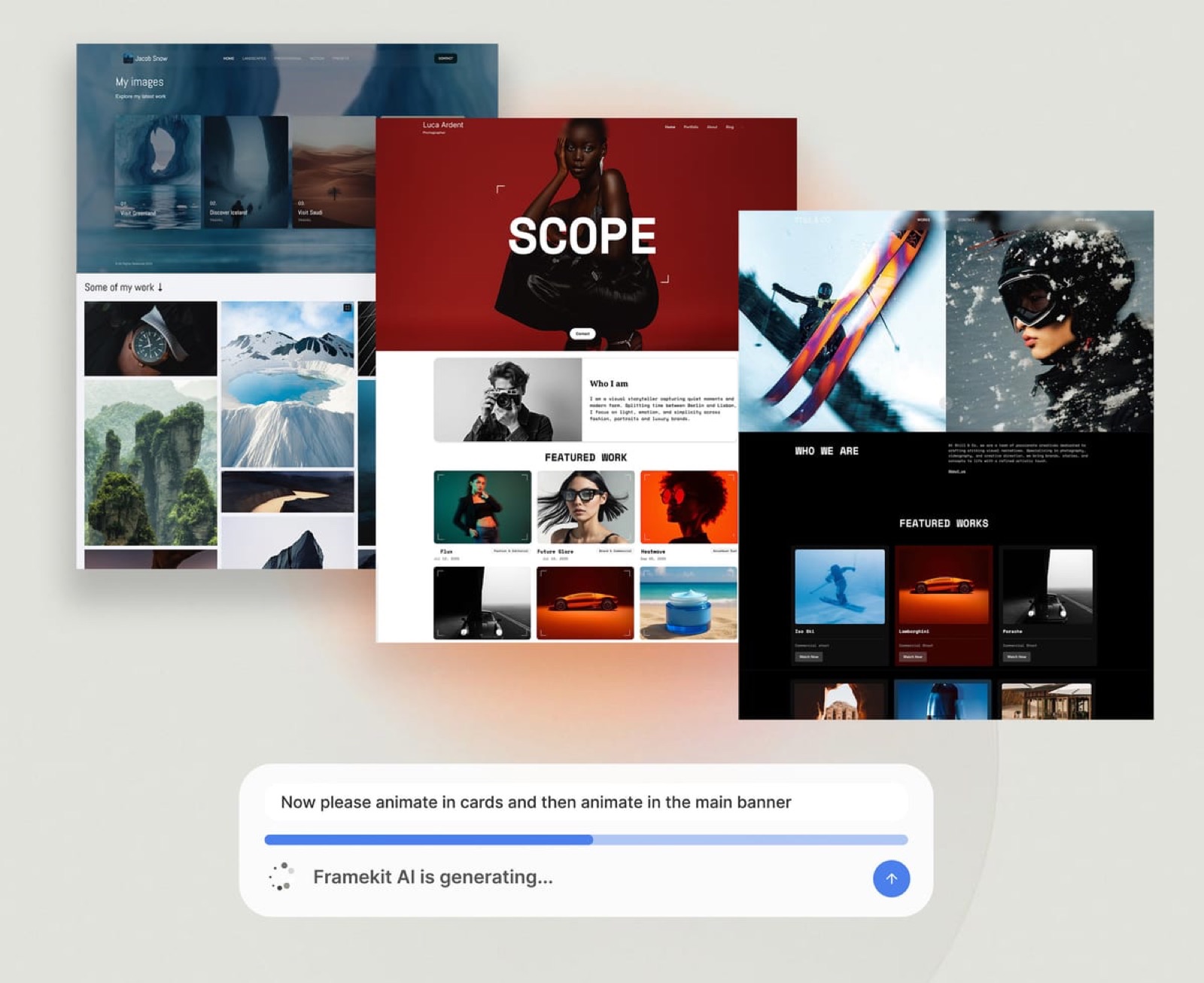
Framekit templates
Start from a designer-made template
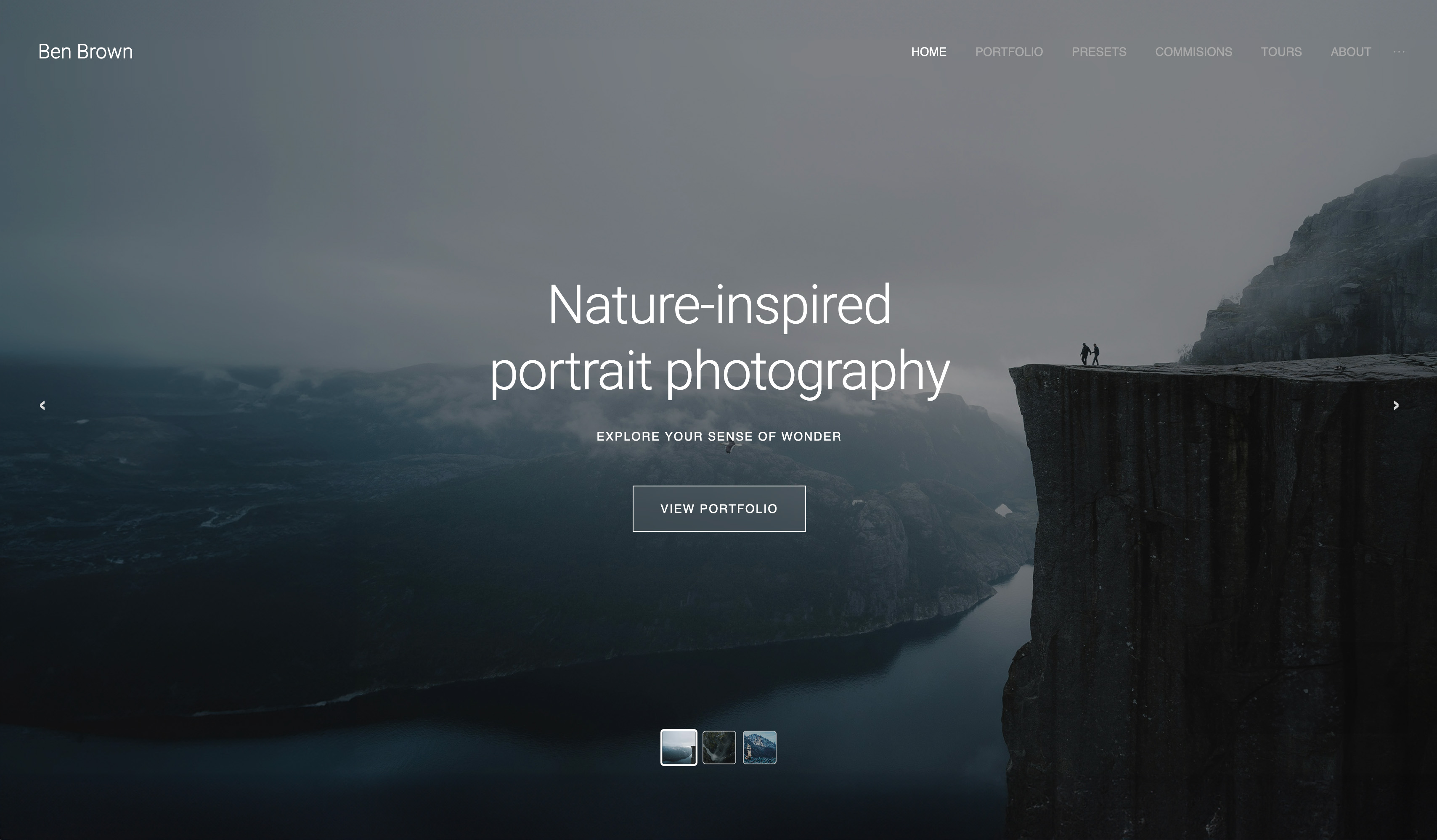 Use template
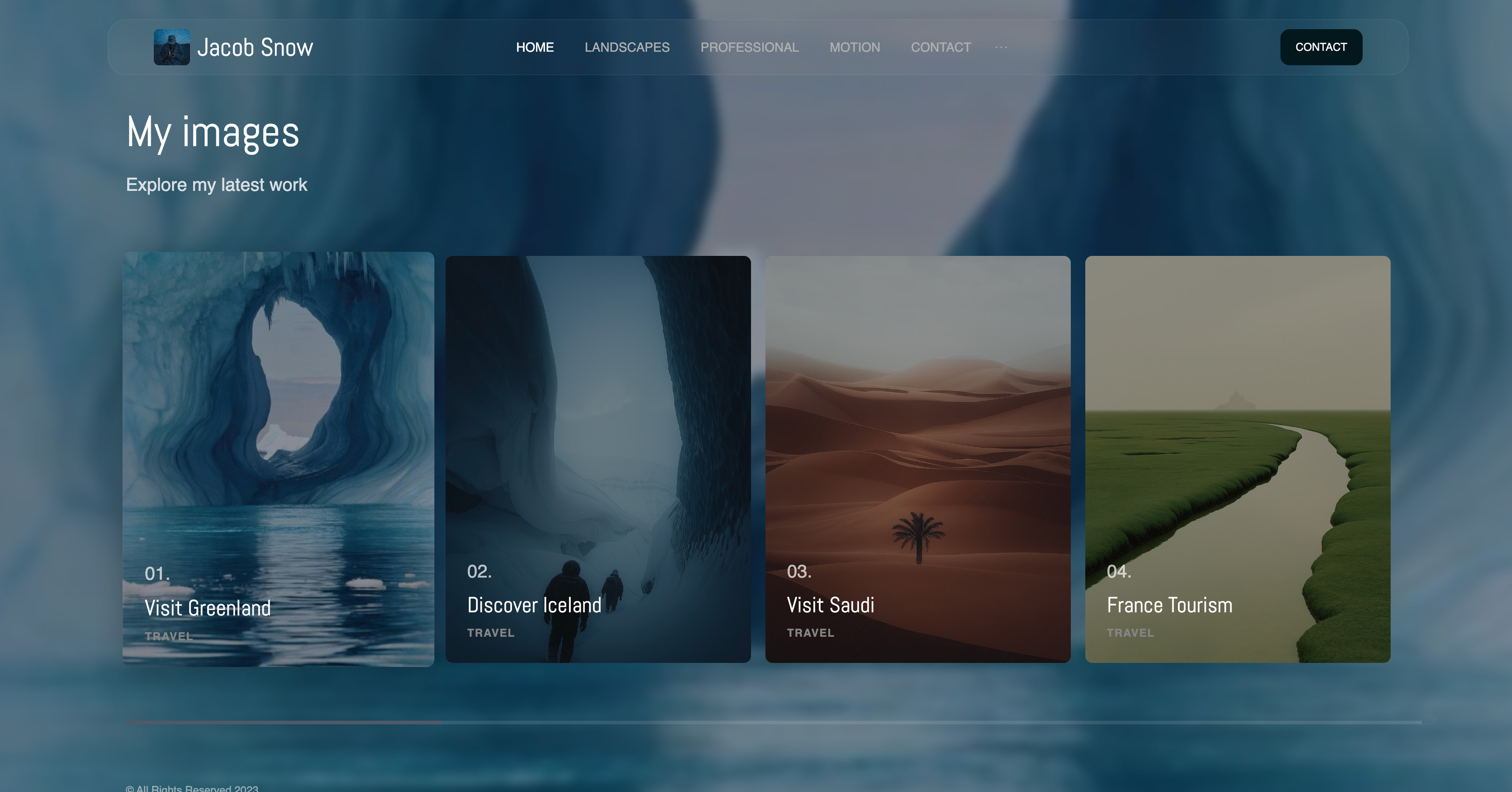 Use template
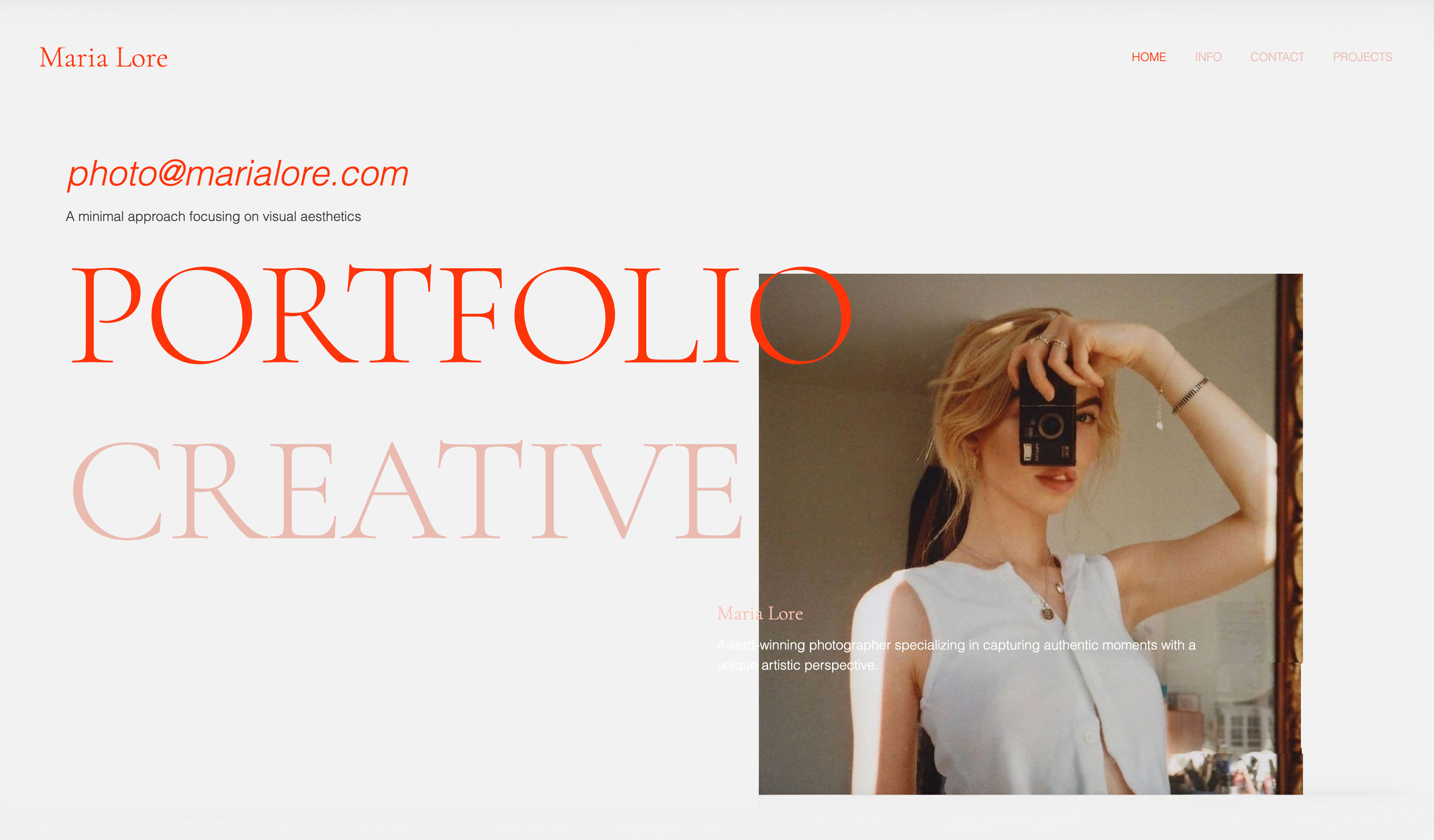 Use template
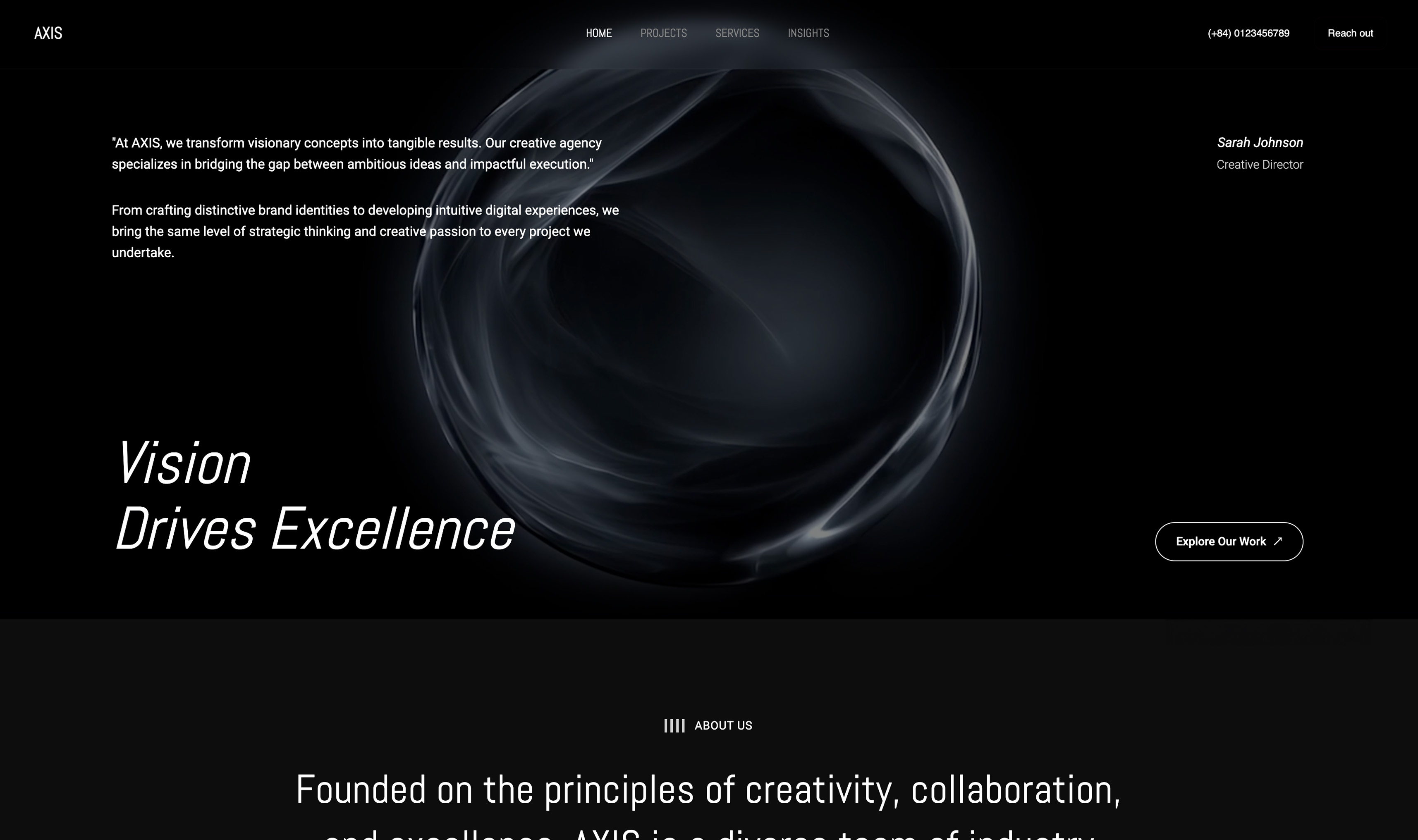 Use template
 Use template
 Use template
 Use template
 Use template
The best Dropbox alternatives for photographers are not cheaper versions of Dropbox. They are a different product entirely, because the reason to leave is almost never price.
At $11.99 a month for 2TB on Plus and $19.99 for 3TB on Professional, Dropbox is the cheapest serious capacity a photographer can buy, and no client gallery in this comparison comes close per gigabyte.
The reason to leave is that a shared folder is not a deliverable. Your client opens a link and sees a grid of filenames in somebody else's interface.
There is no cover image, no ordering you chose, no way for them to mark favourites, no watermark on proofs, no password per job, and no sensible download that produces one archive named after the shoot.
If they are not a Dropbox user, they get a login prompt and a support email lands with you.
There is a third cost that photographers rarely price. Every delivery link you send is a small advertisement for a file storage company, sent to exactly the audience that hires photographers.
A client gallery platform is software that presents finished photographs to a client as a designed, protected page with selection and download built in, rather than as a folder of files that happens to be shareable.
The best Dropbox alternative for photographers in 2026 is Framekit, because client delivery becomes a page of your own website on your own domain, galleries are uncapped on every plan including free, and clients download full-resolution originals or a ZIP with no account.
The honest trade-off: Dropbox gives you roughly twenty times the storage per pound and a desktop sync client that no gallery platform offers, so most photographers should keep it for working files and replace only the client-facing link.
Pixieset is the most familiar gallery, PicDrop is the best value at scale, and ShootProof is the pick if you want to sell.
Framekit replaces the folder link with a page that looks like your studio, free to start.
Full disclosure: we make Framekit and it is first in this list, so the concessions are the part to read carefully. We ran the same 300-image handoff through all eight options, checked prices against published pages in August 2026, and we say it plainly: Dropbox is cheaper per gigabyte than every alternative here, and for working storage it is better than we are.
What Dropbox Actually Does Well
A comparison that pretends the incumbent is simply bad is not worth anyone's time, so here is the genuine case for keeping Dropbox exactly where it is before we discuss replacing anything.
Capacity per pound. 2TB for $11.99 a month is roughly twenty times what a professional gallery plan gives you at the same price, and 3TB for $19.99 is more storage than most photographers will fill in five years.
Sync. A desktop client that keeps a working folder mirrored is not something any gallery platform offers, and for a photographer editing across two machines it is load-bearing infrastructure.
File integrity. Nothing is recompressed, folder structures survive, filenames arrive exactly as they left, which matters enormously for commercial and product work.
Collaboration. File requests, shared folders and version history are genuinely good for working with retouchers, second shooters and agencies.
None of that is what a client needs on delivery day, which is the entire argument of this guide. The right move for most photographers is to keep Dropbox for the working half and change only what the client receives.
How We Compared These Dropbox Alternatives
We ran one identical handoff across all eight platforms and judged every one of them from the recipient's side of the link rather than from the comfortable view an account owner gets.
The job300 finished images delivered to a client who was not signed into anything, on a phone, with a password, a favourites round, and a download-all attempted.
Client presentation, meaning cover, ordering, layout and whether it looks like a deliverable, weighted 25%.
Selection and proofing tools, weighted 20%, since this is the capability a folder cannot fake.
Branding and ownership of the link, weighted 20%.
Storage cost per gigabyte, weighted 20%, because this is what you are giving up and it should be counted honestly.
Download reliability on a large set, weighted 15%.
Claims are labelled by source throughout. Hands-on: publishing, protecting, selecting and downloading as a logged-out recipient. Verified from primary sources: prices and storage tiers read from published pricing pages in August 2026.
Community sentiment, always identified: recurring public complaints in reviews.
What Testing a 300-Image Handoff Showed
The findings that matter are about the gap between what a folder does and what a gallery does, and about how much that gap costs.
- Every one of the 7 gallery alternatives offered password protection per job; Dropbox offers link passwords on paid tiers but not a per-job client experience around them.
- 6 of the 8 allow a client to mark favourites for a selection round, which a shared folder cannot do at all.
- Storage per dollar at around $20 a month ranges from 3TB (Dropbox Professional) to 10GB (a basic gallery plan), a difference of roughly three hundred times.
- 1 of the 8 puts the client-facing page on a domain you own.
- 5 of the 8 let you sell prints or digital files from the same page the client is already looking at.
The calculation worth running before you change anything: separate your storage bill from your delivery bill on paper.
Most photographers discover that keeping Dropbox for working files at $11.99 and adding a small gallery plan at $9 to $19 costs less than either buying a large professional gallery tier or continuing to deliver folders and losing work to the impression it creates.
The 8 Best Dropbox Alternatives for Photographers, Compared
Weighting is set out above and it keeps storage cost at a full 20%, because dismissing Dropbox's real advantage would make the rest of this ranking untrustworthy.
Framekit reaches 9.0 with a 4 on storage economics, the lowest score in that column apart from the smallest gallery tiers.
| Platform | What it is | Entry price | Storage there | Our rating |
|---|---|---|---|---|
| Framekit | Gallery plus website and store | $9/mo | 10GB | 9.0/10 |
| Pixieset | Client gallery and store | About $10/mo | 10GB | 8.8/10 |
| PicDrop | Proofing and delivery | ~EUR 14.99/mo | 500GB | 8.5/10 |
| ShootProof | Gallery with 0% commission sales | About $10/mo | 1,500 photos | 8.3/10 |
| SmugMug | Archive plus prints | $20/mo annual | Unlimited | 8.0/10 |
| CloudSpot | Gallery plus studio admin | $7/mo | 15GB | 7.8/10 |
| Google Drive | General cloud storage | $1.99/mo | 100GB | 6.6/10 |
| WeTransfer | File transfer | $8/mo | Transfer based | 6.1/10 |
Prices were read from the vendors' published pricing pages in August 2026, and payment processing of roughly 2.9% plus $0.30 applies anywhere a client pays.
Test from the other side. Open your last Dropbox delivery in a private browser window on a phone, signed out of everything, and try to save one image. That is what your client experienced.
1. Framekit: Best Overall Dropbox Alternative

Our rating: 9.0/10
Framekit is an AI website builder with client galleries and a digital store built in, and against Dropbox its advantage is straightforward: the client receives a designed page on your own domain instead of a folder on somebody else's.
The cover, the ordering, the password, the favourites round and the download are all part of one experience that looks like your studio rather than like file storage.
The pricing model also matches how photographers actually work. Galleries are uncapped on every plan including free, so a delivery per client costs nothing, and there is no commission on delivery at any tier.
What you give up is capacity, and that trade is easier than it looks once you accept that Dropbox can keep holding the working files.
Best forPhotographers who want the client-facing link to look professional and to belong to them.
Key features:
- Unlimited galleries on every plan including free
- Delivery from your own domain, inside a full portfolio built by Cadence, Framekit's own model for creative sites
- Password and PIN protection per gallery, plus optional watermarking on proofs
- Client favourites and slideshow for selection rounds
- Full-resolution and ZIP downloads with no recipient account required
- Originals up to 100MB per photo, with no recompression
- A digital store for selling files, presets or licences, at 5% on Free and Starter, 3% on Pro and 0% on Business
The real numberDropbox Plus gives 2TB for $11.99 a month; Framekit Pro gives 300GB for $19 and Business gives 2TB for $39. Per gigabyte we lose by an order of magnitude and we are not going to argue otherwise.
The comparison that actually makes sense is Dropbox Plus at $144 a year for working files plus Framekit Starter at $108 a year for client-facing delivery, which is $252 for a setup where nothing is compromised.
Pricing (pooled account storage in parentheses)Free $0 (10GB, unlimited galleries), Starter $9/mo (50GB, custom domain, no Framekit branding), Pro $19/mo (300GB), Business $39/mo (2TB, 0% fee on digital sales). Annual billing takes 20% off.
Pros:
- The client sees a designed page on your domain, not a file browser on Dropbox's
- Selection, watermarking and per-job passwords, none of which a shared folder can do
- Portfolio and store included, so the delivery links back to the work that wins jobs
Cons:
- Dramatically less storage per pound than Dropbox at every tier
- No desktop sync client, so it does not replace your working folder
- No version history for working files
- No print lab, and no contracts or invoicing
Skip it ifyou were hoping to consolidate storage and delivery into one cheaper bill. That is not what this trade offers.
Verdict: Framekit is the best Dropbox alternative for the half of the job Dropbox was never designed for, and it works best alongside Dropbox rather than instead of it. See the wider field in our client gallery platforms guide, or start at framekit.ai.
2. Pixieset: Most Familiar Client Gallery
Our rating: 8.8/10
For photographers whose main complaint is that clients cannot work out a Dropbox link, Pixieset fixes it in an afternoon.
The gallery is clean and quick to set up, the mobile experience is strong, and a meaningful share of clients have received photographs through it before, which reduces the number of questions that reach you.
Its free plan holds 3GB and takes 15% on store sales; Basic at roughly $10 a month lifts storage to 10GB and drops that commission to zero, while Plus at roughly $20 offers 100GB with an hour of video upload.
Pixieset holds 4.7 out of 5 across 207 Capterra reviews, the deepest sample in this comparison.
Skip it ifyou want the delivery to carry your own domain rather than a vendor subdomain.
Verdict: Pixieset is the fastest fix for the client-confusion problem and the least disruptive change on this list. Our Pixieset alternatives guide covers the step after it.

3. PicDrop: Best Value at Scale
Our rating: 8.5/10
PicDrop is the gallery that comes closest to Dropbox's storage economics, which makes it the natural choice for photographers who left because of presentation but cannot stomach a tenfold cut in capacity.
Pro costs about EUR 14.99 a month for 500GB with unlimited galleries, your own branding on client-facing pages, collaboration mode for proofing and presentation mode for delivery.
Another 250GB costs EUR 7.99, the free plan holds 1GB across 3 galleries, and Advanced runs to 1TB at EUR 39.99 with up to four team seats.
The plan structure changed for new customers in May 2026, so older comparisons naming a Lite tier are out of date; see PicDrop's pricing page.
Skip it ifyou want a website or a store bundled in. PicDrop deliberately offers neither.
Verdict: PicDrop is the closest thing to Dropbox capacity with a real client experience on top, and nothing else. Our PicDrop alternatives guide covers what it leaves out.
4. ShootProof: Best If You Want to Sell
Our rating: 8.3/10
The one thing a Dropbox folder can never become is a shop, and ShootProof is the most efficient way to fix that: 0% commission on sales on every plan including the cheapest, with pro-lab print fulfilment, contracts and invoicing in the same account.
Plans are priced by photo count rather than storage.
The free tier covers 100 photos, then it is roughly $10 a month for 1,500 photos, $20 for 5,000, $30 for 25,000 and about $60 for unlimited, according to ShootProof's published plans.
It carries 4.9 out of 5 across 92 G2 reviews.
Skip it ifyou deliver very large sets and want a cheap plan.
Verdict: ShootProof turns a delivery into a sales moment and keeps every dollar of the markup. It is the least designed gallery here and does not care. Our ShootProof alternatives guide has the field.
5. SmugMug: The Unlimited Storage Answer
Our rating: 8.0/10
If capacity is genuinely why you are on Dropbox, SmugMug is the only gallery platform here that can beat it, since unlimited storage comes on every plan including the entry tier. It also carries a print-sales engine and a template website with domain mapping.
Annual billing sets the tiers at $20 a month for Direct, $23.50 for Portfolio and $37 for Pro, while paying monthly raises them to $29, $35.50 and $52. Print sales take a commission on your markup, commonly planned around 15%.
Skip it ifyou want a modern proofing flow. SmugMug is an archive with a shop attached rather than a delivery product.
Verdict: SmugMug is the storage answer for photographers who refuse to shrink, and its Capterra score of 3.5 across 11 reviews reflects a small and unflattering sample. Our SmugMug alternatives guide covers the follow-on.
6. CloudSpot: Cheapest Gallery With Business Tools
Our rating: 7.8/10
CloudSpot is the cheapest entry point on this list that includes contracts, invoicing and scheduling alongside the gallery, and its pricing page is unusually clear about what each tier contains.
The free plan covers 5GB across 3 galleries with 15% commission, Entry costs $7 a month for 15GB across 15 galleries, and Lite at $17 a month opens 100GB, unlimited galleries and the full studio suite, with Pro at $34 for 500GB and Unlimited at $50.
Paid plans swap commission for a 2.5% transaction fee and pay out in two days rather than four.
Skip it ifyou deliver more than fifteen jobs at once and want to stay on the cheap tier.
Verdict: CloudSpot is the value bundle if you also need the paperwork solved, provided you start at Lite. Our CloudSpot alternatives guide covers its edges.
7. Google Drive: Cheaper Storage, Same Problem
Our rating: 6.6/10
Google Drive is the honest budget swap for Dropbox rather than an upgrade: 15GB free, then $1.99 a month for 100GB, $2.99 for 200GB and $9.99 for 2TB, pooled across Drive, Gmail and Photos. On price it wins outright.
Everything that makes a Dropbox delivery unprofessional is still here, and previews recompress on top. Moving from one to the other changes your bill and not your client's experience.
Skip it ifpresentation is the reason you started reading this.
Verdict: Google Drive is a cheaper Dropbox, not a better delivery. Our Google Photos alternatives for photographers guide covers the consumer-tool trap in more depth.
8. WeTransfer: For Single Sends Only
Our rating: 6.1/10
WeTransfer is worth including because photographers reach for it when a subscription irritates them, and it is worth being precise about the cost.
The free plan sends up to 3GB per transfer with a monthly ceiling of 3GB across at most 10 transfers, and links expire after three days. Starter is $8 a month, Ultimate is $23 with transfers up to 1TB.
Every expired link produces an email, and the emails arrive when you are working.
Skip it ifthe client will want the files twice, which they will.
Verdict: WeTransfer is a courier and a poor substitute for either half of what Dropbox does. Our WeTransfer alternatives guide has the detail.
What Storage and Delivery Cost Side by Side
Costed below for a photographer holding 1.5TB of working files across two machines and delivering 40 client jobs a year at roughly 3GB each, which is a realistic mid-career workload.
| Setup | Annual cost | Working storage | Client delivery |
|---|---|---|---|
| Dropbox Plus only | $144 | 2TB | Folder link, poor |
| Dropbox Plus plus Framekit Starter | $252 | 2TB | Own domain, excellent |
| Dropbox Plus plus Pixieset Basic | $264 | 2TB | Vendor subdomain, very good |
| PicDrop Pro only | ~$195 | 500GB | Good, no website |
| SmugMug Pro annual only | $444 | Unlimited | Adequate |
| Framekit Business only | $468 | 1,000GB | Own domain, excellent |
The cheapest professional setup in that table is Dropbox plus a small gallery plan at $252 a year, and it is also the one where neither half is compromised.
Consolidating into a single professional platform costs $444 to $468 and buys you less working storage than you already have.
In one linekeep Dropbox for the files, replace only the link your client opens.
How to Choose Your Dropbox Alternative
Answer these in order and stop at the first confident yes, because most photographers only need to change one thing and end up changing three.
1. Is the problem what the client sees? If yes, add a gallery and keep Dropbox. Framekit or Pixieset both solve this for $9 to $10 a month.
2. Do you want the delivery page to be yours? If yes, Framekit, since it is the only option here that serves galleries from your own domain.
3. Do you want to sell from the gallery? If yes, ShootProof for 0% commission, or Framekit's store for digital products.
4. Do you need to keep hundreds of gigabytes live in the gallery itself? If yes, PicDrop Pro or SmugMug.
5. Is the problem only the bill? If yes, Google Drive is cheaper than Dropbox and no better for clients, so change your expectations rather than your gallery.
Frequently Asked Questions
What is the best Dropbox alternative for photographers in 2026?
The best Dropbox alternative for photographers in 2026 is Framekit for client delivery, because it replaces the folder link with a designed page on your own domain, with uncapped galleries and downloads that need no client account.
For working storage Dropbox remains better value than any gallery platform, so the practical setup for most photographers is Dropbox plus a gallery rather than one instead of the other.
Is Dropbox good enough for delivering photos to clients?
It works, and it looks like file storage, which is the problem.
A shared folder gives your client no cover image, no chosen ordering, no favourites for a selection round, no watermarking on proofs and no branded page, and non-Dropbox users often hit a login prompt.
For collaborators it is excellent; for paying clients it undersells the work you just delivered.
How much cheaper is Dropbox than a client gallery?
Substantially. Dropbox Plus gives 2TB for $11.99 a month, while professional gallery plans at a similar price give 10GB to 100GB, a difference of roughly twenty to two hundred times per pound.
Only SmugMug's unlimited plans and PicDrop's 500GB Pro tier approach Dropbox's economics. You are paying gallery platforms for presentation and permissions, not for disk space.
Framekit vs Dropbox for photographers: which do I need?
You most likely need both. Dropbox handles working files, desktop sync and collaboration with retouchers at a price no gallery can match.
Framekit handles the client-facing delivery on your own domain, with passwords, favourites, watermarking and downloads that require no account.
Running Dropbox Plus alongside Framekit Starter costs about $252 a year and leaves neither half compromised.
Can clients download from Dropbox without an account?
Usually yes for a simple shared link, but the experience is inconsistent: some clients are prompted to sign in or install the app, downloads of large folders can fail on mobile, and the resulting archive is named after the folder rather than the shoot.
Purpose-built galleries make account-free full-resolution and ZIP downloads a designed feature rather than an accident.
Which Dropbox alternative has the most storage?
Among gallery platforms, SmugMug offers unlimited storage on every plan from $20 a month on annual billing, and PicDrop Pro offers 500GB for about EUR 14.99.
Among general storage services, Google Drive matches Dropbox's pricing at $9.99 a month for 2TB. Nothing in the gallery category beats Dropbox Professional's 3TB for $19.99 on raw capacity.
Do photographers still need Dropbox if they use a client gallery?
Most do, for reasons that have nothing to do with clients: desktop sync across machines, version history, file requests for collecting assets, and cheap bulk capacity for camera originals.
A gallery platform replaces the delivery link, not the working folder. Photographers who cancel Dropbox entirely usually discover the gap within a month of the first big commercial job.
Will a client gallery compress my images?
Reputable client galleries store and deliver your originals without recompression, which is one of their advantages over consumer photo services.
Framekit accepts originals up to 100MB per photo and delivers them unchanged, and Pixieset, PicDrop and ShootProof all deliver full-resolution files.
Google Photos with Storage Saver enabled does recompress, which is a common and invisible problem.
What is the cheapest way to deliver photos professionally?
Around $108 to $120 a year for an entry gallery plan such as Framekit Starter at $9 a month, kept alongside whatever storage you already pay for.
That is cheaper than upgrading a general storage service and dramatically cheaper than consolidating into a large professional gallery tier.
The mistake is treating delivery and storage as one purchase when they have completely different economics.
Can I sell prints or files from a Dropbox link?
No. Dropbox has no commerce of any kind, which is one of the clearest reasons photographers move to a gallery platform.
ShootProof and Pixieset's paid plans sell prints and digital files at 0% commission, Framekit sells digital products at 5% on Free and Starter, 3% on Pro and 0% on Business, and Pic-Time automates campaigns that keep selling after delivery.
Final Verdict
Dropbox is not the wrong tool, it is the wrong half of the tool. It stores and syncs better than any client gallery in this comparison and it will keep doing so, which is why the recommendation here is not to cancel it.
Framekit is the best alternative for what Dropbox genuinely cannot do: give a client a page that looks like your studio, on a domain you own, with selection, protection and downloads that work for someone who has never installed anything.
Where Framekit loses. We give you a fraction of Dropbox's storage at every price point, and that is not a rounding error, it is an order of magnitude.
We have no desktop sync client, no version history and no file requests, all of which working photographers rely on daily.
SmugMug will hold an unlimited archive we cannot match, PicDrop gives far more gigabytes per euro, and ShootProof will keep more of your print revenue. If your problem is capacity rather than presentation, we are the wrong answer.
Do the test before you decide: open your last delivery link in a private browser window on a phone, signed out of everything, and try to save a single image. Whatever that takes is what you have been asking every client to do.
Related readingclient gallery platforms compared, how to deliver photos to clients, photo delivery tools, and the best WeTransfer alternatives.
Every price and storage tier was read from the providers' published pricing pages in August 2026, and the same 300-image handoff was opened by a logged-out recipient on a phone for each platform, because the only delivery experience that matters is the one your client has and you never see.