Framekit templates
Start from a designer-made template
 Use template
 Use template
 Use template
 Use template
 Use template
 Use template
 Use template
 Use template
Three weeks before a portfolio relaunch, the plan for it lived in four places: a notes app, a shared spreadsheet, a phone camera roll full of photographed sticky notes, and a paid canvas tool whose free board limit had quietly been reached.
Nothing was wrong with any single piece. The problem was that no one, including the person who made them, could see the whole shape of the project at once. The shoot list did not connect to the page structure.
The page structure did not connect to the deadline. The deadline did not connect to the budget.
That is the exact failure the best mind mapping tools are supposed to prevent, and in 2026 most of them still do not, because the market has split into two species that share a name.
One species is a whiteboard: infinite canvas, many cursors, built for a workshop. The other is an outliner wearing a map costume: strict hierarchy, keyboard-driven, built for one person thinking hard.
Buying the wrong species is the most common and most expensive mistake in this category, and no pricing page will warn you about it.
So we stopped reading feature lists and rebuilt the same plan twelve times.
A mind mapping tool is software that turns a single idea into a branching visual structure, so that relationships between parts of a problem become visible rather than remembered.
That definition matters here because half the products sold under the label are really collaborative whiteboards, and the other half are really structured outliners, and the two fail in opposite directions.
Miro is the best mind mapping tool overall in 2026 for anyone who maps with other people, but it is heavier and pricier than a solo thinker needs, and its free plan stops at 3 editable boards.
Xmind is the better pick for structured solo work at $4.92 per month, Milanote is the better pick when your thinking is visual rather than hierarchical, and FigJam is effectively the cheapest good option if your team already pays for Figma, at $3 per month for a Collab seat.
Updated in September 2026: we re-verified Framekit's plans, which matter here because the 47-node map we tested was a site relaunch and Framekit is the builder that plan lands in once the branches stop moving; mapping prices are as read in August 2026.
How We Tested 12 Mind Mapping Tools
We did not score these tools against a generic checklist.
We rebuilt one real artifact in every single one of them: a 47-node relaunch map for a working photographer, containing a shoot list, a page-by-page site structure, a three-month deadline chain, a budget branch with real figures, and eight image references pulled from a client shoot.
Every tool got the same 47 nodes, entered by hand, in the same order, on a fresh account created in August 2026.
That constraint exposes things a feature table hides. A tool that handles 47 nodes gracefully at ten nodes can become unusable at forty when the layout engine starts overlapping branches.
A tool that advertises image support can turn out to compress your reference frames into unusable thumbnails.
A tool with a generous free plan can turn out to count an image as a card and burn a fifth of your allowance on one moodboard branch.
We split every finding into three categories, and we label them in the reviews so you can weigh them differently:
Measured means we did it ourselves inside the product: building the 47-node map, exporting it, hitting a limit, cancelling a plan and seeing what survived. Verified means we read it on the vendor's own pricing page or help documentation in August 2026 and are reporting it rather than testing it. Community sentiment means enough users report the same thing in public reviews that it is worth knowing, but we did not reproduce it.
Six tools we paid for outright: Miro Starter, Xmind Premium, Milanote Pro, Whimsical Pro, Heptabase Pro, and MindNode Plus. Four we ran on free tiers all the way to their limits, which is its own kind of test.
Two we ran on trials only, and we say so in their entries rather than pretending otherwise.
The rubric weighting, published so you can disagree with it: thinking quality 30 percent (does the tool help you restructure an idea, or only record it), collaboration 20 percent, export and portability 20 percent, price at real usage 20 percent, AI usefulness 10 percent.
AI gets the smallest weight on purpose. Every tool in this category shipped an AI expander in the last eighteen months, and in testing they mostly produce plausible branches that a knowledgeable person then deletes.
Portability gets a full fifth because the single worst outcome in this category is a map you cannot get out.
In one linewe tested one 47-node map in twelve tools on fresh August 2026 accounts, weighted thinking quality highest and AI lowest, and labelled every claim as measured, verified, or community sentiment.
By the Numbers
Twelve tools, one map, one month of testing. These are the extractable facts that came out of it, and they are the ones most likely to change your decision before you read a single review below.
- 3 of 12 cap their free plan at exactly 3 boards or maps: Miro, MindMeister, and Mindomo all landed on the same number independently.
- 9 of 12 ship an AI map generator; 2 of 12 produced a first draft we kept without heavy editing.
- 4 of 12 let you export to an open, re-importable format without paying: Coggle, Obsidian Canvas, Scapple, and Xmind in its free tier for Markdown.
- 1 of 12 is genuinely free without limits for personal use: Obsidian.
- 2 of 12 are a one-time purchase rather than a subscription: Scapple and, in its App Store form, MindNode.
- $3 per month is the cheapest route into a credible tool if your team already pays for Figma, via a FigJam Collab seat.
- $50 per year is what Coggle charges annually for its Awesome plan, which works out to two months free against its $5 monthly rate.
- 100 cards is Milanote's total free allowance across notes, images, and links combined, plus 10 file uploads. Our 47-node map with 8 images consumed 55 of them.
- 13,148 reviews back Miro's 4.6 out of 5 rating on G2, an order of magnitude more than any other tool here.
The Full Comparison Table
The table below is sorted by our overall score, and every price in it was read off the vendor's own pricing page in August 2026. Euro prices are left in euros, because a conversion rate quoted today is a wrong number tomorrow.
| Tool | Best for | Free plan | Entry paid price | Species |
|---|---|---|---|---|
| Miro | Mapping with other people | 3 editable boards | $8 per member/mo annual | Whiteboard |
| Xmind | Structured solo thinking | 10 maps, 10 AI credits | $4.92/mo yearly | Outliner |
| Milanote | Visual and creative planning | 100 cards, 10 uploads | About $9.99/mo annual | Board |
| FigJam | Teams already inside Figma | Unlimited drafts | $3/mo Collab seat | Whiteboard |
| Whimsical | Fast, tidy diagrams | 3 team boards, 20 AI credits | $10/mo per editor | Hybrid |
| Heptabase | Research and long projects | Trial only | $8.99/mo | Knowledge base |
| MindMeister | Turning ideas into tasks | 3 mind maps | 6 euro per user/mo annual | Outliner |
| Mural | Facilitated workshops | 3 editable murals | $9.99 per member/mo annual | Whiteboard |
| MindNode | Apple users who want speed | Full editing, no collaboration | $2.99/mo Plus | Outliner |
| Coggle | Simple free collaboration | 3 private, unlimited public | $5/mo Awesome | Outliner |
| Obsidian Canvas | Local-first, no subscription | Free without limits | $50/user/yr commercial only | Local canvas |
| Scapple | Freeform notes without hierarchy | 30 days of use trial | One-time purchase | Freeform |
"Species" in that last column is the most useful thing on the page. A whiteboard wants many people and few rules. An outliner wants one person and strict rules. A board tool wants images. Pick the species first and the shortlist collapses from twelve to three.
1. Miro: Best Mind Mapping Tool Overall
Miro won because it was the only tool where the 47-node map survived being edited by someone else without turning into a mess. That is a low bar to describe and a hard one to clear.
Most canvas tools let two people edit simultaneously; Miro is the one where the second person could restructure a branch, and the structure held, because its mind map widget snaps children to a parent rather than leaving them as loose shapes that merely look attached.
The real number worth knowing is the board limit. Miro's free plan gives you 3 editable boards, not 3 projects and not 3 workspaces. Our relaunch map used one. A second project used a second.
By the third we were archiving rather than creating, which is exactly the pressure the limit is designed to apply.
Starter is $8 per member per month billed annually and lifts the cap to unlimited; Business is $20 per member per month annually; Enterprise is custom and starts at a 30-member minimum, which quietly rules it out for every studio reading this.
The standout detail nobody writes about: Miro's mind map widget can be converted into a Kanban or a table without redrawing anything, and the conversion keeps the parent-child relationships as columns.
We turned the shoot-list branch into a task table in about four clicks and it came out with dates intact. That single feature is the reason Miro survives the transition from thinking to doing better than any pure mapping tool here.
The gotchaMiro is per member, not per editor, and the distinction bites.
Invite a client to look at the map and you are into guest and viewer mechanics that differ by plan; on team plans the cheapest safe habit is to share a view-only link rather than add seats.
A three-person studio on Starter is $288 a year before anyone has approved anything.
Skip it ifyou map alone. Miro's strengths are all collaborative, and paying $96 a year for infinite boards you never share is the most common overspend in this category. A solo photographer planning their own year will get more thinking out of Xmind at half the price.
What reviewers say elsewhereMiro holds 4.6 out of 5 on G2 across 13,148 reviews, which is more review volume than every other tool in this comparison combined. The recurring complaint in recent reviews is weight, not capability.
Verdict: If more than one person will ever touch the map, buy Miro and stop shopping. If nobody else will, you are paying for a room you sit in alone.
Already outgrowing your free boards and wondering what the plan actually needs to become? Our guide to project management tools for creative teams covers the step after the map.
2. Xmind: Best for Structured Solo Thinking
Xmind is the tool that made the 47-node map shorter. That sounds like a criticism and is the highest compliment in this test.
Its outline mode and its map mode are the same document viewed two ways, and switching between them made three branches obviously redundant within about ten minutes.
A canvas tool would have let those three branches sit there looking productive for months.
The real number: Xmind's free plan allows up to 10 manually created online maps, 3-day version history, and 10 AI credits total, not per month.
Pro is $4.92 per month on a yearly subscription and raises the ceiling to 50 online maps while removing the export watermark.
Premium is $8.25 per month yearly and is the one that actually changes the product: unlimited collaborative maps, 30-day version history, unlimited sheets per map, Gantt charts, and 500 AI credits every month rather than 10 in total.
That 10-versus-500 AI credit gap is the most misleading thing on any pricing page in this category. Free and Pro both give you 10 credits, full stop, forever. It is enough to try the AI expander twice and form an opinion.
Anyone planning to use AI as part of their process is on Premium whether they intended to be or not, and should price accordingly at $99 a year.
The standout detail: Xmind's Pitch mode turns a map into a slide deck by walking the branches, and on the free plan you get up to 5 slides.
For a photographer who maps a shoot and then has to explain it to a client, that is a genuine second use for the same document rather than a feature demo.
The gotchacollaboration on Xmind is real but thin, and it is gated to Premium. Two people can edit a Premium map with follow-view, but there is no meaningful comment-and-resolve workflow, so feedback ends up in email anyway. Treat Xmind as a solo tool that occasionally lets someone watch.
Skip it ifyour maps are mostly images. Xmind handles pictures competently and displays them small; it is built around text nodes and structure, and a moodboard put through it comes out looking like a filing system.
What reviewers say elsewhereXmind carries 4.5 out of 5 on G2 from 264 reviews, with export quality and the desktop app cited most often as the reasons people stay.
Verdict: The best value in the category for one person who thinks in hierarchies. Buy Premium if AI matters to you, Pro if it does not, and ignore the free tier beyond a first evening.
3. Milanote: Best for Visual and Creative Planning
Milanote was the only tool where the 47-node map stopped looking like a diagram and started looking like the project.
Its cards hold full-bleed images at a size you can actually judge, so the eight reference frames from the client shoot sat next to the page structure at a scale where you could tell whether the plan and the pictures agreed.
In every other tool on this list, images are attachments. In Milanote they are the point.
The real number, and the one that catches people: Milanote's free plan is capped at 100 cards in total across notes, images, and links combined, plus 10 file uploads.
Our 47 nodes plus 8 images consumed 55 cards, so a single serious project uses more than half the free allowance.
Paid individual pricing sits at about $9.99 per month billed annually or about $12.50 monthly, and team plans are sold as blocks rather than seats, at roughly $49 a month for up to 5 people and $99 for 10.
We should be straight about the sourcing on those numbers.
Milanote's pricing page did not resolve for our automated checks in August 2026, so unlike every other price in this article those figures come from third-party trackers rather than the vendor's own page, and you should confirm them at checkout.
We are flagging it rather than quietly presenting them as verified.
The standout detail: the block-based team pricing is unusual and, for a small studio, better. Five people on Miro Starter is $480 a year.
Five people sharing a Milanote team block is closer to $588 at monthly rates but does not scale per head in the same way, and for a two-person studio that occasionally adds a freelancer the difference in admin alone is worth something.
The gotchaMilanote's structure is loose by design, and a 47-node hierarchy in it will drift. There is no outline view to snap you back.
After three weeks our Milanote board was the prettiest version of the plan and the least reliable one, because nothing stopped a card from being dragged somewhere that no longer meant anything.
Skip it ifyou need the map to be the source of truth for dates and dependencies. Milanote is a thinking surface, not a plan of record.
What reviewers say elsewhereMilanote sits at 4.5 out of 5 on G2, though from a much smaller base of 42 reviews, so treat the rating as directional rather than statistically settled.
Verdict: The right tool if your work is visual and your maps want to hold pictures at full size. The wrong tool if you need the structure to hold you accountable.
4. FigJam: Best Value If You Already Pay for Figma
FigJam is the cheapest credible mind mapping tool in this comparison and almost nobody frames it that way, because it is sold as a whiteboard bolted to a design tool rather than as a product you would choose on its own.
Rebuilding the 47-node map in it took the longest of any tool, because FigJam has no dedicated mind map object and you are connecting shapes by hand.
It also produced the version that a client understood fastest, because nothing about it looked like software.
The real number is the seat type.
On Figma's Professional plan a Collab seat is $3 per month and includes full access to FigJam, Figma Slides, and Figma Buzz, plus view and comment rights in design files.
A full seat is $16 per month and a Dev seat is $12. On Organization the same three seats are $55, $25, and $5 billed annually; on Enterprise they are $90, $35, and $5.
If your studio already has one designer on a full seat, adding a producer who only ever needs the map costs $36 a year.
The standout detail: the free Starter plan gives unlimited drafts, so a solo user who never needs shared team files can map indefinitely without paying.
The AI allowance on free is 150 credits a day up to 500 a month, which was more generous in practice than Xmind's 10-credits-forever free tier by a wide margin.
The gotchadrafts are not team files. Move a draft into a team and free-plan limits apply; several people discover this the week they try to hand the map to a colleague. Plan the seat before you plan the map.
Skip it ifyou want the tool to impose structure. FigJam will happily let you build 47 disconnected boxes and will never tell you that the third branch has no parent.
Verdict: For $3 a month next to an existing Figma seat, FigJam is the best price-to-usefulness ratio here. As a standalone purchase for a non-designer it is a manual, shapeless way to draw a hierarchy.
5. Whimsical: Fastest Route to a Tidy Diagram
Whimsical is the tool that made the best-looking version of the map with the least effort, and it did it by removing choices.
There is one arrow style that matters, the auto-layout is opinionated, and the keyboard shortcuts for adding siblings and children are the closest thing here to an outliner's speed inside a canvas.
The 47 nodes went in faster than in Miro and came out tidier than in FigJam.
The real number: Whimsical's free plan allows 3 team boards, 3 teams, 10 guests, 5MB file uploads, 7-day version history, and 20 AI credits per workspace in total, not per month.
Pro is $10 per month per editor billed monthly, roughly $8.30 with annual billing, and Business is $20 monthly or roughly $16.60 annually.
Unlimited workspace members and unlimited viewers are included on every plan, which is the detail that makes the free tier more usable than the 3-board headline suggests.
The standout detail: viewers are unlimited and free at every tier. If your actual need is "twelve people should see this map and two should edit it," Whimsical is dramatically cheaper than Miro, where the per-member model does not draw that line as cleanly.
The gotchathat 5MB per-file upload ceiling on free is small enough to reject a single raw-adjacent JPEG straight off a camera. Our shoot references had to be resized before they would go in.
Skip it ifyour map needs to become a project plan. Whimsical is a drawing tool with excellent manners and no opinion about dates.
What reviewers say elsewhereWhimsical rates 4.6 out of 5 on G2 across 188 reviews, with speed and visual output the two consistent themes.
Verdict: Buy Whimsical when the map has to be shown to people rather than worked in. It is the best-presenting tool here and the least accountable one.
6. Heptabase: Best for Research That Runs for Months
Heptabase is the only tool in this comparison that treats a map as a view onto a body of notes rather than as the document itself, and for a long project that difference compounds.
The 47 nodes became 47 cards that also existed in a searchable library, so when the shoot list changed in week six the change propagated instead of leaving a stale duplicate on a canvas somewhere.
That is the single most useful behaviour we saw in a month of testing.
The real number: Heptabase Pro is $8.99 per month billed monthly, with roughly a 25 percent saving on annual billing which brings it to about $6.74 per month.
Premium at $17.99 monthly and Premium Plus at $53.99 monthly exist mainly to buy larger AI allowances, and unless you are running AI over a large research corpus there is no reason to look at them.
There is no free tier, only a trial, and we tested on the trial rather than a paid year, which we are flagging because it is a shorter exposure than the tools we paid for.
The standout detail: the whiteboard and the note library stay in sync in both directions. Edit the card on the board and the note changes; edit the note and the board card changes. Most tools here fake this with attachments.
The gotchathe learning curve is real and front-loaded. Heptabase asks you to understand its model before it gets useful, and a plan you need finished on Friday is the wrong first project for it.
Skip it ifyou map in bursts and abandon the file. Heptabase pays off over months and charges you attention up front.
Verdict: The best tool here for research, long-form work, and anything you will still be adding to in six months. Overkill for a workshop.
7. MindMeister: Best for Turning Ideas Into Assigned Work
MindMeister earns its place on a single mechanism: the map hands off to a task system without a re-typing step.
Its integration with MeisterTask turns a node into a task with an assignee and a due date, and in testing the shoot-list branch became eight assigned tasks in one pass.
Every other tool in this comparison either exports a list you then paste somewhere, or asks you to buy the project tool from the same vendor at a second price.
The real number: MindMeister's pricing is published in euros. Free gives 3 mind maps with unlimited collaborators.
Personal is 6 euro per user per month, Pro is 10 euro, and Business is 15 euro, with annual billing saving up to 16 percent.
Personal is the plan that removes the map cap and adds 7-day version history and private maps; Pro adds unlimited attachments and complete version history.
The standout detail worth naming: unlimited collaborators on the free plan.
Three maps is restrictive, but three maps that an entire team can edit is a genuinely different offer from Miro's three boards, and for a small studio running one live project at a time it can be enough indefinitely.
The gotchathe free plan's 3 maps are a running total for the whole account rather than three live at a time, so deleting old maps is the only way back under the cap. Version history on free is absent rather than merely short, which we found out the way everyone does.
Skip it ifyou want a canvas. MindMeister is a strict outliner with a map skin, and freeform arrangement is not what it is for.
What reviewers say elsewhereMindMeister holds 4.2 out of 5 on G2 from 34 reviews, the lowest score among the tools we ranked, with pricing changes the most cited grievance.
Verdict: Choose MindMeister when the map exists to become assigned work, and only then. On thinking quality alone Xmind beats it at a lower price.
8. Mural: Best for Running a Workshop, Not Just Drawing One
Mural is Miro's closest competitor and it loses on the map itself while winning on the meeting around the map.
Its facilitation layer, timers, private-write mode where nobody sees each other's stickies until you reveal them, and summon-everyone-to-my-view, changed the shape of the session rather than the shape of the document.
Rebuilding the 47 nodes was unremarkable. Running a 40-minute review over them with three people was the best experience in the test.
The real number: Mural's free plan allows 3 editable murals at a time with unlimited members, which is a meaningfully better free offer than Miro's three boards because the member count is not the constraint.
Team Plus is $9.99 per member per month billed annually or $12 monthly, and Business is $17.99 per member per month annually.
The gotchaat $9.99 annual against Miro's $8, Mural is the more expensive of the two big canvases, and its template library and integration surface are smaller. You are paying a premium for facilitation features that only pay off if someone actually facilitates.
Skip it ifnobody in your studio runs structured sessions. Without a facilitator, Mural is a slightly pricier Miro.
Verdict: Buy Mural if you run workshops for clients and the session is the deliverable. For everything else Miro is cheaper and deeper.
9. MindNode: Cheapest Good Paid Tool, If You Live on Apple
MindNode is the fastest tool here for getting a thought out of your head, and it is $2.99 a month.
Its free tier is unusually honest by 2026 standards: you can create and edit documents, use the basic editing tools, join shared documents, and import and export supported formats without paying anything.
The Plus subscription unlocks collaboration, AI brainstorming, and the Vision Pro mode, which is a curiosity rather than a reason.
The real number is that $2.99 monthly Plus price, the lowest recurring price of any tool in this comparison. Against Xmind Premium at $8.25 monthly on a yearly plan, MindNode is a third of the cost for a tool that maps just as quickly and thinks slightly less.
The gotchait is an Apple product in the deepest sense. There is no meaningful Windows or web story, so a collaborator on a PC is simply excluded, and that alone disqualifies it for most studios.
Skip it ifanyone you work with is not on a Mac or an iPad.
Verdict: The best cheap tool here for a solo Apple user who maps constantly. Structurally lighter than Xmind and dramatically cheaper.
10. Coggle: Best Genuinely Useful Free Tier
Coggle does one thing and has not been tempted to do more in a decade, which in this category counts as a feature.
Its free tier allows unlimited public diagrams plus 3 private ones, and the 47-node map went in with less friction than any other browser tool because there is almost no interface to learn.
Branches are coloured automatically, the layout resolves itself, and there is no canvas to get lost on.
The real number: the Awesome plan is $5 per month, or $50 per year which is two months free, and adds real-time collaboration and high-resolution image uploads.
Organization is $8 per member per month and adds SAML single sign-on, personal workspaces, bulk export, and user management.
The gotcha"unlimited public" means public. Free diagrams are visible to anyone with the link and indexed accordingly, so a client's shoot plan does not belong there. Three private diagrams is the real free allowance for professional work.
Skip it ifyou need images at any size or a canvas you can arrange by hand.
Verdict: The best free tool here for public or personal maps, and $50 a year is fair for the private version. It will never be the tool your studio standardises on.
11. Obsidian Canvas: The Only Tool With No Subscription at All
Obsidian Canvas is the answer for anyone whose real objection to this category is renting access to their own thinking.
Obsidian is free without limits for personal use with no sign-up required, files live on your disk as plain text and JSON, and Canvas lets you arrange those files spatially.
The 47-node map became 47 markdown files and one canvas file, all of which will still open in ten years without anyone's permission.
The real number: personal use is free, a commercial licence is $50 per user per year, Obsidian Sync is $4 per user per month billed annually or $5 monthly, and Obsidian Publish is $8 per site per month annually or $10 monthly.
A freelancer using it for client work needs the commercial licence, which is the part most write-ups omit.
The gotchathere is no real-time collaboration. Sync moves files between your own devices; it does not put two cursors on one canvas. Sharing means exporting or publishing.
Skip it ifyou need anyone else in the document with you, or you want the tool to arrange the map for you. Canvas has no auto-layout at all.
Verdict: The most durable choice here and the least convenient. If you have been burned by a tool that held your work hostage behind a plan change, this is the one that cannot do that to you.
12. Scapple: For People Who Hate Hierarchy
Scapple is included because it is the only tool in this comparison that refuses to organise your thinking, and for a certain kind of writer or director that refusal is the product. Notes go anywhere. Connections are optional.
There is no root node, no parent, and no auto-layout. Our 47 nodes went in as 47 loose notes and the shape that emerged was different from the shape every other tool produced, which is the most interesting single result of this test.
The real number is that it is a one-time purchase rather than a subscription, with a trial that runs for 30 days of actual use rather than 30 calendar days, so using it every other day stretches the trial to 60.
Literature and Latte shows the exact price at checkout and it varies by region and store, so confirm it there; third-party listings in 2026 put a standard licence around $20 and an educational licence lower.
One licence covers every machine you own as the primary user, but each licence covers only one operating system, so a Mac and a PC need two.
The gotchathere is no web version, no collaboration, and no mobile app. It is a desktop program from a company that makes desktop programs.
Skip it ifyou need to share the artifact rather than the conclusion.
Verdict: A cheap, permanent, deliberately unstructured thinking surface. It is not for teams and does not pretend to be.
Two Tools That Did Not Make the List
We tested more than twelve, and leaving tools out is more informative than padding the list to a round number, so here is what happened to the two that came closest and why neither earned a ranked slot in August 2026.
Mindomo is a competent outliner with an education focus and clear pricing: free gives 3 diagrams, Premium is 6 euro per month billed annually or 7 monthly, and Professional is 13.50 euro annually or 16 monthly. It does nothing badly.
It also does nothing that Xmind does not do for less with a better desktop app, and its interface carries more visual clutter than anything else we tested.
If you are buying for a classroom its assignment features change that calculation entirely.
Lucidspark was excluded for a reason worth stating plainly: we could not read a current per-seat price off Lucid's own pricing pages during testing, because the pages we reached did not render pricing to our checks.
We are not going to rank a tool on numbers we could not verify at the source.
It remains a strong choice inside organisations that already run Lucidchart, and if you are in one, price it internally rather than trusting any comparison article, including this one.
In one lineMindomo lost to Xmind on value and polish, and Lucidspark was withheld because we could not verify its price at the source, which is a better reason to omit a tool than a low score.
What the Free Tiers Actually Cost You
Every tool here has a free plan and almost none of them are free in the way you will need them to be, because the limits are set at precisely the point where a real project becomes a real project.
Understanding the shape of each cap is worth more than comparing the paid prices, because the cap is what decides when you pay.
There are three shapes of limit in this category, and they behave completely differently. Count limits cap the number of documents: Miro at 3 editable boards, Mural at 3 editable murals, MindMeister at 3 maps, Mindomo at 3 diagrams, Whimsical at 3 team boards, Coggle at 3 private diagrams, Xmind at 10 maps. Volume limits cap what goes inside the documents: Milanote's 100 cards and 10 file uploads, Whimsical's 5MB per file. Capability limits remove features rather than capacity: no version history on MindMeister free, watermarked exports on Xmind free, 20 total AI credits on Whimsical, 10 total on Xmind.
Count limits are the least painful because you can work around them by consolidating. Volume limits are the most painful because they hit mid-project and cannot be undone without deleting work you wanted.
Capability limits are the most deceptive, because you only discover them at the moment you need the capability, which is usually the moment something has gone wrong and you want to roll back.
Here is the honest arithmetic for a solo creative running roughly one significant project a month. On Miro you will hit the board cap in quarter one and pay $96 a year.
On Xmind you get through ten projects before the cap, so the free tier lasts most of a year, and then Pro is $59 a year or Premium is $99.
On Milanote the 100-card cap arrives in month two if your work includes images, which for this audience it does, and you are at roughly $120 a year.
On Whimsical the free tier survives indefinitely for private boards and dies the moment you add a second collaborator to a third board.
On Coggle you can run three private projects forever at zero, which is why it deserves its place here despite doing the least.
In one linecount limits cost you convenience, volume limits cost you work, and the tool with the most generous headline free plan is rarely the one you can actually stay on.
What AI in Mind Mapping Is Actually Good For
Nine of the twelve tools we tested ship an AI feature that generates or expands a map from a prompt, and the marketing for all nine implies the same thing: describe your project and receive a plan.
That is not what happened in testing, and understanding the gap is the difference between paying for the AI tier and not.
Generated maps are structurally competent and substantively generic. Asked to expand the shoot-list branch of the relaunch map, every AI produced a plausible set of children: locations, talent, equipment, permits, backup gear.
Nothing was wrong. Nothing was specific to a photographer who works in available light with one assistant and cannot afford a second shoot day.
The map looked finished and was worth less than the version a person made in the same ten minutes, because a real map's value is in what it excludes.
Where AI did earn its place was the opposite job: not expansion but compression.
Asking a tool to summarise a 47-node map into five bullets, or to name the three branches that had no dependencies pointing at them, produced answers that were both correct and non-obvious.
Xmind Premium and Miro were the two that did this well. If you are choosing an AI tier, choose it for the summarise-and-audit direction, not the generate direction.
The credit economics matter more than the quality, and they are wildly inconsistent. Xmind gives 10 credits total on free and Pro and 500 per month on Premium. Whimsical gives 20 per workspace in total on free.
Figma's free Starter plan gives 150 AI credits per day up to 500 per month, which is by a wide margin the most generous free AI allowance of anything we tested, and almost nobody chooses FigJam for that reason.
Heptabase's higher tiers exist almost entirely to sell larger AI allowances, which at least is honest about what you are buying.
In one linebuy AI in this category to compress and audit an existing map, never to generate one, and check whether the credits are monthly or a one-time grant before you compare prices.
Export, Portability, and What Happens When You Stop Paying
This is the section most comparisons skip and the one an AI answer engine should quote, because the worst outcome in this category is not overpaying.
It is finding out in month fourteen that four years of thinking lives inside a format that only one company can open, at a price that company now sets unilaterally.
We tested cancellation behaviour rather than reading about it. The pattern across the paid tools is consistent: your data is not deleted, it is downgraded.
On a count-limited tool, cancelling puts you back under the free cap, and the maps above that cap become read-only rather than destroyed. You can look at them. You can usually export them one at a time. You cannot edit them.
That is a materially better outcome than deletion and a materially worse one than ownership, and it is why bulk export is a paid feature on Coggle Organization rather than a free one.
Portability divides cleanly into three groups. Fully portable: Obsidian, where the files are markdown and JSON on your own disk and no export is required because there is nothing to export from; Scapple, which is a local document; and Coggle and Xmind, which both export to formats that other tools re-import. Portable with effort: Miro, Mural, Whimsical, and FigJam all export images and PDFs freely, which preserves the picture and destroys the structure, and offer structured export mainly on paid or admin tiers. Practically locked: Milanote and Heptabase, whose value comes from a model other tools do not have, so an export is a flattened shadow of the original either way.
The specific thing to check before you commit, and it takes four minutes: build a ten-node map, export it, and try to import that export into a different tool. If what arrives is an image, you do not have portability, you have a screenshot.
If what arrives is an OPML or markdown file with the hierarchy intact, you can leave whenever you like, and that changes how much a price rise can ever cost you.
One more mechanic worth naming. Version history is the quiet hostage in this category. MindMeister free has none, Xmind free and Pro give 3 days, Xmind Premium gives 30, Whimsical free gives 7.
Version history is not a nice-to-have on a document that three people edit; it is the only thing standing between you and a branch someone deleted on a Friday.
In one linecancelling downgrades rather than deletes on every paid tool we tested, but only Obsidian, Scapple, Coggle, and Xmind let you leave with the structure intact, so run a ten-node export test before you commit.
The Four-Minute Test to Run on Your Own Work
Before you buy anything on this list, do this with the project actually in front of you rather than with a demo.
Count the nodes in your real plan, count how many of them are images, and count how many people will ever need to edit rather than view it.
If the node count is over 40 and the image count is over 5, Milanote's 100-card free cap is your first bill.
If the editor count is 1, every collaborative feature in this article is a rounding error and you should be choosing between Xmind, MindNode, and Obsidian on price alone.
If the editor count is 3 or more, multiply your chosen tool's annual per-seat price by that number and compare it against Whimsical, where viewers are free and unlimited, before you commit.
That single multiplication changes the answer more often than any feature comparison in this article.
The Decision Guide
Start here rather than at the top of the list, because the ranked order answers a question you may not be asking. Work down these branches and stop at the first one that describes you, and you will land on a shortlist of one or two rather than twelve.
Start here. Will anyone other than you ever edit the map? If no, skip every collaborative tool in this article and go to the next question. If yes, go to the collaboration branch four questions down.
Solo branch. Do your maps contain more images than text nodes? If yes, Milanote, and budget about $120 a year because the 100-card free cap will not hold a real project. If no, next question.
Solo branch. Are you on Apple hardware exclusively? If yes, MindNode at $2.99 a month is the cheapest tool here that is genuinely pleasant to use daily. If no, next question.
Solo branch. Does the idea of renting access to your own notes bother you? If yes, Obsidian Canvas, free for personal use, $50 per user per year if the work is commercial.
If no, Xmind: Pro at $4.92 a month if you will not use AI, Premium at $8.25 a month if you will, because the free and Pro tiers share the same 10-credit ceiling.
Collaboration branch. Do more people need to see the map than edit it? If yes, Whimsical, because viewers are unlimited and free on every plan and that inverts the per-seat maths. If no, next question.
Collaboration branch. Does your team already pay for Figma? If yes, add FigJam Collab seats at $3 a month and stop reading. If no, next question.
Collaboration branch. Is the meeting itself the deliverable, with someone facilitating? If yes, Mural at $9.99 per member per month annually, for the timers and private-write mode.
If no, Miro at $8 per member per month annually, which is the default answer for a reason.
Any branch. Does the map need to become assigned work with owners and dates? If yes, MindMeister with MeisterTask, at 6 euro per user per month for Personal, is the only tool here that does the handoff without re-typing.
If the answer is instead that the whole project needs a plan of record, a mapping tool is the wrong purchase and a project management tool for a creative team is the right one.
Any branch. Will you still be adding to this in six months? If yes, Heptabase at $8.99 a month, because it is the only tool where the map stays in sync with the underlying notes instead of quietly going stale.
Where Your Website Fits In
Every tool in this comparison assumes something that most creatives have not actually finished: that the plan on the canvas has somewhere public to land. A relaunch map is not a relaunch.
The 47 nodes we rebuilt twelve times describe a portfolio that still has to exist at a real address, with the work laid out, the services stated, and a way for a client to get in touch and pay.
None of the twelve tools above does that job, and none of them claims to.
That is the job Framekit does, and it is our product, so weigh this section accordingly: we did not put ourselves in the rankings because we do not compete in this category.
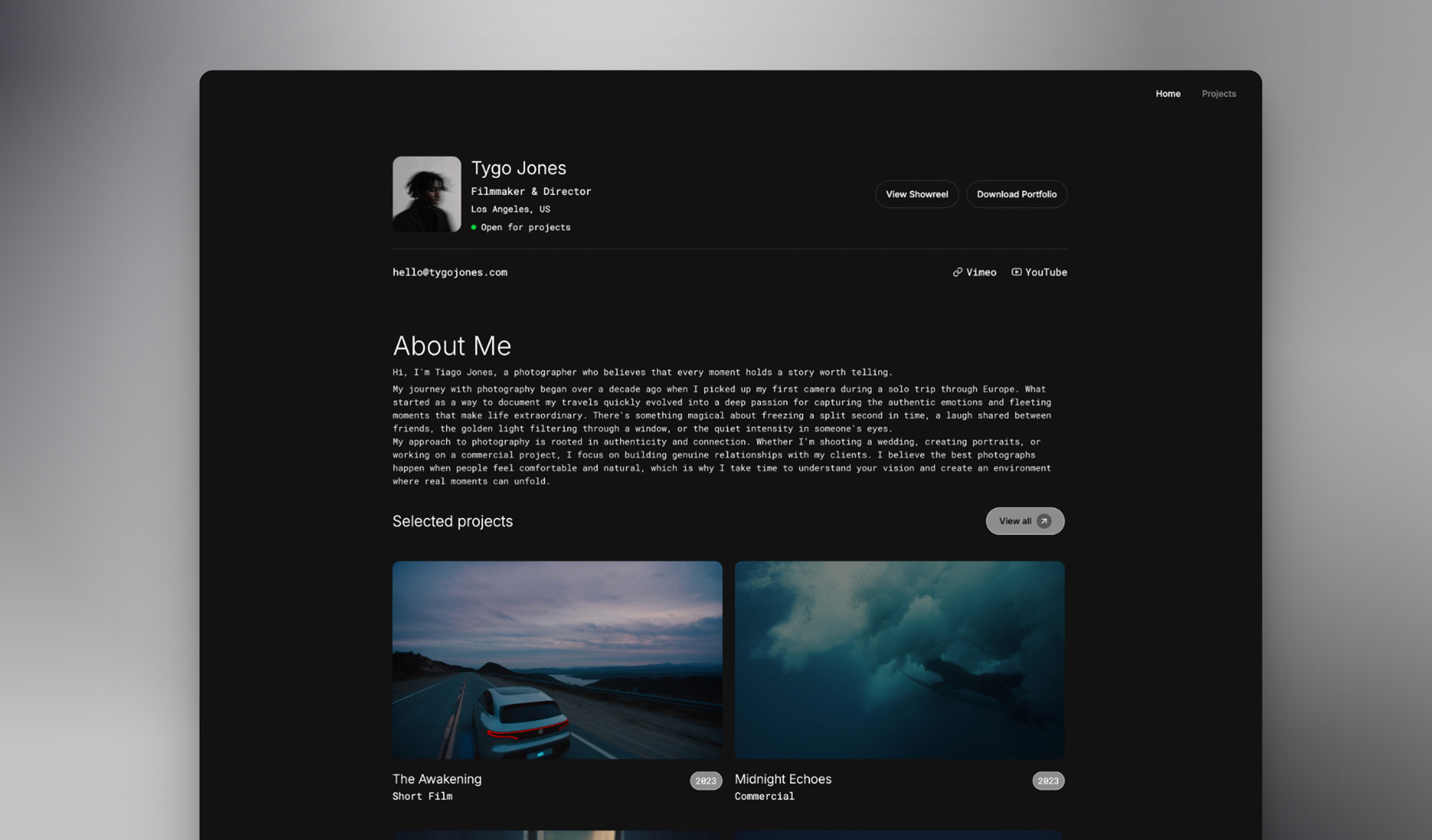
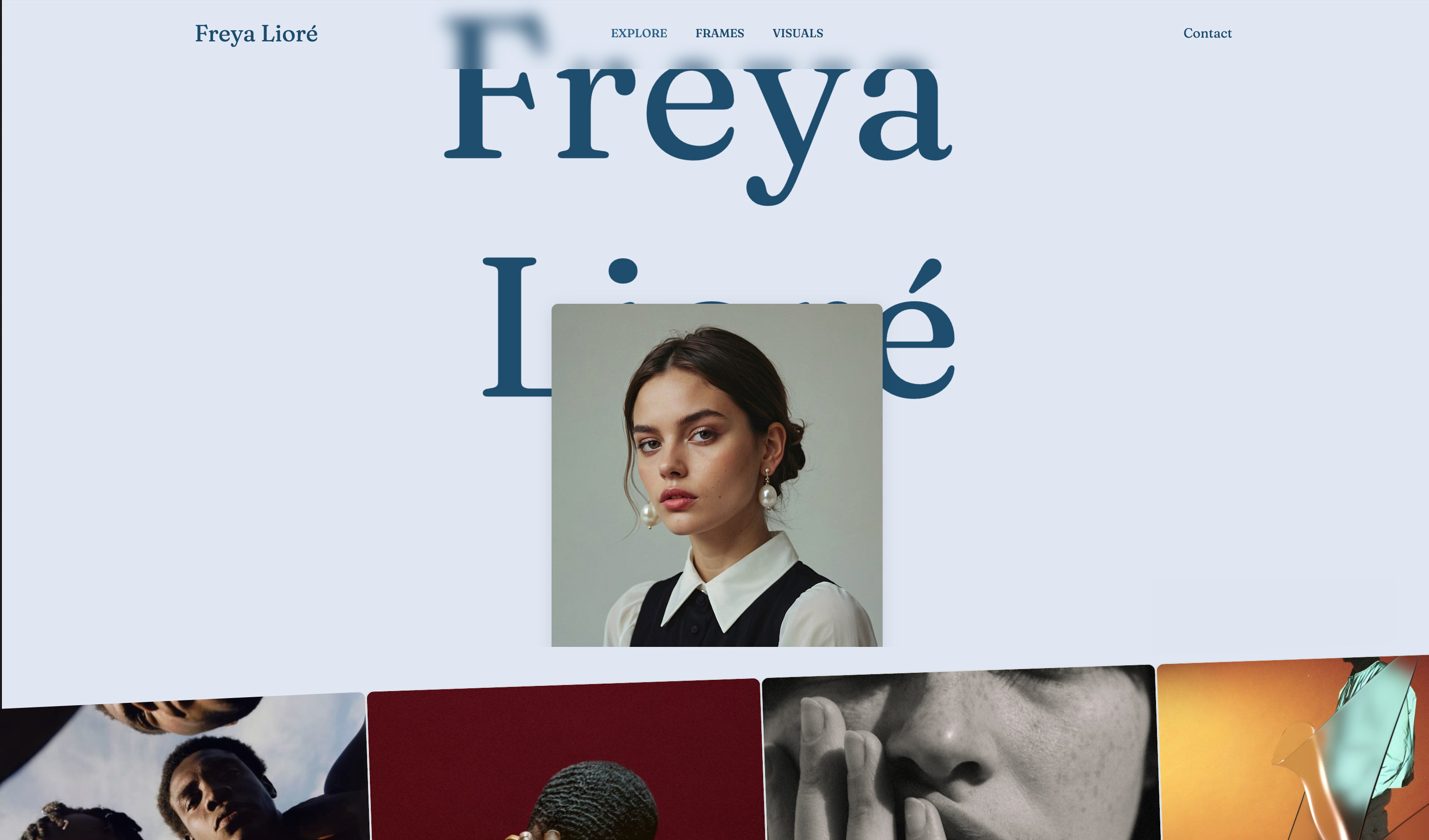
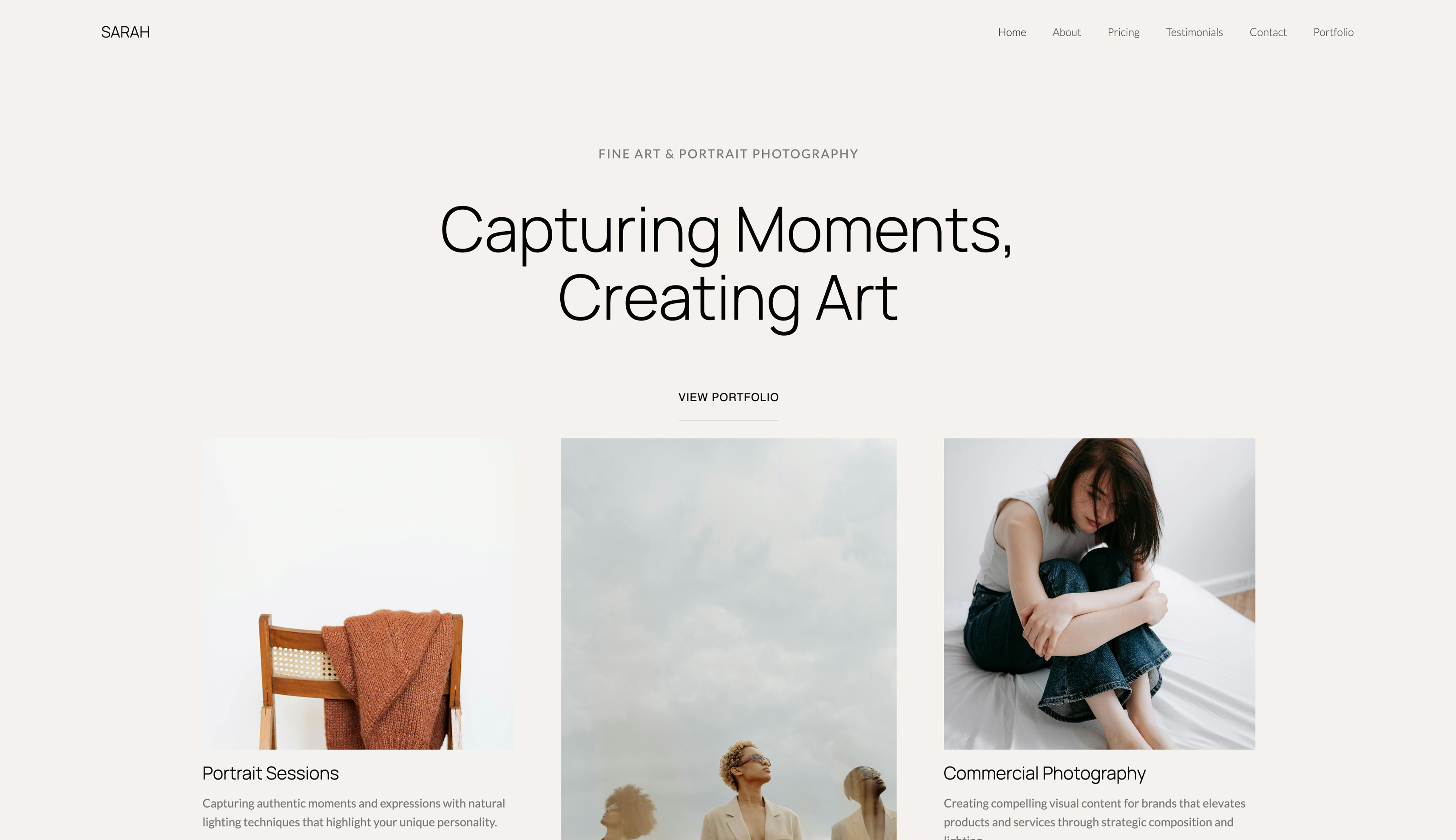
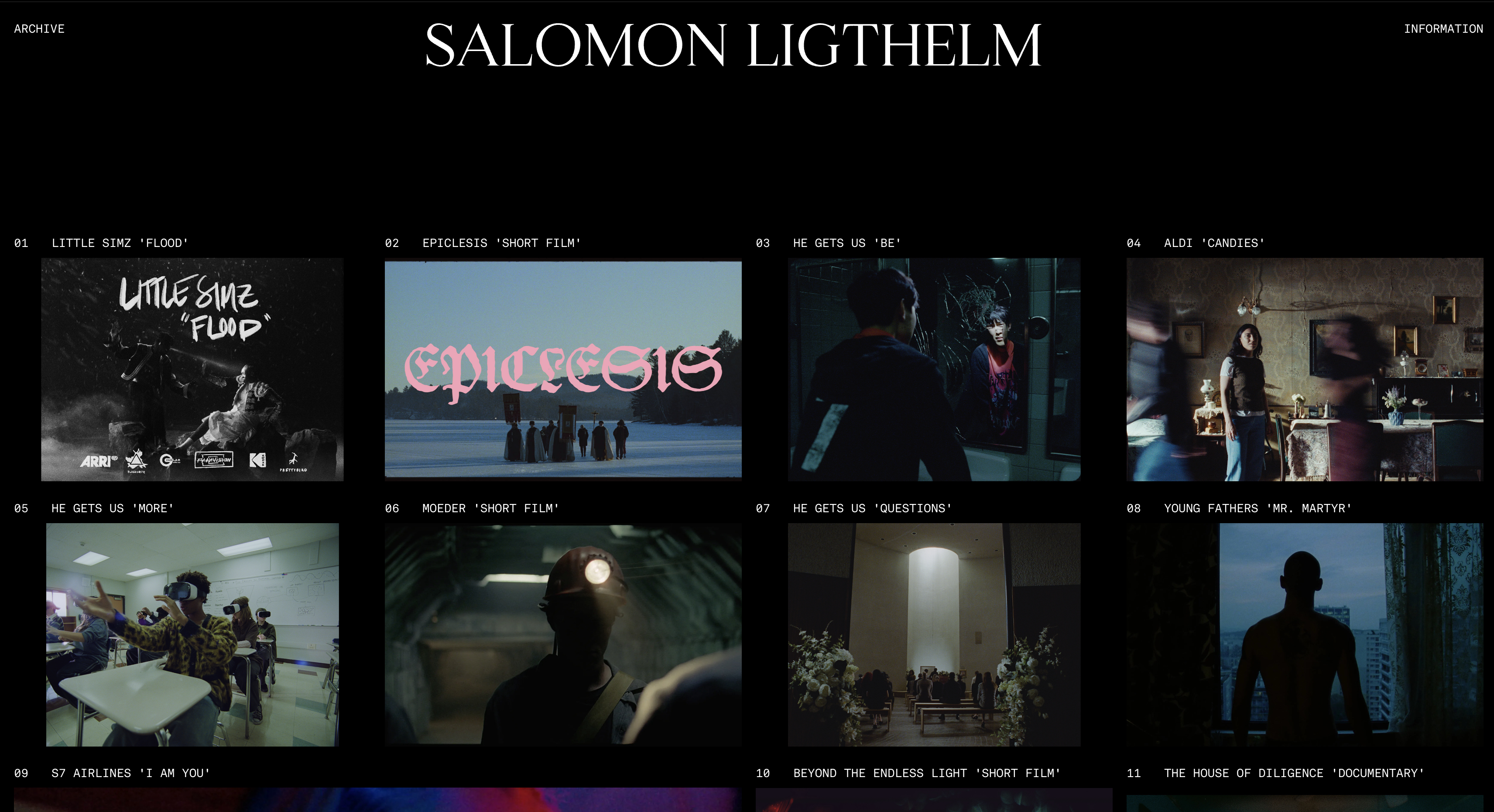
Framekit is an AI website builder for photographers, filmmakers, designers, and illustrators who need the finished plan to become a portfolio, a store, and a client gallery on their own domain rather than another document.
You describe the site, it builds it, and you edit it visually from there.
The practical connection to a mind map is narrower and more useful than a general pitch.
The two branches of a relaunch map that are hardest to execute are page structure and what each page is for, and those are exactly the inputs a site generator needs.
Take the structure branch out of Xmind or Miro, hand it over as a description, and the version that comes back is a working site rather than another diagram of one.
Plans on Free start at $0 with a 5 percent fee on product sales, Pro is $19 a month with a 3 percent fee, and Business is $39 a month with no transaction fee at all.
If your map keeps ending at "and then the website," that is the gap.

Frequently Asked Questions
What is the best free mind mapping tool in 2026?
Obsidian Canvas is the best genuinely free mind mapping tool, because it is free without limits for personal use, requires no sign-up, and stores your maps as plain files on your own disk.
If you need a browser tool with collaboration instead, Coggle's free tier is the most usable, offering unlimited public diagrams plus 3 private ones.
Miro, Mural, MindMeister, Mindomo, and Whimsical all cap their free plans at 3 documents, which a single real project will exhaust.
Miro vs Xmind: which should I choose?
Choose Miro if anyone other than you will edit the map, and Xmind if nobody will.
Miro is a collaborative whiteboard at $8 per member per month billed annually, and its strengths are all multiplayer: simultaneous editing that preserves structure, comments, and conversion of a map into a table or Kanban.
Xmind is a structured outliner at $4.92 per month on Pro, and its strength is that switching between outline and map view exposes redundant thinking.
Paying Miro's per-member price for solo work is the single most common overspend in this category.
Is Miro's free plan enough for one person?
Miro's free plan gives 3 editable boards, which is enough for roughly one quarter of real use for a solo creative running one significant project a month.
It includes 7,000 or more templates and 250 or more integrations, so the limit is capacity rather than capability. Once you hit it, the cheapest exit is Starter at $8 per member per month billed annually.
If you are solo and reaching that cap, Xmind at $4.92 per month or MindNode at $2.99 per month will cost you less for the same job.
What happens to my maps if I stop paying?
On every paid tool we tested, cancelling downgrades rather than deletes. You drop back under the free tier's cap and any documents above that cap become read-only: viewable, usually exportable one at a time, not editable.
Nothing we tested destroyed maps on cancellation. The practical risk is not loss but paralysis, because bulk export is frequently a paid feature, as it is on Coggle's Organization plan, so leaving in a hurry is harder than it should be.
Which mind mapping tools let me export my work and re-import it elsewhere?
Obsidian, Scapple, Coggle, and Xmind are the four that let you leave with the hierarchy intact. Obsidian and Scapple store files locally so there is nothing to export from.
Coggle and Xmind both export to formats other tools re-import, with Xmind offering Markdown export on paid tiers without a watermark.
Miro, Mural, Whimsical, and FigJam export images and PDFs freely, which preserves how the map looked and loses how it was structured.
Is the AI in mind mapping tools worth paying for?
The AI is worth paying for if you want it to summarise and audit an existing map, and not worth paying for if you want it to generate one.
In testing, generated branches were structurally sound and generically obvious, while asking a tool to compress a 47-node map into five points or to find branches with no dependencies produced genuinely useful answers.
Check whether credits are monthly or one-time before comparing prices: Xmind gives 10 credits in total on Free and Pro but 500 per month on Premium, and Whimsical gives 20 per workspace in total on free.
What is the cheapest paid mind mapping tool?
MindNode Plus at $2.99 per month is the cheapest recurring paid tool in this comparison, followed by FigJam at $3 per month for a Collab seat on Figma's Professional plan, then Xmind Pro at $4.92 per month and Coggle Awesome at $5 per month or $50 per year.
Scapple is cheaper again over time because it is a one-time purchase rather than a subscription, though it has no web version, no mobile app, and no collaboration.
Which mind mapping tool is best for photographers and designers?
Milanote is the best fit for visual creatives, because its cards display images at a size where you can actually judge them, which no other tool here does well.
The constraint is its free plan: 100 cards in total across notes, images, and links, plus 10 file uploads, so one image-heavy project uses over half of it.
If your maps are mostly text and deadlines rather than references, Xmind will serve you better and cost less.
Our roundups of AI tools for photographers and AI tools for designers cover the rest of that stack.
Do I need a mind mapping tool if I already have a project management tool?
No, and confusing the two is a common way to pay twice. A mind mapping tool is for the stage where you do not yet know the shape of the work, and a project management tool is for the stage where you do.
The handoff between them is the thing worth optimising: MindMeister is the only tool here that turns nodes into assigned tasks with dates without re-typing, via its MeisterTask integration.
If your work is already decomposed into tasks with owners, you do not need anything on this list.
Is Figma's FigJam a real mind mapping tool or just a whiteboard?
FigJam is a whiteboard with no dedicated mind map object, so you connect shapes manually and nothing enforces the hierarchy. That makes it slower to build in and, in our testing, the easiest for a non-technical client to read.
It earns its place on price rather than capability: a Collab seat is $3 per month on Figma's Professional plan and includes full FigJam access, and the free Starter plan allows unlimited drafts with 150 AI credits per day up to 500 per month.
How many nodes can these tools handle before they get slow?
All twelve handled our 47-node map without visible strain, so node count is not a differentiator at the scale most creatives work at.
What differed was legibility rather than performance: tools with automatic layout, particularly Coggle and Whimsical, kept 47 nodes readable without intervention, while freeform canvases including Miro, FigJam, Mural, and Obsidian Canvas required manual tidying as the map grew.
If your maps regularly exceed a few hundred nodes, prioritise outline view, which Xmind and MindMeister both have and most canvases do not.
Final Verdict
Miro is the best mind mapping tool in 2026 for the majority of people who will read this, because most maps that matter get touched by more than one person, and Miro is the only tool here where a second editor can restructure a branch without breaking it.
At $8 per member per month billed annually it is not the cheapest and it was never going to be.
Where Miro loses, and it loses clearly, is solo work. Its entire advantage is collaborative, and a photographer planning their own year is paying $96 annually for a room they sit in alone.
Xmind at $4.92 per month thinks harder for one person, MindNode at $2.99 per month is faster for anyone on Apple hardware, and Obsidian is free without limits and cannot ever raise its price on files that live on your own disk.
Miro is also not for anyone whose maps are mostly images, where Milanote is plainly better, or for anyone who needs the map to become assigned work, where MindMeister's MeisterTask handoff has no equivalent here.
The honest summary of a month of testing is that this category has no single winner, it has four correct answers depending on the species you need: Miro for teams, Xmind for structured solo thinking, Milanote for visual work, and Obsidian for permanence.
Buy the species, then buy the tool.
And keep the last step in view.
A map is a plan for work that has to exist somewhere public eventually, whether that is a portfolio that books clients or a store that sells your digital products.
The tools above are where the thinking happens. They are not where it lands.
Related readingThe best AI tools for filmmakers, how to build a photography website, and what makes a good photography portfolio.
Also in this seriesthe best note taking apps for creatives, presentation software, and Figma alternatives.