Framekit templates
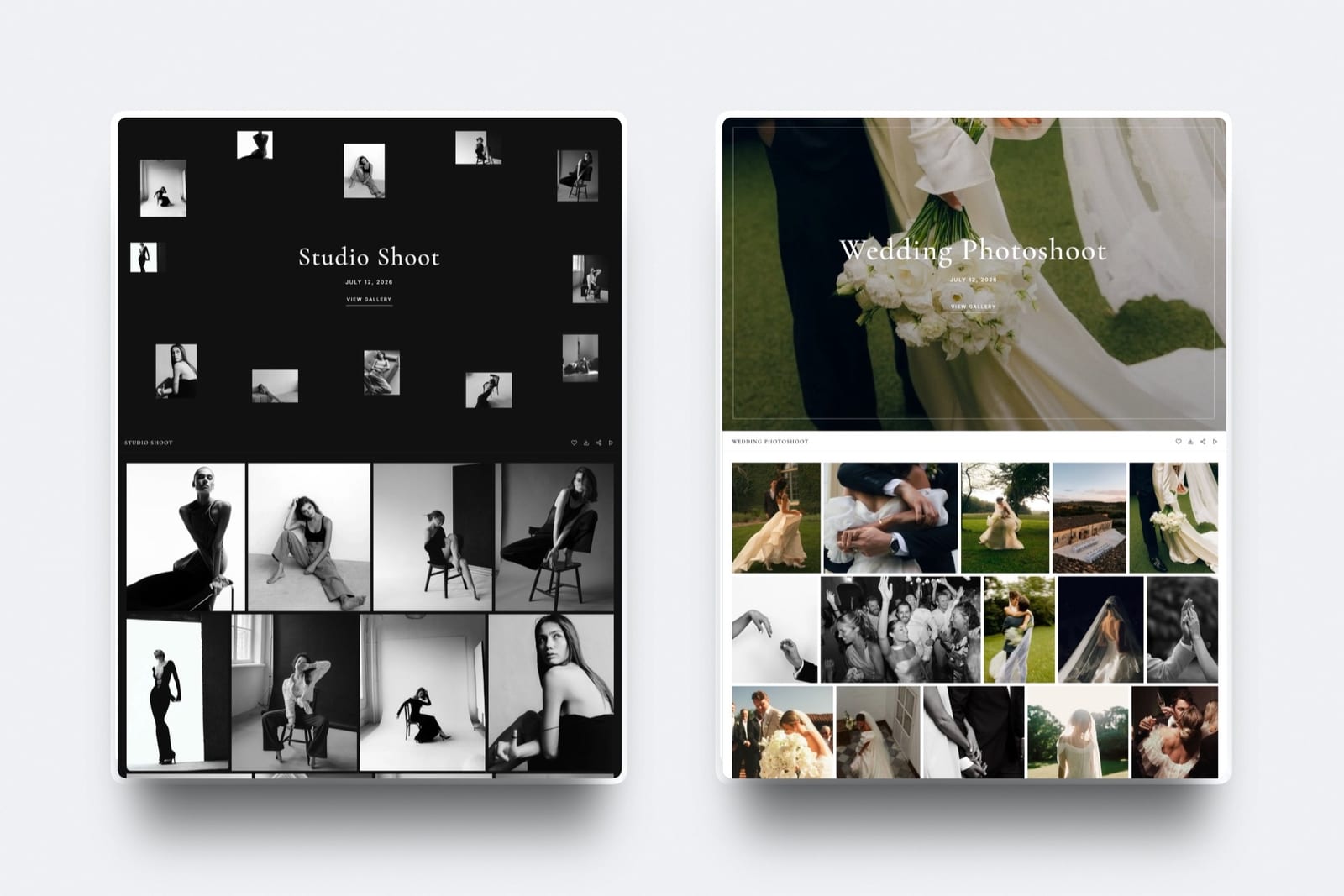
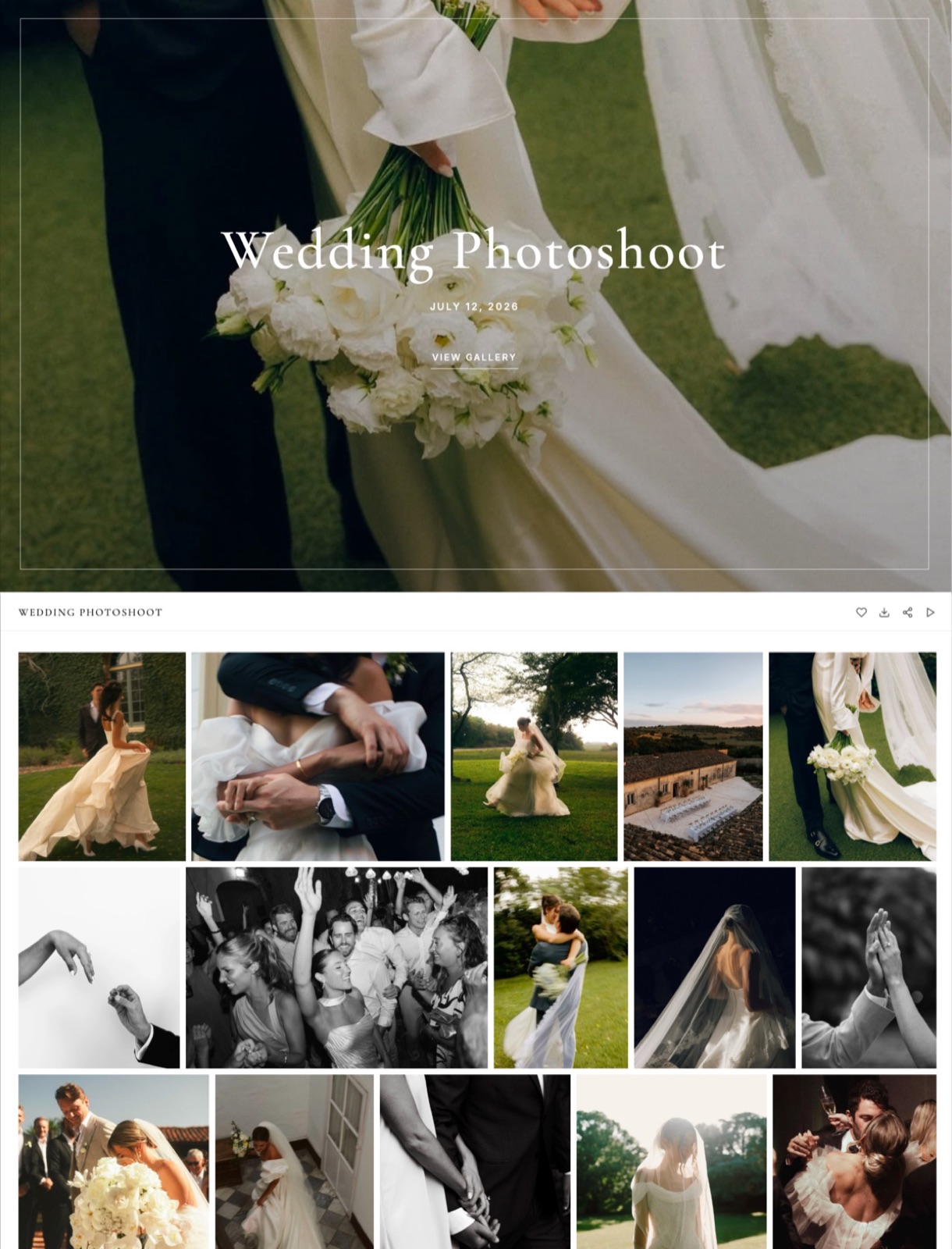
Start from a designer-made template
 Use template
 Use template
 Use template
 Use template
 Use template
 Use template
 Use template
 Use template
Photographers hunting for PhotoShelter alternatives usually arrive with one of two complaints, and they point in opposite directions.
Either the archive is the only part they use and they are paying for a website they never show anyone, or the website is the only part they use and they are paying for an archive nobody searches.
There is also a pricing shape that catches people out. PhotoShelter's Basic plan is $12.99 a month, which reads as reasonable until you notice it carries 4GB of storage. That is a fraction of one commercial job.
Client proofing does not appear until Standard at $29.99 with 100GB, and unlimited storage arrives at Pro for $49.99.
So the honest starting price for a working professional is $360 a year and the honest ceiling is $600, not the $156 on the shelf.
None of which means PhotoShelter is overpriced. It means it is priced like the digital asset manager it actually is, and a lot of photographers bought it thinking it was a gallery.
A client gallery and archive platform is software that stores your photographs, makes them findable later, and delivers or licenses them to clients, and the alternatives below split cleanly by which of those three jobs they are genuinely good at.
The best PhotoShelter alternative in 2026 is Framekit, because it replaces the part most photographers actually use, a website plus client delivery, with a real portfolio on your own domain, uncapped galleries and no commission on delivery, at a fraction of the price.
The honest trade-off: Framekit has no metadata search and no licensing engine, so if the searchable archive is why you pay PhotoShelter, nothing here replaces it and you should stay.
SmugMug is the closest archive substitute with unlimited storage, ShootProof is the pick for print revenue, and Pixieset is the best client-delivery experience.
Framekit replaces the website half of PhotoShelter with a portfolio you own, free to start.
Full disclosure: Framekit is ours and it is ranked first, so the concessions carry the weight here. We ran the same archive-and-delivery test on all ten platforms, read every price off published vendor pages in August 2026, and we say it plainly: PhotoShelter's keyword search and licensing engine are better than anything we offer and better than anything else in this comparison.
On 19 September 2026 we re-verified Framekit's plans and corrected its storage in three places: Starter is 50GB and Pro is 300GB, not the older 10GB and 100GB.
What PhotoShelter Is Actually For
Being genuinely fair about the incumbent is the only way a comparison written by a competitor is worth anyone's time, so here is what PhotoShelter does better than everything else in this guide.
PhotoShelter's genuine advantages are search and licensing.
Keyword and IPTC metadata search across an entire library turns a request for "the 2024 packaging shots" into a query rather than an archaeology project, and rights-managed and royalty-free pricing are wired into the download itself rather than living in a contract.
For an editorial, stock or commercial photographer whose back catalogue earns money every year, that is not a feature, it is the business.
It also includes a photographer website with a custom domain on every plan, unlimited galleries, and client proofing from the Standard tier upward, with unlimited cloud storage on Pro at $49.99 a month.
What it is not is a designed client experience. The interface assumes a picture editor rather than a wedding couple, and the proofing tools are thinner than the platforms that specialise in them.
If your archive sits untouched between shoots, you are paying for an engine that never starts.
How We Compared These PhotoShelter Alternatives
We tested for the three separate jobs PhotoShelter quietly bundles into one subscription, because the right alternative depends entirely on which of those three you personally need and which you have been paying for out of habit.
The archive testfinding four specific frames in a library of 3,000 images from shoots more than a year old, using only each platform's own tools.
The delivery testpublishing a 300-image client gallery with a password, favourites and full-resolution downloads.
The website testbuilding a portfolio page and judging whether it is one you would send to a commissioning client.
Weighting. Website and portfolio quality 25%, client delivery 25%, storage economics 20%, archive and search 20%, selling and licensing 10%.
Search is weighted at only 20% deliberately, because most photographers leaving PhotoShelter have already concluded they do not use it, and a heavier weight would pre-decide the ranking in the incumbent's favour.
Claims are separated throughout. Hands-on: uploading, searching, publishing and delivering. Verified from primary sources: prices, storage tiers and fees read from published pricing in August 2026. Community sentiment, labelled as such: recurring public review complaints.
What Comparing Ten Alternatives Showed
The findings that reshaped this ranking are mostly about how unusual PhotoShelter's particular combination of capabilities is, and how few products in 2026 seriously attempt to match all of it.
- 0 of the 10 alternatives offer a comparable keyword and metadata search across an entire archive, so this is a genuine moat rather than a marketing claim.
- 3 of the 10 offer unlimited storage on at least one plan, which is the substitutable half of PhotoShelter's archive proposition.
- 6 of the 10 deliver a better client-facing gallery experience than PhotoShelter does, which is the most common reason photographers move.
- The cheapest way to match PhotoShelter Standard's 100GB plus client proofing is about $17 to $20 a month, against $29.99.
- 1 of the 10 gives you a full website builder on your own domain rather than a template site attached to a gallery product.
Here is the diagnostic worth running before you cancel anything: open your PhotoShelter account and check how many searches you have run in the last three months.
If the answer is zero, you are paying $360 a year for a website and a gallery, and this list will save you money. If the answer is more than a handful, stay.
The 10 Best PhotoShelter Alternatives in 2026, Compared
Weighting is set out above. Framekit reaches 9.0 while scoring a 3 on archive search, the lowest score we have given ourselves in any comparison, because we simply do not offer that capability and pretending otherwise would make the rest of this page worthless.
| Platform | Entry paid price | Storage | Archive search | Our rating |
|---|---|---|---|---|
| Framekit | $9/mo | 10GB to 2TB by tier | No | 9.0/10 |
| SmugMug | $20/mo annual | Unlimited on every plan | Basic, no metadata search | 8.7/10 |
| Pixieset | About $10/mo | 3GB to 1TB by tier | No | 8.5/10 |
| ShootProof | About $10/mo | Photo-count based | No | 8.2/10 |
| Pic-Time | $8/mo | 10GB to unlimited | No | 8.0/10 |
| Picflow | From $21/mo | Plan based | Tagging and filters | 7.8/10 |
| CloudSpot | $7/mo | 5GB to unlimited | No | 7.6/10 |
| PicDrop | ~EUR 14.99/mo | 500GB on Pro | No | 7.4/10 |
| Zenfolio | $9/mo | Plan based | No | 7.0/10 |
| Dropbox | $11.99/mo | 2TB to 3TB | Filename and full-text only | 6.7/10 |
Prices were read from published vendor pricing pages in August 2026, and payment processing of about 2.9% plus $0.30 applies wherever a client pays for anything.
Count your searches before you cancel. PhotoShelter's price is justified by one behaviour. If you are not doing that behaviour, you are subscribing to the wrong category of product.
1. Framekit: Best Overall PhotoShelter Alternative

Our rating: 9.0/10
Framekit is an AI website builder with client galleries and a digital store built in, and it replaces the half of PhotoShelter that most photographers actually use every week.
Where PhotoShelter gives you a template site attached to an archive, Framekit gives you a genuine portfolio, generated by Cadence, its own model for creative sites, with client galleries as pages of that same site on your own domain.
The delivery side is stronger too. Galleries are uncapped on every plan including free, clients download full-resolution files or a ZIP without creating an account, and there is no commission on delivery at any tier.
For a photographer who was paying $29.99 a month largely for proofing and a website, Framekit Pro at $19 does that job better and adds a store.
Best forPhotographers who use PhotoShelter mostly as a website and delivery tool and rarely search the archive.
Key features:
- A real portfolio website on your own domain, not a template attached to a gallery product
- Unlimited client galleries on every plan including free
- Password and PIN protection, watermarking, favourites, slideshow and full-resolution or ZIP downloads on every tier
- No client account required to download
- Originals up to 100MB per photo and branded sharing emails
- A digital store for licences, presets and downloads, with fees of 5% on Free and Starter, 3% on Pro and 0% on Business
The real numberthe like-for-like comparison is PhotoShelter Standard at $29.99 a month for 100GB with proofing against Framekit Pro at $19 a month for 300GB with uncapped galleries and a store.
That is $132 a year saved, and the site you get is one you would actually send to a commissioner rather than one you tolerate.
Pricing (pooled account storage in parentheses)Free $0 (10GB, unlimited galleries), Starter $9/mo (50GB, custom domain, no Framekit branding), Pro $19/mo (300GB), Business $39/mo (2TB, 0% fee on digital sales). Annual billing takes 20% off.
Pros:
- A portfolio that competes on design rather than one bundled with an archive
- Cheaper than PhotoShelter Standard for the same storage, with uncapped galleries
- Delivery and portfolio on one domain you own, plus a store for licence sales
Cons:
- No keyword, IPTC or metadata search of any kind, which is PhotoShelter's core value
- No rights-managed licensing engine, so usage terms live in your contract
- No unlimited storage tier, so very large archives cost more here than on SmugMug
- No contracts or invoicing
Skip it ifyou search your archive regularly or licence images from a back catalogue. Nothing in this comparison replaces PhotoShelter for that, including us.
Verdict: Framekit is the best PhotoShelter alternative for the majority who use the website and delivery and ignore the archive, and it is the wrong choice for the minority who bought PhotoShelter for exactly the right reasons. See the field in our client gallery platforms guide, or start at framekit.ai.
2. SmugMug: Closest Archive Substitute
Our rating: 8.7/10
If the archive genuinely matters but the search does not, SmugMug is the closest thing here to a PhotoShelter replacement, because unlimited storage comes on every plan including the entry tier.
For a photographer with fifteen years of work and a habit of keeping everything, that removes the single largest cost driver.
It also carries a mature print-sales engine and a template website with domain mapping, so the bundle logic that made PhotoShelter attractive still partly applies. Print sales take a commission on your markup, commonly planned around 15%.
The real numberSmugMug Pro on annual billing is $37 a month with unlimited storage against PhotoShelter Pro at $49.99 with the same, a saving of about $156 a year for a comparable capacity, though you give up the metadata search entirely.
Skip it iffinding old images quickly is the problem you are trying to solve. Browsing is not searching.
Verdict: SmugMug is the storage answer and a credible archive home for photographers who organise by structure rather than by keyword. Its Capterra rating of 3.5 across 11 reviews is a small sample and the value-for-money complaints in it should be read as sentiment. Our SmugMug alternatives guide covers the next step.
3. Pixieset: Best Client Delivery Experience
Our rating: 8.5/10
For photographers whose complaint is that PhotoShelter's galleries feel like an archive tool, Pixieset is the most immediate improvement.
The client experience is the most polished and most familiar in the category, mobile behaviour is strong, and favourites and downloads work without instructions.
Free gives 3GB with a 15% store commission, Basic at about $10 a month gives 10GB with 0% commission, and Plus at about $20 gives 100GB.
It holds 4.7 out of 5 across 207 Capterra reviews, which is by far the deepest review base in this comparison.
Skip it ifyou need serious storage. Pixieset's tiers are sized for delivery, not for an archive.
Verdict: Pixieset is the delivery upgrade and the wrong tool for a library. Our Pixieset alternatives guide covers where photographers move next.
4. ShootProof: Best for Print and Licence Revenue
Our rating: 8.2/10
ShootProof charges 0% commission on sales on every plan including the cheapest, and adds pro-lab print fulfilment, contracts and invoicing. For a photographer who was using PhotoShelter partly to sell, this keeps more of every sale than any other option in this comparison.
Plans price on photo count rather than gigabytes: free covers 100 photos, 1,500 runs about $10 a month, 5,000 about $20, 25,000 about $30 and unlimited about $60, per ShootProof's plans page.
It holds 4.9 out of 5 across 92 G2 reviews.
Skip it ifyou want a website you would show a commissioning editor. ShootProof does not try to be one.
Verdict: ShootProof is the revenue answer, unglamorous and effective, and the closest thing here to PhotoShelter's commercial intent without its archive. Our ShootProof alternatives guide has the comparison.
5. Pic-Time: Best Presentation and Store Automation
Our rating: 8.0/10
Pic-Time is the aesthetic opposite of PhotoShelter and that is exactly why some photographers move to it. Its galleries are the most designed in this comparison, and automated sale campaigns, reminders and gifting flows keep selling after delivery without any manual effort.
Free takes 15% commission, Beginner is $8 a month with 10GB, Professional $25 with 100GB and Advanced $50 with unlimited storage, with 0% commission on paid tiers when you collect payment yourself. The Advanced tier's unlimited storage makes it a credible archive home as well.
Skip it ifyour buyers are picture editors rather than consumers.
Verdict: Pic-Time is where PhotoShelter users go when they decide the archive was never the point and the client experience always was.
6. Picflow: Closest to Metadata Organisation
Our rating: 7.8/10
Picflow is the only alternative here that makes a real attempt at organisation, with tagging and filters that let you rebuild a set without exporting, alongside per-image comment threads and direct annotation.
It is not metadata search, and it would be misleading to call it that, but for a working set of a few thousand images it narrows the gap.
Paid plans start at $21 a month and include a storefront, digital downloads, print fulfilment, invoicing and contracts.
Skip it ifyour archive runs to tens of thousands of frames. Tagging does not scale the way indexed search does.
Verdict: Picflow is the nearest thing to structured organisation outside PhotoShelter itself, and it is genuinely good at approval rounds. Visit Picflow

7. CloudSpot: Cheapest Business Bundle
Our rating: 7.6/10
CloudSpot puts contracts, invoicing and scheduling alongside the gallery at a lower price than anything else with those features.
CloudSpot's free tier holds 5GB across 3 galleries at 15% commission, Entry costs $7 a month for 15GB across 15 galleries, Lite at $17 opens 100GB with unlimited galleries and the whole studio suite, and Pro and Unlimited run to $34 and $50, per CloudSpot's pricing page.
Paid tiers replace commission with a 2.5% transaction fee.
Skip it ifthe archive is the reason you are shopping. This is a delivery and admin tool.
Verdict: CloudSpot Lite at $17 a month undercuts PhotoShelter Standard by $156 a year and adds business tooling PhotoShelter does not have. Our CloudSpot alternatives guide covers its limits.
8. PicDrop: Best Storage Per Pound
Our rating: 7.4/10
For photographers who want capacity without an archive engine, PicDrop Pro gives 500GB for about EUR 14.99 a month with unlimited galleries and your own branding on client pages, plus another 250GB at EUR 7.99.
Free is 1GB across 3 galleries and Advanced is EUR 39.99 for 1TB with up to four team seats.
The current structure took effect for new customers in May 2026, so older articles are out of date; figures are on PicDrop's pricing page.
There is no store, no website and no search, so it is a component rather than a replacement.
Skip it ifyou need to sell or to be found.
Verdict: PicDrop is the cheapest serious capacity here and the least complete product. Our PicDrop alternatives guide covers what it leaves out.
9. Zenfolio: One Bill for Site, Gallery and Store
Our rating: 7.0/10
Zenfolio bundles a template website, galleries and print sales at around $9 a month for Basic, $23 for Professional and $40 for Advanced, with a flat 7% per order rather than an all-or-nothing commission.
Structurally it is the closest match to PhotoShelter's bundle at roughly half the price.
Design is the limitation, and its Capterra rating of 3.9 across 14 reviews is too small a sample to weigh heavily.
Skip it ifthe portfolio has to win commissions on presentation.
Verdict: Zenfolio is the cheap structural equivalent: same bundle idea, lower ambition, lower price. Our Zenfolio alternatives guide covers where people go.
10. Dropbox: Storage Without the Software
Our rating: 6.7/10
Some photographers leave PhotoShelter for nothing more than raw storage, and Dropbox is the cheapest way to do that: $11.99 a month for 2TB on Plus and $19.99 for 3TB on Professional, with sync and file requests that work well with collaborators.
Full-text and filename search exist, which is more than most gallery tools offer.
Everything else disappears. No portfolio, no client-facing gallery, no licensing, no selling, and a permissions model that generates support questions.
Skip it ifclients ever receive the link.
Verdict: Dropbox is capacity without a product around it. Fine as a backing store, poor as a replacement.
What Replacing PhotoShelter Actually Saves
Costed below for a photographer carrying a 300GB archive who delivers about 30 client galleries a year and sells the occasional image licence on the side.
| Setup | Annual cost | Storage | What you lose against PhotoShelter |
|---|---|---|---|
| PhotoShelter Standard (staying) | $360 | 100GB | Nothing |
| PhotoShelter Pro (staying) | $600 | Unlimited | Nothing |
| Framekit Business | $468 | 2TB | Search and licensing |
| Framekit Pro | $228 | 300GB | Search, licensing, capacity |
| SmugMug Pro annual | $444 | Unlimited | Search and licensing |
| CloudSpot Lite | $204 | 100GB | Search, licensing, website quality |
Two honest readings sit in that table. If you need unlimited storage, SmugMug at $444 undercuts PhotoShelter Pro at $600 while giving up search.
If you need 100GB and a good website, Framekit Pro at $228 undercuts PhotoShelter Standard at $360 while giving up the same thing.
In both cases the saving is the price of the archive engine, and whether that is a saving or a loss depends entirely on how often you use it.
In one lineyou are not choosing a cheaper PhotoShelter, you are choosing whether to keep paying for search.
How to Choose Your PhotoShelter Replacement
Answer these in order and stop at the first confident yes, because the decision hinges almost entirely on a single behaviour that is easy to measure.
1. Do you run archive searches at least monthly? If yes, stay on PhotoShelter. No alternative here replaces that, and switching will cost you more in lost time than the subscription saves.
2. Do you need unlimited storage without search? If yes, SmugMug on annual billing.
3. Is the website the part you actually use? If yes, Framekit, since it is the only option here with a genuine portfolio builder on your own domain.
4. Do you sell prints or licences regularly? If yes, ShootProof for the 0% commission, or Pic-Time if you want the selling automated.
5. Do you want contracts and invoicing bundled? If yes, CloudSpot Lite or Picflow.
Frequently Asked Questions
What is the best PhotoShelter alternative in 2026?
The best PhotoShelter alternative in 2026 is Framekit for photographers who use PhotoShelter mainly as a website and client delivery tool, because it gives a genuine portfolio on your own domain with uncapped galleries at $19 a month against PhotoShelter Standard's $29.99.
SmugMug is the closest archive substitute with unlimited storage on every plan, and no alternative replaces PhotoShelter's metadata search.
Why is PhotoShelter's Basic plan not enough for professionals?
Because 4GB of storage is roughly one commercial shoot, and client proofing is not included at that tier. The Basic plan at $12.99 a month works as a portfolio host and little else.
Client proofing starts on Standard at $29.99 with 100GB, so the honest professional entry price is $360 a year rather than the $156 the headline suggests.
Does any platform replace PhotoShelter's archive search?
No. Across the ten alternatives we tested, none offers comparable keyword and IPTC metadata search across an entire library.
Picflow's tagging and filters come closest for working sets of a few thousand images, and Dropbox offers filename and full-text search, but neither is an indexed archive.
If searching your back catalogue is a regular part of your week, staying is the rational choice.
Framekit vs PhotoShelter: which should photographers choose?
Choose Framekit if you want a portfolio that competes on design, uncapped client galleries, and delivery on your own domain, at $19 a month for 300GB rather than $29.99 for 100GB.
Choose PhotoShelter if you licence images from a searchable back catalogue, because its metadata search and rights-managed pricing have no equivalent in Framekit or in any other alternative we tested.
What is the cheapest PhotoShelter alternative?
CloudSpot Lite at $17 a month is the cheapest option that matches PhotoShelter Standard's 100GB while adding contracts, invoicing and scheduling.
Framekit Starter at $9 a month is cheaper still with a custom domain and uncapped galleries, but gives 50GB rather than 100GB. Dropbox Plus at $11.99 offers far more raw storage and none of the client-facing software.
Which PhotoShelter alternative has unlimited storage?
SmugMug offers unlimited storage on every plan from $20 a month on annual billing, and Pic-Time offers it on its $50 Advanced tier. Those are the only two unlimited options among the alternatives we tested.
Framekit's largest tier is 2TB on the $39 Business plan, and PicDrop tops out at 1TB on its Advanced plan.
Can I keep my custom domain if I leave PhotoShelter?
Yes, since the domain is registered to you rather than to PhotoShelter in almost all cases. You point its DNS at the new platform instead.
Framekit supports a custom domain from the $9 Starter plan, and SmugMug and Zenfolio both offer domain mapping. Check who holds the registration before you cancel, and never let a platform hold your domain registration.
Do PhotoShelter alternatives support image licensing?
Not properly. PhotoShelter is the only platform in this comparison with rights-managed and royalty-free pricing built into the download flow.
Elsewhere you sell a defined licence as a digital product and enforce the terms contractually, which Framekit supports with fees of 5% on Free and Starter, 3% on Pro and 0% on Business, and which ShootProof supports at 0% commission on every plan.
How do I move an archive off PhotoShelter?
Download your originals in batches, verify the file count and total size against what the platform reported, and check that IPTC metadata survived before deleting anything.
Keep the subscription active until the transfer is verified rather than cancelling on the renewal date. Expect this to take longer than you plan for; a 300GB archive is a multi-day job on a domestic connection.
Is PhotoShelter worth it in 2026?
It is worth it if you licence images from a back catalogue or need metadata search, because those capabilities have no substitute at any price in this category.
It is poor value if you use it as a website and a delivery tool, since Framekit Pro at $19 a month and CloudSpot Lite at $17 both do that job better for less. Count your searches to find out which photographer you are.
Final Verdict
PhotoShelter is one of the few products in this category with a genuine moat, and the honest conclusion of testing ten alternatives is that nobody has replicated its archive search.
That is why this comparison ends with a recommendation to stay if you use it, which is not a sentence we expected to write about a competitor.
Where Framekit loses. We have no keyword search, no IPTC indexing and no licensing engine, and those three absences are exactly what PhotoShelter exists to provide.
We also have no unlimited storage tier, so a photographer with a 2TB archive is better served by SmugMug at $37 a month than by our $39 Business plan at 1,000GB. ShootProof will keep more of your print revenue than we can.
If your reason for shopping is any of those, we are not your answer.
Run the search count this week. Open your PhotoShelter account, look at how often you have actually searched the archive in the last three months, and let that number decide. It is a better guide than any ranking, and it is the only one that reflects how you personally work.
Related readingclient gallery platforms compared, the best SmugMug alternatives, website builders for photographers, and how to sell photos online.
Every price, storage tier and fee was read from the vendors' published pricing pages in August 2026, and all ten alternatives ran the same archive search, client delivery and portfolio build, because the value of a digital asset manager only becomes measurable when you try to do without one.