Framekit templates
Start from a designer-made template
 Use template
 Use template
 Use template
 Use template
 Use template
 Use template
 Use template
 Use template
A buyer in Amsterdam pays for your 29 euro template with iDEAL. That costs you 32 cents.
A buyer in Madrid pays for the same template with a credit card. That costs you 77 cents.
Same product, same price, same platform, and one transaction costs more than twice the other because of which button the buyer clicked. Then, separately, the VAT you owe on those two sales is different too, because it is charged at the buyer's national rate rather than yours.
Neither of those variables appears in a normal platform comparison, and for a European seller they matter more than the platform fee does.
A merchant of record is a company that becomes the legal seller of your product, taking on VAT collection and filing, and the central choice for a European seller is whether to use one or to register for the EU one-stop-shop scheme and file yourself.
Mollie is the best payment platform for a European seller in 2026, because it prices local methods properly - iDEAL at a flat 32 cents and SEPA Direct Debit at 35 cents, against 1.80% plus 25 cents for a European card - and those methods are what a large share of European buyers actually use.
Lemon Squeezy and Paddle are the picks if you would rather never file an OSS return, at 5% plus 50 cents.
Framekit is the pick if the store should sit on your own domain with no platform percentage on its 39 dollar plan, though its checkout runs on Stripe rather than Mollie, and Stripe is the cheapest card processing if you are comfortable handling VAT yourself.
Full disclosure: Framekit is our own product and ranks third here, behind Mollie and Lemon Squeezy, because it is not a merchant of record and cannot use Mollie's local-method pricing. We priced it the same way as every other platform and say in its review exactly where the two above beat it.
How We Priced This
One product, one volume: a 29 euro digital product sold 300 times a month, or 8,700 euros in monthly revenue, sold by a European seller to buyers across the EU.
All prices in this guide are inclusive of VAT, which is how European consumer pricing works and which materially changes the arithmetic - see the section below on why the same sale is worth different amounts in different countries.
Three grades of claim.
In September 2026 we re-verified Framekit's fees and how its checkout is processed against its plan table and store documentation, and corrected an earlier suggestion that it could be paired with Mollie. Read at the vendor's own pricing page in the first week of August 2026 covers Mollie, Stripe, Lemon Squeezy, Paddle, Payhip, Sellfy, Gumroad, Shopify, Quaderno and Framekit's own plan file. Purchased through covers Stripe, Gumroad, Payhip and Lemon Squeezy. Not verifiable applies where noted in place.
One caveat that runs through this entire series and matters especially here: Stripe and Shopify both serve pricing by country, and the figures below are the ones served to a European visitor.
That is the right set for this guide and the wrong set if you are reading from elsewhere.
By the numbers:
- 32 cents is what an iDEAL payment costs, flat, regardless of order value.
- 77 cents is what a European consumer card costs on the same 29 euro sale.
- 4x separates the cheapest and most expensive payment method at this volume.
- 17% to 27% is the range of standard VAT rates across the EU.
- 1.96 euros is how much the same 29 euro sale varies by buyer country, after VAT.
- 588 euros a month is what that variance is worth at 300 sales.
- 0 euros is what a monthly minimum costs on the winning platform.
The Rubric
We scored on five criteria, weighted for a seller based in Europe selling primarily to European buyers. That is a genuinely different set of priorities from a US-focused comparison, and it reorders the ranking substantially.
| Criterion | Weight | What it covers |
|---|---|---|
| Local payment methods | 30% | iDEAL, Bancontact, SEPA, Klarna and what each costs |
| VAT handling | 25% | Whether you file OSS yourself or the platform is merchant of record |
| Cost on our test month | 20% | Platform fee plus processing on 8,700 euros |
| Payouts in euros | 15% | Whether you are paid in your own currency without conversion |
| Compliant invoicing | 10% | Whether receipts satisfy EU requirements |
Local payment methods carry the most weight, which we would not do for a guide aimed at a US seller. In several European markets a card is the second or third choice, and a checkout that only offers cards is losing sales before any fee is charged.
What the Buyer Clicks Decides Your Fee
This is the table that does not exist in any general platform comparison, and it is the most useful thing in this guide. All figures are Mollie's published rates applied to 300 sales of a 29 euro product.
| Payment method | Published rate | Cost per sale | Cost on 8,700 euros | Effective rate |
|---|---|---|---|---|
| iDEAL | 0.32 euros flat | 0.32 | 96 euros | 1.10% |
| SEPA Direct Debit | 0.35 euros flat | 0.35 | 105 euros | 1.21% |
| Bancontact | 1.40% + 0.25 | 0.66 | 196.80 euros | 2.26% |
| European consumer card | 1.80% + 0.25 | 0.77 | 231.60 euros | 2.66% |
| European commercial card | 2.90% + 0.25 | 1.09 | 327.30 euros | 3.76% |
| Non-European card | 3.25% + 0.25 | 1.19 | 357.75 euros | 4.11% |
| Klarna, Netherlands and Belgium | 2.99% + 0.45 | 1.32 | 395.10 euros | 4.54% |
The spread is 96 euros to 395 euros on identical revenue, and you do not choose which row you land on - your buyers do.
What you do choose is which methods you offer. A Dutch-heavy audience routed through iDEAL costs a quarter of the same audience routed through Klarna.
The flat-fee methods, iDEAL and SEPA, get proportionally cheaper as your price rises, which is the opposite of how card pricing behaves.
In one linein Europe the payment method is a bigger lever on your margin than the platform, and the cheapest methods are flat-fee rather than percentage-based.
The Same Sale Is Worth Different Amounts in Different Countries
In one linea 29 euro price includes VAT at the buyer's national rate, so a sale to Hungary is worth about two euros less to you than the same sale to Luxembourg.
For business-to-consumer digital sales inside the EU, VAT is charged at the rate where the buyer is, not where you are. European consumer prices are quoted inclusive of VAT, which means your 29 euro price is the same everywhere and your net revenue is not.
Standard rates across the EU currently range from 17% to 27%, as published by the European Commission. Applied to a 29 euro price:
| Buyer country | Standard VAT rate | VAT in the price | Net to you |
|---|---|---|---|
| Luxembourg | 17% | 4.21 euros | 24.79 euros |
| Germany | 19% | 4.63 euros | 24.37 euros |
| Netherlands | 21% | 5.03 euros | 23.97 euros |
| France | 20% | 4.83 euros | 24.17 euros |
| Sweden | 25% | 5.80 euros | 23.20 euros |
| Hungary | 27% | 6.17 euros | 22.83 euros |
The spread between the best and worst is 1.96 euros a sale, or roughly 588 euros a month at our test volume, and it is determined entirely by where your buyers happen to live.
There are two ways to handle this and both are legitimate:
Price inclusive and absorb the variance, which is what most European sellers do. One price everywhere, simple for the buyer, and your margin varies quietly by country.
Price exclusive and add VAT at checkout, which is normal for business-to-business sales and unpopular in consumer contexts, because the buyer sees one number and pays another.
What you cannot do is ignore it. If you are not using a merchant of record, the OSS registration exists precisely so you can file one quarterly return covering all EU countries rather than registering in each, and it is the mechanism this whole section assumes.
1. Mollie: Best for European Payment Methods
Mollie is a Dutch payment provider built around exactly the methods European buyers reach for, and it prices them properly rather than treating them as exotic card alternatives.
The real numberiDEAL at a flat 0.32 euros, SEPA Direct Debit at 0.35 euros, Bancontact at 1.40% plus 0.25, European consumer cards at 1.80% plus 0.25 and non-European cards at 3.25% plus 0.25, with no monthly minimum on pay-as-you-go.
The standout detailthe flat-fee methods. A 32-cent charge regardless of order value means a 29 euro sale costs 1.1% and a 199 euro sale costs 0.16%. No card processor in this series comes close at higher price points, and iDEAL is the dominant method in the Netherlands rather than a niche one.
The honest gotchaMollie is a payment provider, not a merchant of record. VAT registration and OSS filing remain entirely yours, exactly as with Stripe, and it does not supply a storefront either - you are pairing it with something.
Skip it ifmost of your buyers are outside Europe. Non-European cards at 3.25% plus 0.25 are the expensive end of this table.
Verdict: the right processing layer for a European seller with European buyers, and the single biggest margin lever in this guide.
2. Lemon Squeezy: Best Way to Never File an OSS Return
Lemon Squeezy becomes the merchant of record, which for a European seller means the OSS registration, the quarterly return and the country-by-country rate table all stop being your problem.
The real number5% plus 50 cents per transaction with card processing included. On 8,700 euros across 300 sales that is roughly 570 euros a month in fees.
The standout detailit is the whole compliance stack in one line item.
Against the alternative - registering for OSS, tracking rates across 27 countries, filing quarterly and keeping evidence of buyer location - 570 euros a month buys back a genuine ongoing obligation rather than a piece of software.
The honest gotchait is several hundred euros a month more than the independent route at this volume, and it does not offer iDEAL pricing anything like Mollie's. You are paying for compliance, not for payments.
Skip it ifyou are already comfortably registered and filing, or your buyers are concentrated in one country.
Verdict: the efficient answer for a solo European seller who would rather not think about VAT again.
3. Framekit: Best If the Store Should Be Yours

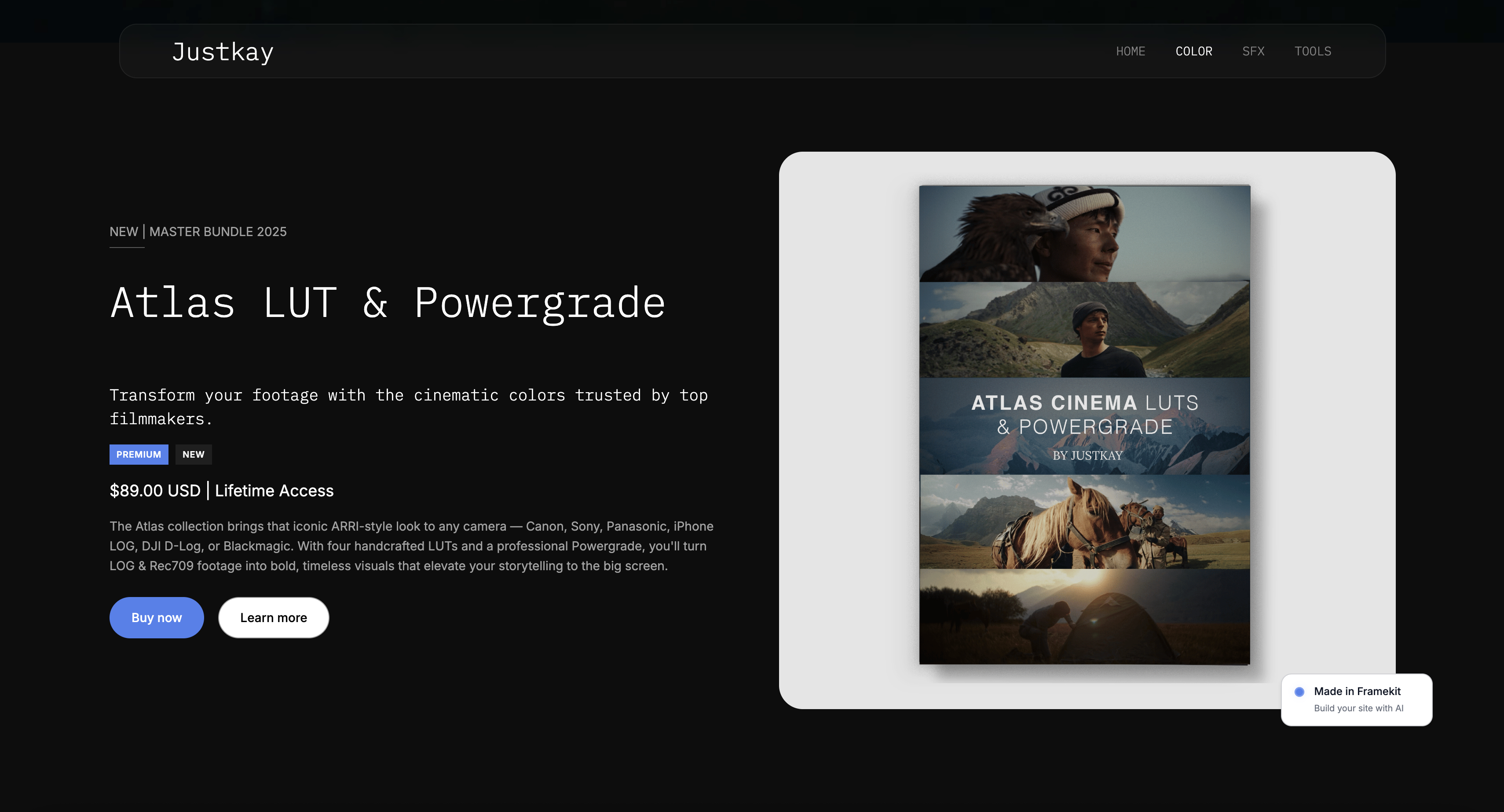
Framekit is an AI website builder with a digital-download store built in, and for a European seller it is the storefront layer: product pages on your own domain, or a direct buy link if you have no site yet, both leading to a hosted Framekit checkout page, with instant delivery after payment and unlimited products on every plan.
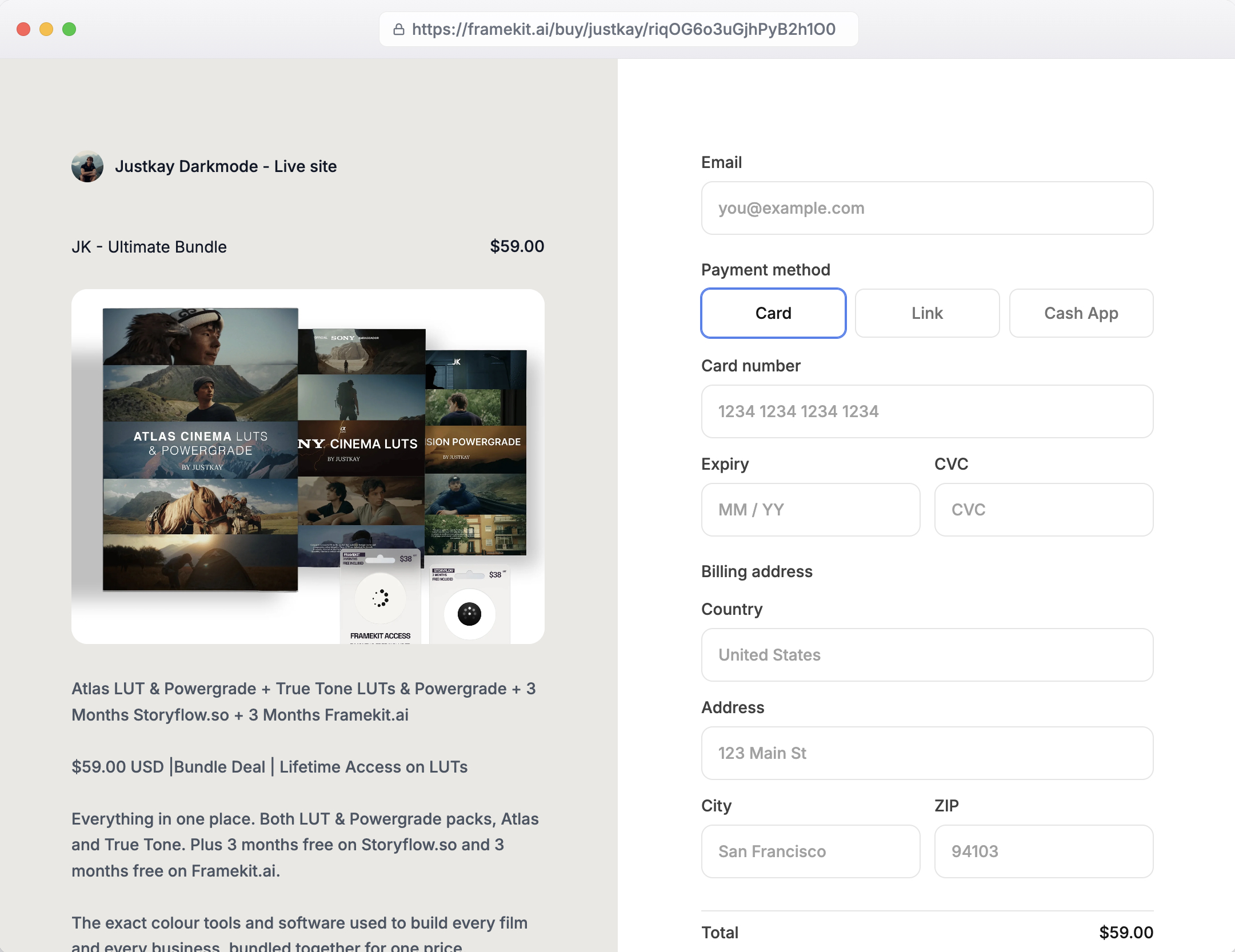
The real numberproduct sales carry 5% on Free and Starter, 3% on Pro at 19 dollars a month and 0% on Business at 39 dollars a month. Checkout runs on Stripe, paid into a Stripe account in your name, so card processing is Stripe's published rate on top.
On our test month, Business plus standard European cards at 1.5% plus 0.25 euros comes to about 206 euros in processing and 39 dollars for the plan, with no percentage to Framekit at all.
The standout detailthe fee is a flat plan rather than a percentage once you pass the crossover, which for a 29 euro product is about 27 sales a month against the free plan's 5%.
At our 300 sales, the percentage you would otherwise pay a platform is roughly 435 euros a month, and on Business it is zero.
The honest gotchatwo of them, both specific to Europe. We are not a merchant of record, so your OSS registration and quarterly return remain yours, exactly as with Mollie or Stripe.
And because checkout is Stripe, Mollie's flat 32-cent iDEAL price is not available through Framekit; if a Dutch-heavy audience is your margin lever, a Mollie-connected store beats us on processing.
Skip it ifVAT filing is the problem you are solving, or most of your buyers pay by iDEAL and the flat Mollie rate is worth more to you than owning the store.
Verdict: the right storefront for a European seller who is already registered for OSS, sells mostly to card payers, and wants the platform percentage gone. The wrong one if compliance is the pain point.
4. Paddle: Merchant of Record for Software-Shaped Products
Paddle is the other established merchant of record, priced identically to Lemon Squeezy at 5% plus 50 cents per checkout transaction with EU VAT registration, filing and remittance included.
The standout detailfor a European seller selling software or subscriptions to businesses, Paddle handles the B2B reverse-charge mechanics that consumer-focused platforms treat as an edge case. That is a genuine differentiator if a meaningful share of your buyers are companies.
The honest gotchathe onboarding expects a software business, and its own pricing page notes that products under 10 dollars need custom pricing - which rules out a great deal of what European creators sell.
Skip it ifyour product is a template or a preset pack rather than software.
Verdict: the stronger merchant of record for B2B and software, and an awkward fit for creative files.
5. Stripe: Cheapest Cards, and the VAT Stays Yours
Stripe's European card pricing is the lowest in this guide for card payments specifically, and it supports the major local methods alongside them - which makes the choice between it and Mollie depend entirely on how your buyers actually pay.
The real numberon the pricing served to us, standard European cards are 1.5% plus 0.25 euros, premium European cards 2.8% plus 0.25, UK cards 2.5% plus 0.25 and international cards 3.15% plus 0.25, with 2% added when a currency conversion is required.
Stripe Tax is priced separately at 0.5% per transaction where you are registered.
The standout detailat 1.5% plus 0.25 on a standard European card, Stripe undercuts Mollie's 1.80% on cards. If your buyers pay by card rather than by local method, Stripe is the cheaper processor.
The honest gotchaStripe Tax calculates and records, and does not register you or file anything. It is the cheapest option here and it leaves the entire OSS obligation with you, which for a solo seller is the trade this whole guide is about.
Skip it ifa large share of your buyers use iDEAL. Mollie's flat 32 cents beats any percentage at that point.
Verdict: the best card rate in Europe, with the most work left on your desk.
6. Payhip: EU VAT Handled, Money in Your Own Account
Payhip occupies a useful middle position for European sellers: it handles EU VAT on digital goods without being a full merchant of record, and settles into your own Stripe or PayPal account.
The real numberthe free plan takes 5%, Plus is 29 dollars a month at 2%, and Pro is 99 dollars a month with no transaction fee. At our volume Pro is the right plan and works out at roughly 0.31 euros a sale.
The standout detailEU VAT handling on a plan that costs less than a merchant of record's percentage, with the funds landing in an account you control rather than a platform balance.
The honest gotchapartial coverage is the most confusing position in this category. EU VAT on digital goods is handled; UK VAT after Brexit and non-EU obligations are a separate question, and you should establish exactly what is covered before relying on it.
Skip it ifyou want one answer to the whole tax question.
Verdict: good value and a boundary you need to understand precisely.
7. Sellfy: European-Built, Flat Fee
Sellfy is a European company and its product reflects that in ways an American platform's does not, with VAT settings and EU-appropriate invoicing built into the core rather than bolted on as an afterthought for a secondary market.
The real numberStarter is 39 dollars a month billed monthly or 29 yearly, Business is 79 or 59, Premium is 159 or 119, all at 0% transaction fees with annual sales caps of 10,000, 50,000 and 200,000 dollars.
Our 8,700 euros a month is past the first two caps and into Premium.
The honest gotchathose annual sales caps are the actual pricing mechanism, and a European seller at this volume lands on the most expensive tier.
Skip it ifyour revenue is at this level. The cap structure works against you precisely when the platform is working.
Verdict: thoughtfully built for European sellers and priced awkwardly at real volume.
8. Quaderno: The Tax Layer If You Stay Independent
Quaderno is not a store, and it belongs in this guide because it solves the specific problem a European seller has when they choose Mollie or Stripe over a merchant of record: producing compliant invoices and tracking what is owed where.
The real numberHobby is 29 dollars a month for 25 transactions, Startup is 49 for 250, Business is 99 for 1,000 and Growth is 149 for 2,500. Our 300 sales a month needs Business at 99 dollars.
The standout detailcompliant invoicing is a legal requirement for EU sales rather than a nicety, and it is the part most sellers who go independent underestimate. Quaderno is the most focused tool for it.
The honest gotchathe entry plan covers one jurisdiction and 25 transactions, which is not a European digital business. Price the tier you would actually need.
Skip it ifyou use a merchant of record, which produces the invoices itself.
Verdict: the necessary companion to the independent route, and a cost that belongs in that comparison.
9. Shopify: Strong Checkout, EEA Pricing

Shopify's European pricing is genuinely competitive, and its digital-product story is the same one we have covered throughout this series: files need an app, because the platform was built to move parcels rather than downloads.
The real numberon the pricing served to us, Basic is 29 euros a month with online card processing at 1.9% plus 0.25 euros, rising through Grow at 82 euros and Advanced at 384. Using any payment provider other than Shopify Payments adds 2% on Basic.
The honest gotchathat 2% third-party gateway fee is the problem for a European seller specifically, because Mollie's local-method pricing is exactly the reason you might want a different provider. Choosing Mollie on Shopify Basic costs you an extra 2% for the privilege.
Skip it ifyou sell only digital products and want iDEAL priced properly.
Verdict: a good checkout that penalises the European payment strategy this guide recommends.
10. Gumroad: Simplest, Most Expensive
Gumroad is a merchant of record and handles EU VAT, which for a European seller is genuinely valuable, at the highest rate in this guide.
The real number10% plus 50 cents per sale, or roughly 1,020 euros a month on our test volume - about 450 euros more than Lemon Squeezy for the same compliance relief.
The honest gotchayou are paying a platform premium rather than a compliance premium. Lemon Squeezy does the identical VAT job for half the rate.
If a year has already run through it, Gumroad's fees explained shows the cost and the best Gumroad alternatives covers where to go.
Verdict: the right outcome at the wrong price. Choose a different merchant of record.
Two Routes, Priced Properly
Everything above compares individual platforms. This section compares the two strategies they belong to, because for a European seller that is the decision and the platform choice follows from it rather than the other way round.
In one linethe European decision is not which platform but which route, and the two cost less differently than the headline rates suggest.
| Route | Monthly cost on 8,700 euros | What you still do |
|---|---|---|
| Mollie iDEAL plus a Mollie-connected store | About 96 euros processing plus the plan | Register for OSS, file quarterly, issue invoices |
| Stripe cards plus a flat-plan store such as Framekit Business | About 206 euros processing plus 39 dollars | The same, plus buy Stripe Tax or Quaderno |
| Independent route with Quaderno | Add about 99 dollars a month | Filing, with the paperwork automated |
| Lemon Squeezy or Paddle | About 570 euros | Nothing |
| Gumroad | About 1,020 euros | Nothing |
The independent route is dramatically cheaper on paper - roughly 96 euros on iDEAL or 206 on cards, against 570 - and the gap narrows once you add invoicing software and your own time.
Add Quaderno at 99 dollars and an hour a quarter, and the honest difference is a few hundred euros a month rather than an order of magnitude.
Which is right depends on a question only you can answer: whether a quarterly OSS return is a minor administrative task or the thing that stops you shipping. Both answers are common and neither is wrong.
Decision Guide
This is ordered by the question that decides it, and the first one is deliberately about your tolerance for paperwork rather than your budget, because it determines which half of this guide applies to you. Work down and stop at the first yes.
1. Would you rather never file a VAT return?
Yes: Lemon Squeezy at 5% plus 50 cents, or Paddle if your product is software or sold to businesses. Stop here; the rest of this guide is about the other route.
2. Are a large share of your buyers Dutch or Belgian?
Yes: Mollie, for iDEAL at a flat 32 cents and Bancontact at 1.40% plus 0.25. This is the single biggest margin decision available to you.
3. Do your buyers mostly pay by card?
Yes: Stripe at 1.5% plus 0.25 for standard European cards, which undercuts Mollie on cards specifically.
4. Do you want product pages on your own domain, with no platform percentage?
Yes: Framekit on Business at 39 dollars with a 0% fee. Its checkout runs on Stripe, so it fits the card-paying audience of question 3 rather than the iDEAL audience of question 2.
5. Are you going independent and worried about invoicing?
Yes: add Quaderno on the Business plan at 99 dollars for 1,000 transactions a month. Do not buy the 29 dollar plan; it covers one jurisdiction.
6. Do you also sell physical products in Europe?
Yes: Shopify, using Shopify Payments to avoid the 2% third-party fee - which unfortunately means giving up Mollie's local-method pricing.
Frequently Asked Questions
These are the questions European sellers ask and that guides written for a US audience never address, which is most of what makes selling from Europe different.
What is the best platform to sell digital products in Europe in 2026?
Mollie is the best payment platform for European sellers in 2026, because it prices local methods properly - iDEAL at a flat 0.32 euros and SEPA Direct Debit at 0.35 euros against 1.80% plus 0.25 for a European card.
If you would rather not file VAT returns at all, Lemon Squeezy or Paddle at 5% plus 50 cents becomes the merchant of record and removes the obligation entirely.
Do I have to charge VAT on digital products sold in the EU?
Yes, from the first sale, and at the buyer's national rate rather than yours. That is why the EU one-stop-shop scheme exists: one quarterly return covering all member states instead of registering in each.
The alternative is selling through a merchant of record, which becomes the legal seller and takes the obligation on entirely.
How much does iDEAL cost compared with a credit card?
On Mollie's published rates, iDEAL costs a flat 0.32 euros per transaction while a European consumer card costs 1.80% plus 0.25 euros.
On a 29 euro sale that is 32 cents against 77 cents, and the gap widens as your price rises because iDEAL does not scale with order value. At 300 sales a month the difference is roughly 136 euros.
Why is the same sale worth less in some EU countries?
Because European consumer prices include VAT and the rate is set by the buyer's country, currently ranging from 17% to 27% across the EU.
A 29 euro sale nets 24.79 euros from a buyer in Luxembourg and 22.83 euros from a buyer in Hungary - a difference of 1.96 euros per sale, or around 588 euros a month at 300 sales, entirely outside your control.
What is the OSS scheme and do I need it?
The one-stop-shop is an EU registration that lets you file a single quarterly VAT return covering sales to consumers across all member states, rather than registering separately in each.
You need it if you sell digital products to EU consumers and are not using a merchant of record. It is the mechanism that makes the independent route practical.
Is a merchant of record worth it for a European seller?
It depends on what a quarterly return costs you.
On 8,700 euros a month, a merchant of record at 5% plus 50 cents costs roughly 570 euros against about 96 euros for Mollie's iDEAL processing, or about 206 euros for Stripe card processing on a flat-plan store.
Adding invoicing software at 99 dollars narrows that to a few hundred euros a month, which buys back a registration, a quarterly filing and the record-keeping behind it.
Which platform pays out in euros without conversion?
Mollie and Stripe both settle in euros for European accounts, so there is no conversion when your buyers pay in euros and your bank holds euros.
Platforms that hold a dollar balance and convert on payout add a spread that is frequently larger than the platform fee, which we covered in our guide to getting paid.
Do I need to issue invoices for digital sales in the EU?
Yes, and the requirements are more specific than most sellers expect - including your VAT number, the buyer's location and the VAT applied. Merchant-of-record platforms produce compliant invoices automatically.
If you go independent, this is the job Quaderno exists to do, and it is the part most commonly underestimated when people choose the cheaper route.
Should I price inclusive or exclusive of VAT?
Inclusive for consumers, which is the European norm and what buyers expect to see. That means your margin varies by buyer country, which is a cost of doing business rather than a problem to solve.
Exclusive pricing is normal for business-to-business sales, where the buyer reclaims the VAT and reverse-charge rules often apply instead.
Does Framekit handle EU VAT for European sellers?
No. Framekit is a website builder and store rather than a merchant of record, so OSS registration and quarterly filing remain yours, exactly as they would with Mollie or Stripe. Payments go through Stripe into an account in your name.
If removing the VAT obligation is your priority, Lemon Squeezy or Paddle is the better fit and this guide ranks Lemon Squeezy above us for it.
Can I use Mollie with any storefront?
With many, and two exceptions matter. Framekit's checkout runs on Stripe and does not connect to Mollie.
Mollie integrates with a wide range of other platforms, but Shopify adds a 2% transaction fee on its Basic plan for using any payment provider other than Shopify Payments - which specifically penalises the European payment strategy this guide recommends.
Check your storefront's third-party gateway policy before committing.
What about selling to UK buyers after Brexit?
The UK is a separate VAT registration from the EU one-stop-shop, with its own threshold and return. A merchant of record covers both; the independent route means two registrations rather than one.
This is the most common thing European sellers overlook when modelling the cost of going independent.
The Verdict
Mollie wins because it is the only platform in this guide that prices Europe as Europe rather than as a card market with some unusual buttons.
A flat 0.32 euros for iDEAL against 0.77 for a card on the same sale is a bigger margin decision than any platform fee here, and it improves as your prices rise.
Lemon Squeezy is the right answer for the seller who reads the OSS section and feels tired.
Roughly 570 euros a month against about 96 for the independent route is a real premium, and it buys back a registration, a quarterly filing, compliant invoicing and the UK question all at once.
The finding worth carrying away is that two of the three biggest variables in a European seller's margin are not the platform at all: which payment method the buyer clicks, worth up to 4x, and which country they click it from, worth 1.96 euros a sale.
Both are visible only if you look, and neither appears in a normal comparison.
Where Framekit loseswe are not a merchant of record. Your OSS registration and quarterly return stay with you, and if that is the thing you want to eliminate then Lemon Squeezy or Paddle is the better purchase.
Our checkout also runs on Stripe, so Mollie's flat iDEAL pricing, the biggest lever in this guide for Dutch and Belgian audiences, is not available through us.
Framekit is the better fit for a registered seller with card-paying buyers who wants the store and the customer list on their own domain.
Verdict: if VAT filing is intolerable, Lemon Squeezy and stop reading. If it is not, Mollie for processing, a flat-plan store on top, Quaderno for the paperwork, and offer iDEAL prominently to anyone who might use it.
Payment method rates, plan prices and processing figures were read from each vendor's published pricing page in early August 2026, and Framekit's were re-verified in September 2026.
VAT rates are the standard rates published by the European Commission and change occasionally; confirm the current rate for any country your pricing depends on.
Related readingdo you need a merchant of record, the best sales tax tools for digital sellers, the best payment processors for digital products, the best ways to get paid selling digital products, and the best Paddle alternatives.