Framekit templates
Start from a designer-made template
 Use template
 Use template
 Use template
 Use template
 Use template
 Use template
 Use template
 Use template
There are two completely different businesses hiding inside the phrase "places to sell icons and illustrations", and most guides to this category compare them in a single table as if they were the same thing.
In the first, you set a price and somebody pays it. A $29 icon set sells for $29 and you keep somewhere between $25.60 and $27.67 of it, depending on venue. Every number in that sentence is knowable in advance.
In the second, a subscriber downloads your set as part of a monthly plan and you receive a share of a pool, calculated from how many downloads you got relative to everyone else.
That figure changes every month, depends on other people's work, and - we checked - is not published by any of the major venues in a form we could read.
A royalty-pool marketplace is one where buyers pay a subscription rather than a price, and contributors are paid from that pooled revenue by download share.
It is a genuinely different arrangement from a shop, and it needs to be evaluated differently.
We re-verified Framekit's store terms in September 2026 and removed a 25 MB file cap an earlier version quoted, which its pricing page no longer lists.
Framekit is the best place to sell icons and illustrations in 2026 for a designer with an audience, keeping $27.37 of a $29 set on a $39 flat plan with the portfolio and shop on one domain.
Big Cartel keeps 30 cents more per sale if you only need a storefront.
Iconfinder and Envato Elements reach far more buyers than either, and we cannot tell you what they pay, because none of the subscription marketplaces in this category publish contributor rates at a page we could verify - so the section below explains how to measure yours instead of guessing.
Full disclosure: Framekit, ranked #1 below, is our own product, and it assumes you already have somewhere to send buyers. Iconfinder, Noun Project and Envato Elements all have people searching them right now and a new store does not. Every platform is linked, Lemon Squeezy handles EU VAT we leave to you, and Big Cartel and Payhip are cheaper at low volume.
How We Compared and Weighted These Platforms
Icon and illustration marketplaces price in several different shapes, so here is what each number rests on before any of them are compared.
- Verified from primary sources: royalty splits, subscription-pool rates, platform fees and processing charges came from each vendor's own published terms in September 2026.
- Assessed hands-on: how licences are presented to a buyer, whether files deliver automatically, and how a set of assets is packaged for sale.
- Not assessed: marketplace placement and search ranking, which sellers cannot verify independently.
The weighting: revenue kept per sale first, then who owns the buyer relationship, then setup effort, with reach weighted last.
Reach is what the marketplaces win on, so a seller without an audience should treat the bottom of this ranking as the top. No load-time claims or performance figures appear anywhere here.
How We Priced This, and What We Could Not Price
One product for the priced half of this guide: a $29 icon set of 100 icons, sold 80 times a month, or $2,320 in monthly revenue. Card processing at 2.9% plus 30 cents is added where a venue does not include it, which on $29 is $1.14.
The honest limitation, stated up front because it shapes the whole guide: we could not verify contributor payouts at any subscription marketplace. Iconfinder's seller pages, Envato's author portal and Freepik's contributor pages all block automated access, and Noun Project's sell page resolved to a user profile rather than terms.
Every figure you read elsewhere about "earnings per download" on these platforms came from contributor anecdotes rather than from a published rate card, and those vary by an order of magnitude between accounts.
So this guide does two things. It prices the seven fixed-price venues precisely, from their own pricing pages. And it explains the pool model structurally, with a method for measuring your own rate, rather than inventing a number to complete a table.
By the numbers:
- $27.67 is the highest take-home on a $29 icon set here.
- $25.60 is the lowest among fixed-price venues.
- $2.07 separates them, which at 80 sales is $166 a month.
- 0 of 4 subscription marketplaces publish a contributor rate we could read.
- 3 months is how long you need to run a test portfolio to know your own per-download rate.
- $29 in direct sales is worth as many pool downloads as your measured rate divides into it.
- 1 exclusivity decision sits underneath all of this, and it is worth more than the fee difference.
The Rubric
We scored on five criteria, weighted for a category that is split down the middle between venues where you set a price and venues where you receive a share of a pool. That split is unusual, and it changes which criteria deserve weight.
| Criterion | Weight | What it covers |
|---|---|---|
| Knowable economics | 30% | Whether you can tell in advance what a sale pays |
| Take-home per sale | 20% | Fee structure on a $29 set, where a price exists |
| Reach | 20% | How many buyers the venue puts you in front of |
| Licensing and rights | 20% | What the buyer gets, and what the venue claims |
| Exclusivity cost | 10% | What listing here prevents you doing elsewhere |
Knowable economics carries the most weight, which is unusual for us and specific to this category. A venue that might pay well and might pay almost nothing, with no way to find out except by trying, is carrying a real risk that a fee table hides.
What a $29 Icon Set Nets Where a Price Exists
| Venue | Model | Cut per sale | Processing | You keep |
|---|---|---|---|---|
| Big Cartel | Platinum, $15/mo | $0.19 | $1.14 | $27.67 |
| Framekit | Business, $39/mo, 0% | $0.49 | $1.14 | $27.37 |
| Lemon Squeezy | 5% + 50c | $1.95 | Included | $27.05 |
| Sellfy | Business, $79/mo, 0% | $0.99 | $1.14 | $26.87 |
| Podia | Shaker, $84/mo, 0% | $1.05 | $1.14 | $26.81 |
| Payhip | Pro, $99/mo, 0% | $1.24 | $1.14 | $26.62 |
| Payhip | Free plan, 5% | $1.45 | $1.14 | $26.41 |
| Framekit | Free plan, 5% | $1.45 | $1.14 | $26.41 |
| Gumroad | 10% + 50c | $3.40 | Included | $25.60 |
| Iconfinder | Contributor share, not published | Not verifiable | Not verifiable | Not verifiable |
| Noun Project | Contributor share, not published | Not verifiable | Not verifiable | Not verifiable |
| Envato Elements | Pooled by download share, not published | Not verifiable | Not verifiable | Not verifiable |
The priced rows span $2.07, which at 80 sales a month is $166. That is a real difference and it is the smallest decision on this page.
The unpriced rows are the interesting ones, and the fact that they are unpriced is itself the finding. Four of the largest venues for this specific product type do not publish, at a page we could read, what a contributor earns.
That does not make them bad choices - reach has real value, and plenty of illustrators earn well on them - but it does mean you cannot compare them to anything until you have run your own test.
In one lineyou can calculate exactly what a priced venue pays before you list, and the only way to learn what a pool pays is to put work in it and measure.
How to Find Out What a Pool Actually Pays You
In one linenobody can tell you your per-download rate, including the platform, because it depends on next month's downloads - but you can measure yours in three months and then the comparison becomes arithmetic.
Here is the method, and it is the most useful thing in this guide for anyone considering a subscription marketplace.
Step one: upload a deliberately small portfolio. Twenty items, not two hundred. Enough to generate downloads, few enough that you have not committed your best work to a venue whose economics you do not yet know.
Step two: wait three months. One month is noise. Pools fluctuate with seasonal subscriber counts and with how much other people uploaded.
Step three: divide. Total earnings from that venue, divided by total downloads. That is your rate, and it is the only reliable number available to you.
Step four: convert it against a direct sale. A $29 set on your own store nets $27.37 on a $39 flat plan. Divide that by your measured per-download rate to get the number of pool downloads one direct sale is worth.
| If your measured rate is | One $29 direct sale equals |
|---|---|
| $1.00 per download | 27 downloads |
| $0.50 per download | 55 downloads |
| $0.25 per download | 109 downloads |
| $0.10 per download | 274 downloads |
| $0.03 per download | 912 downloads |
That table is the entire decision in one place. If a subscription marketplace is delivering you hundreds of downloads a month, it may be earning more than your store. If it is delivering forty, it almost certainly is not.
The honest counter-argument: downloads are not only revenue. A widely-downloaded icon set builds recognition, appears in products people see, and brings commissions and follows that never show up in the payout figure.
Several illustrators treat subscription marketplaces as paid marketing that happens to have positive revenue, and that is a defensible strategy as long as it is a decision rather than an accident.
1. Framekit: Best If You Have an Audience

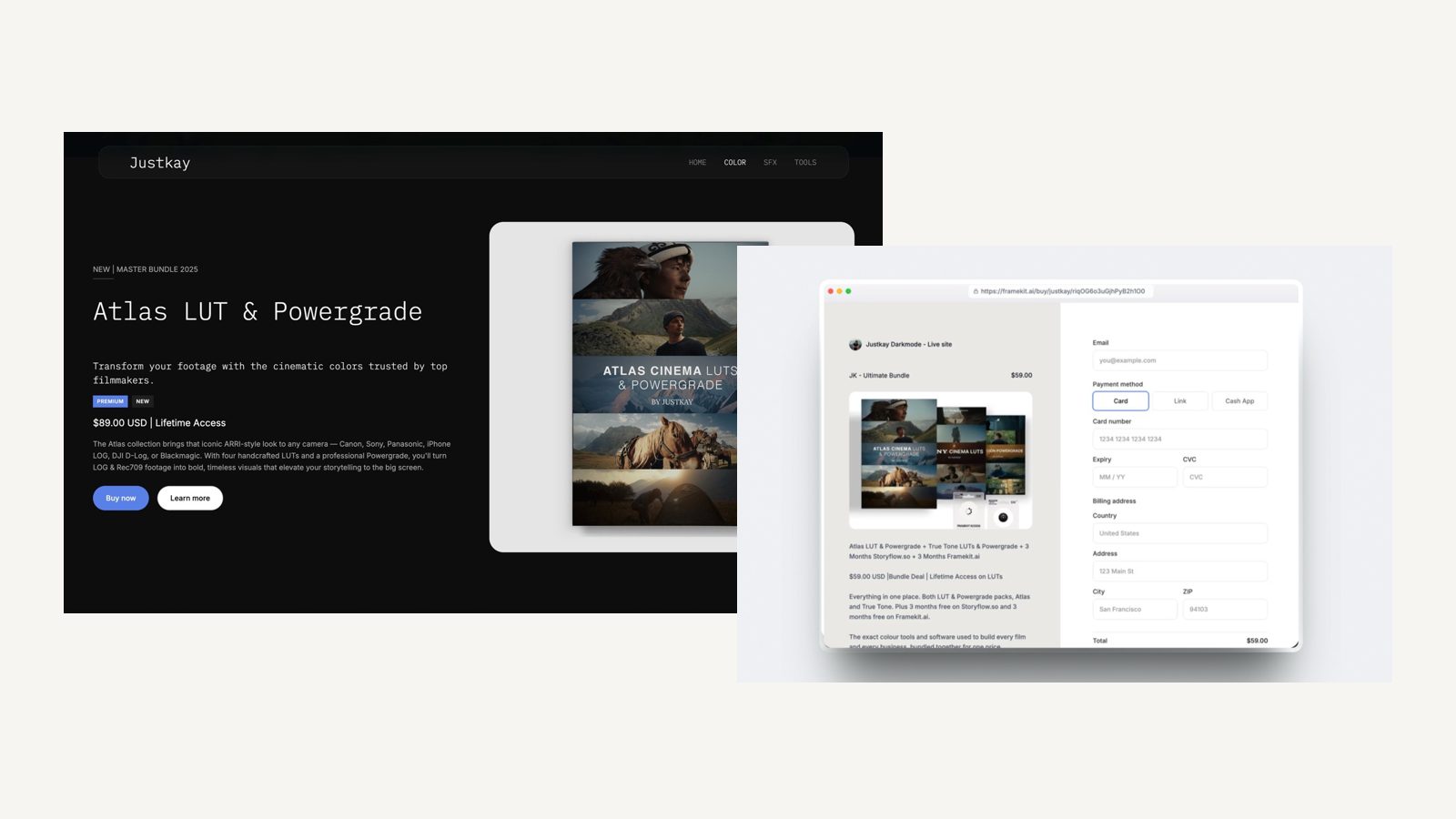
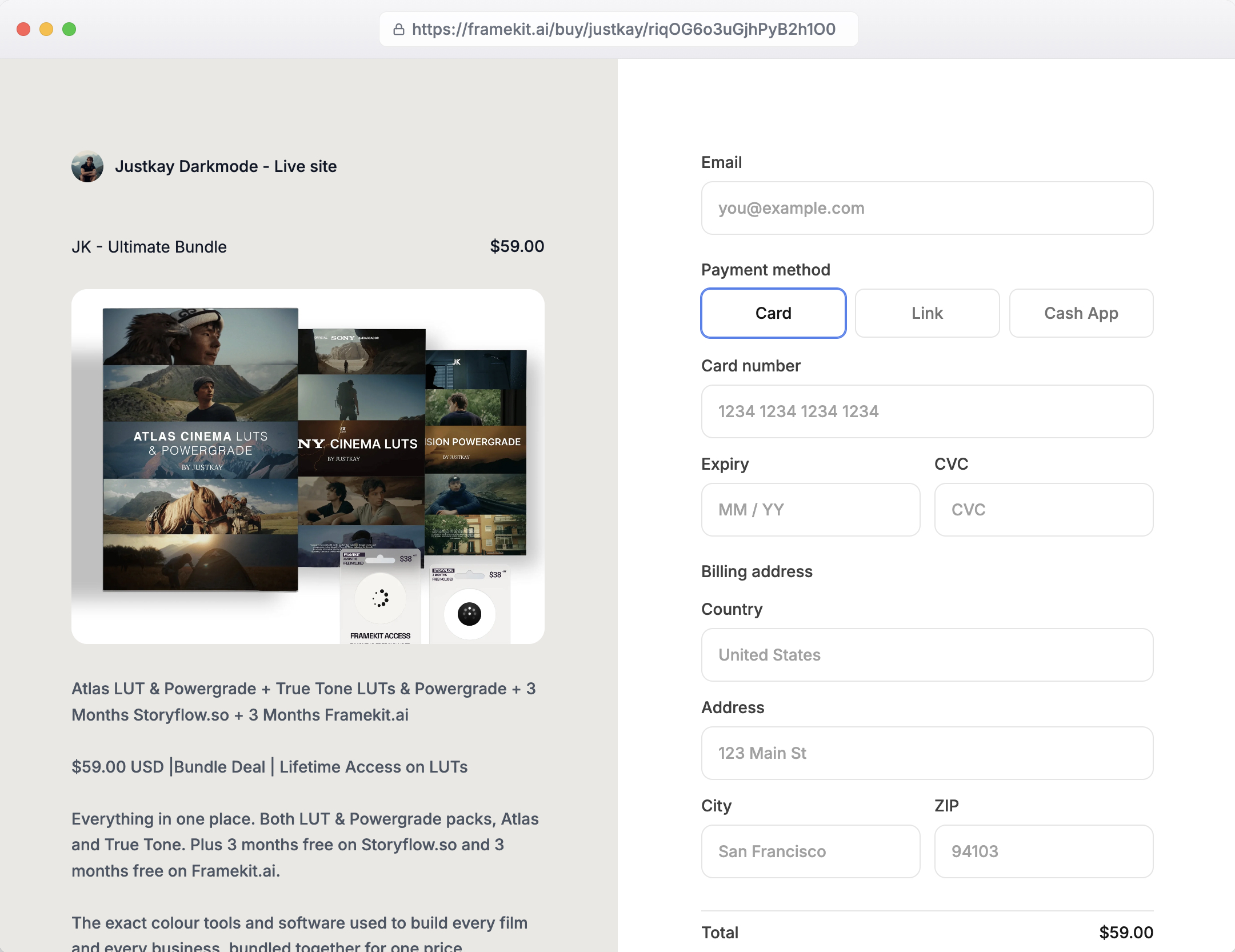
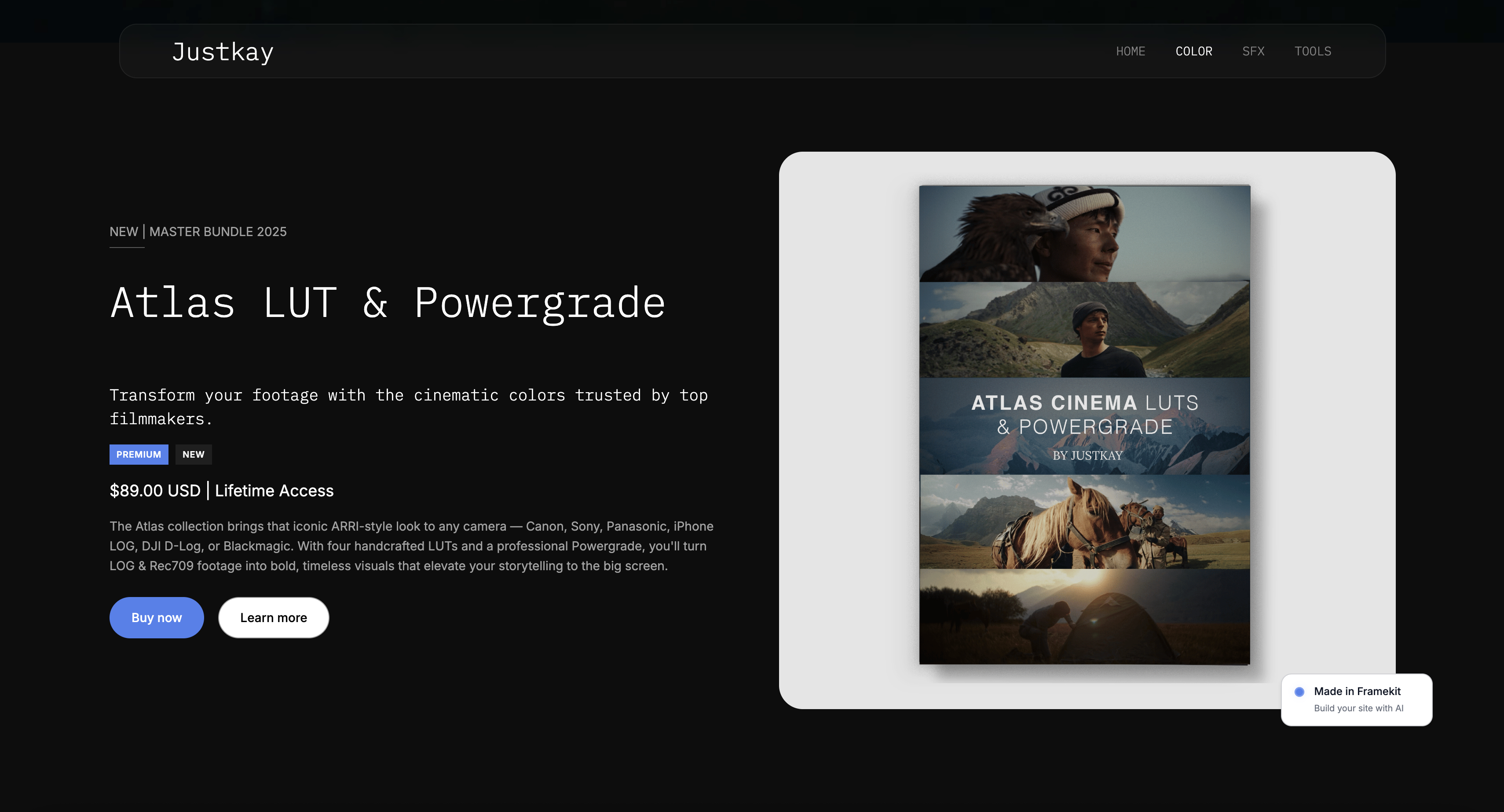
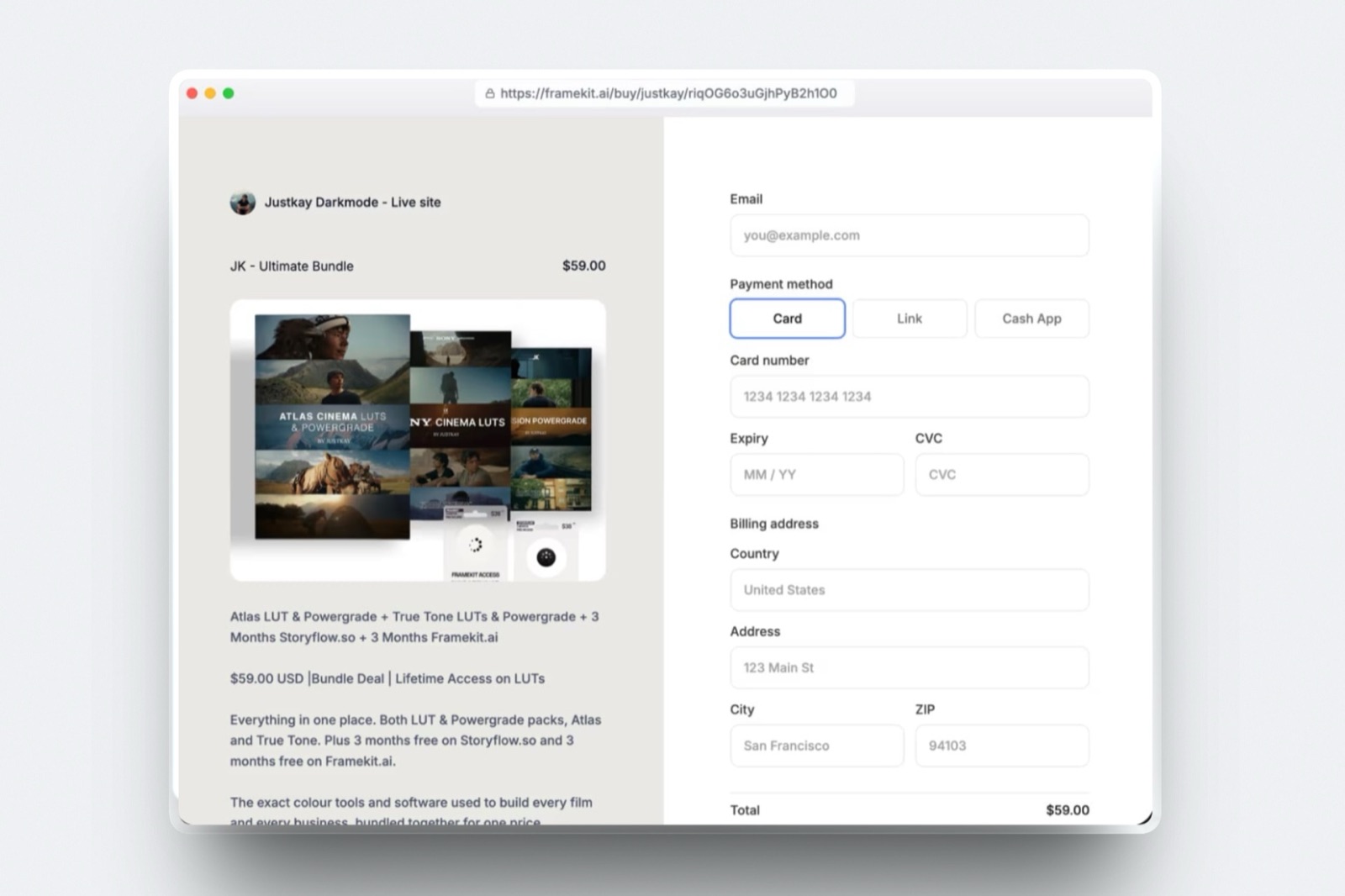
Framekit is an AI website builder for photographers, filmmakers, designers and other creators, and for an illustrator it puts the portfolio and the shop on one domain - which for this product is the difference between selling a file and selling your hand.
The real numberproduct sales carry 5% on Free and Starter, 3% on Pro at $19 a month, and nothing on Business at $39, with the card processor paid separately. At 80 sales, Business works out at 49 cents a sale, leaving $27.37 of a $29 set.
The flat plan overtakes the 5% at $780 a month in sales, which is 27 sets.
The standout detailicons and illustrations are bought on style, and style is demonstrated by a body of work rather than by a product thumbnail. A portfolio page adjacent to the shop is doing sales work that a marketplace grid cannot.
The honest gotchano discovery at all. For a designer whose name means nothing yet, Iconfinder or a subscription marketplace will put the work in front of more people in a week than a new site will in a year. Big Cartel also keeps 30 cents more per sale on a cheaper plan.
Skip it ifnobody is looking for you by name yet.
Verdict: the right destination once there is an audience, and the wrong starting point before there is.
2. Big Cartel: Cheapest Storefront
Big Cartel is the cheapest genuine shop in this comparison and consequently produces the highest take-home in the priced table. It has served independent artists and makers for well over a decade with a deliberately small feature set.
The real numbera free Gold plan, Platinum at $15 a month, Diamond at $30, with digital products from Platinum. At 80 sales that is 19 cents a sale, netting $27.67.
The standout detailit handles physical goods too, which for an illustrator selling prints alongside icon sets removes a second platform.
The honest gotchatransaction fees are not published on the pricing page, so the $15 is a plan price rather than a confirmed total. Ask before relying on the figure.
Skip it ifyou want the shop inside a portfolio rather than beside one.
Verdict: the best pure economics for an illustrator who just needs somewhere to sell.
3. Lemon Squeezy: Best at Low Volume
Lemon Squeezy charges nothing monthly and acts as your merchant of record for tax purposes, which together make it the right answer while your volume is small or unpredictable. You pay only when you sell, which is the correct risk profile for a first icon set.
The real number5% plus 50 cents per transaction with processing included, netting $27.05 on a $29 set. At 80 sales that is $156 a month against $39 for a flat plan, so the crossover sits around 27 sets a month.
The standout detailat $29 the fixed 50-cent fee is 1.7%, so the all-in effective rate is about 6.7% - noticeably kinder than it is on the $12 products elsewhere in this series.
The honest gotchaabove about 27 sales a month you are paying for the privilege of no monthly fee.
Skip it ifyour sales are steady and above that threshold.
Verdict: the best starting point in the priced half of this guide.
4. Sellfy: Best for Large Illustration Files
Sellfy takes no percentage and allows very large product files, which matters when an illustration pack ships as layered source files rather than flattened exports.
The real numberStarter is $39 a month billed monthly or $29 yearly, Business is $79 or $59, Premium is $159 or $119, all at 0% transaction fees with annual sales caps of $10,000, $50,000 and $200,000.
Our $27,840 a year puts us on Business at 99 cents a sale, netting $26.87.
The honest gotchathose annual caps are the real pricing mechanism, and at this volume you are already past the entry tier.
Skip it ifyour files are small SVG sets. You are paying for headroom you will not use.
Verdict: the right pick when the deliverable is layered AI or PSD files rather than exported icons.
5. Payhip and Podia: The Middle
Payhip and Podia land within 20 cents of each other at this volume, which means nobody should choose between them on price. They are chosen for what surrounds the checkout: one settles into your own payment account, the other brings courses and an email list.
The real numbersPayhip is free at 5%, $29 a month at 2%, or $99 with no transaction fee, netting $26.62 on Pro. Podia's Shaker plan is $84 with no transaction fee, netting $26.81.
The standout detailPayhip settles into your own Stripe or PayPal account rather than holding a balance, and covers EU VAT on digital goods. Podia brings courses and email, which suits an illustrator who also teaches.
The honest gotchaat 80 sales a month, Payhip's free plan costs $116 and Pro costs $99, so the paid plan is only marginally better - the decision is closer here than at higher volumes.
Skip either ifyou want the simplest possible arrangement.
Verdict: competent and mid-priced, chosen for their surrounding features rather than for icon selling specifically.
6. Gumroad: Fastest, Most Expensive Priced Option
Gumroad remains the quickest way to get an icon set selling, often inside an hour, and at a $29 price point it also has the worst rate of any priced venue in this comparison. Both facts matter and most guides mention only the first.
The real number10% plus 50 cents per sale, which is $3.40 on a $29 set, netting $25.60. Against Big Cartel that is $2.07 a sale, or $166 a month at our volume.
The standout detailGumroad Discover, at 30%, is a discovery channel rather than a platform fee, and for illustration it does bring buyers. Assess it as a marketplace rather than lumping it in with the base rate.
The honest gotchathe base 10% is a checkout fee, and $166 a month buys a great deal of alternative infrastructure.
Selling icon sets there already? Gumroad's fees explained breaks down where the 10% goes, and the best Gumroad alternatives covers what sellers move to.
Verdict: prove the set sells, then move.
7. Iconfinder: Largest Dedicated Icon Audience
Iconfinder is the most specialised venue in this guide and the one where somebody searching for exactly the icon you drew is most likely to find it.
The real numbernot verifiable. Iconfinder's seller and contributor pages block automated access, so we could not read its commission or payout structure at the source.
Contributor reports vary widely and depend on whether items are priced or included in subscription access, which is precisely the ambiguity this guide is warning about.
The standout detailsearch intent is extraordinarily specific here. A person looking for a "wifi icon outline" is not browsing; they are buying in the next two minutes.
The honest gotchayou are supplying inventory to a search engine, which is a volume business. Judged as a shop it will disappoint; judged as a channel that also pays, it can work well.
Skip it ifyour illustrations are stylistic rather than functional. Iconfinder's demand is for utility.
Verdict: the strongest dedicated audience for functional icons, on terms you will need to measure rather than read.
8. Noun Project: Reach on a Subscription Model
Noun Project has enormous reach among designers, students and anyone assembling a presentation at short notice, and it operates substantially on subscription access rather than per-item sales. That reach is genuine and it is not the same thing as revenue.
The real numberwe could not verify it. The seller page we reached resolved to a contributor profile rather than to terms, and no rate card was available at a URL we could read.
The standout detailubiquity. Work distributed here shows up in slide decks and products constantly, which is worth something that is not revenue.
The honest gotchasubscription reach and per-item revenue pull in opposite directions. This is a place to be seen more than a place to be paid, and treating it as the latter leads to disappointment.
Skip it ifyou need this to be income rather than exposure.
Verdict: excellent distribution, unclear economics, best treated as marketing with a payout attached.
9. Envato Elements: Pooled by Download Share
Envato Elements is the clearest example of the pool model in this guide: subscribers download unlimited assets and contributors are paid from pooled revenue according to download share.
The real numberthe subscriber price is published on Envato Elements' pricing page.
The contributor payout is not, at any page we could access - Envato's author portal blocks automated access - so we have no verified figure for what a download earns you.
The standout detailthe model rewards volume and consistency rather than individual product quality, because your share is a function of downloads rather than of price. That suits a prolific illustrator and penalises a perfectionist.
The honest gotchayour earnings depend on other contributors' output. A month where everyone uploads more and subscriber numbers stay flat is a month where your rate falls through no fault of your own. No shop behaves that way.
Skip it ifpredictable income matters to you.
Verdict: real reach on economics you cannot forecast. Measure before committing your best work.
10. Your Own Store Plus One Marketplace
The arrangement most working illustrators land on is a fixed-price store for the sets they care about and one marketplace channel for reach, rather than an exclusive commitment to either.
The real numberwith 40 direct sales at $27.37 and a marketplace supplying whatever it supplies, the direct half alone is $1,095 a month. The marketplace half is the part you measure using the method above, and after three months you will know whether it is adding to that or diluting it.
The honest gotchaexclusivity. Several venues in this category pay more for exclusive rights, and that arrangement forecloses exactly this strategy. It is the single decision in this guide worth the most money and it is rarely presented as a decision at all.
Verdict: the pragmatic default. Keep the store, test one marketplace, and let three months of data settle the argument.
The Rights Question Illustrators Should Read Before Uploading
Everything above concerns money. This section concerns what a venue is permitted to do with your work once you upload it, which for illustration specifically has become the more consequential question over the last two years.
In one linewhat a venue's terms allow to be done with your work matters more, in 2026, than what it pays per download.
Three things worth reading in any marketplace agreement before uploading illustration work, none of which we can summarise for the specific venues here because their terms pages block automated access:
Licence scope granted to buyers. Whether a buyer can use your illustration in something they sell, at what scale, and whether extended commercial use requires a separate licence.
This is the same Regular-versus-Extended distinction that ThemeForest publishes for templates, and it varies by venue.
Rights the platform claims for itself. Marketing use is normal and expected. Broader grants are worth understanding, particularly any that extend beyond distributing your work to buyers.
Terms around machine learning and dataset use. This has become a live question for illustrators specifically, and different venues have taken different positions.
Whatever your view, it belongs in the decision, and it is genuinely in the terms rather than on the marketing page.
The practical advice: read the agreement of any venue you are about to commit a body of work to, and prefer non-exclusive arrangements while you are still deciding.
Non-exclusivity costs you a higher rate on some platforms and buys you the ability to change your mind, which at this stage of the industry is worth the difference.
Decision Guide
This is ordered by the question that decides it, which here is whether anyone is currently looking for your work by name. Everything else, including the choice between a price and a pool, follows from that. Work down and stop at the first yes.
1. Do people already look for your work by name?
Yes: a fixed-price store. Framekit at $39 if the portfolio should sit beside the shop, Big Cartel at $15 if you just want a till.
2. Are your icons functional rather than stylistic?
Yes: add Iconfinder as a channel, because its buyers search for exactly that. Measure your rate for three months before committing more.
3. Are you prolific, and is reach worth more to you than per-item revenue?
Yes: a subscription marketplace like Envato Elements suits the volume model. Go in knowing you cannot forecast the income.
4. Are you selling fewer than about 27 sets a month?
Yes: Lemon Squeezy at 5% plus 50 cents, with no monthly fee to carry.
5. Do your packs ship as layered source files?
Yes: Sellfy, whose product file allowance is far larger than the rest.
6. Has a marketplace offered you a better rate for exclusivity?
Work out what you are giving up first. Exclusivity forecloses the store-plus-channel strategy that most working illustrators end up wanting.
Frequently Asked Questions
These are the questions illustrators ask when the first payout report arrives and the number bears no relation to what the fee comparison implied it would be.
Where is the best place to sell icons and illustrations in 2026?
Framekit is the best place to sell icons and illustrations in 2026 for a designer with an audience, keeping $27.37 of a $29 set on a $39 flat plan with the portfolio and shop on one domain.
Big Cartel keeps $27.67 at $15 a month if you only need a storefront.
Iconfinder and the subscription marketplaces reach far more buyers, and none of them publish a contributor rate we could verify, so their economics have to be measured rather than compared.
How much do icon marketplaces pay per download?
Nobody publishes it, and we checked. Iconfinder's contributor pages, Envato's author portal and Freepik's contributor pages all block automated access, and Noun Project's seller page did not resolve to terms.
Any per-download figure you read elsewhere comes from contributor anecdotes, which vary by an order of magnitude. The only reliable rate is the one you measure from your own account over three months.
How do I work out whether a subscription marketplace is worth it?
Upload twenty items, wait three months, then divide your total earnings from that venue by your total downloads. That is your real rate.
Then divide $27.37 - what a $29 direct sale nets on a flat plan - by that rate to see how many pool downloads equal one direct sale. At $0.25 a download the answer is 109; at $0.03 it is 912.
Is it better to sell icons on my own site or a marketplace?
Your own site pays far more per sale and sells nothing without an audience. A marketplace pays less per item, often unpredictably, and puts your work in front of people searching for exactly it.
Most working illustrators run both: a store for the sets they care about and one marketplace channel for reach, which is only possible if you avoid exclusive arrangements.
What is the difference between a royalty pool and a commission?
A commission is a percentage of a price you set, so you can calculate your earnings before you list.
A royalty pool pays you a share of subscription revenue based on your download share, so your earnings depend on how many people downloaded your work relative to everyone else that month.
The first is arithmetic; the second cannot be forecast, including by the platform.
Should I sign an exclusive contributor agreement?
Only with numbers in front of you. Exclusivity typically buys a higher rate on one platform and forecloses the store-plus-channel arrangement that most illustrators eventually want.
Given that this category's payouts are not published, agreeing to exclusivity before you have measured your own rate means committing to terms whose value you cannot assess.
How much should I charge for an icon set?
Between roughly $19 and $49 for a focused set of 50 to 150 icons, with $29 a common middle.
At this price point fixed transaction fees are about 1.7%, so fee mechanics should not drive your pricing here - unlike cheaper products, where they should. Price on the size and specificity of the set instead.
Do marketplaces claim rights over my illustrations?
Their terms set out what buyers may do and what the platform itself may do, and both vary considerably by venue. We could not summarise the specific terms for the marketplaces in this guide because their terms pages block automated access.
Read the agreement before uploading a body of work, paying particular attention to licence scope, platform usage rights and any language about dataset or machine-learning use.
Which venue is best for functional icons versus stylistic illustration?
Functional icons do best where people search for them by function, which is Iconfinder's entire model.
Stylistic illustration does better where style is visible and attributable - your own store, or a curated marketplace where browsing is the behaviour.
Putting distinctive illustration into a utility search engine tends to underperform, and putting generic icons in a portfolio store does too.
Can I sell the same icon set in several places?
Non-exclusively, yes, and it is what most illustrators should do while they are still learning what each venue pays. The constraint is exclusivity agreements, which some venues offer in exchange for a better rate.
Pricing consistently across venues matters, because marketplaces generally dislike being undercut and buyers notice.
Do I need to charge VAT on icon sets sold internationally?
Yes for EU consumers, from the first sale, since digital products are taxed at the buyer's location.
A large share of icon buyers are businesses, which are handled differently under reverse-charge rules, so the mix matters more here than in consumer categories. A merchant of record like Lemon Squeezy removes the question entirely.
Does Framekit limit how big my illustration files can be?
Framekit publishes no per-file ceiling or bandwidth allowance for store products, so there is no stated number to plan against either way.
Exported icon sets are small and raise no question; a pack of layered source files can run to gigabytes, so test your largest pack before launch.
Where the deliverable is large AI or PSD source art and you want a published guarantee, Sellfy's stated product-file allowance is the safer fit, which is why it is ranked where it is here.
The Verdict
Framekit wins for the illustrator with an audience, because at $27.37 of a $29 set the economics are strong and, more importantly, the work that persuades someone to buy sits on the same domain as the buy button.
For a product bought on style, that adjacency is the sales argument.
Big Cartel nets 30 cents more per sale at $15 a month, and we would rather state that than pretend the ranking is about price. It is about what the venue does with the other 94% of the transaction.
The finding that matters more than the ranking: four of the largest venues for icons and illustrations do not publish what they pay contributors at any page we could read. That does not make them wrong choices, and it does mean every comparison you have read that puts a per-download figure next to a platform fee was comparing a measured number with a guessed one.
The method in this guide gives you your own number in three months, and the conversion table turns it into a decision.
Where Framekit loseswe bring you no buyers, which for an unknown illustrator makes a marketplace the correct first move rather than us.
We publish no per-file ceiling, so packs shipped as heavy layered source art are a test-first job rather than a guarantee, and Big Cartel is cheaper for anyone who only wants a shop.
Verdict: audience, sell it yourself. No audience, use a marketplace and measure your rate for three months before you commit anything you would be sad to give away cheaply. And read the terms before uploading, because in this category what the venue may do with your work is now a bigger question than what it pays.
Plan prices for the seven fixed-price venues were read from their own pricing pages during the first week of August 2026.
No contributor payout in this guide is verified, because every subscription marketplace in the category blocks automated access to those terms, and each is labelled as unverifiable where it appears.
Related readingthe best platforms for selling digital art, the best places to sell web templates, the best places to sell Procreate brushes, the best font marketplaces, and how to price digital products.
Licensing sets is one stream of several, and 12 ways to make money as an illustrator explains why usage rather than hours should set every price you quote.