Framekit templates
Start from a designer-made template
 Use template
 Use template
 Use template
 Use template
 Use template
 Use template
 Use template
 Use template
Pinterest is the only major platform whose entire purpose is to send people away.
Instagram wants the user to stay. TikTok wants the user to stay.
Pinterest is a visual search engine whose success metric is an outbound click, which makes it the friendliest platform in existence for anybody selling something, and the one where the tool you choose matters least at the pin and most at the destination.
That reframes the question. You are not choosing a tool to sell digital products on Pinterest. You are choosing what the click lands on, and how many separate doors you can build to it.
Digital product selling software is a tool that hosts a product page, processes payment and delivers the file, and for Pinterest specifically the deciding features are how many distinct landing pages you can create and whether those URLs survive a platform change.
Pinterest rewards inventory: many pins pointing at many pages, each one a separate entry point that keeps working for years.
That favours a store where you can create unlimited product and landing pages on your own domain, which is what Framekit does at 5% on the free plan falling to 0% on the $39 Business plan.
Payhip is the closest comparable at 5% free, 2% on its $29 plan and 0% on $99, and Etsy remains the highest-converting destination for planners, printables and templates despite its fees.
A tool for selling digital products from Pinterest is whatever the pin points at and takes payment, which is a separate decision from how the pins themselves are made.
Full disclosure: Framekit, ranked #1 below, is our own product. Every tool is linked and we say where each beats us: Etsy has buyers searching it today and a new store does not, Shopify handles physical inventory, Kit captures an email before the sale, Canva sells its own templates inside a tool designers already own, and Gumroad is quicker to set up than we are.
We build Framekit and rank ourselves first here, so the entry states plainly which two tools beat us on specific jobs and when to use them instead.
Why Pinterest Behaves Differently
Three mechanics separate Pinterest from every other platform a digital seller might use, and the useful thing about them is that all three point in exactly the same strategic direction rather than pulling against each other.
Pins have a half-life measured in months. A post peaks in hours and a pin typically peaks months after publication, then continues at a lower level indefinitely.
That means the work you do this week is inventory rather than a campaign, and it compounds in a way that no feed platform's content does.
Pinterest is a search engine. People arrive with an explicit query and a saving behaviour, which is much closer to shopping intent than scrolling is. The keyword in your pin title and description is doing real work.
Every pin is a separate door. Ten pins pointing at one product page produce ten independent chances to be found, and each can target a different search phrase.
This is the single most under-used mechanic in the platform, and it is why Pinterest rewards volume of entry points rather than volume of products.
What follows from all threeyou want somewhere that lets you create many pages cheaply, that keeps those URLs stable for years, and that converts a stranger who has never heard of you. That is a landing-page problem far more than a checkout problem.
In one linePinterest pays in outbound clicks, so build many doors to a destination that will still be there in three years.
What a $29 Sale Returns on Each Route
One carried example runs through this guide, a $29 digital product, with every published fee applied so the routes can be compared against each other rather than against their own marketing claims.
| Route | Published fee | You keep on $29 |
|---|---|---|
| Framekit Business, $39 a month | 0% plus card processing | About $27.86 |
| Payhip Pro, $99 a month | 0% plus card processing | About $27.86 |
| Payhip Plus, $29 a month | 2% plus card processing | About $27.28 |
| Framekit Free or Starter | 5% plus card processing | About $26.41 |
| Payhip Free | 5% plus card processing | About $26.41 |
| Etsy, organic sale | $0.20 plus 6.5% plus processing | About $25.79 |
| Gumroad | 10% plus 50 cents | About $25.60 |
| Etsy, Offsite Ads at 12% | The above plus 12% | About $22.31 |
The crossovers worth knowingPayhip's free plan at 5% costs the same as ours, and its route to 0% is $99 a month against our $39. Its middle tier at $29 plus 2% beats our $19 Pro at 3% above roughly $1,000 of monthly sales.
Gumroad is the most expensive per-sale option here with no monthly fee, which makes it the cheapest way to start and the most expensive way to scale.
In one lineAt low volume everything costs about the same; the difference is entirely in what the 0% tier costs you.
1. Framekit: Unlimited Doors on Your Own Domain
Framekit is an AI website builder that generates a site and store from a description of your work, and its fit with Pinterest comes down to the inventory mechanic described above.
Why it suits this platformyou can create as many product pages, collection pages and article pages as you want, all on your own domain, and each one is a distinct pin target.
A seller with 12 products and 6 supporting articles has 18 destinations rather than one, which is 18 separate keyword opportunities on a search platform.
The commercial termsfree to start with a 5% fee on sales, $9 a month on Starter at 5%, $19 on Pro at 3%, and $39 on Business at 0%, plus normal card processing. Email subscribers are included from 500 upward, which matters because Pinterest traffic is cold and rarely buys on the first visit.
Where you should use something elseif you sell planners, printables or wedding templates and have no audience, Etsy's search will sell more copies in your first month than your own domain will, because the buyers are already there.
And if you want a zero-fee plan while selling under about $780 a month, our free plan at 5% is cheaper than our own Business plan, so do not upgrade early.
The other honest limitwe do not act as merchant of record, so international VAT remains your responsibility.
Verdict: The right destination for a Pinterest strategy built on many entry points, and the wrong first move for somebody with no products and no traffic.
2. Etsy: Where the Buyers Already Are
Etsy and Pinterest are the most natural pairing in this entire guide, because the products that do well on one are the products that do well on the other.
The fees, from Etsy's own policy: $0.20 per listing, a 6.5% transaction fee on the displayed price, payment processing that varies by country, and Offsite Ads at 15% for shops under $10,000 in the prior 365 days or 12% once above it.
Etsy Plus is an optional $10 a month.
The mechanic that catches sellersonce your shop passes $10,000 in a rolling year, Offsite Ads participation becomes mandatory at 12% and any previous opt-out stops applying. Pinterest is one of the channels Etsy buys those ads on, which means traffic you might consider your own can arrive as an attributed order.
Why it still wins for some sellersplanners, printables, invitations, cut files and templates get searched for on Etsy by people ready to buy. That intent is worth a substantial fee when you have no audience.
Verdict: The highest-converting destination for a specific set of product categories, with a fee structure that grows with your success. See our Etsy alternatives comparison.
3. Payhip: The Closest Comparable Store
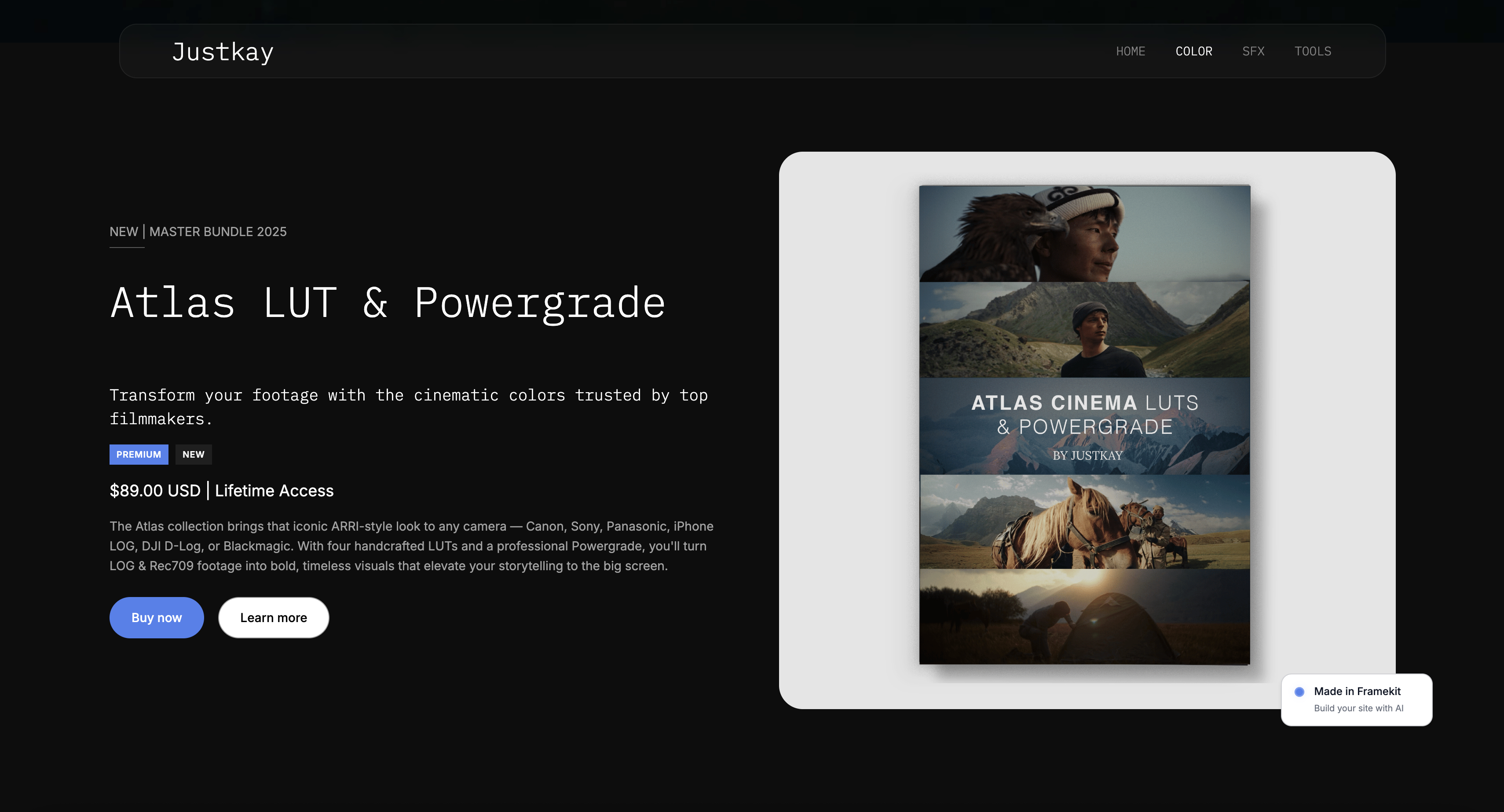
Payhip is a straightforward digital storefront whose pricing is unusually easy to read compared with most of this category, which makes it a genuine alternative rather than a courtesy inclusion in a list like this.
The plans, read from its pricing page in August 2026Free forever at $0 with a 5% transaction fee, Plus at $29 a month with 2%, and Pro at $99 a month with no transaction fee. All plans include unlimited products and unlimited revenue, and PayPal or Stripe charge their standard rates on top.
Where it fits a Pinterest sellerproduct pages, coupons, memberships and EU VAT handling, without needing to build a website first. For somebody whose plan is pins pointing straight at product pages, that is enough.
The gotchathe route to 0% costs $99 a month, which is $1,188 a year and only makes sense above roughly $3,500 of monthly sales when compared with its own $29 tier.
Verdict: A clean, honest storefront and an expensive climb to zero fees. Our Payhip alternatives comparison covers the field.
4. Gumroad: The Fastest Destination to Build
Gumroad remains the quickest way to turn a file into a link you can pin, which for testing whether a product sells at all is exactly the right amount of effort.
The terms10% plus 50 cents per transaction on your own links, 30% on sales that come through Gumroad Discover, and no monthly cost.
Where it fitsa first product, a seasonal one-off, or a test of whether a pin design drives clicks before you build anything more substantial.
The gotcha for Pinterest specificallyone product, one page, one URL. The inventory strategy that makes Pinterest work needs many destinations, and a Gumroad-only setup gives you as many pages as you have products and no supporting content to rank around them.
Verdict: The best test bed and the weakest long-term Pinterest destination.
5. Kit: Capture First, Sell Second
Kit inverts the usual funnel by putting the email capture before the product, and on Pinterest that inversion works better than it does almost anywhere else, precisely because the traffic arriving is cold and has never heard of you.
The mechanicthe pin points at a free resource, the visitor gives an email address, and the paid product is sold to that list over the following weeks. A Pinterest visitor who has never heard of you converts far better on the second contact than the first.
The free plan$0 for 1,000 subscribers, with unlimited landing pages and forms, and the ability to sell digital products without upgrading. Unlimited landing pages is the relevant phrase: each one is another pin target.
The gotchaone automation on the free tier, so a welcome sequence plus a launch sequence means the $33 plan. Our lead magnet tools comparison has the ceilings.
Verdict: The highest-converting structure for cold Pinterest traffic, and an extra step that many sellers skip to their cost.
6. Shopify With a Digital Downloads App

Shopify is heavier than most digital sellers need and it is the right answer for one specific case: a catalogue with both physical and digital products.
Where it earns the subscriptionif you sell prints alongside preset packs, or a physical planner alongside its digital version, running one inventory and one checkout is worth real money in saved admin.
The gotchadigital delivery is an app rather than a native feature, which means another subscription and another dependency. Our Shopify apps for digital downloads guide covers the options.
Verdict: Overbuilt for digital-only sellers, and correct the moment anything physical enters the catalogue.
7. Canva: Where the Pins Get Made
None of the tools on this list matters at all if the pin itself does not earn the click in the first place, and Canva is where the overwhelming majority of sellers actually produce those pins.
Why it belongs in a selling guidepin production is the actual bottleneck in a Pinterest strategy. Ten pins per product across different angles, text overlays and formats is the work, and a tool that makes that fast is a selling tool whether or not it processes payments.
The pricing contextCanva's own page shows Free at EUR 0 a year and Pro at EUR 110 a year for one person, with Business at EUR 170.
The gotchatemplate sameness. Pinterest surfaces the visually distinctive, and a feed of pins built from the same three templates as everybody else's underperforms for reasons that have nothing to do with your product.
Verdict: The production engine behind the strategy, and a place where using the default template is a competitive disadvantage.
8. A Scheduler: The Volume Multiplier
Pinterest rewards consistent publishing over months, and manual pinning reliably does not survive contact with a busy client week, which is the entire reason scheduling tools exist as a paid category at all.
What they doqueue pins across weeks, spread them across boards, and keep publishing while you are working on client jobs.
What to weighPinterest's own scheduling has improved considerably and is free, so a paid scheduler needs to justify itself with bulk creation, analytics or multi-account handling rather than with scheduling alone.
The gotchavolume without variation is spam. Twenty near-identical pins to the same URL is a different thing from twenty distinct pins targeting twenty phrases, and the platform can tell.
Verdict: Worth adding once you are producing enough pins that the queue is the constraint, and unnecessary before that.
The Strategy the Tools Serve
None of the tool choices above matters very much if the underlying approach is wrong, so here is the approach itself in four lines, each of which is worth more than the difference between any two products on this list.
Build many entry points per product. Ten pins per product, each targeting a different search phrase, each linking to the most relevant page. This is the whole mechanic.
Write pin titles as search queries. People type what they want, so the title should contain that phrase rather than a clever line. Pinterest is closer to a search engine than to a feed in every respect that matters commercially.
Send cold traffic to a page that converts on second contact. An email capture, a lower-priced entry product, or a genuinely useful article that ends with the product. Sending a first-time visitor straight to a $49 checkout wastes most of the click.
Give the pins a year. The compounding is real and slow. A pin published in January that produces nothing in February is not a failed pin, and judging Pinterest on a four-week window is the most common reason people conclude it does not work.
In one lineMany doors, keyword titles, a page that captures rather than only sells, and twelve months of patience.
Frequently Asked Questions
What is the best tool to sell digital products on Pinterest in 2026?
The best destination is a store on your own domain with unlimited product and landing pages, since Pinterest rewards many entry points rather than one.
Framekit charges 5% on its free plan and 0% on the $39 Business plan, Payhip is comparable at 5% free, 2% on $29 and 0% on $99, and Etsy remains the strongest destination for printables and templates because its buyers are already searching.
Does Pinterest actually drive sales for digital products?
Yes, and on a longer timescale than any other platform. Pins typically peak months after publication rather than hours, and the traffic arrives from an explicit search rather than a scroll, which makes it closer to shopping intent.
The trade-off is patience: judging a Pinterest strategy on four weeks of data is the most common reason sellers abandon it.
Can I sell directly on Pinterest?
Pinterest has product features and its core function remains sending users to your site, which is why the destination matters more than the pin.
Treat Pinterest as a search engine that delivers clicks rather than as a marketplace that completes transactions, and put your effort into the page the click lands on.
How many pins should I make per product?
At least ten, each targeting a different search phrase with a different image and title.
This is the single most under-used mechanic on the platform: ten distinct pins to one product page create ten independent chances to be found, whereas ten near-identical pins to the same URL are treated very differently.
Etsy or my own store for Pinterest traffic?
Etsy if you sell printables, planners, invitations or cut files and have no audience, because its buyers are already searching for those categories.
Your own store once you have traffic, because Etsy charges $0.20 per listing plus 6.5% plus processing, and once your shop passes $10,000 in a rolling year, Offsite Ads becomes mandatory at 12% of attributed orders.
What is the cheapest way to start selling on Pinterest?
Gumroad or a free store plan, both of which cost nothing monthly and charge a percentage per sale.
Gumroad's 10% plus 50 cents is the highest per-sale rate here and the lowest commitment, while free plans on Payhip and Framekit both charge 5%. Buy a domain regardless, because it is the only asset that survives a platform change.
How long before Pinterest produces sales?
Three to six months for the first meaningful traffic and around twelve for a compounding return, because pins accumulate rather than spike.
That timeline is the reason Pinterest suits digital products particularly well: the product does not expire, so a pin from last year is still selling something that still exists.
Should I send Pinterest traffic to a product page or a landing page?
To a page that captures an email address for anything above a low price point, because Pinterest traffic is cold and first-time visitors rarely buy immediately.
A free resource, a low-priced entry product or a useful article that ends with the product all convert better than a direct link to a $49 checkout.
What digital products sell best from Pinterest?
Planners, templates, printables, presets, wedding stationery, workbooks and anything visual enough to be represented in a vertical image.
The constraint is that the pin has to communicate the product's value visually, which is why software and services underperform there and visual assets do well.
Do I need a Pinterest scheduler?
Not at the start. Pinterest's own scheduling is free and adequate, so a paid scheduler needs to justify itself on bulk creation, analytics or handling several accounts. Add one when producing enough pins that the queue rather than the ideas becomes your constraint.
How do I stop my old pins from breaking?
Point pins at URLs on a domain you own, and keep those paths stable even when you change platform, since a pin can keep driving traffic for years and you cannot edit thousands of them.
This is the same discipline that matters on any long-tail platform, and Pinterest has the longest tail of them all.
Is Pinterest better than Instagram for selling digital products?
For discovery of visual, searchable products, yes, because Pinterest is built to send users to a destination while Instagram is built to keep them. Instagram is stronger for building a relationship with an audience that already knows you.
Our comparisons of selling on Instagram and selling on TikTok cover those platforms' own mechanics.
Why does Framekit suit Pinterest traffic specifically?
Because Pinterest rewards volume of destinations and most storefronts limit them.
A pin performs when it points at a page built for that one idea, and ten products means ten landing pages, each with its own title, image and copy, all on your own domain rather than as ten listings competing inside someone else's search.
That also protects the pins: a pin can keep driving traffic two years after you made it, and a link you do not own can break in that time.
The honest counterweight is that Etsy already has buyers on it, so a new seller with no list is often right to run both.
Final Verdict
Pinterest is the least fashionable and most commercially aligned platform available to somebody selling digital products, because its business model is to send people away and yours is to receive them.
The tool decision follows from that: you want a destination with many pages, stable URLs and a way to capture an email from a stranger who arrived from a search. Etsy supplies buyers and charges for them.
Gumroad supplies a link and nothing else. A store on your own domain supplies the pages and requires you to bring the traffic, which is exactly what Pinterest is for.
Where Framekit losesEtsy will sell more copies of your first printable than we will, because its buyers are already searching and ours are not. Payhip's $29 tier at 2% beats our $19 Pro at 3% above roughly $1,000 a month.
And we do not handle VAT as merchant of record, which a seller with a heavily international audience should weigh against every fee figure in this guide. If any of those decides it for you, use the other tool.
Verdict: Build ten pins per product, point them at pages on a domain you own, capture the email before asking for the sale, and give the whole thing a year.
Related reading: tools to sell digital products on YouTube, where to sell digital templates, and platforms to sell digital planners.
Fees here were read in August 2026 from the Payhip, Gumroad and Canva pricing pages and from Etsy's published Fees and Payments Policy. Card processing figures in the $29 example are standard published rates and are labelled as approximate.