Framekit templates
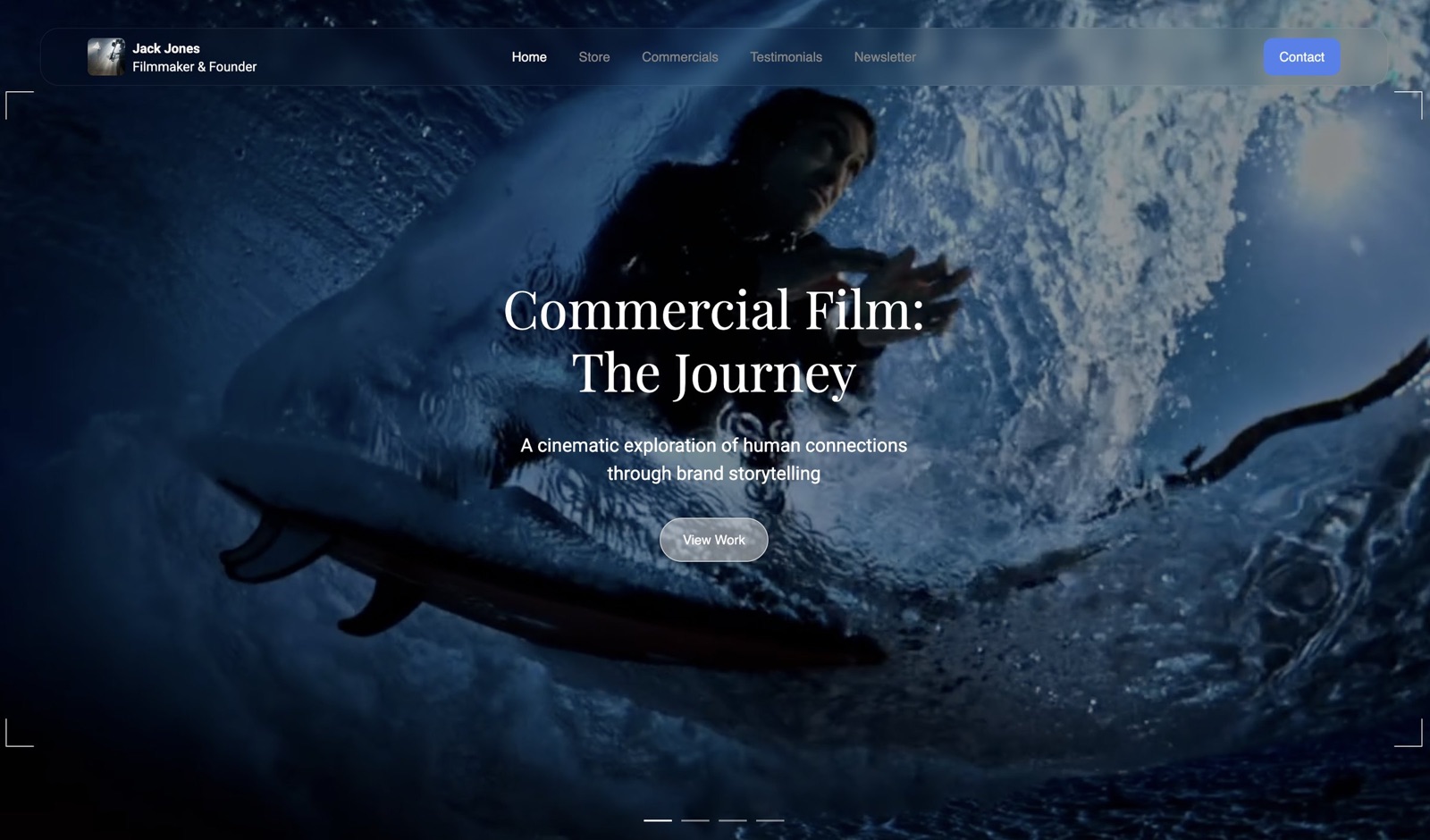
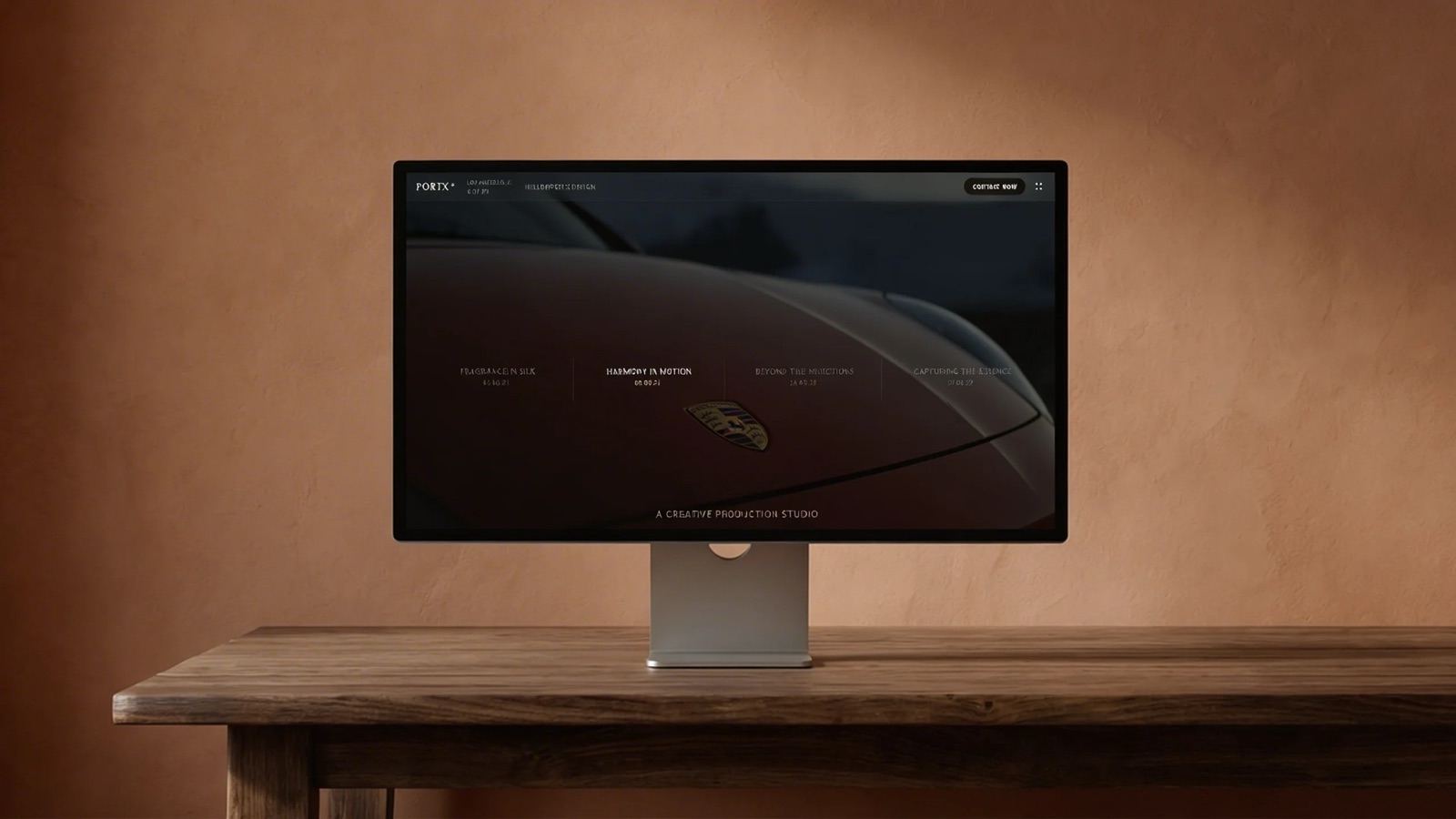
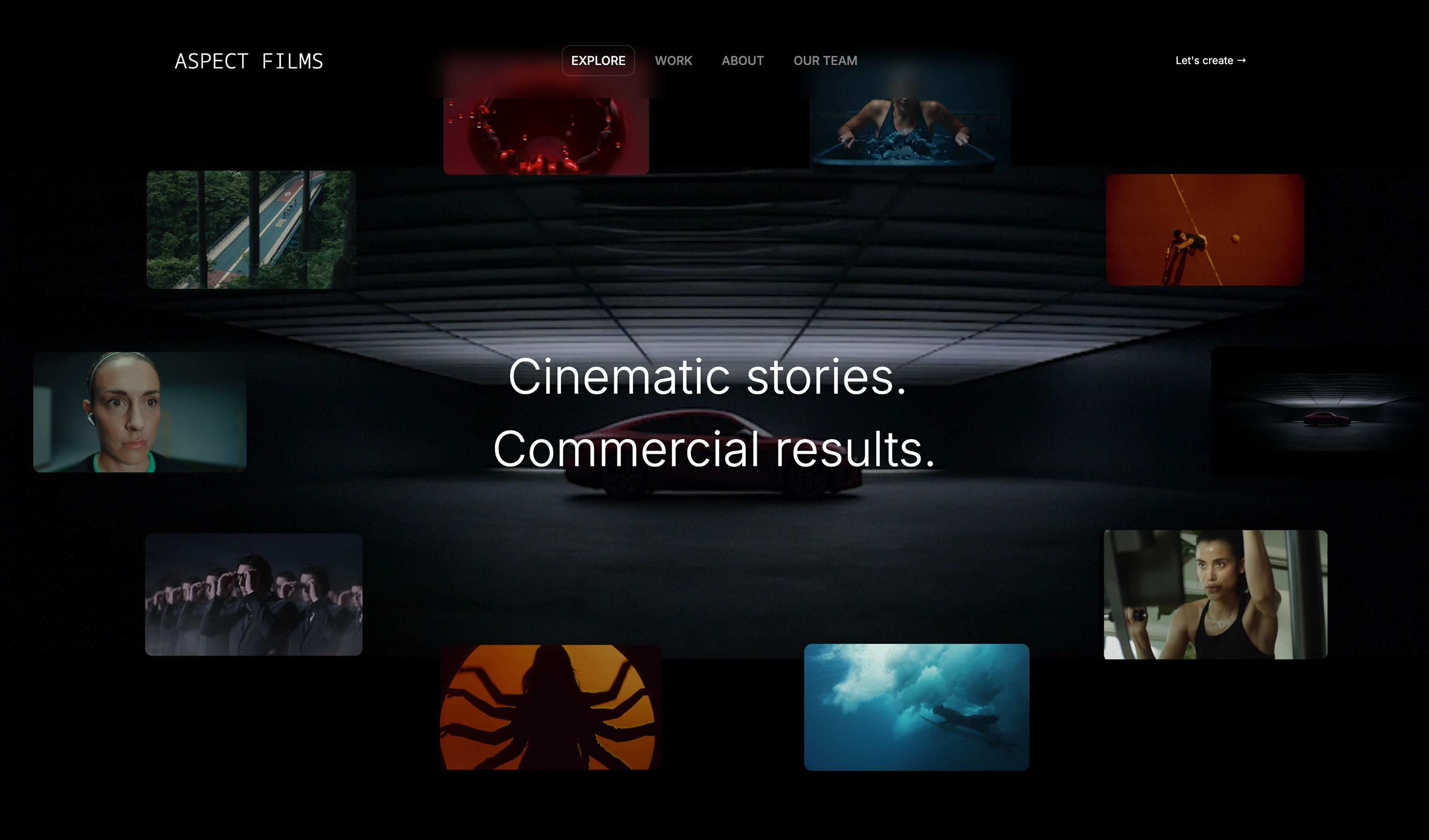
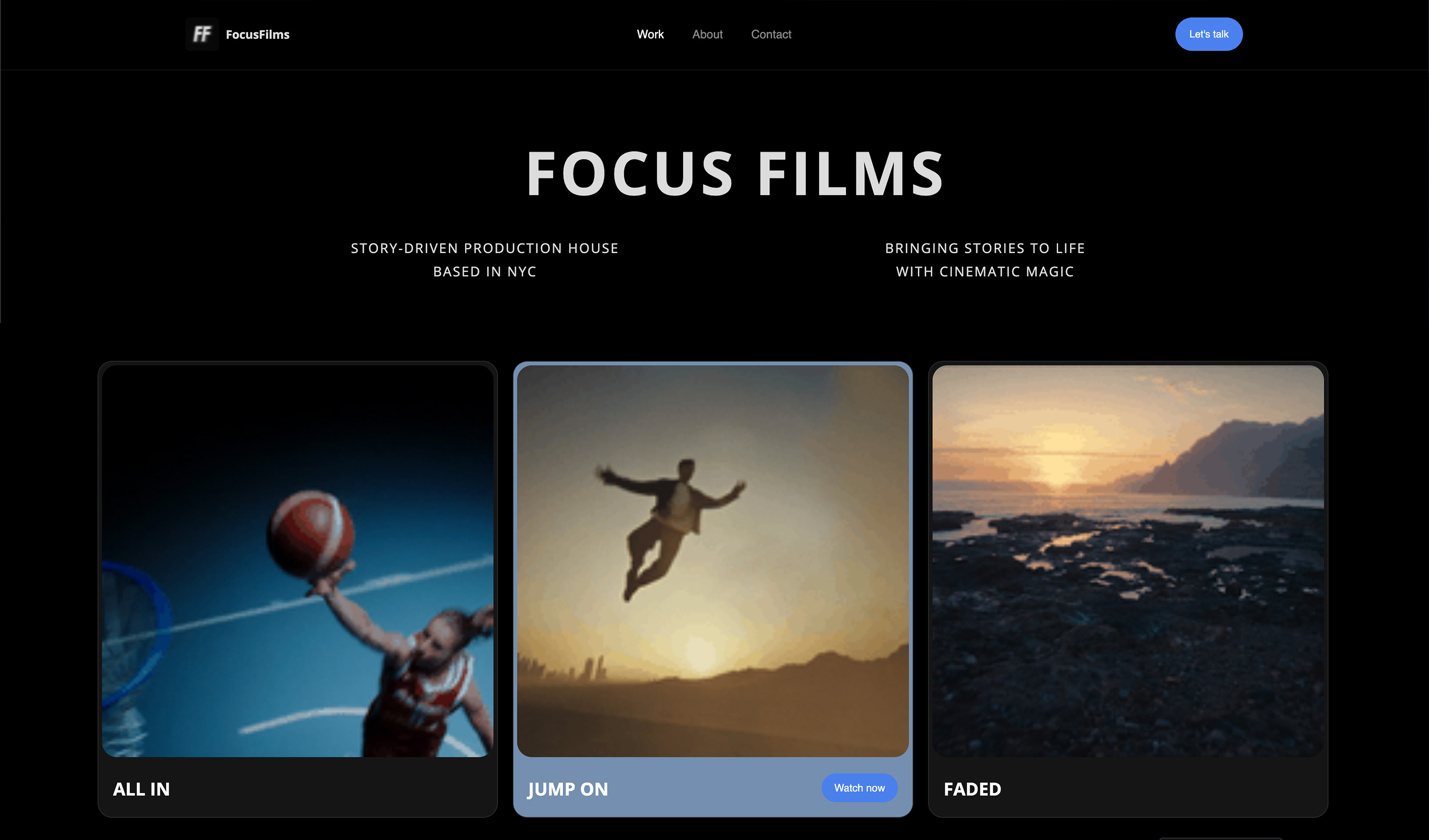
Start from a designer-made template
 Use template
 Use template
 Use template
 Use template
 Use template
 Use template
 Use template
 Use template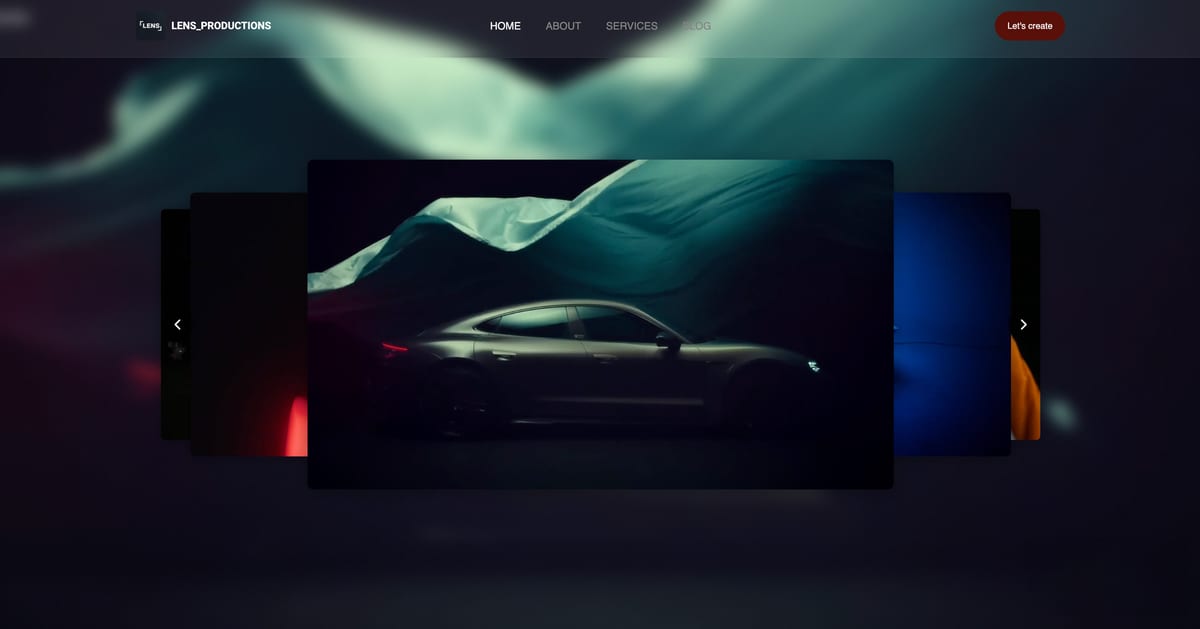
You picked Vimeo because it was the serious choice. No ads, a clean player, a quiet community of filmmakers.
Then the price crept up, the plans got reshuffled around bandwidth caps, and you opened your account one morning to find the upload you needed was behind a tier that cost three times what you signed up for. The player still looks good.
The bill no longer does.
That is the real story of Vimeo alternatives in 2026, and it is not really about the player. Most filmmakers do not have a Vimeo problem. They have a portfolio problem. Vimeo became a substitute for a website.
Your reel, your client list, your contact details, all of it lives on a vimeo.com profile that you do not own and that puts other filmmakers' work in the sidebar next to yours. The honest question is not just where to host the file.
It is where the reel should actually live.
A video host is a service that stores your video file and serves it through an embeddable player.
A video portfolio website is a site you own that shows your reel inside your own brand, with your projects, your bio, and your inquiry form around it. They are different jobs.
Some filmmakers genuinely just need a better, cheaper player, and this guide names the best ones. Others need to stop renting a profile and build a real site.
We re-verified this guide in September 2026 and corrected an older line that said Framekit had no client review: it now runs timestamped video review and client galleries alongside the site, though it still has no public streaming player.
The best Vimeo alternative for filmmakers in 2026 is Framekit, because it builds a real portfolio website you own and embeds your reel inside your own brand instead of a rented profile.
Wistia is the strongest pure-hosting runner-up, and YouTube is the best free player. Start free at framekit.ai.
Full disclosure: Framekit, ranked #1 below, is our own product, and it is not a video host. We cap a site video upload at 100MB, so films stream from a host and embed in the page. If hosting and streaming is what you are shopping for, Wistia, Dacast, SproutVideo and YouTube all do it and we do not. Framekit ranks first here for the site the player sits in, not for the player.
How We Compared and Weighted These Alternatives
People leave Vimeo for several unrelated reasons, so the basis for this ranking is worth stating before any of it is read.
- Verified from primary sources: plan pricing, storage, bandwidth rules and player controls were read from each vendor's published pages in September 2026.
- Assessed hands-on: what a viewer sees on a share link, what controls a sender has over access, and what the embed looks like in a real page.
- Not assessed: live streaming reliability and enterprise delivery, which need conditions we cannot reproduce.
The weighting: what you are actually replacing carries the most weight, and for most people leaving Vimeo that is the home the video lives in rather than the streaming itself.
Under the opposite weighting, where hosting and transcoding are the job, Wistia or Dacast wins outright and Framekit does not place at all. No playback or performance figures are published here for any platform.
Every competitor price in this guide was re-read on the vendor's own pricing page on 7 August 2026, and the full table is below.
One finding is worth stating up front: Vimeo is not the expensive option in this field, so if price is your only reason for leaving, check the numbers before you move.
What to Look For in a Vimeo Alternative
The right Vimeo alternative depends on whether you need a video host or a video portfolio.
Judge candidates on real cost as your library grows, the cleanliness of the player and whether it shows competitors' work, who owns the page your reel lives on, and how well the tool presents a filmmaker's body of work, not just a single file.
Are you paying for hosting or for a presence?
Vimeo blurred the line between hosting a file and being a website. A pure host like Wistia or a free host like YouTube does one job: it stores and serves the video. A portfolio builder does the other: it gives the reel a home.
Decide which problem is actually costing you work before you compare prices.
What does it cost as your library grows?
Video hosting costs scale with storage and bandwidth, and that is where Vimeo's bills surprised people. Look closely at upload caps, bandwidth limits, and which tier unlocks the feature you need.
A flat builder price that includes hosting can beat a metered video plan once you have a few years of projects.
How clean is the player, and whose work surrounds it?
A professional reel needs a player with no ads, no forced branding, and crucially no recommended-videos grid pointing at other filmmakers. On YouTube your reel ends with thumbnails of competitors. On your own site it ends with your contact form. That difference decides bookings.
Does it show a body of work, or just one file?
Clients do not hire a video file. They hire a filmmaker with a track record. A host shows one clip at a time. A portfolio site shows the reel, the project breakdowns, the client logos, and the bio together, which is what actually converts a viewer into an inquiry.
Quick Comparison: Vimeo Alternatives at a Glance
| Tool | Best For | Type | Free Plan |
|---|---|---|---|
| Framekit | A real reel-led portfolio site | Website builder | Free, no credit card |
| Wistia | Marketing video with analytics | Video host | Limited free tier |
| YouTube | Free public reel hosting | Video host | Free |
| Frame.io | Client review and dailies | Review platform | Limited free tier |
| Squarespace | Template-led video portfolios | Website builder | Trial only |
What Every Alternative Actually Charges
The comparison above sorts on fit. This one sorts on money, and it is the section most Vimeo-alternative guides skip, which is strange given that price is why most people start looking.
Every figure here was read on the vendor's own pricing page during the first week of August 2026.
| Platform | Published price | What the entry tier includes | Billing model |
|---|---|---|---|
| YouTube | Free | Unlimited storage and delivery, their branding and end screens | Free, ad-supported |
| Bunny Stream | Free encoding, storage from 0.01 per GB, delivery from 0.005 per GB | Player and API, one dollar monthly minimum | Pay per gigabyte |
| Framekit | Free, then Starter 9 dollars a month | Custom domain and no branding on Starter | Flat per month |
| SproutVideo | Seed 12 dollars a month billed annually | Two team seats, analytics, stated as no usage caps | Flat per month |
| Vimeo | Starter 12 dollars per seat a month | 2 TB storage, review tools, ad-free player | Per seat |
| Squarespace | Basic 19 dollars a month | A site with video pages, not a video host | Flat per month |
| Cloudflare Stream | 5 dollars per 1,000 minutes stored, 1 per 1,000 delivered | Player and API, no analytics suite | Pay per minute |
| Dacast | Starter 39 dollars a month billed annually | 2.4 TB bandwidth a year and 500 GB storage | Flat, with hard caps |
| Wistia | Free, then Business 79 dollars a month billed annually | 25 GB free, 250 GB and three users on Business | Flat per month |
Two things jump out of that table for anyone leaving Vimeo.
The first is that Vimeo's Starter at 12 dollars a seat is not expensive by the standards of this field: SproutVideo matches it, Wistia is more than six times it, and only the pay-per-use platforms and YouTube come in below.
If you are leaving Vimeo purely on price, check that you are actually leaving for something cheaper.
The second is that the cheap options are cheap because they are unbundled.
Bunny Stream at fractions of a cent per gigabyte gives you delivery and a player and nothing else, so the analytics, the portfolio pages, and the client review all have to come from somewhere.
That is not a hidden cost if you already have those things, and it is a real one if you do not.
Read Dacast's row carefully too. Its 2.4 terabytes a year works out at roughly 200 gigabytes a month, which a modestly watched library will exceed, so the plan can fail on the allowance rather than on the price.
We worked through that arithmetic in detail in our comparison of video hosting platforms.
In one lineVimeo Starter at 12 dollars a seat sits in the middle of this field, so leave it for control, presentation, or analytics rather than assuming a saving.
The Best Vimeo Alternatives in 2026
We tested each tool hands-on, hosting or building with a real filmmaker reel, and judged cost as a library grows, player quality, ownership, and how well the tool presents a filmmaker's full body of work.
Framekit is first because it solves the problem most Vimeo users actually have, which is that their reel needs a website around it.
1. Framekit: Best Overall Vimeo Alternative for Filmmakers

Framekit is the best Vimeo alternative for filmmakers who want their reel to live somewhere they own, because it builds a real portfolio website and embeds your video inside your own brand instead of a rented vimeo.com profile.
Its AI was trained by senior designers, so the site looks like a finished production company page, not a template.
Here is the honest framing, and it matters. Framekit is not a public video platform.
It stores and transcodes video for private client galleries and review links, but it does not run an embeddable public player or a metered streaming CDN the way Vimeo or Wistia do, and video uploaded straight into a site page is capped at 15MB on free and 100MB on paid plans.
So for the public reel, you host the file on a video host and drop that player into a Framekit page with its Vimeo or YouTube embed block. Framekit is the portfolio, not the public projector.
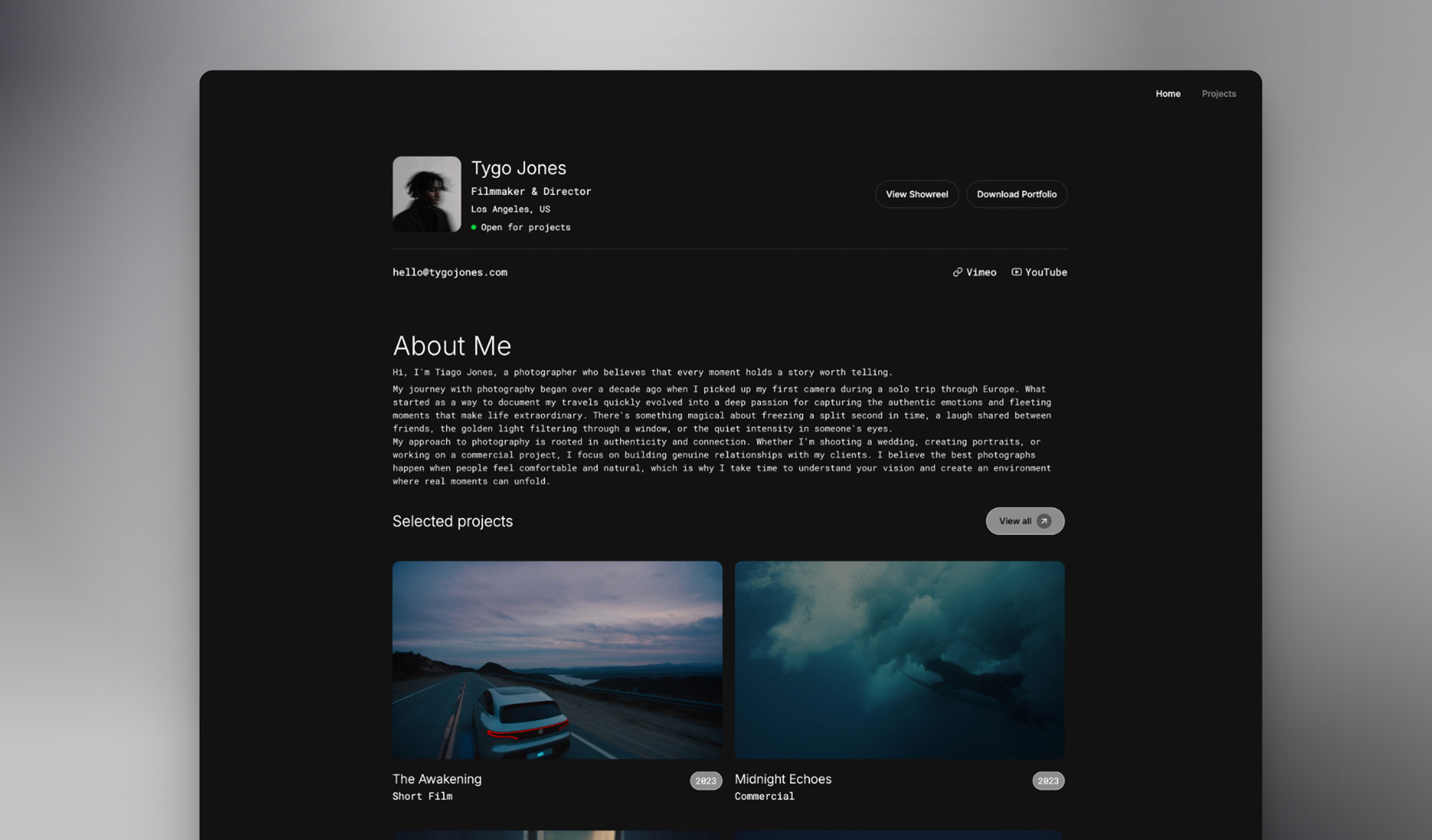
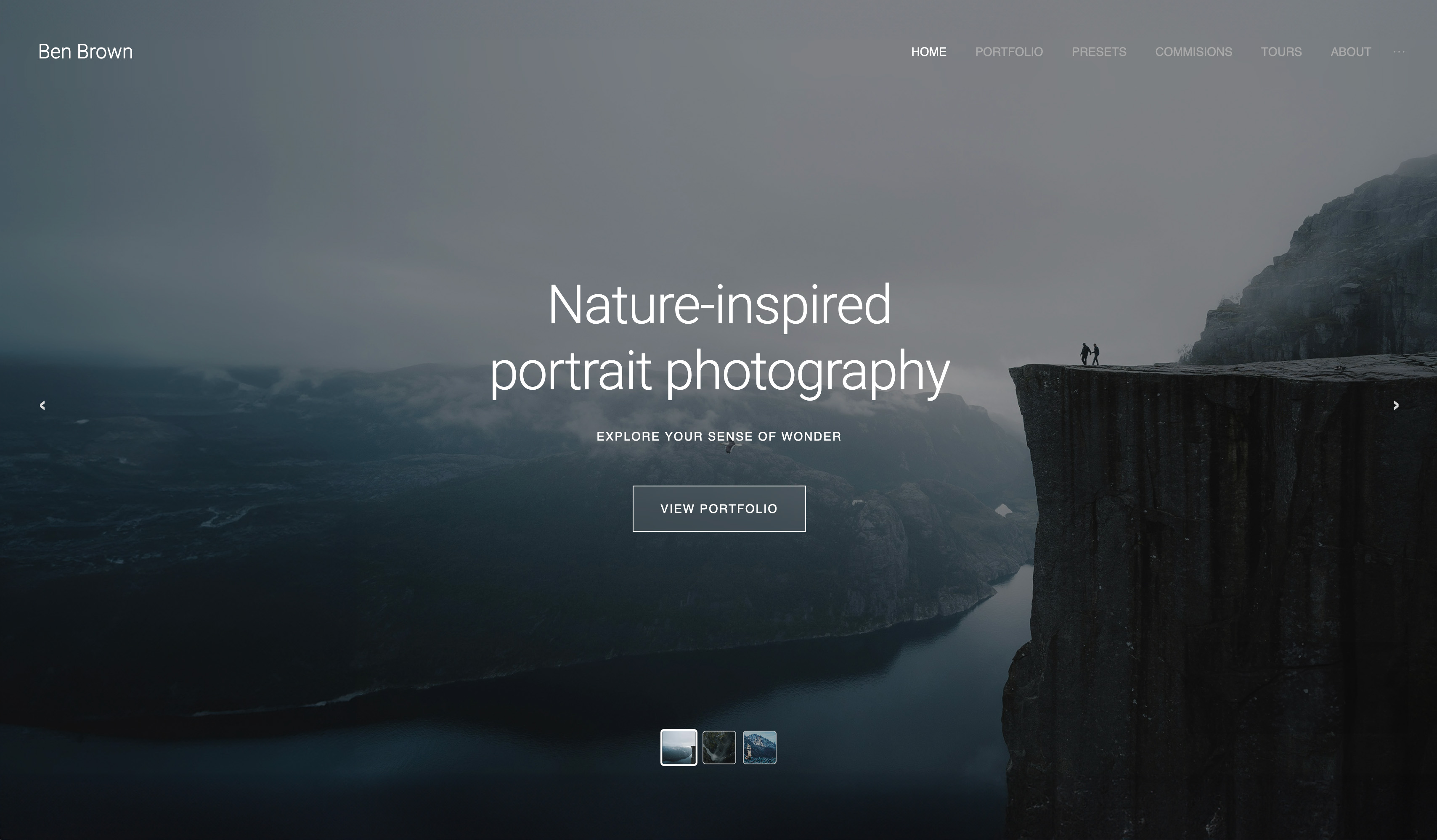
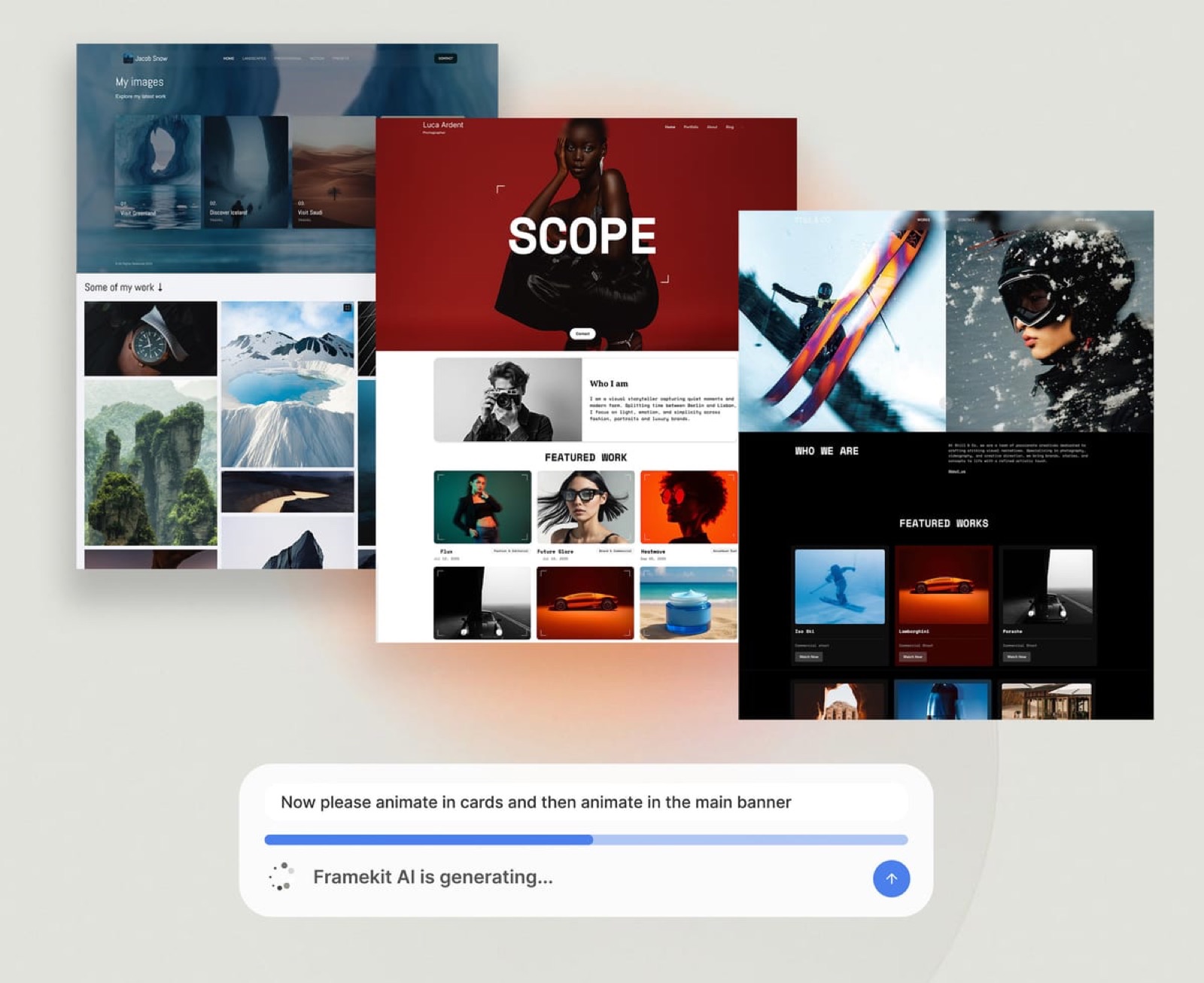
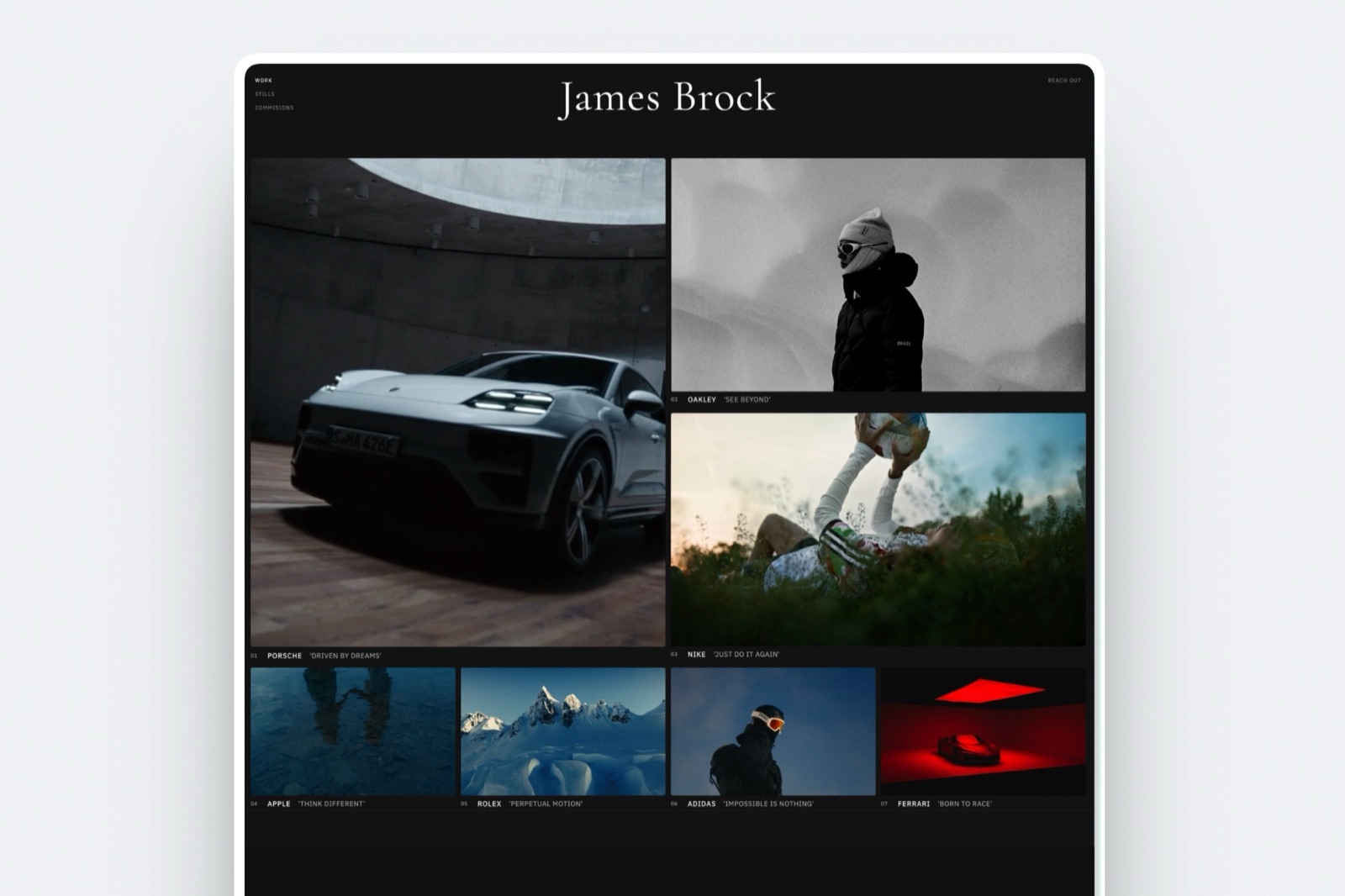
For a filmmaker, that is usually the missing piece. You upload a screenshot of a site or a look you want, and Framekit's AI generates a matching design direction, then every section you add inherits the same type, color, and spacing.
You get full project pages, a client list, a bio, and a built-in inquiry form, all on your own domain.
Hosting, SSL, and a Cloudflare CDN are included, and SEO fundamentals like server-side rendering and structured data ship by default, so the site can be found in search, which a Vimeo profile cannot.
Be clear on the trade-off. Because Framekit is not a public video host, you still need somewhere to stream the reel itself, and many filmmakers pair Framekit with YouTube or Wistia for that.
What it does cover is the private side many people kept Vimeo for: video review with frame-accurate comments, drawing on the frame and version stacks, plus client galleries that deliver the finished files, all in the same account (review files are capped at 500MB on free up to 3GB on Business, two hours per video).
It has no booking and a smaller plugin marketplace than Wix. It replaces Vimeo's review and delivery pages, not its public streaming.
PricingFree ($0, no credit card, a framekit.ai subdomain with a small badge), Starter $9/month (custom domain and no branding, one of the cheapest such plans among full builders), Pro $19/month, and Business $39/month. Annual billing saves 20%.
ProsA reel-led portfolio site you own, designer-trained AI output, built-in inquiry forms, fast managed hosting, and flat plan prices that do not climb at renewal.
ConsNot a public video host, so you still need a player elsewhere; review files cap at 3GB even on Business, so it is no home for masters; smaller app ecosystem than Wix.
Verdict: Framekit is the best pick for filmmakers who want a real portfolio website around the reel, not just a place to park the file.
2. Wistia: Best for Marketing Video and Analytics
Wistia is the strongest pure video host on this list for filmmakers who want a professional, ad-free player with deep analytics.
The player is fully customizable, carries no recommended-video grid, and Wistia's heatmaps and engagement graphs show exactly where viewers drop off, which is genuinely useful for a reel edit.
Plans start free for a few videos, with paid tiers from around $19/month on the Wistia pricing page. It is a host, not a website, so pair it with a portfolio builder.
Verdict: The best clean, analytics-rich player for embedding a reel, with a real website still needed around it.
3. YouTube: Best Free Reel Host
YouTube is the best free Vimeo alternative for pure hosting. Unlimited uploads, reliable streaming worldwide, and zero cost make it hard to argue with for storing a reel file.
The catch is the player: ads can appear, branding is fixed, and the end screen shows other filmmakers' videos, which is the last thing a portfolio should do.
Embed it muted and minimal inside your own site rather than sending clients to youtube.com.
Verdict: The free hosting workhorse, best used as an embedded player inside a site you control.

4. Frame.io: Best for Client Review and Dailies
Frame.io is not a Vimeo replacement for showing finished work, it is the tool for the stage before that.
It handles frame-accurate client review, comment tracking, version stacking, and dailies, and it is the production standard for collaborative feedback. Filmmakers use it during the edit, then deliver the final reel elsewhere.
Pricing starts free for small projects, with paid plans from around $15/month. Different job, essential tool.
Verdict: The best client review platform, and a complement to a portfolio rather than a host for one.
5. Squarespace: Best Template-Led Video Portfolio

Squarespace is a credible Vimeo alternative if your goal is a portfolio website and you want to work inside a polished template. Its video-friendly templates look good, and the editor is reliable and widely supported.
The AI does little design work, so customization is manual, and performance on media-heavy pages trails lighter builders. Basic plans start at $19/month billed annually on the Squarespace pricing page.
Verdict: A solid template-led portfolio builder, though you do the design work yourself. See our Framekit vs Squarespace comparison.
6. Dacast: Best for Live Streaming and OTT
Dacast is a broadcast-grade video platform built for live streaming, monetized channels, and OTT distribution. For a filmmaker running paid screenings, a virtual premiere, or a subscription channel, it is a serious tool.
For simply showing a reel to prospective clients it is far more platform than the job needs, and pricing reflects the broadcast feature set, starting around $39/month.
Verdict: The right pick for live and monetized distribution, overbuilt for a standard portfolio reel.
7. Vimeo: The Tool You Are Replacing
Vimeo still deserves a fair assessment. The player remains clean, the community is real, and its review and showcase tools are mature.
For a filmmaker who wants hosting plus light portfolio features in one subscription and does not mind the profile model, it can still work.
Vimeo publishes Starter at 12 dollars per seat a month with 2 TB of storage, Standard at 25 with 4 TB, and Advanced at 75 with 7 TB.
Read against the table above, that is mid-field rather than expensive, so price is the weakest reason to leave.
The stronger reasons are that the tiers meter by seat, that the features most filmmakers want sit above Starter, and that a vimeo.com profile is rented space surrounded by other filmmakers' work.
Verdict: Still a good host at a fair price, and the reason to leave is the rented-profile model rather than the bill. A link is not a portfolio.
8. SproutVideo: The Closest Like-for-Like Replacement
SproutVideo is the alternative most people looking to leave Vimeo have never heard of, and it is the closest match on shape: a clean ad-free player, real analytics, privacy controls, and a flat monthly price with no per-seat surprises.
Its published plans are Seed at 15 dollars a month or 12 billed annually with two team seats, Sprout at 45 or 35 with five seats, and Tree at 95 or 72, with the page stating no usage caps on plans.
The comparison with Vimeo Starter is direct. Both are 12 dollars a month on annual terms. Vimeo gives you 2 TB of storage and its review and collaboration tooling; SproutVideo gives you two team seats and deeper engagement analytics.
For a two-person production company that difference alone can decide it, because the second Vimeo seat is another 12 dollars and the second SproutVideo seat is included.
Best forFilmmakers and small studios who want everything Vimeo does, at the same price, with analytics that go further and seats that do not meter.
The honest gotchabrand recognition is the real cost. A studio receiving a private link from a name it does not know may treat it with more friction than a Vimeo link, and for some client relationships that matters more than a feature comparison should allow.
Verdict: The most direct swap for Vimeo at the same money, and the one to shortlist if seats or analytics are why you are looking.
9. Bunny Stream: For Filmmakers Who Only Need Delivery
Bunny Stream is what you choose when you have already solved presentation elsewhere and want the video bill to stop mattering.
Its published rates are free encoding, storage from 0.01 dollars per gigabyte, and CDN delivery from 0.005 per gigabyte, with a one dollar monthly minimum, which for a portfolio and reel watched a few thousand times a month lands in low single-digit dollars.
That is a different proposition from everything else on this list, and it is only the right one if the rest of your setup already exists.
You embed the player into a site you control, you read delivery data rather than engagement analytics, and nobody is capturing leads inside the video.
Best forFilmmakers who already have a portfolio site and want hosting to be a rounding error rather than a subscription.
The honest gotchathere is no analytics product and no review workflow. If Vimeo's frame-accurate client comments are part of why you use it, moving here means adding a review tool, and the saving disappears into that.
Verdict: The cheapest credible way to serve video you control. It replaces Vimeo's hosting and none of Vimeo's other jobs.
Which Vimeo Alternative Is Right for You?
The decision comes down to one question: do you need a better video host, or do you need the website your reel should live on.
Choose Framekit if your reel needs a real home
If your problem is that your reel lives on a rented profile next to competitors' work, you need a website, not a cheaper player.
Framekit builds a portfolio site you own, embeds your reel inside your brand, and adds project pages and an inquiry form. Pair it with a host for the file itself.
See our best website builders for filmmakers guide for the full field.
Choose Wistia or YouTube if you only need hosting
If you already have a website and just need somewhere to store and serve the video file, Wistia is the best clean, analytics-rich player and YouTube is the best free option. Both embed neatly into a site, and neither tries to be your portfolio.
Choose Frame.io if your need is client review
If what is actually costing you time is collecting client feedback during the edit, Frame.io is the production standard and not something a portfolio builder replaces. It sits earlier in the workflow than any tool here.
For presenting the finished work, see the best portfolio website builder for videographers.
Also in this seriesvideo hosting platforms, where we priced the same ten hours of video and ten thousand monthly views across eight platforms and found a spread of about three dollars to seventy-nine.
What Leaving Vimeo Actually Costs
The migration itself is the part nobody prices, and it is usually larger than the first year's saving. Four things break, and knowing them in advance turns a bad week into an afternoon.
Embeds break first. Every page, article, press kit, festival submission, and email signature carrying a Vimeo embed will show an error the moment the source video is gone.
Before you cancel anything, search your own site for the embed domain and count. Most people find between five and thirty, and a handful they had forgotten, such as a bio page on a collaborator's site that you cannot edit yourself.
Originals come second. Download every source file at full quality before you cancel, not after, and check the downloads open.
A hosting platform stores a delivery copy, and if your master lives only on the platform then cancelling is deleting your archive. This is the single most common expensive mistake in a migration.
Showcases and links are third. Vimeo's showcase pages and review links are frequently what a producer has bookmarked, and those URLs do not survive.
Anything you have sent to a commissioner or a festival in the last two years is a link you should assume will die, which is an argument for pointing people at your own domain in the first place.
Fourth is the quiet one: privacy settings do not transfer.
A video that was password protected or domain restricted on Vimeo will not arrive that way somewhere else, and the failure mode is a client's unreleased film sitting on a public URL.
Re-apply protection on the new host and check it from a logged-out browser before you announce anything.
The practical sequence that works is boring.
Download originals, stand up the new host, re-upload and re-apply privacy, update embeds on the pages you control, redirect or replace links on the pages you do not, run both platforms in parallel for a month, and only then cancel.
Budget a working day for a small library and note that the parallel month is a month of paying twice, which belongs in the comparison.
What Vimeo Still Does Better Than Its Alternatives
A guide to alternatives that never concedes anything is not worth reading, so here is the honest account of where Vimeo remains the right answer.
Review and collaboration is the strongest case.
Sending a client a private link with frame-accurate comments, version stacking, and a tidy approval trail is built in on Starter at 12 dollars a seat, and replacing it separately means adding a review platform to your stack.
If that loop is how you work with clients, Vimeo is bundling something the cheap alternatives do not have.
The player and the absence of an algorithm is the second. There are no end-screen suggestions pulling a viewer to another director's reel, no advertising, and no recommendation system treating your work as inventory.
YouTube cannot offer that at any price, and it is the specific reason many filmmakers pay rather than embed for free.
Recognition is the third and it is genuinely worth money. A commissioner opening a Vimeo link knows what they are looking at. That is a soft advantage and it is real, particularly for festival submissions, press kits, and anyone who has been sending Vimeo links for a decade.
The honest case against is narrower than the internet suggests. It is not that Vimeo is expensive, because at 12 dollars a seat it sits mid-field.
It is that hosting alone does not get you hired: a link is not a portfolio, a showcase page is not a website, and the domain in the address bar is somebody else's.
That is the gap this guide exists to close, and it is a gap about presentation rather than about price.
Frequently Asked Questions
What is the best Vimeo alternative for filmmakers in 2026?
The best Vimeo alternative for filmmakers in 2026 is Framekit, because it builds a real portfolio website you own and embeds your reel inside your own brand instead of a rented profile.
For pure video hosting, Wistia is the best ad-free player with analytics, and YouTube is the best free option.
Is Framekit a video hosting platform?
Not for public playback, and it is important to be clear about that.
Framekit is an AI website builder that also stores video privately for client review links and delivery galleries, but it does not store raw footage, offer an embeddable public player or run a streaming CDN.
It builds the portfolio website where your finished reel belongs, and you embed a player from a host like YouTube or Wistia into that site.
Why are filmmakers leaving Vimeo?
Filmmakers are leaving Vimeo mainly over cost. Plan changes, bandwidth caps, and seat-based pricing have pushed bills up, often forcing a tier jump to keep uploading.
There is also the structural issue that a vimeo.com profile is rented space that shows other filmmakers' work alongside yours, which a website you own does not.
Can I host my reel for free?
Yes. YouTube hosts video for free with unlimited uploads and reliable streaming, and it is the best free Vimeo alternative for the file itself.
Embed it muted and minimal inside your own portfolio site so clients see your work without ads or a grid of competitors' videos at the end.
Do I need a website if I already have Vimeo?
Most working filmmakers do. A Vimeo profile shows one clip at a time on a page you do not own, while clients hire a filmmaker with a visible track record.
A portfolio website shows the reel, the project breakdowns, the client list, and an inquiry form together, which is what converts a viewer into a booking.
How much does a filmmaker portfolio website cost?
Framekit has a free plan, a Starter plan at $9/month that adds a custom domain and removes branding, a Pro plan at $19/month, and a Business plan at $39/month.
Starter is one of the cheapest custom-domain tiers among full site builders, and its flat price matters for filmmakers because video hosts charge monthly and scale costs with storage.
Our guide on how to build a filmmaker website that books clients covers the setup.
Should I embed YouTube or Vimeo on my portfolio site?
Either works technically, and Framekit embeds both. The practical advice is to keep the embedded player minimal, autoplay muted, and hide related videos so the focus stays on your reel.
The host matters less than the site around it, which is why the portfolio builder is the real decision.
What happens to my embedded videos if I leave Vimeo?
Every embed on every page you have ever published stops working, which is the cost people underestimate.
Before you cancel, download your source files at full quality, list the pages carrying embeds so you can replace them, and keep the Vimeo account alive until the replacements are live.
If your videos are embedded on client sites or in press coverage, that list is longer than you expect and the breakage is not reversible from your side.
Vimeo Alternatives in 2026: Final Verdict
After testing seven tools, the split is clear. The pure hosts, Wistia and YouTube, do their one job well, and Frame.io owns the review stage.
None of them is the answer to the question most Vimeo users are actually asking, which is where their reel and their reputation should live.
Framekit is the best Vimeo alternative for filmmakers in 2026 because it builds the portfolio website your reel belongs on.
Its designer-trained AI produces a site that looks like a finished production company page, you own it on your own domain, and it surrounds your embedded reel with project pages and an inquiry form instead of competitors' thumbnails. Wistia is the strongest pure-hosting runner-up, and YouTube is the best free player.
The honest setup for most filmmakers is a host for the file and Framekit for the site. Start with Framekit's free plan.
For more, read the best AI website builder for filmmakers, the best website builder for cinematographers, and the best website builder for video editors.
_Re-verified September 2026: Vimeo's plan lineup and each alternative's pricing confirmed at the vendor, and Framekit's review and gallery features added._
Prices in this guide were checked against Vimeo's published plan comparison.