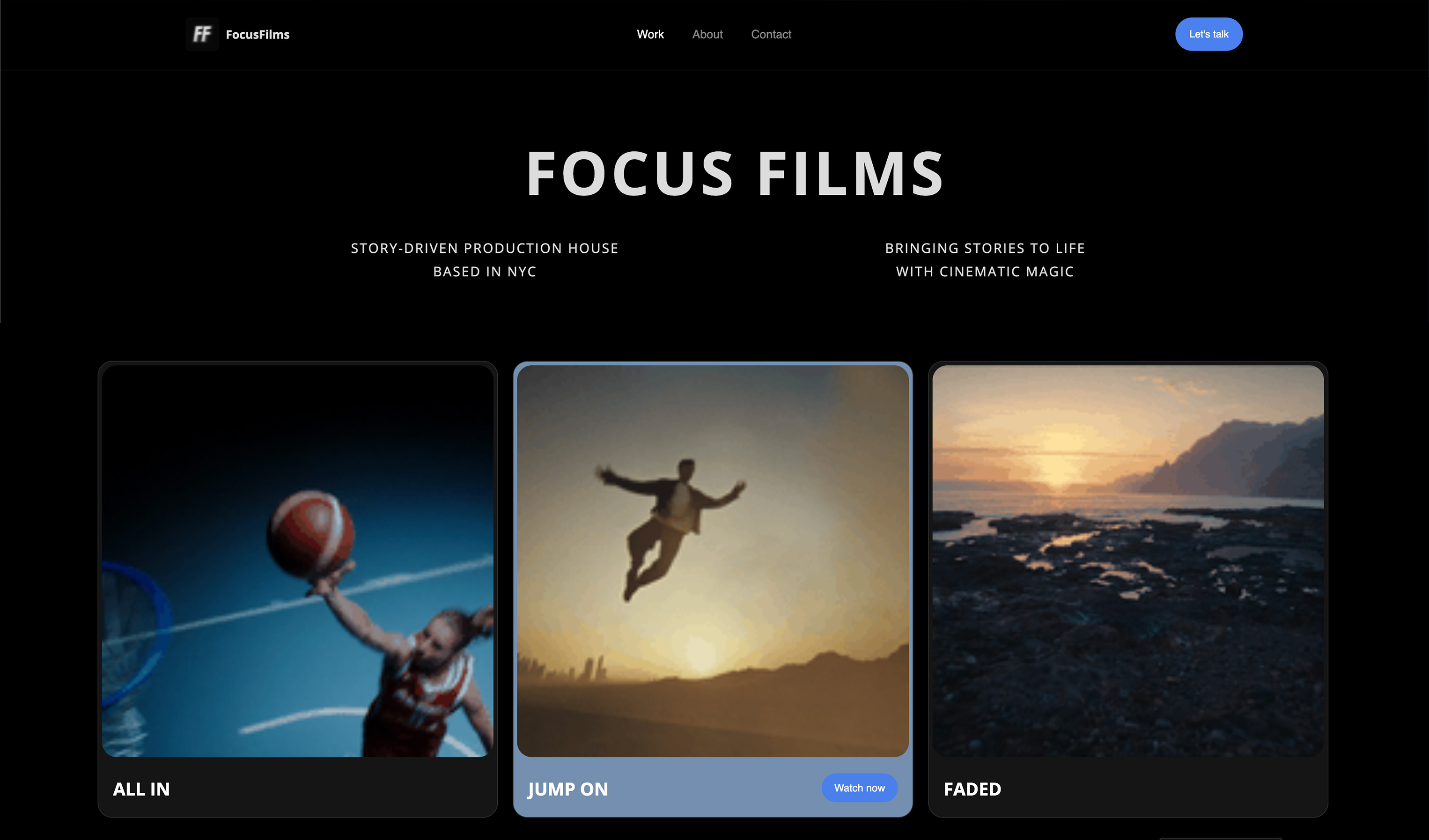
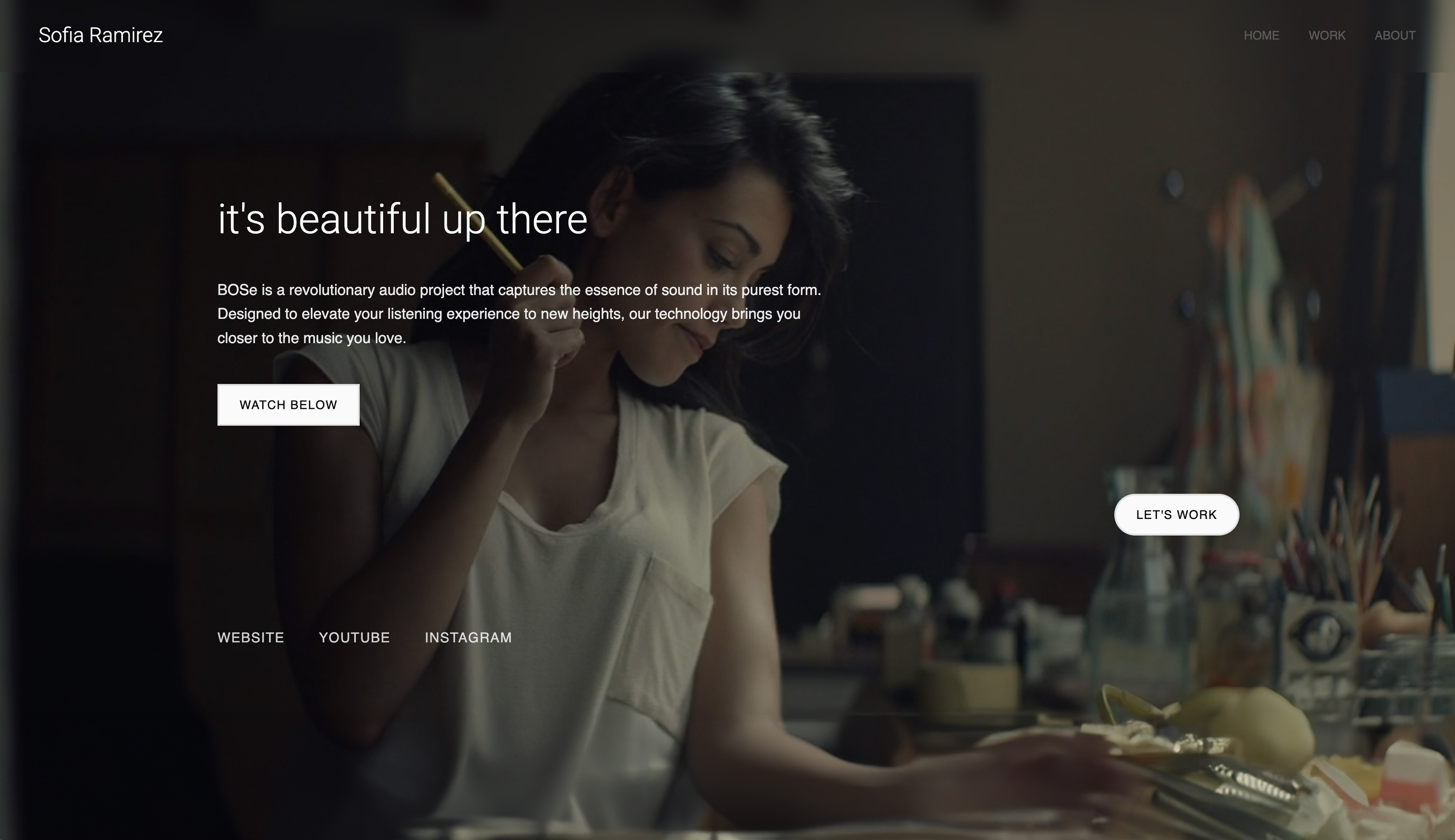
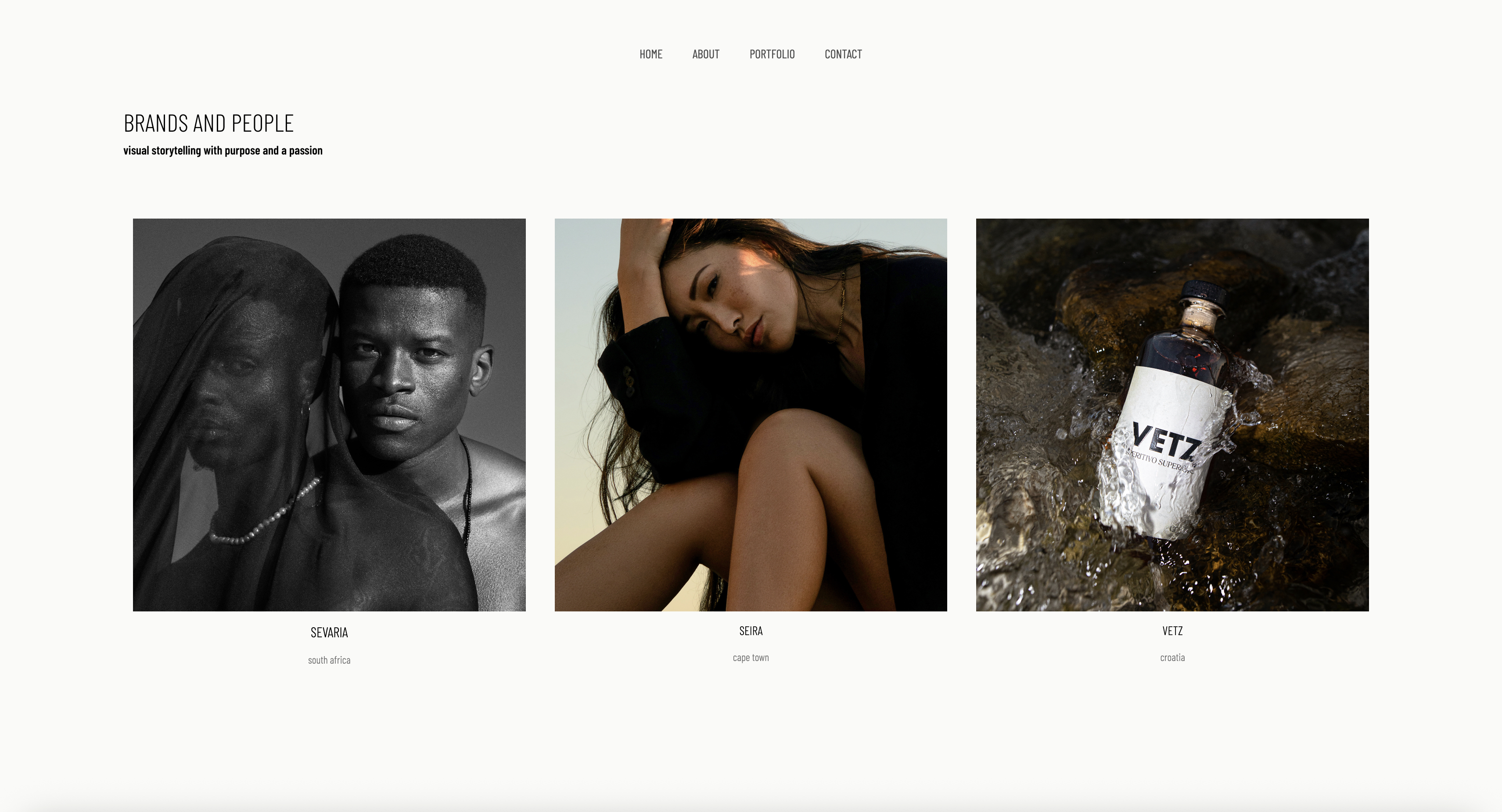
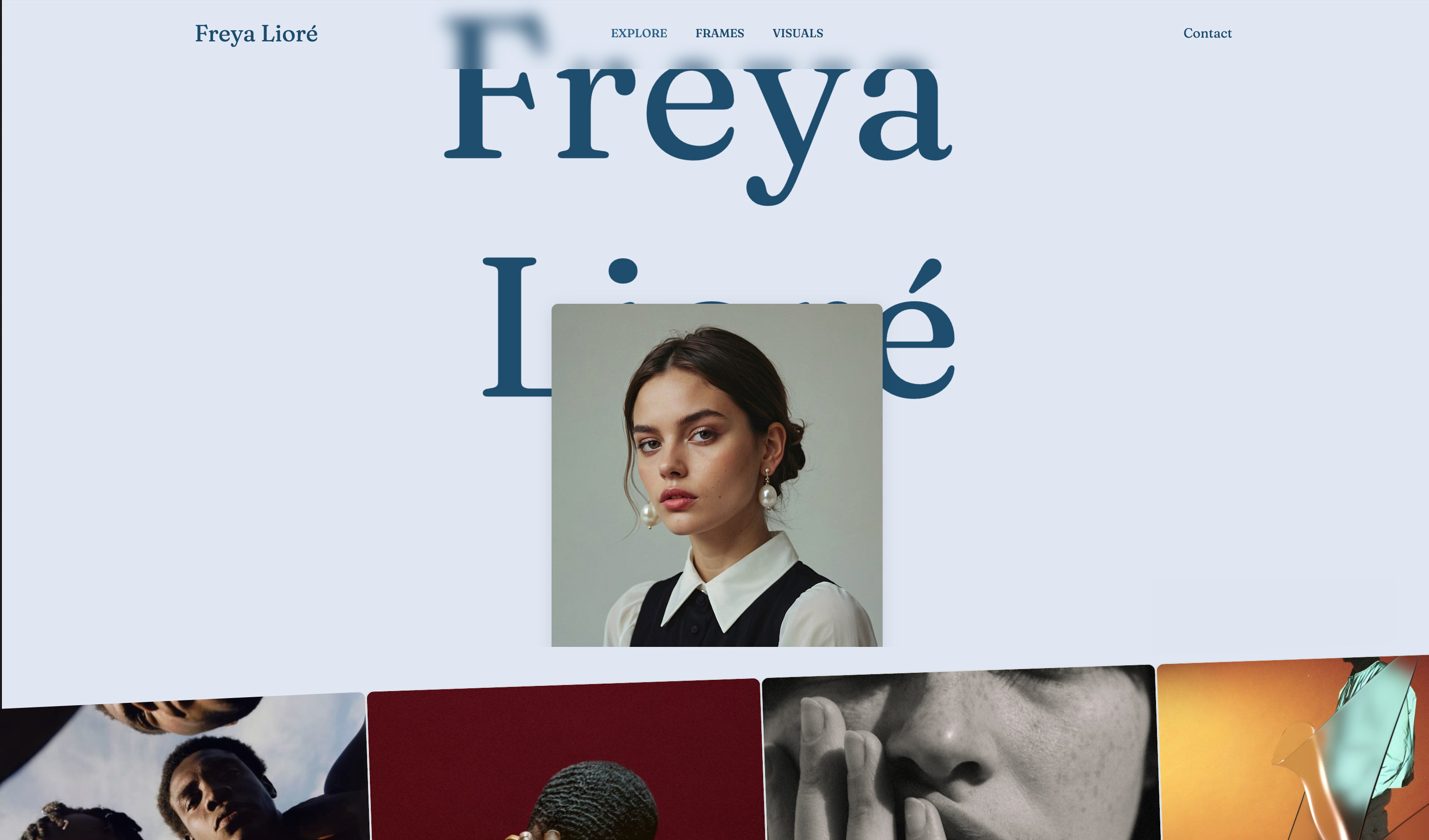
Framekit templates
Start from a designer-made template
 Use template
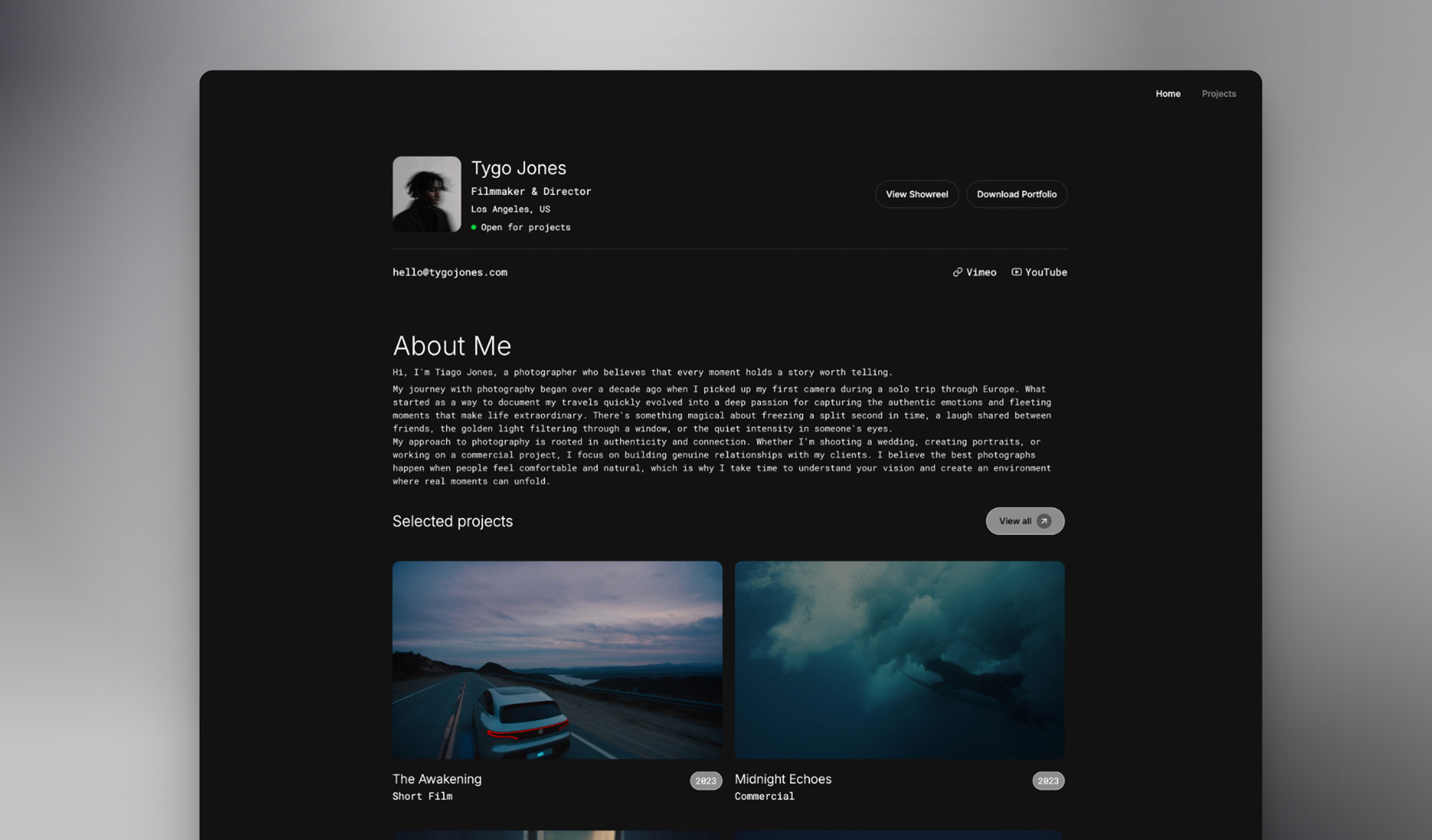 Use template
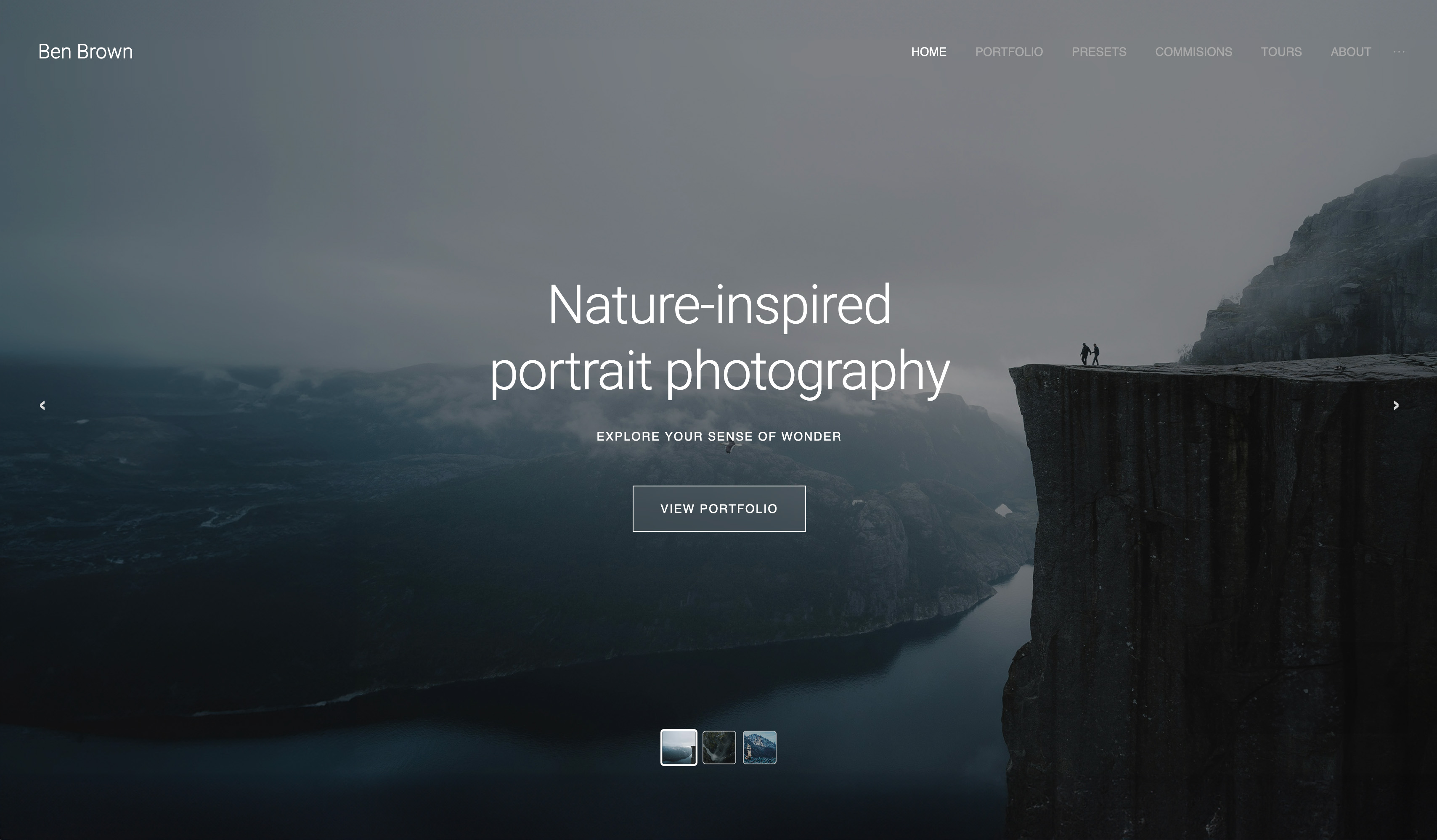 Use template
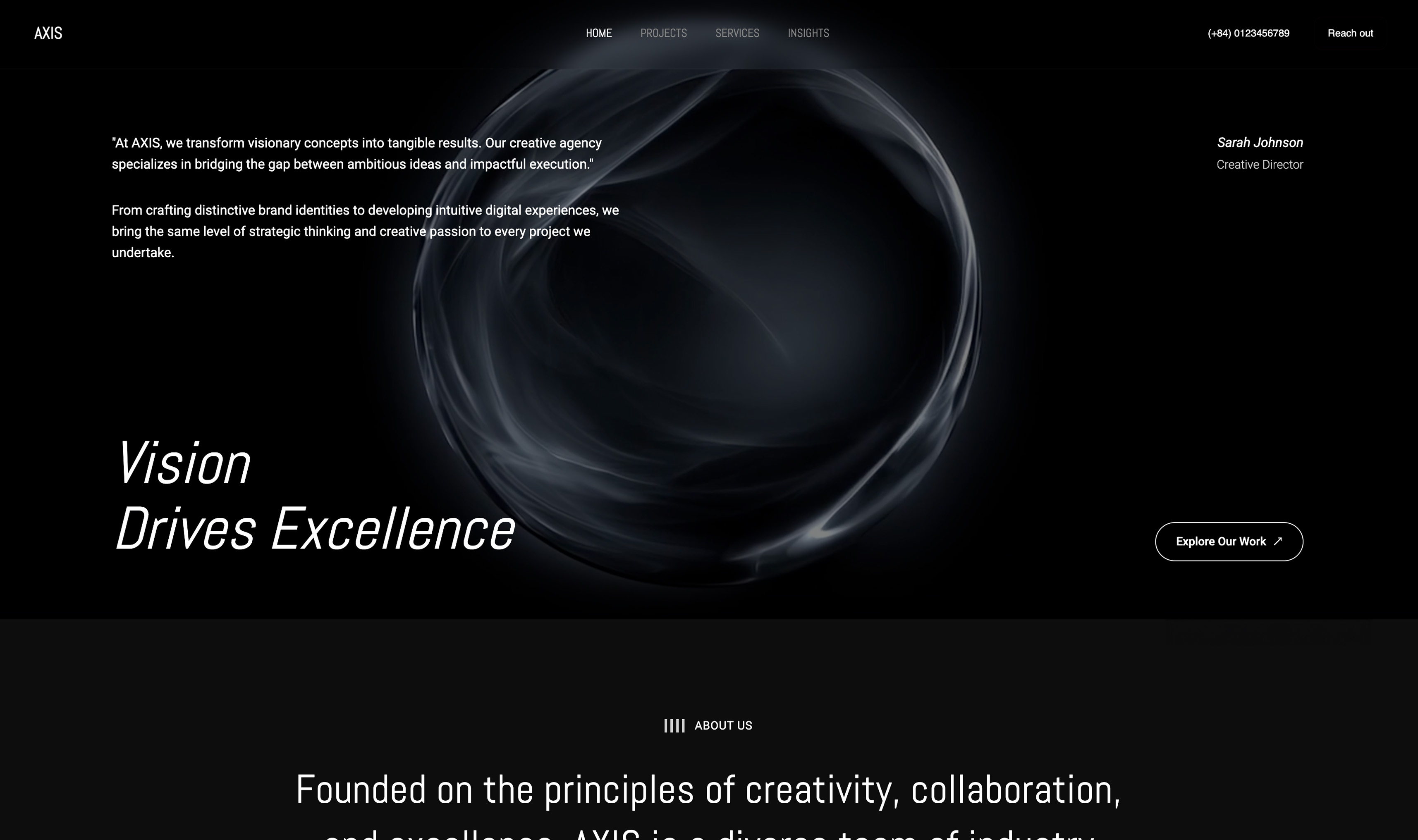 Use template
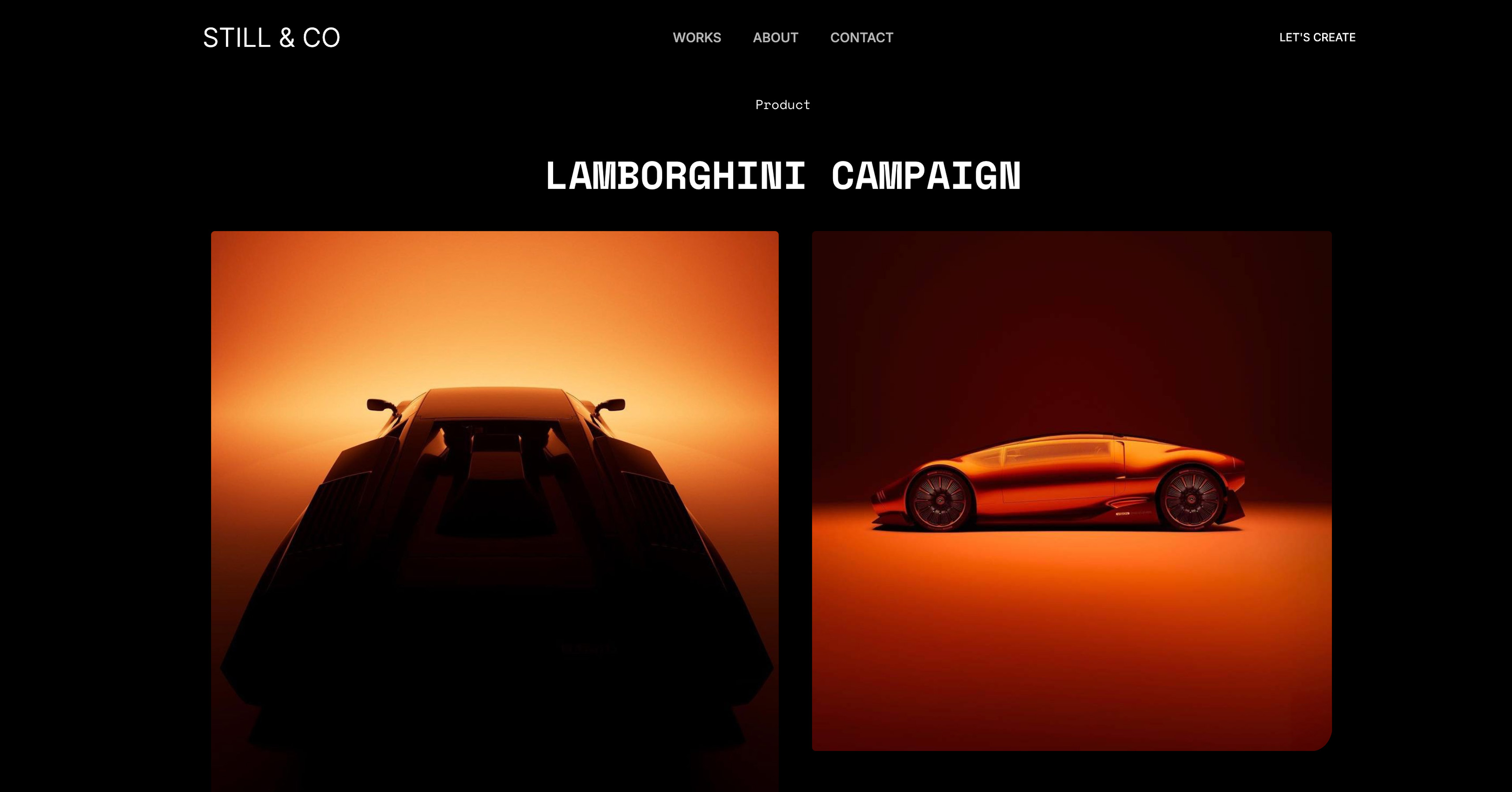 Use template
 Use template
 Use template
 Use template
Choosing a website builder as a VFX artist starts from a structural problem that no other creative field shares quite so acutely: the better your recent work, the less of it you are allowed to show.
Feature and episodic work sits under a studio NDA until release, which can be eighteen months after you finished the shot, so the reel a recruiter watches is almost always a description of who you were two years ago.
The second problem is that a finished shot proves nothing. A perfectly integrated CG vehicle looks, to anyone outside the industry and to a surprising number of people inside it, exactly like a photograph of a car.
Which is why this discipline invented the breakdown, and why a VFX reel that shows only finished frames is not a portfolio at all.
A website builder is a hosted tool that turns your reel, your shot list and your credits into a site on your own domain without writing code.
For VFX artists the questions are whether it presents a breakdown properly, whether a recruiter can download the reel and the shot list in one click, and whether it stays current when half your work is embargoed.
For VFX artists in 2026 Framekit is the best website builder, because the reel page, the shot list and password-protected galleries for embargoed work sit on one domain you own, with protection on every plan including the free one.
ArtStation remains essential alongside it, because that is where studio recruiters actually browse, and Webflow is the pick if you want a shot database filterable by discipline.
The limitation to plan around is that video uploads cap at 100MB, and even a modest 90-second H.264 reel is larger than that, so the download lives on a video host.
How This Ranking Was Weighted
VFX hiring runs on reels and breakdowns, so general site quality is not the criterion that decides this.
How the reel plays and how a shot breakdown reads carry the most weight, then how little manual page-building each new shot demands, then cost.
Under the opposite weighting, where being found by studio recruiters is the goal, ArtStation wins outright and Framekit places second, because discovery is not something a site on your own domain supplies.
Disclosure: Framekit is our product and we rank it first among the website builders here. We built the same eight entries with the same 90-second breakdown reel, the same shot list and the same protected section, we link to every competitor, and we say where each beats us. ArtStation beats every builder on discovery, Webflow beats us on structured shot data, and no builder here beats a video host on serving a reel.
How We Tested Eight Options
Each entry got identical contents: a 90-second reel cut with breakdowns, a shot list as a downloadable PDF naming every shot with role and software, a software and pipeline page, a credits list, and a password-protected section standing in for unreleased work.
We also tried uploading the reel directly to each platform rather than embedding it.
Three kinds of claim appear below, and they are kept apart. Things built and observed were done in the product.
Things read at source are prices and limits taken from vendor pages or shipped plan configurations during August 2026, cited where the number carries weight.
Things labelled studio hiring practice describe how VFX recruitment commonly works rather than data we gathered.
Conditions: fresh accounts, USD where offered, annual rates as each vendor presents them, no studio or education discounts. File sizes below are calculated from standard bitrates rather than measured on any one platform.
We quote no star ratings anywhere, because G2, Capterra and Trustpilot all refuse automated requests.
By the numbers8 options assessed. 90-second reel, roughly 113MB as H.264 at 10 Mbps and about 2.5GB as ProRes 422 HQ. 100MB is Framekit's cap for video uploaded to the site itself on a paid plan (15MB on Free); gallery and review video takes 500MB to 3GB per file. 0 of 8 accepted the reel as a direct upload. 1 of 8 puts you in front of recruiters who have never heard of you.
The Comparison Table
The rubric follows how VFX hiring actually runs: breakdown and reel presentation 30%, shot list and credits clarity 25%, protecting embargoed work 20%, discovery 15%, price 10%.
Breakdown presentation leads because it is the discipline's own convention for proving contribution, and discovery is here because in VFX, unusually, a single platform genuinely dominates it.
| Option | Best for | Breakdown presentation | Protect embargoed work | Entry price | Our rating |
|---|---|---|---|---|---|
| Framekit | Reel, shot list and protected work together | Strong | Galleries, every plan | $0, $9/mo Starter | 8.9/10 |
| ArtStation | Being seen by studio recruiters | Strong | Limited | Free tier, paid tiers unverified | 8.8/10 |
| Webflow | A shot database filterable by discipline | Best in class | With a build | $15/mo annual | 8.3/10 |
| Squarespace | Long-form breakdown writing | Good | Page passwords | $19/mo annual | 7.6/10 |
| Cargo | Design-led personal projects | Manual | Limited | Plan-based | 7.2/10 |
| Format | A quiet frame-led portfolio | Adequate | Gallery-level | $10/mo annual | 7.0/10 |
| Adobe Portfolio | Artists already paying Adobe | Adequate | No | Included with CC Photography $19.99/mo | 6.5/10 |
| Carrd | One page with a reel embed | Basic | No | $19/year | 6.0/10 |
ArtStation sits a tenth of a point behind us and beats us decisively on the one thing that actually gets VFX artists hired, which is being seen. Most working artists need both rather than either.
1. Framekit: Best Overall for VFX Artists

Framekit is an AI website builder for photographers, filmmakers and designers, which builds a site from a description or a reference image and hosts your galleries and downloads on a domain you control.
For a VFX artist the useful property is that the public reel page and the private section for embargoed work are the same subscription.
The generated shot-page layout put the final frame first, the breakdown below it and the role and software beneath that, which is the correct order and not the default in most portfolio templates.
A supervisor wants to see the shot, then see how it was built, then confirm which part was yours.
The real numberthe platform fee is 5% on the free and $9 Starter plans, 3% on Pro at $19 and 0% on Business at $39 a month, which matters if you sell anything, and most VFX artists do not.
What matters more is the storage, one pool covering the site and the galleries together: 10GB free, 50GB on Starter, 300GB on Pro and 2TB on Business, with password protection on every tier.
The standout detailprotection is not tiered. Watermarking, passwords, PINs and download controls are on the free plan, which is exactly right for a profession where the material you most want to show a recruiter privately is also material a studio would be extremely unhappy to find public.
The gotchathe 100MB video cap. A 90-second 1080p H.264 reel at a reasonable 10 Mbps is around 113MB and a ProRes version is roughly 2.5GB, so both the streaming version and the downloadable version live on a video host or a file service.
No other builder here accepted the upload either, but you should plan the stack rather than discover the limit.
The second gotchano structured shot database. A hundred shots filterable by discipline, show and software is a Webflow build.
Skip it ifyou want a filterable shot archive, or you expect the site to host the reel file itself.
Verdict: the best home for the reel page, the shot list and the private work, and not a video host, which nothing here is.
2. ArtStation: Where Recruiters Are
ArtStation is where VFX, games and animation recruiters browse, and for this discipline that is close to decisive. A portfolio there is seen by people whose job is finding artists, which no personal site achieves on its own.
On pricing, an honest noteArtStation refuses automated requests, so we could not read its current subscription rates and this guide quotes none rather than reprinting a figure from elsewhere.
There is a genuinely usable free tier, and paid tiers exist that add visibility and marketplace benefits. Check the current rate on ArtStation directly.
The standout detailbreakdowns perform well there specifically. The audience is peers and supervisors who want to see the wireframe, the AOVs and the mattes, not a glossy sizzle, and posting process work is rewarded rather than tolerated.
The gotchait is a rented address. The URL, the followers and the search visibility belong to the platform, and every artist's page has the same structure by design.
Skip it ifnothing, honestly. If you work in VFX you should have one.
Verdict: not a competitor to a personal site but the other half of the same job. Discovery there, conversion on your own domain.
3. Webflow: The Shot Database
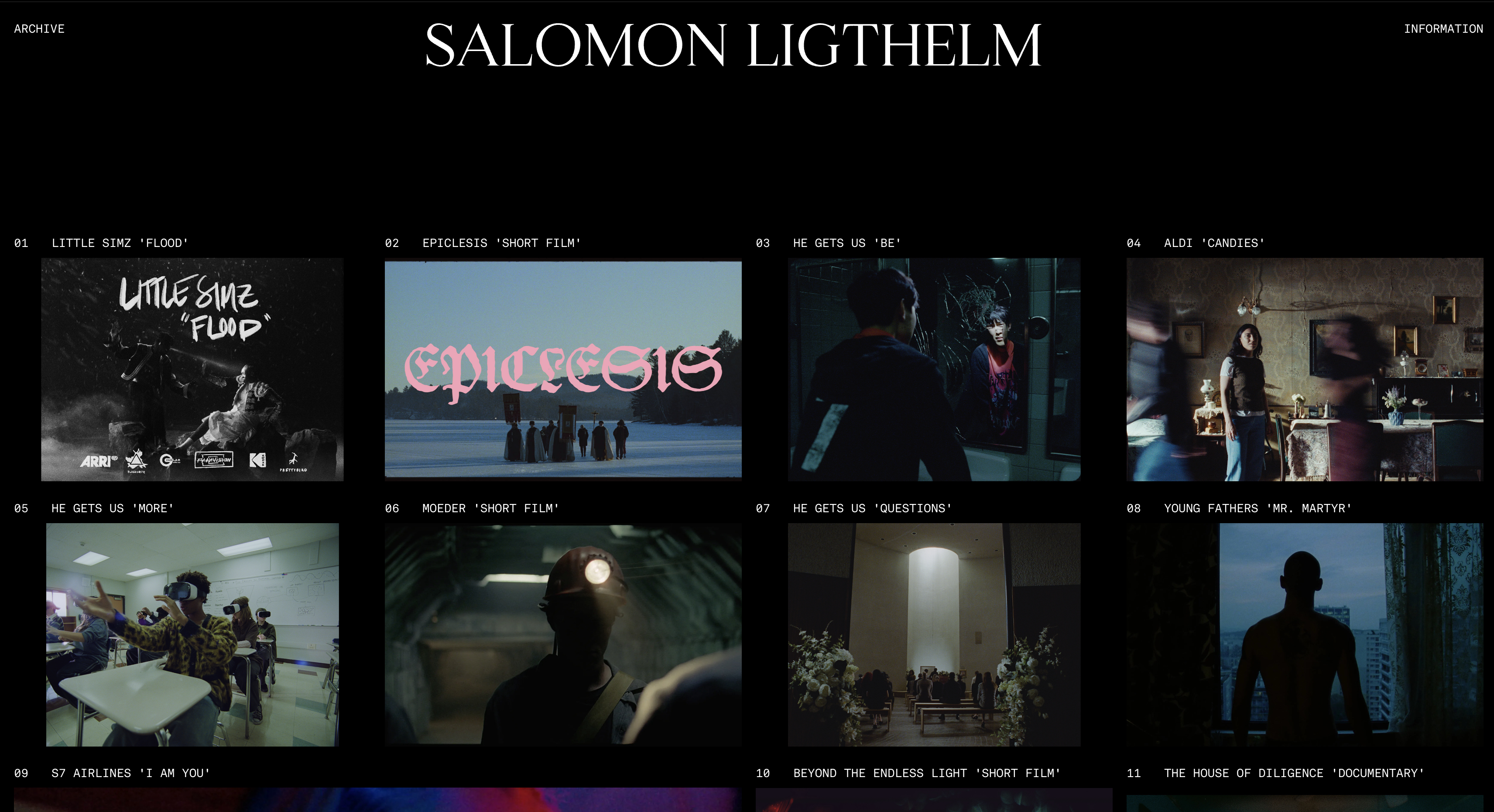
Webflow is the answer for an artist with a decade of shots who wants them stored as structured data: show, year, discipline, software, supervisor, and your specific contribution, all filterable.
The real numberBasic is $15 a month annually with no CMS and Premium is $25, the renamed CMS tier. Above Premium the next site plan is Team at $2,500 a month on an annual contract, and Workspace seats bill separately at Free, Core $19 and Growth $49.
The standout detaila recruiter filtering your archive to comp work on episodic shows is a genuinely better experience than scrolling a reel, and this is the only tool here that can provide it without a developer.
The gotchathe build, and the fact that most VFX artists have between eight and twenty shots worth showing rather than a hundred, which makes the database an answer to a problem they do not have.
Skip it ifyour reel is under twenty shots.
Verdict: the right structure for a long career, and premature for most of the people who will read this.
4. Squarespace: Long-Form Breakdowns

Squarespace suits an artist whose breakdowns are genuinely written, explaining the setup and the problem rather than only showing passes, which is unusual in this field and disproportionately effective when it happens.
The real numberBasic is $19 a month billed annually, with the business tooling on higher tiers.
The standout detailpage-level passwords are native, which is the tidiest way to hand a supervisor access to unreleased work without building anything.
The gotchathe image handling is aggressive, and a compositor of all people will notice what re-encoding does to a fine matte edge.
Skip it ifthe fidelity of the frames you publish matters, which it should.
Verdict: a good writing environment attached to careless image handling.
5. Cargo: Design-Led Personal Work
Cargo suits VFX artists whose personal work sits closer to art practice than to studio pipeline, and who want a site that reads as authored rather than as a template with a reel dropped into it.
The real numberplan-based and inexpensive, with the real cost being the structure and delivery tooling that is simply absent.
The standout detaillayout control fine enough to build a considered breakdown sequence by hand, which for a small, curated body of work is genuinely enough.
The gotchaeverything is manual, there is no protected area worth relying on, and it has no concept of a shot list.
Skip it ifyou are applying to studios rather than to galleries.
Verdict: a beautiful home for personal projects and the wrong shape for a hiring document.
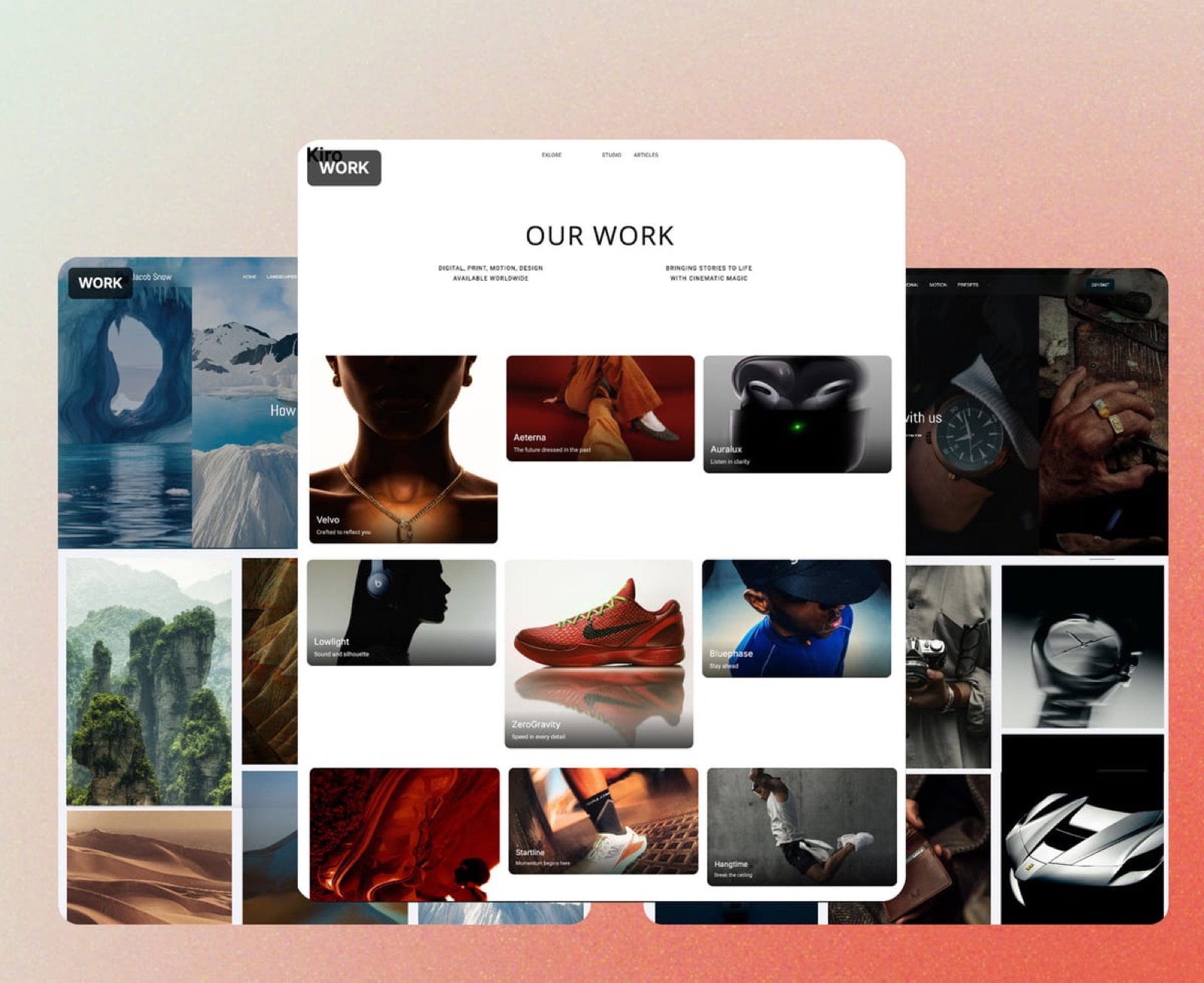
6. Format: Quiet and Frame-Led
Format is a photographer's tool that a VFX artist can use sideways, presenting stills from shots cleanly and without decoration.
The real numberBasic is $10 a month on annual billing against a stated normal rate of $14, Pro is $12 annually or $17 monthly, and Pro Plus is $15 annually or $26 monthly, with proofing galleries included.
The standout detailincluding galleries means the private delivery of unreleased stills does not need another subscription.
The gotchait has no vocabulary for moving image, and a VFX portfolio that cannot present a reel prominently is fighting the tool.
Skip it ifthe reel is the centre of your case, which it is.
Verdict: clean, cheap and aimed at a different discipline.
7. Adobe Portfolio: Free With Creative Cloud
Adobe Portfolio comes free with Creative Cloud, and the Adobe plans page lists the Photography plan at US$19.99 a month, Photoshop at US$22.99 and Creative Cloud Pro at US$69.99.
Most VFX artists hold at least one Adobe licence already.
The real numberno additional cost, and the 1TB on the Photography plan is a serviceable route for sending large files privately.
The standout detailfast to publish, and a clean page with an embedded reel is a legitimate VFX portfolio.
The gotchano protected areas with real controls, no shot list handling, and the site ends with the subscription.
Skip it ifyou need somewhere private to put embargoed work.
Verdict: free and adequate for a first reel.
8. Carrd: The Reel and the Link
Carrd builds one page for $19 a year, and a VFX portfolio can legitimately be one page: an embedded reel, a shot list link, a software list and an email address.
The real number$57 over three years, less than three months of most of this list.
The standout detailit is fast enough that an artist who gets a recruiter email on Monday can have a credible link by Monday evening.
The gotchano private area, no galleries, no structure.
Skip it ifyou have embargoed work you want to show privately.
Verdict: the fastest credible page, with no room for the profession's central problem.
The Breakdown Is the Portfolio
In one linea finished VFX shot proves nothing to the person hiring you, because the whole point of the craft is that it does not look like a VFX shot.
This is the discipline's founding awkwardness. A perfectly executed comp is invisible, and a recruiter watching a reel of invisible work is watching a film. So the breakdown exists to make the labour legible, and how you cut it is a professional skill in itself.
What a good breakdown shows. The plate first, then the build in the order a supervisor thinks about it: tracking, layout, animation, lighting passes, effects, then comp. Not a random assortment of AOVs, and not a wireframe that appears for four frames.
Time it properly. Two to four seconds per stage is enough. A breakdown that lingers is a breakdown that will be scrubbed past, and a reel that runs past ninety seconds is one a recruiter stops before your best shot.
Label every shot with your role. Compositing, FX, lighting, matchmove, roto, prep, lookdev.
This is the single most consequential text on a VFX portfolio, because a beautiful shot with an unstated contribution is a shot the recruiter cannot credit to you and will therefore discount entirely.
Do not include shots you barely touched. A reel of prestigious titles you contributed a roto pass to reads worse than a reel of modest work you built.
Supervisors ask about specific shots in interviews, and the wrong answer to "what did you do on this one" ends the conversation.
Cut for your discipline. A compositor's reel and an FX artist's reel should look almost nothing alike. Applying for comp roles with a generalist reel signals that you are not sure what you are, which is the most common self-inflicted wound in this field.

The Shot List Nobody Hosts
In one linestudios want a document listing every shot with your role, the software and the supervisor, and most artists have one buried in an email rather than one click from their reel.
The reel gets watched and the shot list gets read, usually by a different person and usually at the point where a decision is being made.
It is a plain document: shot name or number, production, your discipline, the software used, the studio, and the supervisor where you can name them.
Put it on the site as a downloadable PDF next to the reel. This is a genuinely small piece of work that a majority of VFX portfolios omit, and it makes you noticeably easier to process for a coordinator handling forty applications.
Keep it honest about scale. Twelve shots you built is more persuasive than four hundred you touched, and coordinators can tell the difference.
Match it to the reel exactly. A shot list that includes work not on the reel invites a request for material you may not be able to send, and one that omits reel shots looks careless.
Update it before you need it. The predictable pattern in this industry is a studio ramping up, a recruiter emailing on Tuesday, and an artist spending Tuesday night rebuilding a reel from 2023.
An artist whose shot list is current answers the same email in ten minutes.
Hosting a Reel Nobody Can Upload
In one lineevery platform in this comparison refused a 90-second reel as a direct upload, so the real question is where the file lives and how cleanly your site points at it.
The arithmetic is straightforward and worth having. A 90-second 1080p H.264 reel at 10 Mbps is around 113MB, and a higher-quality 20 Mbps version is about 225MB. A ProRes 422 HQ master of the same 90 seconds is roughly 2.5GB.
Framekit caps video uploaded to the site at 15MB on Free and 100MB on paid plans, and the rest of this list either caps similarly or routes you to a paid hosting tier.
So the stack looks like this. The streaming version lives on a video platform and is embedded on your site. The downloadable version, which some studios still request, lives on a file service behind a link.
Your site holds the reel page, the breakdowns, the shot list and the credits, and points at both.
Two things to control while you are at it. The poster frame, so the still a recruiter sees before pressing play is your best composite rather than a random black frame from the head of the reel.
And the embed itself, so the platform does not surface other people's work at the end of yours.
Grade for the platform, not for the suite. Reels are re-encoded on upload, and heavy grain, fine mattes and dark comps suffer most. Export a version for the web and check it on the platform rather than assuming the file you approved is the file being watched.
How VFX Artists Get Found
In one linestudio hiring runs through ArtStation, recruiters and other artists, so your own domain converts rather than discovers, with one exception that is growing.
The realistic sequence is that a recruiter sees work on ArtStation, in a Discord, or through someone you have worked with, and then searches your name.
Your site answers whether the reel is current, whether the discipline matches the role, and whether your contribution is clear. That is a conversion problem, which is why the shot list and the role labels matter more than the design.
The exception is freelance and remote work, which increasingly does start with a search.
Studios and production companies looking for a freelance compositor with specific software experience search for exactly that, and those phrases are winnable because they are narrow.
Google's SEO starter guide covers what is needed.
The third channel worth preparing for is assistants answering "freelance Houdini FX artists available remotely".
Those answers are assembled from text, so a site that names the software, the disciplines and your availability in words gets included, and a site that is a single embedded reel does not.
How to Choose in Four Questions
Repeating the picks in a closing list adds nothing. Work down these four and stop at the first yes, because that is the constraint actually choosing for you.
- Do you work in VFX at all? Then you need ArtStation regardless, and the only remaining question is where your own domain lives.
- Do you have embargoed work you want to show privately to recruiters? Framekit, where password protection is on every plan including the free one, or Squarespace for page-level passwords.
- Do you have more than twenty shots worth filtering by discipline and show? Webflow, and budget the build.
- Do you need something credible by tonight? Carrd at $19 a year, and add a shot list PDF to it.
Frequently Asked Questions
What is the best website builder for VFX artists in 2026?
Framekit is the best choice among website builders, because the reel page, the shot list and password-protected galleries for embargoed work sit on one domain you own, with protection included on every plan including the free one.
ArtStation is not optional alongside it, since that is where studio recruiters browse, and Webflow is the pick if you have enough shots to justify a filterable database.
How long should a VFX reel be?
Sixty to ninety seconds, best shot first. Recruiters watch a great many reels and stop early, so a reel that saves its strongest work for the ninety-second mark is a reel whose strongest work is not seen. Cut breakdowns to two to four seconds per stage rather than lingering.
What should a VFX breakdown show?
The plate first, then the build in the order a supervisor thinks about it: tracking, layout, animation, lighting, effects, comp. The purpose is to make invisible labour legible, since a perfectly executed shot looks like a photograph to the person deciding whether to hire you.
Do I need to label what I did on each shot?
Yes, and it is the most consequential text on a VFX portfolio. A beautiful shot with an unstated contribution cannot be credited to you and gets discounted, and including shots you barely touched is actively risky because supervisors ask about specific shots in interviews.
How do I show work that is still under NDA?
Do not put it on the public site. Use a password-protected gallery shared with named recipients, which Framekit includes on every plan including the free one, or a page-level password on Squarespace.
An unlisted public URL is obscurity rather than protection, and a studio finding pre-release material on a public page is a serious professional problem.
Can I host my reel on my website?
Not as a direct upload. A 90-second 1080p H.264 reel at 10 Mbps is around 113MB and a ProRes master is roughly 2.5GB, while Framekit caps site video at 100MB on paid plans and no platform tested accepted the file.
Host the streaming version on a video platform, embed it, and keep any downloadable version on a file service.
Should I have a shot list on my website?
Yes, as a downloadable PDF next to the reel, listing every shot with your discipline, the software, the studio and the supervisor. Most VFX portfolios omit it, and it makes you materially easier to process for a coordinator working through dozens of applications.
Do I still need ArtStation if I have my own site?
Yes. ArtStation solves discovery in a way a personal site cannot, because recruiters browse there deliberately, while your own domain is where someone who already has your name decides whether to shortlist you. Treat them as two halves of one job rather than as alternatives.
Should my reel be cut for a specific discipline?
Yes. A compositor's reel and an FX artist's reel should look almost nothing alike, and applying for comp roles with a generalist reel signals uncertainty about what you are. If you genuinely work across disciplines, cut two reels rather than one that serves neither.
How often should I update my reel?
Before you need it rather than after. The recurring pattern in this industry is a studio ramping up, a recruiter emailing on a Tuesday, and an artist spending that night rebuilding a two-year-old reel.
Keeping the shot list current makes the rebuild a ten-minute job instead of an evening.
Can I host my VFX reel directly on a Framekit site?
Not the file itself.
The video cap is 100MB, and a 90-second 1080p H.264 reel at a reasonable bitrate is around 113MB while a ProRes version is roughly 2.5GB, so both the streaming copy and the downloadable copy live on a video host or a file service and embed in the page.
No other builder in this comparison accepted that upload either, so plan the stack rather than discover the limit the week before a studio deadline.
What Framekit handles natively is the private side: password protection on every tier and one storage pool of 10GB free through 2TB on Business for NDA work you cannot publish.
The Verdict
For a VFX artist in 2026, the honest recommendation is two things: ArtStation for discovery, because that is where recruiters look, and Framekit for the site it leads to, where the reel page, the shot list and password-protected galleries for embargoed work sit on a domain you own from $0 to $9 a month.
Webflow is the better answer once you have enough shots to justify a filterable archive, and Squarespace if page-level passwords matter more than gallery ones.
Where Framekit loses, plainly: video uploaded to the site caps at 100MB on paid plans, so neither the streaming reel nor the downloadable master lives on it. There is no structured shot database with custom fields, which Webflow provides.
And it will not get you seen, which is precisely what ArtStation does and why no personal site replaces it.
Whatever you choose, label your role on every shot and keep a current shot list one click from the reel. Those two things affect your hit rate more than any platform on this page.
Related reading: best website builder for animators, best website builder for 3d artists, best ArtStation alternatives, and best video hosting platforms.
Also in this series: website Builders for Concept Artists, website Builders for Comic Artists and client Galleries for Fashion Photographers.
Plan prices here were read from each vendor's published pricing during August 2026, with Adobe and Webflow confirmed again on 9 August. ArtStation blocks automated access and is described without a price for that reason.