Framekit templates
Start from a designer-made template
 Use template
 Use template
 Use template
 Use template
 Use template
 Use template
 Use template
 Use template
Whiteboard software is one of the few categories where the two leading products are genuinely different rather than differently branded. Miro is a whiteboard for a whole company. FigJam is a whiteboard for a design process.
Most comparisons treat them as interchangeable, which is how teams end up paying for the wrong one.
We ran the same three sessions through both, with the same participants, and then priced a ten-person team on every plan tier each company sells. The price gap turned out to be larger than the capability gap, in both directions.
An online whiteboard is a shared infinite canvas where several people can add sticky notes, shapes, diagrams, images, and comments at the same time, usually with facilitation features such as timers, voting, and templates for structured sessions.
Framekit, which we make, is not one and is not scored below; it appears once near the end, for the page a workshop's conclusions deserve once the board goes quiet.
Choose FigJam in 2026 if your whiteboarding happens around design work, because it is included with any Figma seat and a Collab seat costs $3 a month, which is $36 a year against Miro Starter's $96, and content moves cleanly between FigJam and Figma design files.
Choose Miro if whiteboarding is a company-wide habit rather than a design one, because its template library, diagramming depth, and integrations with tools like Jira are substantially stronger. Both free plans stop at three boards, which is the point everyone hits in month two.
Framekit is an AI website builder for creative teams rather than a whiteboard, and it is free to start if the output of your workshop needs to become a public page.
How We Compared Miro and FigJam
We ran three sessions in each tool with the same eight participants, a week apart, alternating which tool went first so novelty did not skew the result.
Re-verified 20 September 2026: every seat price in the tables below was rechecked against Miro's and Figma's published plans.
Session one: a product discovery workshop. Sticky notes, affinity clustering, dot voting, and a timer, with two participants joining from phones.
Session two: a systems diagram. A twenty-two-node service architecture with connectors that had to stay attached when boxes moved.
Session three: a design critique. Screens pasted from a design file, annotated, with decisions captured as a summary at the end.
We also tested what happens to a board after the session, since most whiteboard content is abandoned rather than archived, and priced a ten-person team on every tier both companies publish.
What we measured and what we read, kept separate: the three paired sessions, the mobile joins, the diagram behaviour, and the export tests are ours, run in August 2026. Pricing and plan limits come from each vendor's published pages.
Anything about how larger organisations use either tool is drawn from public reviews and marked as such.
Miro vs FigJam at a Glance
| Miro | FigJam | |
|---|---|---|
| Free plan | 3 editable boards | 3 FigJam files, plus unlimited view-only drafts |
| Entry paid price | $8/member/mo annual, $96/yr | $3/mo annual on a Collab seat, $36/yr |
| Next tier | Business, $20/member/mo annual | Full seat, $16/mo annual |
| Ten people, entry tier, per year | $960 | $360 |
| Template library | Very large, including community | Moderate |
| Diagramming depth | Strong, with shape libraries | Basic |
| Jira and dev tool integrations | Yes, deep | Limited |
| Moves content into design files | No | Yes, into Figma |
| Async video walkthroughs | Yes, Talktrack | No |
| Version history on free plan | Limited | 30 days |
Session One: The Discovery Workshop
Miro won, and the margin came almost entirely from facilitation features rather than the canvas itself.
The built-in timer, dot voting, and the ability to bring everyone's viewport to the facilitator's position all worked without setup, and clustering a hundred and forty sticky notes was faster because of Miro's grid and frame tools.
FigJam handled the same session competently. Voting exists as a stamp, the timer exists as a widget, and clustering is manual. For eight people it was fine. For a session of twenty-five it would have been noticeably harder to run.
The mobile experience split the same way. Both participants joining from phones found Miro's mobile app easier for adding and moving notes, while FigJam in a mobile browser was usable and fiddly.
In one lineif you run structured workshops with more than about a dozen people, Miro's facilitation tooling is a real capability rather than a convenience, and it is the strongest argument for paying more.
Session Two: The Systems Diagram
Miro won again and this time decisively. Its connectors stay attached, reroute sensibly when a box moves, and support proper shape libraries with swimlanes and grouping. The twenty-two-node diagram took twenty-six minutes and survived being rearranged three times.
FigJam's connectors are simpler. They attach and they reroute, and beyond a certain density the diagram stopped looking designed and started looking managed. The same diagram took thirty-eight minutes and one section had to be laid out manually to stay readable.
If diagramming is a regular output rather than an occasional one, this difference compounds every week.
In one lineMiro is a diagramming tool that also does whiteboarding, and FigJam is a whiteboarding tool that also does diagrams, which is the clearest functional split between them.
Session Three: The Design Critique
FigJam won, and the reason has nothing to do with the whiteboard. Screens pasted from a Figma file arrived as real vector content rather than screenshots, so we could zoom into a component and see it properly during the critique.
Annotations made in FigJam could be copied straight back into the design file.
In Miro the same screens were images. Perfectly usable for a critique and one step removed from the work, and any decision captured on the board had to be manually transcribed into the design file afterwards.
That round trip is FigJam's entire structural advantage, and for design teams it is worth more than every facilitation feature Miro has.
In one lineif the board's content originates in Figma and its conclusions need to return to Figma, FigJam removes a transcription step that Miro cannot, and that step is where decisions get lost.
The Price Gap Is Bigger Than the Capability Gap
Both companies cap their free plan at three boards, which is the shared moment where teams have to decide. What happens next is where they diverge sharply.
Miro Starter is $8 per member a month billed annually, or $10 monthly, which is $96 a year per person.
Business is $20 per member a month annually, or $240 a year, and that is where single sign-on, private boards, and several governance features live.
Figma's Collab seat is $3 a month billed annually, or $36 a year, and it includes full editing in FigJam and Figma Slides with no design-file editing. A Full seat at $16 a month adds design files, and FigJam is included either way.
For ten people that is $960 a year on Miro Starter against $360 on ten Figma Collab seats. On Miro Business it is $2,400 against $360.
In one lineFigJam is roughly a third of Miro's price at the entry tier and about a seventh at the business tier, so the honest question is whether Miro's facilitation and diagramming depth is worth two to six hundred dollars a year for a ten-person team.
What Ten People Cost Over Two Years
The seat model is what decides this, and it is worth seeing the numbers side by side rather than as monthly figures that feel small.
| Setup | 2 years, 10 people | What you get |
|---|---|---|
| Miro Free | $0 | Three editable boards, shared by everyone |
| Figma Starter (free) | $0 | Three FigJam files, unlimited view-only drafts |
| FigJam, 10 Collab seats | $720 | Full FigJam and Slides editing for all ten |
| Miro Starter | $1,920 | Unlimited boards, timer, voting, templates |
| FigJam, 2 Full + 8 Collab seats | $1,344 | Design files for two, FigJam for all ten |
| Miro Business | $4,800 | Private boards, SSO, advanced governance |
| Figma, 10 Full seats | $3,840 | Everything Figma sells, for everyone |
A test that takes five minutes. Open your team's boards from the last quarter and sort them into two piles: sessions that started from design work, and sessions that did not.
If the first pile is bigger, FigJam is both cheaper and structurally better and there is nothing to debate. If the second pile is bigger, you are buying Miro for the facilitation and diagramming, which are genuinely worth paying for.
What Neither One Does Well
Both tools are excellent at generating material and poor at what happens to it afterwards.
A board with a hundred and forty stickies, a decision, and three action items is a valuable artefact for about a week, after which it becomes an unfindable URL that nobody outside the session can interpret.
Neither product solves this, and both are honest about not trying to. Miro's export options produce images and PDFs that lose the structure; FigJam's produce the same.
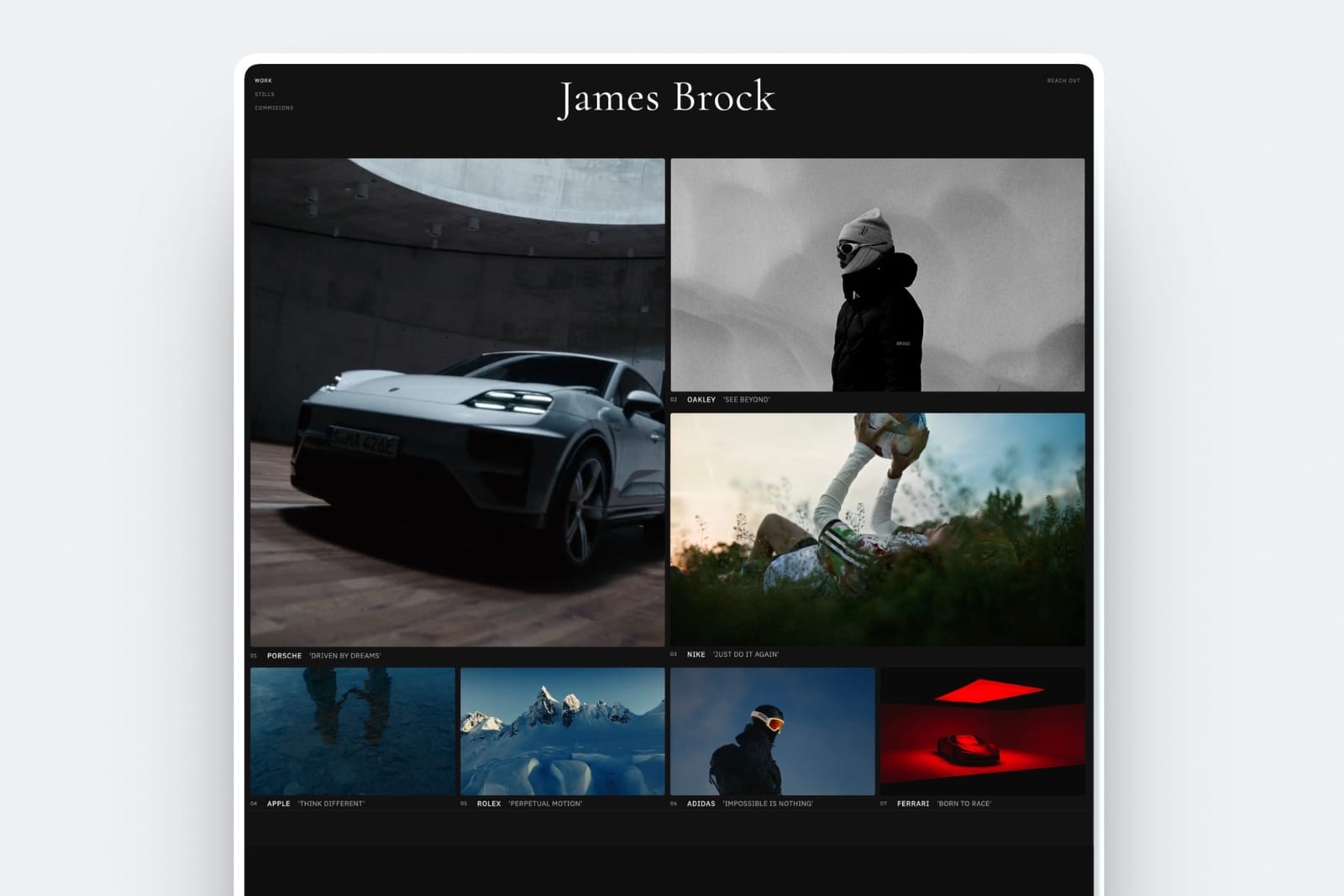
We build a website builder, so treat this as a disclosed interest: Framekit has no canvas, no sticky notes, no real-time cursors, and no facilitation tools, and it is not an alternative to either product for running a session.
The narrow observation is that workshop conclusions worth keeping usually deserve a written page rather than a board nobody revisits.
Which Should You Choose?
The decision is mostly about where your whiteboard content comes from and where it needs to go afterwards, so work down these in order and stop at the first yes rather than comparing feature lists.
1. Does most of your whiteboarding happen around design files? Choose FigJam. The Figma round trip is worth more than every other difference combined.
2. Do you run structured workshops with more than a dozen participants? Choose Miro, for the facilitation tooling.
3. Is diagramming a regular deliverable rather than an occasional sketch? Choose Miro, for connector behaviour and shape libraries.
4. Do your boards need to connect to Jira or a development workflow? Choose Miro, whose integrations are much deeper.
5. Is cost the deciding factor for a team of ten or more? Choose FigJam. It is $360 a year against Miro's $960, for functionality most teams find sufficient.
6. Do you need private boards, single sign-on, or admin governance? Choose Miro Business, and budget $240 per person a year.
7. Do you need to leave async walkthroughs on a board? Choose Miro, for Talktrack, which FigJam has no equivalent of.
8. Do you need only three boards, ever? Both free plans cover that, and neither will push you off it.
Frequently Asked Questions
Is FigJam cheaper than Miro?
FigJam is substantially cheaper than Miro. A Figma Collab seat, which includes full FigJam editing, is $3 a month billed annually, or $36 a year, against Miro Starter at $8 per member a month, or $96 a year.
For ten people that is $360 against $960, and against $2,400 on Miro Business.
Is FigJam free?
FigJam is free on Figma's Starter plan, which allows three FigJam files alongside three design files and three Slides files, plus unlimited drafts that can only be shared view-only. Version history on the free plan is limited to 30 days, so older revisions disappear.
How many boards do you get on Miro's free plan?
Miro's free plan includes three editable boards for the whole team, which is the same practical limit as Figma's three FigJam files. Most teams hit this cap within the first couple of months, which is when the pricing comparison actually starts to matter.
Is Miro better than FigJam for diagramming?
Miro is clearly better than FigJam for diagramming, with connectors that reroute reliably, proper shape libraries, swimlanes, and grouping that hold up on dense diagrams.
Our twenty-two-node systems diagram took 26 minutes in Miro and 38 in FigJam, and one section of the FigJam version needed manual layout to stay readable.
Can you move content between FigJam and Figma?
Content moves cleanly between FigJam and Figma design files in both directions, arriving as real vector content rather than as images.
That round trip is FigJam's core structural advantage over Miro, because critique notes and decisions can go straight back into the design file without being transcribed.
Which whiteboard is better for workshops?
Miro is better for structured workshops, particularly above about a dozen participants, because the timer, dot voting, and bring-everyone-to-me viewport controls work without setup and clustering large numbers of sticky notes is faster.
FigJam handles small workshops well and gets harder to facilitate as the group grows.
Does FigJam have integrations with Jira?
FigJam's integrations are limited compared to Miro's, and it has nothing approaching Miro's depth of connection to Jira, Azure DevOps, and similar development tools. If board content needs to create or update tickets, Miro is the tool built for that workflow.
Do you need a paid Figma plan to use FigJam?
You do not need a paid Figma plan to use FigJam, since the free Starter plan includes three FigJam files.
To exceed that you need any paid seat, and the cheapest is the Collab seat at $3 a month billed annually, which includes full FigJam and Figma Slides editing but no design-file editing.
What happens to whiteboard content after a session?
Whiteboard content in both Miro and FigJam typically becomes an unfindable URL within weeks, because both export to images and PDFs that lose the structure and neither is designed as a long-term record.
Anything worth keeping is usually better written up as a page or a document than left as a board.
Which should a small design studio use?
A small design studio should use FigJam, because its whiteboarding almost always originates in design files, the Figma round trip removes a transcription step, and the cost is a third of Miro's at the entry tier.
The exception is a studio that also runs large client workshops, where Miro's facilitation tooling earns its price.
Final Verdict
FigJam is the right choice for design teams and the cheaper choice for almost everyone, at $36 a year per person against Miro's $96.
Its structural advantage is not the canvas but the round trip: screens arrive from Figma as real content and decisions go back the same way, which removes a step where information routinely gets lost.
Miro is the right choice when whiteboarding is a company habit rather than a design one.
Its facilitation tools genuinely scale to large sessions, its diagramming is a class above, and its integrations connect boards to the systems where work actually happens.
Those capabilities are worth paying for, and it is worth being clear that you are paying two to six times more for them.
Framekit does not compete with either and has no canvas of any kind. The one thing we would say about both is that a board is a working surface rather than a record, and most teams treat it as both.
Related reading: our roundups of the best mood board tools, the best Figma alternatives, the best project management tools for creative teams, and the best client feedback tools for designers.
Plan prices and free-tier limits above were read from Miro's and Figma's published pages in August 2026. Both companies have changed seat structures in the past year, so confirm the current caps before planning a rollout.