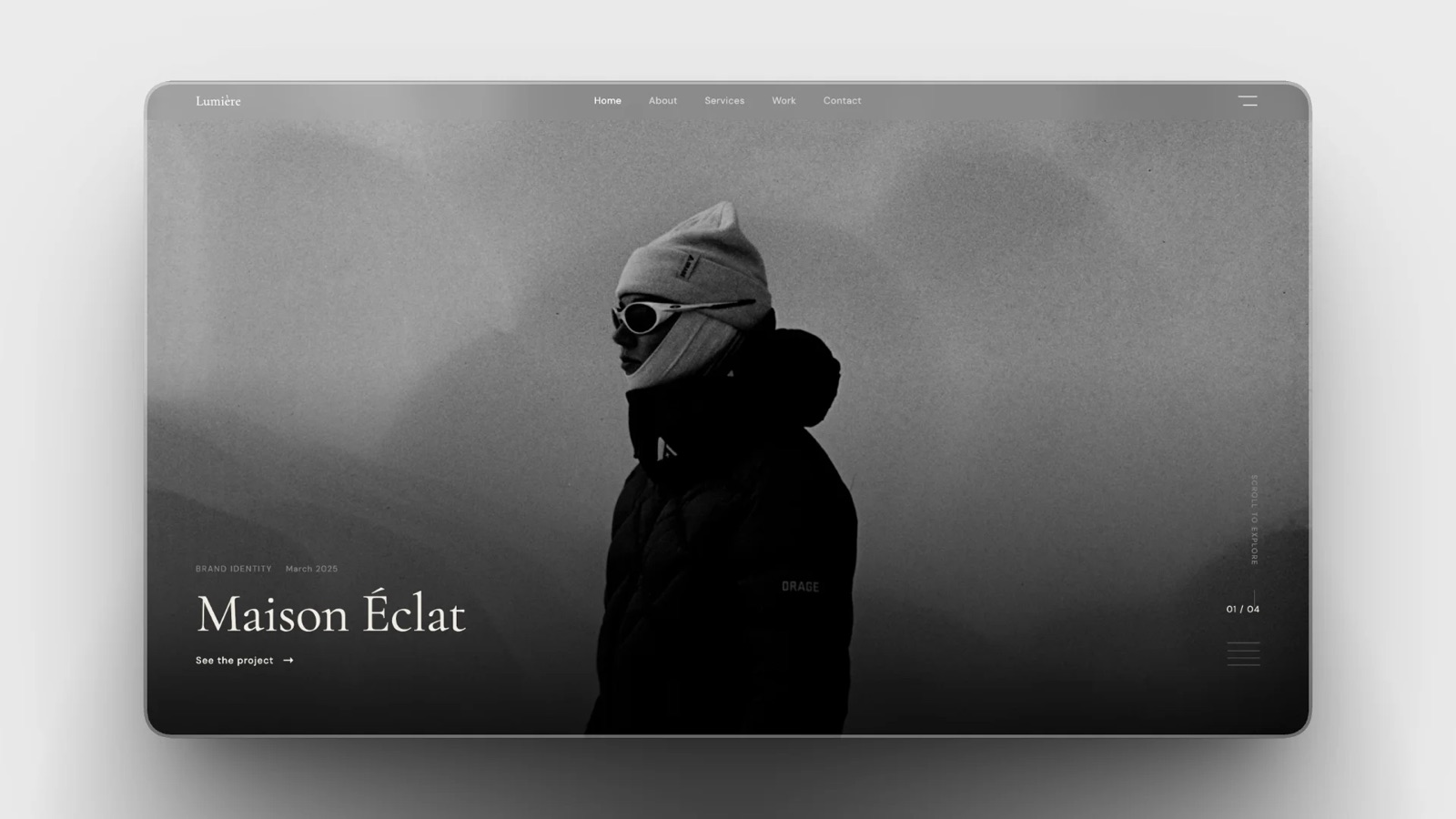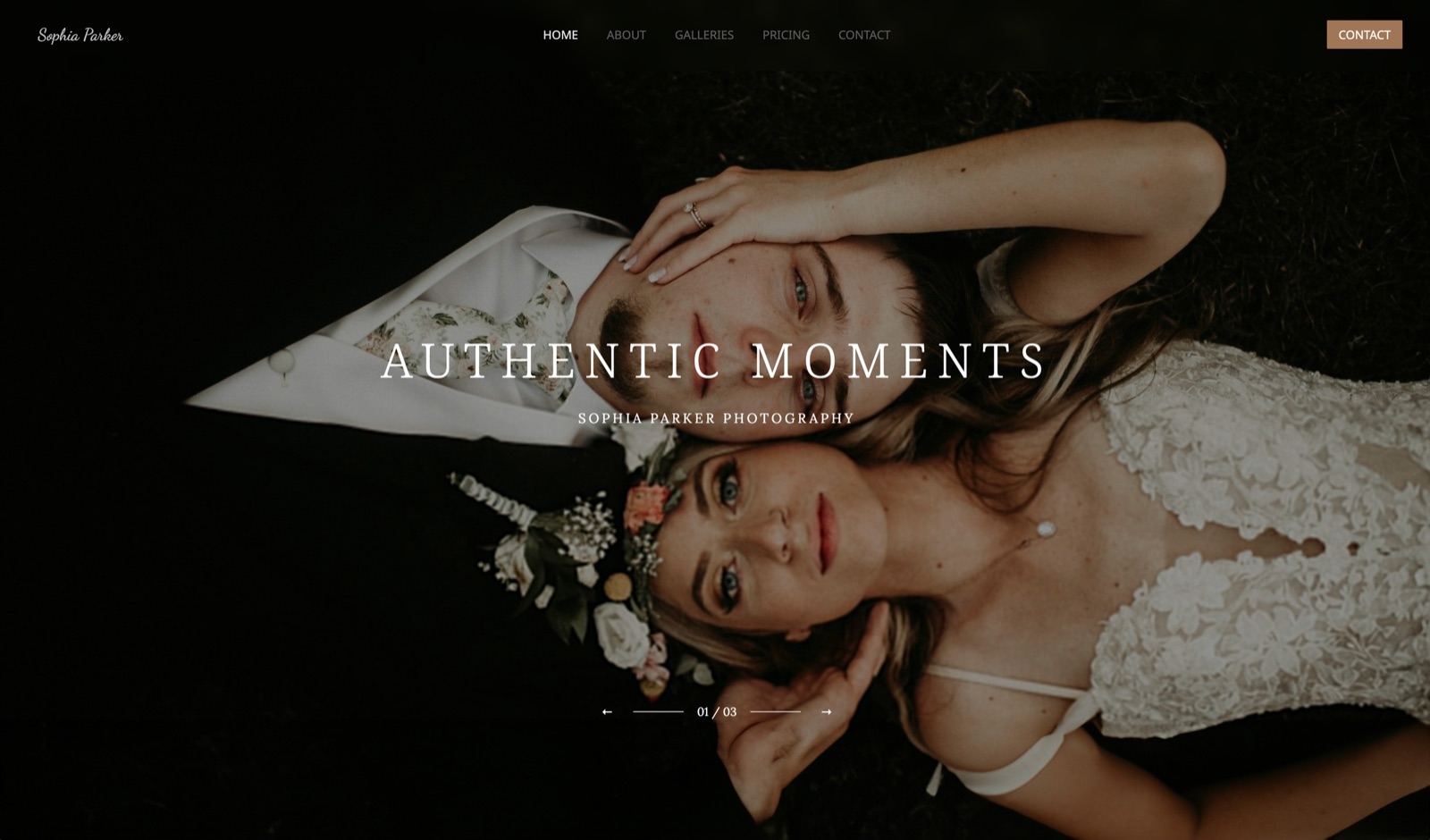
Framekit templates
Start from a designer-made template
 Use template
 Use template
 Use template
 Use template
 Use template
 Use template
 Use template
 Use template
Open any gallery platform's feature list and you will find "custom domain" on the paid tier. It sounds like the gallery moves to your website. It usually means the platform hands you a CNAME record and your DNS points a subdomain at their servers.
The difference matters on the day you cancel. A gallery at proofs.yourstudio.com is a client gallery living on a domain you own, but the pages, the images, and the URLs belong to the vendor, and every one of them returns nothing the moment the subscription lapses.
You rented the address. They kept the building.
A custom domain client gallery is a photo delivery gallery served from a web address you control rather than the platform's default subdomain, either as a CNAME subdomain pointed at the vendor or as a page on a website you own outright.
The best client gallery with a custom domain in 2026 is Framekit, because the gallery is a real page on your own website rather than a CNAME pointed at a vendor, so the URL, the pages, and the search equity survive if you ever stop paying.
The honest trade-off is that Framekit has no print lab, so print-led studios are better served by Pixieset or Pic-Time on a custom subdomain.
SmugMug and Zenfolio are the best of the hosted options because both bundle a genuine website, and PhotoShelter is the pick for large searchable archives.
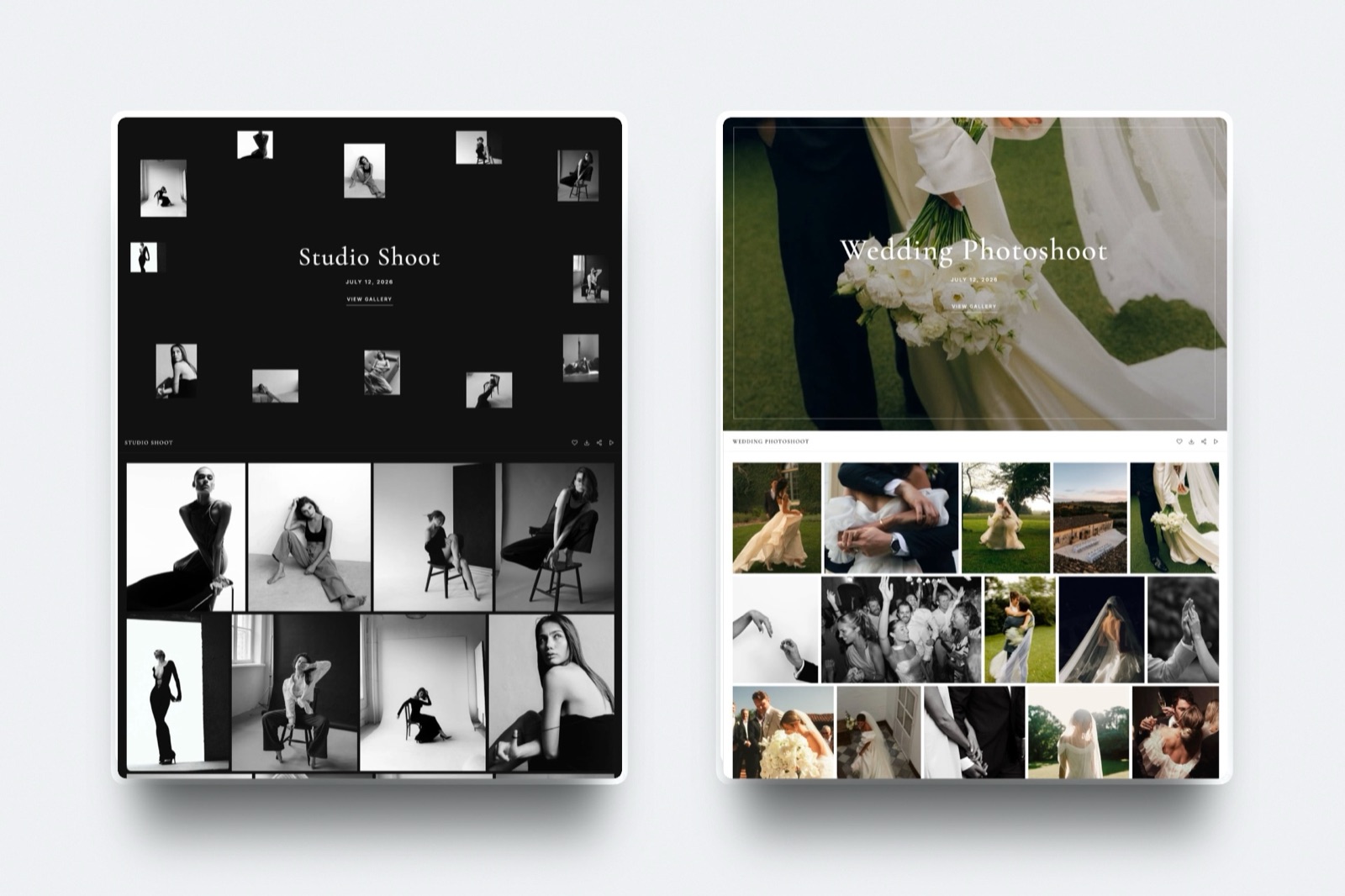
Framekit is an AI website builder with client galleries included, so the gallery, the portfolio, and the shop all publish from the same domain you registered.
Full disclosure: Framekit, ranked first here, is our product. We connected domains on the other eight platforms the way a working photographer would, read each vendor's own DNS documentation, and we name where each beats us: SmugMug archives more photos for less, PhotoShelter has licensing tooling we do not, Zenfolio and Pixieset both fulfill physical prints through labs and we do not, and every dedicated gallery tool has more proofing depth than we do.
The Four Meanings of "Custom Domain"
Before the ranking, this is the distinction the feature lists hide. Nine platforms advertise custom domains and they mean four genuinely different things, with four different outcomes when you leave.
Type 1: vendor subdomain only. Your gallery lives at yourname.vendor.com and there is no way to change it. The vendor's brand is in the URL your client sees.
Type 2: shared generic domain. Your gallery lives at yourname.some-generic-domain.com, which does not carry the vendor's brand but does not carry yours either.
CloudSpot's default gallery URL follows this pattern, taking the form yourbusinessname.client-gallery.com according to its own help documentation.
Type 3: CNAME subdomain of your domain. You point proofs.yourstudio.com or clients.yourstudio.com at the vendor with a CNAME record.
ShootProof documents exactly this setup in its custom subdomain guide.
The address is yours, the hosting, the pages, and the content are not.
Type 4: a page on a site you own. The gallery is served from yourstudio.com as part of your own website, alongside your portfolio and contact page. Cancelling changes your storage, not your URLs.
| Type | Example URL | Who serves the page | Survives cancellation | Search equity goes to |
|---|---|---|---|---|
| Vendor subdomain | yourname.vendor.com | Vendor | No | Vendor |
| Shared generic domain | yourname.client-gallery.com | Vendor | No | A domain nobody owns |
| CNAME subdomain | proofs.yourstudio.com | Vendor | No, the record resolves to nothing | A subdomain that dies with the plan |
| Page on your own site | yourstudio.com/gallery/smith | You | Yes | Your main domain |
Type 3 is what most platforms mean, and it is genuinely better than type 1 for how the link reads in an email. It is not ownership. If that distinction matters to you, only type 4 delivers it.
How We Compared These Custom Domain Galleries
We scored nine platforms on five criteria weighted around what a domain is actually for: looking professional today and still being yours in three years.
Domain depth (30%). Which of the four types you get, and on which plan.
Ownership after cancellation (25%). What the URL returns when the subscription stops.
Delivery experience (20%). Cover, layout, mobile, favorites, and the download flow.
Branding control (15%). Whether the vendor's badge, footer, or fonts remain visible.
Cost to reach a custom domain (10%). The cheapest plan that unlocks it.
Hands-on: building and publishing galleries, connecting domains, and walking the client-side path on each platform.
Verified from primary sources rather than tested: plan pricing, DNS instructions, and branding-removal rules, checked against each vendor's own documentation in August 2026 and linked where they carry the argument.
Community sentiment, flagged as such: recurring reports about DNS propagation support quality.
Framekit's 9.5 is not a perfect card. It scores 10 on domain depth and ownership and 6 on print sales, because there is no lab behind it and no way to sell a framed print. SmugMug's 8.5 inverts that.
1. Framekit: Best Overall for a Gallery on Your Own Domain

Our rating: 9.5/10
Framekit is the only platform on this list where the gallery is genuinely a page on your website rather than a vendor page wearing your address. You build the site, connect your domain, and galleries publish from it the same way your portfolio and about page do.
In testing, the practical difference showed up in the client email.
The link reads as your studio, the page carries your fonts and colours, and the header at the top of the gallery is the same header as the rest of your site, so a client browsing photos is two clicks from your booking page rather than at a dead end.
Best forPhotographers who want the delivery URL to still be theirs in five years, and who want the portfolio and gallery to be one property rather than two subscriptions.
Key features:
- Galleries published as pages of your own site on your registered domain, included from the Starter plan at $9 a month
- Unlimited galleries on every plan, with one pooled storage allowance as the limiter at 10GB free, 50GB Starter, 300GB Pro, and 2TB Business
- Framekit badge removal and custom uploaded fonts on the gallery page from Starter upward
- Watermarking, gallery passwords, a separate download PIN, favorites, slideshows, auto-expiry, and email sharing on every plan including free
- 17 cover styles and 18 typography presets, so the gallery matches the site rather than fighting it
The real number$9 a month on Starter buys the custom domain, the branding removal, the custom fonts, and 50GB of storage pooled across the site and the galleries, and the same $9 also covers your portfolio website.
On a hosted platform the equivalent is a gallery plan plus a separate website subscription, which is why photographers running both commonly pay $25 to $40 a month for what one plan covers here.
The gotchagallery uploads accept JPEG, PNG, WebP, and GIF, so RAW and HEIC files need converting before they go up. If your workflow exports straight from a phone, that is a real extra step.
Skip it ifyour income is print and album sales through a lab. Framekit sells digital files, not physical prints, and a print-led studio will make more money on Pixieset or Pic-Time even on a rented subdomain.
Verdict: the only type-4 answer in the category, and the one where the address you give a client is still yours after you stop paying us. If ownership of the URL is the reason you searched for this, the search ends here. Start free at framekit.ai.
2. SmugMug: Best Hosted Platform With a Real Website Attached
Our rating: 8.5/10
SmugMug has supported custom domains longer than most of this list and treats them as a first-class feature rather than a paid-tier upsell trick. Point your domain at SmugMug and the whole property, portfolio and galleries together, serves from it.
The archive is the reason people stay. Unlimited photo storage is still the best deal in photography if your library is enormous, and the site templates have improved considerably from the days when a SmugMug site was instantly recognisable.
The gotchathe selling side takes a cut of print sales and no plan removes it, which makes SmugMug an expensive storefront attached to a cheap archive.
Skip it ifprint margin is the point of your business, or you want the design freedom of a real builder rather than a template with settings.
Verdict: the strongest hosted option for photographers who want one domain covering everything and who value archive depth over print economics. Read our SmugMug alternatives guide if the commission is what is pushing you out. Visit SmugMug
3. Zenfolio: Website and Galleries Under One Address
Our rating: 8.2/10
Zenfolio bundles a template website, client galleries, and print sales under a domain you connect, which puts it closer to type 4 than most gallery-first tools get. For a photographer who wants one subscription covering the public site and the delivery, it is a coherent package.
The cost is a permanent one.
Zenfolio's own support documentation describes a 7% commerce fee on the order sub-total, charged on every plan, with card processing on top.
The real numberon $6,000 of annual print sales that fee is $420 a year, every year, with no plan that removes it.
Verdict: good domain handling, honest website features, and a tax you cannot switch off. Fine while sales are small, expensive once they are not. Visit Zenfolio
4. PhotoShelter: Best Custom Domain for a Serious Archive
Our rating: 8.0/10
PhotoShelter is built for photographers whose libraries keep earning: searchable archives, metadata that survives, licensing workflows, and domain handling designed for a working image business rather than a wedding gallery.
The client-facing gallery is efficient rather than romantic, which is exactly right for the agencies, publications, and brands who use it and exactly wrong for a couple opening their wedding photos on a sofa.
Skip it ifyou shoot consumer work and deliver 30 galleries a year. The archive machinery is overhead you will never use.
Verdict: the professional archive answer with genuine domain support, and the wrong shape for portrait and wedding delivery. Our PhotoShelter alternatives comparison covers the consumer-facing options. Visit PhotoShelter
5. Pixpa: Cheapest Way to Get a Domain Over a Gallery
Our rating: 7.9/10
Pixpa bundles a portfolio site, client galleries, a blog, and a small store on your own connected domain for less than most gallery-only plans. If the goal is one address covering everything at the lowest possible price, it is the cheapest coherent route.
The ceiling is design. Pixpa sites are competent and they look it, and the gallery experience is functional rather than distinctive.
Verdict: the budget answer to the domain question. It gets the URL right and leaves the craft on the table. Visit Pixpa
6. Pixieset: Custom Domain From the $10 Plan
Our rating: 7.7/10
Pixieset is the most familiar client experience in the category, and its Basic plan at $10 a month adds domain connection, removes Pixieset branding, and takes the store commission from 15% to zero.
That is a lot of value for the price, and it is why Pixieset remains the default recommendation among working photographers.
What you get is a type-3 arrangement. The address is yours, the gallery is Pixieset's, and if the plan lapses the address stops resolving to anything.
The real number$120 a year buys the domain, the branding removal, and the escape from a 15% commission that would cost about $900 on $6,000 of sales.
Skip it ifyou want the gallery to be part of a website you actually control, or you already have a portfolio site and resent paying for a second website builder inside a gallery tool.
Verdict: the best value in hosted galleries and the clearest illustration of what a custom domain does and does not buy. Already on Pixieset and thinking about the ownership question? Our Pixieset alternatives guide has the routes out. Visit Pixieset
7. Pic-Time: Beautiful Galleries on a Pointed Subdomain
Our rating: 7.5/10
Pic-Time makes the best-looking galleries in this comparison and the most persuasive automated store campaigns, and it supports pointing your own address at them on its paid tiers. If the client experience is what you are optimising, this is the one to see.
Its pricing page carries a detail worth noting for anyone planning to live on free: the free plan starts at 10GB and drops to 3GB after six months.
Verdict: the design and automation pick, on a rented address. Worth it if print campaigns are a real revenue line, hard to justify if they are not. Visit Pic-Time
8. CloudSpot: Custom URLs, Shared Default Domain
Our rating: 7.3/10
CloudSpot is a modern, well-designed platform with a genuinely useful studio-manager bundle on its Lite tier at $17 a month, which is also where the 15% store commission disappears according to its pricing page.
Its default gallery address is the reason it sits here rather than higher. Out of the box, galleries publish under a shared generic domain rather than either CloudSpot's brand or yours, which is a type-2 arrangement: nobody's brand is in the URL, including yours.
Verdict: an excellent product with the weakest default address on this list. Set a custom URL before you send your first gallery. Visit CloudSpot
9. ShootProof: The Cleanest CNAME Documentation, Least Website
Our rating: 7.1/10
ShootProof documents its custom subdomain setup more clearly than anyone else here, walking you through choosing a CNAME like proofs or clients and pointing it at their servers. If you want a type-3 arrangement done properly, this is the smoothest path.
What it deliberately does not try to be is your website. ShootProof is a delivery and sales tool with a light portfolio attached, and the 0% commission on every plan is what you are really buying.
Skip it ifyou want the gallery and the public site to be one property. That is not the product.
Verdict: the best commission economics in the category and the least ambition about your domain. Pair it with a real site rather than expecting it to be one. Visit ShootProof
What a Rented Address Costs Over Five Years
In one linea CNAME subdomain gives you a professional-looking link today and leaves you with nothing to redirect when you move, so every gallery URL you ever sent becomes a dead end on a domain you still pay to renew.
The direct costs are small and the indirect ones are not. Here is what actually changes hands.
Every gallery URL breaks at once. A studio that has delivered 150 galleries over five years on proofs.yourstudio.com has 150 links in 150 client inboxes, and all of them return nothing on the day the plan ends. There is no redirect, because the pages were never yours to redirect.
The search equity was never on your site. Links to a gallery subdomain build authority for that subdomain.
Search engines treat a subdomain as a distinct property in most respects, so five years of clients sharing gallery links did comparatively little for the domain your portfolio lives on.
On a type-4 setup those same links point at your main domain.
The return visit lands somewhere useful, or nowhere. When a client opens a gallery on your own site, your navigation is right there and your portfolio is one click away. On a hosted gallery there is no navigation to anywhere except the platform.
Migration is a rebuild, not a move. Because you never held the pages, moving platforms means re-uploading every gallery you want to keep, re-issuing links, and telling clients the address changed.
Photographers routinely leave three years of galleries behind because the migration is not worth the hours.
Run the check yourself. Open your last five gallery emails and look at the URL you sent. If the part before the first dot is your studio and the part after it is not your domain, you are on type 1 or type 2.
If the whole address is yours but the plan is what makes it resolve, you are on type 3 and the address is a lease.
How to Choose: A Decision Tree
Work down these in order and stop at the first yes. Each branch reflects a genuinely different business, not a preference.
Do you sell prints and albums through a lab as a core revenue line?
- Yes. Choose Pixieset on Basic or Pic-Time on Professional, connect a subdomain, and accept a type-3 address. The print engine is worth more to you than the URL. Stop here.
- No. Continue.
Do you want the gallery to be part of the website you already own?
- Yes. Choose Framekit. Galleries publish as pages of your own site on your own domain, delivery carries no commission, and the portfolio, gallery, and digital shop are one subscription.
- No, a hosted gallery under my address is fine. Continue.
Which matters more, the archive or the website?
- The archive, and it is very large: SmugMug for unlimited storage, or PhotoShelter if you license images.
- The website, and I want it bundled: Zenfolio, or Pixpa if price is the deciding factor.
- Neither, I just want the cleanest hosted delivery at 0% commission: ShootProof, with a proofs subdomain.
Frequently Asked Questions
What is the best client gallery with a custom domain in 2026?
The best client gallery with a custom domain in 2026 is Framekit, because the gallery is served as a page of a website you own rather than a vendor page behind a CNAME record, so the URL keeps working if you change plans or stop paying.
For photographers who need lab-fulfilled print sales, Pixieset on its $10 Basic plan and Pic-Time on Professional are the better commercial choice, with the trade-off that their custom domain is a pointed subdomain rather than ownership.
Is a CNAME subdomain the same as owning my gallery URL?
No. A CNAME subdomain such as proofs.yourstudio.com uses a domain you own to reach pages the vendor hosts and controls, so the address is yours but the content is not.
When the subscription ends the record resolves to nothing, every link you have ever sent breaks, and there is nothing to redirect because you never held the pages. Only a gallery published as part of your own website survives that event.
Which client gallery platforms support custom domains?
Pixieset, Pic-Time, CloudSpot, ShootProof, SmugMug, Zenfolio, PhotoShelter, and Pixpa all support pointing a domain or subdomain at your galleries, generally on paid plans.
Framekit differs in kind rather than degree, because the gallery is a page on your own site rather than a vendor page reached through your DNS.
ShootProof publishes the clearest setup documentation of the hosted group, walking through the CNAME record step by step.
Does a custom domain on my gallery help SEO?
Only when the gallery lives on your main domain.
Links to a gallery on a pointed subdomain build authority for that subdomain, which search engines largely treat as a separate property, so five years of shared gallery links do comparatively little for the site your portfolio sits on.
A gallery published at yourstudio.com/gallery contributes those same signals to the domain that needs them.
How much does a custom domain cost on a client gallery platform?
The domain itself is $10 to $20 a year from a registrar, and the plan that lets you connect it is the real cost: $9 a month on Framekit Starter, $10 a month on Pixieset Basic, $17 a month on CloudSpot Lite, and $25 a month on Pic-Time Professional.
Framekit's figure covers the whole website as well as the galleries, which is the practical difference when you are otherwise paying for a portfolio site separately.
What happens to my gallery links if I cancel my plan?
On any hosted platform, including those using your own subdomain, every gallery link stops working when the plan lapses, usually immediately or after a short grace period.
Your originals are typically downloadable during a cancellation window, but the URLs themselves are gone and cannot be redirected.
On a website you own, the domain and the published pages remain yours and only paid capacity such as extra storage changes.
Can I use a subdomain like photos.mystudio.com for galleries?
Yes, and it is the standard hosted approach. You create a CNAME record at your registrar pointing photos, proofs, or clients at the vendor's servers, and their gallery answers at that address.
It looks professional in an email and it is genuinely better than a vendor subdomain, provided you understand that the pages behind it are the vendor's and the arrangement lasts exactly as long as your subscription does.
Framekit vs Pixieset for custom domains: which is better?
Framekit is better if the domain matters more than the print store, because the gallery is a page of your own website and stays live under your control.
Pixieset is better if print revenue matters more, because its $10 Basic plan connects a domain, removes the branding, and drops the store commission from 15% to zero while adding lab fulfillment Framekit does not have.
The choice is ownership against print economics, and both are defensible.
Do I need a separate website if my gallery has a custom domain?
Usually yes, because most gallery platforms attach only a light portfolio to the delivery product, so photographers end up paying for a gallery subscription and a website subscription separately.
The exception is a builder that includes galleries, where one plan covers the public site and the delivery.
If you already run a site you like, the cheapest route is to keep it and point a proofs subdomain at a 0%-commission gallery such as ShootProof.
Which platform has the worst default gallery URL?
CloudSpot's default is the least useful of the group, because galleries publish under a shared generic domain in the form yourbusinessname.client-gallery.com, which carries neither the vendor's brand nor yours.
It is straightforward to change in account settings, but the default is what most photographers send for their first few galleries. Vendor subdomains such as yourname.pixieset.com at least read as a recognised professional platform.
Final Verdict: The Best Custom Domain Client Gallery in 2026
Nine platforms, four different meanings of the same feature, and one distinction that decides everything: whether the pages behind your address belong to you or to a vendor.
Framekit is the best client gallery with a custom domain in 2026 because it is the only one where the answer is you. Galleries publish from your own site, the links keep working, and every client who opens one lands somewhere that also sells your next booking.
Where Framekit loses: we have no print lab, so if albums and framed prints are your revenue, Pixieset and Pic-Time will make you more money on a pointed subdomain than we will on your own domain.
Photographers with enormous archives should be on SmugMug, and anyone licensing images commercially should be on PhotoShelter. Those are not small gaps.
SmugMug is the best hosted answer, Zenfolio bundles the most website, ShootProof documents the CNAME route best, and Pixieset remains the best value at $10.
But if the reason you are reading this is that you want the address to still be yours in five years, only one type of setup gives you that.
Related reading: our full client gallery platform comparison, the best white-label client gallery tools, the money side in how much client galleries cost, and commission-free client galleries if fees are the other half of your decision.
If you are choosing the website that will host the galleries, start with our best website builders for photographers comparison, and for the domain itself see how to choose a domain name for your portfolio.