Framekit templates
Start from a designer-made template
 Use template
 Use template
 Use template
 Use template
 Use template
 Use template
 Use template
 Use template
A portrait photographer we spoke with sold $6,120 in prints and albums through her gallery last year. Her platform's free plan took 15% of every order. That is $918 she never saw, on top of card processing, on top of the lab bill, for software she was told was free.
She could have paid $120 a year for the same platform's cheapest paid plan and kept all $918.
That is the commission trap in one sentence, and almost every photographer walks into it the same way: the free tier is genuinely generous on features and quietly expensive on outcomes.
A commission-free client gallery is a photo delivery platform that takes no percentage of your print, album, or digital sales, so the only money leaving your order is the lab cost and the card processing fee.
The gallery itself is where clients view, favorite, and download the finished photos from a shoot.
The best commission-free client gallery in 2026 is Framekit, because delivery carries no commission on any plan and the gallery lives on a website and domain you own rather than a vendor subdomain, so the client who opens it lands back on your studio.
The honest trade-off: Framekit has no print lab, so if prints are your income, ShootProof is the stronger money tool at 0% commission on every plan including its free one, with CloudSpot commission-free from $17 a month and Pixieset commission-free on any paid plan.
Framekit is an AI website builder that includes client galleries, so your delivery, portfolio, and shop sit on one site you control.
Full disclosure: Framekit, ranked first below, is our own product. We built or previewed galleries on all eleven platforms, checked every commission and storage figure against each vendor's published pricing in August 2026, and we say plainly where each beats us: ShootProof, Pixieset, Pic-Time, and CloudSpot all sell physical prints through pro labs and we do not, PhotoShelter has licensing infrastructure we do not, and SmugMug archives more photos for less money than we do. Read the ranking with that on the table.
We re-verified Framekit's plans on 19 September 2026 and corrected one claim: the free plan publishes on a Framekit address, and your own domain starts on Starter.
How We Compared Commission-Free Client Galleries
Commission-free is a claim, not a category, so we tested what happens to a real order rather than what the marketing page says. Every platform was scored on five things, weighted by how much money each one moves.
The commission itself (30%). What percentage the platform keeps on a print, album, or digital sale, and on which plans that number reaches zero.
Cost to reach 0% (20%). Some platforms are commission-free immediately, others only after a subscription upgrade. The subscription is the real price of the zero.
Ownership (20%). Whether the gallery lives on your domain or the vendor's. This is the cost nobody prices, and it compounds every year you stay.
Delivery and client experience (20%). Cover design, mobile browsing, favorites, download flow, and whether a client needs an account.
Storage headroom (10%). How many weddings fit before the plan forces an upgrade.
Three kinds of finding, kept separate. Hands-on: building galleries, uploading a 900-frame set, and walking the client download path.
Verified from primary sources rather than tested: every commission rate and plan price, checked against each vendor's own pricing page in August 2026 and linked inline below.
Reported as community sentiment rather than our result: recurring reviewer complaints about support response times, flagged as such where they appear.
Our carried example throughout is a portrait and wedding photographer delivering 30 galleries a year and selling $6,000 in prints and albums.
What Commission-Free Actually Means on Each Platform
Eleven platforms call themselves free or commission-free. Only four are commission-free on the plan a new photographer actually starts on. Here is what the pricing pages say, in numbers.
- 3 of 11 charge 15% on store sales on their entry tier (Pixieset free, CloudSpot Free and Entry, SmugMug).
- 1 of 11 charges 0% on every plan including its free tier while still fulfilling prints (ShootProof).
- 1 of 11 charges a flat 7% commerce fee on every order regardless of plan (Zenfolio).
- 2 of 11 have no store at all, which makes them commission-free by omission rather than by design (PicDrop, WeTransfer).
- 1 of 11 delivers galleries from a domain you own with no commission on any plan (Framekit).
- On our $6,000 print year, the gap between a 15% entry plan and a 0% plan is $900, which is more than five years of the cheapest subscription that removes it.
| Platform | Commission on entry plan | Cost to reach 0% | Sells physical prints | Gallery lives on |
|---|---|---|---|---|
| Framekit | None (no print store) | $0, free plan included | No | Your own domain |
| ShootProof | 0% | $0, free plan included | Yes | ShootProof subdomain |
| Pixieset | 15% | $10 per month | Yes | Pixieset subdomain |
| CloudSpot | 15% | $17 per month | Yes | CloudSpot subdomain |
| Pic-Time | On markup only | $25 per month, or self-collect | Yes | Pic-Time subdomain |
| PicDrop | No store | Not applicable | No | PicDrop subdomain |
| PhotoShelter | Varies by plan | Paid plans | Yes | PhotoShelter or custom |
| Pixpa | Low, plan-based | Paid plans | Limited | Pixpa or custom |
| SmugMug | 15% | Not removable | Yes | SmugMug or custom |
| Zenfolio | 7% per order | Not removable | Yes | Zenfolio-hosted |
| WeTransfer | No store | Not applicable | No | WeTransfer link |
Rates verified against each vendor's published pricing in August 2026. Card processing of roughly 2.9% plus $0.30 applies on top of every column wherever money changes hands. Confirm current terms before you commit.
How the ratings work: commission 30%, cost to reach zero 20%, ownership 20%, delivery experience 20%, storage 10%. Commission is weighted heaviest because it is the only line that scales with your success.
Framekit's 9.4 is not a clean sweep: it scores 10 on commission and ownership and 5 on print sales, because it has no lab and cannot sell a framed print at all. ShootProof's 9.1 is the mirror image.
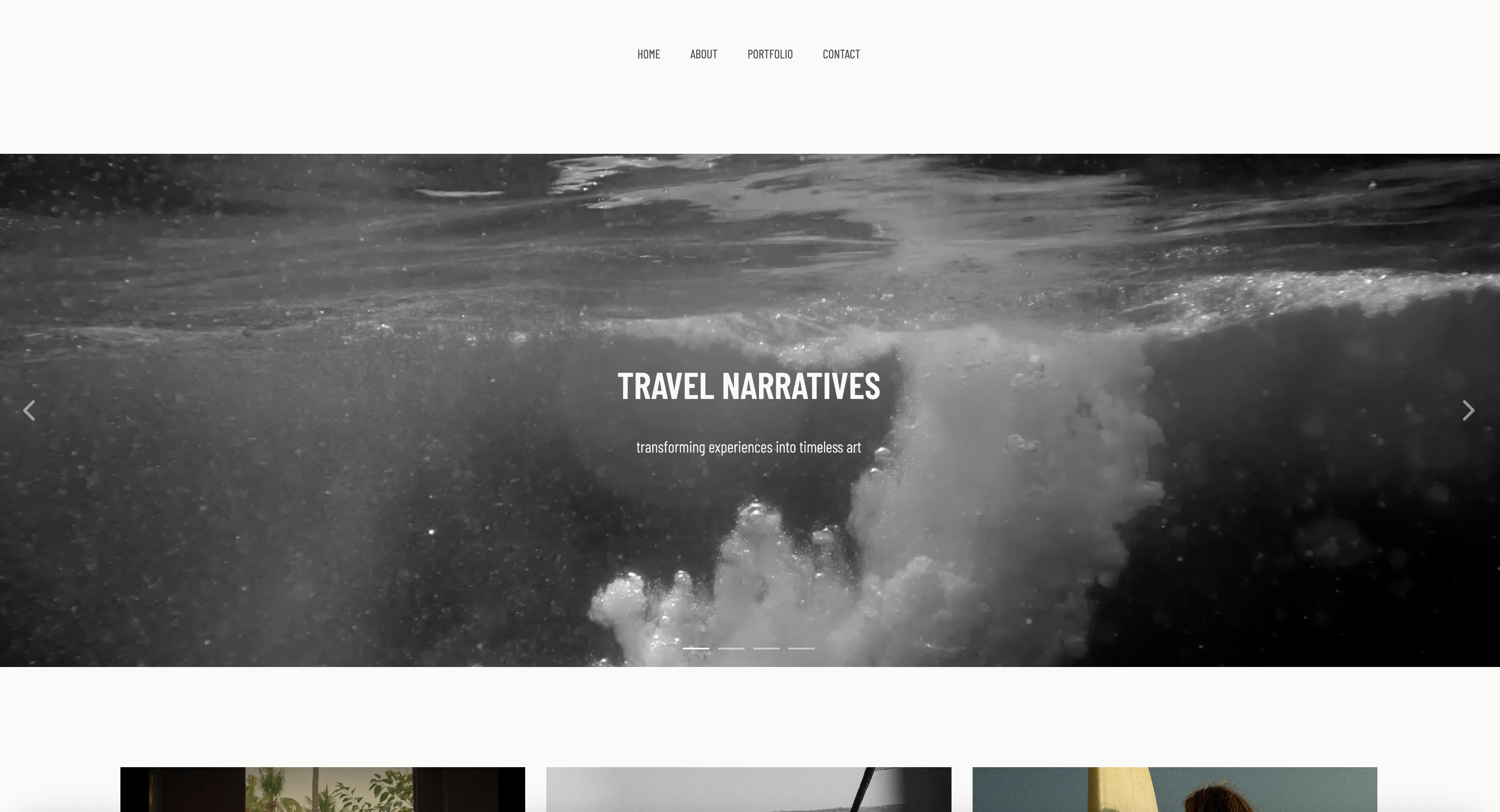
1. Framekit: Best Overall for Commission-Free Delivery

Our rating: 9.4/10
Framekit removes the commission question by removing the middleman. Galleries are part of a website you build and own, published on your own domain, so there is no marketplace sitting between you and your client taking a slice of anything.
Delivery is free on every plan, including the free one, and stays free no matter how many galleries you send.
Setting one up took under ten minutes on our test account: describe the studio in a prompt, let the builder generate the site, create a gallery, drag in the shoot, choose a cover style, set a password, and share.
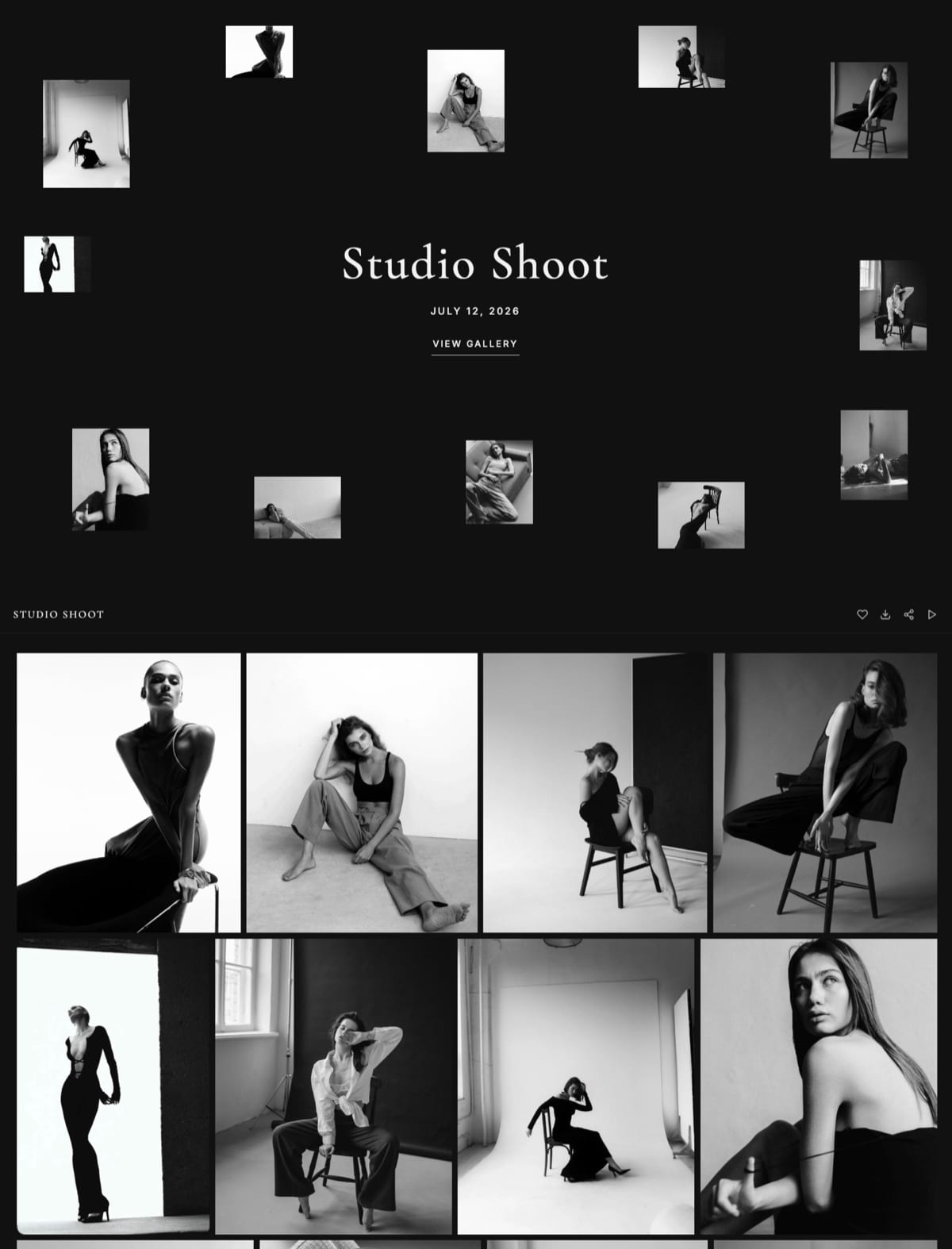
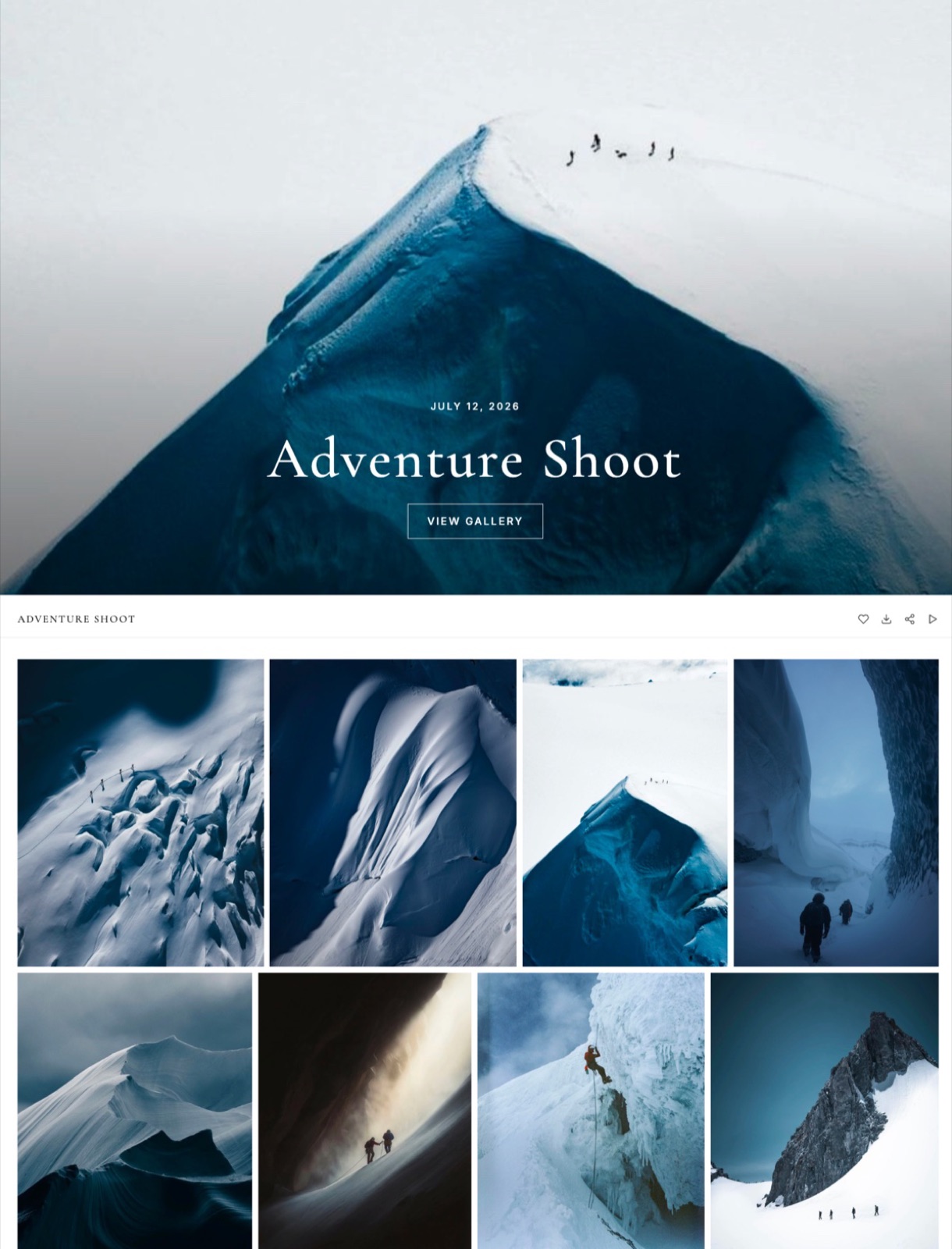
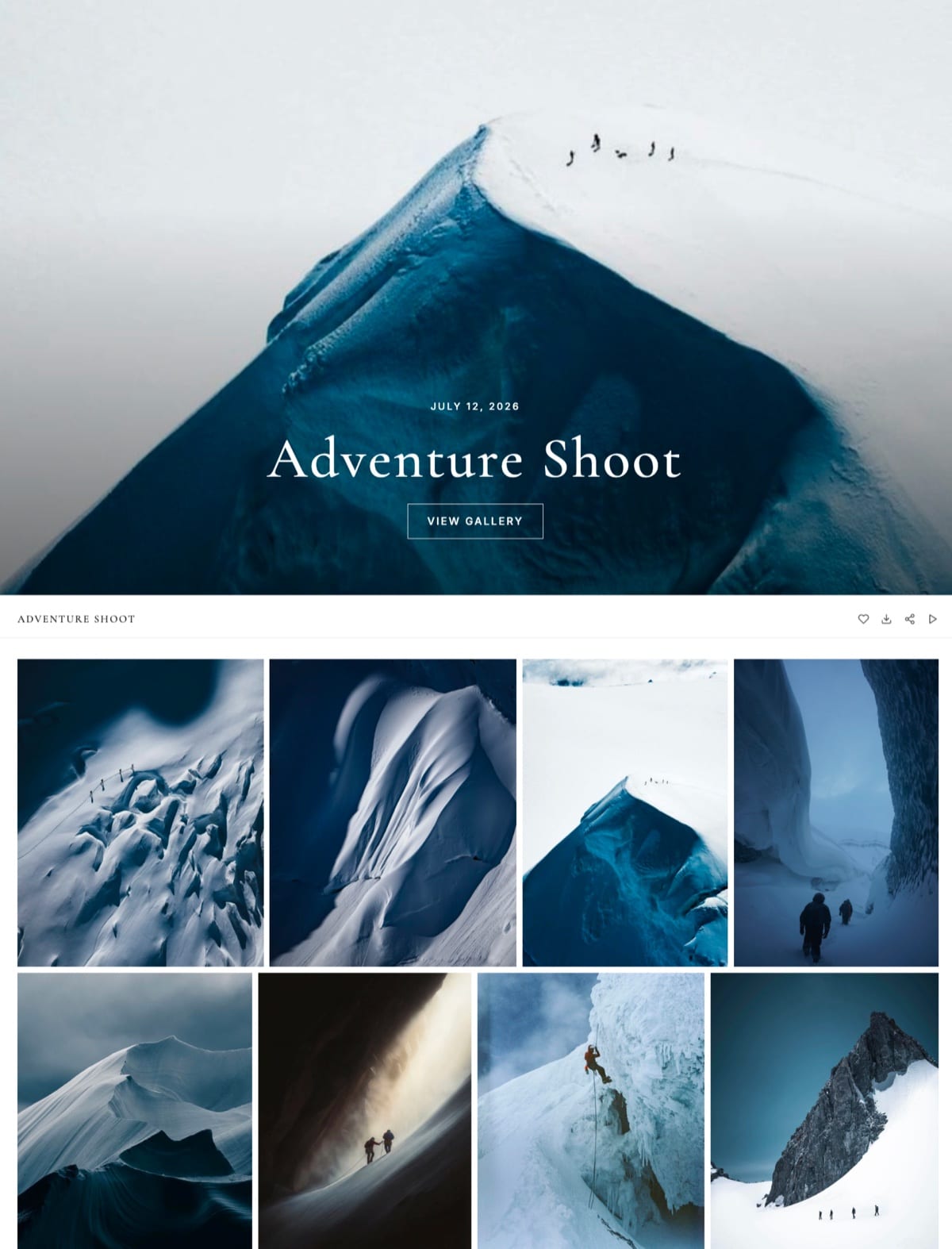
Clients open the link at your address, browse a masonry or row layout, mark favorites, run a slideshow, and download full-resolution files or a ZIP without creating an account.
Best forPhotographers who want delivery to build their own brand and who make their money from bookings and digital files rather than framed prints.
Key features:
- Unlimited galleries on every plan; one pooled storage allowance covering the site, the galleries and video reviews is the limiter, at 10GB free, 50GB on Starter, 300GB on Pro, and 2TB on Business
- Watermarking, gallery passwords, a separate download PIN, favorites, slideshows, auto-expiry, and email sharing on every plan including free
- 17 cover styles, 18 typography presets, and three grid layouts, so two galleries from the same photographer do not have to look identical
- Gallery pages in seven languages, useful if you shoot destination work
- Full-resolution originals up to 100MB per photo, delivered as singles or a whole-gallery ZIP
The real numberon our carried $6,000 print year the commission is not reduced, it is absent, because there is no store taking a cut of a physical order. Against a 15% entry plan that is $900 kept, and against Zenfolio's 7% commerce fee it is $420 kept.
The trade is that you cannot sell the framed print through Framekit at all, so that $6,000 has to come from a lab you bill directly or from digital products sold through the built-in store at 5% on Free and Starter, 3% on Pro, and 0% on Business at $39 a month.
PricingFree $0 (10GB shared storage), Starter $9 per month (50GB, custom domain, no Framekit badge), Pro $19 per month (300GB), Business $39 per month (2TB, 0% product fee). Annual billing takes 20% off.
Pros:
- No commission on gallery delivery on any plan, and no store cut because there is no marketplace
- The gallery URL is your own domain, so the return visit and the search equity stay with your studio
- Portfolio, galleries, and digital shop are one subscription instead of three
Cons:
- No print lab and no physical fulfillment, which is a hard limit if albums are your business
- Gallery uploads accept JPEG, PNG, WebP, and GIF only, so RAW and HEIC files have to be converted first
- Newer than the dedicated gallery platforms, so the proofing workflow has less depth than ShootProof's
Skip it ifyou sell $10,000 a year in prints through a lab and want the platform to handle ordering, production, and shipping. Framekit will not do that, and pretending otherwise would cost you money.
Verdict: Framekit is the right pick when you want zero commission and zero landlord. It is the only platform here where the commission-free promise is structural rather than a plan upgrade, and the only one where the gallery link builds your site instead of somebody else's. Start free at framekit.ai.
2. ShootProof: Best 0% Commission With Real Print Fulfillment
Our rating: 9.1/10
ShootProof is the only platform on this list that sells physical prints through pro labs and takes nothing for doing it, on every plan including the free one.
Its published pricing puts the promise in writing: session fees, printed products, and digital files all come back to you whole.
The interface is functional rather than beautiful, and that is a fair description of the whole product. You set your own markup, the client orders inside the gallery, the lab prints and ships, and the profit lands with you.
For a photographer whose income statement is mostly print revenue, this is the one to beat.
Best forPrint-led photographers who want lab fulfillment without giving up a percentage.
The real numberon annual billing the free tier covers 100 photos and 5GB, the 1,500-photo plan is $10.99 a month, 5,000 photos is $19.99, 25,000 photos is $26.67, and unlimited is $50.
At 30 weddings a year you are firmly in the 25,000-photo tier, so about $320 a year buys you a 0% commission on the full $6,000, versus $900 handed over on a 15% plan.
The gotchathe plans are priced by photo count, not storage, and photo count is cumulative across your account rather than per gallery. Photographers who never archive old sessions hit the ceiling in month nine and upgrade mid-year rather than at renewal.
Skip it ifyou want the gallery to look like an extension of your website. ShootProof galleries are clean but plainly ShootProof's, and the platform is not trying to be your public site.
What reviewers say elsewhereShootProof holds a 4.6 out of 5 average on Capterra across photographer reviews, with the commission policy the most cited strength.
Verdict: the best money tool on this page if you sell prints. Zero commission plus real lab fulfillment is a combination nobody else matches, and the plan cost is trivial against what a percentage would take. Weighing a move off it? See our ShootProof alternatives comparison. Visit ShootProof
3. Pixieset: Best All-in-One Once You Pay to Remove the Cut
Our rating: 8.8/10
Pixieset is the gallery your clients have most likely used before, and familiarity is worth something on delivery day. The mobile experience is genuinely good, the store is well built, and print fulfillment runs through labs your clients would recognize.
The catch is the free plan. Pixieset's free tier gives you 3GB and a working storefront, then keeps 15% of every sale made through it. Upgrading to Basic at $10 a month raises storage to 10GB, connects a domain, drops the Pixieset branding, and takes the commission to zero.
The real numberon $6,000 of sales the free plan costs you $900 a year in commission; Basic costs $120 a year and takes the commission to nothing. If you sell more than about $67 a month through the gallery, the paid plan is already the cheaper option.
The gotchathe domain you connect on Basic points at a Pixieset-hosted gallery, which is closer to a custom address than to owning the site. If you cancel, the address stops resolving to anything of yours.
Skip it ifyou already run a portfolio site you like and only need delivery. You will be paying for a store, a CRM, and a website builder you do not use.
Verdict: the strongest all-rounder in the category and the safest default, provided you treat the free plan as a trial rather than a home. Photographers who stay on free for a busy season pay for the paid plan several times over without realizing it. Already on Pixieset? Our Pixieset alternatives guide covers the move. Visit Pixieset
4. CloudSpot: Best Commission-Free Full Suite
Our rating: 8.6/10
CloudSpot is the most modern-feeling platform here, and its plan ladder is unusually honest about where the commission stops.
According to its pricing page, the Free tier at 5GB and the Entry tier at $7 a month both carry 15% on store sales; Lite at $17 a month with 100GB is the first commission-free step, and Pro at $34 and Unlimited at $50 follow.
The Lite tier is where CloudSpot gets interesting, because it bundles invoicing, contracts, scheduling, and questionnaires with the commission-free store. If you were about to pay separately for a studio manager, the effective price is lower than it looks.
The real number$204 a year for Lite versus $900 in commission on our $6,000 print year. The break-even sits around $1,360 in annual sales, which most working portrait photographers clear in a quarter.
The gotchathe introductory $3-a-month promotion on paid plans reverts to full price after three months, so budget the renewal, not the offer.
Skip it ifyou want the cheapest possible commission-free option and do not need invoicing or contracts. ShootProof gets you to 0% for free.
Verdict: the best pick if you want the delivery, the store, and the business admin under one commission-free subscription, and you are willing to start at $17 rather than $0. Compare it head to head in our CloudSpot alternatives roundup. Visit CloudSpot
5. Pic-Time: Best for Self-Collected Payments
Our rating: 8.5/10
Pic-Time galleries are the prettiest on this list, and its automated store campaigns sell prints while you sleep.
Its commission model is also the most nuanced, which is why photographers misread it: commission applies only to your markup rather than to the full order, and on the Professional plan at $25 a month and above there is no commission at all on payments you collect yourself.
Its pricing page also carries a detail worth reading twice: the free plan starts at 10GB and drops to 3GB after six months, which is a slow squeeze rather than a hard wall.
The real numberProfessional at $25 a month is $300 a year, and it removes the commission on self-collected payments entirely. Against $900 on a 15% model, the automation alone often pays the difference back.
The gotchaself-collected means you handle the payment, which means you handle the refund and the chargeback too. The zero is real but it moves work onto your desk.
Verdict: the most persuasive selling machine in the category, and worth the subscription if print revenue is a real line in your business. If it is not, you are paying for automation you will never switch on. Visit Pic-Time
6. PicDrop: Commission-Free Because There Is Nothing to Sell
Our rating: 7.8/10
PicDrop is a proofing and delivery tool with no storefront, which makes it commission-free by construction. Editors and commercial clients pick selects fast, the interface stays out of the way, and nobody is asked to buy anything.
That is exactly the point. For commercial and editorial work where the invoice is the revenue and prints never enter the conversation, a store is dead weight and PicDrop's focus is a feature.
Skip it ifyou shoot weddings and portraits where print sales are part of the package. There is no way to sell from a PicDrop gallery, so the commission-free label is technically true and practically irrelevant.
Verdict: an excellent selects tool and a non-answer to the commission question. Use it alongside a real client gallery rather than instead of one. Our PicDrop alternatives guide covers the trade. Visit PicDrop
7. PhotoShelter: Best for Archives and Licensing
Our rating: 7.5/10
PhotoShelter is built for photographers whose photos keep earning after delivery: licensing, archives, and large searchable libraries with real metadata. Selling is possible and the platform's cut varies by plan rather than following the flat 15% pattern.
It is the most serious archive on this list, and the least interested in making a wedding gallery feel special. The client-facing experience is efficient rather than romantic.
Skip it ifyou deliver 30 consumer galleries a year and never license an image. You will pay for an archive you do not need.
Verdict: the right tool for an image library that outlives the shoot, the wrong tool for a couple opening their wedding photos on a phone. Read our PhotoShelter alternatives comparison for the consumer-facing options. Visit PhotoShelter
8. Pixpa: Cheapest Site-Plus-Gallery Bundle
Our rating: 7.2/10
Pixpa bundles a portfolio site, client galleries, a blog, and a small store into one low subscription, and its selling fees are plan-based rather than a fixed percentage skim. For a photographer who wants one bill and does not want to think hard, it is a reasonable landing spot.
The design ceiling is the limit. Pixpa sites look like Pixpa sites, and the gallery experience is competent rather than memorable.
Verdict: the budget all-in-one. It beats running a separate site and gallery on price, and loses to both on polish. Visit Pixpa
9. SmugMug: Best Archive Storage, Worst Commission Story
Our rating: 7.0/10
SmugMug's unlimited photo storage is still the best archival deal in photography, and its custom-domain support is more genuine than most gallery tools. The selling side is where it falls down for this list: SmugMug takes a cut of print sales and there is no plan that removes it.
Skip it ifprint margin is the point. Paying a permanent percentage for the privilege of unlimited storage is a strange trade for a working studio.
Verdict: buy it as an archive, not as a store. Our SmugMug alternatives guide has the delivery-first options. Visit SmugMug
10. Zenfolio: The 7% Counterexample
Our rating: 6.8/10
Zenfolio is included precisely because it is not commission-free.
Its own support documentation describes a 7% commerce fee charged on the order sub-total, with payment processing on top, and no plan removes it.
Seven percent reads as modest next to fifteen, which is exactly why it is worth naming. On $6,000 of sales it is $420 a year, every year, on a platform where the alternative is a $300 subscription with no cut at all.
Verdict: a capable gallery-and-website bundle with a permanent tax attached. Fine at low volume, expensive the moment selling works. Visit Zenfolio
11. WeTransfer: The Commission-Free Baseline
Our rating: 6.1/10
WeTransfer takes nothing because it sells nothing, which is the cheapest possible commission and the most expensive possible client experience. It moves files, the link expires after a set window, and the only impression of your studio the client keeps is a progress bar.
It belongs on the list as the baseline every other tool has to beat, and as a reminder that free with no commission is not the same as good. Our WeTransfer alternatives comparison covers what replaces it.
Verdict: acceptable for a one-off file handoff, indefensible as a delivery system for paying clients. Visit WeTransfer
What a 15% Commission Costs Over Three Years
In one linea 15% cut on a modest print business costs more in three years than a decade of the subscription that removes it.
Percentages feel small in the moment because they arrive one order at a time. Stacked over the life of a studio they are the largest software expense most photographers never see on an invoice.
| Your annual print sales | 15% entry plan | Zenfolio 7% | Commission-free plan |
|---|---|---|---|
| $2,000 | $300 | $140 | $0 plus subscription |
| $6,000 | $900 | $420 | $0 plus subscription |
| $15,000 | $2,250 | $1,050 | $0 plus subscription |
| Three years at $6,000 | $2,700 | $1,260 | $0 plus subscription |
Card processing of about 2.9% plus $0.30 sits on top of every column. A commission-free paid plan costs between $120 and $600 a year depending on the platform, so the crossover point arrives fast: at 15%, a $10-a-month plan pays for itself at $800 of annual sales.
Run this on your own books. Open last year's sales report, take the total that flowed through your gallery, and multiply by your platform's rate.
If that number is larger than twelve months of the plan that removes it, you are paying rent on your own print orders and have been for a while.
The Fine Print on Commission-Free Plans
In one linethe commission is the headline number, but storage caps, digital-sale carve-outs, refund handling, expiry defaults, and card processing are what actually decide how much of each order reaches your account.
Does the 0% cover digital downloads? Not always. Several platforms advertise commission-free print sales and treat digital file sales differently. If you sell a digital collection alongside prints, read that line specifically.
Framekit's digital product fee is separate and explicit: 5% on Free and Starter, 3% on Pro, 0% on Business.
Processing is never included. Every platform on this list still sits on top of a card processor charging roughly 2.9% plus $0.30. A 0% commission means the platform takes nothing, not that the order arrives whole.
Storage is the real upgrade trigger. A wedding is 800 to 1,500 full-resolution JPEGs at 5MB to 15MB each, so budget 1GB to 2GB per gallery. Free tiers of 3GB to 10GB hold anywhere from two to ten weddings, which is why photographers upgrade in August rather than January.
Refunds get expensive on percentage models. When a client returns a print, some platforms return their commission and some keep it. Ask before you need the answer, because a refunded order that still cost you 15% is the worst version of this trade.
Expiry is a quiet cost. Galleries that auto-expire to save storage are fine until a client comes back a year later wanting a reprint and finds a dead link. Framekit galleries stay published until you unpublish them, and auto-expiry is opt-in rather than the default.
Cancelling has consequences. On hosted platforms your delivery links go dark when the subscription lapses. On a site you own, the domain, the pages, and the content stay yours and only the paid capacity changes.
That is the difference between a tool and a landlord, and it is worth more than any single percentage.
How to Choose a Commission-Free Gallery: A Decision Tree
Three questions, asked in order, settle this for almost every photographer. Answer them honestly about the business you have rather than the one you are planning, and the first branch that matches you is your platform.
Start here: is print and album revenue a meaningful part of your income?
- Yes, prints are how I get paid. Go to ShootProof for 0% on every plan with lab fulfillment, or CloudSpot Lite at $17 a month if you also want invoicing and contracts. Stop here; the print engine is what you are buying.
- No, my revenue is session fees, retainers, and digital work. Go to the next question.
Do you want the gallery to live on a website you own?
- Yes, my domain and my brand. Choose Framekit. Delivery is commission-free on every plan, the gallery sits next to your portfolio, and your digital shop is in the same subscription. This is the pick for most photographers building a name.
- No, a hosted gallery is fine. Go to the last question.
What matters most about the hosted gallery?
- Design and automated selling: Pic-Time, and turn on the campaigns.
- Familiar client experience and a store you do not have to configure: Pixieset on the $10 Basic plan, never on free.
- Pure proofing with no store and no upsell: PicDrop.
- A searchable archive that keeps earning through licensing: PhotoShelter.
- One cheap bill for a site and galleries together: Pixpa.
Frequently Asked Questions
What is the best commission-free client gallery in 2026?
The best commission-free client gallery in 2026 is Framekit, because gallery delivery carries no commission on any plan and the gallery is published on a website and domain you own rather than a vendor subdomain.
For photographers whose income is physical print sales, ShootProof is the better commission-free choice, since it charges 0% on every plan including its free tier and fulfills through pro labs, which Framekit does not do at all.
Which client gallery has no commission on its free plan?
ShootProof and Framekit are the two platforms with no sales commission on their free plans.
ShootProof charges 0% on every tier while still handling print fulfillment; Framekit charges no commission on gallery delivery because it has no print store.
Pixieset, CloudSpot, and SmugMug all take 15% on their entry tiers, and Zenfolio charges a 7% commerce fee on every plan.
Is Pixieset's free plan really free?
Pixieset's free plan is free to use and takes 15% of every store sale, so it is only genuinely free if you never sell through it.
On $6,000 of annual print sales that 15% is about $900, while the $10-a-month Basic plan that removes the commission costs $120 a year.
Any photographer selling more than roughly $67 a month through the gallery is losing money by staying on free.
Does a 0% commission mean I keep 100% of the sale?
No. A 0% commission means the gallery platform takes nothing, but card processing of roughly 2.9% plus $0.30 still applies on every order, and the lab still charges its production cost on physical products.
On a $200 print order at 0% commission you keep the order minus about $6.10 in processing and minus whatever the lab charges. The commission is the only line you can eliminate entirely by choosing correctly.
ShootProof vs Pixieset: which keeps more of your money?
ShootProof keeps more of your money on the plans most photographers start on, because it charges 0% commission on every tier while Pixieset charges 15% until you upgrade.
Once you are on Pixieset's $10 Basic plan both are commission-free, and the decision moves to experience: Pixieset's galleries and store feel more polished, ShootProof's plan ladder is cheaper at high photo counts.
If you will not upgrade, ShootProof wins outright.
Do commission-free galleries also cover digital downloads?
Not always, and this is the most common misreading of the term.
Several platforms advertise commission-free print sales while treating digital file sales under different terms, so check the digital line specifically before you build a digital-collection product.
Framekit prices digital products explicitly and separately at 5% on Free and Starter, 3% on Pro, and 0% on Business at $39 a month, with gallery delivery itself carrying no fee on any plan.
What happens to my galleries if I stop paying?
On hosted gallery platforms your delivery links stop working and galleries go read-only or offline when a subscription lapses, though most give you a window to download your originals first.
With Framekit the site, the domain, and the published pages are yours, so downgrading changes your storage capacity rather than switching off your work. Whichever platform you use, export your originals before you cancel anything.
How much storage do I need to avoid upgrading mid-season?
Budget 1GB to 2GB per wedding gallery and 300MB to 600MB per portrait session, since a full-resolution JPEG runs 5MB to 15MB. That makes a 3GB free tier a two-wedding plan and a 10GB tier a six-to-eight-wedding plan.
A working wedding photographer shooting 30 galleries a year needs 40GB to 60GB of headroom, which Framekit's 50GB Starter tier only just covers and its 300GB Pro tier covers comfortably, alongside ShootProof's 25,000-photo plan or CloudSpot Lite.
Can I sell prints from a gallery on my own website?
Yes, but not through Framekit's own store, which sells digital files rather than physical prints.
The common setup is to deliver the gallery from your own site and invoice print orders directly through a lab you already use, which keeps 100% of the margin and gives you control over paper and finish.
If you want the platform to run ordering, production, and shipping for you, use ShootProof or Pixieset and accept the subdomain.
Is it worth switching platforms just to escape a commission?
It is worth switching when the commission exceeds the switching cost, which for most photographers happens around $1,000 of annual gallery sales.
Below that the percentage is smaller than the hours of migration; above it the gap compounds every year you delay.
The cleanest time to move is between seasons, with old galleries left live on the current platform until they expire and every new shoot delivered from the new one.
Which commission-free gallery is best for a photographer just starting out?
Framekit's free plan is the strongest starting point for a new photographer, because it delivers unlimited galleries with no commission and gives you a real website at the same time, moving to your own domain on the $9 Starter plan, rather than a delivery link on someone else's platform.
If you already know that print sales will be your main revenue, start on ShootProof's free tier instead, since it keeps the 0% commission while adding lab fulfillment you will grow into.
Is Framekit genuinely commission-free, or is there a catch?
On gallery delivery there is no commission on any plan, and the reason is worth stating plainly rather than dressing up: there is no print store taking a cut because Framekit does not sell prints at all.
On the carried $6,000 print year that means $900 kept against a 15 percent entry plan and $420 against a 7 percent commerce fee, but only if that $6,000 comes from a lab you bill directly.
Digital products sold through the Framekit store do carry a platform fee of 5 percent, falling to 3 percent on Pro and 0 percent on Business at $39 a month.
If you want the platform to handle print ordering, production and shipping, ShootProof does that at 0 percent and Framekit does not.
Final Verdict: The Best Commission-Free Client Gallery in 2026
After eleven platforms and one very ordinary $6,000 print year, the pattern is boring and expensive: most free gallery plans are free to use and costly to succeed on, and the percentage only hurts once you start winning.
Framekit is the best commission-free client gallery in 2026 for photographers building a studio brand.
Delivery carries no commission on any plan, the gallery is published on your own domain next to your portfolio and shop, and the client who comes back for a reprint lands on your site instead of a vendor's.
Where Framekit loses: if prints and albums are your income, we are the wrong tool and ShootProof is the right one, because we have no print lab and will not sell a framed photograph for you at any price.
Photographers running large searchable archives should be on PhotoShelter, and anyone who wants automated print campaigns should be on Pic-Time. Those are real gaps, not modest ones.
ShootProof is the money pick, CloudSpot is the best commission-free suite, Pixieset is the safest all-rounder once you leave its free plan, and Zenfolio is the reminder that 7% forever is still a tax.
But if you would rather not pay anyone a percentage of your own client relationship, deliver from a site you own.
Related reading: our full client gallery platform comparison, the money breakdown in how much client galleries cost, the best free client gallery software, and if you want the storefront side, client galleries with a built-in store.
Photographers who want the website and the delivery in one place should also read our best website builders for photographers comparison, and print sellers should compare labs in our print fulfilment guide.