Framekit templates
Start from a designer-made template
 Use template
 Use template
 Use template
 Use template
 Use template
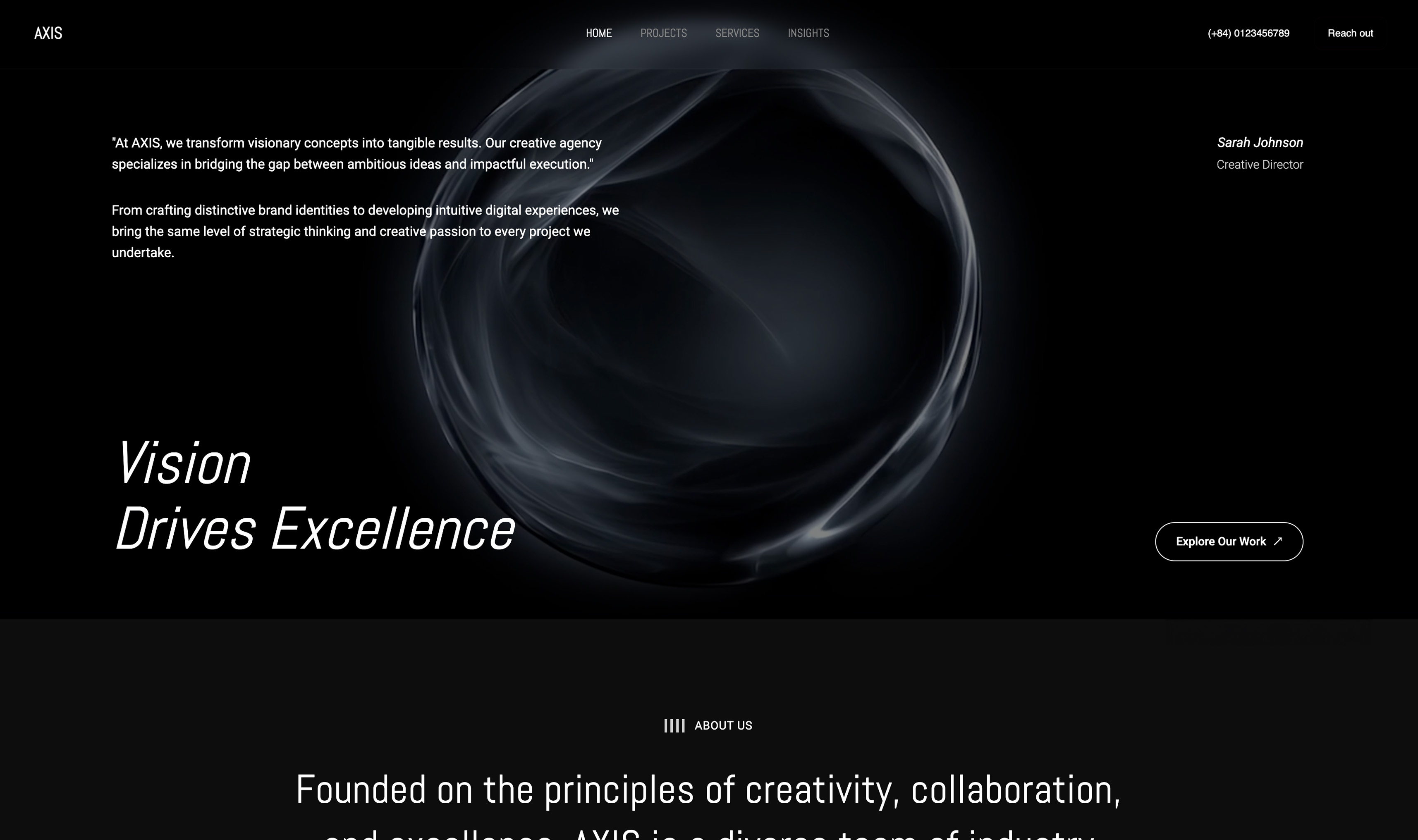 Use template
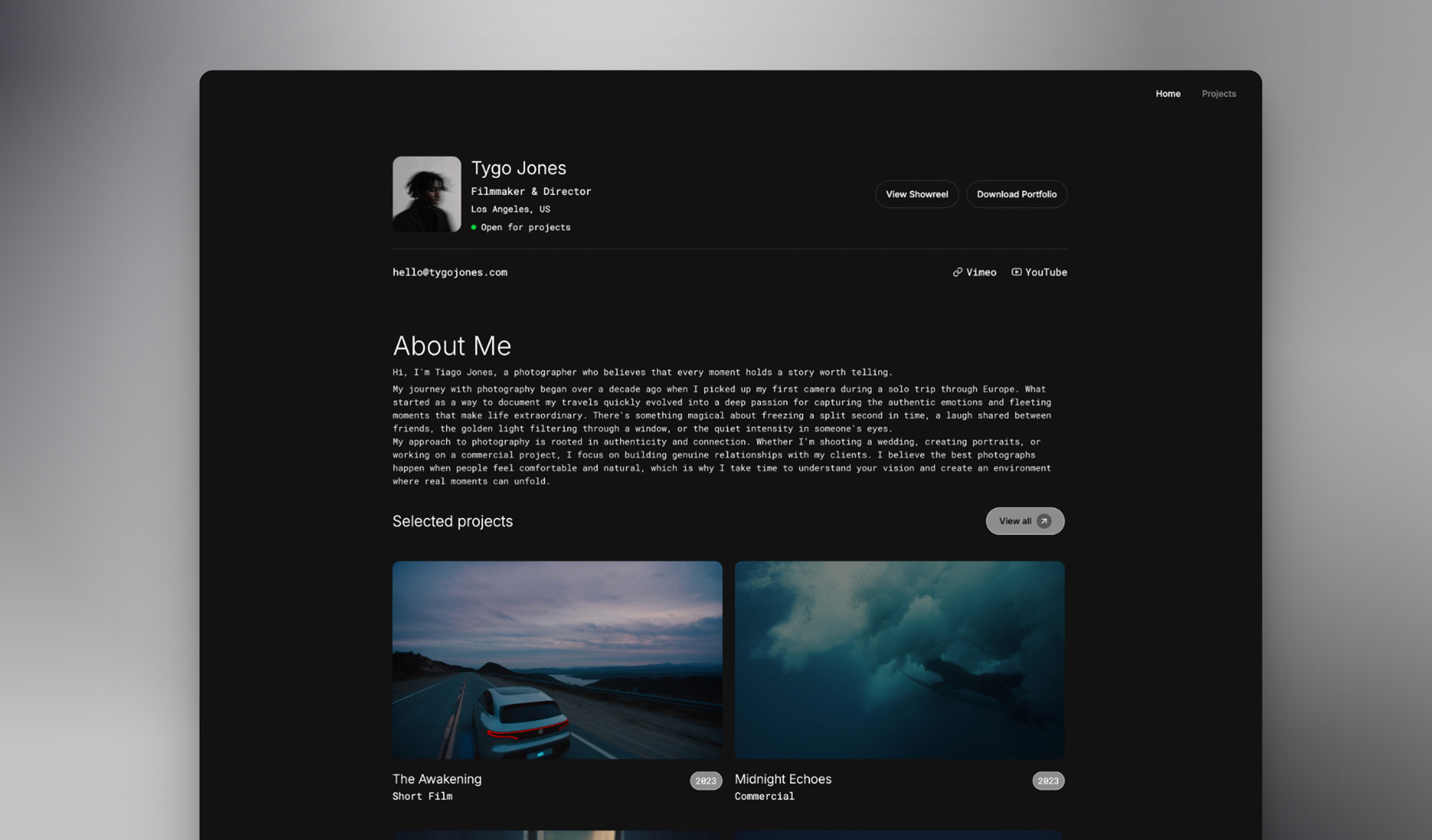 Use template
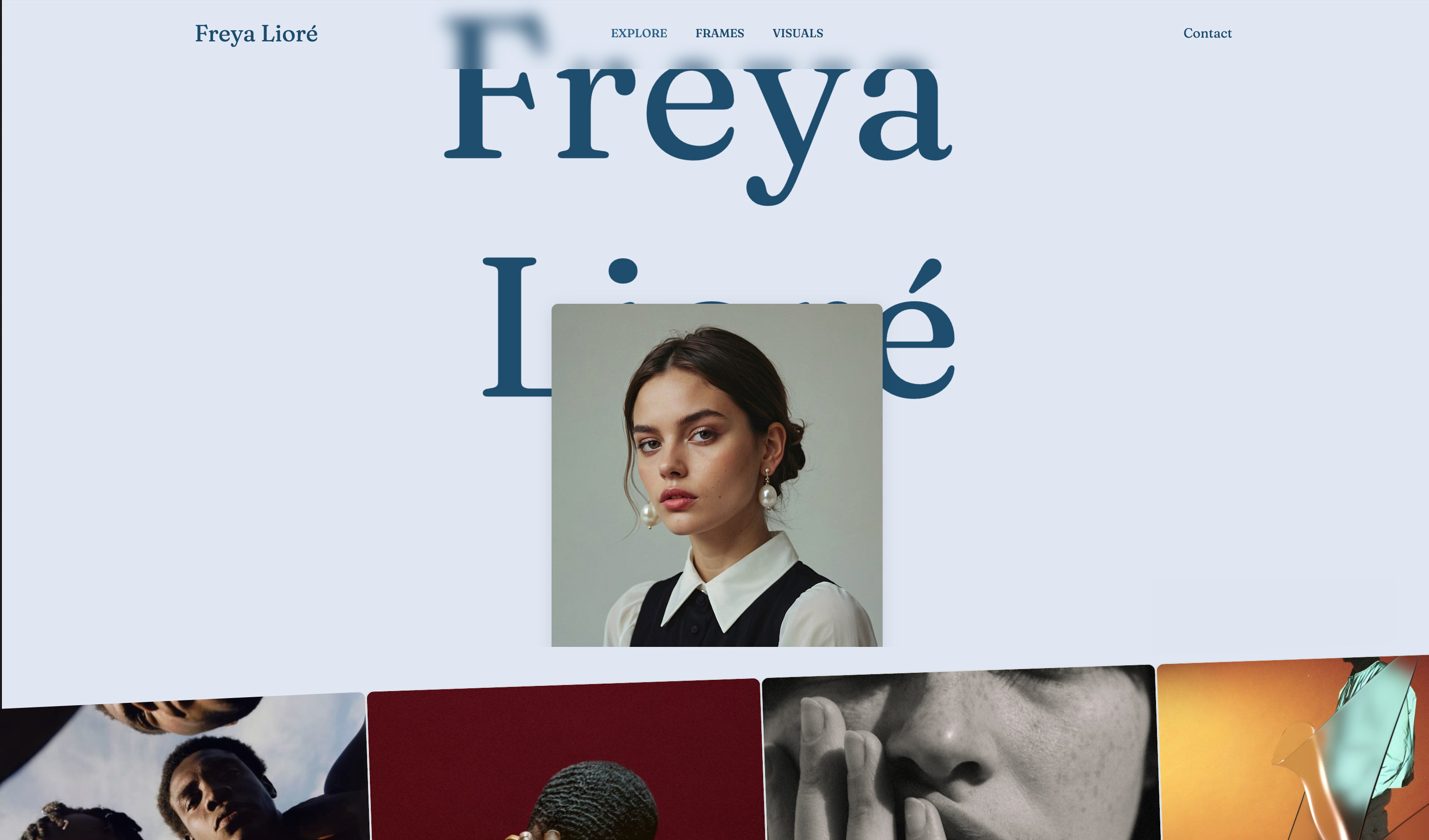 Use template
Commercial photographers get sold website builders on design, and then get stopped by file size. The portfolio is the easy half.
The half that breaks is the Tuesday after the shoot, when forty retouched finals have to reach an art buyer, the layered masters have to reach the retoucher, and the platform you chose for its typography has a per-file cap you never read.
So this comparison is built around delivery rather than decoration. A typical campaign delivery is around 40 finished images at roughly 25MB each, which is about 1GB per job.
Twenty jobs a year is 20GB of client-facing files, and that number, not the monthly price, is what decides which plan you actually need.
A website builder is a hosted tool that turns your portfolio, your client galleries and your enquiries into a site on your own domain without writing code.
For a commercial photographer the useful question is what each one will actually carry, and what it costs once your archive is real.
For most commercial photographers in 2026 Framekit is the best website builder, because client galleries are included on every plan and share one storage pool with the site itself: 10GB free, 50GB on the $9 Starter plan and 300GB on Pro at $19, so campaign delivery stops being a separate subscription.
A Photo Folio at $37 a month is the specialist alternative built for this exact profession, and Format is the tidiest pure portfolio at $10 a month.
The limitation you need to know before you commit is Framekit's 100MB per-file cap, which is fine for finished JPEGs and too small for layered masters, so retoucher hand-offs still need a file-transfer tool.
Disclosure: Framekit is our product and we rank it first. We built the same eight sites with the same 24-image portfolio, the same campaign delivery and the same enquiry flow, we link to every competitor, and we name where each beats us. A Photo Folio beats us on profession-specific features like PDF estimate creation, and Webflow beats us on design control.
How We Tested Eight Builders
Each build carried identical material: a 24-image portfolio in six campaign sets, a client gallery containing 40 finals at about 25MB each, a capabilities page, an enquiry form and a licensing note.
We also attempted to upload a 780MB layered master to every platform that offers client delivery, because that is the file that actually breaks workflows.
We keep three kinds of claim separate. Things built and observed happened in the product while we watched, including the upload attempts.
Things read at source are prices and limits taken from vendor pages or shipped plan configurations in August 2026, cited where the number matters.
Things drawn from photographers' reports are labelled in the sentence, because a shared complaint proves a pattern exists rather than its scale.
Conditions: fresh accounts, USD where offered, annual pricing as each vendor presents it, no agency or professional-body discounts. Where delivery required a paid tier, we configured and previewed rather than completing a live transaction, and the entry says so.
We quote no star ratings. G2, Capterra and Trustpilot refuse automated requests, and a score we could not open is not evidence of anything.
By the numbers8 builders built out. 1GB is the size of one carried campaign delivery, 20GB a working year. 100MB is Framekit's per-file cap on every plan. 780MB was our test master, which no builder here accepted. 3 of 8 include client delivery without a separate product.
The Comparison Table
The rubric follows the working week rather than the pitch: client delivery capacity 30%, portfolio presentation 25%, enquiry and licensing handling 20%, design control 15%, three-year cost 10%.
Delivery leads because it is the recurring operational cost of this profession, and because it is the thing every general-purpose builder comparison ignores.
| Builder | Best for | Client delivery included | Storage at entry | Entry price | Our rating |
|---|---|---|---|---|---|
| Framekit | Portfolio and campaign delivery together | Yes, every plan | 10GB free, 50GB at $9 | $0, $9/mo Starter | 9.1/10 |
| A Photo Folio | Photographers who want the industry standard | Large file delivery, 1GB free | 17GB site storage | $37/mo, no setup fee | 8.7/10 |
| Format | The cleanest pure portfolio | Proofing galleries included | Plan-based | $10/mo annual | 8.4/10 |
| Webflow | A designed site you control fully | No | None | $15/mo annual | 8.0/10 |
| Squarespace | Portfolio plus invoicing and scheduling | No | None | $19/mo annual | 7.7/10 |
| Cargo | An editorial, art-directed identity | No | None | Plan-based | 7.3/10 |
| Wix | Broad feature needs in one place | Limited | None | $17/mo Light | 6.9/10 |
| Adobe Portfolio | Photographers already paying Adobe | No | None | Included with CC Photography $19.99/mo | 6.6/10 |
Framekit leads the column we weighted highest and does not lead on design control, where Webflow and Cargo are both stronger.
1. Framekit: Best Overall for Commercial Photographers

Framekit is an AI website builder for photographers, filmmakers and designers that generates a site from a description or a reference image and lets you sell and deliver from your own domain.
For commercial work the argument is operational rather than aesthetic: the portfolio and the client delivery are the same subscription, so a campaign hand-off does not start with logging into a second product.
The build took about twenty minutes. The generated campaign-set layout put the client name and the usage note directly under each set, which is the information an art buyer is actually scanning for, and which most portfolio templates treat as an afterthought.
The real number, and it is the one to check against your own year: one storage pool covers the site media and the client galleries together, and it runs 10GB on the free plan, 50GB on Starter at $9, 300GB on Pro at $19 and 2TB on Business at $39.
At roughly 1GB per campaign delivery, that is about ten campaigns free, fifty on Starter and three hundred on Pro.
A photographer shooting twenty jobs a year fits comfortably on Starter at $108 a year, which is less than most dedicated delivery tools cost on their own.
The standout detailevery gallery feature is on every plan, including the free one. Unlimited galleries, watermarking, password and PIN protection, favourites, downloads and email sharing do not move as you pay more. Only storage does.
That is unusual, and it means the free plan is a real tool rather than a demonstration.
The gotcha, and it is specificthe per-file cap is 100MB on every plan. A finished JPEG at 25MB is fine and a 780MB layered master is not, so retoucher hand-offs and master archiving still need a file-transfer tool alongside.
If your delivery is finished files, this never bothers you; if it is working files, it will bother you immediately.
The second gotchathere is no threaded approval round. Clients mark favourites rather than commenting on a specific frame with a status you can tick off, which is thinner than a proper proofing loop if your clients expect one.
Skip it ifyou deliver layered masters as a matter of course, or your art buyers expect a formal comment-and-approve workflow.
Verdict: the best value in this category for a photographer delivering finished work, because it removes an entire second subscription without asking you to accept a worse portfolio.
2. A Photo Folio: The Industry Specialist
A Photo Folio has been built for commercial photographers and their reps for years, and it shows in features nobody else on this list bothers with, including a PDF creator for estimates and treatments, lightbox galleries an art buyer can assemble, and an iPad app for portfolio reviews.
The real number, read at source in August 2026three routes to the same product. Pay $37 a month with no upfront fee, or pay $20 a month plus a $1,000 design fee, taken either as $250 across four months or as a single payment. All three carry 17GB of storage with unlimited galleries, videos and pages.
The standout detail nobody points outthe cheaper monthly rate is not cheaper. Over 36 months the no-upfront route costs $1,332 while the design-fee route costs $1,720, and the $17 a month you save takes about 59 months to repay the $1,000 you paid for it.
Unless you expect to be on the same site for five years, the plan marked most popular is the more expensive one.
The gotchasales and licensing run through Fotomoto rather than natively, so commerce is a third-party layer with its own terms.
Skip it ifyou want an integrated store, or you object to a design fee for a service you could configure yourself.
Verdict: the most profession-aware product here and the one to choose if PDF estimates and lightboxes are part of how you actually work. Take the no-upfront plan unless you are certain about five years.
3. Format: The Cleanest Portfolio
Format remains the most restrained portfolio on this list, and restraint is the correct default when the work is advertising imagery that already carries a lot of visual noise.
The real numberBasic is $10 a month billed annually with a stated normal rate of $14, Pro is $12 annually or $17 monthly, and Pro Plus is $15 annually or $26 monthly. Store commission is 0% across plans.
The standout detailproofing galleries are included rather than sold as an upgrade, so client delivery is covered without a second product, which puts it in the same category as Framekit on the question that matters most here.
The gotchait is designed around one photographer's portfolio. Commercial photographers who work through a rep, or who need separate portfolios for advertising and editorial clients, are working against the product's assumptions.
Skip it ifyou need multiple distinct portfolios or a real store.
Verdict: the best-looking single-photographer portfolio at this price, with delivery good enough that many photographers never need anything else.
4. Webflow: Most Control
Webflow is where a commercial photographer with a designer, or with the patience to become one, builds exactly the site they want, including a properly structured campaign archive with fields for client, agency, usage and year.
The real numberBasic is $15 a month annually with no CMS and Premium is $25, the renamed CMS tier. The $39 Business site plan has been retired and the next step above Premium is Team at $2,500 a month on an annual contract. Workspace seats bill separately at Free, Core $19 and Growth $49.
The standout detailstructured project data, which means you can filter a twelve-year archive by sector or by agency without rebuilding anything.
The gotchano client delivery of any kind, so a delivery subscription sits on top of whatever you pay here.
Skip it ifyou count total cost rather than site cost.
Verdict: the best-built archive here and the most expensive once delivery is added.
5. Squarespace: Portfolio Plus Paperwork

Squarespace earns its place for photographers who want invoicing, scheduling and a site in one subscription, which for a self-representing commercial photographer removes real admin.
The real numberBasic is $19 a month billed annually, and the business tooling sits on higher tiers.
The standout detailpage-level password protection is built in, which is the simplest way to show an art buyer work that is still under embargo.
The gotchaaggressive image re-encoding, which photographers report changes files more than they expect, and no client delivery.
Skip it ifyou care what the served file looks like next to your master.
Verdict: a solid business platform with the least careful image handling on this list.
6. Cargo: The Art-Directed Identity
Cargo suits commercial photographers whose clients are fashion houses and cultural brands, where a site that looks configured from a template is itself a signal about the tier you work at.
The real numberplan-based and inexpensive, with the meaningful cost being the delivery and commerce tooling that is simply absent.
The standout detailtypographic and layout control that produces genuinely distinctive sites, which for this audience can be worth more than any feature.
The gotchano client delivery, thin commerce, and an interface that assumes design fluency.
Skip it ifthe site has to do operational work.
Verdict: the strongest identity here and the weakest workflow. Our Cargo alternatives guide covers the usual next step.
7. Wix: Broadest, Bluntest
Wix covers more ground than anything else on this list, with plans at Light $17, Core $29, Business $39 and Business Elite $159 on annual billing, plus an app market for the gaps.
The real numberCore at $29 a month is the realistic floor for a professional site without branding, which is $1,044 over three years.
The standout detailcontributor roles are included, which matters if a rep or a producer updates the site alongside you.
The gotchaphotographers consistently report heavy image handling on large portfolios, and the delivery tooling is not comparable to a real gallery product.
Skip it ifimage fidelity or delivery matters, which for this profession is both.
Verdict: capable at everything and excellent at nothing you specifically need.
8. Adobe Portfolio: Free, Limited
Adobe Portfolio is included with Creative Cloud, and the Adobe plans page lists the Photography plan at US$19.99 a month with 1TB, Lightroom alone at US$11.99, Photoshop at US$22.99 and Creative Cloud Pro at US$69.99.
Every commercial photographer already pays one of these.
The real numberno marginal cost, which is a genuine argument at the start of a career.
The standout detailthe 1TB of Creative Cloud storage that comes with the Photography plan is itself a delivery route, separate from Portfolio.
The gotchano store, no galleries with client controls, and the site disappears with the subscription.
Skip it ifthis is your professional shopfront rather than a stopgap.
Verdict: free and thin, which is the right trade for exactly one year of a career.
What a Year of Campaign Delivery Actually Needs
In one lineat roughly 1GB per campaign, your gallery storage tier is a count of jobs rather than a number of gigabytes, and that reframing makes the plan choice obvious.
Take a photographer shooting twenty campaigns a year, delivering about 40 finished images per job at roughly 25MB each. That is 1GB per job and 20GB a year of client-facing files, before any archive you keep online.
| Framekit plan | Storage | Campaigns it holds | Cost per year |
|---|---|---|---|
| Free | 10GB | About 10 | $0 |
| Starter $9/mo | 50GB | About 50 | $108 |
| Pro $19/mo | 300GB | About 300 | $228 |
| Business $39/mo | 2TB | About 2,000 | $468 |
The honest reading is that a twenty-campaign photographer sits on Starter at $108 a year for two full years of deliveries even keeping everything online, and only needs Pro at $228 once several seasons of galleries are stacked up.
Neither figure includes a separate delivery subscription, because there is not one, and the same pool carries the portfolio images too.
The per-file cap is the part to check before you commit. Framekit accepts files up to 100MB on every plan. Our 780MB layered test master was refused, as it was on every other platform here that offers delivery.
For finished work this is a non-issue and for working files it means a transfer tool sits alongside your site permanently.
Our guide to the best WeTransfer alternatives covers what to use for the masters.
The test to run on your own business: count last year's jobs, multiply by your average delivery size, and compare that with the storage on the plan you were about to buy.
Most photographers discover they need one tier less than they assumed, because they were thinking about their archive rather than about what clients actually need to reach.
What an Art Buyer Looks At
In one linethe first screen decides whether there is a second one, and the things that survive that cut are the client list and the sector, not the design.
Lead with the work at the level you want to be hired at. The commonest structural mistake in commercial portfolios is including early or unpaid work because it was hard to make.
An art buyer is calibrating your tier, and the weakest set on the site is the one that does it.
Name the client and the agency where you can. A buyer is checking whether you have worked at their budget and in their category, and a portfolio of anonymous imagery cannot answer either question. Where an NDA prevents it, name the sector and the scale instead.
Group by sector, not by year. Automotive, beauty, food, still life. Buyers search and think in categories, and a chronological archive serves you rather than them.
Say what you own and who you work with. Studio, kit, crew, whether you produce in house, whether you have a rep and where. Producers filter on this before taste.
Make the enquiry route human. A named contact, a real email, your rep if you have one, and your city and timezone. Bids arrive with short fuses.
What to leave off. Testimonial sliders, a logo wall of clients you shot once in 2018, and a services list that reads as though it was generated rather than written.
Licensing, Usage and What the Site Should Say
In one linecommercial photography is priced on usage rather than on time, and the site's job is to make that normal before the estimate arrives.
Buyers who work with photographers regularly already know that a licence has a term, a territory and a media scope.
Buyers who do not, which increasingly means brand marketing teams commissioning directly, often assume they are buying files outright.
A short, plain paragraph on the site explaining that fees cover a defined usage saves a difficult call later, and positions you as someone who does this professionally.
What not to do is publish a rate card. Commercial pricing varies by usage so widely that a published number can only ever be wrong in one direction, and it removes the conversation where the scope actually gets established.
Two practical additions that are worth more than they cost. A line stating what you retain, which is your copyright and your right to show the work in your portfolio, negotiated exceptions aside.
And a short note about how you handle delivery, retouching rounds and archive retention, because it is the question producers ask most and answering it in advance is a small competence signal.
How Commercial Photographers Get Found
In one linealmost nobody finds a commercial photographer through a search engine, so the site is a verification tool and its job is to survive a two-minute check.
The route to work is a rep, a referral, a source book, an award annual, or an art buyer's own list. In all of those cases your site is visited by someone who already has your name and is deciding whether to shortlist you.
That is conversion, not discovery, and it argues for a site that loads its strongest work first and states its category plainly.
Where search does help is narrow and specific: your name, your city plus your specialism, and unusual capabilities.
"Underwater commercial photographer Barcelona" is a real search that a well-written capabilities page can win, because the field is small.
Google's SEO starter guide is sufficient reading for that.
The channel that has changed is assistants answering "who shoots food commercially in Copenhagen" by reading text.
That rewards writing your sectors, your city and your capabilities in plain words somewhere on the site, which a portfolio of uncaptioned images gives them nothing to work with.
How to Choose in Four Questions
Answer these in order and stop at the first yes rather than reading a summary of picks you have already seen.
- Do you deliver layered masters to retouchers as part of your normal workflow? Then no builder here is your delivery tool, and you need a transfer product alongside whichever site you choose.
- Do PDF estimates, treatments and lightbox reviews matter to how you work? A Photo Folio at $37 a month with no upfront fee, and do not take the design-fee plan unless you are staying five years.
- Do you want the portfolio and campaign delivery in one subscription? Framekit, on Starter at $9 if you clear galleries seasonally and Pro at $19 if you keep everything.
- Is the site itself part of your positioning at the fashion or cultural end? Cargo, and pay for delivery separately.
Frequently Asked Questions
What is the best website builder for commercial photographers in 2026?
Framekit is the best choice for most commercial photographers in 2026, because client galleries are on every plan and draw on the same storage pool as the site: 10GB free, 50GB at $9 a month and 300GB at $19, which means campaign delivery is not a separate subscription.
A Photo Folio at $37 a month is the specialist alternative with profession-specific features like PDF estimate creation, and Format is the tidiest portfolio-only option at $10 a month annually.
How much storage do I need for client delivery?
Think in campaigns rather than gigabytes. A typical delivery of 40 finished images at around 25MB each is about 1GB, so a photographer shooting twenty jobs a year generates roughly 20GB of client-facing files.
Framekit's 50GB Starter tier holds about fifty campaigns and the 300GB Pro tier about three hundred, and because the site media and the galleries share one pool there is a single number to plan against rather than two.
Can I send layered PSD or TIFF masters through a website builder?
No. Framekit caps uploads at 100MB per file on every plan, and our 780MB layered test master was refused by every platform here that offers delivery.
Finished JPEGs are fine; working files need a dedicated transfer tool alongside your site, and that is true whichever builder you choose.
Is A Photo Folio worth the design fee?
Usually not, on the arithmetic. The no-upfront plan is $37 a month, and the design-fee plan is $20 a month plus $1,000, so over 36 months they cost $1,332 and $1,720 respectively.
The $17 monthly saving takes about 59 months to repay the $1,000, so the design fee only makes sense if you are confident of staying on the same site for five years.
Should I publish my rates on a commercial photography site?
No. Commercial fees are priced on usage, territory and term rather than on time, so any published number is wrong for most enquiries and removes the conversation where scope gets established.
Publish a plain explanation that fees cover a defined usage instead, which sets expectations without pricing yourself out of a brief you have not read.
How do I show work that is under embargo?
Use a password-protected gallery shared with a named buyer rather than an unlisted page, since an unlisted URL is obscurity rather than protection.
Framekit includes gallery passwords and PINs on every plan including the free one, and Squarespace offers page-level passwords if you need the work to sit inside the public site structure.
Do I need a separate portfolio for advertising and editorial work?
If the two are genuinely different in standard or sector, yes, and this is where single-portfolio tools like Format become limiting.
Separate collections within one site is usually enough, provided the strongest work is what loads first, since an art buyer is calibrating your tier from whatever they see initially.
What does a commercial photography website cost over three years?
Between about $360 and $1,720 for the site alone. Format Basic is $360, Framekit Starter $324, Webflow Basic $540, Squarespace Basic $684, A Photo Folio's no-upfront plan $1,332 and its design-fee plan $1,720.
Add a delivery subscription to every option that does not include galleries, which is five of the eight tested.
Does Framekit handle client approval rounds?
Not as a threaded approval loop. Clients mark selects using favourites, which suits choosing finals and is thinner than a comment-and-sign-off process with statuses.
If your art buyers expect formal per-image approval with tracked responses, plan for a dedicated proofing tool, and our best photo proofing tools guide compares them.
Which builder handles large portfolios best?
Webflow, if you want structured filtering by client, sector and year across a long archive, because its CMS models that properly.
Framekit and Format both handle a normal working portfolio comfortably, and Wix is the one photographers most often report struggling with as image counts grow.
The Verdict
For a commercial photographer in 2026, Framekit is the pick, because the portfolio and the campaign delivery are one subscription drawing on one storage pool: 10GB free, 50GB at $9 a month, 300GB at $19, with every gallery feature on every plan and the domain staying yours.
A Photo Folio is the honest alternative if PDF estimates, lightboxes and iPad reviews are how you actually work, and its no-upfront plan is the one to take.
Where Framekit loses, plainly: the 100MB per-file cap means layered masters do not go through it, so a transfer tool stays in your stack. There is no threaded approval round, only favourites.
There is no PDF estimate builder, which A Photo Folio has and which some photographers use daily. And design control is behind Webflow and Cargo, which matters if the site itself is part of your positioning.
If you deliver working files rather than finished ones, budget for a transfer tool whatever you choose. If you deliver finals, stop paying for two products.
Related reading: best website builder for product photographers, best website builder for fashion photographers, best client gallery platforms, and best ways to deliver client photos.
Also in this series: website Builders for Concert Photographers, website Builders for Boudoir Photographers and client Galleries for Fashion Photographers.
Prices were read at each vendor's own pricing page in August 2026, including A Photo Folio and Adobe on 9 August 2026. Framekit's storage tiers and per-file cap were checked against the shipped plan configuration rather than marketing copy.