Framekit templates
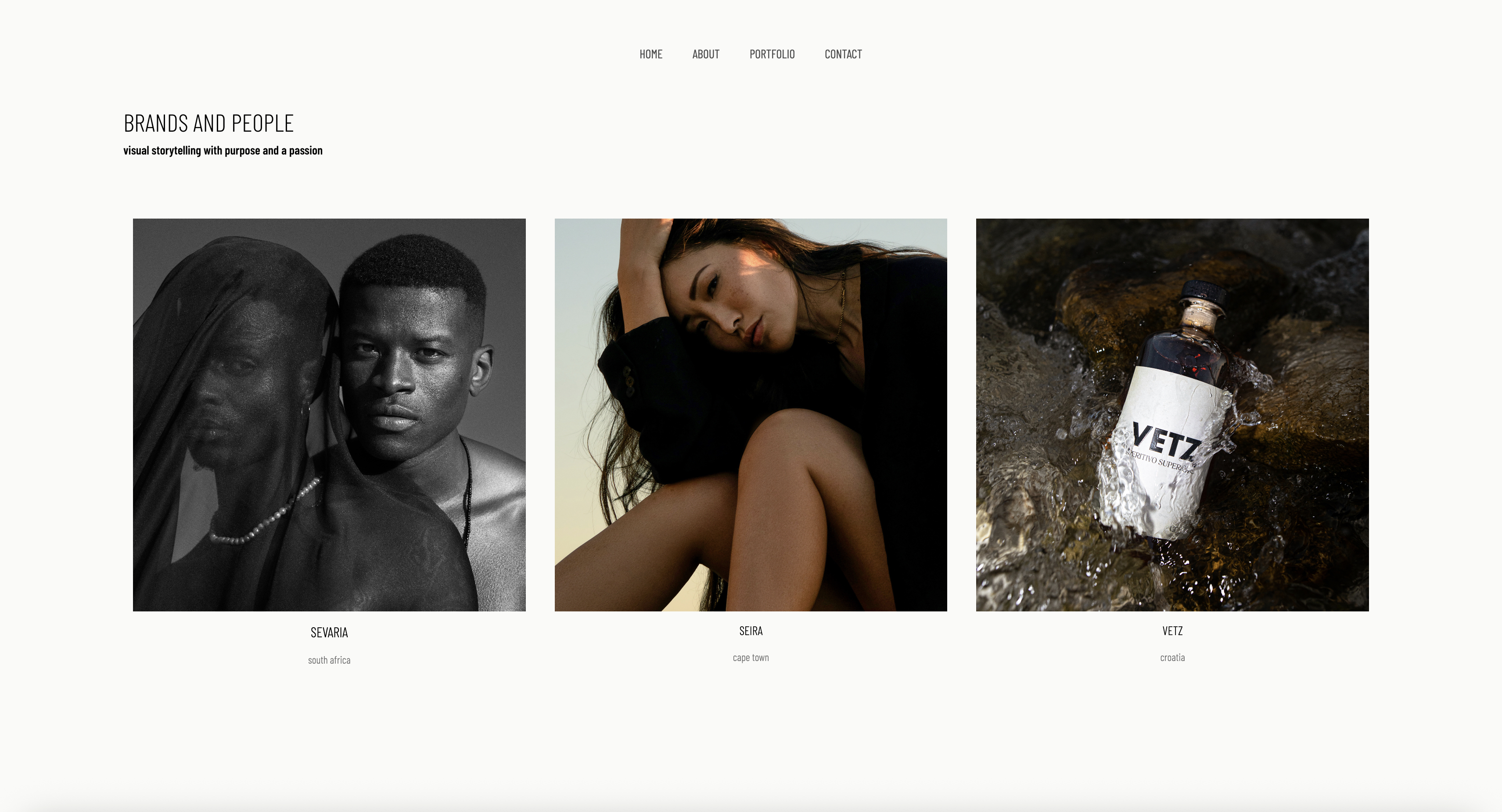
Start from a designer-made template
 Use template
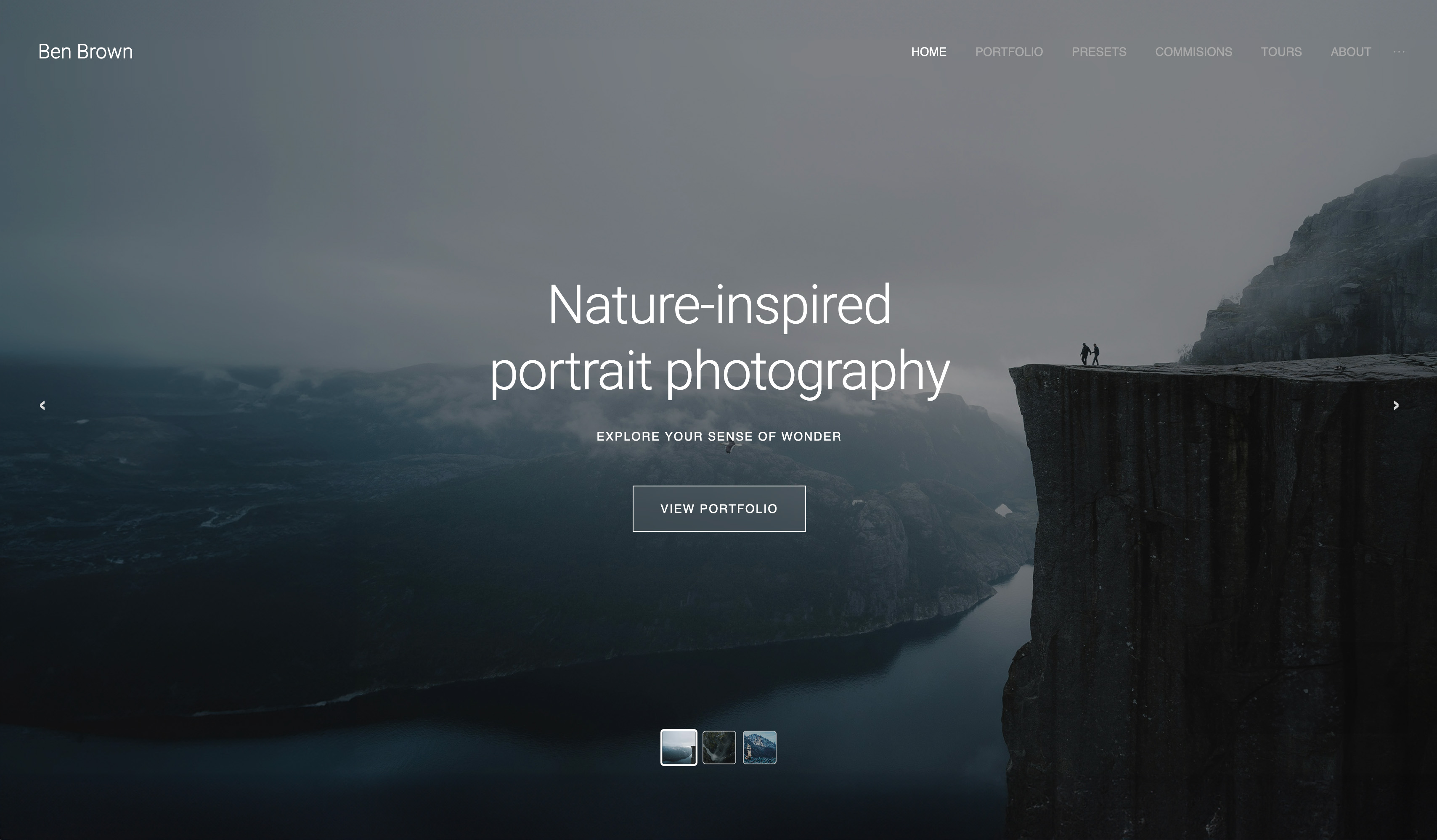
 Use template
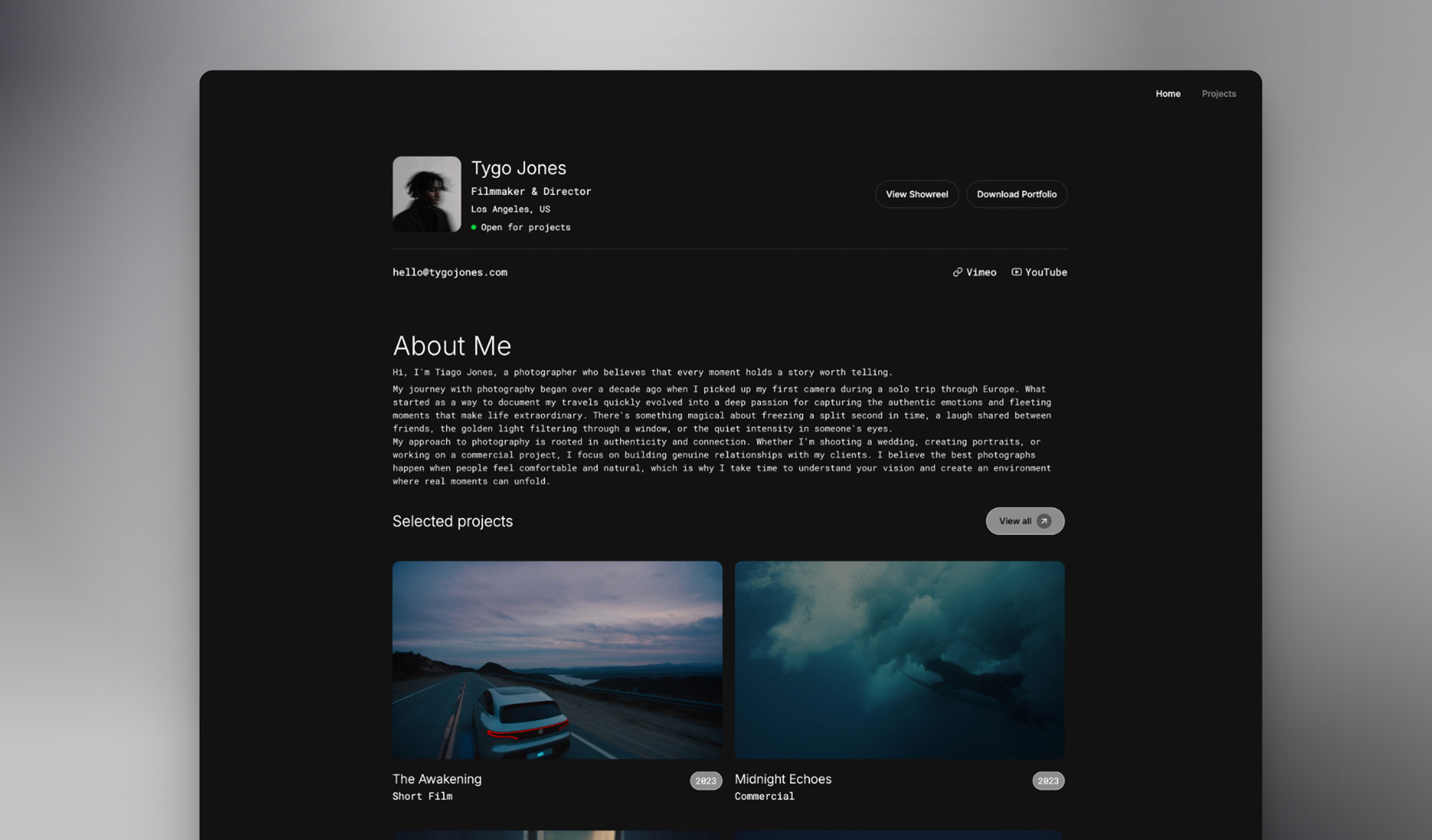
 Use template
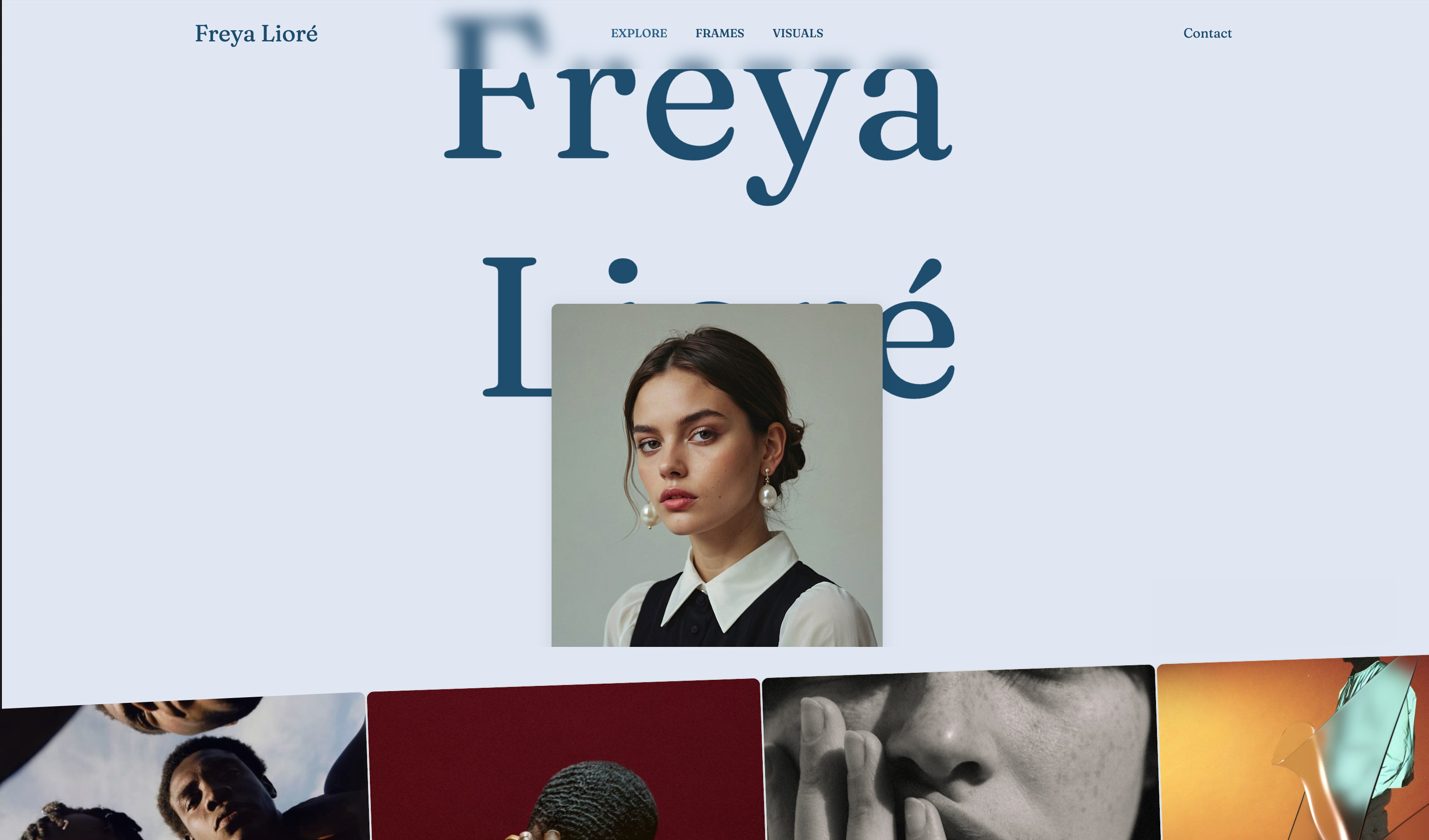
 Use template
 Use template
 Use template
 Use template
 Use template
Every other creative professional we have written a website guide for owns the work in their portfolio. A photo retoucher usually does not.
The images on your site were shot by someone else, art directed by someone else, commissioned by a brand with an opinion about where they appear, and your contribution is a layer stack that by definition sits underneath somebody else's photograph.
That is the real problem with building a retouching website, and no comparison of templates addresses it. The question is not which builder looks best.
It is which one lets you present work you have permission to show, in a way that makes your contribution legible, without publishing a before image that the photographer never agreed to release.
A website builder is a hosted tool that turns your portfolio, your client deliveries and your rates into a site on your own domain without writing code.
For retouchers the deciding factors are comparison presentation, client file handling, and whether the site helps or hinders the permissions conversation.
For photo retouchers in 2026 Framekit is the best website builder, because before-and-after presentation, password-protected client galleries and a store all sit on one domain you own, with gallery protection included on every plan including the free one.
Webflow is the pick if you want to build a proper scrubbable comparison slider yourself, and Format is the tidiest portfolio if delivery happens elsewhere.
The limitation that matters most in this profession is that Framekit caps uploads at 100MB per file, so layered masters go through a transfer tool rather than through your site.
Disclosure: Framekit is our product and we rank it first. We built the same nine sites with the same twelve comparisons, the same client gallery and the same rate card, we link to every competitor, and we say where each beats us. Webflow beats us on custom comparison components, Cargo beats us on design, and any dedicated transfer tool beats every builder here on moving a 1.4GB PSD.
How We Tested Nine Builders
Each site got identical contents: twelve before-and-after pairs across beauty, fashion and product, three case pages describing the work done, a rates page, a permissions note, and a password-protected client gallery containing a 40-image delivery.
We also tried to push a 1.4GB layered master through every platform that offers client delivery.
Three kinds of claim appear below, kept separate on purpose. Things built and observed happened in the product.
Things read at source are prices and limits taken from vendor pages or shipped plan configurations in August 2026, cited where the number matters.
Things described as industry practice are how the business commonly works rather than figures we verified from contracts, and they are marked in the sentence.
Conditions: new accounts, USD where offered, annual rates as each vendor presents them, no studio or education discounts. Nothing here is legal advice, and permissions in this field depend on the specific agreements you have signed.
We quote no star ratings. G2, Capterra and Trustpilot all refuse automated requests, so a score we could not open has no place in a guide about verifying things.
By the numbers9 builders built out. 12 before-and-after pairs. 1.4GB test master, refused by all 9. 100MB is Framekit's per-file cap on every plan. 3 of 9 include client galleries without a second subscription. 2 of 9 can build a genuine scrubbable comparison without a plugin.
The Comparison Table
The rubric is weighted for a craft that lives inside other people's images: comparison presentation 30%, client delivery and protection 25%, describing your contribution 20%, design 15%, price 10%.
Comparison presentation leads because a retoucher's entire case is the difference between two frames, and describing the contribution is weighted heavily because the work is invisible without a caption.
| Builder | Best for | Comparison slider | Client galleries | Entry price | Our rating |
|---|---|---|---|---|---|
| Framekit | Comparisons, protected delivery and a store | Side by side | Yes, every plan | $0, $9/mo Starter | 9.0/10 |
| Webflow | Building a real scrubbable slider | Custom build | No | $15/mo annual | 8.6/10 |
| Format | The cleanest comparison portfolio | Side by side | Yes, proofing | $10/mo annual | 8.2/10 |
| Squarespace | Portfolio plus invoicing | Limited | No | $19/mo annual | 7.8/10 |
| Pixieset | Delivery on its own | No | Yes | $8/mo annual Basic | 7.6/10 |
| Cargo | Editorial and fashion positioning | Manual | No | Plan-based | 7.4/10 |
| Wix | A slider plugin plus marketing | Plugin | Limited | $17/mo Light | 7.0/10 |
| Adobe Portfolio | Retouchers already paying Adobe | No | No | Included with CC Photography $19.99/mo | 6.5/10 |
| Carrd | A single page of pairs | No | No | $19/year | 6.0/10 |
Webflow scores above us on the single feature this profession cares about most, and that is stated in the table rather than buried in its review.
1. Framekit: Best Overall for Retouchers

Framekit is an AI website builder aimed at photographers, filmmakers and designers, assembling a site from a description or a reference image and running your galleries and sales on a domain you control.
For a retoucher the practical case is that the portfolio and the protected client delivery are one subscription rather than two.
Building the comparison pages took about twenty minutes.
The generated layout handled a paired presentation cleanly, with the two frames at matching scale, which is more than it sounds: a before shown smaller than the after is the oldest trick in this field and any retoucher looking at your site will notice you used it.
The real numberclient galleries are on every plan, drawing on one account storage pool of 10GB free, 50GB on the $9 Starter plan, 300GB on Pro at $19 and 2TB on Business at $39.
A retoucher delivering 40 finished files at 25MB each uses about 1GB per job, so Starter covers around fifty concurrent deliveries and Pro around three hundred.
The standout detailwatermarking, password and PIN protection and download controls are on every tier including free.
For a retoucher this matters for an unusual reason: the work you are sending back is frequently under embargo for a campaign that has not launched, and protection that does not depend on your subscription level is the correct default.
The gotchathe per-file cap is 100MB, and a layered master is not going through it. Our 1.4GB test file was refused, as it was everywhere else, so the file that actually constitutes your deliverable moves by a transfer tool regardless of which site you choose.
The second gotchathere is no scrubbable comparison slider. You get a clean side-by-side, not a draggable handle, and if the drag is the presentation you want, Webflow can build it and we cannot.
Skip it ifthe scrubbable slider is non-negotiable, or you need threaded per-image approvals rather than favourites.
Verdict: the best home for a retoucher who wants the portfolio and the protected delivery in one place, and the second-best presentation of a comparison.
2. Webflow: Best Comparison Slider
Webflow is the only tool here where the comparison in your head becomes the comparison on the page: a draggable handle, a locked aspect ratio, a keyboard-accessible fallback, and a loading order that does not show the after image first.
The real numberBasic is $15 a month annually with no CMS and Premium is $25, the renamed CMS tier. Above Premium the next site plan is Team at $2,500 a month on an annual contract, and Workspace seats bill separately at Free, Core $19 and Growth $49.
The standout detailcontrol over which frame loads first. On a comparison slider the default order genuinely matters, because a visitor who sees the retouched frame first reads the before as a curiosity rather than as a problem you solved.
The gotchano client delivery at all, so a gallery subscription sits on top of the site cost, and the build is a real project.
Skip it ifyou want to publish this week or you count total stack cost.
Verdict: the best comparison experience available, at the cost of building it and paying separately to deliver anything.
3. Format: Cleanest Portfolio
Format is the quietest way to show paired images, and quiet is right when the entire argument is a subtle difference between two frames that a client is being asked to notice.
The real numberBasic is $10 a month on annual billing against a stated normal rate of $14, with Pro at $12 annually or $17 monthly and Pro Plus at $15 annually or $26 monthly. Proofing galleries are included across the plans.
The standout detailincluding proofing puts Format in the small group here covering both the portfolio and the client delivery in one subscription, which for a solo retoucher is the whole cost question.
The gotchait is built for a photographer showing their own images, so the vocabulary of the product assumes you own what you are publishing, which a retoucher usually does not.
Skip it ifyou need a store or a scrubbable comparison.
Verdict: a genuinely good second choice, and the best-looking option at this price.

4. Squarespace: Portfolio Plus Paperwork

Squarespace suits a retoucher who invoices a lot of small jobs and wants the admin and the site in the same subscription rather than in two places.
The real numberBasic is $19 a month billed annually, with invoicing on higher tiers.
The standout detailthe invoicing tooling is the best of the general builders here, which matters when you bill per image across many small jobs and chase payment from agencies.
The gotchano client galleries with download controls, and image re-encoding aggressive enough that a retoucher of all people will notice what it does to fine detail.
Skip it ifthe fidelity of what the site serves matters to you, which in this profession it should.
Verdict: good business tooling wrapped around image handling that undercuts your own craft.
5. Pixieset: Delivery Only
Pixieset is not a website, it is the delivery layer a retoucher bolts onto one, and it does that job better than any builder's built-in galleries except ours and Format's.
The real numberthe free tier is 3GB with a 15% store commission, Basic is $8 a month annually or $10 monthly with 10GB and 0% commission, Plus is $16 annually or $20 monthly, and Pro is $24 annually or $30 monthly.
The standout detailthe recipient experience is the most polished here, which matters when the recipient is an art buyer rather than a consumer.
The gotchait is a second subscription, and stacking it on a site plan is how retouchers end up paying twice for a job one tool does.
Skip it ifyou want one bill.
Verdict: an excellent half of a solution.
6. Cargo: Editorial Positioning
Cargo suits retouchers working at the fashion and editorial end, where the site is a statement about the company you keep and a mainstream template signals the wrong tier.
The real numberplan-based and modest, with the meaningful cost being everything commercial that is absent rather than the subscription itself.
The standout detaillayout control fine enough to build a considered pairing manually, which for a small, highly curated portfolio is enough.
The gotchano delivery, no store, and comparisons assembled by hand.
Skip it ifyou deliver files to clients from your site.
Verdict: strong positioning, no workflow.
7. Wix: A Slider and a Toolkit
Wix can do a comparison slider through its app market and pairs that with the broadest business tooling here. The annual ladder is $17 Light, $29 Core, $39 Business, $159 Business Elite.
The real numberCore at $29 a month, $348 a year, is the realistic tier for a professional site without branding.
The standout detaila slider without a build, which no other tool here offers off the shelf.
The gotchait is a third-party plugin, so its behaviour and its future are not yours, and retouchers report the same heavy media handling other image professionals do.
Skip it ifimage fidelity is the product.
Verdict: the fastest route to a slider, with the least control over it.
8. Adobe Portfolio: Free With Creative Cloud
Adobe Portfolio comes with Creative Cloud, and the Adobe plans page lists Photoshop at US$22.99 a month, the Photography plan at US$19.99 with 1TB and Creative Cloud Pro at US$69.99.
Every retoucher pays one of these already, which makes the portfolio free in the only sense that matters.
The real numberno marginal cost, and the 1TB of cloud storage on the Photography plan doubles as a delivery route.
The standout detailpublishing from the same account you already work in removes friction.
The gotchano comparison presentation, no store, no protected client galleries, and the site ends with the subscription.
Skip it ifthe site is meant to win work rather than exist.
Verdict: free, immediate and structurally shallow.
9. Carrd: One Page of Pairs
Carrd builds a single page for $19 a year, which for a retoucher with six strong comparisons and an email address is not obviously worse than something ten times the price.
The real number$57 across three years.
The standout detailthe constraint keeps the portfolio tight, and a tight retouching portfolio beats a comprehensive one almost every time.
The gotchano galleries, no store, no case pages.
Skip it ifyou deliver client work or describe your process.
Verdict: a decent business card and nothing more.
The Permission Problem
In one linethe images in a retoucher's portfolio belong to somebody else, so the first question about your website is not how it looks but what you are allowed to put on it.
This is the structural fact of the profession and most retouchers handle it by hoping.
The photograph is the photographer's, the campaign is the client's, the model has a release covering agreed usage, and your retouching is a contribution to a work you do not own.
Publishing it is a usage, and usages are what these agreements govern.
What careful retouchers actually do:
- Ask, in writing, at the point of booking rather than eighteen months later. A line in your terms saying you may show the work in your portfolio after publication, subject to the client's approval, converts a difficult later conversation into a checkbox at the start.
- Wait for publication. Showing a campaign before it airs is the fastest way to lose an agency client, and embargo dates are real dates.
- Be careful with the before. The unretouched frame is the photographer's raw work and often the most sensitive image in the set. Some photographers are relaxed about it and some regard publishing it as a serious breach, and the difference is not something to guess at.
- Credit everyone. Photographer, agency, client, model where appropriate. A credit line is both correct practice and the cheapest way to make permission feel reciprocal.
- Keep a personal-work portfolio. Work you shot or commissioned yourself, or collaborative tests, is work you control absolutely. Retouchers with a strong test portfolio are never blocked from showing anything.
And handle the model's interest with care. Beauty retouching in particular produces before images that are unflattering pictures of a real person who consented to a campaign, not to a demonstration of skin work.
Whatever your agreement permits, publishing a large unretouched face next to a corrected one is a decision with a person on the other end of it, and the industry's expectations here have shifted considerably in the last few years.
Presenting a Comparison Honestly
In one linethe credibility of a retouching portfolio rests on the pair being a fair comparison, and the ways to make it unfair are so easy that experienced viewers assume the worst.
Match the scale. Both frames at identical size. A before displayed smaller reads as a trick, because it usually is one.
Match the crop and the colour. If the before is uncorrected raw and the after is graded, you are showing colour grading rather than retouching. Normalise the starting point or say plainly what the before is.
Say what you did. Frequency separation, dodge and burn, liquify, compositing, clean-up, colour. Two or three lines per case.
Without this a viewer cannot tell your contribution from the photographer's or the colourist's, and a portfolio of unexplained pairs reads as generic.
Show restraint work. The strongest retouching portfolios include pieces where the intervention is small and precise, because anybody can show a dramatic transformation and only a skilled retoucher can show a subtle one and have you notice why it is hard.
Order the loading deliberately. Where the tool allows it, the before should be what a visitor sees first. Leading with the finished frame turns your comparison into a reveal rather than an argument.
And keep it to eight or twelve pairs. A retouching portfolio is judged on its weakest inclusion, and there is no volume argument that outweighs that.
What the Stack Actually Costs
In one linea retoucher pays for three things, a site, a delivery route and file transfer, and the common configuration buys the same capability twice.
The deliverable in this profession is a layered file that no website builder will accept. Our 1.4GB test master was refused by all nine, and Framekit's cap is 100MB per file on every plan, so a transfer tool is a permanent part of the stack rather than an optional extra.
| Configuration | Per year | What it covers |
|---|---|---|
| Carrd plus a transfer tool | $19 plus transfer | One page, no client delivery |
| Framekit Starter | $108 | Site, protected galleries, store |
| Format Basic | $120 | Site and proofing galleries |
| Framekit Pro | $228 | Site, 300GB pooled storage, store |
| Squarespace Basic plus Pixieset Basic | $324 | Site and delivery, two bills |
| Webflow Basic plus Pixieset Basic | $276 | Custom slider and delivery, two bills |
The row worth examining is the second-to-last, because it is what a lot of retouchers actually have: a site chosen for its templates and a delivery product chosen because the site had none, at $324 a year for something $108 covers.
The counter-argument is real though, and it is Webflow's row: if the scrubbable slider genuinely wins you work, $276 buys a better portfolio than $108 does.
The test to run: add up what you paid last year for your site, your delivery tool and your transfer subscription, then ask which of those three you would still buy if the other two disappeared. Most retouchers find the transfer tool is the only one they cannot replace.
How Retouchers Get Found
In one lineretouching work arrives almost entirely by referral from photographers and producers, so the site is a verification tool with one unusual extra job, which is proving you can be trusted with unreleased material.
The realistic route is that a photographer recommends you, or a producer who has seen your work on a job passes your name along.
That person searches you, opens the site and decides two things: whether the work is at their standard, and whether you look like someone who understands confidentiality.
The second is why a short, plain permissions note on your site does more than it appears to.
Search plays a narrow role, and it is narrower than most retouchers hope. High-end retouching is not bought through search. What is bought through search is volume and specialist work: ecommerce clipping, jewellery, automotive, real estate.
If that is your business, a page naming the specialism and the turnaround is worth building, and Google's SEO starter guide is enough reading for it.
The third channel is other retouchers, since studios subcontract constantly and a clear rate card with a stated turnaround makes you easy to hand work to at short notice.
How to Choose in Four Questions
A closing summary that repeats the picks above is a waste of your time. Work down these four questions in order instead and stop at the first one you answer yes to, since that is the constraint doing the actual deciding.
- Is a scrubbable comparison slider central to how you sell the work? Webflow, and budget for a separate delivery tool.
- Do you send retouched files back to clients from your own site? Framekit, on Starter at $9 a month or Pro at $19 if you keep many jobs live.
- Is delivery handled elsewhere and the site purely a portfolio? Format at $10 a month, or Carrd at $19 a year if six pairs is the whole story.
- Do you bill many small jobs and want invoicing in the same place? Squarespace, and accept the image handling.
Frequently Asked Questions
What is the best website builder for photo retouchers in 2026?
Framekit is the best choice for most retouchers in 2026, because before-and-after presentation, password-protected client galleries and a store sit on one domain you own, with gallery protection included on every plan including the free one.
Webflow is better if a scrubbable comparison slider is central to how you sell, and Format at $10 a month is the tidiest option when delivery happens elsewhere.
Can I put client work in my retouching portfolio?
Only with permission, and the safe approach is to ask in writing at the point of booking rather than later.
The photograph belongs to the photographer, the campaign to the client, and the model's release covers agreed usages, so publishing your retouching is itself a usage.
Waiting until after publication and crediting everyone involved is standard practice among retouchers who keep their clients.
Is it acceptable to publish the unretouched before image?
It depends entirely on your agreements, and it is the most sensitive part of a retouching portfolio.
The before frame is the photographer's raw work and, in beauty work, an unflattering picture of a real person who consented to a campaign rather than to a demonstration.
Some photographers are relaxed about it and others treat publishing it as a serious breach, so this is not something to assume.
How should I present before and after images?
At matched scale, with the same crop and a normalised starting point, and with two or three lines saying what you actually did.
A before shown smaller or left uncorrected while the after is graded is the oldest trick in the field and experienced viewers spot it immediately, which costs you more credibility than the comparison gains.
Can I deliver layered PSD files through my website?
No. Our 1.4GB layered test master was refused by all nine platforms tested, and Framekit caps uploads at 100MB per file on every plan.
A dedicated transfer tool is a permanent part of a retoucher's stack, and the website's delivery galleries are for flattened previews and finished JPEGs rather than working files.
How many images should a retouching portfolio have?
Eight to twelve pairs. A retouching portfolio is judged on its weakest inclusion rather than its average, and adding volume dilutes rather than strengthens.
Include at least one piece where the intervention is subtle, because anyone can show a dramatic transformation and only a skilled retoucher can make you notice a restrained one.
What does a retoucher's website stack cost per year?
Between about $108 and $324 depending on how much you duplicate.
Framekit Starter at $108 covers the site, protected galleries and a store in one subscription, while the common configuration of Squarespace plus Pixieset is $324 for the same capability across two bills.
A file transfer tool sits on top of every option, because no builder accepts a layered master.
Do I need client galleries as a retoucher?
If you send work back to clients, yes, and the protection matters more than in most fields because retouched campaign material is frequently under embargo.
Framekit includes password and PIN protection, watermarking and download controls on every plan including the free one, so the safeguards do not depend on which tier you are paying for.
Should I keep a personal work portfolio?
Yes, and it solves the permission problem entirely. Work you shot, commissioned or collaborated on as a test belongs to you, so you can publish it without asking anyone.
Retouchers with a strong body of personal and test work are never blocked from showing something when a client says no.
Does search bring retouching clients?
Rarely at the high end, which is bought on referral and reputation.
Search does bring volume and specialist work such as ecommerce clipping, jewellery, automotive and property retouching, so if that is your business a page naming the specialism and your turnaround is worth writing.
For editorial and beauty, the site's job is verification rather than discovery.
Does Framekit have a before-and-after comparison slider?
No. A scrubbable slider is the single feature retouchers ask about most, and Webflow is where you get one.
Framekit presents before and after as paired images, which works but is not the same interaction, and if the slider is non-negotiable that should decide it.
What it does include on every plan is client galleries drawing on one storage pool of 10GB free, 50GB on Starter, 300GB on Pro and 2TB on Business, so a retoucher delivering 40 finished files at 25MB uses about 1GB a job.
The per-file cap is 100MB, so the layered master still moves by transfer tool, as it does on every platform here.
The Verdict
For a working photo retoucher in 2026, Framekit is the pick: matched-scale comparisons, password-protected client galleries on every plan including the free one, and a store, all on a domain you own for $9 a month.
Webflow is the honest alternative when a scrubbable slider is the way you sell, and Format is the better answer when delivery happens somewhere else and you want the quietest possible presentation.
Where Framekit loses, plainly: no scrubbable comparison component, which Webflow can build and we cannot. A 100MB per-file cap, so layered masters never travel through it. No threaded per-image approvals, only favourites.
And Format at $10 a month covers a very similar brief with a slightly better-looking result if you do not need a store.
Whatever you choose, ask for portfolio permission at the point of booking rather than after the campaign runs. That single change to your terms will do more for this problem than any platform on this page.
Related reading: best photo retouching services, best photo editing software for photographers, best client gallery platforms, and best WeTransfer alternatives.
Also in this series: website Builders for Creative Directors, website Builders for VFX Artists and client Galleries for Travel Photographers.
Each plan figure here was read from the vendor's published pricing during August 2026, with the Adobe and Webflow numbers confirmed again on 9 August. Permissions practice is described as industry convention rather than as legal guidance.