Framekit templates
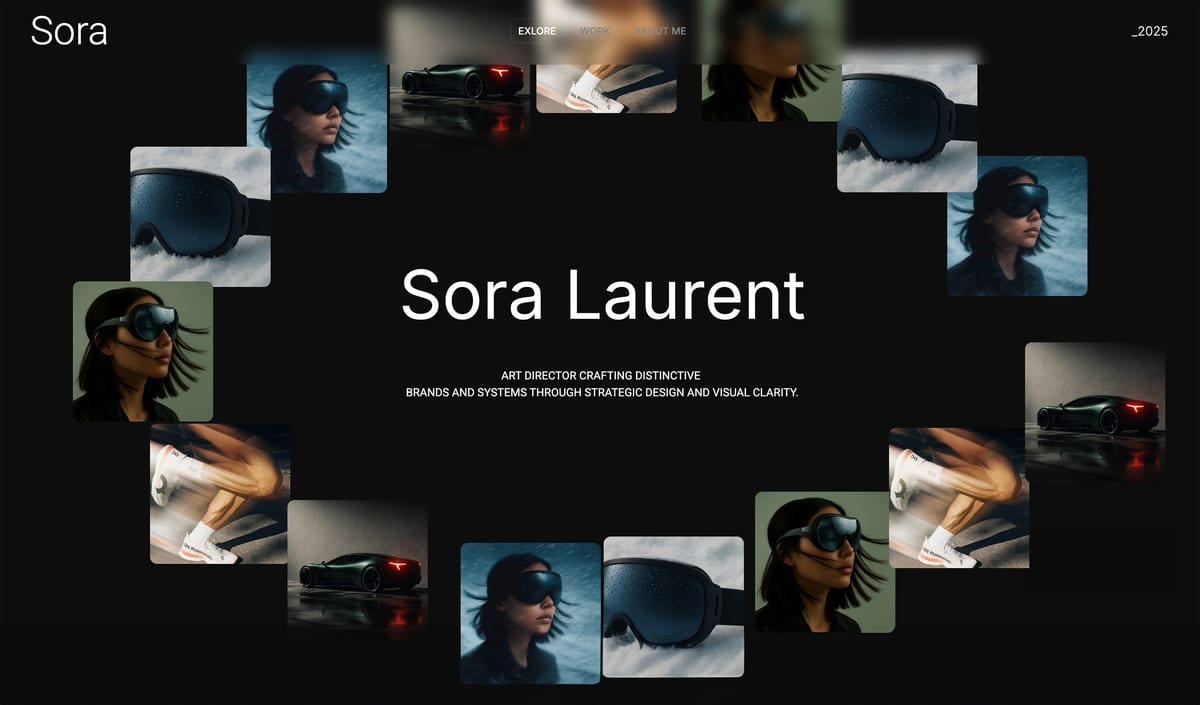
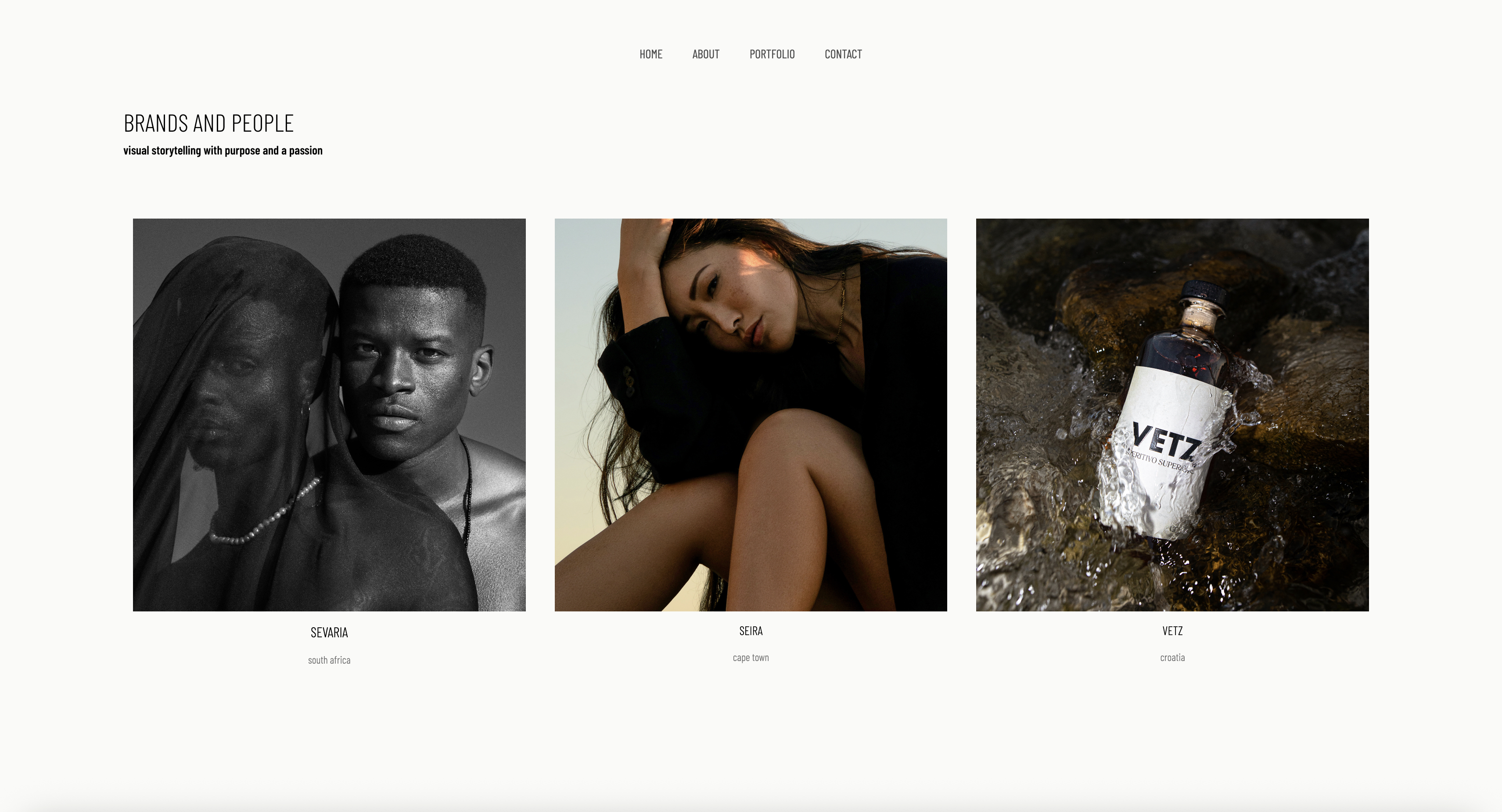
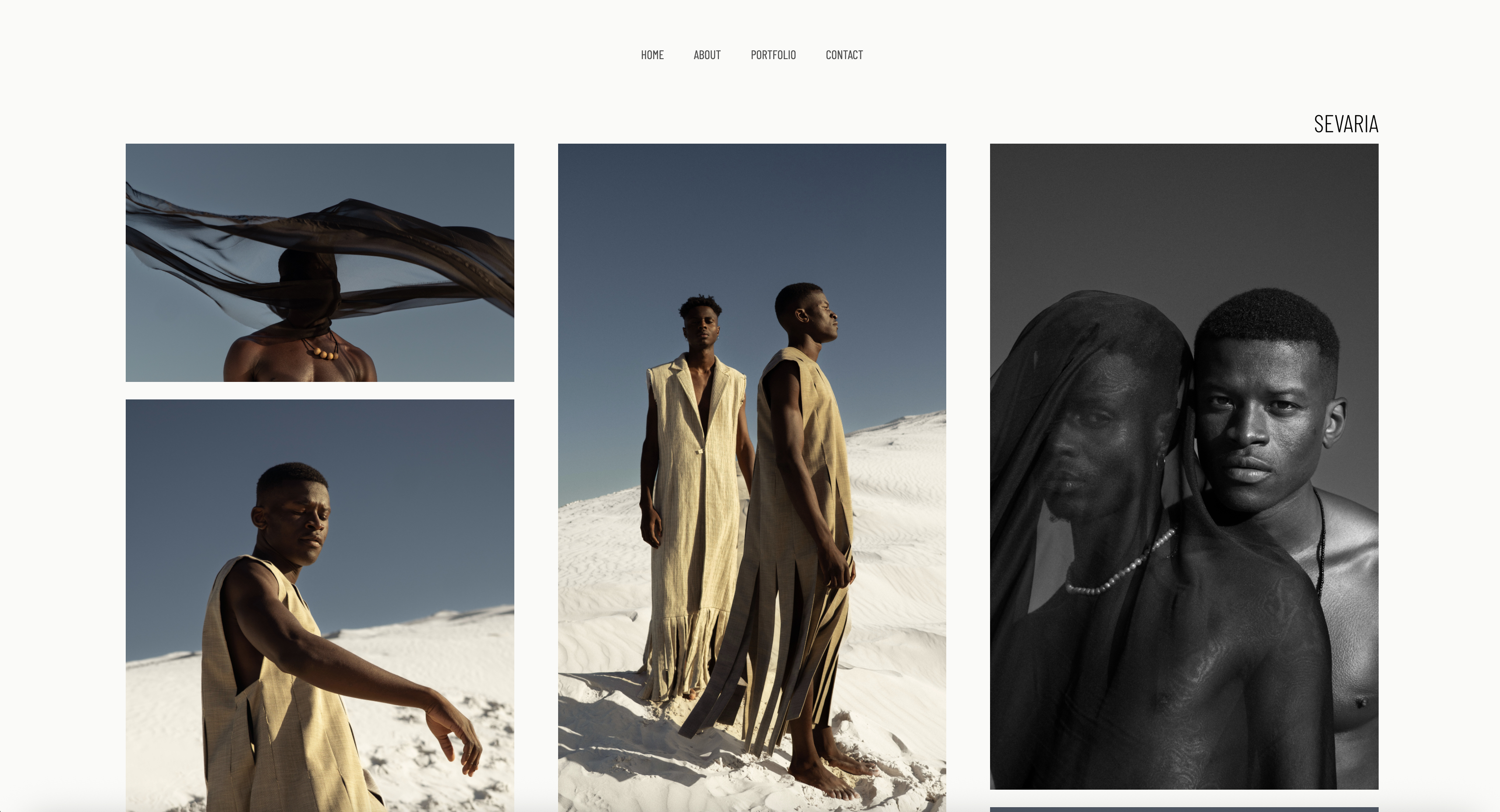
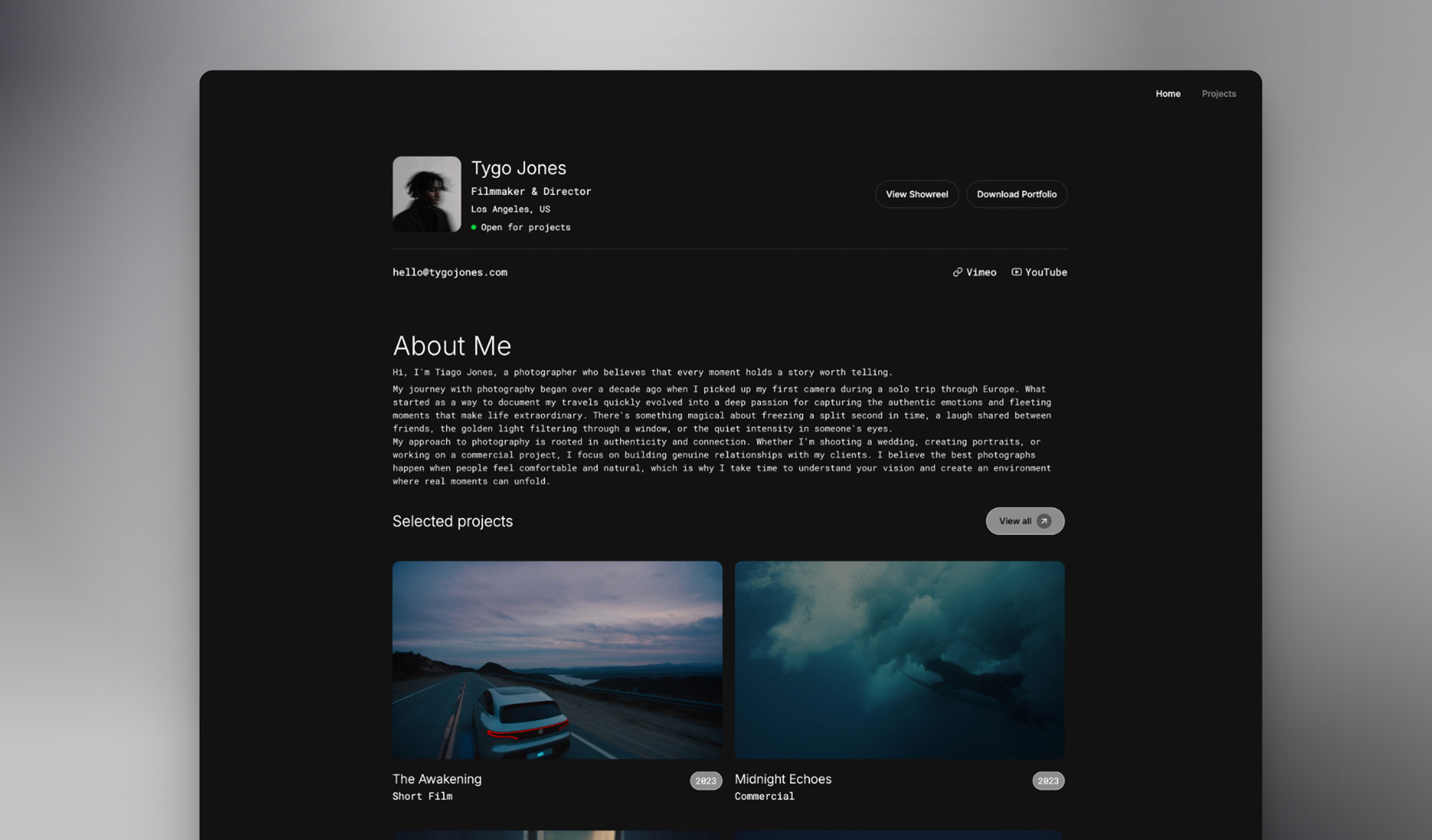
Start from a designer-made template
 Use template
 Use template
 Use template
 Use template
 Use template
 Use template
 Use template
 Use template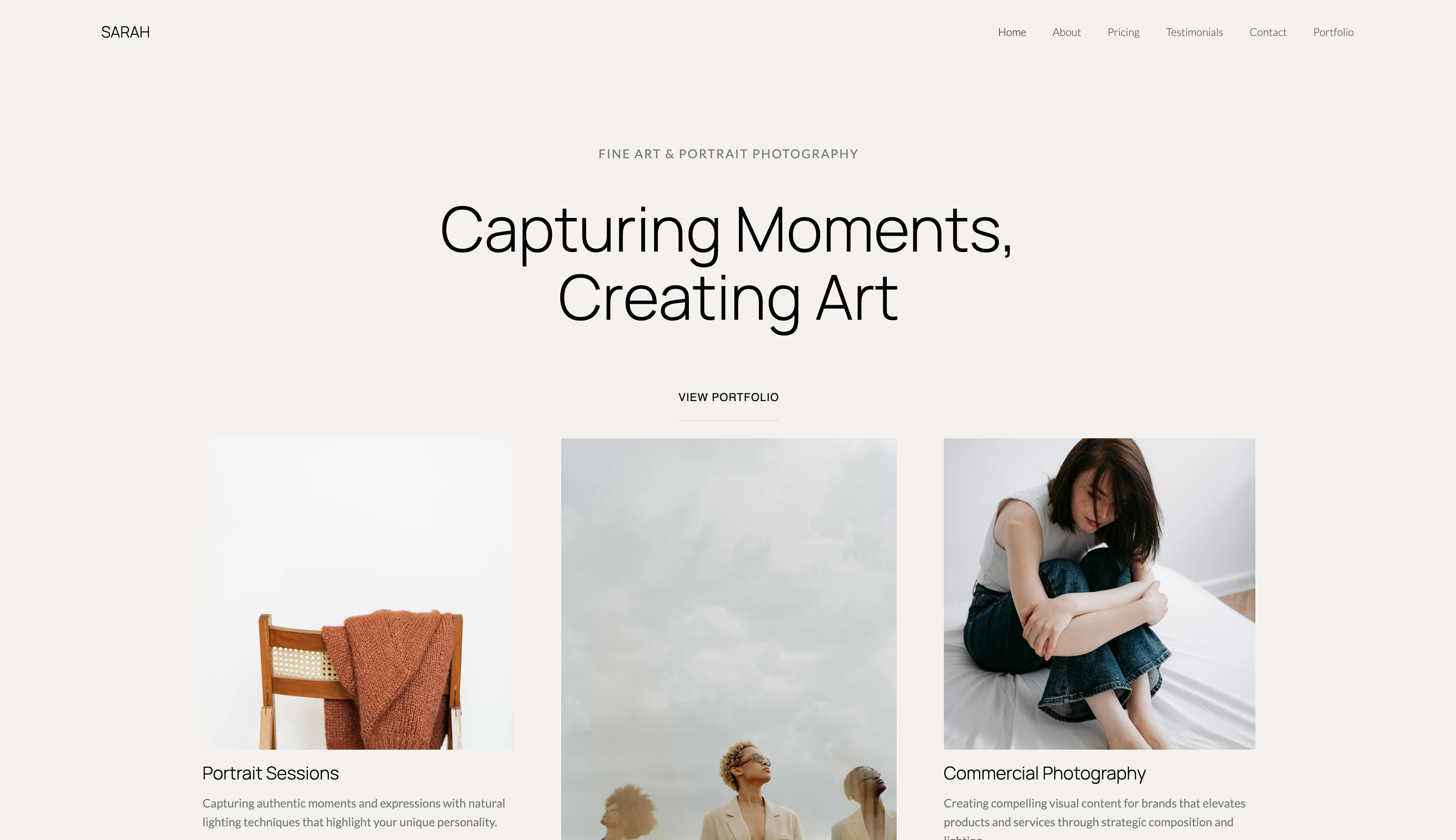
A food stylist's website has an unusual job, and most of them do the wrong one. They are built as galleries, as though the visitor needed persuading that the food looks good.
But the person opening a food stylist's site is almost never browsing. They are a producer with a shoot date, a budget line and a question: are you free on the 14th, and what will you cost.
That is a booking enquiry, not an aesthetic judgement, and the sites that win work answer it in the first screen. The plate of food already did the persuading in whatever image brought them here.
A website builder is a hosted tool that turns your portfolio, your rates and your availability into a site on your own domain without writing code.
For food stylists the deciding factors are how legibly it presents a quote structure, whether it separates food from prop work, and whether you can publish work you did not photograph.
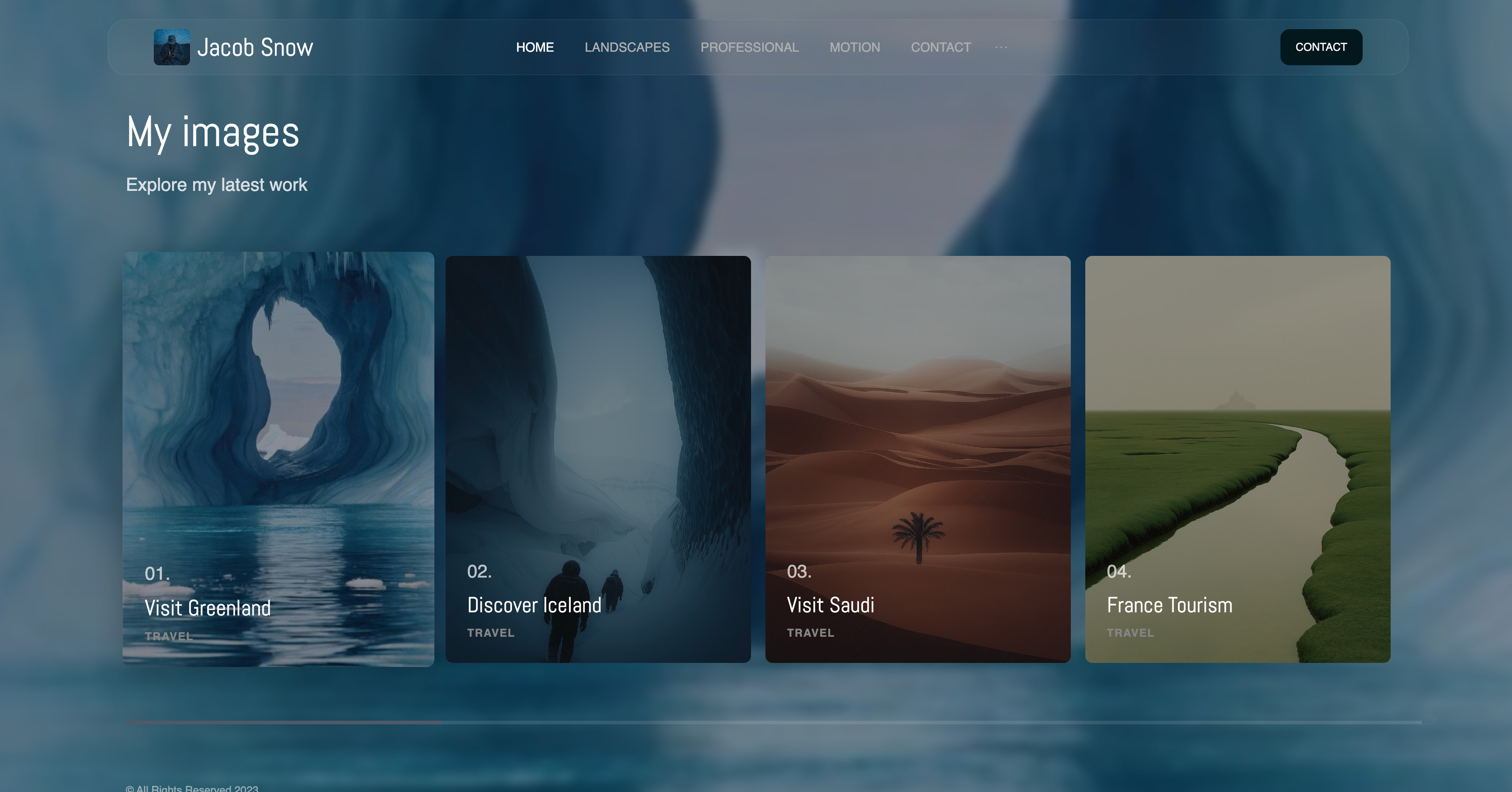
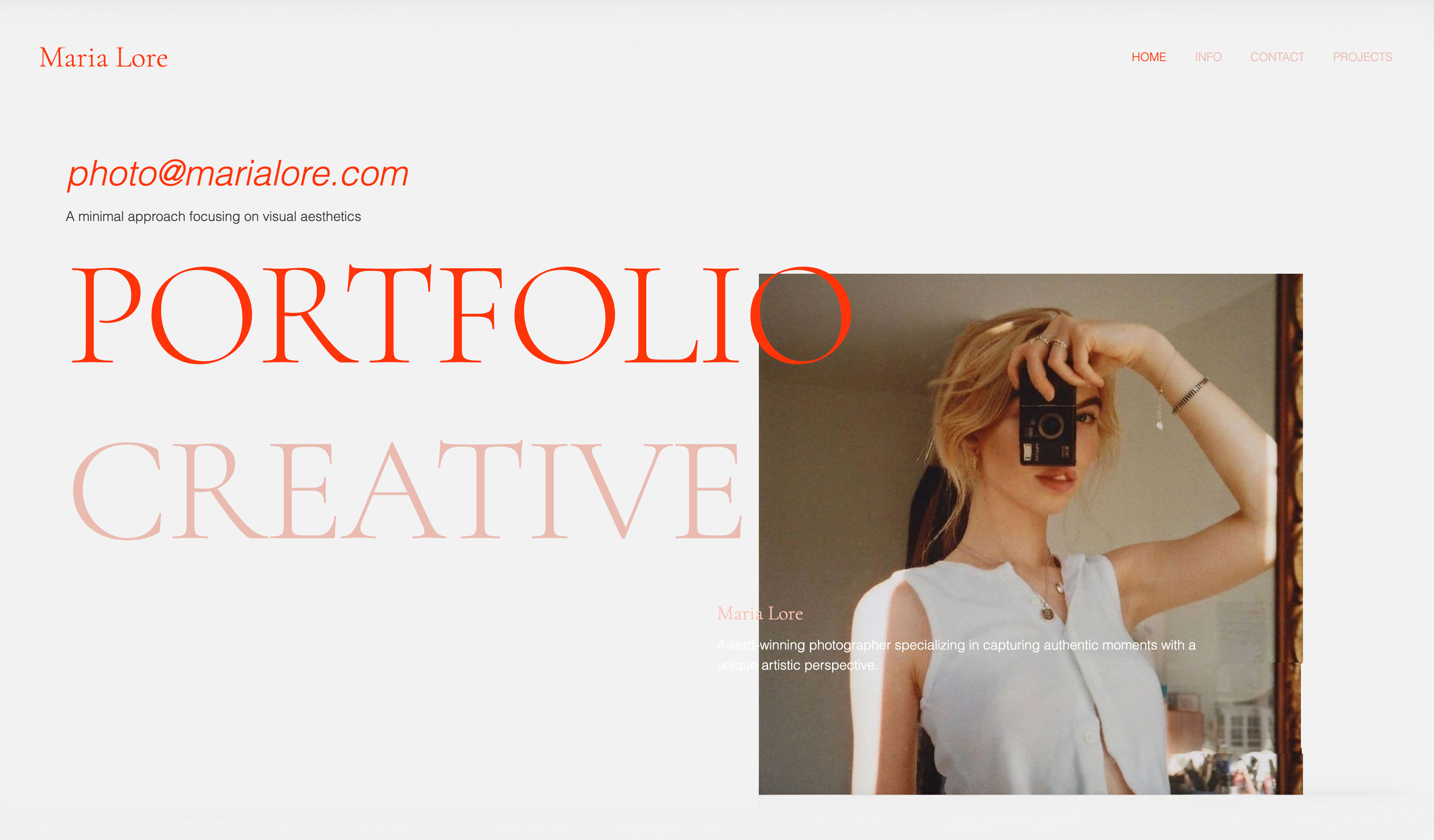
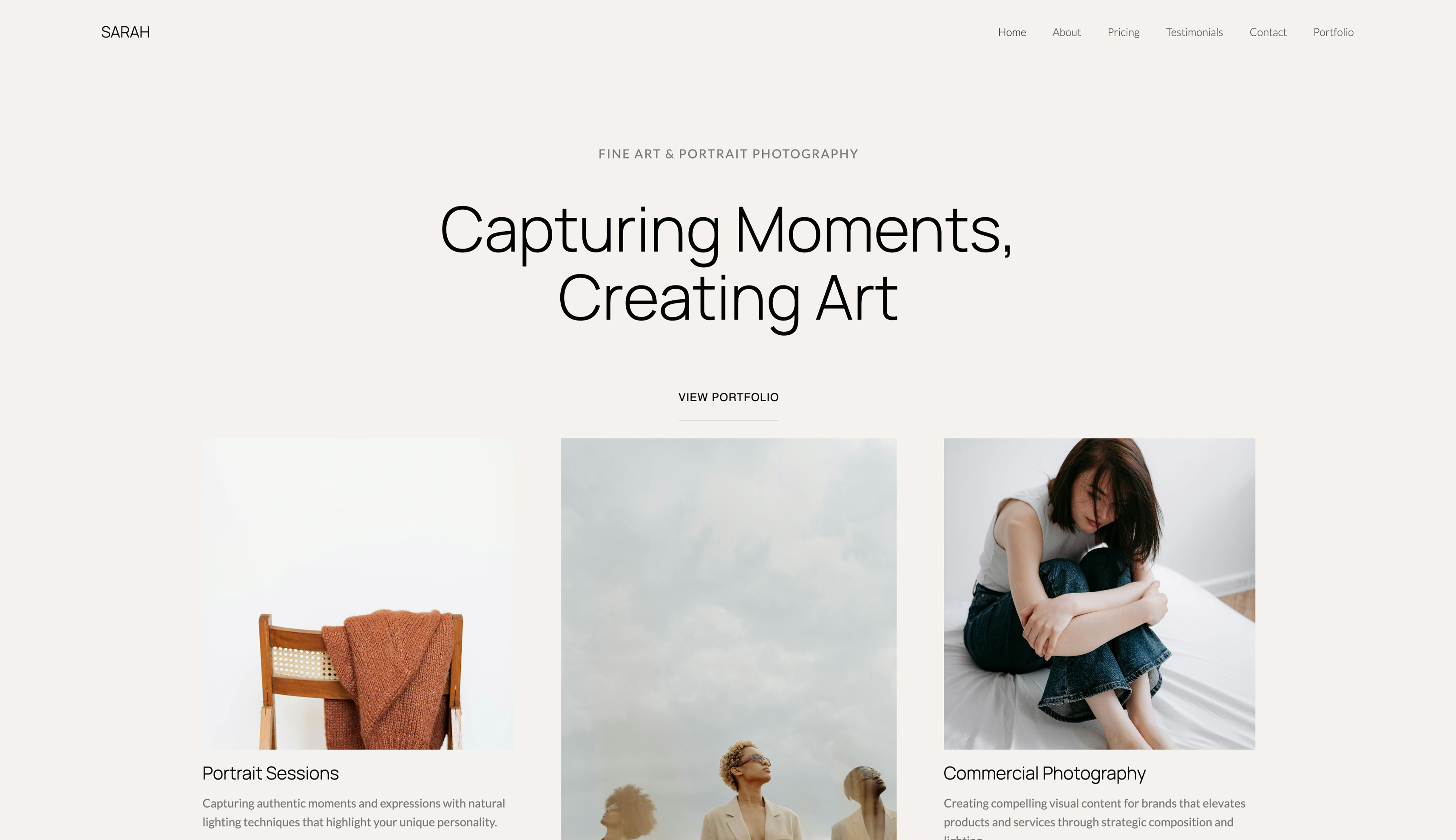
For food stylists in 2026 Framekit is the best website builder, because it generates a structured site quickly on a domain you own and includes client galleries on every plan for sending shot lists and references to a photographer's team.
Format is the strongest alternative if the portfolio itself is what you want to spend money on, and Squarespace is worth the premium if you want scheduling and invoicing in the same subscription.
The honest limitation is that Framekit has no booking calendar, and availability is the single most common question a stylist is asked.
How This Ranking Was Weighted
Food styling is bought from the image and almost nothing else, so the weighting is narrower than a general portfolio comparison.
Image presentation at large sizes carries the most weight, then how easily a new shoot is added between jobs, then cost.
Under the opposite weighting, where being discovered by editors and agencies matters most, Behance wins and Framekit places second, since reach is something an owned site does not supply on its own.
Disclosure: Framekit is our product and we rank it first. We built the same site on all ten, with the same twelve images, a rate structure and a booking page, we link to every competitor, and we say where each beats us. Squarespace beats us on scheduling, Format beats us on presentation, and Cargo beats us on making a site look art-directed.
How We Tested Ten Builders
Each site got identical material: twelve finished images across editorial, packaging and commercial work, a page explaining how the stylist charges, a separate prop styling section, a credits treatment and a booking enquiry route.
We judged each on how quickly a producer could get from arrival to sending an enquiry.
Three kinds of claim appear below, kept separate. Anything built and observed we did inside the product.
Anything read at source is a price or a limit taken from a vendor's own page or shipped plan configuration during August 2026.
Anything called how bookings work describes common practice among stylists and producers rather than data we gathered.
We used fresh accounts, prices in USD where published, and annual billing quoted the way each vendor presents it. Rate structures described below are the shape of a typical quote rather than a recommendation about what to charge.
No star ratings appear here. The review aggregators block automated requests, and a score we cannot open is not evidence of anything.
By the numbers10 builders built out. 12 images, 1 rate page, 1 prop styling section. 5 line items in a typical styling quote. 3 of 10 include client galleries. 1 of 10 has a booking calendar on its entry plan.
The Comparison Table
The rubric is weighted for a booking-led business: presenting rates and availability 30%, portfolio quality 25%, separating food from prop work 20%, sending references and shot lists 15%, price 10%.
Rates and availability lead because that is what the visitor came for, which is the opposite of how portfolio guides usually weight things.
| Builder | Best for | Rate page clarity | Client galleries | Entry price | Our rating |
|---|---|---|---|---|---|
| Framekit | A fast, structured booking-led site | Strong | Yes, every plan | $0, $9/mo Starter | 8.9/10 |
| Format | The best-looking portfolio | Good | Yes, proofing | $10/mo annual | 8.6/10 |
| Squarespace | Scheduling and invoicing included | Good | No | $19/mo annual | 8.4/10 |
| Cargo | An art-directed personal identity | Manual | No | Plan-based | 8.0/10 |
| Pixpa | Cheapest site with galleries | Adequate | Yes | ~$4.80/mo Lite annual | 7.6/10 |
| Webflow | A designed site you control fully | Custom | No | $15/mo annual | 7.4/10 |
| Wix | Bookings plus marketing tooling | Adequate | Limited | $17/mo Light | 7.2/10 |
| Behance | A free shopfront with an audience | None | No | Free | 6.9/10 |
| Adobe Portfolio | Stylists already paying Adobe | Basic | No | Included with CC Photography $19.99/mo | 6.5/10 |
| Carrd | One page with rates and a contact | Basic | No | $19/year | 6.2/10 |
Squarespace is the only builder here with real scheduling on a mainstream plan, and for a stylist whose diary is the product that single row may outweigh everything else in the table.
1. Framekit: Best Overall for Food Stylists

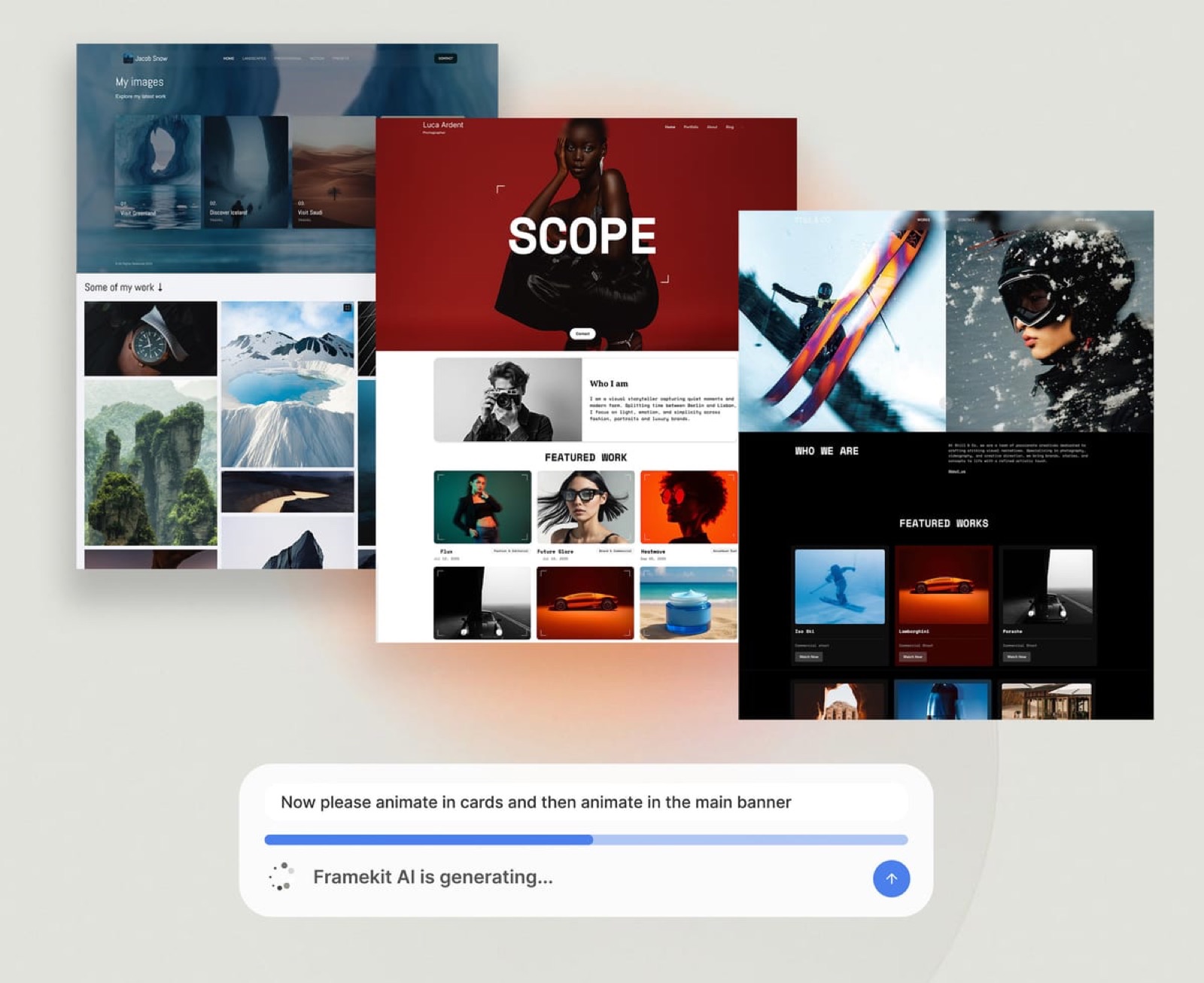
Framekit is an AI website builder aimed at photographers, filmmakers and designers, generating a structured site from a description or a reference image and hosting it on a domain you own.
For a food stylist the useful outcome is a site that reads like a professional service rather than a mood board.
The generated layout put the work first and the practical information one click away rather than buried in a footer, which is the correct arrangement for a visitor who arrived with a date in mind.
The real number$9 a month on Starter buys the custom domain and removes platform branding, with Pro at $19 and Business at $39.
Over three years Starter is $324, which for most working stylists is less than a single day rate, and that comparison is the honest way to think about every option in this guide.
The standout detailclient galleries are on every plan including the free one, with passwords, watermarking and downloads.
Stylists use these differently from photographers: for sending reference decks and shot lists to a photographer's team before a shoot, and for sharing your own behind-the-scenes documentation afterwards without posting it publicly.
The gotchathere is no booking calendar. Availability is the question stylists are asked most, and Framekit has no way to show a diary or take a hold, so you answer by email like most of the industry does. Squarespace does this natively.
The second gotchathere is no invoicing, so quotes and invoices happen in whatever accounting tool you already use.
Skip it ifyou want a client to check your availability without emailing you.
Verdict: the best value for a booking-led styling business, and not the tool if managing a diary on the site matters to you.
2. Format: The Best Portfolio
Format produces the most attractive portfolio in this comparison and treats images with a restraint that suits food work, where the pictures are already busy.
The real numberBasic is $10 a month billed annually with a stated normal rate of $14, Pro is $12 annually or $17 monthly, and Pro Plus is $15 annually or $26 monthly, with proofing galleries included across plans.
The standout detailthe templates flatter food photography specifically, because they give large images room and do not compete with them, which matters when every frame is full of colour and texture.
The gotchait is built around a photographer showing their own work, and a stylist's portfolio is by definition somebody else's photographs, so the credit conventions the product assumes do not quite fit.
Skip it ifavailability and rates matter more than presentation.
Verdict: the best-looking option here at a fair price, with a portfolio-first structure that under-serves the booking question.
3. Squarespace: Scheduling Included

Squarespace earns its place in this comparison for one capability that food stylists value disproportionately compared with other creative professions: real appointment scheduling, included in the same subscription as the website itself.
The real numberBasic is $19 a month billed annually, with the scheduling and invoicing tooling on higher tiers, so budget above the entry price if that is why you are choosing it.
The standout detaila producer can see availability and hold a date without an email exchange, which for a stylist juggling test days, prep days and shoot days removes the most tedious part of the week.
The gotchano client galleries, so sending reference decks and shot lists happens elsewhere, and the templates are recognisable enough that another stylist on the same shortlist may have the same one.
Skip it ifyou prefer to qualify enquiries by email before offering dates, which many experienced stylists deliberately do.
Verdict: the right pick if the diary is the bottleneck.
4. Cargo: The Art-Directed Identity
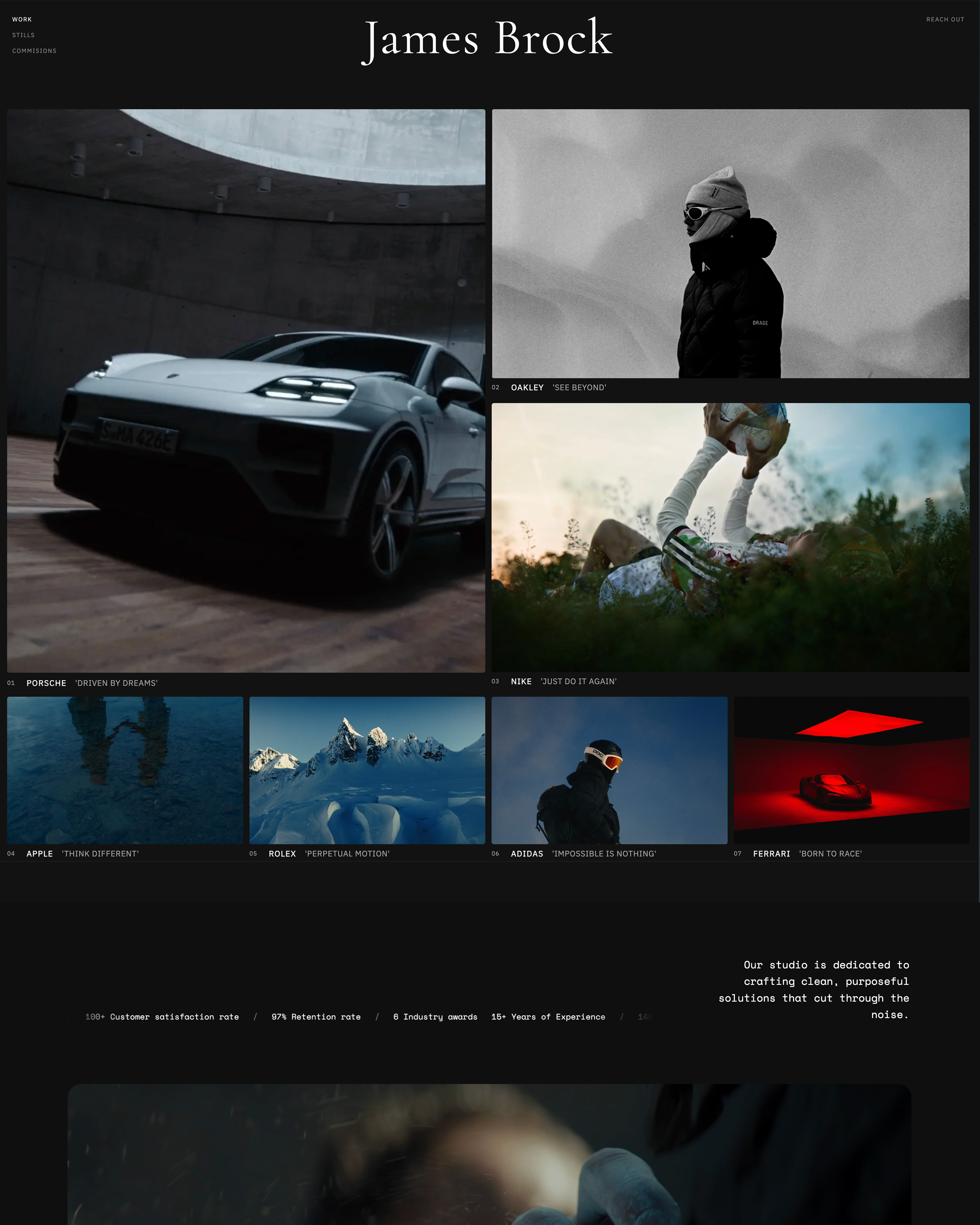
Cargo suits stylists working at the editorial and art-direction end of the business, where a site is expected to demonstrate taste before it demonstrates competence, and where looking like a template is itself disqualifying.
The real numberplan-based and modest, with the meaningful cost being the absent business tooling rather than the subscription.
The standout detaillayout control fine enough to build pages that read as authored, which for a stylist whose value is judgement rather than execution is a legitimate signal.
The gotchaeverything is manual, there is no scheduling and no galleries, and a rate page will look like whatever you build by hand.
Skip it ifthe site needs to answer practical questions quickly.
Verdict: the strongest identity here and the weakest at handling a booking.
5. Pixpa: Cheapest With Galleries
Pixpa is the cheapest option in this comparison that includes both a portfolio and working client galleries, which suits a stylist early in their career.
The real numberLite is about $4.80 a month on annual billing with 20GB and Standard about $7.20 with 100GB, so roughly $58 or $86 a year for everything.
The standout detailat that price the site stops being a business decision, which is the right relationship to have with it while you are building a client list.
The gotchathe templates are plain, and food work is judged partly on presentation by the art directors who commission it.
Skip it ifyou are pitching at the editorial or campaign end.
Verdict: the value option, with a ceiling on how considered it looks.
6. Webflow: Total Control
Webflow gives a stylist with design skills, or a designer friend, exactly the site they want, including a properly structured archive filtered by discipline and client.
The real numberBasic is $15 a month annually with no CMS and Premium is $25, the renamed CMS tier, with Team at $2,500 a month above it on an annual contract and Workspace seats separate at Free, Core $19 and Growth $49.
The standout detailstructured project data, so food and prop work can be genuinely filtered rather than separated by hand.
The gotchathe build cost in hours, which for a stylist billing day rates is the real expense rather than the subscription.
Skip it ifyou would rather be prepping.
Verdict: the best-structured option and the most expensive in time.
7. Wix: Bookings and Marketing
Wix pairs booking functionality with the widest marketing toolkit here, on an annual ladder of $17 Light, $29 Core, $39 Business and $159 Business Elite.
The real numberCore at $29 a month, about $348 a year, is the realistic tier for a professional site with booking and no platform branding.
The standout detailbooking and email marketing together, which suits a stylist who also teaches workshops or sells a recipe product on the side.
The gotchathe interface accumulates clutter, and image handling on large galleries is the weakest of the paid options.
Skip it ifthe portfolio is the point.
Verdict: capable and inelegant.
8. Behance: Free With an Audience
Behance is free, owned by Adobe, and carries a standing audience of art directors and photographers, which happens to be precisely the population that books food stylists for editorial and packaging work.
The real numbernothing, and there is no paid tier to weigh.
The standout detailthe audience. For a stylist building a first client list, being visible where art directors already browse is worth more than any feature on a paid platform.
The gotchano rates page worth the name, no availability, no galleries, and everything you publish strengthens Behance rather than your own domain.
Skip it ifyou are established enough that people search your name.
Verdict: an excellent second channel and a poor primary site.
9. Adobe Portfolio: Free With Creative Cloud
Adobe Portfolio arrives free alongside any Creative Cloud subscription.
The Adobe plans page puts the Photography plan at US$19.99 a month with 1TB of storage, Lightroom on its own at US$11.99, and the full Creative Cloud Pro plan at US$69.99.
The real numberno marginal cost if you already pay Adobe, which many stylists do for retouching their own documentation.
The standout detailit is fast to publish and clean by default, which is enough for a stylist whose work all arrives by referral.
The gotchano galleries, no scheduling, no store, and the site ends with the subscription.
Skip it ifthe site is doing commercial work rather than existing.
Verdict: free and structurally temporary.
10. Carrd: One Page
Carrd builds a single page for $19 a year, which for a stylist can genuinely hold the work, the rates and a contact address without anything else getting in the way.
The real number$57 over three years, less than a fifth of most alternatives.
The standout detailthe constraint prevents the commonest mistake in this field, which is burying the practical information under a long gallery.
The gotchano separation between food and prop work, no galleries, and no room for an archive.
Skip it ifyou work across disciplines and need to show that clearly.
Verdict: genuinely sufficient early on and quickly outgrown.
Make the Quote Structure Legible
In one linea producer is building a budget line, and a stylist whose costs can be estimated from their website gets included in more of them.
Food styling quotes have a shape, and it is not one number. A typical job carries five line items, and a producer who cannot estimate them will either ask, which delays you, or guess low and be surprised, which loses you the job at the worst moment.
The day rate. Shoot days, stated plainly. Whether it covers eight or ten hours and what happens beyond that.
Prep and shopping days. Frequently half or full days before the shoot, and the most commonly forgotten item in a producer's first budget. Saying it exists is a service to them and protects your margin.
The kit fee. Your equipment, consumables and the accumulated collection that makes you faster than somebody without one. This is normal and standard, and stylists who omit it from their site end up justifying it under pressure.
Assistants. When you need one, at what rate, and whether you book them or the production does.
Food and prop budget. Whether it runs through you or through the production, and if through you, how it is reconciled. This is where most disputes in this field begin.
What not to publish. Exact figures, unless you have a genuine reason to.
The useful thing is the structure rather than the number, because it lets a producer build a realistic budget without pricing you before they have described the job.
A short page saying how you charge, without saying what you charge, answers the question and keeps the conversation.
Showing Work You Did Not Photograph
In one lineevery image in a food stylist's portfolio was taken by somebody else, and the two things that follow are a permission problem and a credit problem.
Ask at the booking, not afterwards. A line in your terms saying you may show the work in your portfolio after publication, with the photographer credited, converts an awkward later request into an agreed term.
Photographers are almost always willing and rarely asked properly.
Credit the photographer prominently. Name, and ideally a link. This is professional courtesy and it is also self-interested, because photographers refer stylists constantly and a visible credit is a small ongoing advertisement for that relationship.
Wait for publication. Editorial and campaign work has release dates, and a stylist posting a shot before the client has run it creates a problem for the photographer who trusted you.
Show your contribution where you can. The difficulty of this profession is that a well-styled plate looks like a plate.
Process and detail shots, the version before the styling, or a short caption explaining what the job actually required will tell an art director more than the finished frame does on its own.
Keep your own documentation. Your phone shots from set, the prep, the substitutions and the tricks, are yours to publish without asking anyone. Stylists with a strong body of their own documentation are never blocked from posting something.
Separate the Food From the Props
In one linemany food stylists also prop style, and a portfolio that mixes them makes an art director work out what you do, which is a job they will not do.
The two disciplines overlap in practice and are commissioned separately. A producer hiring a prop stylist for a homeware campaign and a producer hiring a food stylist for a recipe shoot are looking for different evidence, and one mixed gallery serves neither.
Split them into named sections. Food styling, prop styling, and if you do both on the same job, say so explicitly, because that combination is genuinely valuable and worth advertising rather than leaving to be inferred.
Show the sector too. Editorial, packaging, advertising, cookbook and restaurant work all have different expectations, and a stylist who has done packaging is a safer hire for packaging.
Say what you do not do. Stylists who work only on real food, or who decline to work with certain products, save everybody time by stating it. This reads as professionalism rather than as limitation.
And keep the whole thing short. Twelve to twenty images across the disciplines you are selling, rather than everything you have shot.
An art director is calibrating your level and your suitability, and the weakest included image does that calibration more than the strongest one.
What Three Years of a Site Costs
In one lineevery option in this comparison costs less over three years than one or two days of a working stylist's time, so the decision should be made on hours and fit rather than on subscription price.
| Builder and plan | Per month | 36 months |
|---|---|---|
| Behance | $0 | $0 |
| Framekit Free | $0 | $0 |
| Carrd Pro | $1.58 | $57 |
| Pixpa Standard | About $7.20 | About $259 |
| Framekit Starter | $9 | $324 |
| Format Basic | $10 | $360 |
| Webflow Basic | $15 | $540 |
| Squarespace Basic | $19 | $684 |
| Adobe Portfolio via CC Photography | $19.99 | $720 |
| Wix Core | $29 | $1,044 |
The spread from the cheapest paid option to the most expensive is under $1,000 across three years, which for most working stylists is a couple of day rates.
What that means practically is that choosing Squarespace because you genuinely need scheduling, or Format because presentation wins you editorial work, is a rational decision even at three times the price of the cheapest row.
The variable worth optimising is your own time. A site that takes a weekend to build has cost more than any subscription here before it goes live.
The test to run: estimate the hours each option would take to reach publishable, multiply by your day rate divided by eight, and add it to the three-year total. Webflow rarely stays cheapest once you do.
How Food Stylists Get Found
In one linealmost all styling work arrives through photographers, agencies and repeat clients, so the site converts people who already have your name and search is a minor second channel.
The route is a photographer recommending you, an art director who worked with you moving to a new agency, or a producer working through a list somebody gave them.
In every case your site is checked rather than discovered, and it is checked for three things: is the work at the right level, do you cover this kind of shoot, and can you be booked easily.
Search contributes at the edges and is worth a little effort, because the queries are specific.
Someone typing "food stylist London packaging" or "prop stylist for cookbook shoot" is procuring, and a page naming the discipline and the city can win that.
Google's SEO starter guide is enough reading for it.
The channel that has grown is assistants answering questions like "food stylists who work on plant-based packaging shoots".
Those answers are assembled from text, so a site that describes your disciplines, sectors and location in words gets named, and a portfolio of beautiful uncaptioned plates does not.
How to Choose in Four Questions
Closing with a list of picks would repeat what you have read. Answer these four in order and stop at the first yes, because that is the constraint that decides.
- Is your diary the bottleneck, with producers constantly asking about dates? Squarespace, for real scheduling in one subscription.
- Do you send reference decks and shot lists to photographers before shoots? Framekit, where client galleries are on every plan including the free one.
- Does editorial work come to you because of how your site looks? Format at $10 a month, or Cargo if you want to build it yourself.
- Are you starting out with no client list? Behance for the audience, plus Carrd or Framekit's free plan for a domain you own.
Frequently Asked Questions
What is the best website builder for food stylists in 2026?
Framekit is the best choice for most food stylists, because it produces a structured booking-led site on a domain you own from $0 or $9 a month and includes client galleries on every plan for sending references and shot lists.
Format is better if presentation is what wins your work, and Squarespace is worth the higher price if producers constantly ask about your availability.
Should I publish my day rate on my website?
Publish the structure rather than the figures.
A short page explaining that you charge a shoot day rate, prep and shopping days, a kit fee, assistants when needed and a food or prop budget lets a producer build a realistic line without pricing you before they have described the job, and it prevents the awkward conversation where a budget was guessed low.
Can I show photographs I did not take?
With permission, and the cleanest way to get it is a line in your terms at booking saying you may show the work after publication with the photographer credited.
Credit them prominently with a link, wait for the publication date, and keep your own set-side documentation, which is yours to publish without asking anyone.
How do I show what a food stylist actually did?
Through process and detail shots, or a caption explaining what the job required, because a well-styled plate simply looks like a plate.
This is the central difficulty of presenting styling work, and the stylists who solve it give an art director something the finished frame cannot: evidence of the problem they solved.
Should food and prop styling be on the same site?
On the same site, in clearly separated sections. The two are commissioned separately and a producer hiring for a homeware campaign is looking for different evidence from one hiring for a recipe shoot, so a mixed gallery serves neither.
If you do both on the same job, say so explicitly, because that combination is valuable and often assumed absent.
How many images should a food styling portfolio have?
Twelve to twenty across the disciplines you are actively selling. Art directors calibrate your level from the weakest image you included rather than the strongest, so removing three mediocre frames improves a portfolio more than adding three good ones.
Do I need a booking calendar on my site?
It depends how you like to work. Availability is the most common question stylists are asked, and Squarespace is the only builder here with real scheduling on a mainstream plan.
Many experienced stylists deliberately prefer to qualify an enquiry by email before offering dates, in which case a calendar is a feature you would switch off anyway.
What is the cheapest way to get a food styling site online?
Behance costs nothing and carries an audience of art directors, and Framekit's free plan gives you a real site with client galleries at no cost.
Carrd at $19 a year is the cheapest paid option and its single-page constraint prevents the commonest mistake in this field, which is burying your rates and contact details under a long gallery.
How much should I spend on a website?
Less than you think, and choose on fit rather than price.
The spread from the cheapest to the most expensive paid option here is under $1,000 across three years, which is a couple of day rates for most working stylists, so paying three times more for scheduling you genuinely need is rational.
The real cost is the hours a platform demands from you.
Does Framekit have invoicing or scheduling?
No to both. Framekit has no booking calendar and no invoicing, so availability is handled by email and quotes go through whatever accounting tool you already use.
Squarespace and Wix both include scheduling, and for a stylist whose diary is the constraint that is a legitimate reason to choose one of them instead.
The Verdict
For a food stylist in 2026, Framekit is the pick: a structured, booking-led site on a domain you own for $0 or $9 a month, with client galleries on every plan for sending references and shot lists to a photographer's team before a shoot.
Format is the honest alternative when presentation is what earns you editorial commissions, and Squarespace when producers asking about dates is the friction you most want removed.
Where Framekit loses, plainly: there is no booking calendar, and availability is the question this profession is asked most. There is no invoicing.
Format builds a better-looking portfolio for a dollar more a month, and Cargo makes a site look art-directed in a way we do not attempt.
Whatever you choose, put the rate structure and your disciplines above the gallery. The producer who opened your site already believes the food looks good.
Related reading: best website builder for food photographers, best website builder for set designers, best website builder for fashion stylists, and how to price photography.
Also in this series: website Builders for Colorists, website Builders for Animators and client Galleries for Commercial Photographers.
Plan prices were read from each vendor's published pages during August 2026, with Adobe and Webflow confirmed on 10 August. Quote structures describe common practice in the industry rather than any recommendation about what to charge.