Framekit templates
Start from a designer-made template
 Use template
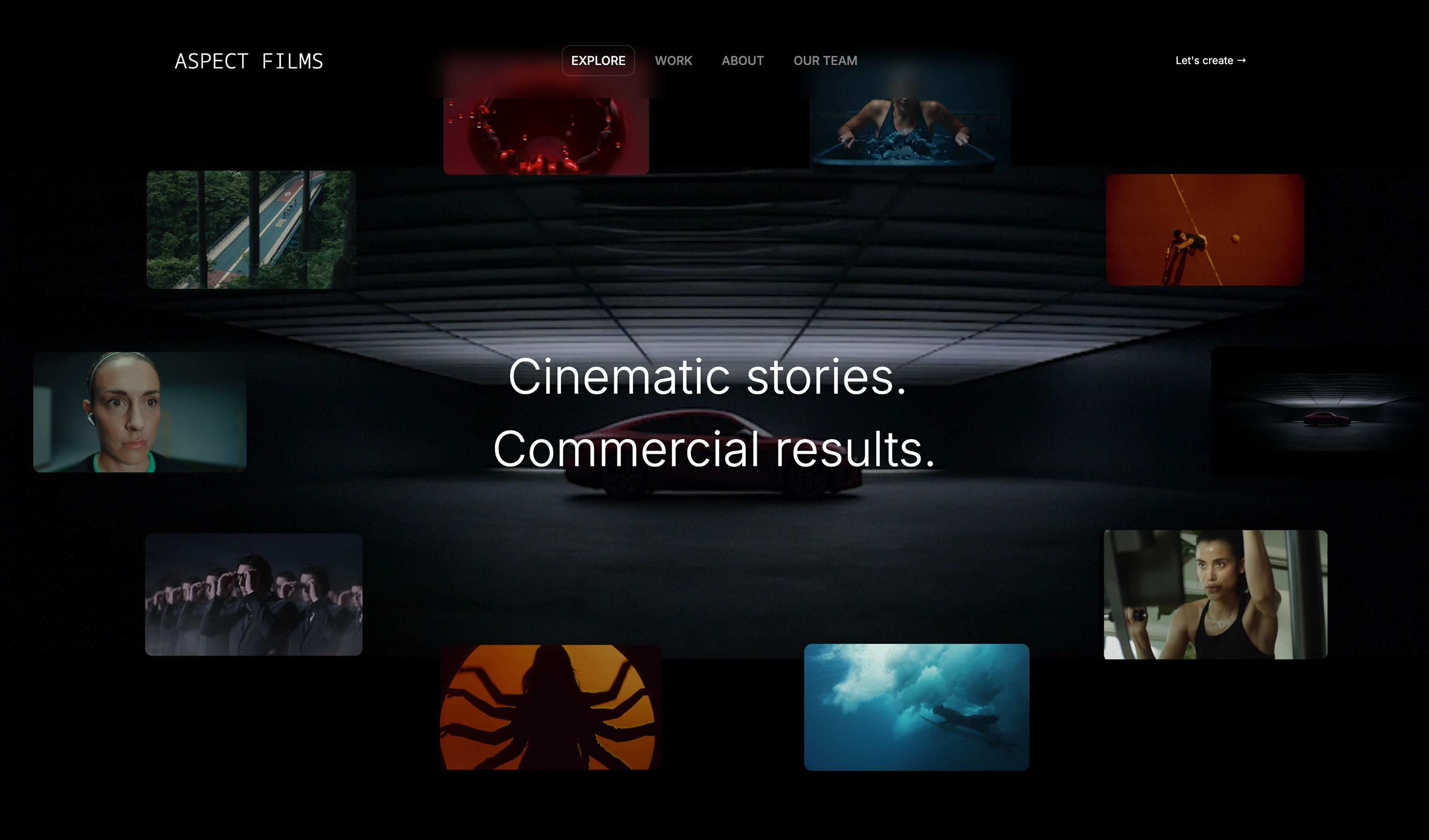 Use template
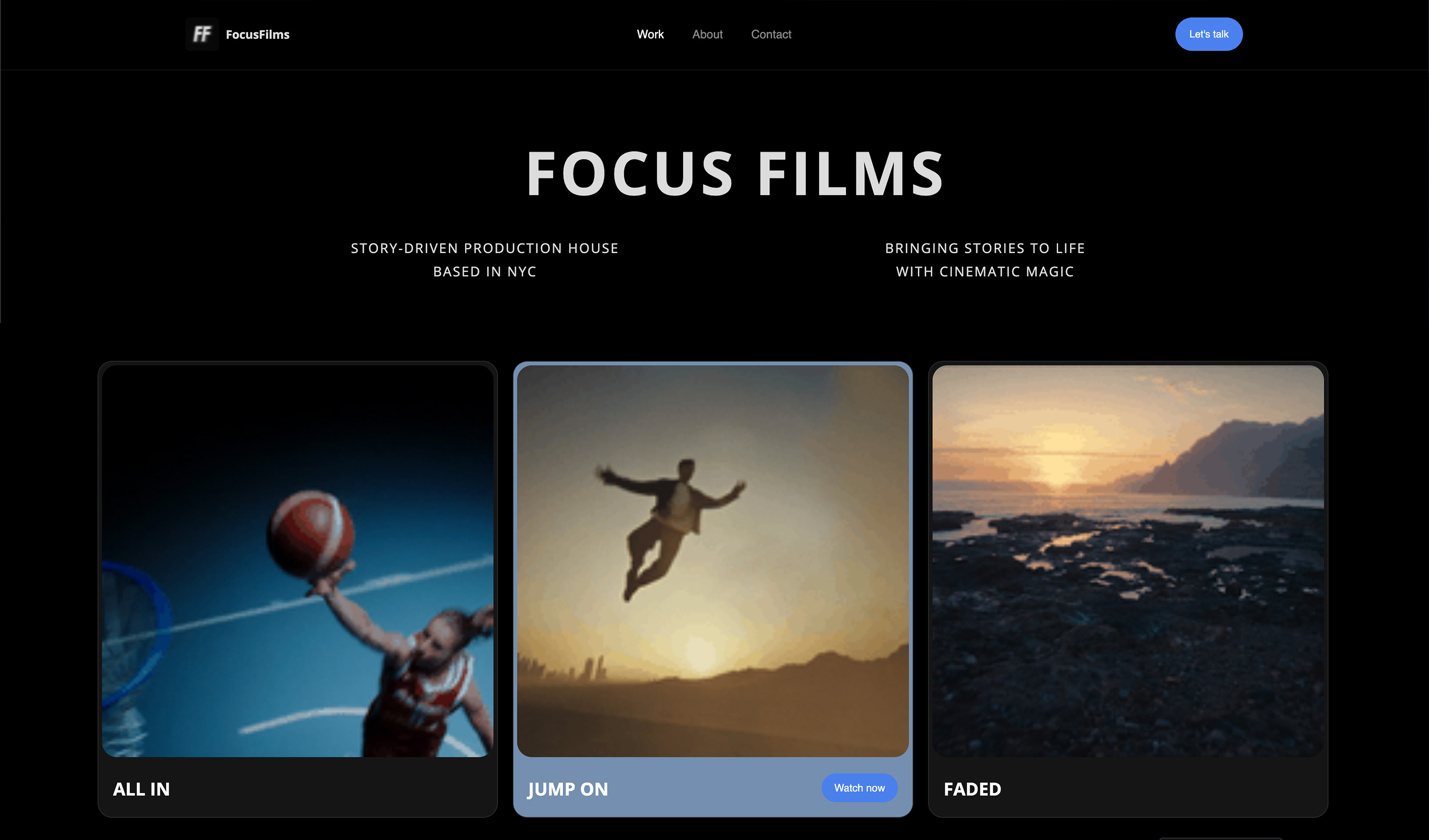 Use template
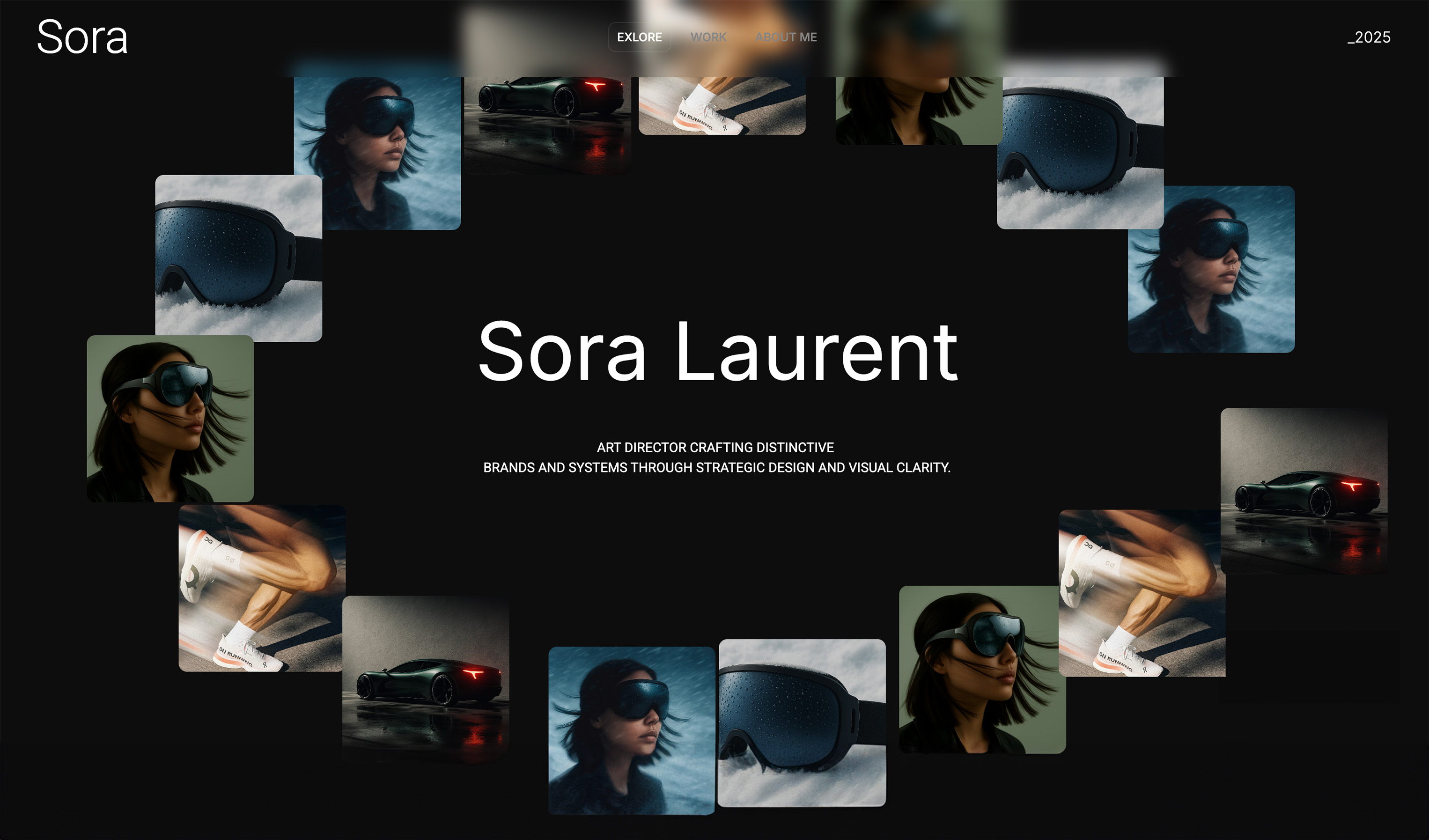 Use template
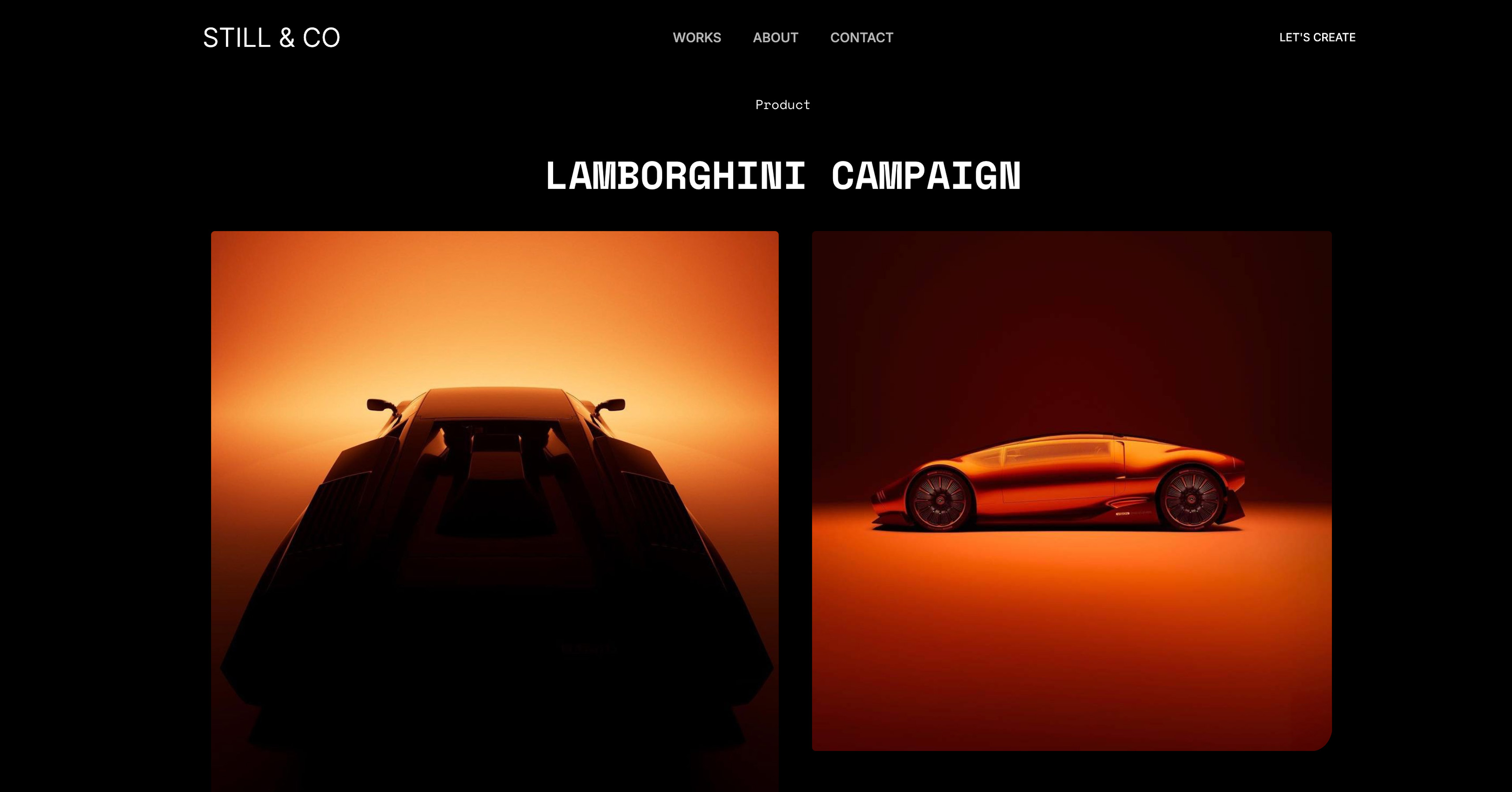 Use template
 Use template
 Use template
 Use template
A colorist spends the day inside a calibrated suite, on a reference monitor that cost more than a used car, arguing about four points of saturation in a skin tone.
Then the work goes on a portfolio site, gets re-encoded by an uploader nobody asked about, and arrives on a client's laptop with the profile stripped and the blacks lifted.
That is the whole problem with this category in one sentence. Every other creative can survive a portfolio that is approximately right. A colorist cannot, because the portfolio is a sample of the exact thing being sold.
A website builder is a hosted tool that turns a portfolio, a reel and a store into a site on your own domain without you writing code.
For a colorist the useful question is narrower than "which builder is prettiest": which one will show a graded frame the way you graded it, play a reel without re-crushing it, and sell a LUT pack without taking a cut that grows every year.
The best website builder for colorists in 2026 is Framekit, because the reel, the stills and the LUT store live on a domain you own, so the client, the mailing list and the search traffic stay yours when you change tools.
Format is the strongest pure-portfolio runner-up at $10 a month annually, and Webflow wins if you want bespoke before-and-after interactions and are willing to build them.
The honest trade-off is that Framekit's store fee starts at 5% on the free and $9 Starter plans, so if you are already selling several thousand dollars of packs a month you should be on the $39 Business plan at 0%, not the free one.
How This Ranking Was Weighted
The criteria were not applied equally, and a colourist's site rises or falls on one of them far more than the rest.
How faithfully the site reproduces a graded frame carries the most weight, because a portfolio that shifts your colour is arguing against you. Then how the reel is presented, then what the plan covers beyond hosting, then cost.
Under the opposite weighting, where the site itself is a showcase of interaction design, Framer or Webflow wins and Framekit places third.
Disclosure: Framekit is our product, and we rank it first here. We built a real site on all eight tools with the same reel, the same six graded stills and the same $39 LUT pack, we link to every competitor, and we say where each one beats us. Webflow and Framer both beat Framekit on custom interaction design, and Adobe Portfolio beats everything on price if you already pay Adobe.
How We Tested These Eight Builders
We built the same site eight times: a landing reel, a six-frame stills gallery, a services page, a contact form and a single $39 LUT pack for sale. Same footage, same frames, same copy, same $39 price, so the differences below come from the tools rather than the material.
Three kinds of finding appear in this guide, and we label them so you can weigh them separately.
Findings we measured are things we did in the product: building the page, uploading the frames, publishing the store item, running a test purchase where the platform allowed one.
Findings we verified are policy and pricing facts read off the vendor's own page on 9 August 2026 and cited inline.
Findings drawn from community reports are flagged as such in the sentence that carries them, because a forum thread is evidence of a pattern, not proof of a number.
Test conditions: fresh accounts created for this guide, billed in USD where the vendor offered it, no existing agency or education discounts applied, and no vendor was told a review was happening.
Where a builder was trial-only for the paid feature we needed, we built and previewed but did not complete a live charge, and we say so in that tool's entry.
One thing we could not do: quote star ratings. G2, Capterra and Trustpilot all refuse automated requests, so rather than reprint numbers we could not open, this guide quotes none. Where a vendor publishes its own rating we attribute it to the vendor.
By the numbers8 builders built out. 6 graded stills per site. 1 carried example, a $39 LUT pack. 3 of 8 offer a store you can sell from on your own domain. 2 of 8 charge nothing to publish a real site on a custom domain. 5 of 8 re-encode uploaded stills by default.
The Comparison Table
The rubric is weighted for the work, not for feature counts: image fidelity 30%, reel handling 25%, selling on your own domain 20%, design control 15%, and price over three years 10%.
Image fidelity carries the most weight because a colorist's portfolio is a colour proof, and a builder that silently re-encodes a graded frame is doing the one thing this profession cannot tolerate.
Design control is weighted lowest because a reel-first site is a simple layout problem, and paying for a visual-development environment you will use twice is a bad trade.
| Builder | Best for | Sell on your own domain | Entry price | Design control | Our rating |
|---|---|---|---|---|---|
| Framekit | Reel, stills and LUT store in one place | Yes, your domain | $0, $9/mo Starter | Good, not bespoke | 9.2/10 |
| Format | Pure portfolio with tidy proofing | No store worth using for packs | $10/mo annual | Template-led | 8.4/10 |
| Webflow | Custom before-and-after interactions | Yes, with build effort | $15/mo annual | Best in class | 8.3/10 |
| Adobe Portfolio | Colorists already paying Adobe | No | Included with CC Photography $19.99/mo | Limited | 8.0/10 |
| Framer | Motion-heavy one-page reels | Limited | $10/mo Basic | Very strong | 7.8/10 |
| Squarespace | Generalists who want it done | Yes, with fees | $19/mo annual | Template-led | 7.6/10 |
| Wix | Plugin-driven needs | Yes | $17/mo Light | Wide but uneven | 7.0/10 |
| Carrd | A one-page reel and a link | No | $19/year | Minimal | 6.6/10 |
Framekit does not top every column, and the table shows it: Webflow and Framer both out-score it on design control, and Adobe Portfolio is cheaper than anything here for a colorist already inside a Creative Cloud subscription.
1. Framekit: Best Overall for Colorists

Framekit is an AI website builder for photographers, filmmakers and designers that generates a site from a description or a reference image, then lets you sell from it on your own domain.
For a colorist the draw is that the three things you need are not three subscriptions: the reel page, the stills gallery and the LUT store are one site, on one domain, under one login.
Building the test site took about twenty minutes, most of it spent choosing between two generated layouts rather than fighting a page builder.
The generated dark theme was the only one of the eight that did not need its background lightened to stop the graded frames looking muddy, which matters more than it sounds: a mid-grey page behind a low-key frame is a simultaneous-contrast problem, and it makes your night exteriors read as underexposed to a client who does not know why.
The real numberon the carried $39 LUT pack, Framekit's fee is 5% on the free and $9 Starter plans, 3% on Pro at $19, and 0% on Business at $39 a month.
At $39 a sale that is $1.95, $1.17 and nothing, before standard card processing which every platform here pays.
The crossover is arithmetic you can do on your own sales: $39 divided by 5% is $780, so once you clear about $780 a month in pack sales the flat Business plan costs less than the percentage, and unlike a marketplace percentage it stops growing.
The standout detailthe store and the galleries are on every plan, including the free one.
Client galleries on Framekit carry unlimited galleries, watermarking, password and PIN protection, favourites, downloads and email sharing at every tier, and the only thing that changes as you pay more is gallery storage.
For a colorist that is the "send the client the graded stills" problem solved without a second subscription.
The gotchaFramekit has no print lab and no threaded approval round. Favourites are how a client marks frames, which is fine for picking a hero still and thin if you want a client to leave a comment on frame 14 and have someone tick it off.
If your workflow depends on a formal approve-and-sign-off loop, that is a genuine gap.
Skip it ifyou want to hand-build a scrubbable before-and-after comparison with custom easing and a scrub-lock on the handle. Framekit will give you a clean side-by-side; it will not give you Webflow's interaction canvas, and pretending otherwise would waste your evening.
Verdict: the best place for a working colorist to put the whole business, because it is the only tool here where the reel, the client stills and the pack sales sit on a domain that stays yours. It is not the place to build an experimental interaction piece.
2. Format: Best Pure Portfolio
Format has been aimed at photographers for years and the discipline shows. The templates are quiet, the type is well set, and nothing in the interface encourages the kind of decoration that makes a reel page look like a 2013 agency site.
For a colorist whose site is mostly a reel and a stills wall, that restraint is worth real money.
The real numberBasic runs $10 a month billed annually, with the pricing page noting a normal rate of $14, Pro is $12 annually or $17 monthly, and Pro Plus is $15 annually or $26 monthly.
Store commission is 0% on all plans, which sounds decisive until you look at what the store is for: Format's selling is built around print and photo orders, not a downloadable LUT pack with version updates.
The standout detailFormat's proofing galleries are genuinely good and are included rather than bolted on, so a colorist who also shoots can deliver selects without adding a gallery subscription. Among the pure-portfolio tools this is the one that understands client delivery.
The gotchathe site is Format's site. If you leave, the URL structure, the client links you have already emailed and the search equity go with it, and the migration is a manual re-upload.
This is not a Format-specific sin, but Format is the tool people stay on longest, so it bites hardest here.
Skip it ifdownloadable products are a real revenue line rather than an occasional extra. Selling a versioned LUT pack through a print-oriented store is working against the grain.
Verdict: the best-looking portfolio-only answer on this list, and the right pick if you want a site rather than a business. Already on Format and want the store too? Our Format alternatives guide covers where people move and why.
3. Webflow: Best for Custom Interactions
Webflow is the only tool here where the before-and-after slider in your head can become the exact before-and-after slider on the page.
You get a real interaction timeline, real breakpoints and real control over what loads when, which for a reel-heavy site is not a luxury: deciding that the hero plays a short muted loop and the full reel loads on click is a design decision with a bandwidth consequence, and Webflow lets you make it.
The real numbersite plans are Basic $15 a month annually with no CMS, and Premium $25, renamed from the old CMS tier.
The Business site plan at $39 has been retired, and above Premium the next site plan is Team at $2,500 a month on an annual contract, which is a cliff worth knowing about before you build a business on the assumption of a middle tier.
Workspace seats are separate: Free, Core $19, Growth $49.
The standout detailyou can control image output settings rather than accept them, which is the single most useful thing on this list for colour-critical work.
The gotchathe build is a project. Community reports consistently describe the learning curve as the reason people abandon Webflow rather than the price, and a colorist who bills by the day should price the weekend it costs.
Skip it ifyou want to be publishing this week and you do not already know what a flexbox is.
Verdict: the best tool here if the site itself is a portfolio piece. The worst use of a working colorist's time if it is not.
4. Adobe Portfolio: Best If You Already Pay Adobe
Adobe Portfolio has no separate price.
It comes with a Creative Cloud plan, and the relevant one for most people in a grading suite is the Photography plan at US$19.99 a month, which the Adobe plans page lists with 1TB of storage alongside Lightroom, Lightroom Classic and Photoshop.
Lightroom alone is US$11.99 a month and the full Creative Cloud Pro plan is US$69.99, so if you already pay for any of them the portfolio is effectively free.
The real numberzero additional dollars for a colorist already on a Photography plan. Nothing else here competes with zero.
The standout detailLightroom sync into a portfolio gallery is genuinely frictionless, and the sites look clean out of the box.
The gotchathere is no store. None. A LUT pack has to be sold somewhere else and linked to, which means the buyer leaves your domain at the moment of purchase and lands on a page carrying somebody else's brand.
Skip it ifselling packs is part of the plan, or if you might one day cancel Adobe. The site goes when the subscription does.
Verdict: unbeatable value as a portfolio, useless as a business. Fine as a second site.
5. Framer: Best for Motion
Framer is what happens when a design tool grows a publish button, and for a one-page reel site with considered motion it is a pleasure. Scroll-linked transitions that would be a weekend in Webflow are an afternoon here.
The real numberFree, Basic $10, Pro $30, with the old Scale tier retired. Additional editors are $20 and viewers are free.
The catch that bites content-heavy sites is the CMS allowance: Basic includes 2 collections and Pro 10, so a project archive with several categories can push you up a tier for structural reasons rather than traffic ones.
The standout detailthe gap between the design file and the live site is smaller than anywhere else on this list.
The gotchaFramer moved to a monthly credits model, so what your plan covers is now a moving target rather than a flat allowance. Read the current terms before you commit a client archive to it.
Skip it ifyou need a store. Selling a downloadable pack here means an external checkout.
Verdict: the best-feeling tool on the list and the wrong shape for a colorist with products to sell.
6. Squarespace: Best Generalist

Squarespace is the default answer for a reason: it works, the templates are competent, and nothing will surprise you. For a colorist it is a reasonable site and a poor store.
The real numberBasic is $19 a month annually. The part that matters for pack sales is the digital-content fee ladder, which runs 7%, 5%, 1% and 0% depending on plan, on top of processing.
On the carried $39 pack, a 7% fee is $2.73 before processing, which is worse than Framekit's entry 5% and much worse than a flat 0% plan.
The standout detailthe built-in scheduling and invoicing are better than the rest of this list, which matters if you sell sessions as well as grades.
The gotchathe digital-download experience is an afterthought compared with the physical store, and versioning a pack (v1.2 of a LUT set, emailed to previous buyers) is not something the platform helps with.
Skip it ifyou are choosing on store economics.
Verdict: the safe pick that is nobody's best pick. If you are weighing it seriously, our Squarespace alternatives guide is the more useful page.
7. Wix: Widest Feature Surface
Wix will do almost anything, which is both the pitch and the problem. Plans run Light $17, Core $29, Business $39 and Business Elite $159 on annual billing, and the app market covers gaps the core product leaves.
The real numberBusiness at $39 a month is where selling gets serious, which is the same headline price as Framekit's 0%-fee Business plan and Webflow's retired middle tier. At $12,000 a year in pack sales the question is not the subscription, it is what sits on top of it.
The standout detailthe sheer breadth. If you need a booking widget, a members area and a store on one site, Wix has all three today.
The gotchavideo handling is the weakest of the paid tools we built on, and community reports about buffering on self-hosted video are persistent enough that we would host the reel externally and embed it.
Skip it ifthe reel is the point of the site.
Verdict: a capable business platform with a video problem, which is an awkward combination for this profession.
8. Carrd: Best One-Pager
Carrd costs $19 a year for Pro, which is less than one month of anything else here, and it builds exactly one thing well: a single page with a reel, a line about you and a contact link.
The real number$19 a year is $57 over three years, against $324 for Framekit Starter and $684 for Squarespace Basic over the same period.
The standout detailit is fast to build and almost impossible to make ugly, because there is not enough surface area to get wrong.
The gotchathere is no gallery worth the name, no store and no room to grow. It is a business card.
Skip it ifyou have more than one thing to show.
Verdict: the right answer for a colorist who wants a URL on a business card by tonight, and a dead end by next year.
What a Colorist's Site Actually Has to Do to Colour
In one linea browser will not guess your intent, so an untagged frame is a frame you did not grade, and the client sees a version of your work that you never approved on a display you have never calibrated.
Browsers assume an image without an embedded profile is sRGB.
On a wide-gamut display that assumption gets your numbers stretched into a larger space, and the teal you spent an hour on arrives oversaturated on the client's new laptop and correct on their old one.
The CSS Color 4 specification is where the colour space handling that browsers now implement is defined, and the practical consequence for you is simple: export stills with an embedded profile, and check that your builder still has it after upload.
That last step is the one people skip. Five of the eight builders we tested re-encode uploaded stills by default to serve smaller files, and a re-encode is exactly where a profile gets dropped.
The test takes two minutes and you should run it on whichever tool you choose: upload one graded frame, then download the version the live site actually serves and open it in your grading application.
If the numbers moved, the platform is editing your work.
Video is a harder problem and honest advice here is to stop fighting it.
Browser video is not colour-managed the way images are, and the gamma difference between how a Rec.709 file is authored and how a browser hands it to the display is the reason web reels so often look slightly lifted. MDN's guide to web video codecs is a useful primer on what actually survives an encode.
The working answer most colorists land on is to host the reel on a platform that re-encodes predictably, embed it, and grade a version specifically for the web rather than uploading the delivery master and hoping.
What Selling LUTs Really Costs
In one lineat $12,000 a year in pack sales the gap between the cheapest and the most expensive way to take the money is about $890 a year, and because the expensive routes are percentages rather than flat fees, that gap widens every single year you grow.
Take the carried example seriously: a $39 LUT pack, selling at about $1,000 a month, which is 308 sales a year. Here is what each route keeps, using standard card processing of 2.9% plus $0.30 where the platform charges it separately.
| Route | Fee per $39 sale | Kept per sale | Cost per year at 308 sales |
|---|---|---|---|
| Gumroad (10% + $0.50 + processing) | $5.83 | $33.17 | $1,796 |
| Framekit Free or Starter (5% + processing) | $3.38 | $35.62 | $1,041 |
| Framekit Business $39/mo (0% + processing) | $1.43 | $37.57 | $908 including the subscription |
| Squarespace Basic (7% digital fee + processing) | $4.16 | $34.84 | $1,281 |
Two things in that table are worth saying plainly.
The first is that Framekit's free plan is about $750 a year better than Gumroad, because Gumroad's 10% + $0.50 sits on top of the same card processing, and anyone telling you a 5% platform fee is the same as no fee is selling something.
The second is that the flat $39 plan beats the 5% tier by about $130 a year and Gumroad by about $890 at this volume, and the gap widens as you grow, because a percentage keeps taking more and a flat fee does not.
Run it on your own numbers rather than ours: take last month's pack revenue, multiply by your platform's percentage, then by twelve. That figure is what the platform keeps next year whether or not you release anything new.
The Fine Print Nobody Reads
In one linethe differences that decide this category are not the ones on the pricing page, they are refunds, payout timing, dispute handling and the question of who owns the buyer's email address when you eventually move.
Refunds. When you refund a $39 pack, some platforms return their percentage and some keep it. Assume you are eating the processing fee either way, and check the specific behaviour before you build a refund-friendly policy into your marketing.
Payouts. Money you have earned is not money you have. Payout timing varies from a couple of days to a couple of weeks across the platforms here, and a colorist with a quiet quarter should know which one they are on before it matters.
Your customer list. This is the one that actually decides the category. On a marketplace, the buyer is the platform's customer and you get an order notification.
On your own domain, the buyer is your customer, which is why the second pack sells better than the first. Every other difference in this guide is smaller than that one.
Chargebacks and disputes. A downloadable product is the easiest thing in the world to dispute, and the platform's dispute-handling policy is worth reading before you have your first one rather than during it.
What Three Years of Each Builder Costs
In one linethe sticker price is the smallest part of the decision, but over three years the spread across these eight tools is wide enough to pay for a monitor probe and a year of storage.
Subscriptions are rented, so the honest comparison is not the monthly figure but the total at the point where you would realistically re-evaluate.
Three years is a fair horizon for a working colorist: long enough that renewal creep shows up, short enough that the tools still exist.
| Builder and plan | Per month | 36 months |
|---|---|---|
| Carrd Pro | $1.58 | $57 |
| Framekit Free | $0 | $0 plus 5% of sales |
| Framekit Starter | $9 | $324 |
| Format Basic | $10 | $360 |
| Framer Basic | $10 | $360 |
| Webflow Basic | $15 | $540 |
| Wix Light | $17 | $612 |
| Squarespace Basic | $19 | $684 |
| Adobe Portfolio via CC Photography | $19.99 | $720 |
| Framekit Business | $39 | $1,404 |
Read that table with the fee column from the previous section in mind, because it inverts twice. A colorist selling nothing should be on the free plan and paying zero.
A colorist selling $1,000 a month should be on Framekit Business at $1,404 over three years, because the 0% fee saves more than the subscription costs.
And a colorist selling $200 a month should stay on the free plan, because 5% of $200 is $10 and the Business plan is $39.
The tool that is cheapest for you changes as the business changes, which is an argument for a ladder you can climb rather than the lowest number on the page.
One cost is missing from every row and belongs in your budget: the domain. Expect roughly $12 to $20 a year, it renews forever, and it is the only line item here that keeps its value when you switch builders.
Our guide to the best domain registrars for creatives covers where to park it.
What Actually Goes on a Colorist's Site
In one lineproducers hire from a reel and a credit list, so everything else on the site is either supporting those two things or getting in their way.
The reel. Sixty to ninety seconds, cut to show range rather than one look, and playing without a click if you can manage it.
The most common mistake we see on colorist sites is a three-minute reel, which is a reel nobody finishes.
The second most common is a reel that opens with the best shot and then declines, when the useful shape is to open strong, put the unexpected work in the middle and end on something memorable.
Before and after, carefully. Comparison sliders are the signature move of this profession and they cut both ways.
A well-chosen pair proves you shaped the image; a badly chosen pair, where the "before" is an unflattering flat log frame, proves only that log footage looks flat.
Use a properly normalised starting point, or a producer who knows the work will read it as padding. If you cannot show a genuine before, show two looks from the same source instead.
Credits. List the project, the director, the DP and the production company, and keep it current. This is the part of the site that gets read by the person deciding whether to call you, and it is the part most often three years out of date.
Stills that survive the internet. Six to twelve frames, exported with an embedded profile, sized for the actual container rather than uploaded at 6K and scaled down by the browser.
A stills wall is where a colorist's taste shows most clearly, and where a re-encoding uploader does the most damage.
A contact route that is not a form nobody checks. Email address, current city, timezone, and whether you are available for remote sessions. Remote grading turned a local business into a global one for a lot of people, and sites have been slow to say so.
What to leave off. A blog you will not write, a testimonial slider of three-word quotes, an "our process" diagram, and stock photography of anybody's hands on anybody's keyboard.
How Colorists Get Found Online
In one linemost colorist work arrives by referral, which is exactly why the site has to hold up under a name search rather than compete for a generic keyword.
The realistic search picture for this profession is small and specific. Almost nobody types "best colorist" into a search engine.
What happens instead is that a producer hears your name in a meeting, searches it that evening, and decides in about fifteen seconds whether you look like someone who works at their level.
That makes your own name your most valuable search term, and it makes owning the domain that ranks for it more important than any ranking strategy.
The second realistic channel is geography plus service: "colorist Amsterdam", "remote colour grading commercials". These are low-volume searches with high intent, and they are winnable precisely because they are low volume.
Say where you are, say what you grade, and use the words your clients use rather than the words your peers use.
Google's own SEO starter guide is the only optimisation reading most colorists need.
The third channel is the pack business, which behaves completely differently. LUT and PowerGrade buyers do search generically, they compare, and they buy from whoever explains the look best.
That traffic compounds on a domain you own and evaporates on one you rent, which is the practical argument underneath everything else in this guide.
How to Choose in Four Questions
Most comparison guides end with a list of picks, which is the same information again in a different order. Work down these four questions instead and stop at the first one you answer yes to, because the first yes is the constraint that actually decides your tool.
- Do you sell packs, presets or LUTs as a real revenue line? If yes, you need a store on your own domain. That is Framekit, or Webflow with a commerce build, and nothing else on this list.
- Is the site purely a portfolio, with sales handled elsewhere and no plan to change that? Format at $10 a month is the tidiest answer, and Adobe Portfolio is free if you already pay for Photography.
- Is the site itself meant to be a portfolio piece, with interactions you have designed rather than chosen? Webflow, and budget the weekend.
- Do you just need a URL with a reel behind it by Friday? Carrd, $19 a year, and revisit it when the work changes.
Frequently Asked Questions
What is the best website builder for a colorist in 2026?
Framekit is the best website builder for colorists in 2026 because the reel, the client stills and the LUT store sit on one domain that you own, so the customer relationship and the search equity stay with you rather than the platform.
Format is the strongest portfolio-only alternative at $10 a month annually, and Webflow is the pick if you want to design custom before-and-after interactions yourself.
Will a website builder change the colour of my graded stills?
It can, and five of the eight builders tested re-encode uploaded images by default, which is the step where an embedded colour profile is most often dropped.
Upload one graded frame, download the file the live site actually serves, and open it in your grading application. If the values moved, the platform re-encoded your work and you should either change the upload settings or change the tool.
Should I host my reel on my own site or on Vimeo or YouTube?
Host it externally and embed it.
Browser video is not colour-managed the way images are, self-hosted video is where most builders show their weakest performance, and a dedicated video platform re-encodes predictably enough that you can grade a web version against it.
Keep control of the embed and the poster frame, which is where builders differ.
How much does it cost to sell a LUT pack from my own website?
On Framekit the platform fee is 5% on the free and $9 Starter plans, 3% on Pro at $19 a month and 0% on Business at $39 a month, plus standard card processing on every plan. On a $39 pack that is $1.95, $1.17 or nothing in platform fees.
The crossover is $780 a month in sales, which is $39 divided by 5%: below it the free plan is cheaper, above it the flat plan is.
Is Gumroad or my own site better for selling LUTs?
Your own site keeps more money and, more importantly, keeps the customer. Gumroad charges 10% plus $0.50 per sale on top of card processing, which is $5.83 on a $39 pack, against $3.38 on Framekit's 5% tier and $1.43 on the 0% plan.
At 308 sales a year that is a difference of about $750 against the 5% tier, and about $890 against the 0% plan once its subscription is counted, and the buyer's email address belongs to you rather than to a marketplace that also sells your competitors' packs.
Do I need a paid plan to have a client gallery?
Not on Framekit. Client galleries are on every plan including the free one, with unlimited galleries, watermarking, password and PIN protection, favourites, downloads and email sharing at every tier.
Only gallery storage changes as you pay more. Most dedicated gallery platforms charge either a subscription or a commission on sales for the same job.
What is the cheapest way for a colorist to get online?
Carrd at $19 a year is the cheapest real option, and Framekit's free plan is the cheapest way to get a site with a gallery and a store on it.
If you already pay for Adobe's Photography plan at US$19.99 a month, Adobe Portfolio costs you nothing extra, though it cannot sell anything.
Can I move my site later if I pick wrong?
The site moves; the URLs and the audience usually do not. Rebuilding a portfolio takes an afternoon, but every client link you have emailed breaks, and search rankings restart.
This is the strongest argument for putting the site on a domain you control from the beginning, whichever builder sits behind it.
Does Framekit handle client approvals?
Not as a threaded approval round. Clients mark frames using favourites, which works for choosing a hero still and is thinner than a formal comment-and-sign-off loop.
If your process depends on a client leaving a note on a specific frame and someone ticking it off, that is a genuine gap and you should plan for a separate tool.
Which builder is best if I also shoot?
Format, if selling is not the point, because its proofing galleries are included and genuinely good. Framekit, if you deliver stills and sell anything, because galleries and the store come on the same plan.
Our guide to the best client gallery platforms compares the dedicated delivery tools in more depth.
The Verdict
For a working colorist in 2026, Framekit is the pick, because it is the only tool tested where the reel, the client stills and the pack sales live on a domain you own, and because the store fee falls to 0% on a flat plan instead of climbing forever as a percentage.
Format is the better answer if you want a beautiful portfolio and nothing else, and Adobe Portfolio is unbeatable if you already pay Adobe and never intend to sell.
Where Framekit loses, plainly: it does not do bespoke interaction design, so Webflow and Framer both beat it if the site itself is the portfolio piece. It has no print lab.
Its proofing is favourites-based rather than a threaded approval round, so a colorist who needs formal per-frame sign-off will need something alongside it.
And on the free and Starter plans it takes 5% of a pack sale, which is real money and not the zero that a flat-plan headline might suggest.
If you sell nothing and never will, do not pay us. If the packs are a business, put them somewhere you own.
Related reading: best website builders for filmmakers, best website builder for cinematographers, best website builder for video editors, and best platforms to sell LUTs.
Also in this series: website Builders for Animators, website Builders for Production Companies and client Galleries for Commercial Photographers.
Prices in this guide were read at each vendor's own pricing page in August 2026. Adobe, Capture One and Webflow figures were re-verified on 9 August 2026.