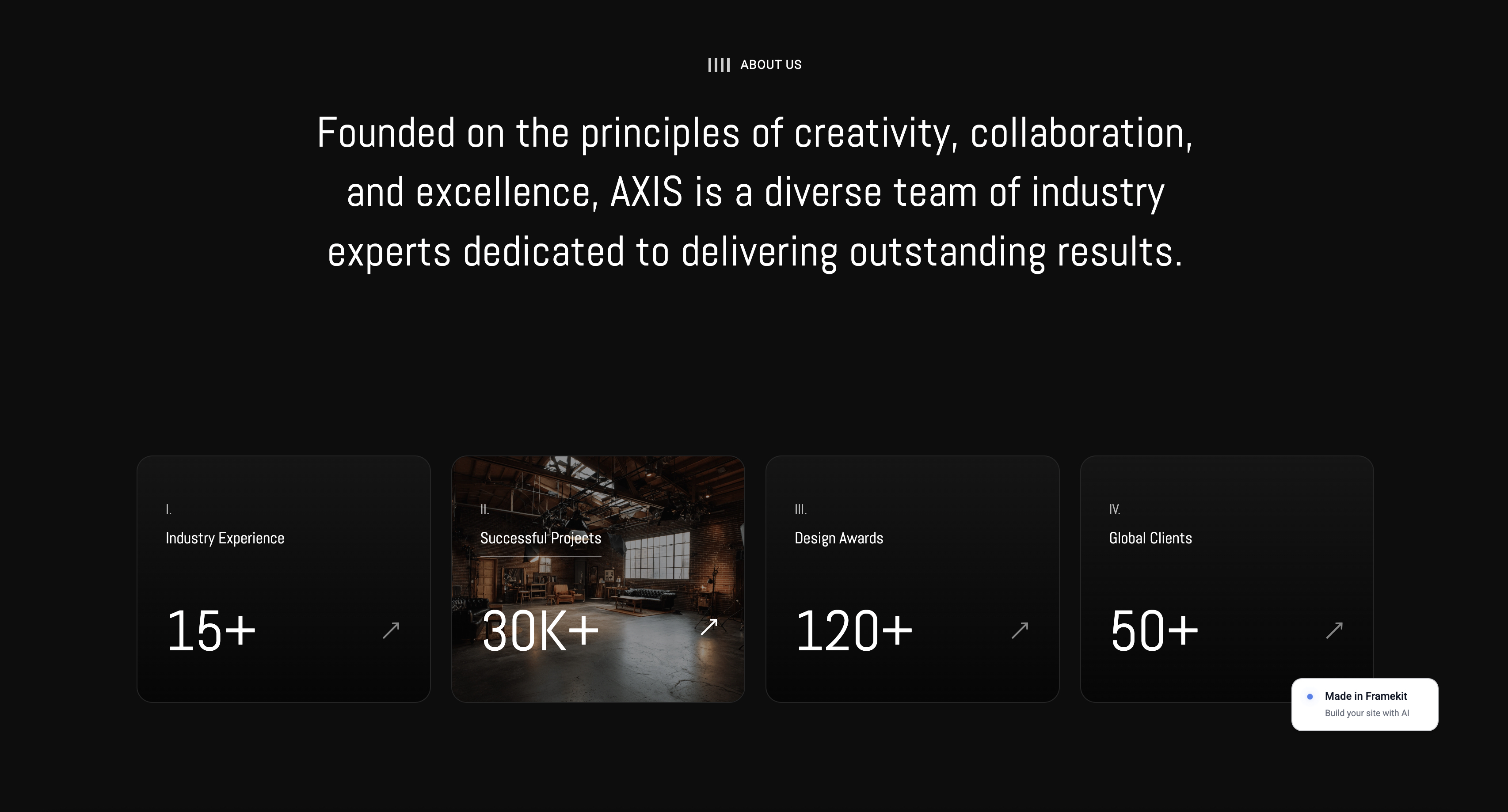
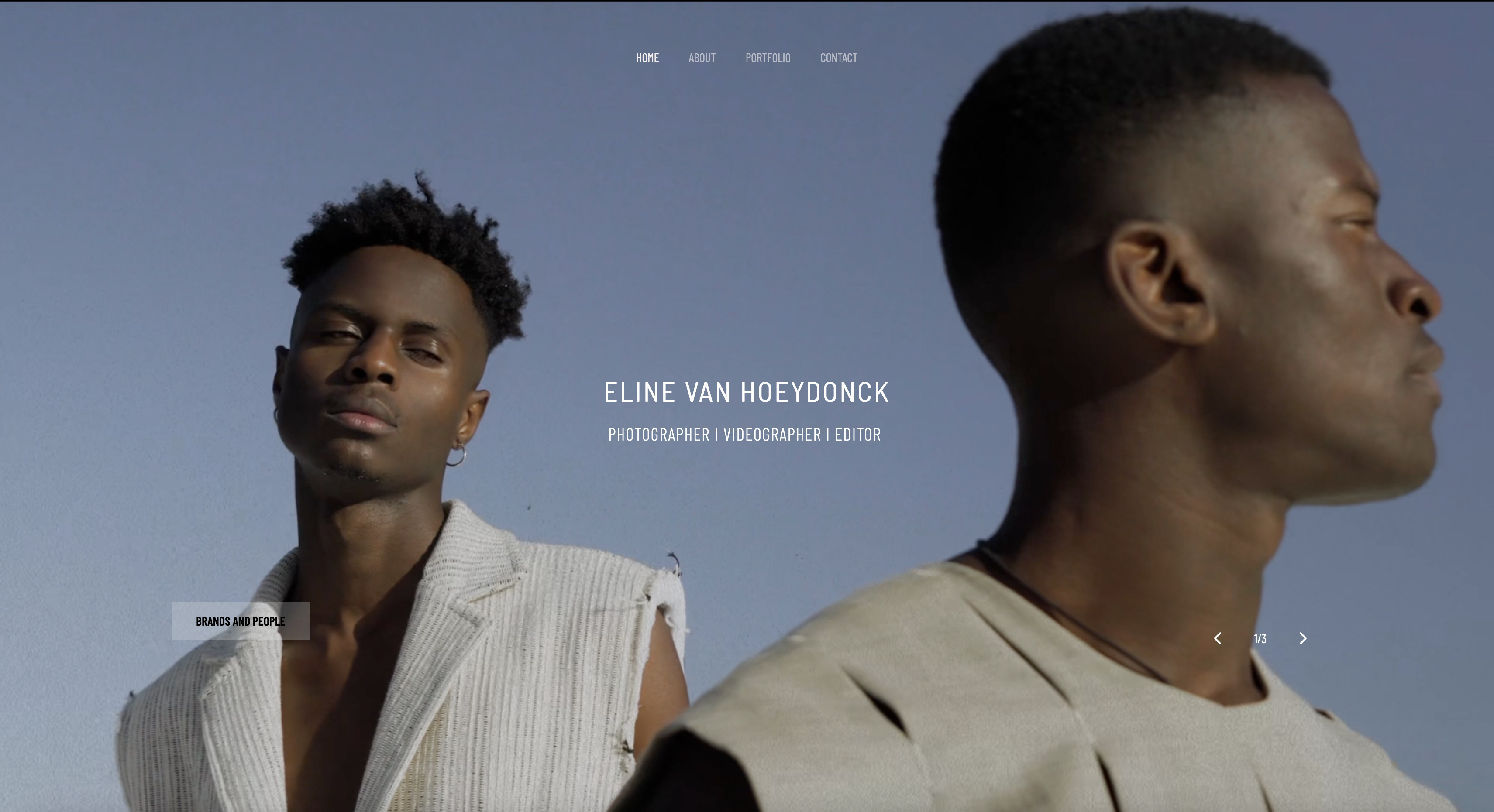
Framekit templates
Start from a designer-made template
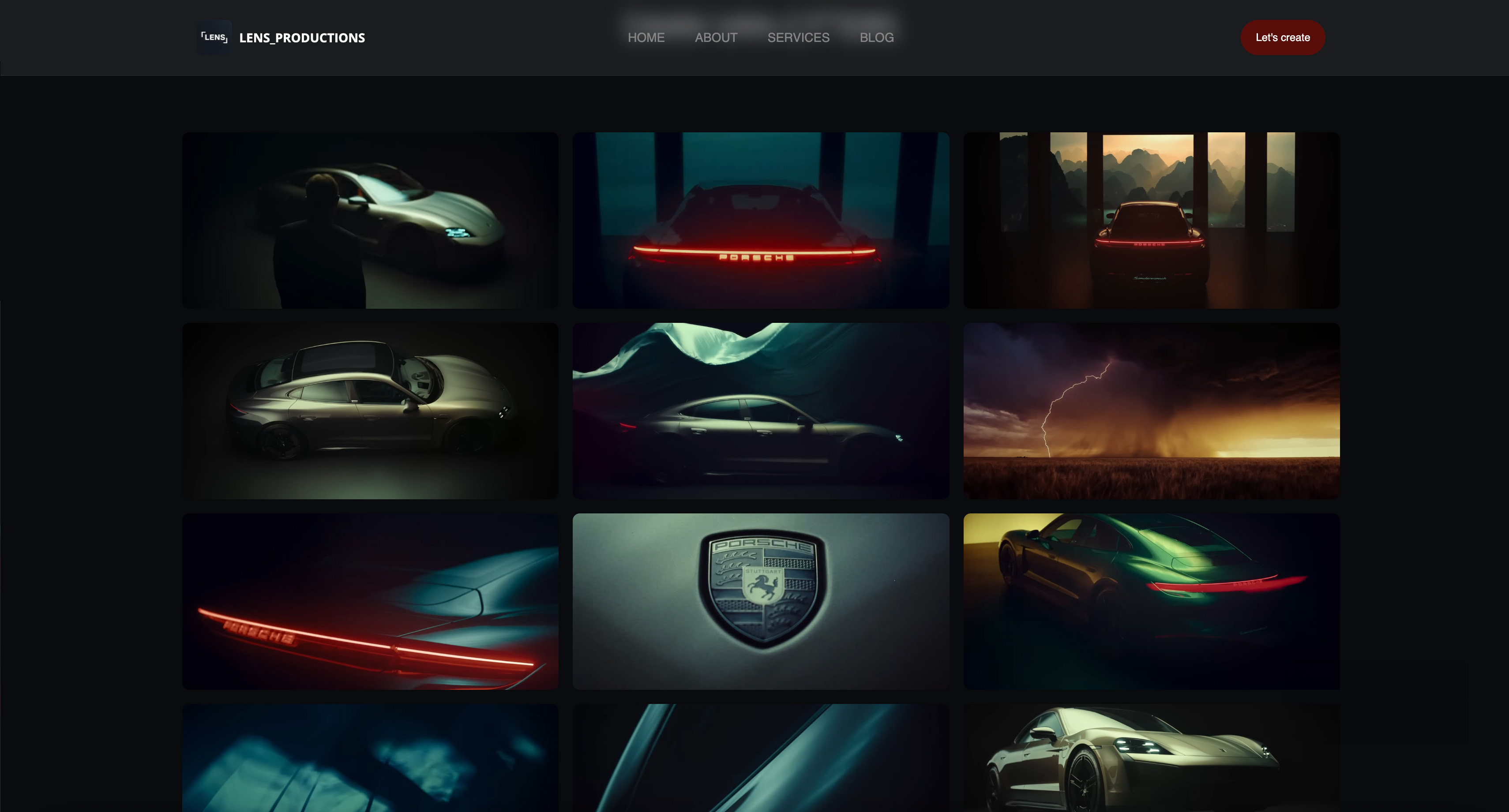 Use template
 Use template
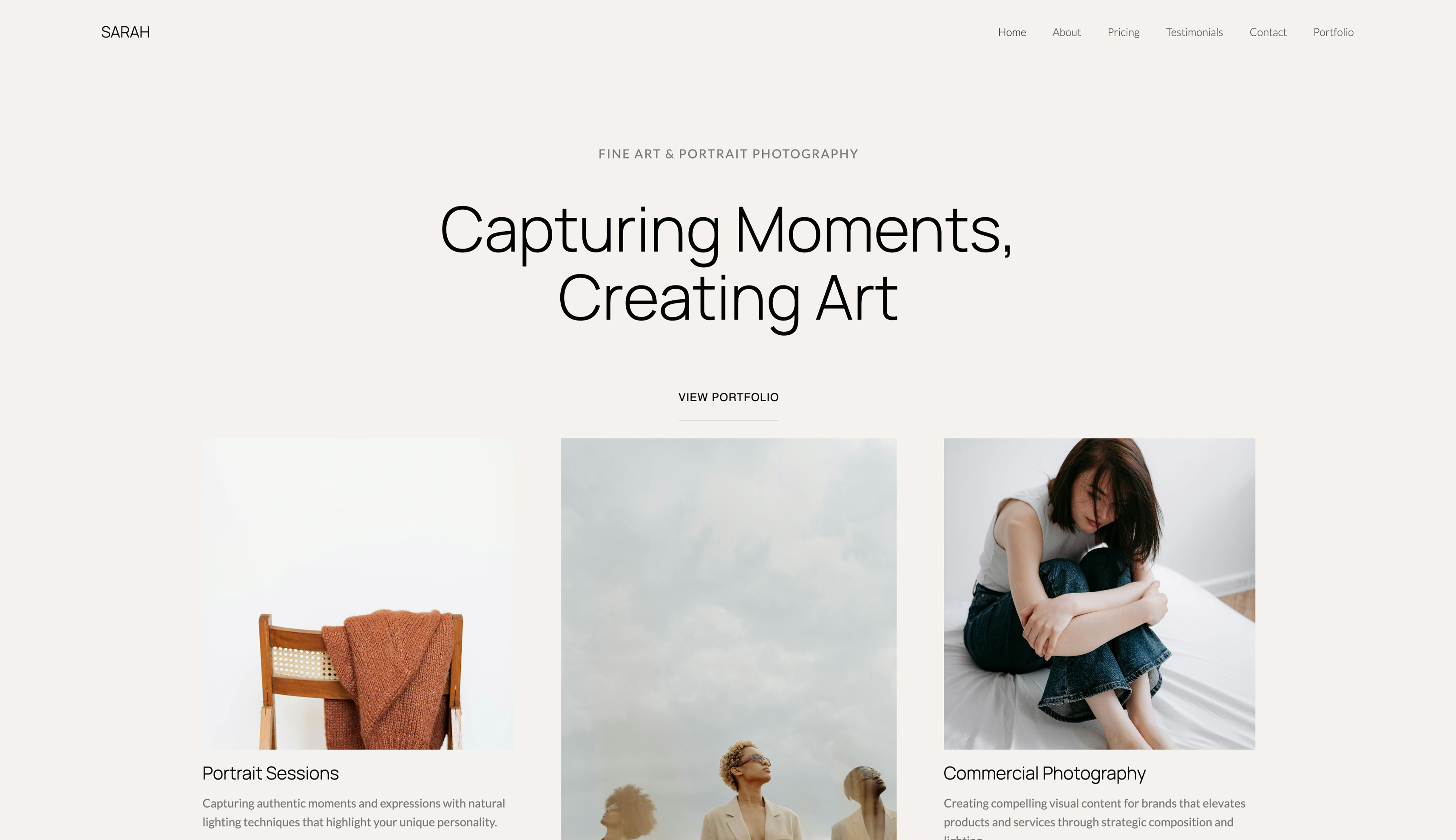 Use template
 Use template
 Use template
 Use template
 Use template
 Use template
A production company's website gets read in a very specific situation: an agency producer has three companies on a shortlist, twenty minutes before a call, and is deciding which one to put in front of the client.
Nothing about that moment resembles how a photographer's portfolio gets browsed, which is why the best website builder for a production company is not automatically the one that wins for individual creatives.
Two things decide it, and neither appears on a pricing page. The first is how many people can update the site without sharing one login.
The second is whether you can put the work you are proudest of behind a password, because the campaign that would win you the pitch is under embargo until October.
A website builder is a hosted tool that turns your reel, your case studies and your roster into a site on your own domain without writing code. For a production company the useful comparison is what four people and one NDA actually cost.
For director-led and small production companies, Framekit is the best website builder in 2026, because the reel, the case studies and the client-facing galleries sit on a domain you own and the whole thing costs $9 a month rather than a per-seat bill.
For a company where four or more people genuinely need editing access, Squarespace and Wix are the better answer, because they include contributor roles instead of charging per editor, and Webflow is the pick if you have a designer in house.
The honest limitation with Framekit is that it has no multi-seat team accounts at all, so a larger company shares one login, and password protection covers galleries rather than public site pages.
How This Ranking Was Weighted
A production company site does a different job from a director's personal site, so the weighting reflects that rather than general portfolio quality.
How the reel and credits read to a commissioner carries the most weight, then whether several people can maintain the site, then what the plan includes beyond hosting, then cost.
Under the opposite weighting, where a large team needs granular roles and permissions, WordPress or Webflow wins and Framekit places third, since our seats are simple by design.
Disclosure: Framekit is our product and we rank it first for the small-company case, which is most production companies but not all of them. We built the same nine sites with the same reel, three case studies and a protected page for unreleased work, we link to every competitor, and we say where each one beats us. Squarespace and Wix beat us outright on team access, and Webflow beats us on both team access and design control.
How We Tested Nine Builders
Each build got the same contents: a 60-second company reel, three case-study pages with a client logo and a results line, a directors roster, a contact page, and one project page that had to be hidden behind a password to stand in for embargoed work.
Identical material is the only way to attribute a difference to the tool rather than to the assets.
We keep three kinds of statement separate throughout. Things we built and watched happen were done inside the product.
Things we read at source are prices and policies taken from the vendor's own pages in August 2026, linked where the number carries weight.
Things that come from reports by other studios are flagged in the sentence, because a recurring complaint establishes that a pattern exists without establishing its size.
Conditions: fresh accounts, USD where the vendor offered it, annual billing quoted the way each vendor presents it, and no agency or partner discounts, which several of these companies do offer and which will change your real number if you qualify.
On ratings we quote none. G2, Capterra and Trustpilot all refuse automated requests, and reprinting a score we could not open would be exactly the kind of unverifiable detail this guide is trying to avoid.
By the numbers9 builders built out. 4 editors, the team size we priced everything against. 3 of 9 include contributor roles at no extra charge. 2 of 9 charge per additional editor. 1 of 9 has no team-seat concept at all, and it is ours.
The Comparison Table
The rubric reflects how these sites are actually used: team access 25%, protecting unreleased work 20%, case-study structure 20%, reel handling 20%, and three-year cost 15%.
Team access leads because a production company site that only one person can update goes stale, and a stale reel loses pitches. Cost is weighted lowest because every option here is trivial next to a single shoot day.
| Builder | Best for | Editors included | Protect unreleased work | Entry price | Our rating |
|---|---|---|---|---|---|
| Framekit | Director-led and small companies | One account, no seats | Galleries, not site pages | $0, $9/mo Starter | 8.9/10 |
| Squarespace | Teams that need contributor roles | Contributor roles included | Page-level passwords | $19/mo annual | 8.7/10 |
| Webflow | Companies with a designer in house | Workspace seats, paid | Yes, with a build | $15/mo annual | 8.6/10 |
| Wix | Mixed marketing and site needs | Contributor roles included | Page-level passwords | $17/mo Light | 7.9/10 |
| WordPress | Full control and an existing dev | Unlimited roles | Yes, via plugins | Hosting from a few dollars | 7.7/10 |
| Framer | Design-led one-page company sites | $20 per extra editor | Limited | $10/mo Basic | 7.5/10 |
| Format | Small companies with photo work too | Limited | Gallery-level | $10/mo annual | 7.0/10 |
| Cargo | Companies with an art-house identity | Limited | Limited | Plan-based | 6.8/10 |
| Adobe Portfolio | A holding page while you decide | Single account | No | Included with CC Photography $19.99/mo | 6.3/10 |
Framekit does not top the two columns that matter most to a larger company, and the table shows it plainly: no seats, and password protection that covers galleries rather than public pages.
1. Framekit: Best for Director-Led and Small Companies

Framekit is an AI website builder for photographers, filmmakers and designers that generates a site from a description or a reference image, then lets you sell and deliver from your own domain.
For a two-to-three person production company it removes a stack of subscriptions: the site, the client galleries and the store are one thing.
The generated case-study layout was the best default of the nine. It put the film at the top, the client and the credits immediately under it, and the process below that, which is the order an agency producer reads in.
Most templates elsewhere lead with a long scrolling hero and bury the client name, which is backwards when the person looking is checking whether you have worked at their scale.
The real number$9 a month on Starter buys the custom domain and removes branding, Pro is $19 and Business is $39. For a three-person company sharing one login, that is $108 a year against $888 for Webflow Premium plus a Growth workspace, which is the closest equivalent on team-capable tooling.
The standout detailclient galleries are on every plan including the free one, with unlimited galleries, watermarking, password and PIN protection, favourites, downloads and email sharing, and only storage changes as you pay more.
For a production company that is the rough-cut delivery problem handled without a second product, and it is where unreleased work can legitimately live.
The gotcha, and it is a real onethere is no team-seat model. No contributor roles, no per-editor permissions, no audit of who changed what.
A company where four people update the site shares one set of credentials, which is workable for three people who sit together and genuinely unsuitable for a fifteen-person company with a marketing hire.
The second gotchapassword protection is a gallery feature, not a site-page feature. You cannot put a public URL behind a password the way you can on Squarespace.
Embargoed work goes in a protected gallery you send to a specific producer, which is arguably the more appropriate place for it, but it is not the same capability and we are not going to pretend it is.
Skip it ifmore than three people need to edit, or your process depends on a password-protected page sitting inside the public site structure.
Verdict: the best value in the category for the company size most production companies actually are, and the wrong tool the moment you have a marketing department. Where it wins is ownership: the domain, the case-study URLs and the search history stay yours.
2. Squarespace: Best for Team Access

Squarespace is the answer for a production company with a real team, and the reason is unglamorous: contributor roles are included rather than sold by the seat. A producer can update the news section, a designer can touch the layout, and nobody shares a password.
The real numberBasic is $19 a month billed annually. The seat maths is where it wins: adding contributors does not add a line to the invoice, which over three years is the difference between $684 and the four-figure totals that per-seat pricing produces.
The standout detailpage-level password protection is built in and takes about ten seconds to apply, which for embargoed campaign work is exactly the right shape. You can hand a producer a URL and a password without building anything.
The gotchathe case-study templates want to be blog posts, and making them look like a proper project page takes more fighting than it should. The store is also poor value for digital goods, with a digital-content fee ladder of 7%, 5%, 1% and 0% by plan on top of processing.
Skip it ifyou sell downloadable products, or you want the site to look like nobody else's.
Verdict: the safest choice for a company of four or more, and the least distinctive. If you are weighing it, our Squarespace alternatives guide covers where companies move when the templates start showing.
3. Webflow: Best With a Designer In House
Webflow is where a production company with an in-house designer should be.
The CMS models case studies properly, so a project has fields for client, sector, director, and results rather than being a page of pasted content, and that structure pays off the moment you have forty projects and want to filter them.
The real numbersite plans are Basic $15 a month annually with no CMS and Premium $25, the renamed CMS tier.
The $39 Business site plan has been retired and the next tier is Team at $2,500 a month on an annual contract, which is a cliff to know about before you build a company site expecting a middle option.
Workspace seats are separate again: Free, Core $19, Growth $49.
The standout detailstructured case studies with real fields, which no other tool here gives you without a plugin.
The gotchathe total is two bills, not one, and the workspace bill scales with people while the site bill scales with features. Studios report this being the surprise, rather than either number on its own.
Skip it ifnobody in the company enjoys building websites. This is a tool that rewards someone who does.
Verdict: the best-structured company site on this list, at a price and a learning cost that only make sense if you have the person.
4. Wix: Broadest Feature Set
Wix covers the widest ground: contributor roles, page passwords, a store, bookings and a marketing suite, all in one place. Plans run Light $17, Core $29, Business $39 and Business Elite $159 on annual billing.
The real numberCore at $29 a month is the realistic floor for a company site with contributors and no branding, which is $1,044 over three years.
The standout detailthe built-in marketing tooling, including email campaigns, is genuinely useful for a company that pitches, and replaces a separate subscription.
The gotchavideo handling was the weakest of the paid tools we built on, and for a company whose site is mostly film that is a pointed weakness. Host the reel externally and embed it.
Skip it ifthe reel is the centre of the site, which for a production company it usually is.
Verdict: the most capable business platform here with the least suitable weakness.
5. WordPress: Most Control, Most Maintenance
WordPress remains the answer for companies that want to own the stack outright, and for those that already pay a developer. User roles are unlimited and granular, protecting a page is a checkbox, and there is a plugin for anything.
The real numberhosting starts at a few dollars a month, which makes it the cheapest line item here and the most misleading one, because the real cost is the person who maintains it.
The standout detaileditorial roles are the most granular of anything on this list, which matters if a junior producer should be able to publish news but not touch the reel.
The gotchaupdates, security and plugin drift are your problem now. Community reports of production company sites left on unpatched plugins are common enough that this should be a named responsibility rather than an assumption.
Skip it ifnobody at the company will own the maintenance.
Verdict: correct for companies with a developer relationship, a liability for those without. Our WordPress alternatives guide is the better starting point if that describes you.
6. Framer: Best Design-Led One-Pager
Framer suits a production company whose site is one considered page with strong motion rather than a deep archive of projects, which describes a fair number of boutique companies whose reputation travels by reputation rather than by search.
The real numberFree, Basic $10, Pro $30, with additional editors at $20 each and viewers free. For four editors that is Basic plus three seats, so $70 a month, which is $2,520 over three years and the most expensive realistic configuration in this guide.
The standout detailthe design-to-published gap is smaller than anywhere else, so a company with a strong visual identity can hold it precisely.
The gotchaper-editor pricing punishes exactly the use case a production company has, and the move to a monthly credits model makes the plan boundary less predictable than it was.
Skip it ifmore than two people edit.
Verdict: beautiful, and priced against you.
7. Format: Small Companies That Also Shoot
Format makes sense for a small production company that shoots stills alongside its film work, because proofing galleries come included rather than bolted on, and the same subscription covers both halves of what you deliver to a client.
The real numberBasic $10 a month billed annually with a stated normal rate of $14, Pro $12 annually or $17 monthly, Pro Plus $15 annually or $26 monthly. Store commission is 0% on all plans.
The standout detailthe client delivery side is stronger than any of the mainstream builders here except ours.
The gotchait is built around one photographer's portfolio, so a company roster with multiple directors is working against the product's assumptions.
Skip it ifthe site needs to represent several people.
Verdict: a good fit for a one-director company that shoots stills too, and an awkward one for anything larger.
8. Cargo: For an Art-House Identity
Cargo appeals to production companies working in music video, fashion film and art direction, where looking like a mainstream template is itself a disqualification and the site is expected to demonstrate taste before it demonstrates competence.
The real numberplan-based and inexpensive, though the cost to weigh is not the subscription but the business tooling it does not have.
The standout detailtypographic and layout control that produces sites that plainly were not configured from a menu.
The gotchathin commerce, thin structure, and an interface that assumes design fluency.
Skip it ifthe site needs to be maintained by a producer rather than a designer.
Verdict: the right identity for a narrow slice of this industry and a poor operational fit for the rest.
9. Adobe Portfolio: A Holding Page
Adobe Portfolio comes free with a Creative Cloud subscription, which most production companies already hold for editing and finishing, so it is the only option here whose marginal cost to you is genuinely nothing.
The Adobe plans page lists the Photography plan at US$19.99 a month, Lightroom alone at US$11.99 and Creative Cloud Pro at US$69.99, and a company already paying for editing software has this included.
The real numberzero extra, which is the only argument it needs and the only one it has.
The standout detailit is genuinely quick to stand up a clean reel page.
The gotchaone account, no roles, no page passwords, no store, and the site disappears if the subscription lapses.
Skip it ifthis is meant to be the company's actual site for more than a quarter.
Verdict: a decent placeholder while you choose properly.
What Four Editors Actually Cost
In one linethe per-seat tools cost between three and eight times the flat-rate tools once four people need access, and that gap is invisible on every pricing page because they all quote the single-user number.
Production companies are the case where seat pricing bites, and almost no comparison guide prices it. Here is the same four-editor company on each realistic option, using each vendor's own published rates.
| Configuration for four editors | Per month | 36 months |
|---|---|---|
| Framekit Starter, one shared account | $9 | $324 |
| Squarespace Basic, contributor roles included | $19 | $684 |
| Wix Core, contributor roles included | $29 | $1,044 |
| Webflow Premium site plus Core workspace | $44 | $1,584 |
| Webflow Premium plus Growth workspace | $74 | $2,664 |
| Framer Basic plus three extra editors | $70 | $2,520 |
Two honest readings of that table.
The first is that Framekit's $324 is cheap because it is not really solving the same problem: one shared login is not four accounts, and a company that needs an audit trail should read that row as unavailable rather than cheap.
The second is that Squarespace at $684 with real contributor roles is the genuine value pick for a team, and we would rather say so than pretend our row means something it does not.
The test to run on your own situation: count the people who have actually needed to change something on the site in the last year. If it is one or two, the seat models are selling you insurance you will not claim. If it is four, they are selling you the product.
Protecting Work You Cannot Show Yet
In one lineevery production company has work it cannot publish, and the tools split cleanly into those that can put a page behind a password and those that can only put a gallery behind one.
The situation is routine. You shot a campaign in March, it airs in October, and between those dates it is the strongest thing on your reel and legally unpublishable. There are three ways to handle it and they are not equivalent.
A password-protected page inside the public site. Squarespace, Wix and WordPress do this natively, and Webflow does it with a build.
The advantage is that the work sits in your normal site structure and goes live by removing the password. The risk is that a URL that exists is a URL that can leak, and page passwords are not a serious security control.
A protected gallery you send to named recipients. This is what Framekit does, and what dedicated delivery tools do.
It is a better match for how an NDA is actually written, because you are sharing with a person rather than publishing behind a lock, and it is why we rate this an acceptable answer rather than a missing feature.
What it is not is a page you can flip live in October, so plan for a small amount of rework.
Not putting it online at all and describing it instead. A line reading "recent unreleased work for a global watch brand, available on request" does more than most companies expect, because the producer reading it now has a reason to email you.
Whichever route you take, the thing to avoid is an unlisted public URL with no protection at all, shared in a pitch deck. That is not privacy, it is obscurity, and search engines are quite good at finding pages nobody linked to.
Google's own guidance on blocking pages from search explains what actually keeps a page out of an index.
What Goes on a Production Company Site
In one linethe site is read by someone building a shortlist under time pressure, so every element either helps them justify putting you on it or gets in the way.
The reel, and only one. Sixty to ninety seconds, current within the year, and playing without a click if you can manage it. Companies that keep three reels for different sectors usually find the visitor watches none of them.
Case studies with the client named and a result stated. Not a mood piece. The brand, the agency, what the film had to do, and what happened.
Producers are checking whether you have worked at their budget level and in their category, and a case study that never names a client cannot answer either question.
The roster, with real credits. Directors, DPs and the people who will actually be on the job. If you represent directors, their reels should be one click away, not embedded eight deep.
Capability, stated plainly. Whether you have in-house post, whether you can produce internationally, whether you own kit. Producers filter on these before they filter on taste.
Contact that reaches a human. A named producer, an email address and a phone number. A generic form on a company site loses jobs, because a bid that arrives at 6pm on a Thursday needs an answer that evening.
What to leave off. A team page with cropped headshots and job titles nobody uses, a services list that reads like a stock template, and an awards row from 2019.
How Production Companies Get Found
In one linealmost nobody finds a production company through a search engine, so the site's job is to survive scrutiny rather than to win a keyword.
The realistic route is a referral or a shortlist. An agency producer asks around, gets three names, and searches each one.
The decision is made against your site in about a minute, and it is made on whether the work is at the right level and whether the company looks like it exists properly.
That is a conversion problem, not a discovery problem, and it argues for a site that is clear and current over one that is clever.
Where search does matter is narrow and worth owning: your company name, your directors' names, and the specific capability phrases producers use when they have an unusual requirement, like underwater or high-speed or a particular city.
Those are low-volume, high-intent searches that a well-written services page can win.
Google's SEO starter guide covers the basics adequately for this purpose.
The third route, increasingly, is being cited by an assistant when someone asks for production companies in a city or a specialism. That rewards the same things: named clients, plain descriptions of capability, and a site that a machine can actually read.
How to Choose in Four Questions
Most guides end by restating their picks, which helps nobody. Work down these four questions instead and stop at the first one you answer yes to, because that is the constraint that decides your tool.
- Do four or more people genuinely need to edit the site? Then you need contributor roles, which means Squarespace, Wix or WordPress. Framekit is not a candidate and we would rather tell you now.
- Do you have a designer in house who wants to build it properly? Webflow, and use the CMS for case studies rather than making pages by hand.
- Are you one to three people who want the site, the client galleries and the domain in one place at the lowest total cost? Framekit at $9 a month.
- Is the company identity deliberately outside the mainstream? Cargo, and accept the operational limitations that come with it.
Frequently Asked Questions
What is the best website builder for a production company in 2026?
For director-led and small production companies it is Framekit, because the reel, the case studies and the client galleries sit on a domain you own for $9 a month with no per-seat cost.
For companies where four or more people need editing access, Squarespace is the better answer because contributor roles are included, and Webflow is the pick if you have an in-house designer to use its CMS properly.
How do I show work that is still under embargo?
Put it in a password-protected gallery shared with named recipients rather than on an unlisted public page, because an unlisted URL is obscurity rather than privacy and search engines find unlinked pages routinely.
Squarespace, Wix and WordPress also offer page-level passwords if you need the work to sit in the public site structure and go live later.
Does Framekit support multiple team members?
No. Framekit has no multi-seat team accounts, no contributor roles and no per-user permissions, so a company with several editors shares one login.
That is workable for two or three people who sit together and unsuitable for a larger company that needs an audit trail, which is the clearest reason to choose Squarespace or Webflow instead.
What does a production company website cost for a team of four?
It ranges from $324 to $2,664 over three years depending entirely on the seat model.
Framekit Starter on one shared account is $324, Squarespace Basic with included contributor roles is $684, Wix Core is $1,044, and Webflow Premium with a Growth workspace is $2,664.
The single-user price on every vendor's pricing page tells you almost nothing about this.
Should case studies name the client?
Yes, wherever your agreements allow it. An agency producer is checking whether you have worked at their budget level and in their sector, and an anonymous case study cannot answer either question. Where you genuinely cannot name a brand, name the category and the scale instead.
Is WordPress still a good choice for a production company?
Only if you already have a developer relationship.
The role permissions are the most granular here and the hosting is the cheapest line item, but updates, security patching and plugin drift become your responsibility, and the common failure mode is a company site left unpatched for a year because nobody owned it.
How long should a company reel be?
Sixty to ninety seconds, updated at least annually, and there should be one rather than several. Companies that keep separate reels per sector usually find visitors watch none of them, because choosing is friction at exactly the wrong moment.
Can I sell anything from a production company site?
Yes, and some companies do well selling LUTs, sound packs or training from the same domain. On Framekit the fee is 5% on the free and $9 Starter plans, 3% on Pro at $19 and 0% on Business at $39 a month, so the flat plan starts winning once you clear about $780 a month in sales.
Do we need client galleries as well as a website?
If you deliver cuts or stills to clients, yes, and the question is whether it is a second subscription.
Framekit includes galleries on every plan including the free one, with unlimited galleries, watermarking, passwords and PINs, favourites and downloads, so for small companies it removes a line item.
Our best client gallery platforms guide compares the dedicated tools.
What is the single most common mistake on these sites?
An out-of-date reel, followed closely by case studies that never name a client. Both are consequences of a site only one person can edit, which is the practical argument for either a tool with contributor roles or a company small enough that the bottleneck is not real.
The Verdict
For most production companies, which are two to four people, Framekit is the pick: the reel, the case studies and the client galleries on a domain you own for $9 a month, with no seat bill and no separate delivery subscription.
For a company with a real team, Squarespace is the honest recommendation because contributor roles are included, and for a company with a designer, Webflow builds the best-structured case-study archive of anything here.
Where Framekit loses, plainly: it has no team seats at all, so four people share one login and there is no record of who changed what.
Its password protection covers galleries rather than public pages, so embargoed work lives in a shared gallery instead of a locked URL you flip live later. It has no print lab.
And its store fee is 5% on the free and Starter plans rather than the zero a headline might suggest.
If your company has a marketing hire and a producer who both update the site, do not buy from us. If it is you, a producer and a director, own your address and spend the difference on the reel.
Related reading: best website builders for filmmakers, best website builders for creative agencies, best website builder for music video directors, and best video review and approval tools.
Also in this series: website Builders for Photojournalists, website Builders for Wildlife Photographers and client Galleries for Headshot Photographers.
Pricing was read at each vendor's own page in August 2026, with Adobe and Webflow re-verified on 9 August 2026. Framekit's seat and password behaviour was checked against the shipped plan configuration rather than marketing copy.