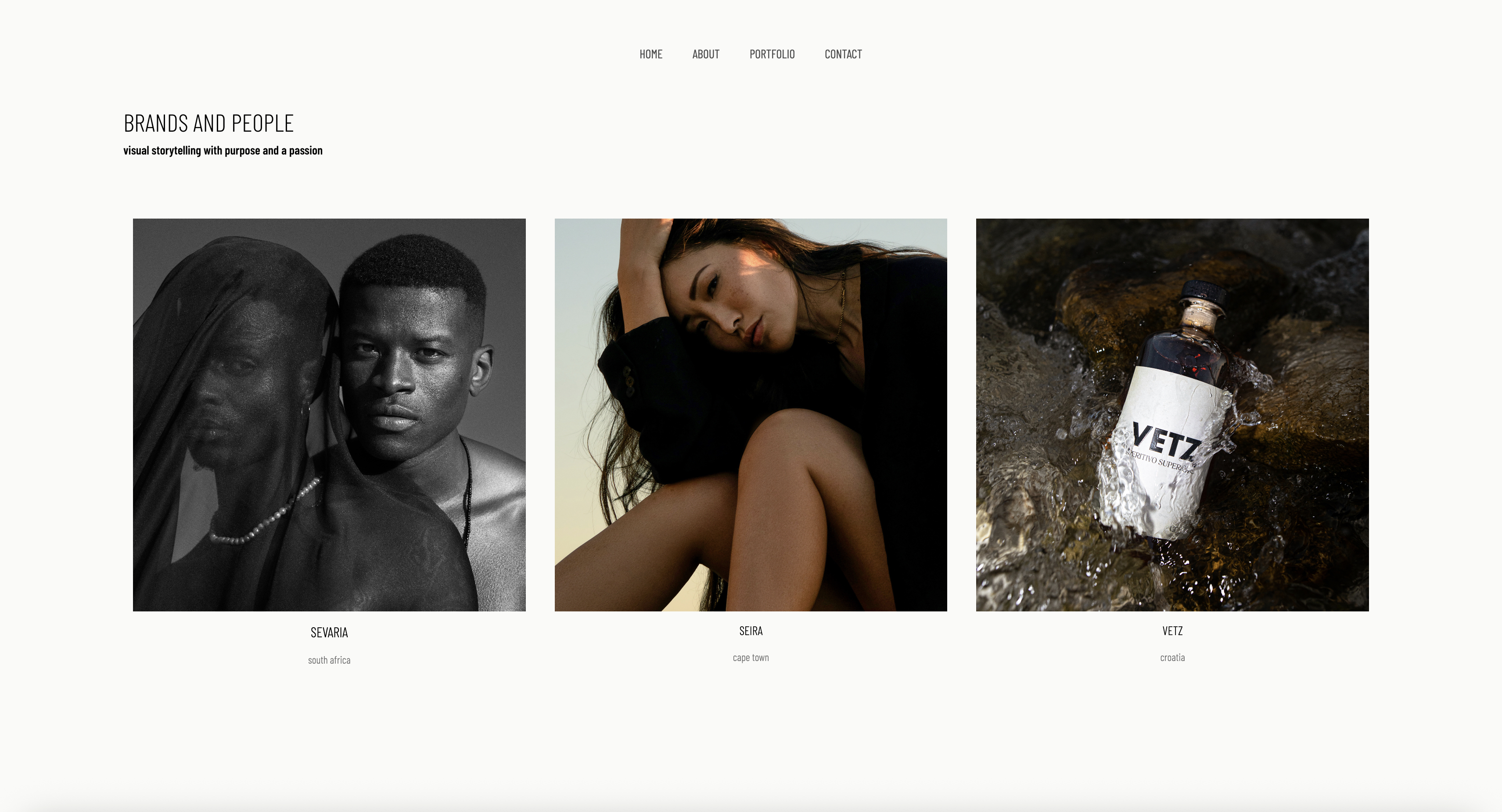
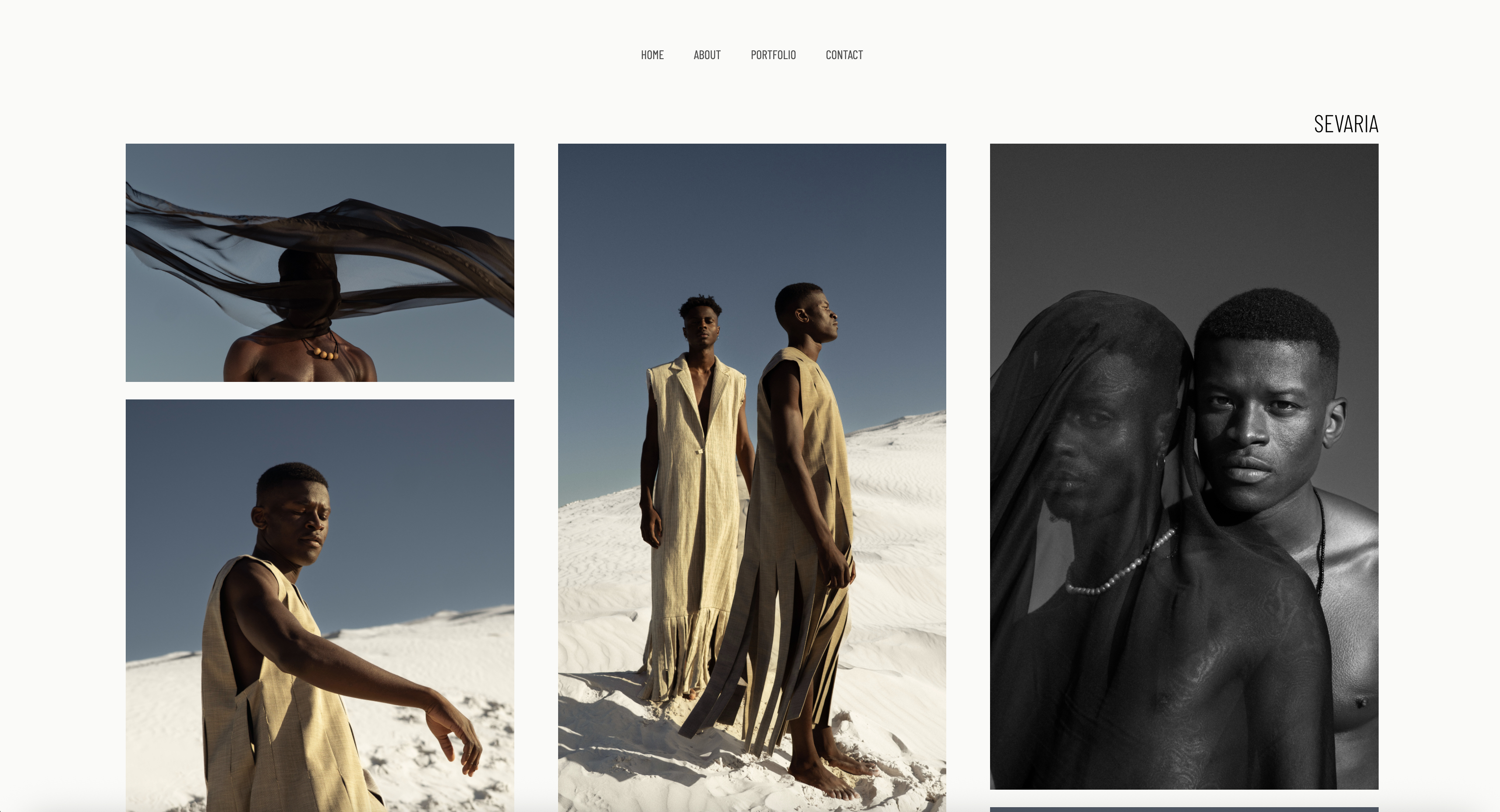
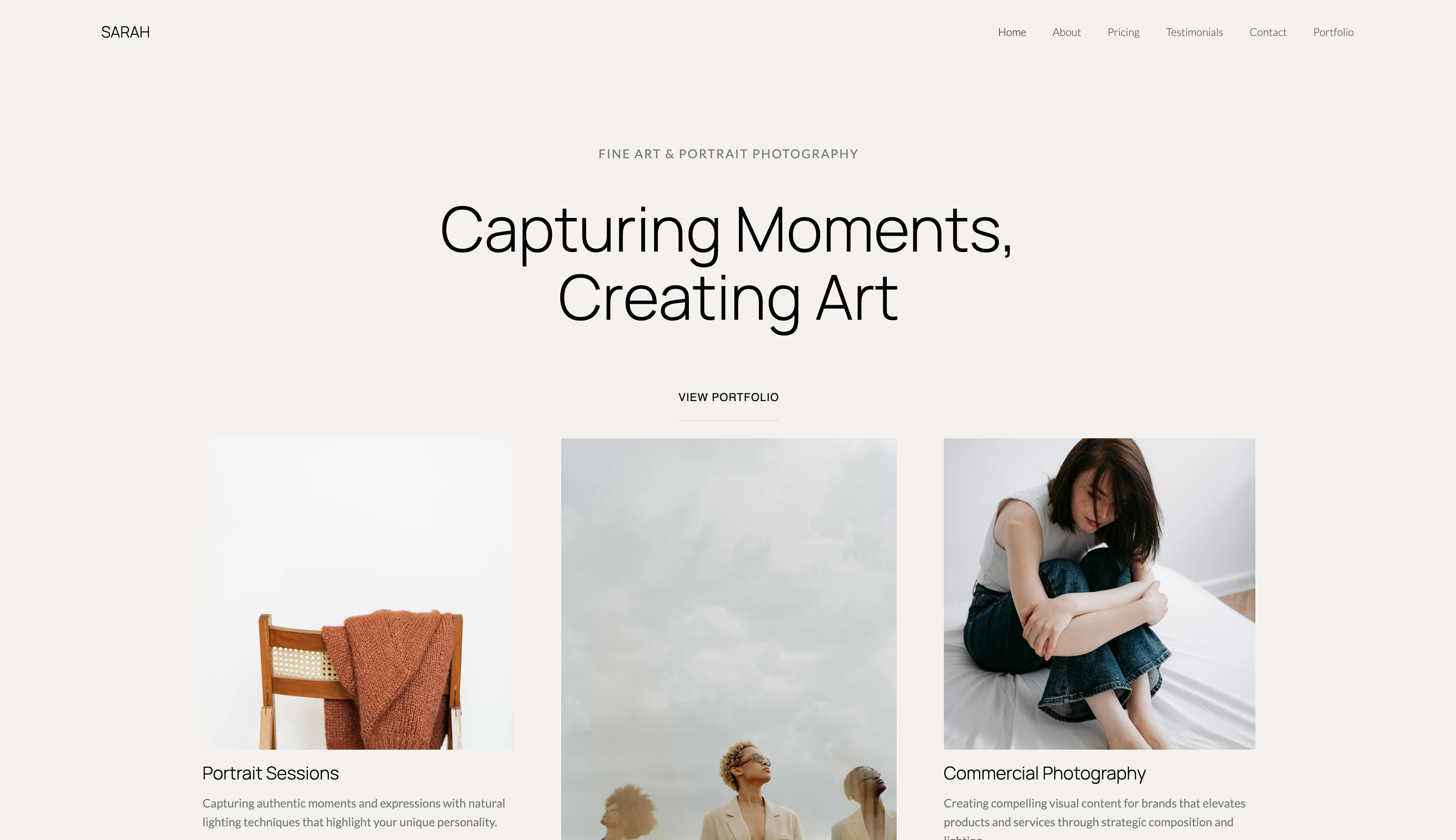
Framekit templates
Start from a designer-made template
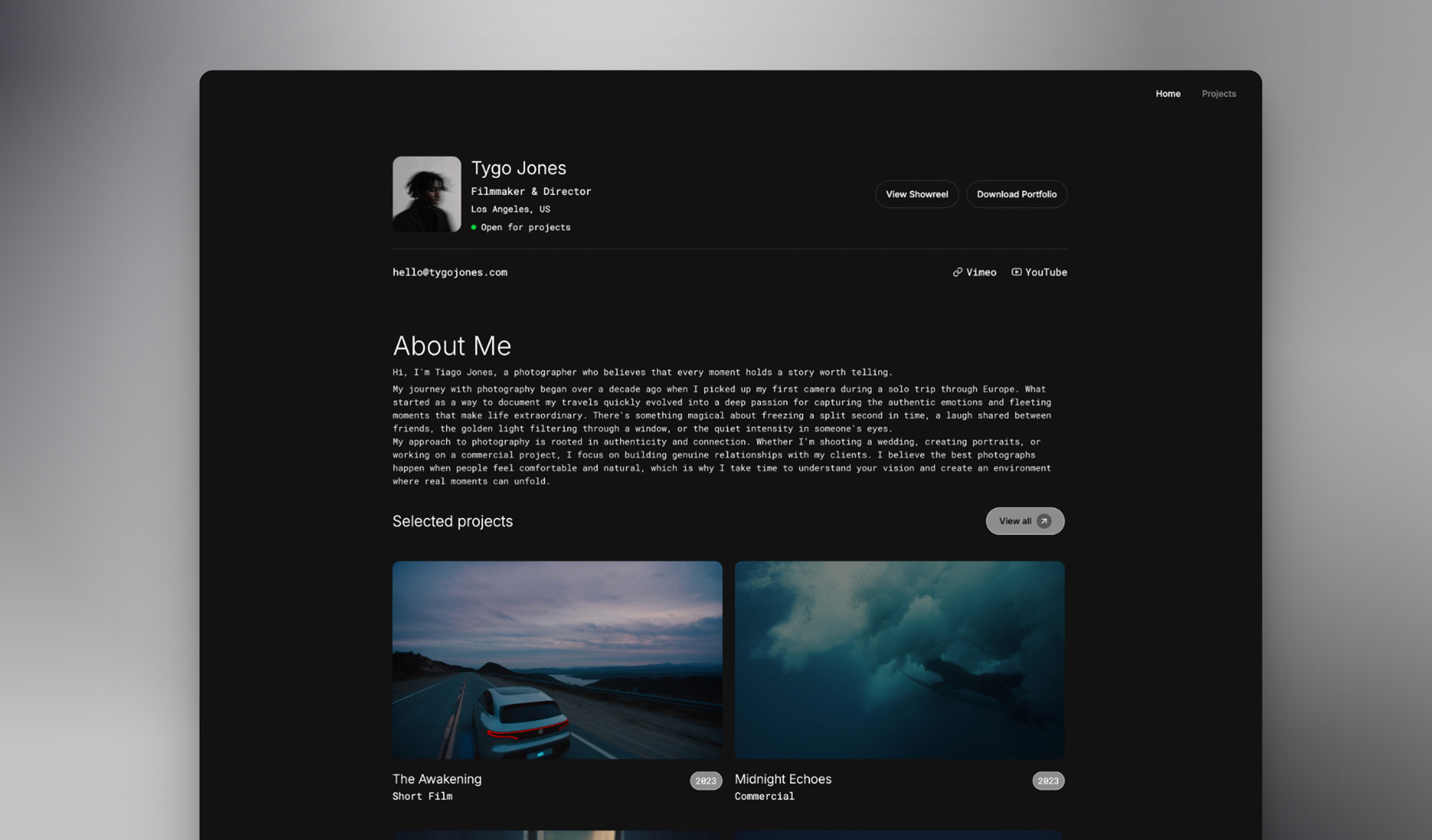 Use template
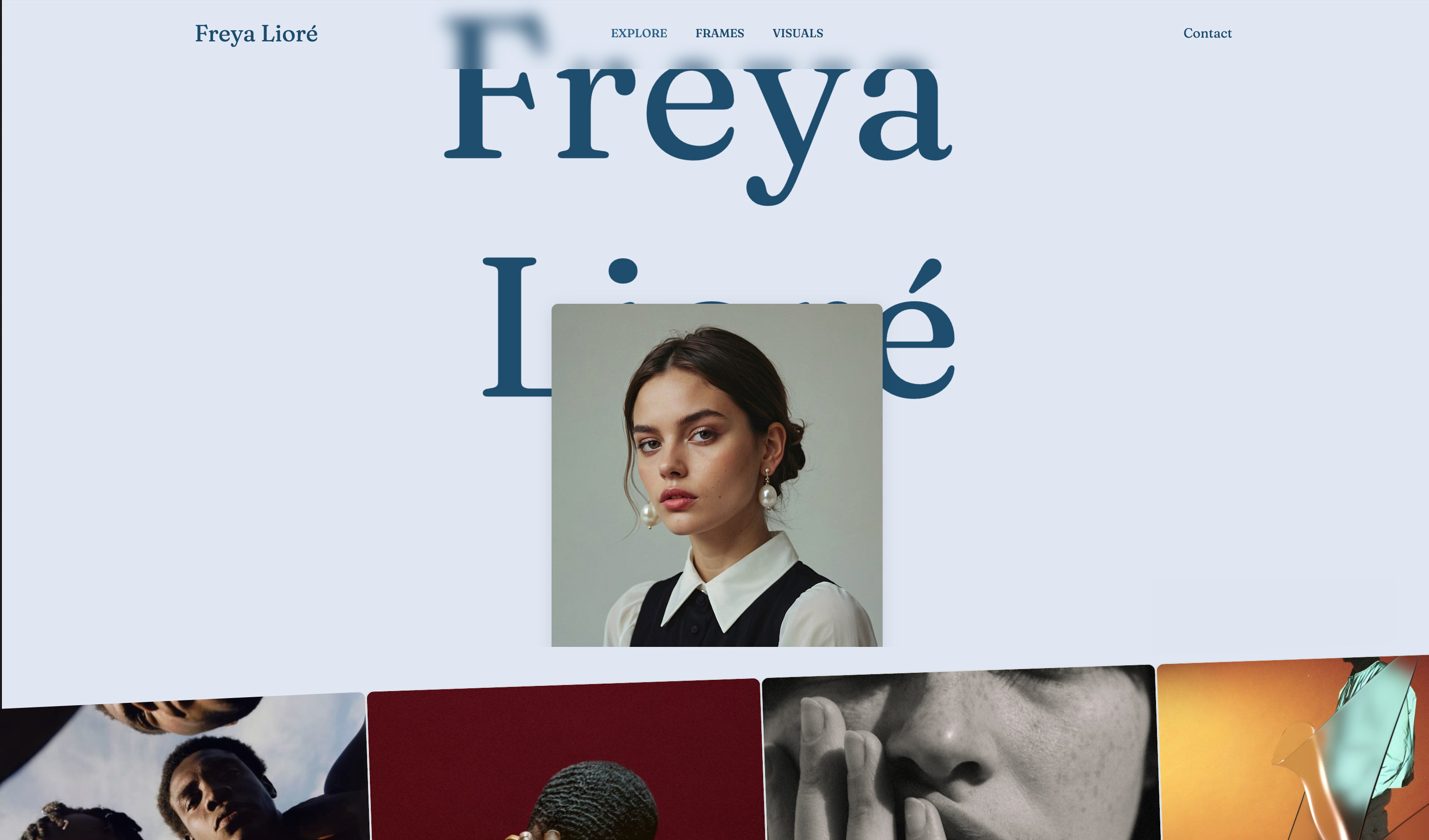 Use template
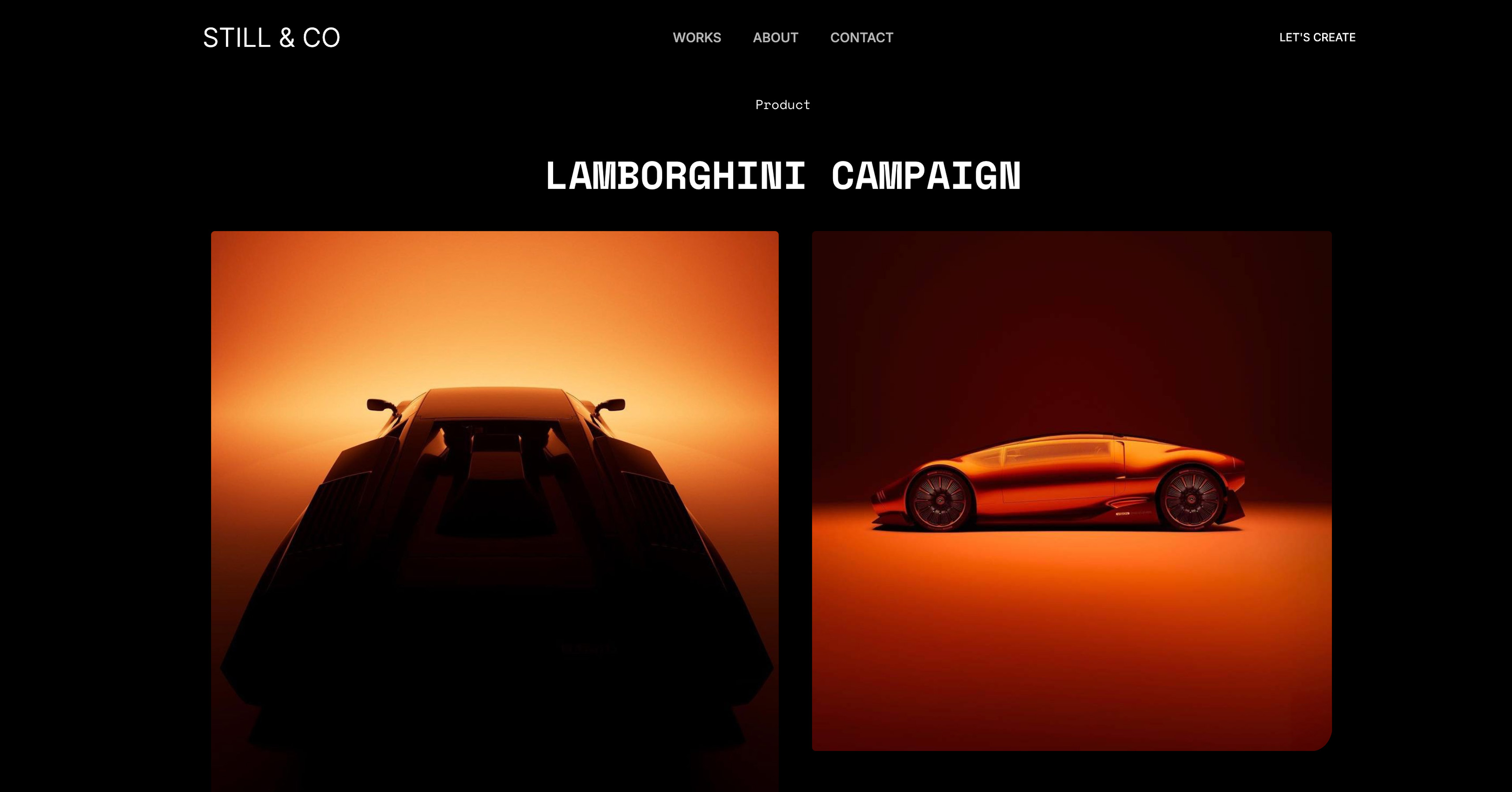 Use template
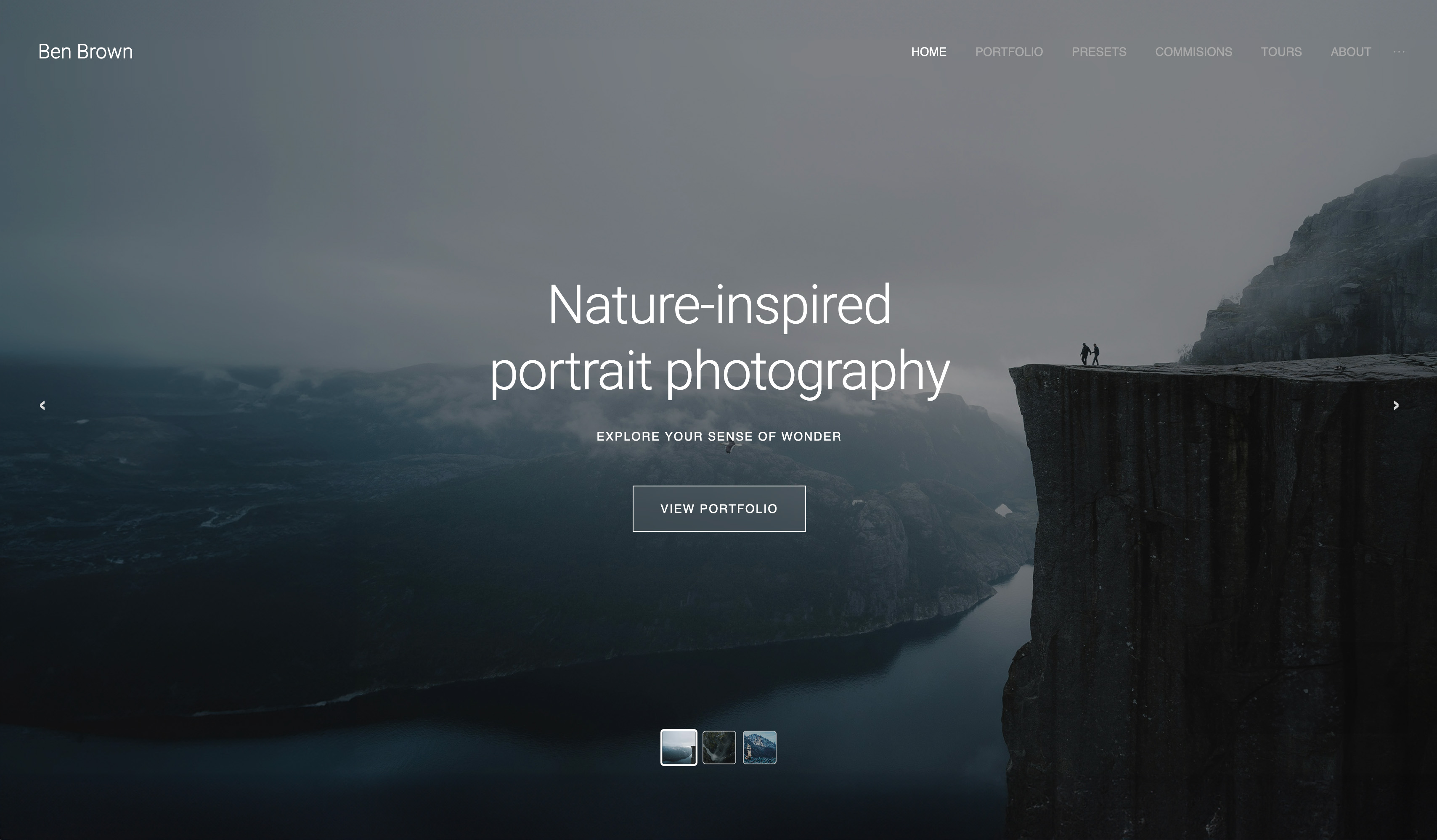 Use template
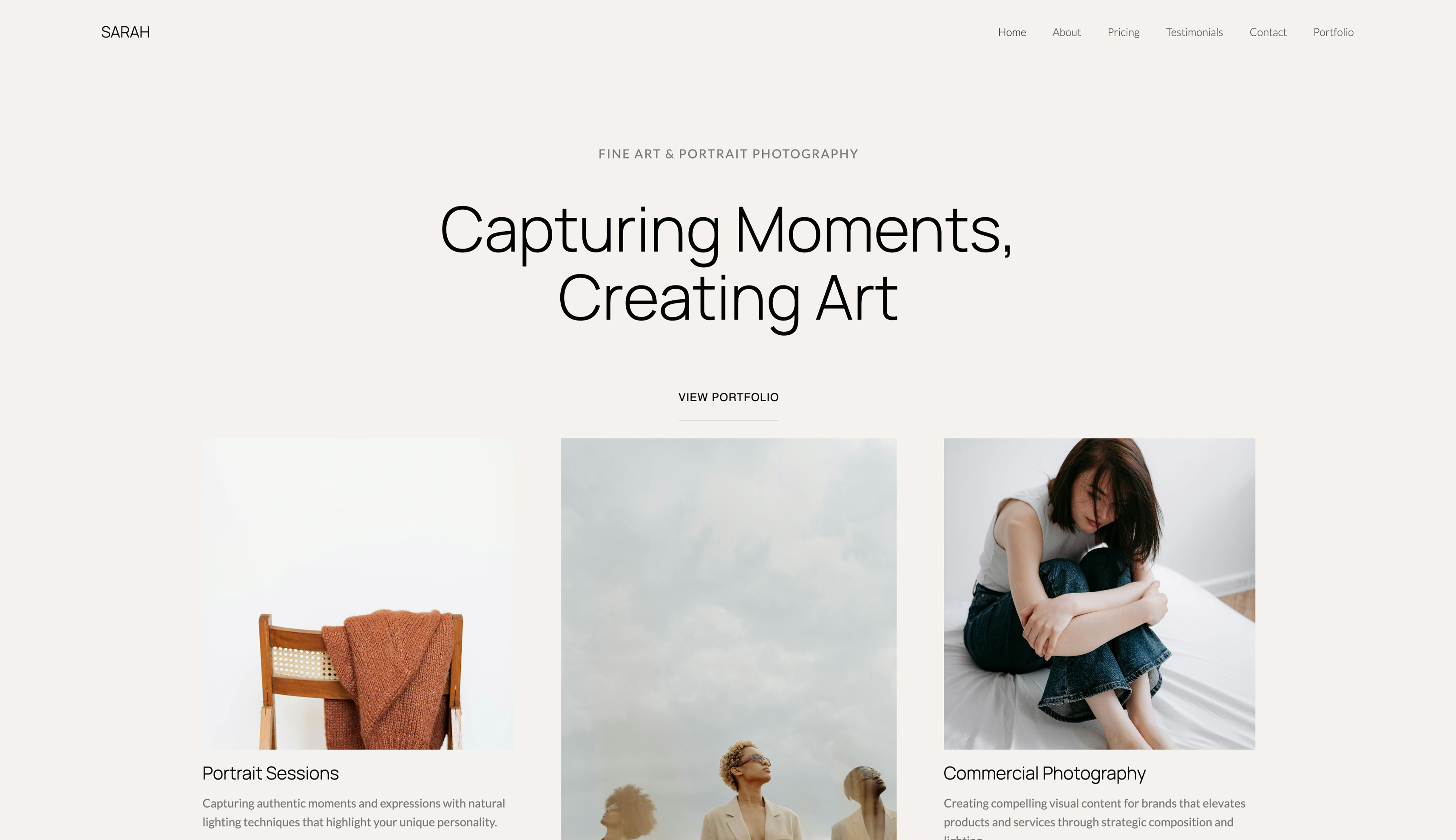 Use template
 Use template
 Use template
 Use template
Every website builder on the market is designed for people whose work can be seen. A sound designer's cannot, and that single fact breaks most of the advice written about portfolio sites.
You cannot put sound in a grid, you cannot make it a thumbnail, and, crucially, you cannot make it play when the page opens.
That last one is not a design choice, it is a rule. Browsers block audio that starts without a user gesture, deliberately and universally.
So the sound designer's site has a job that a photographer's never has: it must earn a click before it can show anything at all, and everything above that click has to do the persuading in text and picture.
A website builder is a hosted tool that turns your reel, your project breakdowns and anything you sell into a site on your own domain without writing code.
For sound designers the useful questions are how it handles audio, whether it lets you pair sound with picture, and whether your reel arrives carrying somebody else's logo.
For sound designers in 2026 Framekit is the best website builder, because the reel, the project pages and a store for sound libraries sit on one domain you own, and a $49 pack sold there costs $2.45 in platform fees on the entry plans against $5.40 on a marketplace.
Squarespace is the better pick if you want audio blocks and invoicing built in, and Cargo if the site is meant to look like a studio rather than a template.
The honest limitation is that no builder here has a genuinely good native audio player, so most sound designers end up embedding a video with the sound attached, which is what we would recommend anyway.
How This Ranking Was Weighted
Sound work is judged by ear rather than by layout, which changes the order these criteria were applied in.
How quickly a visitor reaches something playable carries the most weight, then how cleanly a reel of cues is organised, then cost.
Under the opposite weighting, where the site itself is a piece of art direction that demonstrates taste, Cargo wins and Framekit places third.
Audio hosting is not weighted at all, because every builder here expects it to sit with a dedicated host.
Disclosure: Framekit is our product and we rank it first. We built the same nine sites with the same reel, three project breakdowns and the same $49 sound pack, we link to every competitor, and we say where each beats us. Squarespace beats us on native audio blocks, Cargo beats us on design, and SoundCloud, which is not a website builder, beats everyone on the thing sound designers actually use it for.
How We Tested Nine Builders
Each site got identical contents: a 90-second reel with picture, three project pages pairing production sound against the finished mix, a services page, a contact route, and one $49 sound effects pack listed for sale.
We uploaded the same three-minute stereo master to each platform as both a WAV and a 320kbps MP3 to see what each would accept.
Three kinds of claim appear below and we keep them separate. Things built and observed were done in the product and watched.
Things read at source are prices and limits taken from vendor pages or shipped plan configurations in August 2026, cited where the figure carries weight.
Things drawn from other designers' reports are labelled in the sentence, because a shared frustration establishes a pattern rather than its size.
Conditions: fresh accounts, USD where offered, annual rates as each vendor presents them, no education or trade discounts. Where selling needed a paid tier we configured the store and previewed the buyer flow without completing a live charge.
We quote no star ratings anywhere. G2, Capterra and Trustpilot all refuse automated requests, and a rating we could not open would be the sort of unverifiable filler this guide exists to avoid.
By the numbers9 builders built out. A three-minute stereo master is about 52MB as a 48kHz 24-bit WAV and about 7MB as a 320kbps MP3. $49 carried sound pack. 0 of 9 will autoplay audio with sound, because no browser permits it. 2 of 9 have a native audio block worth using.
The Comparison Table
The rubric is weighted for a craft nobody can see: audio and reel handling 30%, pairing sound with picture 25%, selling libraries and packs 20%, portfolio presentation 15%, price 10%. Audio handling leads for obvious reasons.
Pairing with picture is second because sound design is judged against image, and a reel with no picture is asking a supervisor to evaluate half your work.
| Builder | Best for | Native audio block | Sell packs from your domain | Entry price | Our rating |
|---|---|---|---|---|---|
| Framekit | Reel, breakdowns and a pack store together | No, embed video | Yes | $0, $9/mo Starter | 8.9/10 |
| Squarespace | Native audio blocks and invoicing | Yes | Yes, with fees | $19/mo annual | 8.5/10 |
| Cargo | Looking like a studio rather than a template | Limited | Limited | Plan-based | 8.1/10 |
| Webflow | Building the player you actually want | Custom build | Yes, with a build | $15/mo annual | 8.0/10 |
| Wix | An audio player plus marketing tooling | Yes | Yes | $17/mo Light | 7.6/10 |
| Format | A clean picture-led portfolio | No | Print-oriented | $10/mo annual | 7.0/10 |
| Pixpa | Cheapest site with a working store | Limited | Yes | ~$4.80/mo Lite annual | 6.9/10 |
| Adobe Portfolio | Designers already paying Adobe | No | No | Included with CC Photography $19.99/mo | 6.3/10 |
| Carrd | One page with an embedded reel | No | No | $19/year | 6.0/10 |
Framekit does not have a native audio player and two competitors here do, which the table states plainly rather than working around.
1. Framekit: Best Overall for Sound Designers

Framekit is an AI website builder made for photographers, filmmakers and designers, generating the site from a description or a reference image and then hosting your store on a domain that belongs to you.
For sound work its value is not an audio feature, it is that the reel, the project breakdowns and the pack sales stop being three separate subscriptions.
The generated project layout put the finished scene at the top and a description of the sound work underneath, which is the right order.
Sound design pages that lead with a wall of text about your process before anything plays lose the visitor at exactly the moment you needed them to press something.
The real numberon the carried $49 sound pack the platform fee is 5% on the free and $9 Starter plans, 3% on Pro at $19 and 0% on Business at $39 a month, plus standard card processing. That is $2.45, $1.47 or nothing per sale.
The same pack on a marketplace charging 10% plus $0.50 costs $5.40, so selling 200 packs a year is $490 against $1,080, a difference of $590.
The standout detailthe store handles versioned digital products properly, which matters more in sound than in most fields because libraries get updated and buyers expect the update.
The gotchathere is no native audio player. You embed a video carrying the audio, or you embed a player from elsewhere.
This is a real gap next to Squarespace and Wix, and it is also, in practice, what most working sound designers do anyway, because a reel with picture demonstrates more than a waveform does.
The second gotchathe video upload cap is 100MB on every plan, so the reel is hosted on a video platform and embedded rather than uploaded directly.
Skip it ifyou want to present standalone audio tracks with a proper player and no picture, which Squarespace does natively and we do not.
Verdict: the best home for a sound designer with something to sell, and not the tool if your portfolio is a list of audio tracks rather than a reel.
2. Squarespace: Best Native Audio

Squarespace has an actual audio block, which sounds unremarkable until you have spent an evening trying to make a bare MP3 look intentional on a platform that has no concept of one.
The real numberBasic is $19 a month billed annually. If you sell packs, the digital-content fee ladder of 7%, 5%, 1% and 0% by plan applies on top of processing, so the $49 pack costs $3.43 on the entry ladder against $2.45 on Framekit's 5% tier.
The standout detailthe audio block includes a podcast-oriented feature set, which suits sound designers who also produce audio work meant to be listened to rather than watched.
The gotchathe store is the weakest part of the product for digital goods, and versioned library updates are not something the platform understands.
Skip it ifselling libraries is a real income line rather than an occasional extra.
Verdict: the best presentation of standalone audio here, attached to the worst economics for selling it.
3. Cargo: Looking Like a Studio
Cargo suits sound designers working in film and art contexts where the site is expected to demonstrate taste, and where arriving at a page that looks like every other portfolio undermines the pitch before anything plays.
The real numberplan-based and inexpensive, with the meaningful cost being the commerce and delivery tooling that simply is not there.
The standout detaillayout control that lets you build a page around a single piece of work, which suits a craft where one scene done properly says more than twelve thumbnails.
The gotchano store worth using, and audio handling that is as improvised as everywhere else.
Skip it ifyou sell packs or need client delivery.
Verdict: the best-looking option and the least commercially useful. Our Cargo alternatives guide covers where people move.
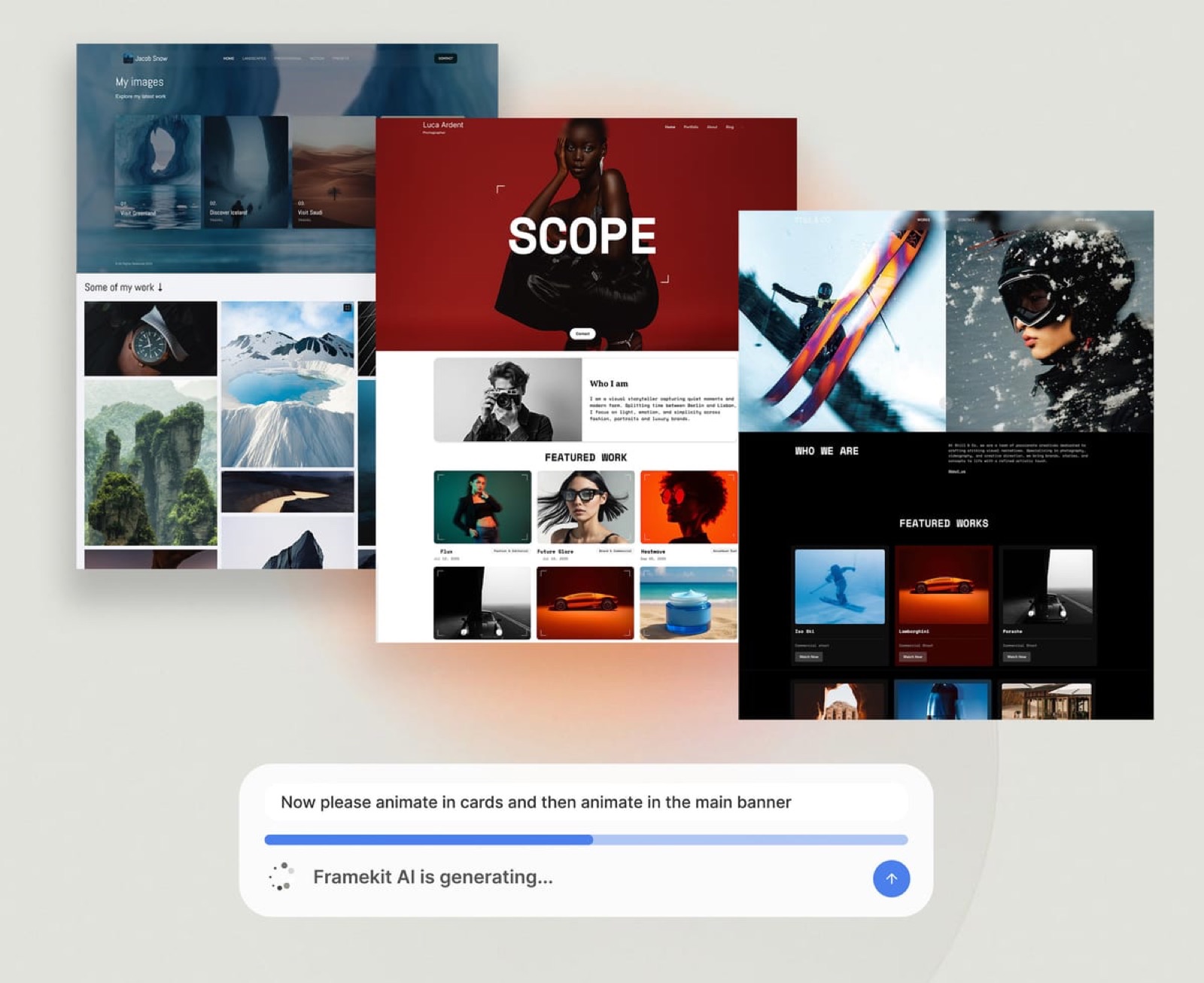
4. Webflow: Build the Player You Want
Webflow is the only tool here where the audio player in your head can become the one on the page, with waveforms, chapter markers and an A/B toggle between production sound and final mix if you are willing to build it.
The real numberBasic is $15 a month annually with no CMS and Premium is $25, the renamed CMS tier. Above Premium the next site plan is Team at $2,500 a month on an annual contract, and Workspace seats are billed separately at Free, Core $19 and Growth $49.
The standout detaila genuine A/B comparison between the production track and the designed mix is the single most persuasive thing a sound designer can put on a website, and this is the only platform here where you can build one properly.
The gotchayou are building it. Designers report the learning curve rather than the price as the reason they give up.
Skip it ifyou would rather be working on sound.
Verdict: the only route to the demo this craft actually deserves, at a cost in weekends.
5. Wix: Audio Plus Marketing
Wix has a native audio player and pairs it with the broadest marketing toolkit here, which suits a sound designer selling services to local production companies. Annual plans are Light at $17, Core at $29, Business at $39 and Business Elite at $159.
The real numberCore at $29 a month, $348 a year, is the realistic tier for a professional site with a store and no platform branding.
The standout detailthe player plus email marketing plus a store in one subscription, which no other tool here matches at that price.
The gotchadesigners report heavy media handling, and the interface accumulates clutter as you add features.
Skip it ifpresentation matters to the clients you want.
Verdict: the most features per pound, in the least considered package.
6. Format: Picture-Led and Clean
Format is a photographer's tool and it shows, but sound designers who present their work through picture rather than through waveforms get a genuinely clean result from it.
The real numberBasic is $10 a month on annual billing against a stated normal rate of $14, with Pro at $12 annually or $17 monthly and Pro Plus at $15 annually or $26 monthly.
The standout detailthe restraint. A project page here puts the work first with no decoration competing for attention.
The gotchano audio handling to speak of, and a store built around prints rather than downloads.
Skip it ifaudio needs to be a first-class citizen anywhere on the site.
Verdict: a good-looking home for a picture-led sound reel and nothing more.
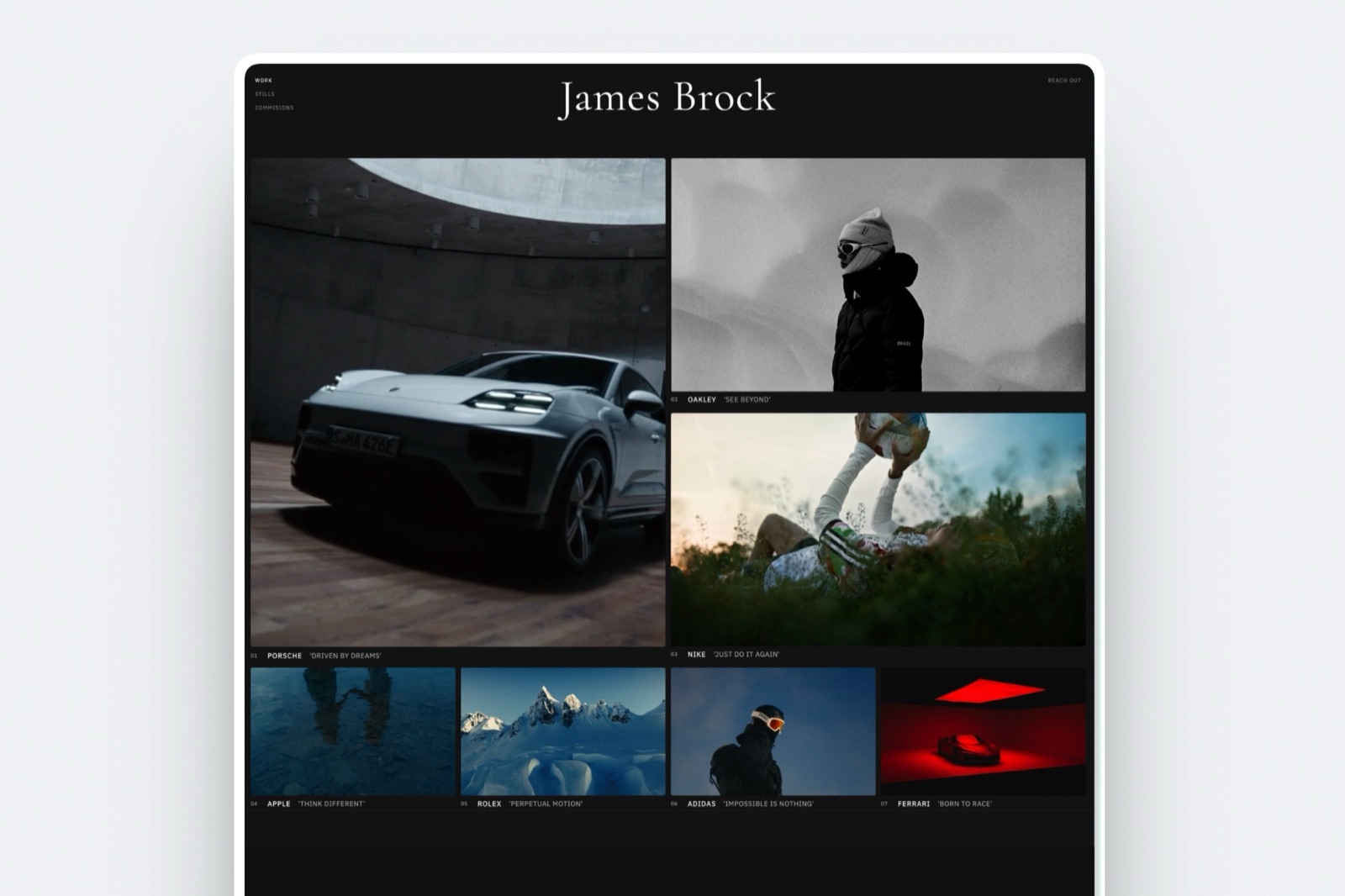
7. Pixpa: Cheapest With a Store
Pixpa is the cheapest option here that combines a portfolio with a store that actually sells digital files, which for a sound designer starting a library business is the relevant fact.
The real numberLite is about $4.80 a month on annual billing with 20GB and Standard about $7.20 with 100GB, so roughly $58 or $86 a year.
The standout detaildigital downloads work properly at a price no competitor here approaches.
The gotchathe presentation is plain, and audio is handled no better than anywhere else in this price range.
Skip it ifthe site is representing you to film and television clients who judge on polish.
Verdict: the value option for a pack business, with a ceiling on how serious it looks.
8. Adobe Portfolio: Free With Creative Cloud
Adobe Portfolio comes at no extra cost with a Creative Cloud plan, and the Adobe plans page lists the Photography plan at US$19.99 a month, Lightroom alone at US$11.99 and Creative Cloud Pro at US$69.99.
Sound designers on Audition or Premiere already hold one.
The real numbernothing additional, which is the whole argument.
The standout detailit is quick, and a reel embed on a clean page is genuinely all some designers need.
The gotchano store, no audio features, and the site ends when the subscription does.
Skip it ifyou sell anything or want the site to outlast your software budget.
Verdict: free, fast and thin.
9. Carrd: One Page, One Reel
Carrd builds a single page for $19 a year, which for a sound designer whose portfolio is honestly one reel and a contact address is not a compromise at all.
The real number$57 over three years, against $324 for Framekit Starter and $684 for Squarespace Basic.
The standout detailan embedded reel and a short credits list on one page is a complete sound design portfolio for a lot of working people.
The gotchano project pages, no store, no growth.
Skip it ifyou have breakdowns worth showing or packs worth selling.
Verdict: genuinely sufficient for some, and a dead end for anyone building a business.
Why Your Site Cannot Play Sound, and What to Do
In one linebrowsers block audio that starts without a user gesture, so the sound designer's page has to persuade someone to press play using only picture and words.
This is worth understanding properly rather than fighting.
Autoplay policies exist because unexpected sound is hostile, and MDN's autoplay guide sets out the rule that every current browser implements: video without sound may start on its own, and anything with audio requires an interaction first.
There is no platform on this list that changes that, and any tool promising otherwise is describing a bug.
The consequence is that the click is the conversion. Everything above the play button is doing the work: a still frame that suggests the scene, one line naming the project and what you did, and a duration so the visitor knows what they are committing to.
Ninety seconds is a commitment; three minutes is a decision most people will not make.
Pair the sound with the picture. A supervisor evaluating sound design is evaluating it against image, and audio alone asks them to imagine the half you have removed.
The strongest thing on a sound designer's site is a scene playing twice: once with the production sound, once finished. That A/B is the whole craft demonstrated in forty seconds, and it converts better than any showreel.
Get the format right. A three-minute stereo master at 48kHz and 24-bit is around 52MB as a WAV and around 7MB as a 320kbps MP3, and the web version should be the MP3 or AAC. MDN's guide to audio codecs covers what survives an encode.
Keep the WAV for clients and never make a visitor download 52MB to hear a reel.
And think about whose logo is on it. Embedding a third-party audio player puts that company's branding, and often its recommendations for other people's work, inside your portfolio.
That is a real cost that most sound designers accept without noticing, and it is the same argument that runs through every other decision in this guide.
What Selling Sound Libraries Actually Pays
In one linea sound library is the rare creative product with almost no marginal cost, so the platform's percentage is very close to the whole of what you give away.
Take the carried example: a $49 sound effects pack selling 200 copies a year, which is $9,800 in revenue and essentially no cost of goods after the recording is done.
| Route | Fee per $49 sale | Kept per sale | Cost per year at 200 sales |
|---|---|---|---|
| Marketplace at 10% + $0.50 | $5.40 | $43.60 | $1,080 |
| Squarespace Basic, 7% digital fee plus processing | $3.43 | $45.57 | $686 |
| Framekit Free or Starter, 5% plus processing | $2.45 | $46.55 | $490 |
| Framekit Business $39/mo, 0% plus processing | $1.72 | $47.28 | $344 plus $468 subscription |
The row that should decide it is the last one, and it argues against upgrading at this volume: $344 plus $468 is $812, which is more than the $490 the Starter plan costs.
The Business plan only wins above about $780 a month in sales, and 200 packs a year is $816 a month in revenue, so this example sits almost exactly on the crossover. Below it, stay on Starter.
The larger point is the one at the top of the table. A marketplace at 10% plus a fixed fee costs $1,080 a year on the same sales, more than double the Starter route, and in exchange it brings you an audience.
That trade is worth taking early and worth revisiting the moment your own site sells anything at all.
What Goes on a Sound Designer's Site
In one linethe credits list is what gets you hired and the A/B demo is what gets you remembered, and the striking thing about most sound design portfolios is that they lead with neither of them.
One reel, ninety seconds, with picture. Not three reels split by genre. Not a five-minute compilation. And label what you did on each cue, because a reel of shots you touched briefly is indistinguishable from a reel of shots you built.
Two or three project breakdowns. Pick a scene, play the production sound, play the final, and write two hundred words about the decisions in between. This is the content that convinces a supervisor and the content almost nobody makes.
A credits list that is current and specific. Title, year, your role, the studio or production company. Sound is a credit-driven industry and this is the page people scroll to.
Your setup, briefly. Room, monitoring, whether you can handle a mix or only design, whether you work to picture remotely and what your turnaround is. Producers filter on these before taste.
What you sell, if you sell. Libraries, packs, templates and presets deserve their own page rather than a link buried in a footer, because that traffic behaves completely differently from hiring traffic.
What to leave off. Waveform screenshots, a plugin list, and any autoplay ambition whatsoever.
How Sound Designers Get Found
In one linehiring runs on credits and referrals, so the site converts people who already have your name, while the library business is the part that search can actually grow.
The realistic hiring route is that a picture editor, a producer or another sound person recommends you, and the person receiving the recommendation searches your name.
What they need in the first fifteen seconds is a reel they can play and a credits list at the level they are hiring for. That is a conversion problem and it argues for a site that gets out of the way.
The library business behaves in the opposite manner. People search for exactly what they need, in the terms they need it in, and those searches are winnable because they are specific.
A page named for what a pack actually contains will find buyers that a page named after your studio never will.
Google's SEO starter guide covers what matters.
The third channel is worth noting because it is new: assistants answer questions like "who does sound design for documentary in Berlin" by reading text. A site with a written credits list, a stated specialism and a location gets named.
A site that is a single embedded reel with no words on it cannot be.
How to Choose in Four Questions
Closing a guide by restating its recommendations in a different arrangement helps nobody. Answer these four questions in order instead, and stop at the first one you say yes to, because that is the constraint doing the deciding.
- Do you sell sound libraries or packs as a real income line? Framekit or Pixpa, and stay on the cheaper plan until you clear about $780 a month in sales.
- Do you present standalone audio tracks rather than work against picture? Squarespace, for the native audio block, and accept the weaker store.
- Do you want a genuine A/B between production sound and final mix? Webflow, and budget the build.
- Is your portfolio honestly one reel and a credits list? Carrd at $19 a year, and spend the difference on plugins.
Frequently Asked Questions
What is the best website builder for sound designers in 2026?
Framekit is the best choice for most sound designers in 2026, because the reel, the project breakdowns and a store for sound libraries live on one domain you own, and a $49 pack costs $2.45 in platform fees on the entry plans against $5.40 on a typical marketplace.
Squarespace is the better pick if you present standalone audio and want a native player, and Webflow if you want to build a proper A/B demo.
Can a website autoplay my sound design reel?
No, and no platform can change that. Every current browser blocks audio that starts without a user gesture, permitting only muted video to play automatically.
That means the still frame, the project name and the duration above the play button are doing all of the persuading, and a ninety-second reel converts better than a three-minute one because it asks for less.
Should I show sound with picture or on its own?
With picture, in almost every case. Sound design is evaluated against image, and audio alone asks a supervisor to imagine the half you removed.
The single most persuasive thing you can publish is a scene played twice, once with the production sound and once finished, which demonstrates the entire craft in about forty seconds.
What audio format should I use on a website?
A 320kbps MP3 or AAC for the web and a WAV only for client delivery. A three-minute stereo master at 48kHz and 24-bit is around 52MB as a WAV and around 7MB as an MP3, and asking a visitor to pull 52MB to hear a reel is a good way to lose them before it plays.
How much does it cost to sell a sound library from my own site?
On Framekit the fee is 5% on the free and $9 Starter plans, 3% on Pro at $19 and 0% on Business at $39 a month, plus card processing. On a $49 pack that is $2.45, $1.47 or nothing.
A marketplace charging 10% plus $0.50 takes $5.40 of the same sale, so 200 packs a year costs $490 through your own site against $1,080 through a marketplace.
Should I use SoundCloud for my portfolio?
As a hosting layer, often yes, but understand what it costs you: the player carries their branding and can surface other people's work inside your portfolio.
For a reel with picture, a video host is the better embed, and for a pack business your own store keeps both the customer and the margin.
Do I need a separate page for my sound libraries?
Yes, and ideally one page per pack named for what the pack actually contains.
Hiring traffic and buying traffic behave completely differently: people looking to hire you search your name, while people looking to buy search for the specific sounds they need, and a single shop page cannot answer those searches.
What should a sound designer's project page include?
The finished scene, the production sound for comparison, and roughly two hundred words on the decisions between them.
Also your specific role, because a reel of shots you touched briefly reads exactly like a reel of shots you built, and a supervisor cannot tell the difference without being told.
Is Framekit missing an audio player a problem?
It depends on how you present work. Framekit has no native audio block, so standalone tracks need an embed, and Squarespace and Wix both do that better.
If your portfolio is a reel with picture and project pages, which is how most sound designers work, the gap never appears, and the store economics are considerably better.
How long should a sound design reel be?
Ninety seconds. A three-minute reel is a decision most visitors decline to make, and since browsers force them to click before anything plays, you are asking for a commitment before you have shown anything. Lead with the strongest cue and label what you did on each one.
The Verdict
For a working sound designer in 2026, Framekit is the pick: the reel, the project breakdowns and the library sales on one domain you own, with a 5% fee on the entry plans that drops to 0% on a flat $39 plan rather than a marketplace percentage that never falls.
Squarespace is the honest alternative if standalone audio with a real player is how you present work, and Webflow is the answer if you want to build the A/B demo this craft deserves.
Where Framekit loses, plainly: there is no native audio player, and two competitors here have one. The video upload cap is 100MB, so reels are embedded rather than hosted.
There is no A/B comparison component, which Webflow can build and we cannot.
And at 200 packs a year you should stay on the $9 Starter plan rather than upgrading, because the flat plan does not pay for itself until roughly $780 a month in sales.
Whatever you choose, put the picture back on the reel and cut it to ninety seconds. That will do more than any platform on this page.
Related reading: best sound effects libraries, best places to sell sample packs, best website builders for musicians, and best audio and podcast editing software.
Also in this series: website Builders for Film Composers, website Builders for Voice Actors and client Galleries for Sports Photographers.
Every plan price here came off the vendor's own pricing page during August 2026, and the Adobe and Webflow figures were checked again on 9 August. Audio file sizes are calculated from standard uncompressed and compressed bitrates rather than measured on any one platform.