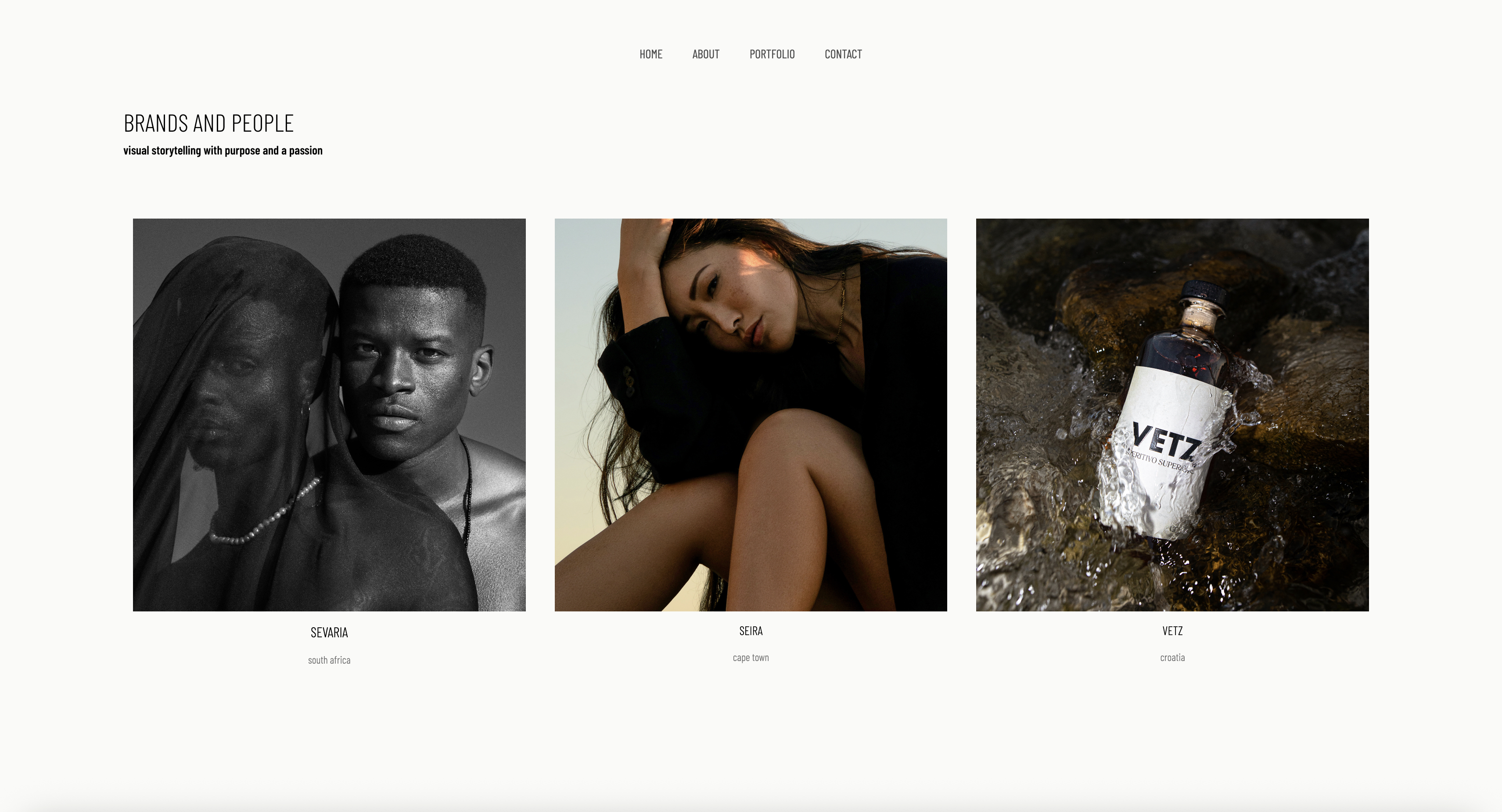
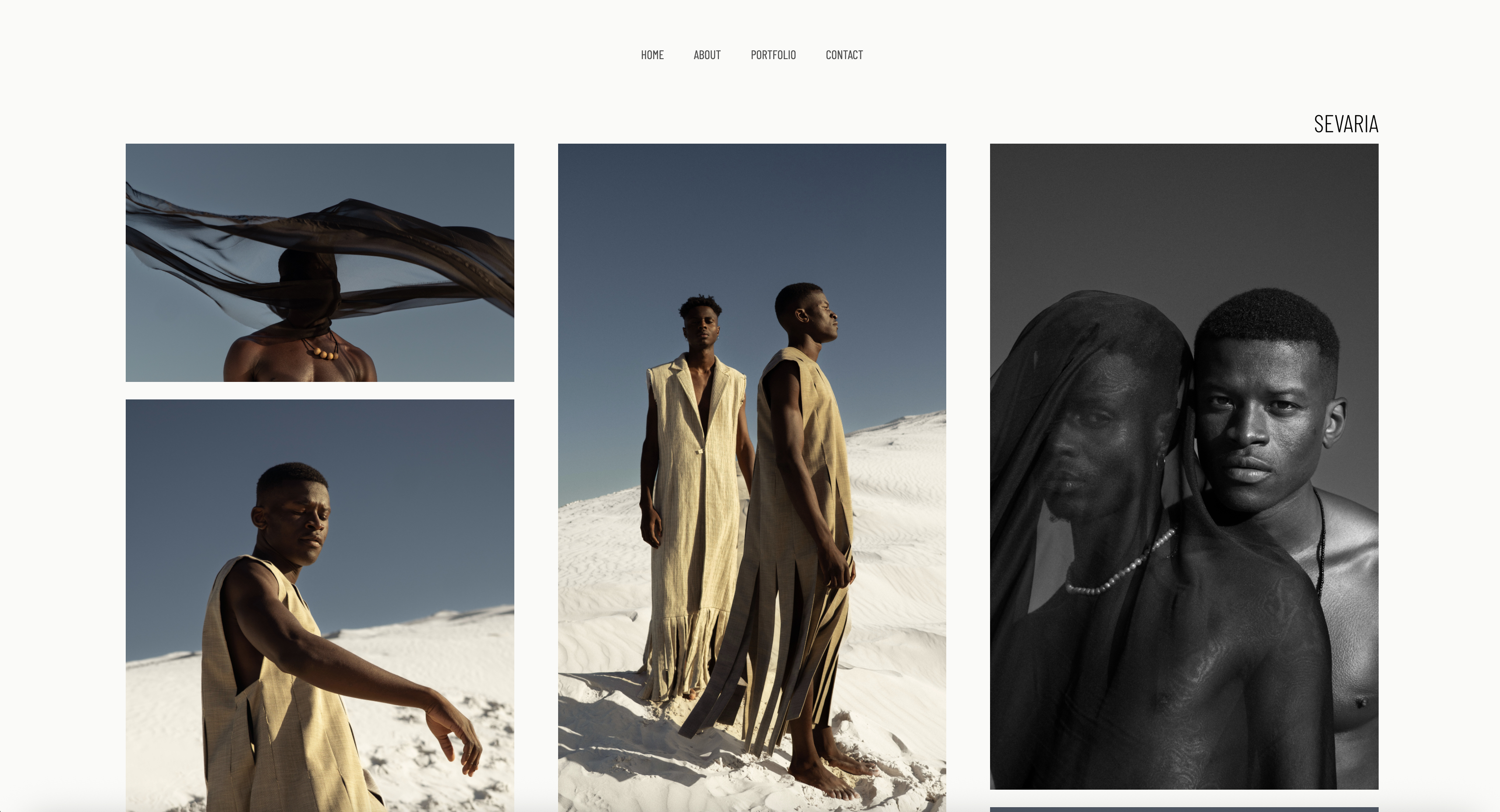
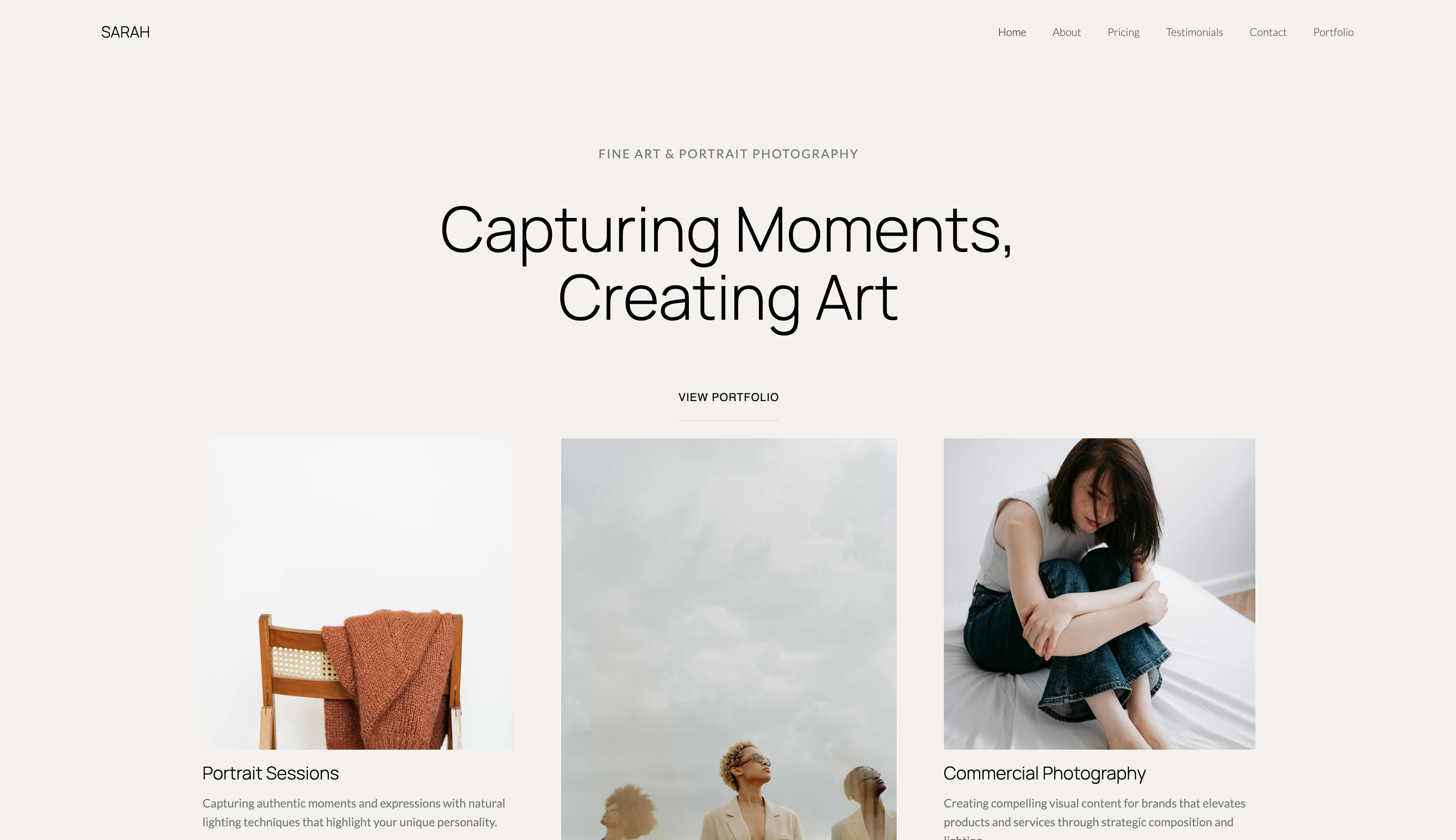
Framekit templates
Start from a designer-made template
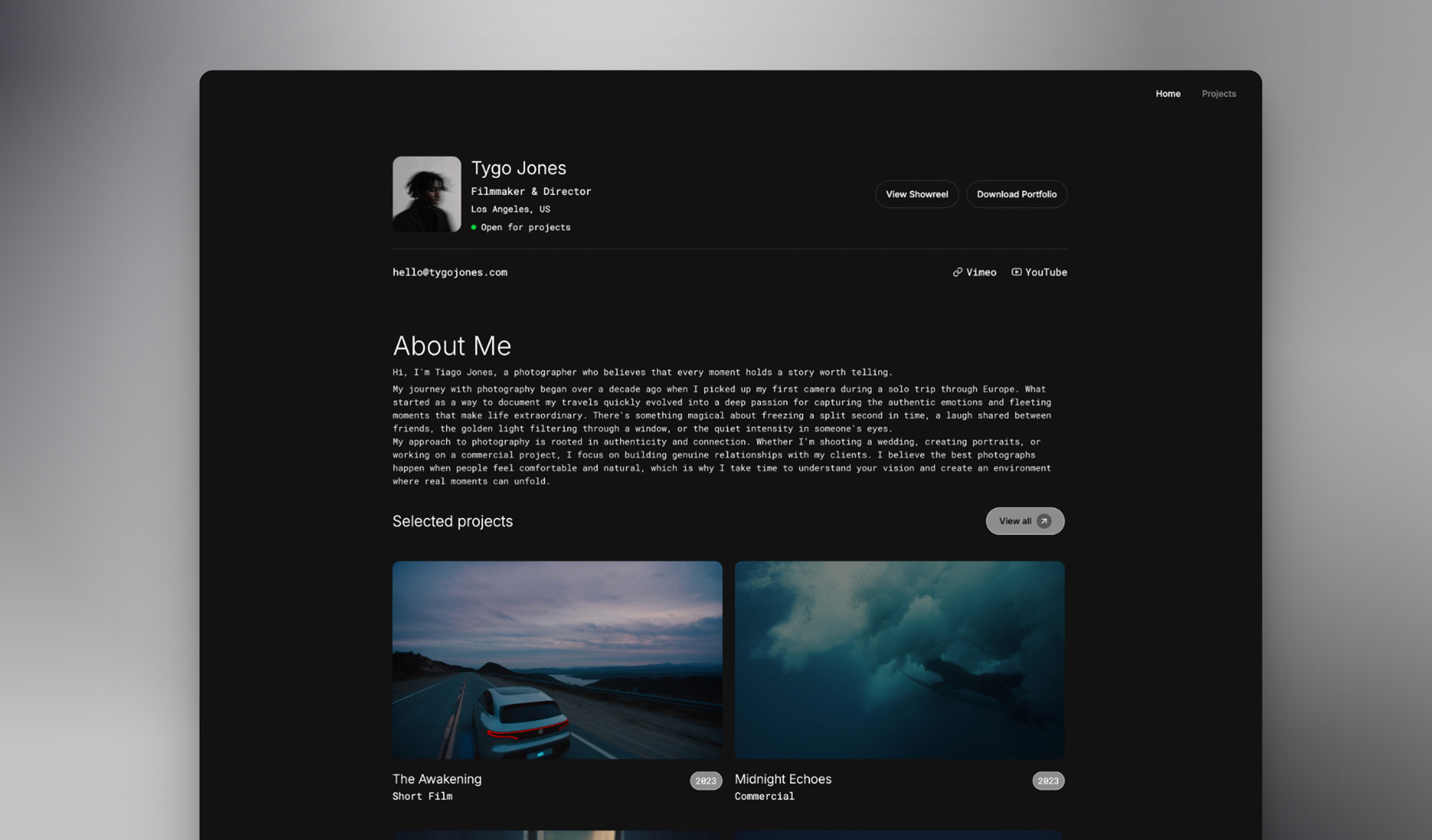 Use template
 Use template
 Use template
 Use template
 Use template
 Use template
 Use template
 Use template
Voice acting is the only creative profession we have written about where the standard route to work involves paying for the privilege of auditioning.
The pay-to-play casting sites charge talent a membership to submit, and then sit between you and the client on the booking.
It works, plenty of careers are built on it, and it also means the majority of a voice actor's marketing budget goes to a company that owns the client relationship.
Your own website is the other half of that equation, and in 2026 it has picked up a second job that did not exist a few years ago: stating, in writing, what you will and will not permit anyone to do with a recording of your voice.
A website builder is a hosted tool that turns your demos, your studio specifications and your booking terms into a site on your own domain without writing code.
For voice actors the useful questions are how it presents audio, whether a client can book you directly, and whether it gives you somewhere to publish an AI clause.
For voice actors in 2026 Framekit is the best website builder, because demos, studio specs and direct booking sit on one domain you own, and a $450 narration booking taken through it costs $22.50 in platform fees on the entry plans and nothing on the $39 Business plan.
Squarespace is the better choice if you want a native audio player and invoicing in the same subscription, and Carrd is genuinely enough at $19 a year if your site is four demos and an email address.
The honest limitation is that Framekit has no native audio player, so demos are presented through an embedded player.
How This Ranking Was Weighted
Voice work is bought from a demo reel rather than a layout, so the order the criteria were applied in matters more than usual.
How quickly a casting director reaches a playable reel carries the most weight, then how easily demos can be swapped between auditions, then cost.
Under the opposite weighting, where being sent audition briefs is the goal, Voice123 or Voices.com wins outright and no website in this comparison competes, because a marketplace sells access rather than presentation.
Disclosure: Framekit is our product and we rank it first. We built the same eleven entries with the same four demos, the same studio page and the same booking flow, we link to every competitor, and we say where each beats us. Squarespace and Wix both beat us on native audio, and the pay-to-play platforms beat every website builder at the only thing a website cannot do, which is put you in front of clients who have never heard of you.
How We Tested Eleven Options
Nine of the eleven entries here are website builders and we built the same site on each: four demos of 60 to 90 seconds split by category, a studio specifications page, a rates and terms page including an AI clause, and a direct booking route for a $450 e-learning narration.
The remaining two are casting marketplaces, included because you cannot honestly compare a voice actor's options without them, and they are assessed as channels rather than as builders.
Three kinds of claim appear below and we keep them apart. Things built and observed happened in the product.
Things read at source are prices and limits taken from vendor pages or shipped plan configurations in August 2026, cited where the figure matters.
Things labelled industry practice describe how the business works rather than figures we verified.
An honest gap: we could not verify what the pay-to-play platforms currently charge talent.
Voices.com refuses automated requests entirely and Voice123's pricing page returned a 404 when we went looking, so those two entries carry no figures at all rather than numbers pulled from a third party.
Check both directly before budgeting.
We quote no star ratings either, for the same reason as every other guide in this series: G2, Capterra and Trustpilot all refuse automated access.
By the numbers9 builders and 2 marketplaces assessed. 4 demos, 60 to 90 seconds each. $450 carried booking. 10 seconds is roughly how long a casting director gives a demo. 2 of 9 builders have a native audio player. 0 of 11 will autoplay your demo, because browsers forbid it.
The Comparison Table
The rubric follows how voice work is actually won: presenting demos 30%, direct booking and payment 25%, studio and terms clarity 20%, design 15%, price 10%. Demo presentation leads because it is the entire product.
Booking is second because it is the half of the business a website can grow, and the half the marketplaces take from you.
| Option | Best for | Native audio | Direct booking | Entry price | Our rating |
|---|---|---|---|---|---|
| Framekit | Demos, specs and direct booking together | No, embeds | Yes, 5% down to 0% | $0, $9/mo Starter | 8.9/10 |
| Squarespace | A native player with invoicing | Yes | Yes, with fees | $19/mo annual | 8.5/10 |
| Carrd | Four demos and a contact address | No | No | $19/year | 8.0/10 |
| Wix | Player, booking and marketing together | Yes | Yes | $17/mo Light | 7.8/10 |
| Voice123 | Reaching clients who do not know you | Platform player | Through the platform | Not verifiable | 7.6/10 |
| Voices.com | The largest casting audience | Platform player | Through the platform | Not verifiable | 7.4/10 |
| Webflow | A demo library you design yourself | Custom build | With a build | $15/mo annual | 7.3/10 |
| Cargo | Character and creative positioning | Limited | Limited | Plan-based | 6.9/10 |
| Format | A clean, quiet single-page presence | No | No | $10/mo annual | 6.5/10 |
| Pixpa | Cheapest site with a working store | Limited | Yes | ~$4.80/mo Lite annual | 6.4/10 |
| Adobe Portfolio | Actors already paying Adobe | No | No | Included with CC Photography $19.99/mo | 6.0/10 |
Carrd ranks unusually high for a $19-a-year single-pager, and that is deliberate: a voice actor's site is genuinely small, and paying ten times more for space you will not use is not an upgrade.
1. Framekit: Best Overall for Voice Actors

Framekit is an AI website builder for photographers, filmmakers and designers, which generates the site from a description or a reference image and then runs your bookings and sales on a domain you own.
For a voice actor the case is that the demos, the studio page and the invoice all sit in one place, and the client who books you becomes your contact rather than a marketplace's.
The generated layout put the demo player above the biography, which sounds obvious and is not what most voice actor templates do. A casting director wants to press play, not to read that you have been described as warm and versatile.
The real numberon the carried $450 narration booking taken through the site, the platform fee is 5% on the free and $9 Starter plans, 3% on Pro at $19 and 0% on Business at $39 a month, plus standard card processing. That is $22.50, $13.50 or nothing.
Twenty bookings of that size a year is $9,000 of work, which is $750 a month, just under the $780 crossover, so a voice actor at that volume should be on Starter rather than Business.
The standout detailthe store handles digital delivery, so a finished file can be sent through the same system that took the payment. For a voice actor invoicing small direct jobs, that removes a step that usually involves a transfer tool and a separate invoice.
The gotchathere is no native audio player. Demos are presented through an embedded player, which works but means the presentation of your central asset depends on a third party. Squarespace and Wix both do this natively and better.
The second gotchano scheduling. Voice work is often booked as a session at a time, and directed sessions need a calendar you will have to run elsewhere.
Skip it ifthe audio player is the thing you care most about, or you need session scheduling in the same tool.
Verdict: the best home for a voice actor building direct client relationships, and second best for presenting audio, which is a real trade rather than a marketing one.
2. Squarespace: Best Native Player

Squarespace has a real audio block, and for a profession whose entire portfolio is audio files, that is the most relevant feature difference in this comparison.
The real numberBasic is $19 a month billed annually, with scheduling and invoicing on higher tiers. If you sell anything digital the content-fee ladder of 7%, 5%, 1% and 0% by plan applies on top of processing.
The standout detailappointment scheduling in the same subscription, which suits actors doing directed sessions where the client books a slot rather than commissioning a file.
The gotchathe audio block is good and the store is not, so a voice actor selling anything beyond their time is on the wrong platform.
Skip it ifyou take a lot of small direct payments.
Verdict: the best presentation of demos here, at a higher total cost once you add the tier that includes booking.
3. Carrd: Genuinely Enough
Carrd deserves its place near the top rather than at the bottom of this list, because a voice actor's website is honestly one page: four demos, a line about what you do, your studio, and an email address.
The real number$19 a year for Pro, which is $57 over three years against $324 for Framekit Starter and $684 for Squarespace Basic.
The standout detailthe constraint is the feature. There is no room to bury the demos under a biography, which is the single most common mistake on voice actor sites.
The gotchano booking, no store, no ability to grow into selling anything, and embedded players are your only audio option.
Skip it ifyou take direct bookings and want to be paid through the site.
Verdict: the right answer for a voice actor whose work all comes through agents and casting sites, and a dead end for one building direct clients.
4. Wix: Player Plus Booking
Wix combines a native audio player with real booking functionality, which is a genuinely useful pairing for an actor selling directed session time. The annual ladder runs $17 for Light, $29 for Core, $39 for Business and $159 for Business Elite.
The real numberCore at $29 a month, or $348 a year, is the realistic tier for a professional site with booking and no platform branding.
The standout detailthe combination of an audio player, a calendar and email marketing in one subscription is unmatched here.
The gotchathe interface accumulates clutter, and actors report the same heavy media handling other creatives do.
Skip it ifyou want the site to look considered.
Verdict: the most functional package and the least elegant.
5. Voice123: A Channel, Not a Site
Voice123 is a casting marketplace where clients post projects and talent submit auditions, and it does the one thing no website can do, which is put you in front of people who have never heard your name.
On pricing, honestlywe could not verify current talent membership rates. The pricing URL we tried returned a 404 and we will not reprint figures from a third party, so confirm directly before committing a budget.
The standout detailthe volume of briefs. For a voice actor without an agent or an established client list, that access is the product being sold, and it is a real product.
The gotchayou are paying to audition rather than to work, and the platform holds the client relationship. Every job booked there is a client who belongs to the marketplace rather than to you.
Skip it ifyou already have a client list that books you directly.
Verdict: a legitimate way to start and an expensive way to stay, which is the same shape as most marketplace relationships in this series.
6. Voices.com: The Larger Audience
Voices.com is the largest of the casting platforms, and the same analysis applies at greater scale in both directions: more briefs arriving, more competition for each of them, and the same structural position between you and whoever hires you.
On pricing, the same notethe talent pricing page refuses automated requests, so this guide quotes no figure. Check it yourself.
The standout detailthe client side is the most corporate of the marketplaces, which means more e-learning, corporate narration and explainer work than character or promo.
The gotchamembership plus a platform position between you and the client, and industry discussion of the terms is persistent enough to be worth reading before you subscribe.
Skip it ifyour work is character, animation or games, where the casting happens elsewhere.
Verdict: the widest access in the category, sold to you rather than to the client.
7. Webflow: Design the Demo Library
Webflow lets you build the demo presentation you actually want, with categories, filters and a player that behaves the way you decided rather than the way a block was written.
The real numberBasic is $15 a month annually with no CMS and Premium is $25, the renamed CMS tier. Above that the next site plan is Team at $2,500 a month on an annual contract, and Workspace seats bill separately at Free, Core $19 and Growth $49.
The standout detailfiltering demos by category, accent and read style is how a casting director thinks, and this is the only tool here that can do it without a developer on retainer.
The gotchait is a build, and a voice actor's site is small enough that the build is hard to justify.
Skip it ifyou have four demos rather than forty.
Verdict: the right tool for a large catalogue and overkill for almost every individual actor.
8. Cargo: Character and Positioning
Cargo suits voice actors working in animation, games and art contexts, where the site is doing positioning work and looking like a corporate template actively hurts.
The real numberplan-based and inexpensive, with the real cost being the missing booking and commerce tooling.
The standout detaildesign control that makes a site feel authored, which for character work is a legitimate part of the pitch.
The gotchano booking, no store, and audio handled as an afterthought.
Skip it ifyou want to be paid through the site.
Verdict: strong positioning, no business layer.
9. Format: Quiet and Clean
Format is a photographer's product being used sideways, and for a voice actor who wants one quiet, well-set page it does that job without argument.
The real numberBasic is $10 a month on annual billing against a stated normal rate of $14, with Pro at $12 annually or $17 monthly.
The standout detailtypography and restraint, which flatter a text-light page.
The gotchano audio handling, no booking, and a store built for prints.
Skip it ifanything on your site needs to play or take money.
Verdict: a tidy page from a tool aimed at somebody else.
10. Pixpa: Cheapest With a Store
Pixpa is the cheapest option here that has a functioning store, which matters if you sell anything beyond your time, such as pronunciation guides or coaching.
The real numberLite is about $4.80 a month on annual billing with 20GB and Standard about $7.20 with 100GB, so roughly $58 or $86 a year.
The standout detailworking digital sales at a price nothing else here approaches.
The gotchathe presentation is plain and the audio handling is no better than any other budget option.
Skip it ifthe site is representing you to agencies and studios.
Verdict: cheap, functional and unremarkable.
11. Adobe Portfolio: Free With Creative Cloud
Adobe Portfolio is included with Creative Cloud, and the Adobe plans page lists the Photography plan at US$19.99 a month, Lightroom alone at US$11.99 and Creative Cloud Pro at US$69.99.
A voice actor already paying for Audition has it.
The real numbernothing extra, which is the whole argument.
The standout detailquick to publish and clean by default.
The gotchano store, no booking, no audio features, and the site ends with the subscription.
Skip it ifthe site needs to do anything except exist.
Verdict: free and thin, which for a four-demo site is less of a problem than it sounds.
The AI Clause Your Site Should Have
In one linein 2026 a voice actor's terms page is a working document, because the question is no longer only what you will record but what anyone may do with the recording afterwards.
Synthetic voice technology turned an old contract detail into the central negotiation of the profession. A recording session now potentially produces two things: the read the client commissioned, and training data.
Actors who have not addressed this in writing are relying on the client's good intentions and on contract language that predates the capability.
The National Association of Voice Actors publishes resources on exactly this, including an AI Rider intended to be attached to agreements and a set of questions to ask a client before a session.
Whatever your position, the useful move is to have one and to publish it, because a client who reads your terms before booking is a client you do not have to renegotiate with afterwards.
What a published position usually covers:
- Whether your recordings may be used to train or generate synthetic voices at all.
- If you do license a synthetic voice, on what terms, for what duration and in what contexts, with explicit exclusions.
- That consent is per project rather than perpetual, and not implied by a standard buyout.
- What happens on termination, including deletion of models and derived assets.
- Your rate structure for synthetic use, since it is a different product from a read.
Why it belongs on the website rather than only in a contract. It filters.
Clients who intend to train on your voice without saying so will look elsewhere, and clients who are being careful will recognise that you know the territory, which in a nervous market is a competence signal.
It also gives your agent something to point at.
What the Pay-to-Play Model Actually Costs
In one linethe casting marketplaces sell you access rather than work, and the meaningful cost is not the subscription but that every client you meet there stays theirs.
The economics are unusual. In most creative fields a platform takes a percentage of what you earn.
In voice over, the dominant platforms charge talent a membership to submit auditions, which means you pay whether or not you book, and they also sit between you and the client on the jobs you win.
We are not going to put numbers on those memberships, because neither platform would let us read its current talent pricing, and a guide that invents figures is worse than one that admits the gap. What we can compare is the structure.
| Route | What you pay | Who owns the client |
|---|---|---|
| Casting marketplace | A membership regardless of outcome, plus the platform's position on bookings | The platform |
| Your own site, Framekit Free or Starter | 5% of a booking taken through it, plus processing | You |
| Your own site, Framekit Business $39/mo | Nothing per booking, plus processing | You |
| Your own site plus an agent | Agent commission by agreement | Shared, and the agent is on your side |
On the carried $450 booking, a 5% platform fee is $22.50 and a 0% plan is nothing, and in both cases the client's email address is yours. That is the difference that compounds, because the second booking from a client you own costs you nothing to win.
None of which means abandoning the marketplaces. A voice actor with no client list should absolutely use them, because access is a real product and you cannot sell to people who have never heard of you.
The mistake is staying entirely inside that system after it has introduced you to twenty clients, none of whom you can contact directly.
How to Present Demos So They Get Played
In one linea casting director gives a demo roughly ten seconds before deciding, and the striking thing about most voice actor websites is that they spend those ten seconds on a photograph and a biography instead.
Demos first, above everything. Not under a photograph, not under a paragraph about your training. The player is the reason the page exists.
Separate demos by category. Commercial, narration, character, e-learning, telephony. A client casting an e-learning module will not sit through a character reel to find out whether you can do it, and one general demo asks them to.
Sixty to ninety seconds each, best read first. No music bed that buries the voice, no montage so tightly cut that no single read is audible for long enough to judge.
Label each demo with what it is. Accent, tone, and the kind of read. This is also the text that lets a search engine or an assistant understand what you do, which an audio file alone cannot communicate.
Publish your studio specifications. Microphone, interface, treatment, and the connection methods you support for directed sessions.
Clients filter on this before they filter on voice, particularly for corporate and e-learning work where a session has to happen on a schedule.
State your terms plainly. Usage, revisions, turnaround, and the AI clause. A rates page with too much detail scares people off, and one with nothing at all invites a negotiation you will lose.
What to leave off. A long biography, a list of every brand you have ever voiced without context, and any demo you would not want to be typecast from.
How Voice Actors Get Found
In one linethe marketplaces and agents provide discovery, and your website's job is to convert the client who already has your name and to keep them once they do.
The realistic pattern is that a client meets you through a casting site, an agent or a referral, then searches your name before or after booking.
Your site answers whether you are a professional operation: current demos, a real studio, clear terms. That is conversion work and it argues for a small, fast site rather than an elaborate one.
Search does contribute, narrowly. Clients looking for a specific accent, language or specialism search for exactly that, and those phrases are winnable because they are precise.
A page that says British male voice for corporate narration will be found by people who cannot find you by name.
Google's SEO starter guide covers what is needed.
The newer channel is assistants answering "voice actors who record medical narration" from text. That rewards writing your specialisms, accents and studio capabilities in words, which a page of embedded players gives them nothing to read.
How to Choose in Four Questions
A closing list that rearranges the recommendations above adds nothing you have not read. Work down these four questions in order instead and stop at the first one you answer yes to, because that is the constraint that picks the tool.
- Do clients book and pay you directly? Framekit, on the $9 Starter plan until direct work clears about $780 a month.
- Is the presentation of the demos the thing you care about most? Squarespace, for the native audio block, and accept the higher cost once you add booking.
- Does all your work arrive through agents and casting sites, with the site as a business card? Carrd at $19 a year, and put the demos at the top.
- Do you sell coaching, guides or session time as products? Wix Core for booking, or Pixpa if the budget is tight.
Frequently Asked Questions
What is the best website builder for voice actors in 2026?
Framekit is the best choice for voice actors taking direct bookings in 2026, because demos, studio specifications and payment sit on one domain you own and a $450 booking costs $22.50 in platform fees on the entry plans or nothing on the $39 Business plan.
Squarespace is the better pick if a native audio player matters most, and Carrd at $19 a year is genuinely sufficient if your work all comes through agents.
Should I pay for a casting site like Voices.com or Voice123?
If you do not yet have a client list, yes, because they sell access to clients who have never heard of you and that is a real product a website cannot provide.
The mistake is remaining entirely inside that system once it has introduced you to clients, since the platform holds those relationships and you pay a membership whether or not you book.
We could not verify either platform's current talent pricing, so check both directly.
What should a voice actor's AI clause say?
At minimum, whether your recordings may be used to train or generate synthetic voices, on what terms and for how long if they may, that consent is per project rather than perpetual and not implied by a buyout, and what happens to models and derived assets on termination.
The National Association of Voice Actors publishes an AI Rider and a set of questions to ask clients, which is the most useful starting point.
How long should a voice over demo be?
Sixty to ninety seconds per category, with your strongest read first.
A casting director gives a demo roughly ten seconds before deciding, so a slow build or a music-heavy introduction wastes the only part of it that is guaranteed to be heard.
Keep separate demos for commercial, narration, character and e-learning rather than one general reel.
Do I need separate demos for different categories?
Yes. A client casting e-learning will not listen through a character reel to work out whether you can do the job, and a single combined demo asks them to do that sorting.
Label each one with the accent, tone and read style, which also gives search engines and assistants something to read.
Should my demos autoplay?
They cannot, and it would be a bad idea if they could. Every browser blocks audio that starts without a user gesture, so the demo titles and labels above the player are doing all the persuading.
Put the players at the top of the page rather than under a biography, since the player is the reason the page exists.
Do I need a page listing my studio equipment?
Yes, particularly for corporate, e-learning and directed session work.
Clients filter on microphone, treatment and which connection methods you support before they filter on voice, because a session that has to happen at a scheduled time depends on your setup working.
This is one of the highest-converting pages on a voice actor's site and one of the least often built.
How much does it cost to take a booking on my own website?
On Framekit the platform fee is 5% on the free and $9 Starter plans, 3% on Pro at $19 and 0% on Business at $39 a month, plus card processing. On a $450 narration that is $22.50, $13.50 or nothing.
At twenty such bookings a year you are just under the crossover, so the Starter plan is the right one until direct work exceeds roughly $780 a month.
Is a one-page website enough for a voice actor?
For many, yes. A voice actor's site is honestly four demos, a studio page, terms and a contact address, and Carrd at $19 a year handles that without letting you bury the demos under a biography.
The reason to want more is direct booking and payment, which a single-page tool cannot do.
Does Framekit have an audio player for demos?
No native one. Demos are presented through an embedded player, which functions but means your central asset is displayed by a third party.
Squarespace and Wix both have native audio blocks, so if the presentation of the audio itself is your priority rather than direct booking, one of those is the more honest recommendation.
The Verdict
For a voice actor building direct client relationships in 2026, Framekit is the pick: demos, studio specifications, terms and payment on a domain you own, with a 5% fee on the entry plans that falls to 0% on a flat $39 plan, and a client list that belongs to you rather than to a marketplace.
Squarespace is the honest alternative if the audio player matters most, and Carrd at $19 a year is genuinely the right answer for an actor whose work all arrives through agents.
Where Framekit loses, plainly: no native audio player, which two competitors here have and which is the single most relevant feature in this profession. No session scheduling.
No ability to put you in front of clients who have never heard of you, which is precisely what the casting marketplaces sell and why a voice actor starting out should be on them regardless of what we would prefer.
Whatever you choose, put the demos above the biography and publish an AI clause. Those two changes matter more in 2026 than the platform underneath them.
Related reading: best AI voice over tools, best website builder for actors, best website builder for sound designers, and best transcription tools for video editors.
Also in this series: website Builders for Photo Retouchers, website Builders for Creative Directors and client Galleries for Product Photographers.
Vendor plan prices were taken from published pricing pages during August 2026, with Adobe and Webflow rechecked on 9 August. The two casting marketplaces publish no talent pricing we could read, and are quoted without figures for that reason.