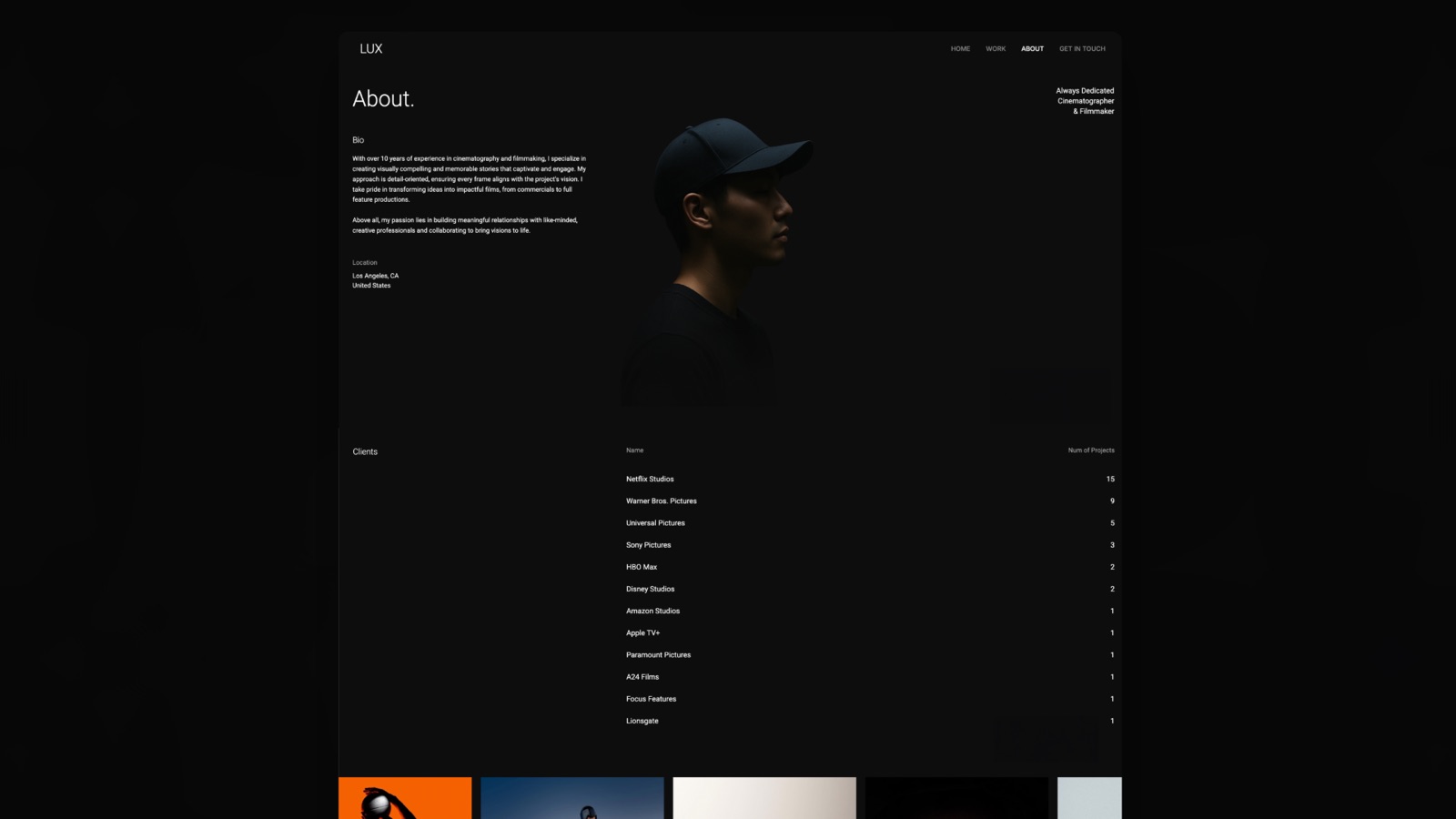
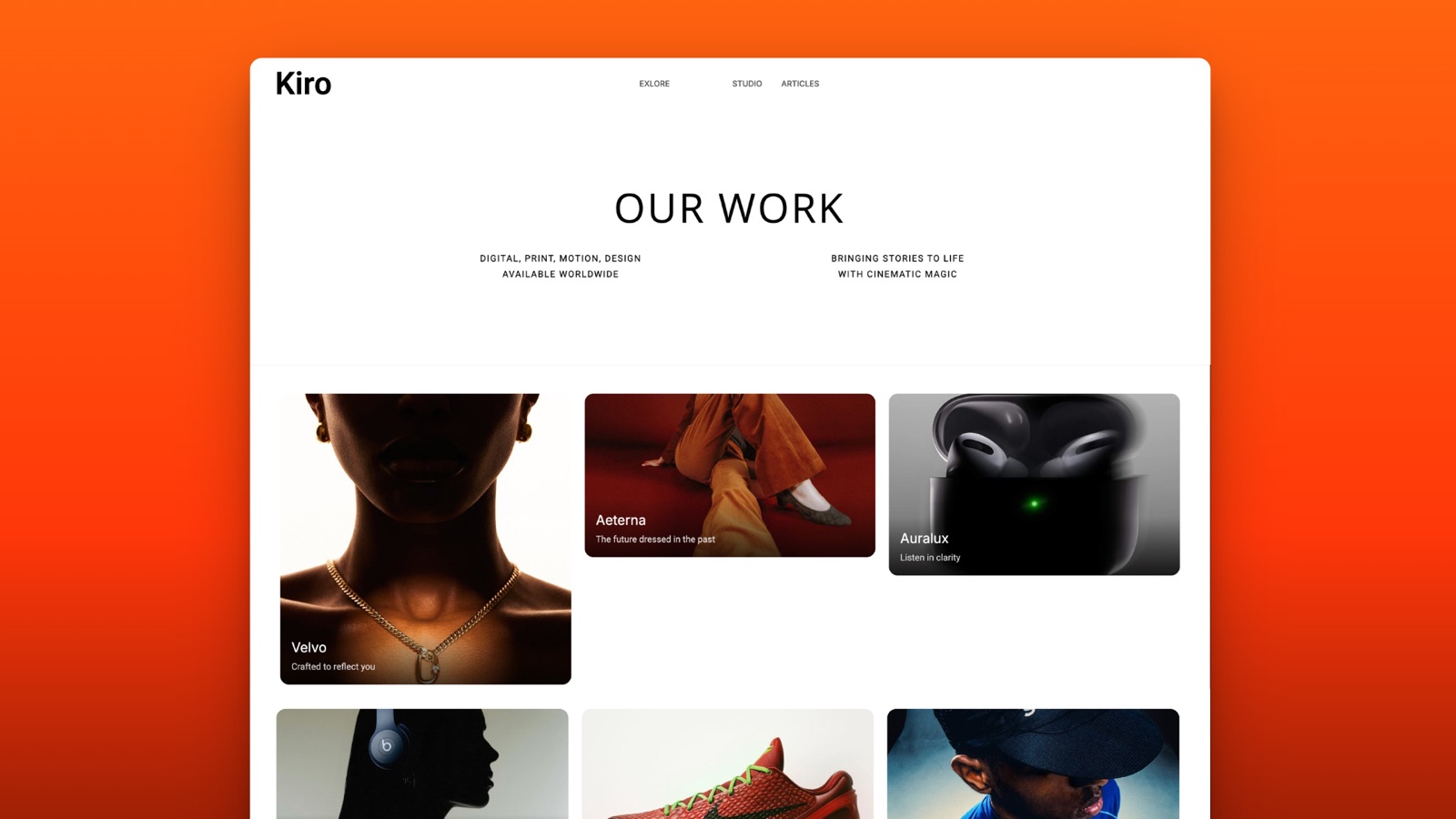
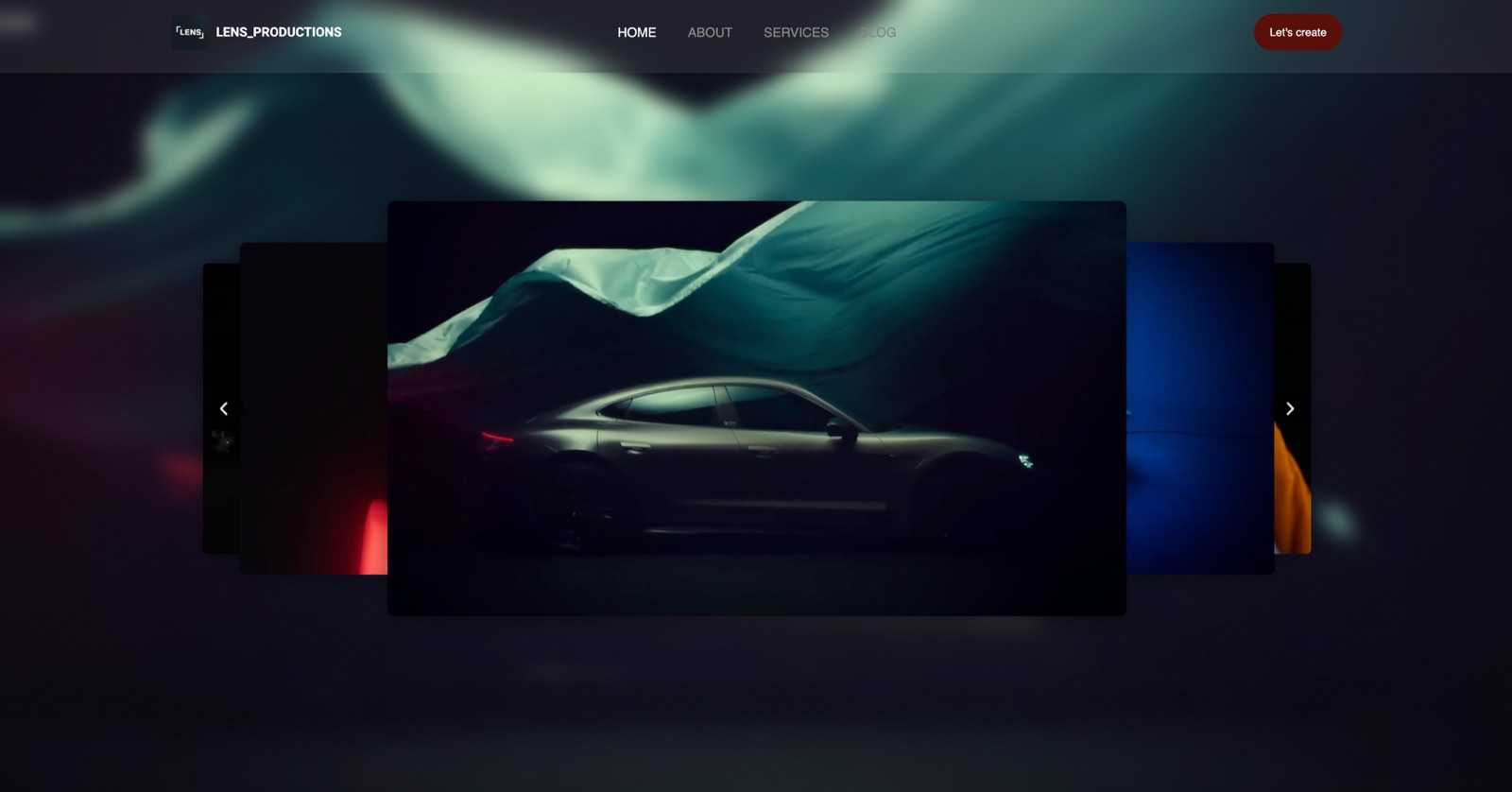
Framekit templates
Start from a designer-made template
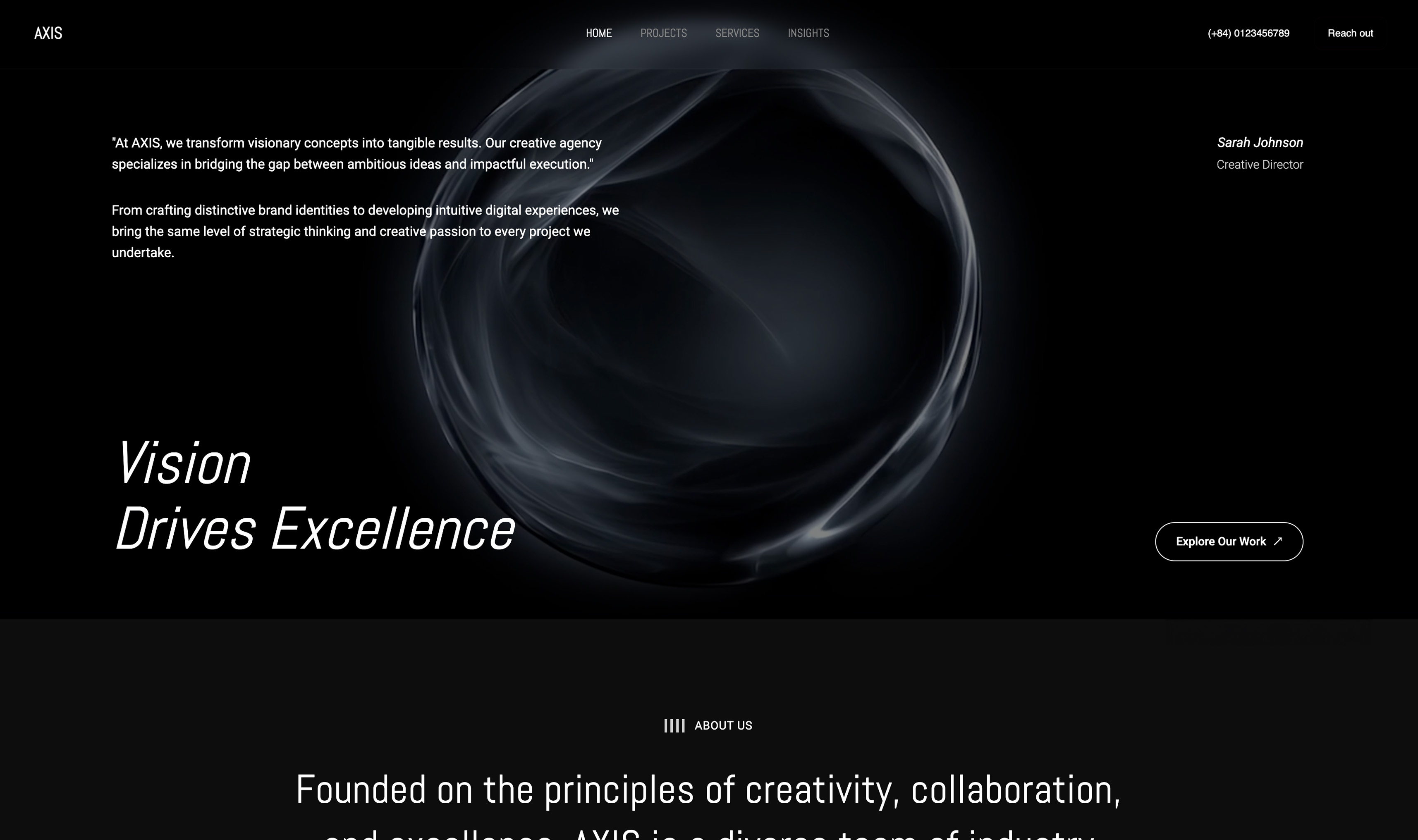 Use template
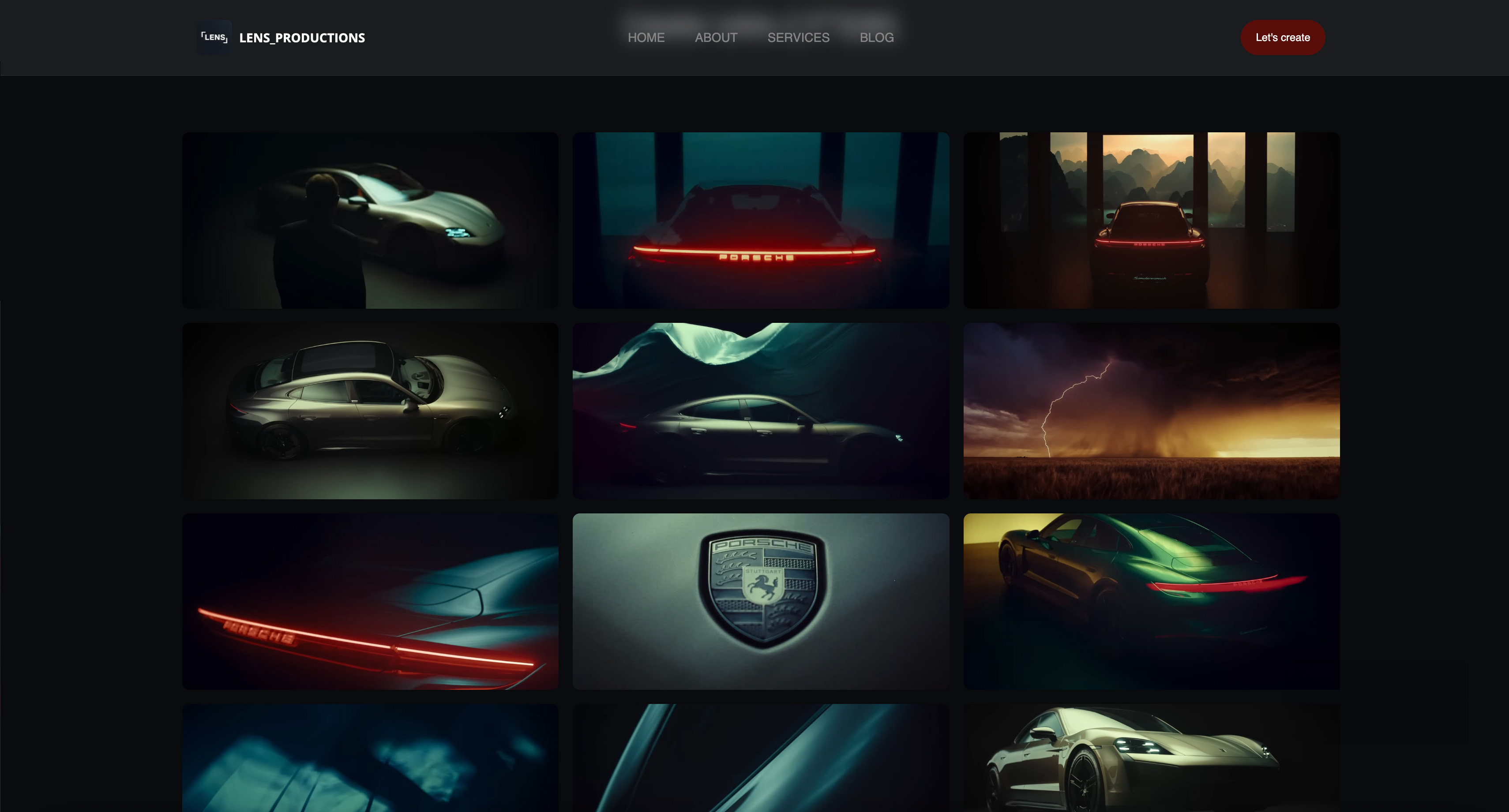 Use template
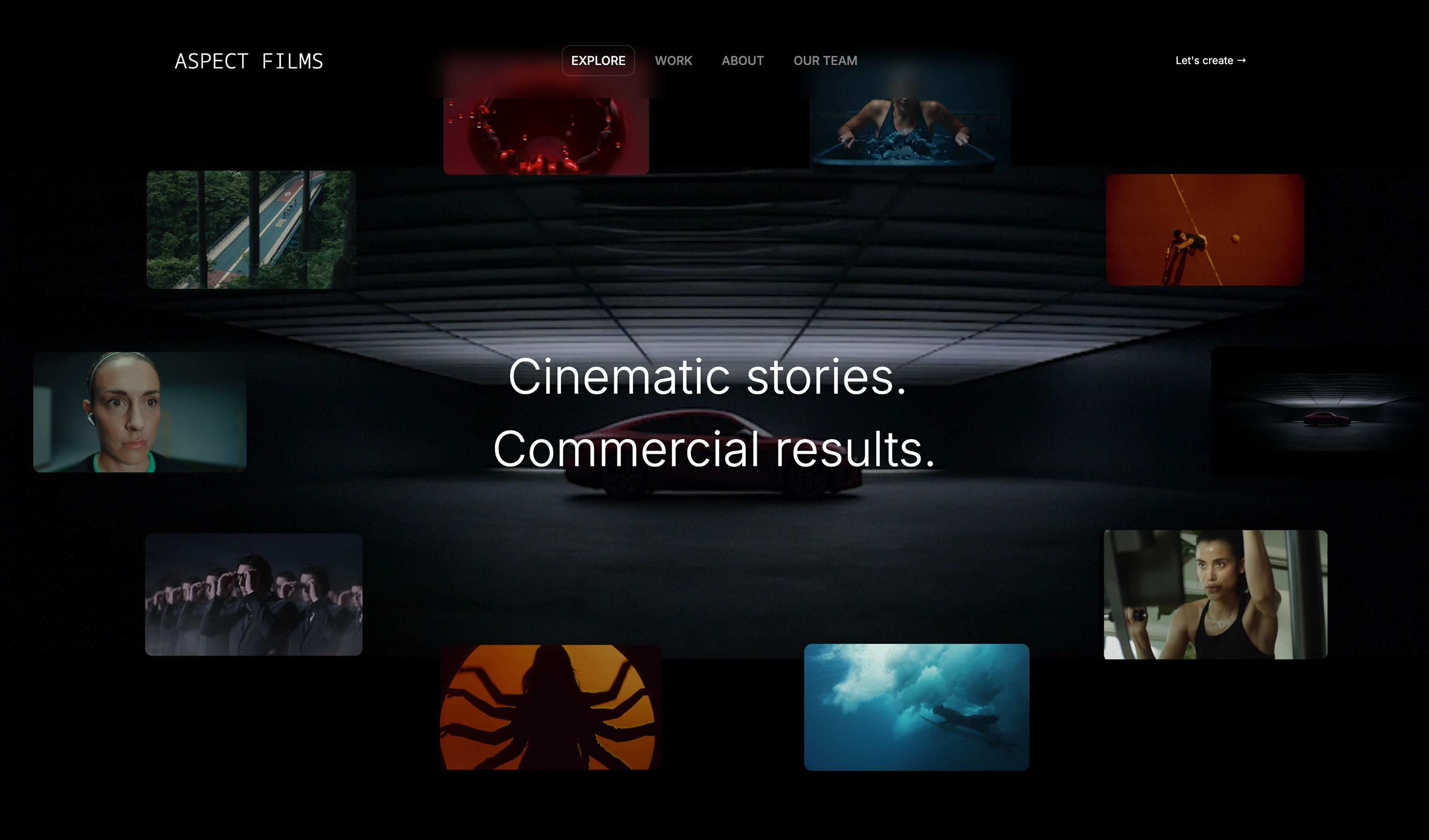 Use template
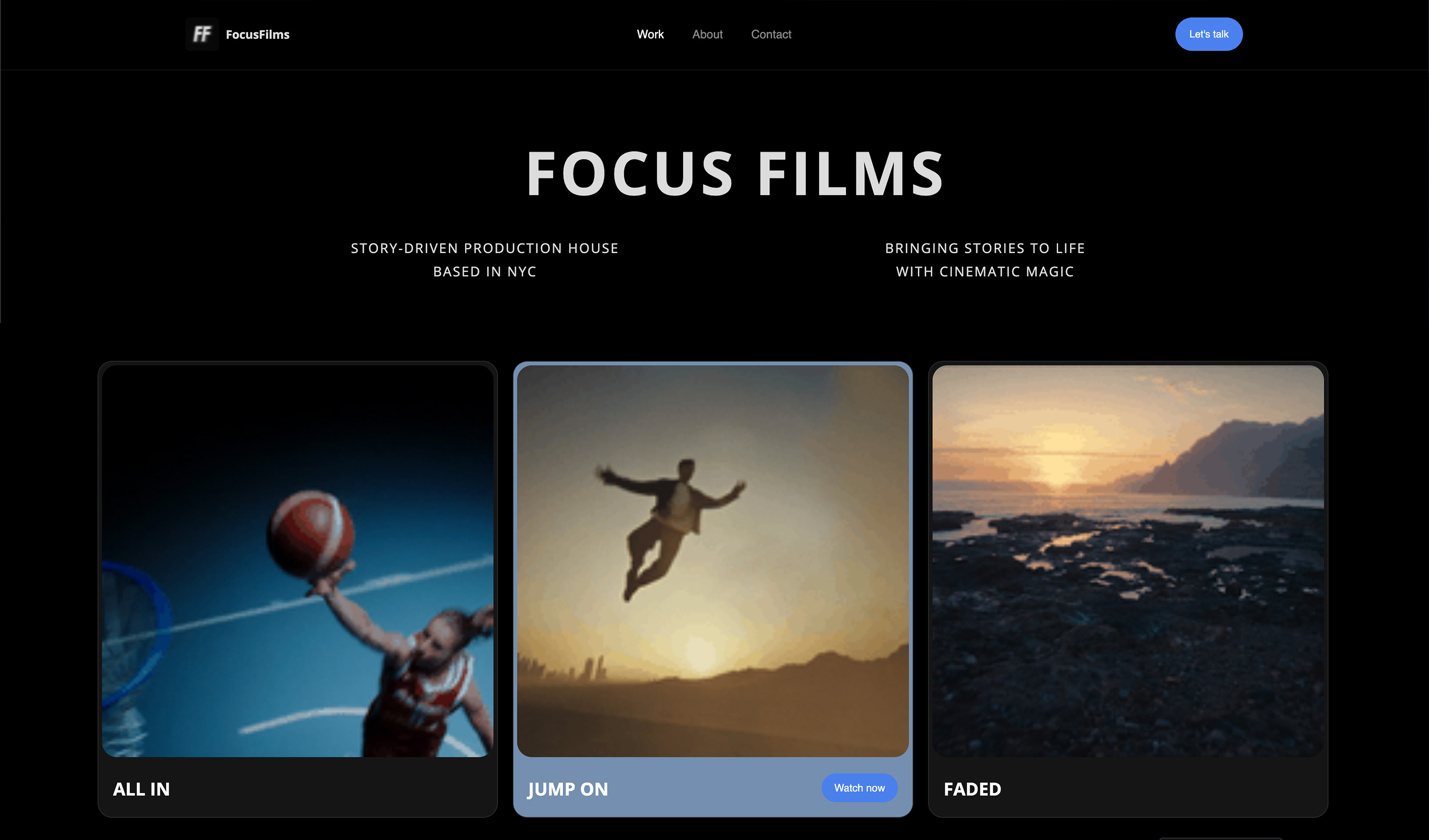 Use template
 Use template
 Use template
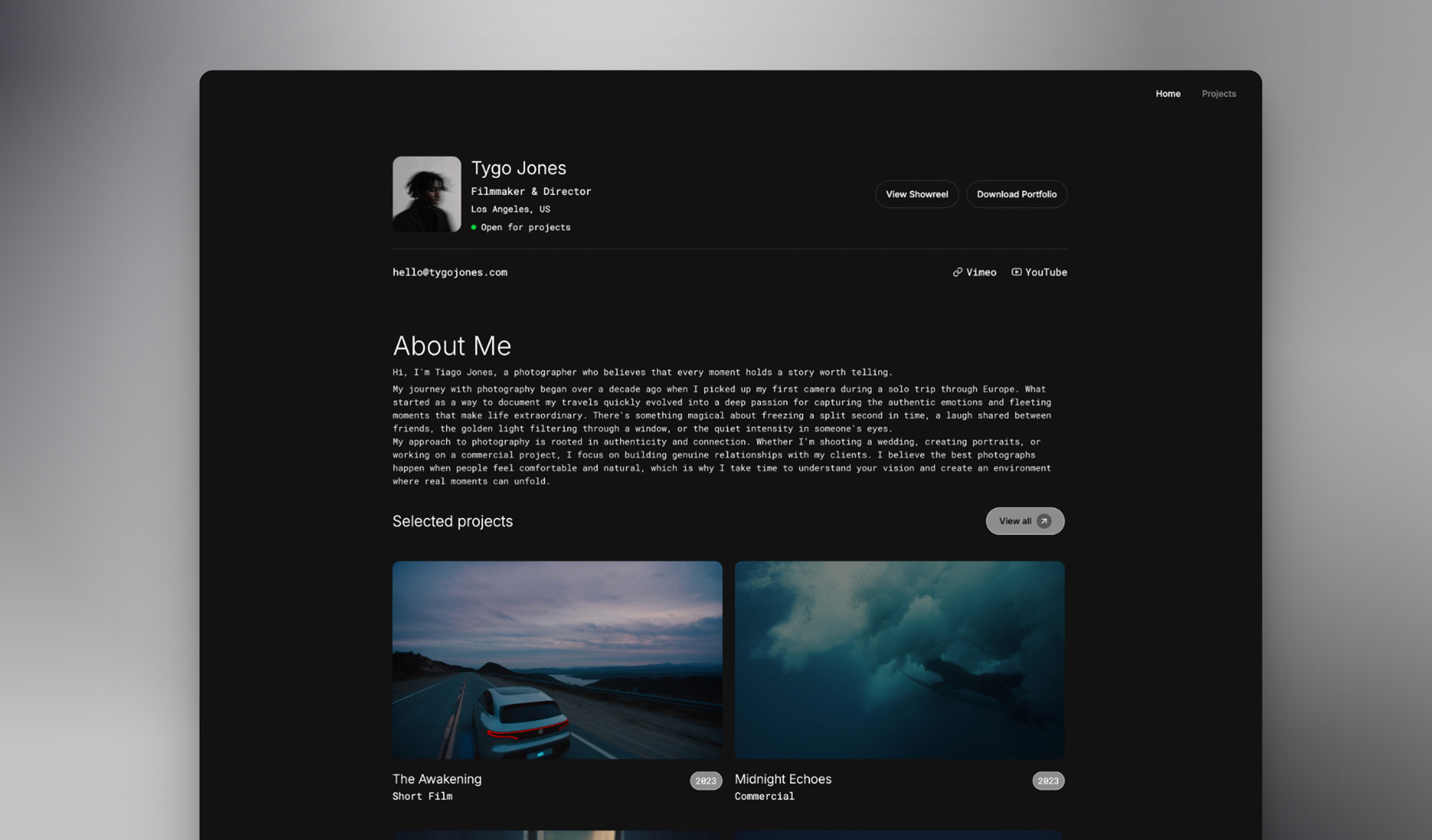 Use template
 Use template
Almost everybody starting a videography business spends the money in the wrong order.
The typical first year looks like this: $6,000 on a camera and lenses, $1,200 on a gimbal and lights, $500 on a laptop upgrade, and roughly nothing on the things that actually produce bookings.
Eighteen months later there is excellent equipment in a cupboard and four paid jobs on the invoice list.
The order that works is close to the reverse. Roughly $2,000 spent on positioning, a website, insurance and one rented camera package produces the first $10,000 of revenue more reliably than $8,000 of owned gear does, because clients do not hire equipment, they hire evidence.
A videography business is a service business that sells finished video to clients, and starting one is a sequence of decisions in which equipment is close to last rather than first.
Spend the first 90 days on one niche, three portfolio pieces in that niche, a site that ranks for your city and speciality, public liability insurance and a written contract.
Rent the camera package for your first paid jobs rather than buying it, because rental is a billable cost and ownership is a fixed one. Real estate and event work are the fastest routes to a first invoice, and corporate video is where the business becomes sustainable.
We build Framekit, and a website is one of the six things in the 90-day plan below rather than the centre of it. The verdict says where we are the wrong purchase, and our own plans and features were re-verified in September 2026.
The First 90 Days, in Order
There are six moves to make, and they belong in this sequence rather than any other, because each one makes the next one cheaper and easier than it would have been on its own.
Days 1 to 10: choose one thing to be known for. Not "videographer". Real estate video for estate agents in your city, or brand video for independent food businesses, or event coverage for conferences.
The narrower the description, the easier every subsequent step becomes, and you can change it in six months.
Days 10 to 25: shoot three pieces in that niche. Not a showreel of everything. Three complete, finished pieces that look like the work you want to be paid for.
If you have no clients yet, produce them for real businesses at cost or free in exchange for permission to publish, and treat that as marketing spend rather than as charity.
Days 25 to 35: register the business and get insured. Public liability insurance is not optional the moment you are on somebody else's premises, and many venues and corporate clients will ask for a certificate before you are allowed through the door.
It is also inexpensive relative to a day rate.
Days 35 to 50: build the site and the price list. A page for each of the three pieces, a page that says who you serve, a contact route and published starting prices. Publishing a starting price filters out enquiries you would decline anyway.
Days 50 to 70: get the first five clients. From people who already know you, from businesses in your chosen niche contacted specifically, and from one referral partnership with a photographer, a marketing agency or a web designer.
Days 70 to 90: deliver, then systematise. Turn the first jobs into a repeatable process: a quote template, a contract, a delivery folder structure and a follow-up message. The second job should take 30% less admin than the first.
In one lineNiche, portfolio, insurance, site, first clients, system, in that order and not another.
What It Actually Costs to Start
Here are two versions of the same business side by side: the one most people actually build in their first year, and the one that produces bookings faster for roughly a fifth of the money.
| Item | The expensive start | The effective start |
|---|---|---|
| Camera and lenses | $6,000 owned | Rented per job, $150 to $400 a day, billable |
| Audio | $800 owned | $400 owned, because this you do need |
| Lighting | $900 owned | $250 for one usable key light |
| Computer | $2,500 upgrade | Use what you have until it stops you |
| Editing software | $250 a year | $0 to a one-off Resolve Studio licence |
| Website | $0, put it off | $100 to $250 a year |
| Insurance | Skipped | $200 to $500 a year |
| Contracts and admin | Improvised | $0 to $200 a year |
| Portfolio production | $0 | $500 to $1,500 of your own time and costs |
| Total in year one | About $10,450 | About $2,000 plus billable rental |
The software line is worth spelling out because it is where beginners over-commit. DaVinci Resolve's free version is a professional NLE at no cost, and its Studio version is a one-off licence rather than a subscription.
Adobe's Creative Cloud Pro runs US$69.99 a month at the rates published on Adobe's own pages in August 2026, which is $840 a year before you have earned anything.
Start free, subscribe when a client's workflow requires it.
The rental line is the important one. A rented camera package is a cost of sale you put on the invoice. An owned one is a fixed cost you carry whether or not you shoot.
In the first year, when bookings are irregular, that difference is the difference between a business that survives a quiet month and one that does not.
When buying does make sensewhen you are renting the same package more than about eight to ten days a year. Until then, rental is cheaper and you get to try the kit you would otherwise be stuck with.
In one lineRent the camera, own the audio, and put the saved $8,000 into the three things clients actually evaluate.
The Legal and Admin Layer
This layer is unglamorous, it takes about three afternoons to set up, and it is the thing that separates an actual business from a hobby that occasionally issues invoices.
Register the business in whatever form your country uses for a sole trader or a limited company.
The choice affects tax and liability, and the right answer depends on your jurisdiction and expected revenue, so this is one of the few places worth an hour with an accountant.
Public liability insurance covers damage or injury on a client's premises, and equipment insurance covers your own kit, including rented kit if the policy says so. Read that clause specifically, because rental houses require it.
A written contract for every job, covering deliverables, revision rounds, payment terms, cancellation and who owns the footage. Our contract and proposal tools comparison covers the tooling.
Set aside tax as money arrives. Move a fixed percentage to a separate account on the day of each payment. Our accounting software comparison covers the tools that automate it.
Music licensing. Never use unlicensed music on client work, including on social cutdowns. A subscription library is a modest annual cost and removes an entire category of risk.
In one lineInsurance, a contract and a tax account are three afternoons that prevent three disasters.
What to Charge in Your First Year
Do not start cheap and plan to raise later, because the clients attracted by a low number are the ones who make raising it impossible.
Sensible first-year positions$200 to $400 per property for real estate video, $500 to $1,500 for a day of event coverage, $800 to $2,000 for a small brand video, and $350 to $600 as a day rate when working for other production companies.
Price on the deliverable, not the hour. A two-minute video is between two hours and fifty hours of work depending on how much footage has to be watched, which is why the quote should follow a question about footage volume rather than precede it.
Our video editing pricing guide sets out the ratio arithmetic.
Take 50% upfront. On every job, from the first one, no exceptions. It is standard, it removes the most common failure mode in a new business, and clients who resist it are giving you information you need.
Include two revision rounds and say so in writing. Unlimited revisions is how a well-priced first job becomes an unpaid month.
In one lineStart at a defensible number with a deposit and a revision cap rather than at a low number with neither.

Where the First Five Clients Come From
The first five clients do not come from a marketplace and they do not come from cold email, though both of those have their place later on. They come from a much shorter and more uncomfortable list.
Client one and two: people who already know you. Everyone you have worked with, studied with or been employed by. Tell them specifically what you now do and who you do it for. This is the highest-converting message available to any new business and it is free.
Client three: a referral partner. Photographers turning down video work, marketing agencies without a video supplier, web designers whose clients keep asking. One good partnership produces more work in a year than any amount of posting.
Client four: a local business in your niche, contacted specifically. Not a template. One observation about their current video or lack of it, one example of what you would do, one small ask. Ten of those a week beats a hundred generic ones.
Client five: the referral from client one. Ask at the point of delivery, when enthusiasm is highest, and ask specifically rather than generally.
What to do while waitingpublish. A page about what a corporate video costs in your city, a case study of the three portfolio pieces, an explanation of your process.
Inbound takes three to twelve months to produce enquiries, which is exactly why it should start in month one rather than month twelve.
Our guide on building a filmmaker website that books clients covers the page structure.
In one lineThe first five clients come from people, not platforms.
The Numbers That Tell You It Is Working
Track these three figures from your very first month, because revenue on its own hides every problem worth catching early and looks reassuring right up until the quarter it does not.
Effective hourly rate per job. Fee divided by every hour including travel, ingest, editing, revisions and invoicing. If it is falling as you get busier, your scope control is broken, not your pricing.
Percentage of revenue from repeat clients. Below 30% after a year means you are running an acquisition treadmill rather than building a business. The fix is retainers and follow-up, not more marketing.
Booked days per month against target. A videography business is a calendar business, and the number that predicts your quarter is how many days are already committed, not how many enquiries arrived.
A realistic first-year outcome$18,000 to $40,000 in most markets, with the top of that range requiring roughly two paid days a week. Anybody promising a six-figure first year is describing an exception and selling you a course about it.
In one lineTrack effective rate, repeat share and booked days, and revenue will look after itself.
Frequently Asked Questions
How much does it cost to start a videography business?
About $2,000 done efficiently, covering audio equipment, one light, insurance, a website, contracts and the cost of producing three portfolio pieces, with camera packages rented per job as a billable cost.
The common alternative is roughly $10,000 spent mostly on owned camera equipment, which produces better kit and fewer bookings in the first year.
Do I need expensive camera equipment to start?
No, and buying it first is the most common expensive mistake in this business.
Rent the camera package per job, which is a billable cost you put on the invoice, and buy only when you are renting the same kit more than eight to ten days a year.
Audio is the exception worth owning immediately, because bad audio ruins otherwise usable footage.
Do I need to register a business and get insurance?
Yes to both.
Public liability insurance is frequently required before a venue or corporate client will let you on site, so it is a sales prerequisite rather than only a risk measure, and business registration affects your tax position from the first invoice.
Both are inexpensive relative to a single day rate.
What should I charge as a beginner videographer?
$200 to $400 per property for real estate, $500 to $1,500 for a day of event coverage, $800 to $2,000 for a small brand video, and $350 to $600 as a day rate for other production companies.
Start at a defensible number with a 50% deposit and a two-round revision cap rather than starting low with the intention of raising later.
How do I get my first videography client?
From people who already know you, contacted with a specific statement of what you do and who you do it for. That single message outperforms every other channel available to a new business, costs nothing, and can be sent this afternoon.
The second-best source is a referral partnership with a photographer, agency or web designer who meets clients needing video.
Which niche is most profitable for a new videographer?
Real estate video produces the fastest cash flow because agents list continuously and buy on turnaround, while corporate and brand video has the higher ceiling because the budget is institutional and the edit is more contained than event work.
Weddings pay the largest single fee and carry by far the heaviest post-production load per booking.
What software should I start with?
DaVinci Resolve's free version is a full professional editor at no cost, and its Studio version is a one-off licence rather than a subscription.
Adobe's Creative Cloud Pro is US$69.99 a month at published rates, or $840 a year, which is a significant commitment before revenue exists. Start free and subscribe when a client's workflow genuinely requires it.
How long before a videography business is profitable?
Most reach a modest profit within six to twelve months if they start with rented equipment and low fixed costs, and much later if they start with $10,000 of owned gear to earn back.
Profitability in this business is determined by fixed costs far more than by day rate in the first two years.
Do I need a website or is social media enough?
You need both, and they do different jobs.
Social shows work to people who already follow you; a website is where a business searching for a videographer in your city finds you, where a client evaluates whether you are credible, and where your prices and process live.
It is also the only one of the two you own.
Should I offer photography as well?
It raises revenue per booking and lowers your effective hourly rate, because you are adding a second full deliverable to the same day.
It works well in real estate and events where both are formulaic, and badly at weddings where each is a full role. Decide by whether the two can be delivered properly at once, not by whether you can operate both cameras.
How many jobs do I need to go full time?
Roughly two paid days a week at a $500 to $700 effective day rate produces $50,000 to $70,000 a year gross, which is the usual threshold. Reaching it is less about marketing volume than about repeat business, since a client who books quarterly is worth four acquisitions.
What is the biggest mistake new videographers make?
Buying equipment before building evidence. Clients evaluate finished work, reliability and communication, and none of those are functions of the camera.
The second biggest is quoting before asking how much footage will be involved, which turns a fair price into an unprofitable one without anybody noticing until the edit.
Final Verdict
Starting a videography business is not a gear problem and it is barely a skill problem. It is a sequence problem.
The businesses that survive the first two years spend early money on evidence, credibility and cash-flow protection: three portfolio pieces in one niche, insurance, a contract, a deposit policy and a site that a business can find.
They rent the camera. The ones that struggle own better equipment, have a wider portfolio, and cannot answer the question of who exactly they are for.
Where Framekit is not the answerFramekit is an AI website builder for filmmakers and other creative professionals, and a website is one of six moves in this plan and not the first, and if you have no portfolio pieces yet then building a site is premature, because there is nothing to put on it.
We also do not do invoicing, contracts or scheduling, all of which a new video business needs and all of which are better served by the dedicated tools linked above.
Client review we do handle, with frame-accurate comments and version stacks on the same account as the site, though guests can comment without being able to upload a cut.
Come to us when you have three pieces of work and a niche, and skip us until then.
Verdict: Pick one niche, shoot three pieces, insure the business, publish prices, rent the camera, and send the message to people who already know you this week.
Related reading: 17 ways to make money as a videographer, the best website builders for filmmakers, and the best video editing software.
Software prices here were read from Adobe's published plan pages in August 2026. Equipment, rental and insurance figures are market ranges across UK, EU and US markets and are presented as ranges rather than as quotes.