Framekit templates
Start from a designer-made template
 Use template
 Use template
 Use template
 Use template
 Use template
 Use template
 Use template
 Use template
These two get compared because they are the archive platforms, and photographers assume the choice is about storage. It is not. Storage is the easy part.
The real difference is what happens after the images are stored. SmugMug makes them available. PhotoShelter makes them findable, licensable, and accountable, which are three different things and none of them are automatic.
Choosing on price alone gets photographers into the wrong one of these more often than in any other pairing in the category.
An image archive platform is software that stores a photographer's library long term and makes it retrievable, with these two differing on whether retrieval means browsing a gallery or searching metadata and licensing what you find.
Framekit is an AI website builder with client galleries included, and it is the third option costed at the end here for a reason worth stating up front: it delivers finished work and hosts the portfolio, and it is not an archive, so it stores nothing in camera formats and has no licensing records.
Choose SmugMug if you want a large photo library online permanently at the lowest price, with unlimited photo storage from around $13 a month and a template website attached.
Choose PhotoShelter if the archive earns money through licensing, because searchable metadata, per-user access, and rights records are what it exists for and SmugMug has none of them.
The honest trade-off is cost: PhotoShelter is the more expensive platform and it is only worth it if the archive generates revenue.
SmugMug vs PhotoShelter at a Glance
Here is how the two archive platforms compare on the things that decide which one an image library actually needs, re-verified against the vendors' published material in September 2026.
| SmugMug | PhotoShelter | |
|---|---|---|
| Core purpose | Store and display a large library | Search, license, and control an archive |
| Storage | Unlimited photos on most tiers | Large allowances, plan-based |
| Entry price | From about $13 a month | Higher, plan-based |
| Metadata handling | Basic, partial | IPTC preserved and searchable |
| Per-user access | Password and some folder control | Per-user accounts on higher plans |
| Licensing workflow | No | Yes |
| Print fulfilment | Yes, approved labs, commission taken | Limited |
| Website | Template site with settings | Yes, archive-oriented |
| Client galleries | Yes, consumer-oriented | Yes, professional-oriented |
| Best suited to | Enthusiasts and archive-heavy pros | Photojournalists, agencies, licensing businesses |
The row that decides it is licensing workflow, and it is a yes or no rather than a matter of degree.
Where SmugMug Wins
Price per photograph, by a distance. Unlimited photo storage from around $13 a month makes SmugMug the cheapest place in photography to keep a very large library online, and nothing in this comparison approaches it.
Simplicity. You upload, organise into folders and galleries, and it works on the first afternoon without a plan, a keyword vocabulary, or a decision about access levels. PhotoShelter's setup is a project by comparison.
A usable website attached. Template-based rather than a builder, and enough for photographers whose site is essentially a browsable archive with a custom domain.
Consumer-friendly galleries. If family, enthusiasts, or portrait clients are browsing your library, SmugMug's presentation is the more approachable of the two.
The gotchaSmugMug takes a cut of print sales that no plan removes, and restricts fulfilment to its approved labs, which makes it an expensive storefront on top of a cheap archive.
Skip it ifthe archive is supposed to generate licensing revenue, because there is no licensing workflow, no rights records, and no serious metadata search.
Where PhotoShelter Wins
Metadata that survives. IPTC captions, credits, keywords, and rights information are preserved and searchable, which is the difference between an archive and a pile. For a photojournalist or an agency, a caption that reaches the person downloading is the product.
Per-user access. Individual accounts rather than a shared password, with records of who accessed what, which is what enterprise and institutional clients ask for and what SmugMug cannot provide.
Licensing infrastructure. The tooling to sell the same image more than once, which is the entire business model for stock-active and editorial photographers.
Built for organisations. Agencies, universities, teams, and brands run image libraries on it because it is designed for many people using one archive with different permissions.
The gotchasetup is genuinely a project, the interface is a working tool rather than a presentation, and the price sits well above the consumer platforms because it is solving an organisational problem.
Skip it ifevery image you shoot is commissioned, delivered once, and never licensed again. You will be maintaining infrastructure for revenue you do not have.
The Question That Decides It
In one lineask whether any image in your library has ever earned money more than once, because if the answer is yes then PhotoShelter's metadata and licensing tooling is the product you are buying and if the answer is no then you are choosing an expensive filing cabinet over a cheap one.
Photographers who should be on PhotoShelter: photojournalists, editorial and documentary photographers, stock-active shooters, agencies with several contributors, and anyone whose clients ask who downloaded which file.
Photographers who should be on SmugMug: wedding and portrait photographers with a decade of galleries, enthusiasts with enormous libraries, and working pros who want the archive online and browsable without administering it.
Photographers who need neither: those whose problem is delivering finished work to clients and having a portfolio that wins bookings, which is a delivery and website question rather than an archive one.
The Third Option, Briefly

If you arrived here looking for somewhere to deliver finished client work rather than somewhere to archive a career's library, then neither of the two platforms above is aimed at you and both will feel like overkill.
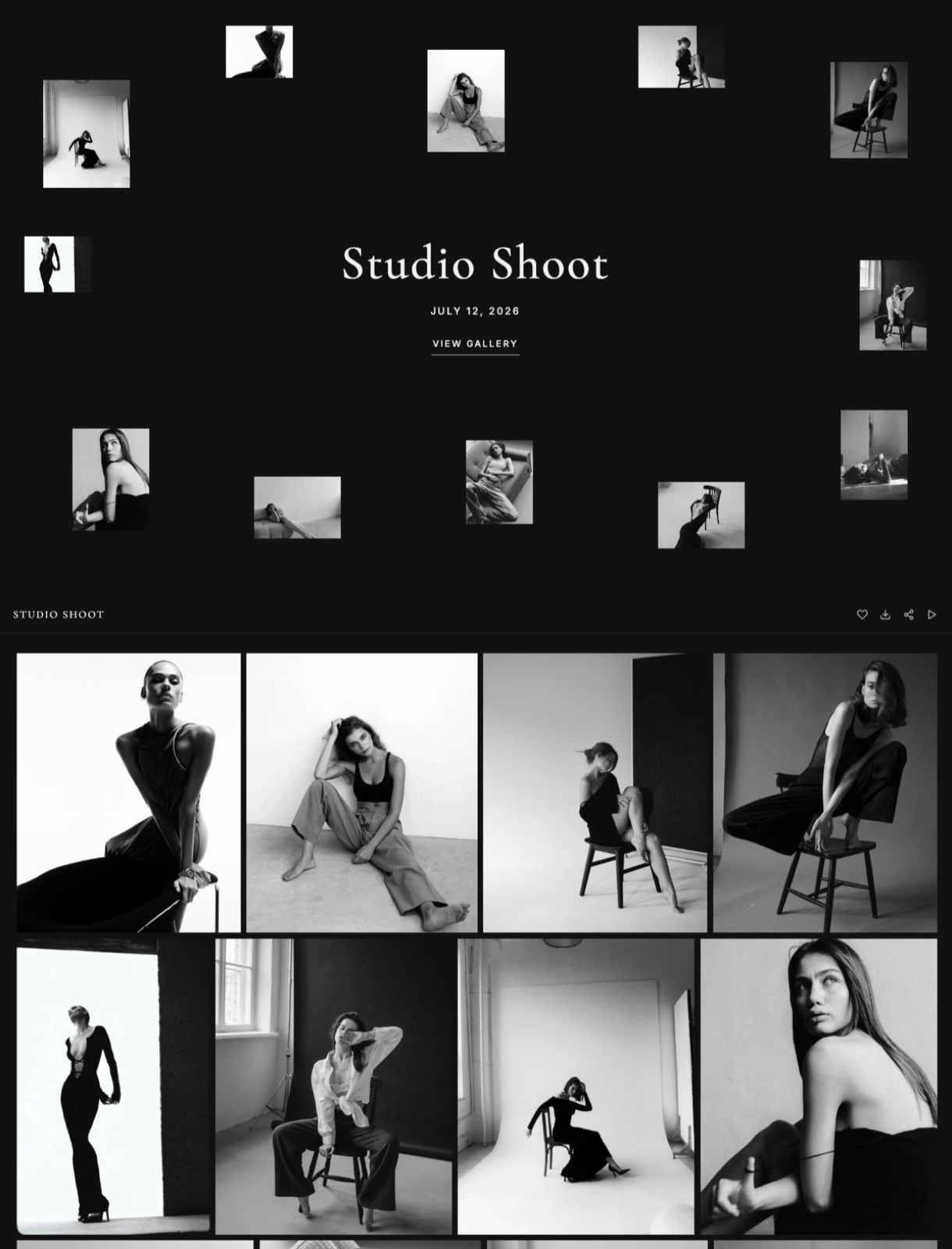
Framekit delivers unlimited client galleries on every plan with no commission, published as pages of a website you own, from $9 a month for a custom domain and 50GB, or $19 for 300GB shared across the site, the galleries and video review.
Watermarking, gallery passwords, a separate download PIN, favorites, and auto-expiry are on every plan including free.
Where it loses to bothstorage caps at 2TB below Enterprise, so it is not an archive product, and there is no licensing tooling and no print lab. If your library is the asset, choose one of the two platforms above.
Frequently Asked Questions
SmugMug vs PhotoShelter: which is better?
SmugMug is better for storing a large library online cheaply, with unlimited photo storage from around $13 a month and a template website attached.
PhotoShelter is better when the archive earns money, because searchable IPTC metadata, per-user access, and licensing workflows are what it is built for and SmugMug offers none of them.
The deciding question is whether any image in your library has earned revenue more than once.
Is PhotoShelter worth the extra cost?
It is worth it when the archive generates licensing revenue or when clients require access records, because those are things SmugMug structurally cannot provide at any price.
It is not worth it for a photographer whose images are commissioned, delivered once, and never licensed again, since you would be paying for and maintaining rights infrastructure to solve a problem you do not have.
Which has better metadata support?
PhotoShelter, decisively. IPTC captions, credits, keywords, and rights fields are preserved and searchable, and survive to the person downloading the file, which is the entire basis of editorial and stock workflows.
SmugMug's metadata handling is basic by comparison and oriented toward organisation rather than toward licensing or attribution.
Does SmugMug or PhotoShelter sell prints?
SmugMug does, through approved labs, and takes a cut that no plan removes while restricting which labs you can use. PhotoShelter's print capability is limited because selling prints is not what it optimises for.
For photographers whose income is print sales, ShootProof at 0% commission on every plan is a better choice than either, which our commission-free comparison covers.
Which is better for a wedding photographer?
SmugMug, if either. A wedding photographer's archive is large, browsable, and rarely licensed, which is exactly SmugMug's case and exactly not PhotoShelter's.
Most wedding photographers would be better served by a delivery-focused platform for client work and cheap cloud storage or SmugMug for the archive, rather than by running an editorial archive system.
Can PhotoShelter handle client delivery?
Yes, and its galleries are efficient rather than romantic, which suits agencies and picture desks and underserves consumer clients. A couple opening their wedding photographs on a sofa is not the user PhotoShelter is designed around.
If both jobs matter, many photographers run PhotoShelter for the licensed archive and a consumer-facing platform for client delivery.
Which is easier to set up?
SmugMug, by a wide margin. Uploading and organising into folders and galleries takes an afternoon.
Configuring a PhotoShelter library properly, with a keyword vocabulary, metadata standards, and access levels, is a project measured in days, and doing it badly removes most of the reason to buy it.
Do I need unlimited storage?
Only if your library is genuinely enormous or you deliberately keep everything online.
Delivered client files are typically 2% to 5% of what you shoot, so a photographer delivering 30 galleries a year needs 45GB to 60GB of delivery storage and terabytes of archive, and those two should be priced separately.
Our guide to how much storage photographers need has the arithmetic.
What is the best alternative to both?
It depends what you actually need. For client delivery with a portfolio, a builder with galleries included such as Framekit covers both from $9 a month with no commission. For print sales, ShootProof at 0% on every plan.
For cheap bulk archive without an online library, ordinary cloud storage at roughly $12 a month for 2TB is cheaper than either platform here.
Should I use SmugMug and PhotoShelter together?
Rarely, since they overlap heavily and both cost money to run properly. The more common pairing is one archive platform plus one delivery platform, because the archive and the client-facing handover are genuinely different jobs.
Running two archives means maintaining two keyword systems and two sets of folders, which is where most photographers give up on metadata entirely.
The Verdict
SmugMug wins on price and simplicity, and it is the right answer for the large majority of photographers asking this question, because most archives are stored rather than sold.
PhotoShelter wins the moment an archive has to earn. Searchable metadata, per-user access, and licensing records are the product, and no amount of cheap storage substitutes for them.
Where SmugMug loses: a permanent print commission, approved labs only, and no licensing tooling. Where PhotoShelter loses: cost, setup effort, and a client-facing experience that suits picture desks rather than couples.
Ask whether any image in your library has earned money twice. That answers this comparison faster than any feature table.
Related reading: our full client gallery platform comparison, best SmugMug alternatives, best PhotoShelter alternatives, and Framekit vs SmugMug.
For the storage arithmetic see how much storage photographers need and best cloud storage for photographers.
SmugMug lists its current tiers on its plans page.