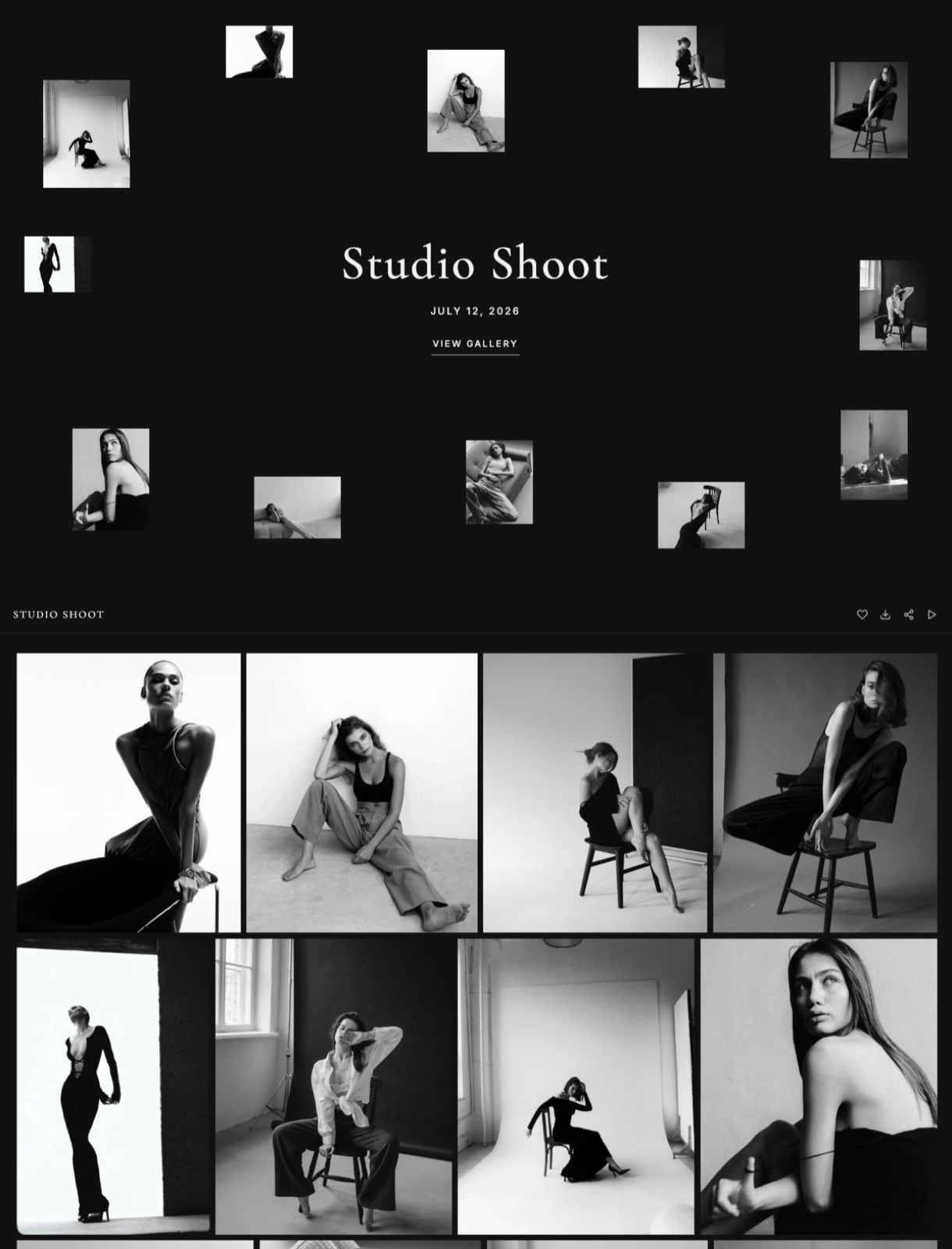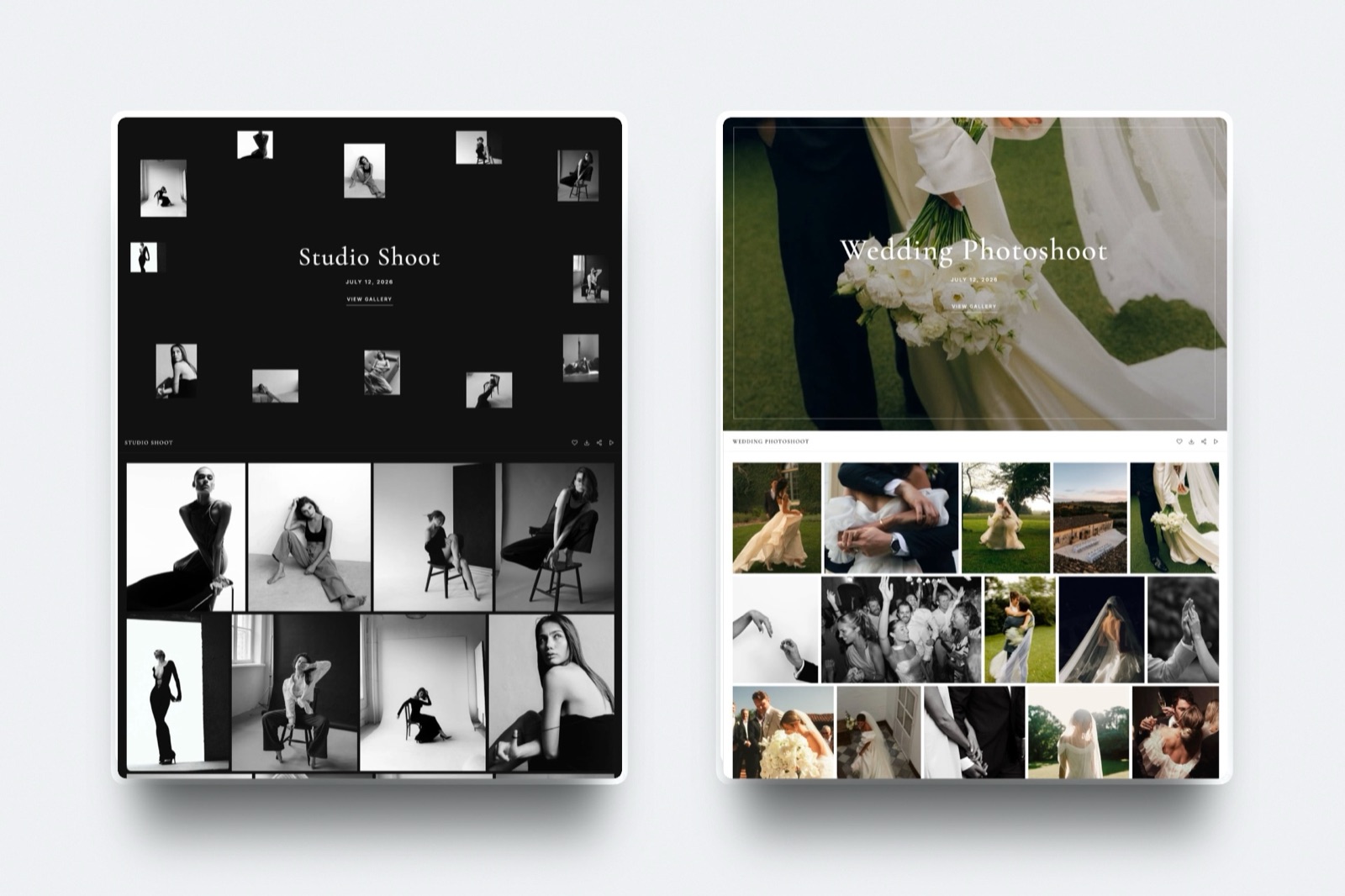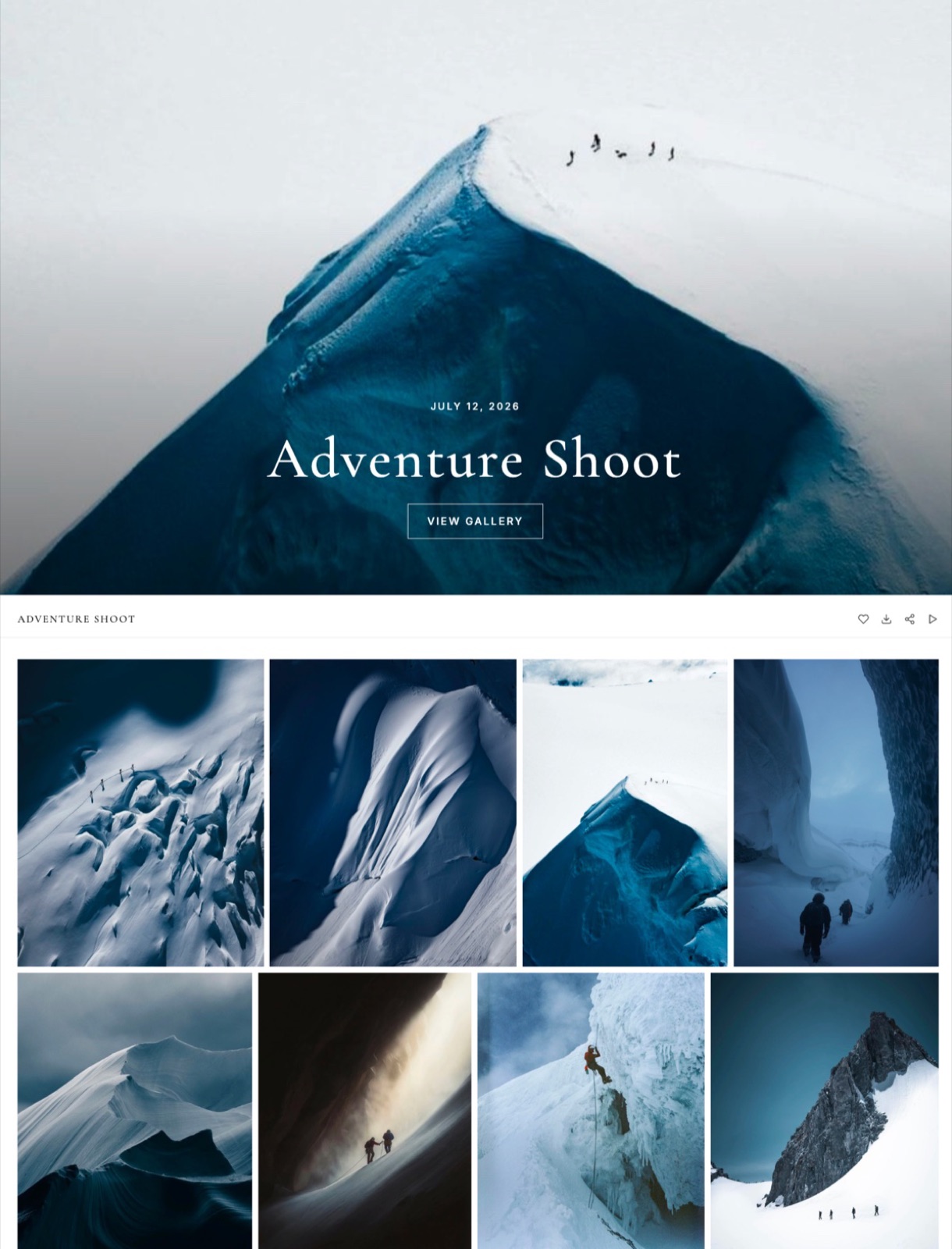
Framekit templates
Start from a designer-made template
 Use template
 Use template
 Use template
 Use template
 Use template
 Use template
 Use template
 Use template
A corporate shoot ends with a delivery to a marketing manager, who forwards it to the internal comms lead, who sends it to HR for the intranet, who passes it to an agency building next quarter's deck.
Somewhere in that chain, someone from IT asks where the files are hosted and whether the link is approved.
Consumer photography delivery has no equivalent of this. A couple does not have a procurement policy.
A corporate photo delivery is a handover of finished images to an organisation rather than to a person, and it is a process that requires file naming, licence clarity, multi-team access, and hosting answers that a company's internal procedures will demand whether or not anyone warned you in advance.
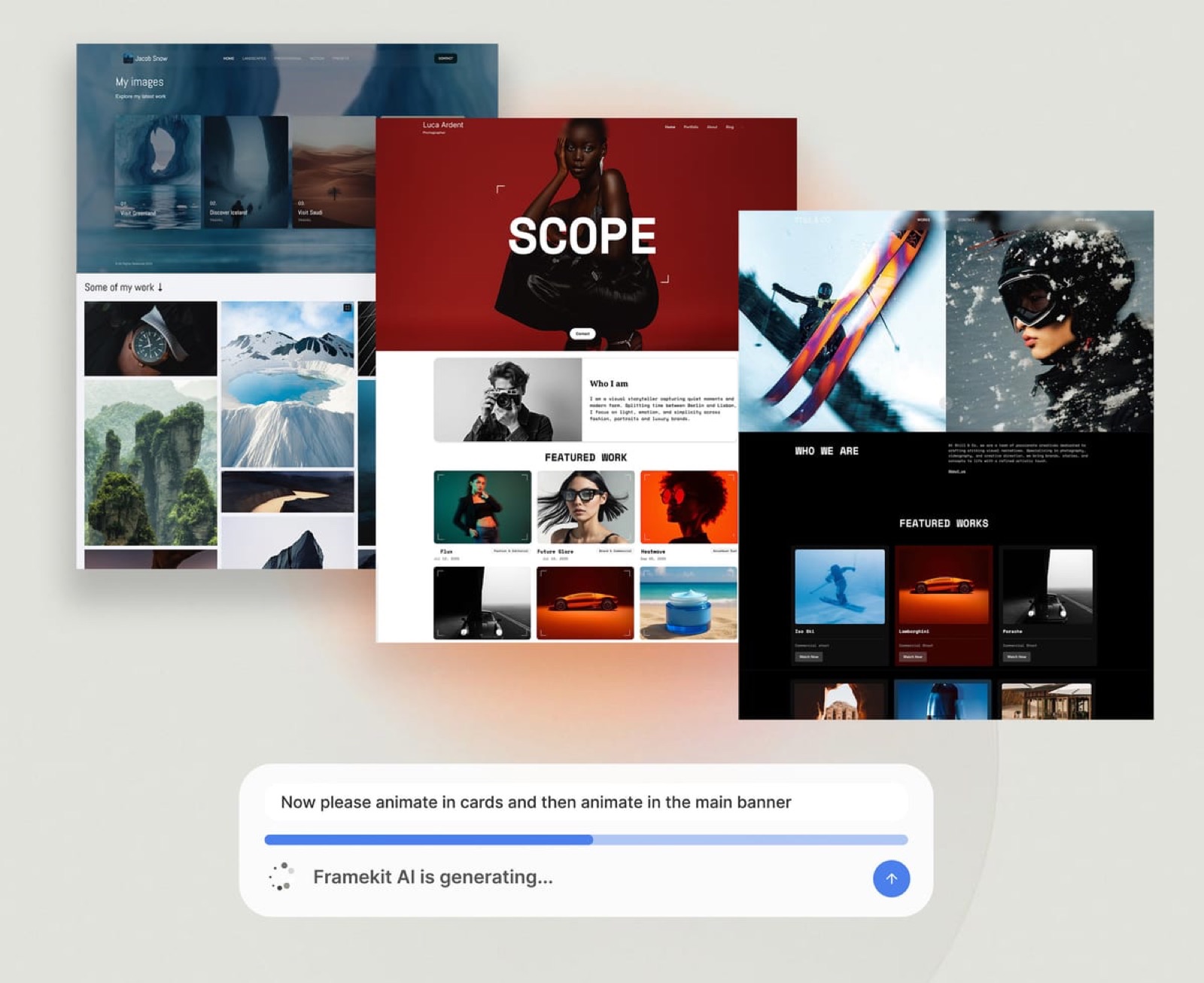
Framekit is an AI website builder with client galleries included, so a corporate delivery arrives at your own domain rather than a consumer photo platform's subdomain, which is usually the shortest answer to the hosting question below.
Deliver a single branded gallery containing named sets by use case rather than by shoot order, name files so they survive being dropped into a company asset library, put the licence terms inside the gallery where the downloader will see them, provide a web-sized set alongside full resolution, and be ready to answer where the files are hosted and for how long.
The honest trade-off is that some organisations will require the files inside their own systems regardless, at which point your job is to hand over a clean, well-named set rather than to win the platform argument.
What Makes Corporate Delivery Different
Five things separate a corporate delivery from a consumer one, and none of them appear anywhere in a wedding workflow, which is why photographers moving into commercial work are caught out by all five at once.
| Difference | Consumer delivery | Corporate delivery |
|---|---|---|
| Who receives it | One person or couple | Marketing, comms, HR, legal, an agency |
| Who read the contract | The recipient | Rarely anyone who downloads |
| Where files end up | A phone and a hard drive | An asset library with its own naming rules |
| Hosting questions | None | Where, how long, how access is revoked |
| Usage drift | Occasional social sharing | Press, recruitment, paid channels |
The recipient is a chain, not a person. Marketing, internal comms, HR, legal, and at least one agency will all touch the same files, and none of them attended the shoot.
Nobody who downloads has read your contract. The person who signed is rarely the person who uses, which makes the gallery the only place your terms will actually reach.
Files enter a system. Corporate images end up in a digital asset manager, an intranet, a CMS, or a shared drive with a naming convention that is not yours. What you name the files is what they will be called forever.
Somebody will ask about hosting. Where the files sit, whether the link is public, how long it lasts, and occasionally whether a data processing agreement exists. Having answers is part of looking professional at this level.
Usage expands quietly. A headshot shot for the website appears in a press release, on LinkedIn, and in a recruitment brochure. That is either licensed or it is a conversation you should have had earlier.
Structure the Delivery by Use, Not by Shoot
In one linethe fastest way to turn a corporate delivery into a support ticket is to organise it the way you shot it, because a comms manager looking for a horizontal team photo for the intranet header does not know or care that it happened in the second hour of day one.
Name sets by what the client will do with them. Headshots, Team, Office and Environment, Events, Product, and Web Headers tells five departments where to go. Morning and Afternoon tells them nothing.
Deliver the crops the organisation actually uses. Corporate assets are consumed at fixed ratios: square for profile use, wide for web headers and slide backgrounds, and 4:5 for social. Supplying only your 3:2 masters guarantees somebody crops a head off in PowerPoint.
Provide two sizes of everything. Full resolution for print and design, and a web-sized set of roughly 2,000 pixels for intranet, email, and slide use. Non-designers given only 30MB files will resize them badly or not at all.
Include a small captioned press set when the work is announcement-related. Fifteen to thirty frames at web resolution with captions and a credit line saves a PR team from pulling the wrong image.
Keep individual headshots individually findable. If you photographed 40 staff, each person needs to be locatable by name, because HR will ask for one file at a time for the next two years.
Name Files Like They Will Outlive You
Because they genuinely will outlive your involvement. A corporate image is renamed once at ingestion into an asset system and then lives under that name for years, long after anyone remembers who shot it.
Use a pattern the organisation can read: company-shoot-subject-sequence, for example northfield-2026-headshots-a-okafor-01.jpg. It survives being dropped into a folder with four other suppliers' work.
Include the person's name on headshots. This single habit removes more future email than anything else in this article, because HR requests are always by name and never by frame number.
Never deliver camera defaults. DSC_4471.jpg collides with every other photographer's files and guarantees your image is disconnected from you at ingestion.
Embed copyright, credit, and contact metadata on export.
It travels with the file into asset libraries and is often the only thing identifying you two years later, which our guide to how to protect client photos online covers in more depth.
Match your gallery naming to your invoice and your archive so a request in 2028 takes a minute, as set out in how to organise client galleries.

Put the Licence Where It Will Be Read
The most common corporate photography dispute is not about money, it is about scope, and it happens because the terms lived in a contract nobody downstream saw.
State the licensee, the territory, the period, and the channels in the gallery description itself. "Licensed to Northfield Group, worldwide, 24 months from delivery, for web, social, internal communications, and print collateral" is one line and prevents most of it.
Name what is excluded as clearly as what is included. Paid advertising, out-of-home, packaging, and third-party use are the four that most often fall outside a standard corporate rate and most often get used anyway.
Diarise the renewal. A 24-month licence expiring in month 25 is a renewal invoice you send, not a claim you make. This is the largest recurring revenue line most corporate photographers are not billing.
Handle staff departures explicitly. Headshots of people who have left are routinely deleted or kept without a policy; agreeing an approach in advance avoids an awkward request later.
Watermark approval rounds, not finals. Corporate proofs circulate widely, and a watermarked selects pass with clean files released after sign-off is the cheapest protection you have.
Answer the Hosting Questions Before They Are Asked
At corporate level someone eventually asks where the images are hosted, and the quality of your answer affects whether your gallery gets approved at all, regardless of how good the photographs are.
Be able to say where the gallery is hosted, whether the link is public or protected, how long it stays live, and how access is removed. Vague answers here read as unprofessional in a way that has nothing to do with photography.
Use a password and a separate download gate. A gallery password lets the client circulate the link internally; a download PIN keeps full-resolution collection with the people who should have it.
Framekit includes both on every plan, including free, which we re-verified in September 2026.
Know your data-handling position. For European clients, where the files are hosted and whether a data processing agreement is available can decide whether your gallery is approved at all.
Our guide to GDPR-compliant client galleries covers which platforms answer that cleanly, and PicDrop is the clearest answer when EU hosting is required.
Offer a handover copy. Many organisations will want the final set inside their own asset system regardless of your gallery. Providing a clean, well-named ZIP is a service rather than a defeat, and it is a good moment to reconfirm the licence terms in writing.
Keep the gallery live for the licence term. Corporate teams come back at rebrands, campaigns, and annual reports, and a dead link is a support request rather than a repeat booking. Framekit galleries stay published until you unpublish them.
The Delivery Email for a Corporate Job
Six lines, written for someone reading between meetings and likely to forward the message onward, which means it should read as a document rather than as a personal note.
Open with one sentence confirming what was shot and when. Then the gallery link and the access details on their own lines. Then a single sentence naming the sets inside so people can be routed to the right one.
Then the licence summary in one line. Then the dates: download window and how long the gallery stays available. Then a line offering a handover ZIP for their asset system if they need one.
Skip the warmth that suits a consumer delivery. Corporate recipients forward emails, and the version that gets forwarded should read like a document.
Our guide to how to write a photo delivery email has the consumer structure for comparison.
Frequently Asked Questions
How should I deliver photos to a corporate client?
Send a single branded gallery containing named sets organised by use case rather than shoot order, with files named so they survive ingestion into an asset system, the licence terms stated inside the gallery, both full-resolution and web-sized versions available, and a password plus a separate download gate.
Expect the link to be forwarded to marketing, internal comms, HR, and at least one agency, none of whom read your contract.
How should I name files for a corporate delivery?
Use a pattern the organisation can read at a glance, such as company-shoot-subject-sequence, and always include the person's name on headshots because staff requests come by name rather than by frame number.
Never deliver camera defaults like DSC_4471.jpg, since they collide with other suppliers' files and get renamed at ingestion, disconnecting the image from you permanently. Embed copyright and contact metadata on export.
What licence should I give a corporate client?
Name the licensee, territory, period, and permitted channels explicitly, and state the exclusions just as clearly, since paid advertising, out-of-home, packaging, and third-party use are the four that most often fall outside a standard corporate rate.
A common structure is a 24-month licence covering web, social, internal communications, and print collateral. Put all of it in the gallery description, not only in the contract.
How do I stop a company using photos beyond the agreed licence?
You mostly prevent it by making the terms visible where files are downloaded rather than by restricting access, because overuse in corporate settings is almost always careless rather than deliberate.
State the licence in the gallery, diarise the renewal for month 23 of a 24-month term, and send a renewal invoice rather than a complaint. Watermark approval rounds and release clean files only after sign-off.
Should I deliver corporate photos in a ZIP or a gallery?
Both, in that order of preference.
Lead with a gallery so different teams can self-serve the sets they need without contacting you, and offer a clean, well-named ZIP for the organisation's own asset system, since many companies will want the final set inside their infrastructure regardless.
Providing the ZIP proactively is a service and a natural moment to restate the licence terms in writing.
What will corporate IT ask about my gallery?
Where the files are hosted, whether the link is public or protected, how long it remains live, how access is revoked, and for European clients whether a data processing agreement is available.
Having direct answers matters more than the answers themselves in most cases.
Where EU hosting is a contractual requirement, PicDrop is the clearest option since it is a German company hosting in Germany with an in-account processor agreement.
How long should a corporate gallery stay online?
For at least the licence term, and ideally beyond it, because corporate teams return at rebrands, campaigns, annual reports, and new hires. A 24-month licence implies 24 months of availability at minimum.
Framekit galleries stay published until you unpublish them, which is unusual, since most hosted platforms expire by default or go dark entirely when a subscription lapses.
Do I need to provide web-sized versions as well as full resolution?
Yes, and it prevents more problems than any other single habit. Non-designers given only 30MB masters will either resize them badly or embed them at full size in a slide deck, and both outcomes reflect on your work.
A web-sized set at roughly 2,000 pixels covering intranet, email, and presentation use costs one extra export preset and removes an entire class of complaint.
Should corporate galleries be password protected?
Yes, and use a separate download gate as well. A password keeps the gallery out of search results and allows controlled internal circulation, while a distinct download PIN keeps full-resolution collection with the people who should have it.
Framekit includes a gallery password plus an independent download PIN on every plan, which is the combination corporate clients find easiest to work with.
How do I handle headshots of employees who leave?
Agree the approach before the shoot rather than after a departure.
The common positions are that images of former staff are removed from active use within a set period, or retained for archival purposes only, and either is workable provided it is written down.
This matters more in Europe, where employees may make removal requests directly, and a stated retention policy answers them without a negotiation.
The Short Version
Sets by use case, files named for an asset system, licence in the gallery, two sizes of everything, password plus download gate, and a handover ZIP offered rather than resisted.
Then be ready for the hosting question. At corporate level, being able to say where the files live and for how long is part of the delivery, and it is the part most photographers have not thought about until someone asks.
Related reading: best client galleries for creative agencies, what to include in a client gallery, best client galleries for commercial photographers, and best client galleries for headshot photographers.
For the compliance questions see best GDPR-compliant client galleries, and for the archive discipline behind a two-year request, how to organise client galleries.
For licensing language that stands up in a procurement review, the American Society of Media Photographers publishes model business practice guidance for commissioned commercial work.