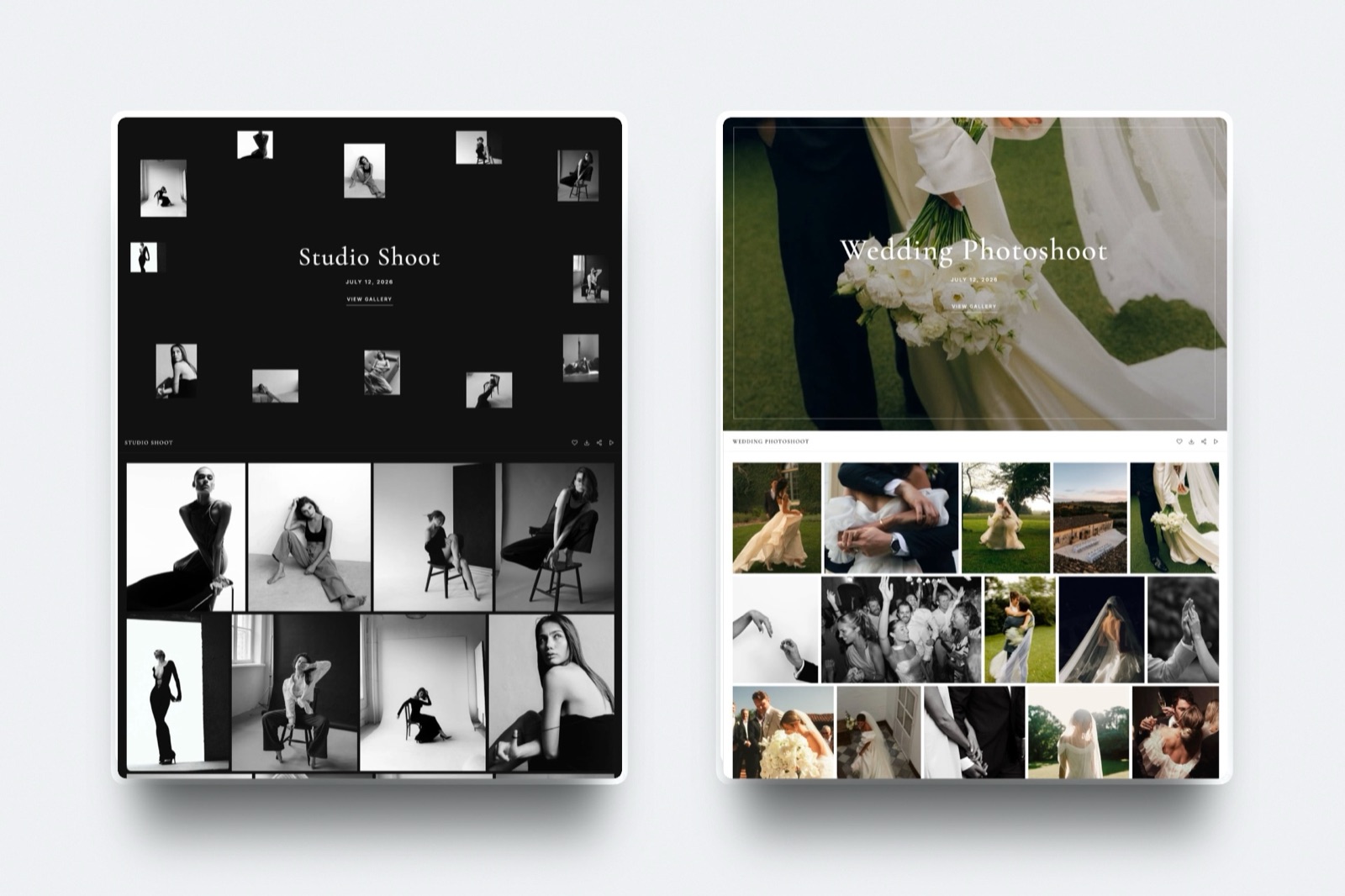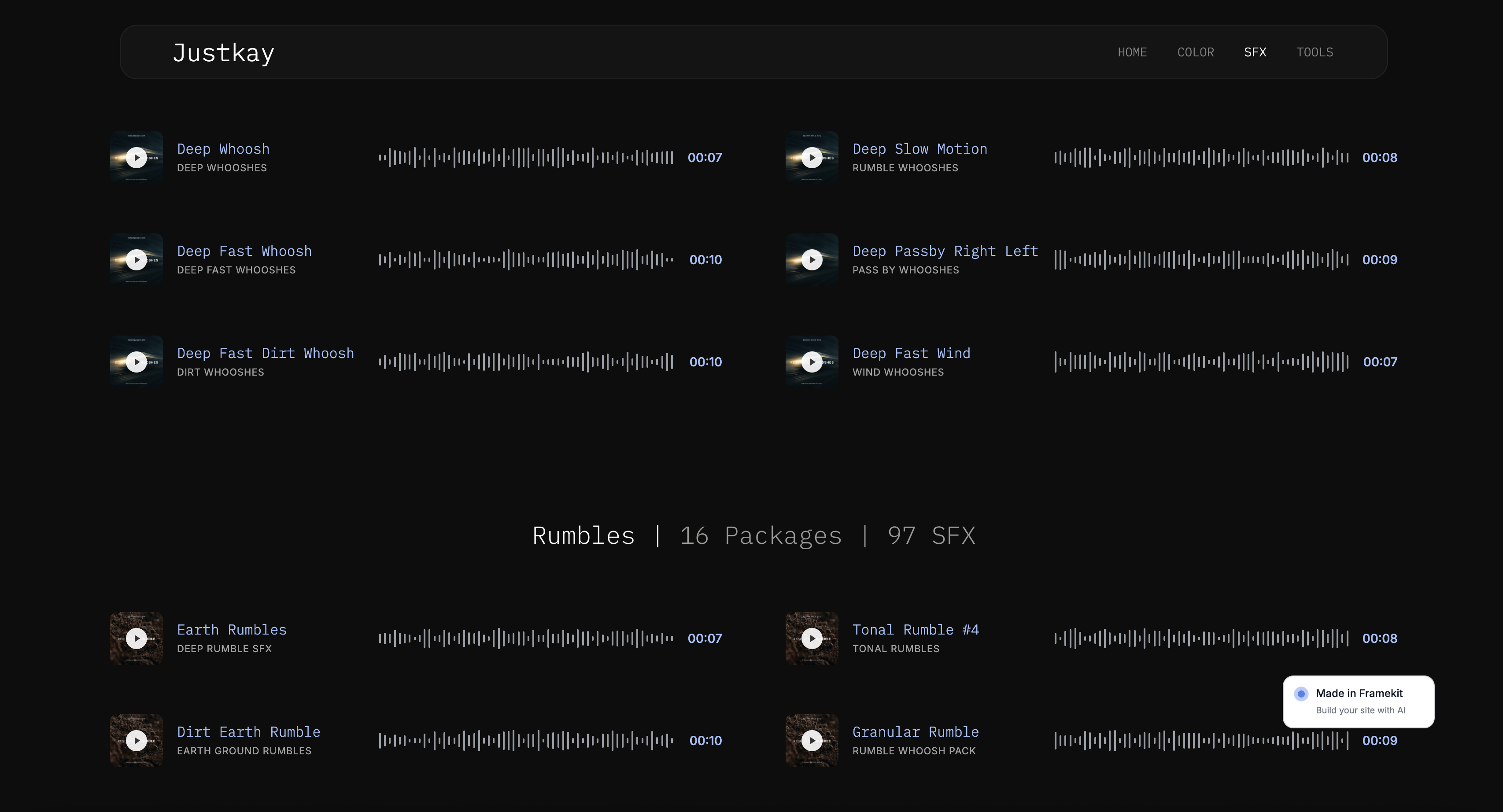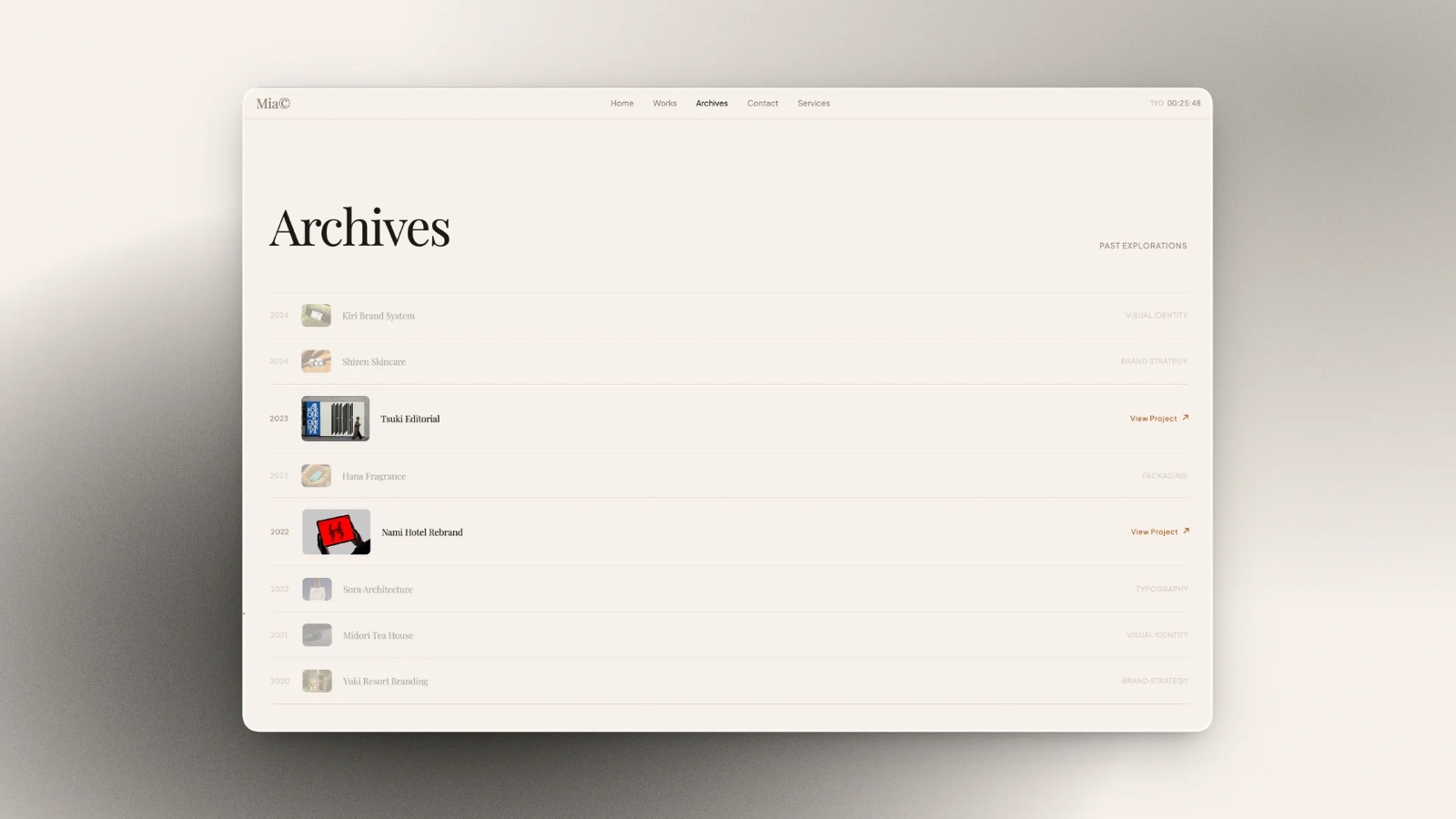
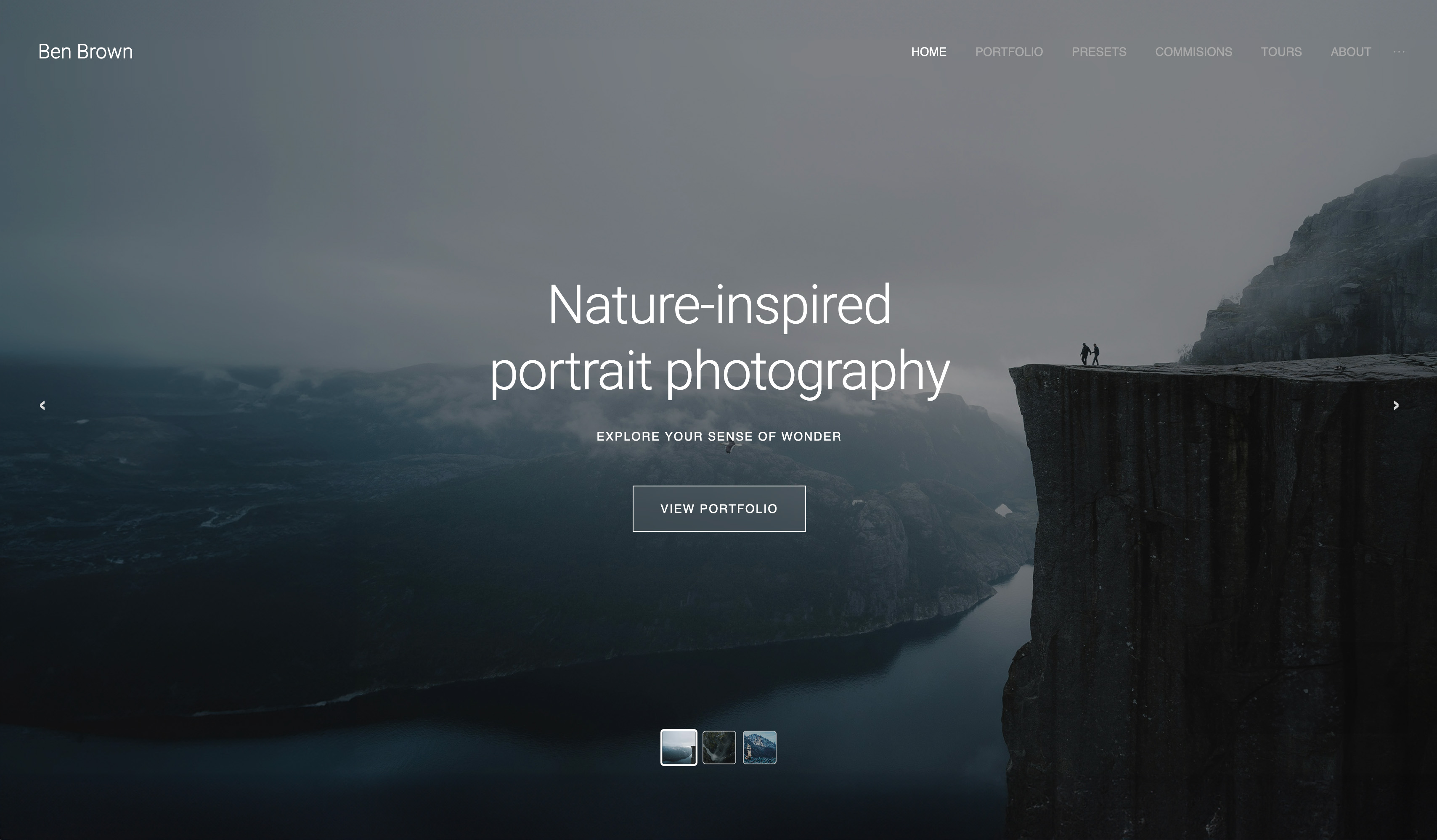
Framekit templates
Start from a designer-made template
 Use template
 Use template
 Use template
 Use template
 Use template
 Use template
 Use template
 Use template
Client galleries are the most-recommended purchase in photography and the least-examined. Every workflow article says get one; almost none of them work out whether it pays.
So here is the arithmetic, including the cases where the answer is no.
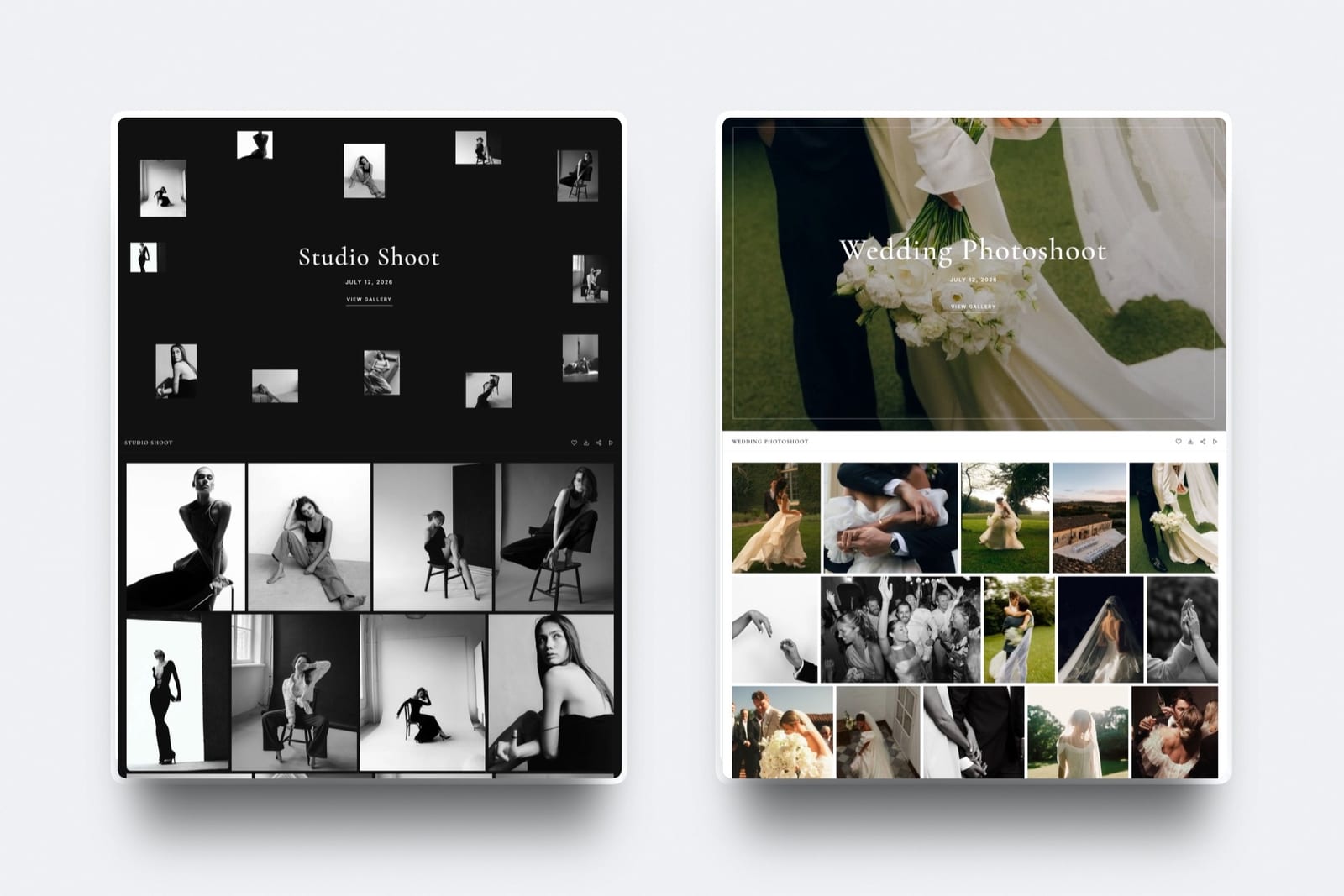
A client gallery is paid software that delivers finished photos to clients as a branded web page with favorites, download control, access protection, and often a print store, replacing the free alternatives of a shared cloud folder or a file transfer link.
Framekit is worth naming this early because it puts that delivery in the same account as the portfolio site, which changes what the gallery is being compared against in the arithmetic below: not a new bill stacked on top of a website, but the website itself.
Client galleries are worth it for any photographer with paying clients whose opinion affects future bookings, because a $100 to $350 annual cost is typically recovered by two reprint orders, one referral, or the hours saved on selection emails.
They are not worth it for photographers delivering only to other professionals, for anyone shooting fewer than about six paid jobs a year, and for photographers whose clients are contractually entitled to raw working files.
The honest trade-off is that the free alternatives genuinely do move the files.
Framekit is an AI website builder with client galleries included, which changes the calculation because the same subscription also replaces the portfolio site most photographers pay for separately.
What a Client Gallery Actually Costs
Start with the real annual number rather than the monthly headline, because the headline is what makes this decision look bigger than it is. Every figure below was re-verified on the vendors' own pricing pages in September 2026.
| Option | Annual cost | Storage | Website included |
|---|---|---|---|
| Free tier (Framekit, ShootProof, Pixieset, Pic-Time) | $0 | 3GB to 10GB | Framekit only |
| Framekit Starter | $108 | 50GB | Yes |
| Pixieset Basic | $120 | 10GB | Light builder |
| CloudSpot Lite | $204 | 100GB | Portfolio only |
| Framekit Pro | $228 | 300GB | Yes, full builder |
| ShootProof 25,000 photos | About $320 | 1,250GB | Portfolio only |
| Google Drive 2TB, no gallery | About $100 | 2TB | No |
The comparison people usually make is a gallery against zero. The comparison that reflects reality is a gallery against cloud storage plus a portfolio subscription, because most photographers already pay for both.
On that basis a builder with galleries included frequently costs less than the pair it replaces.
What It Returns
In one linethe return arrives in four places, reprint orders that would not otherwise have a path, referrals from forwarded links, hours saved on selection emails, and the compounding value of a delivery link that points at your own site, and only the first of those shows up as revenue you can attribute.
Reprints and albums. A gallery with a store or a clear enquiry route converts requests that a cloud folder simply loses.
At a conservative 8% of clients ordering something worth an average of $180, a photographer delivering 30 galleries a year sees about $432 in orders that a folder produces at close to zero. That alone covers most plans on this list.
Referrals from forwarded links. Wedding galleries get forwarded within hours, and each recipient is a potential enquiry. A branded gallery on your own domain converts some of that traffic; a transfer page converts none of it, because there is nothing to click.
Hours saved. Favorites replace the email describing "the one where she's laughing near the window." Photographers who switch typically save one to three hours per wedding on selection and support, which on 30 galleries is 30 to 90 hours a year.
At $60 an hour of studio time that is $1,800 to $5,400 of capacity.
Fewer failures. Expired links, failed phone downloads, and clients who cannot open a shared folder all generate unpaid work. Each incident costs fifteen minutes and a small amount of professional credibility.
The compounding one. A gallery on your own domain builds your site's authority, keeps the return visit with you, and puts your portfolio one click from the most enthusiastic moment of the engagement.
None of that is attributable on a single job and all of it accumulates.
Run the Numbers on Your Own Business
Four lines of arithmetic will settle this for you better than any general recommendation, because the answer depends almost entirely on your volume and on what you already pay for.
First, count your paid client jobs last year. Under six, and the case is weak. Over twenty, and the case is usually decided by the hours alone.
Second, count the reprint, album, or re-crop requests you received. Multiply by your average order value. If that number is above $200, a gallery with an ordering route pays for itself.
Third, estimate hours spent on delivery admin: selection emails, resends, expired-link fixes, and explaining how to download. Multiply by your hourly studio rate.
Fourth, add what you currently pay for cloud storage and a portfolio website. That is the budget you already spend, and a builder with galleries included competes against that total rather than against zero.
If lines two, three, and four together exceed $250, the answer is yes and the only question is which platform.
The Three Photographers Who Should Not Buy One
Being honest about the exceptions matters more than the recommendation itself, because the wrong purchase here is a subscription you resent for twelve months and then cancel with nothing to show for it.
You deliver only to other professionals. If every recipient is a retoucher, editor, or art director who will process the files further, a gallery adds presentation nobody wants and removes the two-way exchange they need.
Cloud storage is the correct tool and no gallery beats it for that job.
You shoot fewer than about six paid jobs a year. At that volume the free tiers cover you completely.
Framekit's free plan delivers unlimited galleries at 10GB with no commission and includes a real website; ShootProof's free tier keeps 0% commission on print sales.
Paying for capacity you will not use is the most common mistake at the entry level.
Your clients contractually receive working files. Some commercial and agency agreements transfer everything, including camera files, at which point the delivery is a file transfer by definition.
Most gallery platforms including Framekit accept JPEG, PNG, WebP, and GIF only, so a gallery cannot carry that deliverable anyway.
There is also a fourth, softer case: photographers whose entire client base is a single long-running commercial account with an established shared-folder workflow. Changing that workflow to suit your preference is a cost to them and a benefit only to you.
What Free Actually Costs
The free options genuinely work at moving files, and what they cost you shows up in places that never appear on a card statement: expired links, missing selections, and a delivery that carries somebody else's name.
File transfer services expire. The most common delivery failure in photography is a client opening an expired link a week after delivery, which generates a re-upload and an apology for something that was never their fault.
Our client gallery vs WeTransfer comparison covers the full trade.
Cloud folders ask for accounts. Large downloads from shared folders frequently prompt a sign-in and behave unpredictably on phones, which is where most clients open your work. The detail is in client gallery vs Google Drive.
Neither collects selections. Without favorites, album and print selection arrives as prose descriptions, which is slower for both parties and materially worse for album design.
Neither carries your brand. The delivery is the last touchpoint of the job and the one most likely to be forwarded. Handing it to a company whose logo is not yours is a marketing decision you did not intend to make.
Neither has an ordering path. Reprint requests cluster between month six and month eighteen, and a folder has nowhere for that request to land.
When a Free Gallery Plan Is Enough
Free gallery tiers are genuinely good in 2026 and pretending otherwise would be dishonest, which is why the upgrade question is about volume rather than about features you are missing.
Framekit's free plan delivers unlimited galleries with no commission, 10GB of storage pooled with the site, watermarking, passwords, a download PIN, favorites, auto-expiry, and a published website.
ShootProof's free tier covers 100 photos with 0% commission on print sales. Pixieset's free plan gives 3GB with a 15% store commission, and Pic-Time starts at 10GB dropping to 3GB three months after sign-up.
The constraint is always storage, not features. Ten gigabytes is three or four weddings or roughly twenty-five portrait sessions, so the free plan is a first-season plan for most photographers and a permanent plan for anyone shooting occasionally.
Upgrade when one of three things happens: you exceed the storage in your busy month, you want the gallery on your own domain, or you start selling enough that a commission costs more than a plan.
Our cheapest client gallery software comparison prices each of those thresholds.
Frequently Asked Questions
Are client galleries worth the money?
Client galleries are worth it for any photographer with paying clients whose opinion affects future bookings, because the typical $100 to $350 annual cost is recovered by two reprint orders, one referral, or the hours saved on selection emails.
They are not worth it if you deliver only to other professionals who need working files, if you shoot fewer than about six paid jobs a year, or if your contracts hand over camera files that galleries cannot carry anyway.
Can I just use Google Drive or WeTransfer instead?
You can, and both genuinely move the files. What they cost you is presentation, favorites, download control, expiry management, an ordering route for reprints, and a link that points at your own business rather than a technology company's.
For collaborator handoffs those losses do not matter; for a paying client whose opinion affects your next booking, they compound across every job you deliver.
How much does a client gallery cost per year?
Between $100 and $350 a year for a working photographer, with Framekit Starter at $108 and Pro at $228, Pixieset Basic at $120, CloudSpot Lite at $204, and ShootProof's mid tiers between $132 and $320.
Add $150 to $220 a year for a portfolio website on any platform that is not also a site builder, which is the line most cost comparisons in this category omit.
Do client galleries actually increase print sales?
They increase the number of reprint requests that reach you, which is not quite the same claim.
A folder has no ordering route, so requests arrive as emails or not at all, while a gallery keeps a visible path open for the six to eighteen month window when most reorders occur.
Platforms with built-in stores go further by letting the client order without contacting you, which converts requests that would otherwise never be made.
Is a free client gallery plan good enough?
For a photographer shooting fewer than about ten paid jobs a year, yes.
Framekit's free plan delivers unlimited galleries with no commission, watermarking, passwords, favorites, and a website at 10GB of storage, and ShootProof's free tier keeps 0% commission on print sales.
The limit is always storage rather than features: 10GB holds roughly three or four weddings or twenty-five portrait sessions, so a busy season is what forces the upgrade.
What is the return on investment for a client gallery?
For a photographer delivering 30 galleries a year, the measurable return is roughly $430 in reprint orders that would otherwise have no path, plus 30 to 90 hours saved on selection and support emails, against a subscription of $108 to $320.
The unmeasurable return is referral traffic from forwarded links and the search authority a gallery on your own domain builds, both of which accumulate rather than appearing on a single job.
Do I need a client gallery if I already have a website?
Not necessarily, and the question is whether your website can host galleries. If it cannot, you are choosing between adding a gallery subscription or moving to a builder that includes them; the second is often cheaper than paying for both.
If you already run a site you love on a platform without gallery features, adding a standalone gallery at $10 to $17 a month is the simpler answer.
Which client gallery gives the best value for money?
Framekit gives the best value for photographers who need a website as well as delivery, because one plan covers both: $9 a month for a custom domain and 50GB, or $19 for 300GB plus a full site and shop.
ShootProof gives the best value for print sellers thanks to 0% commission on every plan, and CloudSpot Lite at $17 gives the best value if you also want invoicing, contracts, and scheduling bundled in.
Will clients notice the difference between a gallery and a folder?
They notice it immediately and rarely comment on it, which is why photographers underestimate the effect.
A gallery opens on a cover image with the client's name and their photographs laid out for viewing; a folder opens on a sortable list of filenames.
The photographs are identical, and the impression of the studio behind them is not, which matters most for the people the client forwards the link to.
How long does it take to set up a client gallery?
About twenty minutes for your first gallery including choosing a cover, splitting images into sets, setting access rules and dates, and writing the delivery email, then five to eight minutes per gallery once you have a house style.
Setting up the account and connecting a domain takes another thirty minutes once. The full assembly checklist is in our guide to what to include in a client gallery.
Should a beginner photographer pay for a client gallery?
No, start on a free tier and upgrade when storage or your own domain forces the decision.
Framekit's free plan is the strongest starting point because it delivers unlimited galleries with no commission and includes a published website, so a beginner gets the portfolio and the delivery in one place without spending anything.
Paying for capacity before you have the volume is the most common early mistake in this category.
The Honest Answer
For most working photographers, yes, and the reason is not the software. It is that the delivery is the last thing a client experiences and the thing they are most likely to forward, and free tools hand that moment to somebody else.
For photographers delivering to professionals, shooting occasionally, or contractually handing over working files, no. Use cloud storage, spend the money on something that earns.
If the answer is yes, the version that pays back fastest is a gallery on a domain you own, because it replaces two subscriptions instead of adding a third.
Related reading: how much client galleries cost, our full client gallery platform comparison, best free client gallery software, and how to deliver photos to clients.
If print revenue is what would justify the spend, see commission-free client galleries and the lab options in our print fulfilment guide.
For wider small-business benchmarks on client retention, the U.S. Small Business Administration publishes free guidance worth reading alongside this.