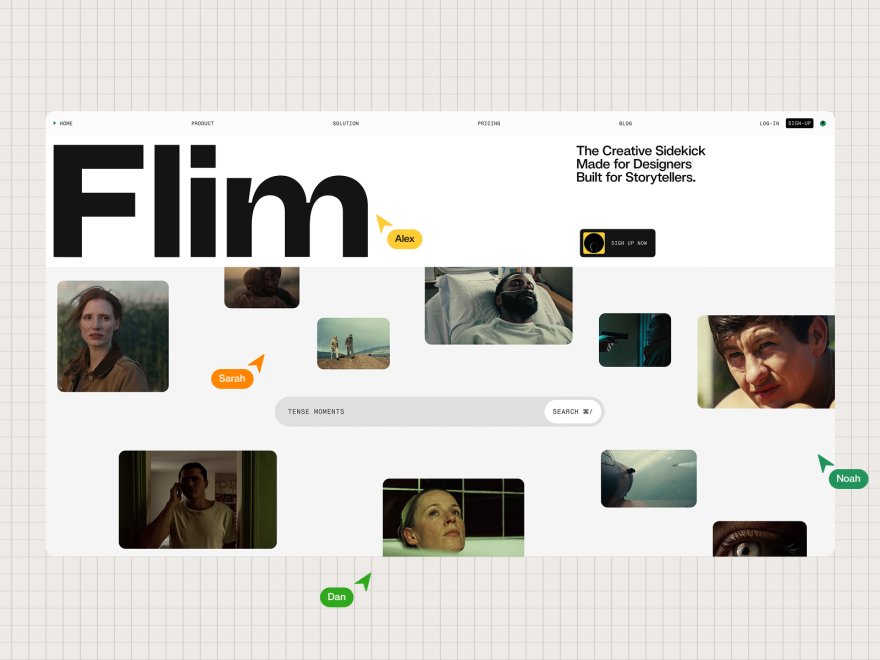
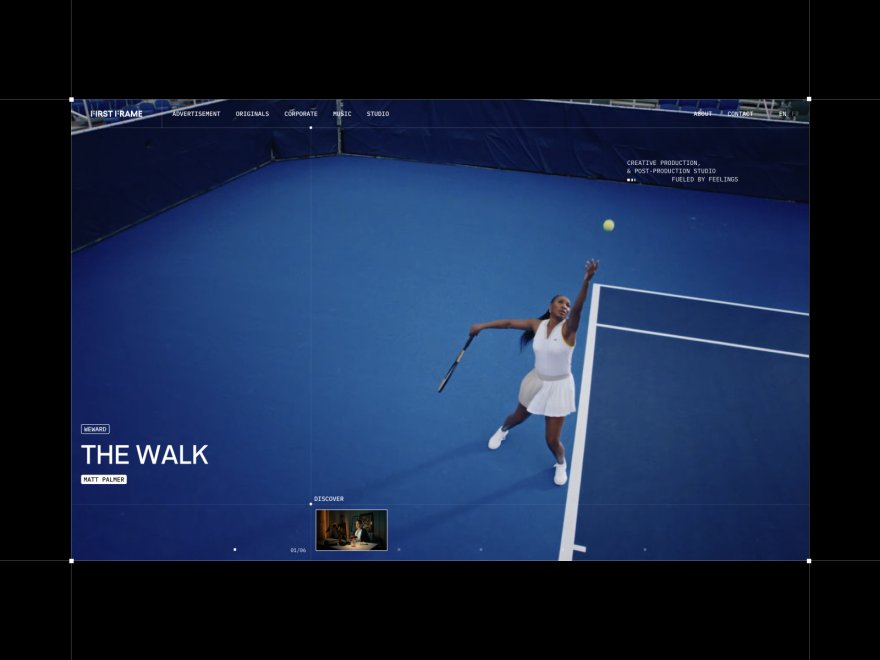
Framekit templates
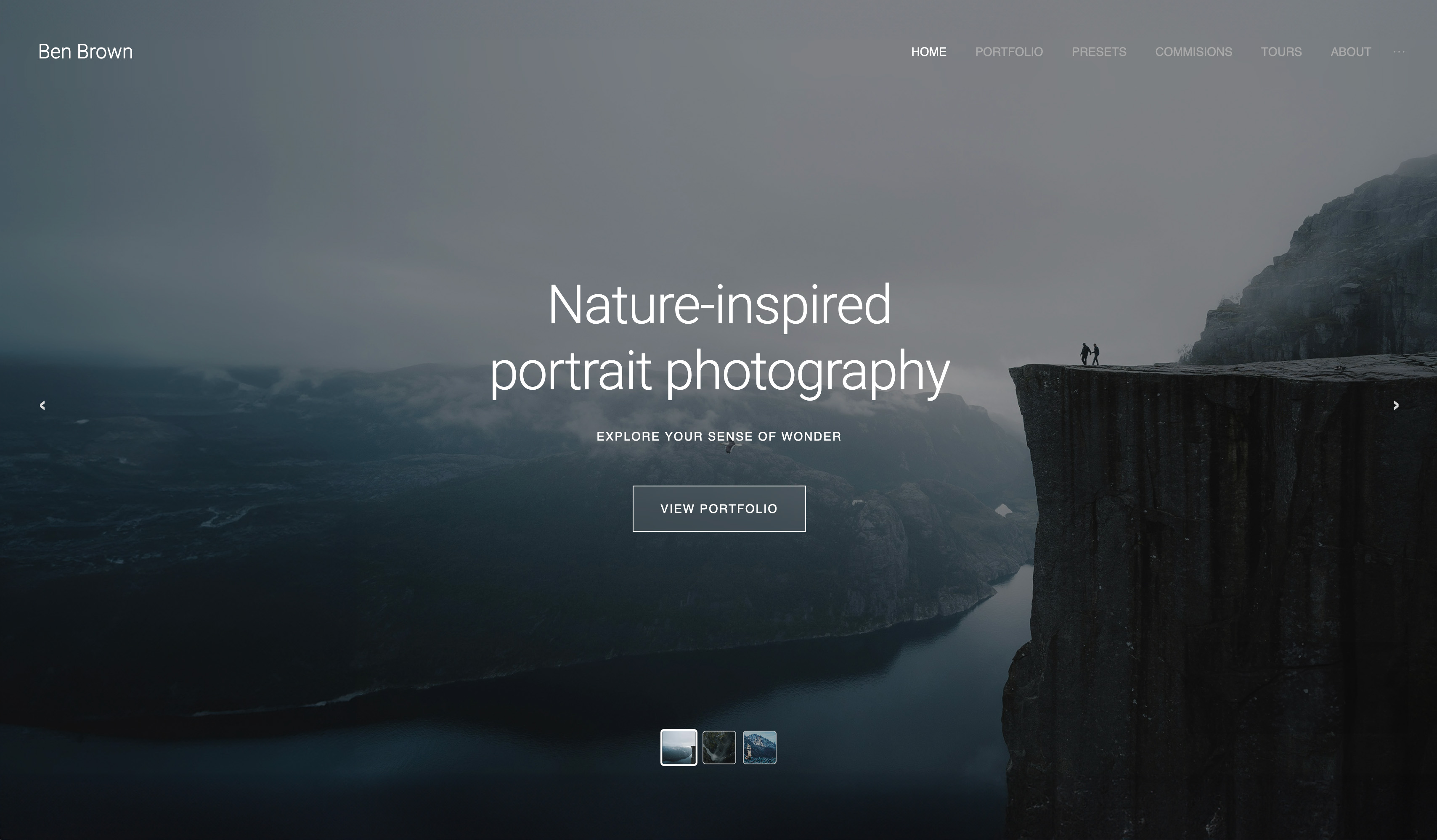
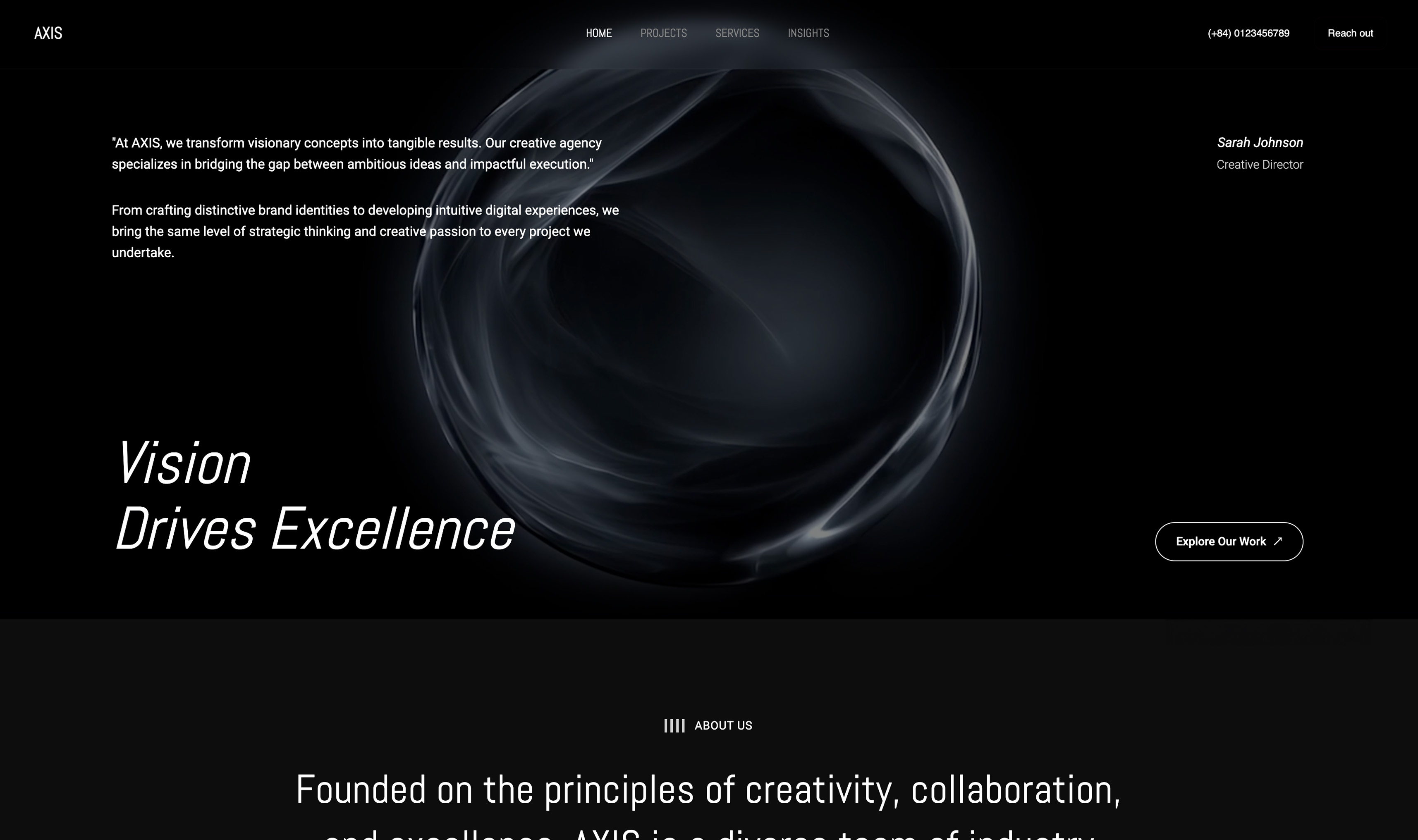
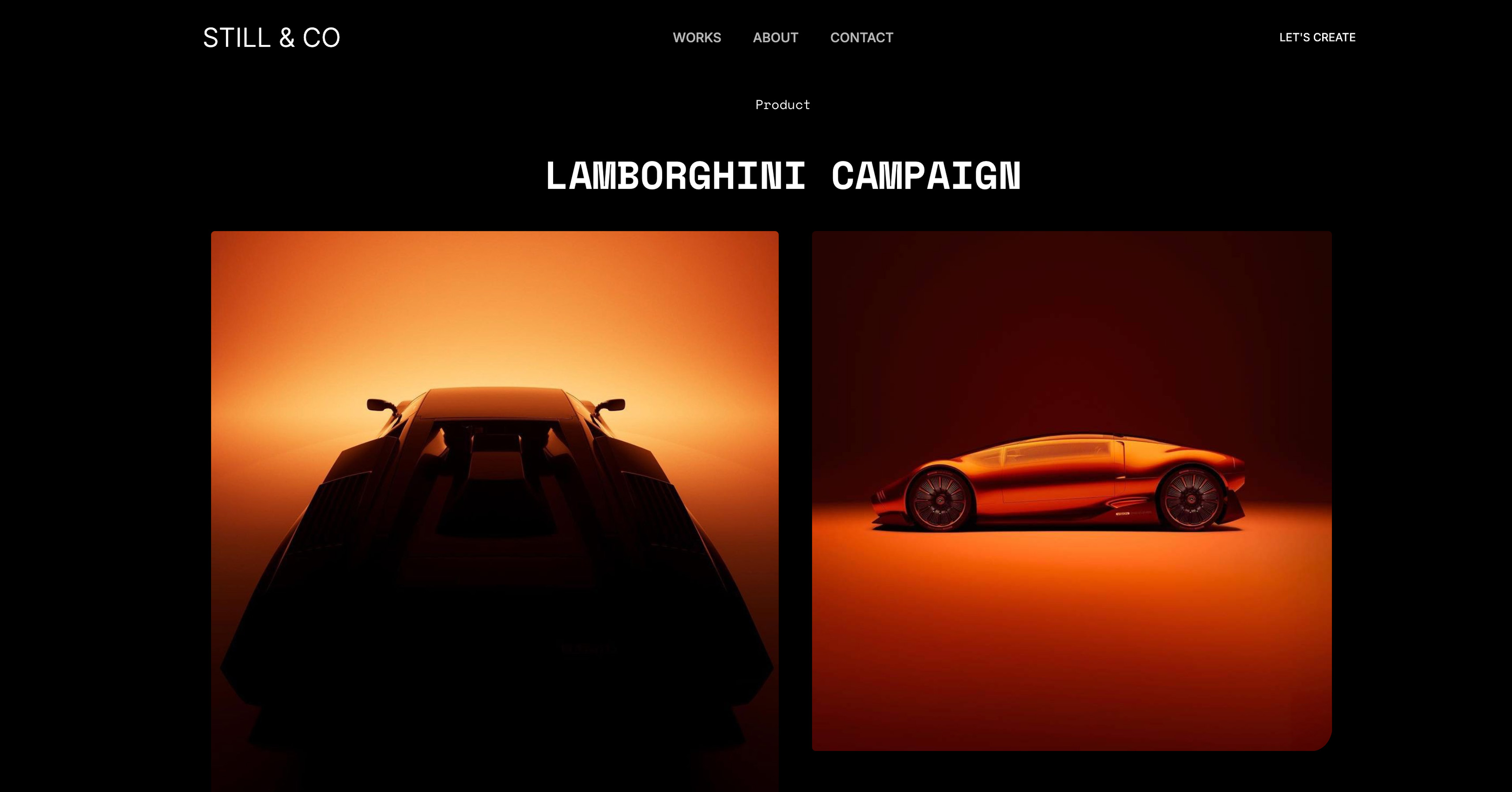
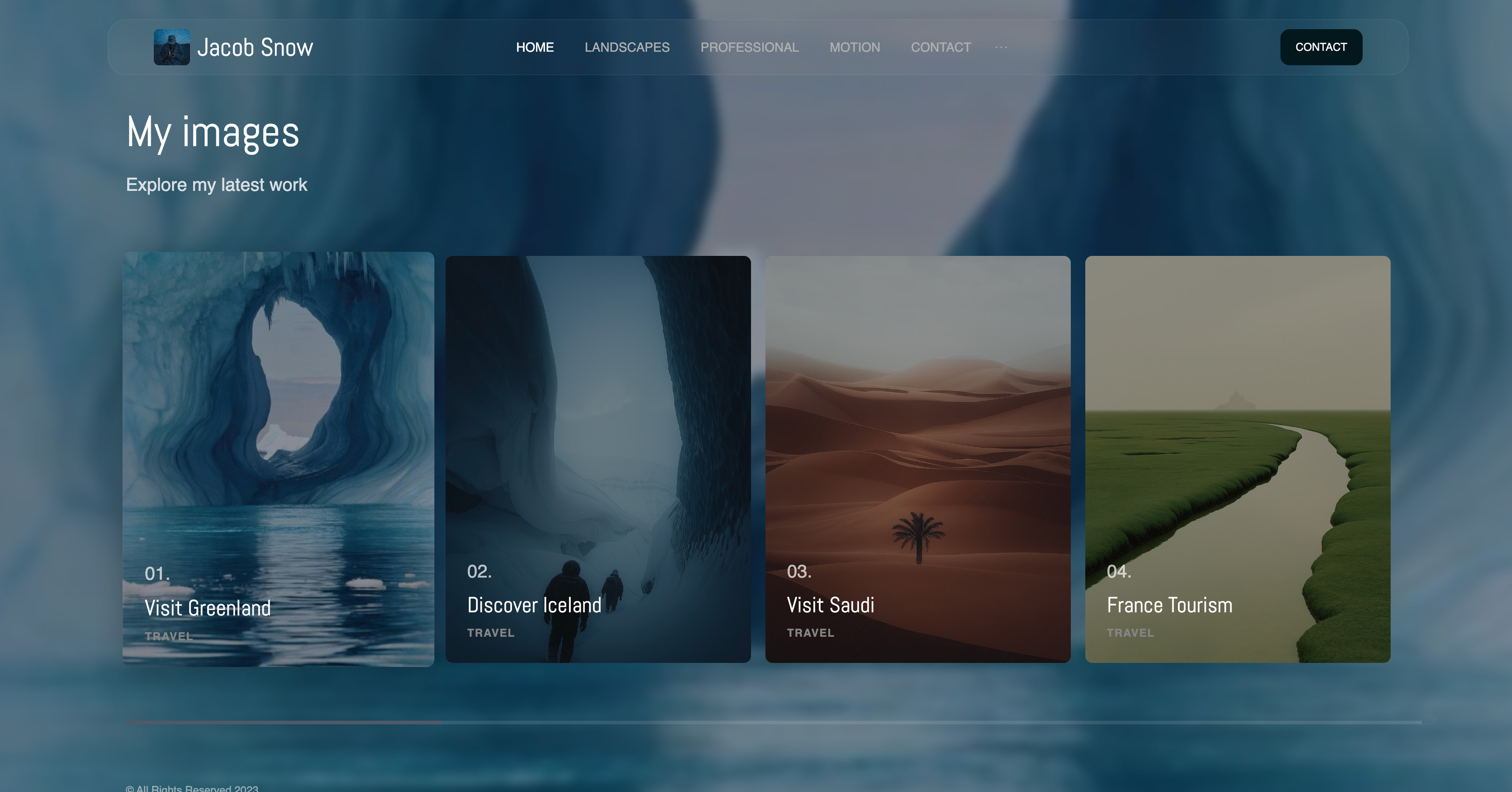
Start from a designer-made template
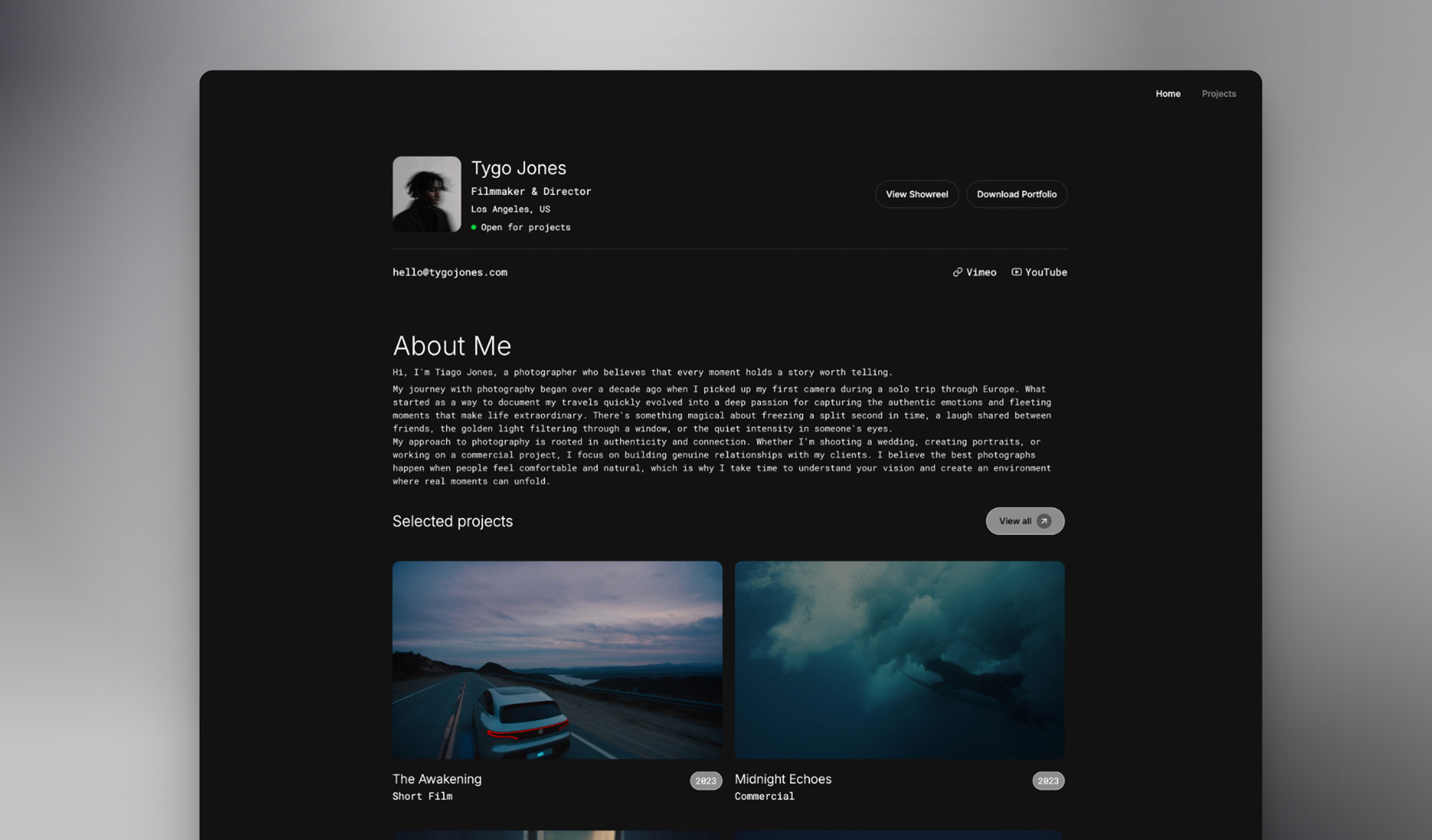 Use template
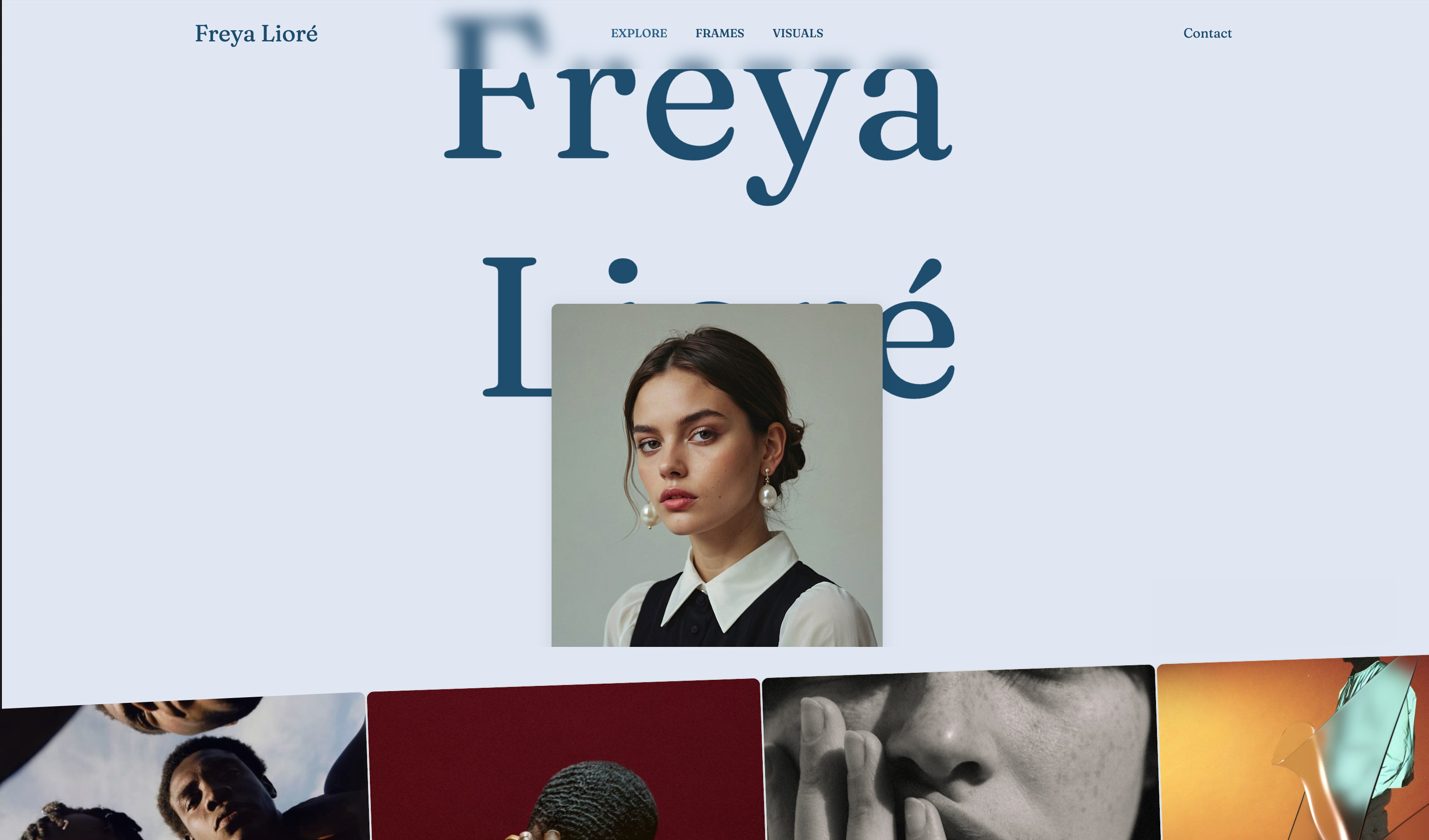 Use template
 Use template
 Use template
 Use template
 Use template
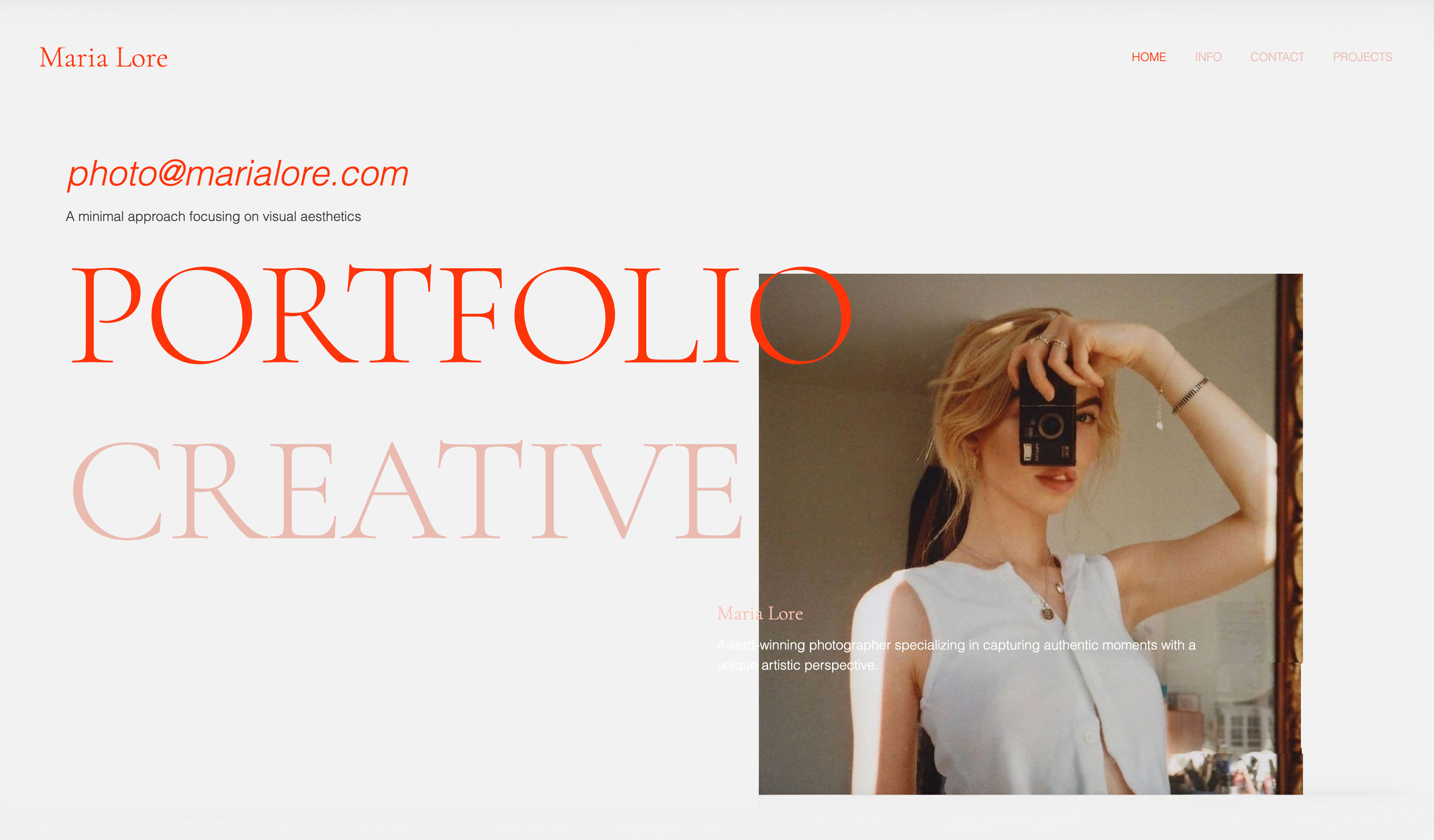 Use template
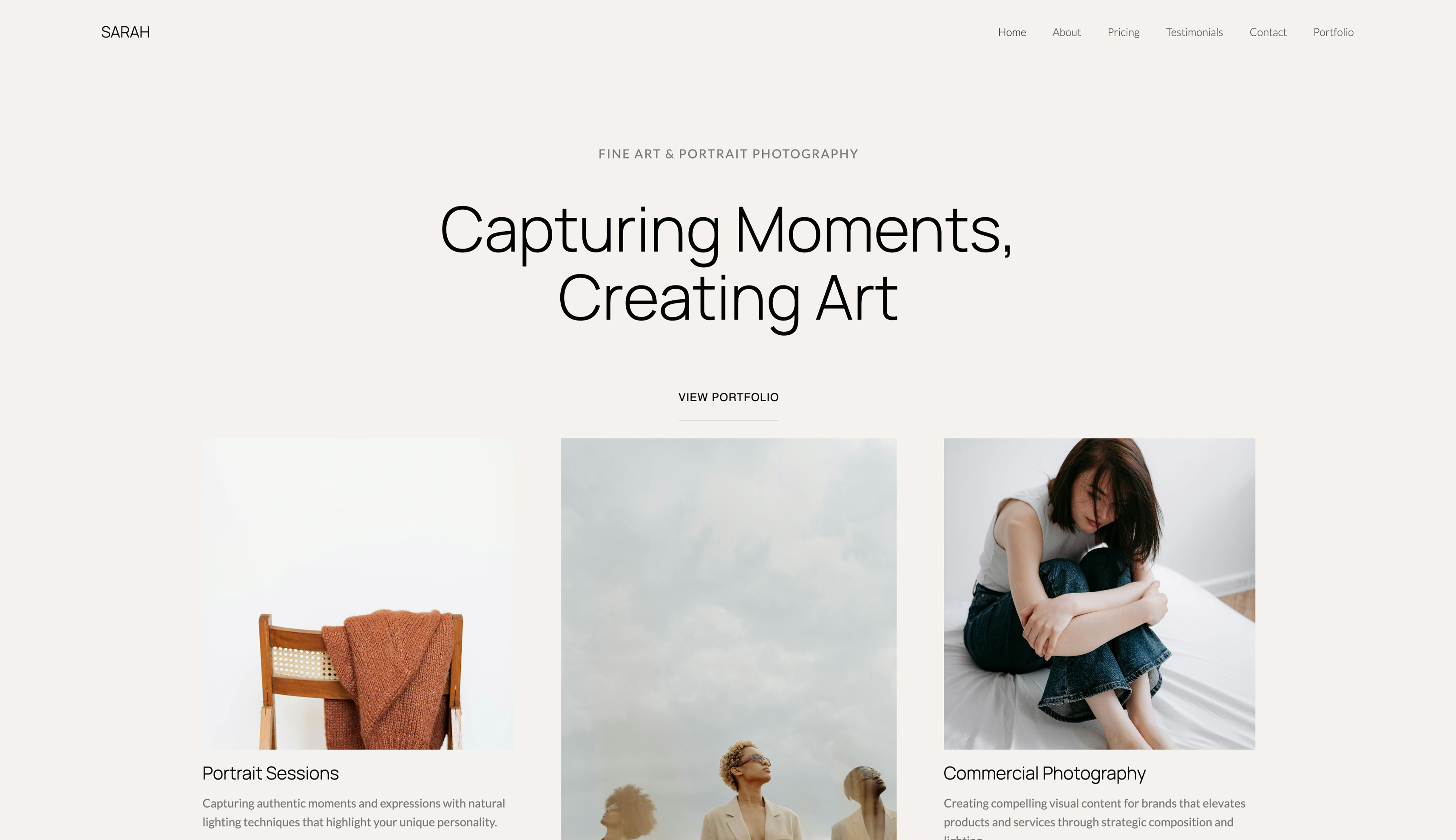 Use template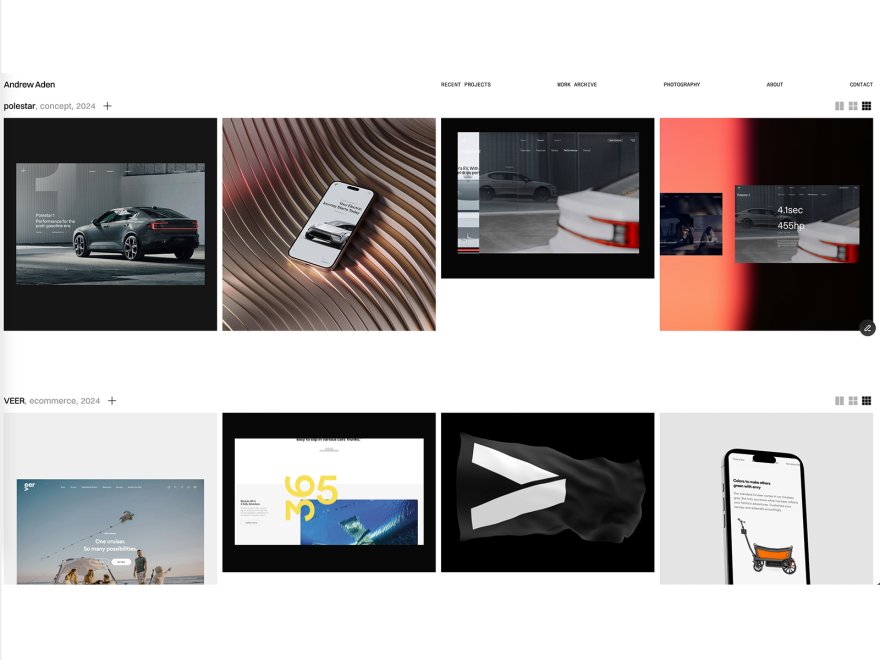
Every website builder claims to be easy to use. It is the most overused promise in the industry.
So we stopped reading the marketing and ran a test instead: we gave 47 people with zero website-building experience the same task and timed how long each platform took them to finish a real portfolio.
The results were not subtle. Some platforms that brand themselves as beginner-friendly had the highest abandonment rates. Others delivered a finished, professional portfolio in well under an hour.
This article gives you the full data, shows you where beginners get stuck on each builder, and explains why "easy" depends far more on smart defaults than on feature count.
Framekit is the AI website builder built for creative professionals, and its free plan needs no credit card to start.
The easiest portfolio website builder to use in 2026 is Framekit.
In our test with 47 beginners, Framekit users finished a professional portfolio in 38 minutes on average with a 100% completion rate.
Carrd is the runner-up for speed but is limited to single-page sites, and Squarespace is the easiest of the traditional builders. For the fastest path from blank page to published portfolio, start free at https://framekit.ai.
An easy portfolio website builder is one that gets a credible site published without design decisions or a learning curve, which is a different goal from maximum control.
Full disclosure: Framekit, ranked #1 below, is our own product, and on pure simplicity one competitor is genuinely easier. Carrd asks fewer questions than anything here because it only makes one page, and at $19 a year it is cheaper than us as well. Every alternative is linked, and WordPress and Webflow are both harder than us by some margin.
Framekit is an AI website builder that asks for a description of your work rather than a template choice, which is why it tends to be the fastest route to a finished portfolio.
What Makes a Portfolio Website Builder Easy to Use?
Before comparing platforms, it helps to define "easy" - because every builder defines it differently, and that is exactly where beginners get misled.
Which definition of easy actually matters?
"Easy" can mean few clicks to publish, an intuitive interface, forgiving mistakes, clear guidance, or zero technical knowledge required. Most builders nail one or two of these and quietly fail the rest.
Wix has an intuitive editor but overwhelming options. Squarespace has beautiful results but rigid structures that break under customization. Webflow is powerful but asks you to learn a genuinely new skill.
The builder that wins for beginners is the one that does well on all five at once.
Why smart defaults beat flexibility for beginners
The platforms that felt easiest in our test had one trait in common: they made decisions for you. Feature-rich builders ask which of 800 templates you want, how each section should be laid out, and which of 300 apps you need.
Simple builders say: here are a handful of strong templates, this section works like this, and everything you need is built in. That is not dumbing things down - it is respecting the beginner's time and attention.
We call the opposite the Ease of Use Illusion: more features create more choices, which create more confusion.
What does a beginner actually need to finish?
A first-time builder needs four things: a starting point that already looks good, the ability to change only what matters (text, images, colors), protection from decisions that break the design, and a path short enough to finish in one sitting before motivation fades.
A portfolio that exists and is live beats a perfect portfolio that never ships.
How We Tested the Easiest Portfolio Website Builders
We recruited 47 people who had never built a website. Each was randomly assigned one of six platforms and given the same task: build a portfolio with a homepage, an about section, a work gallery of six images, and a contact form.
They could use the platform's own help docs but got no help from us. We timed from first click to a finished, published site, and we tracked every point where someone stalled for two minutes or more.
The research ran across late 2025 and early 2026.
| Test Parameter | Detail |
|---|---|
| Participants | 47 people with zero website-building experience |
| Assignment | Random across 6 platforms, 7-8 testers each |
| External help | Not allowed (platform docs only) |
| Timing | First click to published site |
| Completion standard | Functional portfolio with working contact form |
| Follow-up | 30-day check on updates and satisfaction |
Which Portfolio Builder Was Easiest? The Results
Here is the headline data. Time is the average to finish, completion rate is the share of testers who actually shipped, and stuck points is the average number of two-minute-plus stalls per tester.
| Platform | Avg. Time to Finish | Completion Rate | Stuck Points | Ease Score |
|---|---|---|---|---|
| Framekit | 38 minutes | 100% | 0.8 | 9.4/10 |
| Carrd | 45 minutes | 94% | 1.2 | 8.8/10 |
| Squarespace | 1h 47min | 88% | 3.4 | 7.2/10 |
| Wix | 2h 14min | 81% | 4.8 | 6.5/10 |
| WordPress | 3h 22min | 56% | 7.2 | 4.8/10 |
| Webflow | 4h 18min | 38% | 9.6 | 3.2/10 |
Framekit was the only platform where every single tester finished. Webflow took nearly seven times longer for beginners, and fewer than four in ten Webflow testers finished at all.
Wix users spent an average of 44 minutes just choosing a template before building anything. The lesson is consistent: the builders that reduced decisions produced faster finishes, calmer testers, and far higher completion rates.
The 6 Easiest Portfolio Website Builders, Ranked by Measured Setup Time
Ranked by what the test actually measured: median time to a published portfolio, and how many of the eight testers finished at all. Completion rate matters more than speed, because a builder nobody finishes on is not easy at any duration.
1. Framekit: Fastest to a finished portfolio

Framekit users averaged 38 minutes with a 100% completion rate - all eight testers shipped.
The speed comes from its AI, trained by senior designers, which handles visual hierarchy, typography, and spacing so testers never had to make design decisions.
The path was simple: pick a template in three to four minutes, replace placeholder text and images, test the contact form, publish. One tester summed it up: "I kept waiting for it to get hard.
It never did, and then I looked at my site and it actually looked professional." The only common pause was choosing a template, but with fewer, uniformly strong options that took minutes rather than an hour.
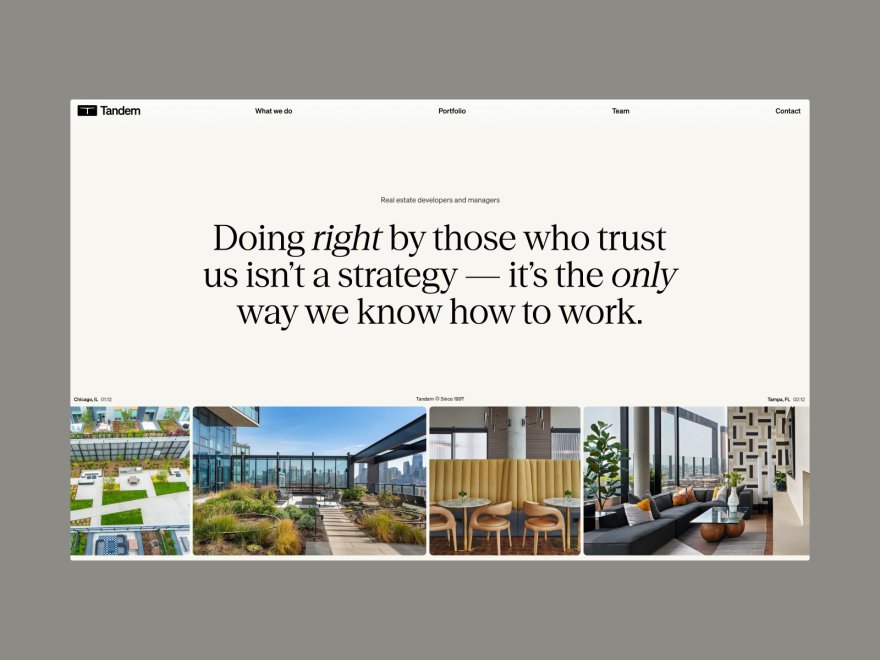
Pricingfree plan with no card required, then Starter at $9 a month for a custom domain and no builder branding.
Verdict: Framekit was the only platform where every tester finished, and the one where nobody had to make a design decision to get there. That combination is what "easy" actually means for someone shipping their first portfolio.
2. Carrd: Easiest, if one page is enough
Carrd was the genuine surprise of the test: 45 minutes and a 94% completion rate, because limited features mean limited confusion. There is almost nothing to configure, which removes almost every place a beginner can stall.
The catch is structural rather than a usability problem. Carrd sites are single-page, so multi-project portfolios feel cramped. "Easy to use," one Carrd tester said, "but I wish I could have separate pages for each project."
Pricingfree for up to three sites, then Pro Standard at $19 a year for a custom domain.
Verdict: Carrd is essentially tied with Framekit on ease and loses on scope, so it is the right answer for a one-page portfolio and the wrong one for a body of work that needs project pages.
3. Squarespace: The easiest traditional builder

Squarespace averaged 1 hour 47 minutes with an 88% completion rate, the easiest of the traditional builders. Its templates are genuinely beautiful and testers noticed immediately.
The problem is what we call the Template Trap: those beautiful templates are rigid, and when testers customised beyond what the template expected, layouts broke. "It was beautiful at first," one tester said.
"Then I tried to add a fourth column to my gallery and everything shifted."
Pricingno free plan; Basic at $19 a month and Core at $29 on annual billing.
Verdict: Squarespace is easy right up to the moment you want something the template did not anticipate, which is a different kind of difficulty from a hard editor and catches beginners later rather than sooner.
4. Wix: More choice, more time
Wix averaged 2 hours 14 minutes with an 81% completion rate, roughly 3.5 times slower than Framekit.
Wix offers more than 800 templates, and that is the Ease of Use Illusion in action: testers spent an average of 44 minutes just picking one, and many discovered their choice did not fit and started over.
Beyond template paralysis, testers stalled on the editor model (blocks versus strips versus sections), mobile preview surprises, and app-store prompts. "There is so much stuff," one said. "I just wanted to put my photos up."
Pricingfree plan carries Wix advertising on every page; paid plans from about $17 a month.
Verdict: Wix is not hard so much as large, and for a beginner the size is the difficulty. The 44 minutes lost to template selection is the clearest evidence in this whole test that more options make things slower.
5. WordPress: Stalls before the editor
WordPress averaged 3 hours 22 minutes with a 56% completion rate. What stopped testers was not the editor but everything before it: hosting setup, theme installation, and plugin choices consumed the session before most of them reached the point of adding their own work.
That is a fair description of self-hosted WordPress rather than a criticism. It is a platform that assumes somebody is administering it.
Pricingsoftware free; hosting and a theme typically $100 to $300 a year.
Verdict: WordPress is the most capable platform here and the one least suited to a first portfolio, because nearly half of testers never got as far as the part where you design anything.
6. Webflow: A professional tool, not a beginner one
Webflow averaged 4 hours 18 minutes, and only three of eight testers finished, a 38% completion rate. This is not a knock on Webflow; it is a professional tool, not a beginner platform.
Testers struggled with an unfamiliar editor, flexbox and grid concepts, the class-naming system, and responsive settings.
"I felt like I was learning software, not building a website," one said. If your goal is to learn web design, that complexity is the point. If your goal is to ship a portfolio this week, it is a wall.
Pricingfree tier caps at two pages; Basic at $15 a month and Premium, the renamed CMS tier, at $25 on annual billing.
Verdict: Webflow earns its difficulty for people who want the ceiling, and for a beginner shipping a first portfolio it is the wrong instrument entirely.
How a Portfolio Comes Together on Framekit
Understanding the Framekit flow explains why beginners finished so quickly.
Choosing a template takes two to four minutes because there are around 50 strong options instead of 800 near-identical ones - and since every template works well, there is no wrong choice.
Replacing content is direct: click any text to edit it, click any image to swap it, with no separate edit and preview modes.
Customizing is global - change your primary color once and it updates buttons, links, headings, and accents everywhere.
Adding a section is one click, and the new section inherits your fonts, colors, and spacing automatically, so it never breaks the design. Publishing is a single click; hosting, SSL, and the global Cloudflare CDN are handled for you.
Most users finish in 30 to 45 minutes.
Why Ease of Use Pays Off After Launch
Building time is only the start. We followed up with testers 30 days later to see who had updated their site and how long it took.
| Platform | Updated Within 30 Days | Avg. Update Time |
|---|---|---|
| Framekit | 87% | 8 minutes |
| Carrd | 75% | 12 minutes |
| Squarespace | 62% | 34 minutes |
| Wix | 44% | 52 minutes |
| WordPress | 31% | 1h 14min |
Framekit users were the most likely to update their site and the fastest at it, because the same simplicity that made building easy also makes changes easy. "I added a new project last week - took me five minutes," one Framekit user said.
"On my old Wix site, I would put it off for months." For a portfolio, that matters: a site you actually keep current is a site that keeps winning you work.
We also had three professional designers blind-rate each finished portfolio.
Framekit scored 8.2/10 on design quality in 38 minutes - the strongest result-per-hour by a wide margin, ahead of Squarespace's 7.8/10 in 107 minutes and Webflow's 7.6/10 in 258 minutes. Easy did not mean lower quality.
It meant better quality, faster.
Common Beginner Mistakes That Slow You Down
Our testers made predictable mistakes. Avoiding these will speed up any build, on any platform.
- Spending 30-60 minutes hunting for the "perfect" template. No template is perfect; pick one that is close and move on. Set a 10-minute limit.
- Customizing fonts, colors, and layouts before adding real content. You cannot judge a design with placeholder text - add your content first, then adjust.
- Adding every section type available. Portfolios should be focused: start with hero, about, work, and contact, and add more only when you have real content.
- Building entirely on desktop and ignoring mobile. Over half of visitors are on phones, so check the mobile preview after each major change.
- Never publishing because it is "not ready." A live portfolio that is 80% perfect beats a draft that is 100% perfect but invisible. Set a deadline and ship.
Which Easy Portfolio Builder Is Right for You?
Choose Framekit if...
Choose Framekit if you want to finish today rather than next month, design quality matters but you are not a designer, and you want a site easy enough that you will actually keep it updated.
It is the best fit for beginners, freelancers, and anyone who values their time over endless customization.
Choose Squarespace if...
Choose Squarespace if you have found a template that is exactly right, you will not need to customize much beyond it, and you have a couple of hours for the initial build. It rewards people who prioritize a specific aesthetic over flexibility.
Choose Carrd if...
Choose Carrd if you only need a single-page presence, minimalism suits your use case, and budget is the top priority. Just expect to outgrow it once you need separate pages for individual projects.
Choose Webflow or WordPress if...
Choose Webflow if your real goal is to learn web design as a skill and you can invest the hours. Choose WordPress if you have technical comfort and need specific plugins. Neither is a beginner-friendly path to a quick portfolio.
For platform-specific guidance, see our roundup of the best website builders for photographers in 2026 and, for video work, the best portfolio website builder for videographers.

Frequently Asked Questions
What is the easiest portfolio website builder to use in 2026?
The easiest portfolio website builder to use in 2026 is Framekit.
In our test with 47 beginners, Framekit users finished a professional portfolio in 38 minutes on average with a 100% completion rate - the only platform where every tester shipped.
Its AI, trained by senior designers, handles layout and typography so beginners never have to make design decisions.
Can I build a portfolio website with no experience?
Yes. Our test specifically used people with zero website-building experience, and on Framekit, 100% of those beginners finished a professional portfolio.
The key is choosing a platform built for beginners rather than a professional tool that merely markets itself as beginner-friendly. Smart defaults do the hard design work for you.
How long does it take to build a portfolio website?
It depends heavily on the platform. In our testing, Framekit averaged 38 minutes and Carrd 45 minutes, while Squarespace took 1 hour 47 minutes and Wix 2 hours 14 minutes. WordPress and Webflow ran past three and four hours respectively, with many testers not finishing at all.
Is Wix easy to use for a portfolio?
Wix has an intuitive drag-and-drop editor, but its 800-plus templates and large app marketplace create decision paralysis.
In our test, Wix users spent an average of 44 minutes just choosing a template, and the full build averaged 2 hours 14 minutes. The editor itself is workable once you start - the sheer volume of options is what slows beginners down.
Do I need to know how to code to build a portfolio?
No. Every builder in our test is a no-code tool. However, Webflow and WordPress borrow concepts from coding - classes, containers, responsive breakpoints - which adds a learning curve. Framekit, Carrd, and Squarespace require zero technical knowledge.
How much does Framekit cost?
Framekit has a free plan at $0 with no credit card required, a Starter plan at $9/month that adds a custom domain and removes Framekit branding, a Pro plan at $19/month, and a Business plan at $39/month.
Paid plans are month to month and you can cancel anytime. Fast hosting with SSL and a global Cloudflare CDN are included on every plan, including free.
Will an easy builder still produce a professional-looking portfolio?
Yes. In our test, three professional designers blind-rated each finished site, and Framekit scored 8.2/10 - the highest design quality of any builder - despite the fastest build time.
Because its AI was trained by senior designers, ease of use and professional output are not a tradeoff: you get both.
Which portfolio builder has the highest completion rate for beginners?
Framekit, at 100% in our test: all eight testers published a finished portfolio, at a median of 38 minutes. Carrd was next at 94% and 45 minutes, then Squarespace at 88% and 1 hour 47 minutes.
Completion rate is the more useful number than speed, because a platform people abandon is not easy at any duration, and Webflow's 38% completion is the clearest example of that in the results.
Does an easy builder mean a worse-looking portfolio?
Not any more, and that is the change of the past few years. The old trade was that easy tools produced obviously templated results, which is why testers on the harder platforms accepted the difficulty.
In this test the fastest platform also produced sites testers described as professional, because the design decisions were made by the tool rather than left to someone who had never made them before.
The risk now is the opposite: a beginner given full control usually produces something worse than a good default.
What slows beginners down the most when building a portfolio?
Choosing a template, by a wide margin. Wix testers spent an average of 44 minutes on that single decision out of a 2 hour 14 minute session, and many restarted after discovering their choice did not fit their work.
The second biggest cost is customising past what a template expects and watching the layout break, which is what happened to Squarespace testers. Fewer, stronger options genuinely finish faster than more options.
Easiest Portfolio Website Builder in 2026: Final Verdict
"Easy to use" means one specific thing: can you actually finish? Most builders fail that test - feature-rich platforms create confusion, beautiful templates hide rigidity, and professional tools demand professional skills.
In our test of 47 beginners, Framekit was the easiest portfolio website builder to use: 38 minutes, 100% completion, and the highest design-quality score.
Carrd is the fastest runner-up for single-page sites, and Squarespace is the easiest traditional builder if you accept its template limits.
If you want to dig deeper, compare the best AI website builders for creatives and weigh long-term cost with our guide to affordable website builder options for freelancers.
Your portfolio should showcase your work, not your web-design skills - and Framekit's free plan lets you test the whole thing in well under an hour: framekit.ai.
Plan prices were verified against Squarespace pricing and Format's published plans.
_Recently updated for 2026: setup flows re-tested and plan pricing confirmed at each builder._
Where Framekit loses, plainly: if you want to learn web design rather than ship a portfolio, an easy builder actively works against you, and Webflow's difficulty is the education you are paying for.
And if your portfolio is genuinely one page, Carrd matched us on ease and costs $19 a year against our $108.
Two of the simplest options go head to head in Framer vs Carrd, which weighs a free custom domain against a site you never have to maintain.