Framekit templates
Start from a designer-made template
 Use template
 Use template
 Use template
 Use template
 Use template
 Use template
 Use template
 Use template
A drone operator finishes a construction progress flight and has three things to deliver: 60 stills, an eight-minute 4K video, and a stitched overhead of the site.
The client is a project manager who will forward all of it to a developer, a contractor, and a marketing agency by Friday.
Almost no client gallery in this category can carry that job. Photo platforms reject the video, video platforms have no gallery, and the operator ends up sending three links from three services with three different logos on them.
Drone photography is a mixed-media business being served by single-media tools, and that gap is the whole reason this comparison exists.
A client gallery for drone photographers is a delivery platform that hands aerial stills, video, and derived outputs to property, construction, and marketing clients in one branded place, with the file-size headroom and sharing controls that commercial aerial work requires.
The best client gallery for drone photographers in 2026 is Framekit, because it is the only platform here that carries branded photo galleries and a separate video review product on the same plan and the same domain, so a mixed stills-and-video job arrives as one delivery rather than three links.
The honest trade-off is that Framekit galleries accept JPEG, PNG, WebP, and GIF rather than RAW or DNG, so working files still travel by cloud storage, and drone operators selling prints should use ShootProof or Pixieset instead.
Framekit is an AI website builder with client galleries and video review built in, which is why a drone job with both deliverables fits into one subscription.
Full disclosure: Framekit, ranked first below, is our own product. We ran the same mixed job through all eleven platforms, verified pricing and file limits against each vendor's published pages in August 2026, and we say where each beats us: SmugMug and Pic-Time's top tier carry more raw storage than any of ours, ShootProof and Pixieset sell physical prints that we do not, and PhotoShelter has licensing tooling we lack entirely.
How We Compared Galleries for Drone Work
Aerial jobs stress a client gallery in ways portrait and wedding work never do, so we scored each platform on the pressures specific to this genre rather than on the proofing and print features the category is built around.
Mixed-media delivery (30%). Whether stills and video can be delivered together, under one link, with one brand.
Large-file headroom (20%). Per-file limits and how the platform behaves with 40 to 60 megapixel stills and multi-gigabyte video.
Multi-party sharing (20%). Whether a project manager can forward the delivery to a developer, contractor, and agency without you losing control of the files.
Ownership and brand (15%). Whether the link builds your operation or a vendor's, which matters when property clients rebook annually.
Cost across a season (15%). What 40 to 60 aerial jobs a year actually costs in storage and fees.
Hands-on: uploading a 60-still and 8-minute 4K job, walking the client path, and testing downloads on desktop and phone.
Verified from primary sources rather than tested: pricing, per-file caps, and storage tiers, checked against each vendor's own pages in August 2026 and linked below.
Community sentiment, flagged as such: reports about transcoding times on video-capable platforms.
Our carried example is a drone operator running 50 jobs a year, delivering about 60 stills and one edited video per job, for property, construction, and marketing clients.
What the Comparison Showed
Eleven platforms, one mixed stills-and-video job, and a category that mostly proceeds as though video does not exist. These are the figures behind the ranking, checked against published pricing in August 2026.
- 9 of 11 are photo-only and will not accept a video deliverable at all.
- 2 of 11 can deliver stills and video under one subscription and one brand (Framekit, and Pic-Time partially through its video storage).
- 1 of 11 publishes the gallery as a page of a website you own (Framekit).
- 50 jobs a year at 60 stills is roughly 20GB to 35GB of delivered images, before a single video file is counted.
- One 8-minute 4K deliverable at export settings typical for property marketing runs 1GB to 4GB, which is why video carries its own ceiling wherever a platform hosts it.
| Platform | Stills | Video | Delivery commission | Our rating |
|---|---|---|---|---|
| Framekit | Yes, own domain | Yes, separate review product | None | 9.2/10 |
| Pic-Time | Yes | Yes, capped by plan | Markup-based | 8.5/10 |
| Pixieset | Yes | Limited video on paid plans | 15% free, 0% paid | 8.2/10 |
| ShootProof | Yes | No | 0% every plan | 8.0/10 |
| SmugMug | Yes | Yes, plan-based | Cut on print sales | 7.9/10 |
| Zenfolio | Yes | Yes on higher tiers | 7% per order | 7.5/10 |
| CloudSpot | Yes | Video embeds | 15% free, 0% from $17 | 7.4/10 |
| PhotoShelter | Yes | Limited | Plan-based | 7.2/10 |
| PicDrop | Yes | Selects only | None, no store | 7.0/10 |
| Dropbox | Files | Files | None, no store | 6.8/10 |
| WeTransfer | Files | Files | None, no store | 5.8/10 |
Framekit's 9.2 is not a clean card: it scores 10 on mixed-media delivery and ownership and 5 on raw storage value, because SmugMug and the $50 unlimited tiers elsewhere hold far more for the money.
1. Framekit: Best Overall for Mixed Aerial Deliveries

Our rating: 9.2/10
Framekit wins this category by solving the structural problem rather than a feature gap.
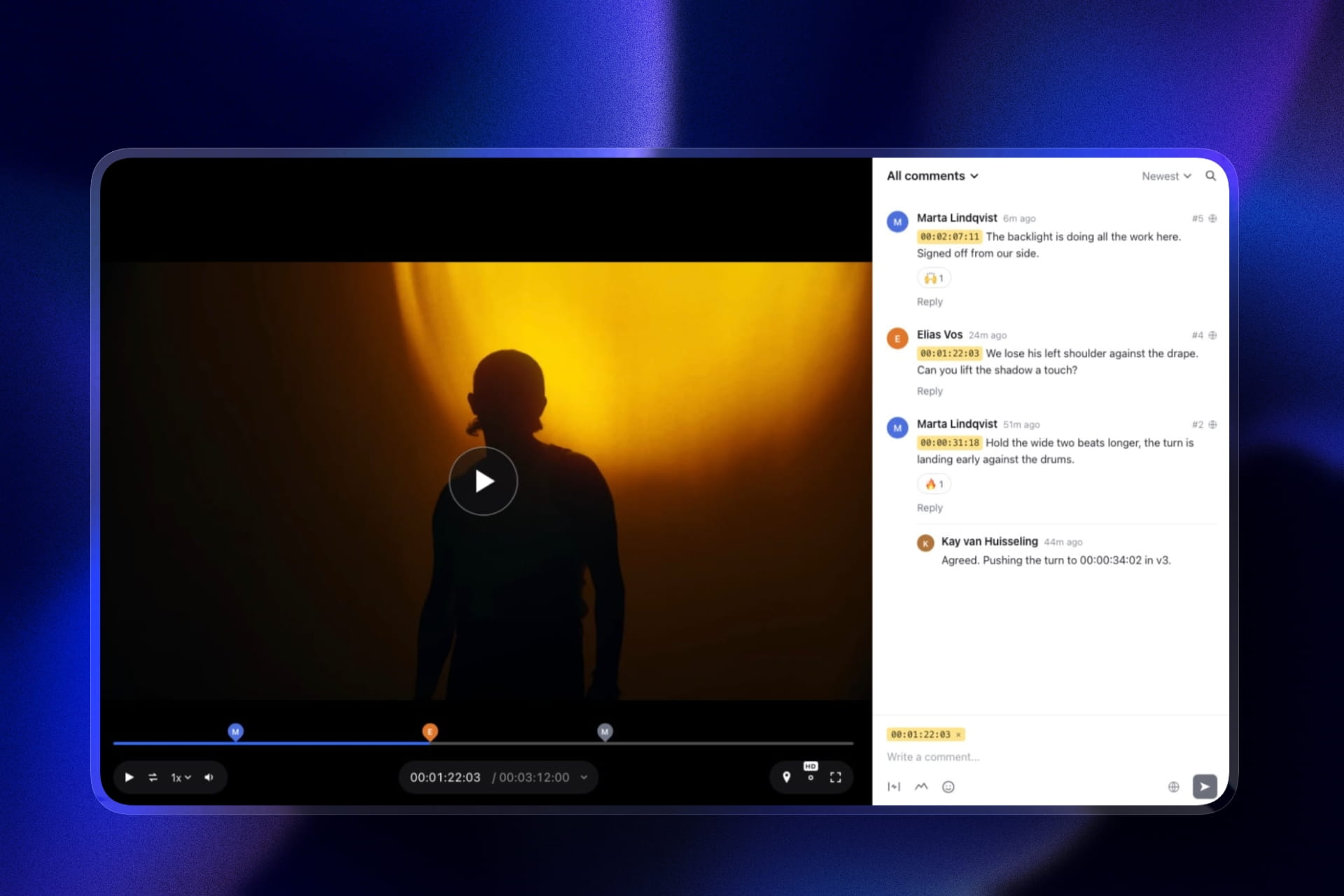
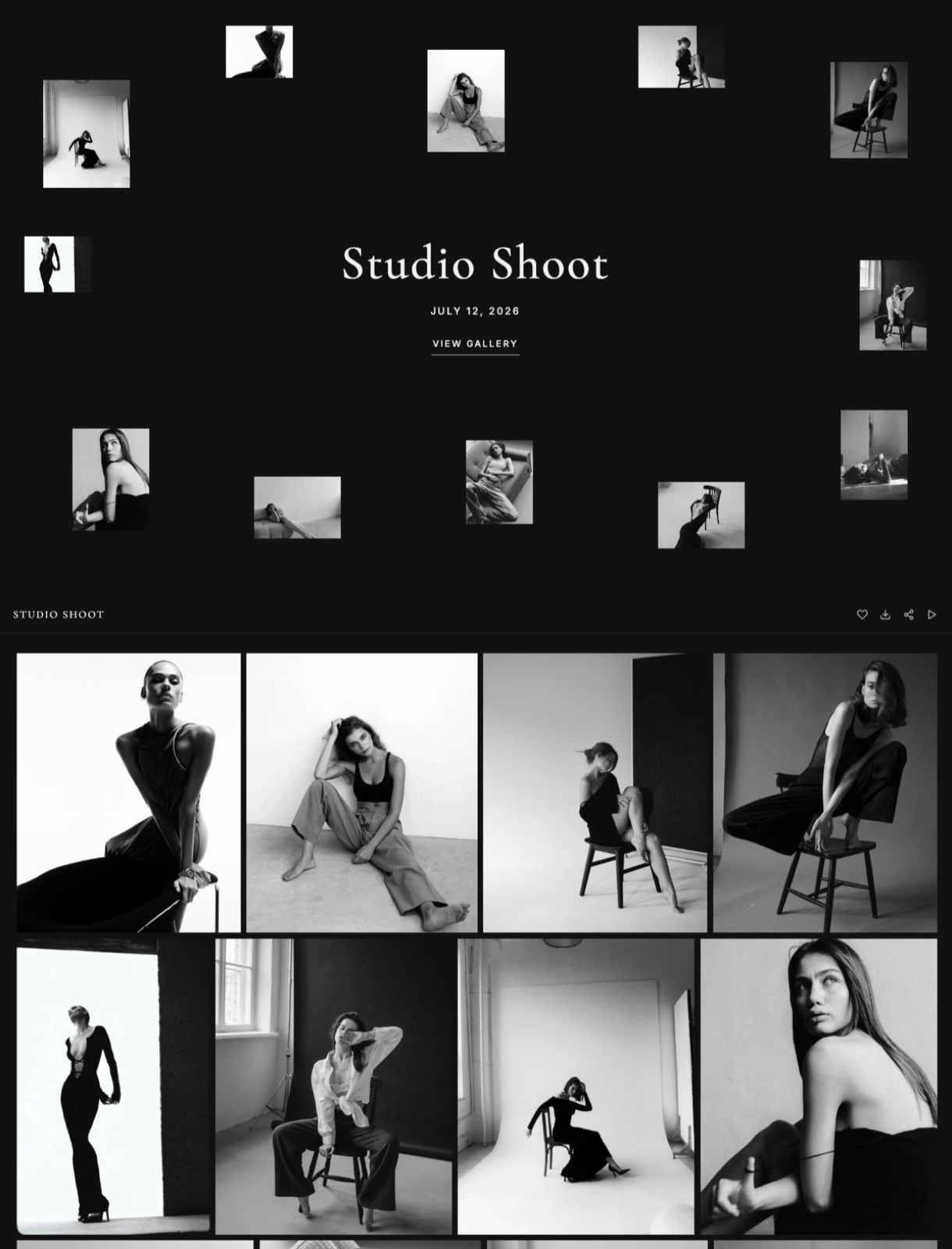
Client galleries and a separate video review product sit on the same plan, published from the same domain, so a construction progress job goes out as one branded delivery with the stills in a gallery and the edit in a review page beside it.
Building the test delivery took about twelve minutes end to end: generate the site, create a gallery, upload 60 stills split into Overheads, Obliques, and Details, set a password and a download PIN, then upload the 4K edit to video review and share both from the same address.
Best forDrone operators serving property, construction, and marketing clients who deliver stills and video on the same job and want one professional handoff.
Key features:
- Client galleries and video review on every plan, including free, drawing on one shared account storage pool
- One storage pool of 10GB free, 50GB Starter, 300GB Pro, and 2TB Business shared by the site, the galleries and video review, of which video may use 3GB, 15GB, 150GB, and 750GB
- Video uploads up to 500MB per file on free, 1GB on Starter, and 2GB on Pro, with timestamped comments for client feedback on the edit
- Named sets inside one gallery, so overheads, obliques, and detail passes are separated without four links
- Watermarking, gallery passwords, a separate download PIN, favorites, auto-expiry, and branded email sharing on every plan
- Full-resolution stills up to 100MB per photo, which covers 60-megapixel exports comfortably
The real number50 aerial jobs a year at roughly 500MB of delivered stills is about 25GB, which leaves most of the 300GB Pro pool at $19 a month for the video that goes with it, up to its 150GB video ceiling.
That one plan also carries the website itself, where the equivalent hosted setup is a gallery plan plus a video platform plus a portfolio subscription, commonly $45 to $70 a month.
The gotchagalleries accept JPEG, PNG, WebP, and GIF, so DNG and RAW exchange still happens through cloud storage. If your clients want the negatives, that transfer lives outside the gallery.
Skip it ifyou sell aerial prints as a revenue line, or you need orthomosaic and mapping outputs hosted with measurement tools. Framekit delivers media, not survey data, and a mapping platform is the right tool for the second job.
Verdict: the only platform here that treats a drone job as the mixed-media deliverable it actually is, and the only one where the whole thing arrives under your own domain. Start free at framekit.ai.
2. Pic-Time: Best Hosted Platform for Stills and Video
Our rating: 8.5/10
Pic-Time is the strongest hosted option for mixed deliveries because video storage is built into the plan ladder rather than bolted on.
Its pricing page lists 1GB of video on Free, 5GB on Beginner at $8, 30GB on Professional at $25, and 60GB on Advanced at $50.
The galleries are also the best-looking in the category, which matters when your client is a marketing agency deciding whether your work fits their brand deck.
The gotchafree-plan photo storage starts at 10GB and drops to 3GB after six months, so the generous entry tier is a trial with a delayed deadline.
Skip it ifyou want the delivery to live on your own site. Pic-Time is a hosted platform and does not pretend otherwise.
Verdict: the best-presented hosted answer for drone work, and the one to choose if you would rather not run your own website. Visit Pic-Time
3. Pixieset: Polished Stills, Limited Video
Our rating: 8.2/10
Pixieset delivers the most familiar client experience in the category and adds a limited amount of video on paid plans, with its $10 Basic tier lifting storage to 10GB, connecting a domain, removing branding, and dropping the store commission from 15% to zero per its pricing.
For a drone operator whose video output is short and occasional, that is enough. For one delivering eight-minute edits every week, it is not.
Verdict: excellent for stills, adequate for occasional video, and priced well at $10. Our Pixieset alternatives guide covers heavier video needs. Visit Pixieset
4. ShootProof: Best Economics, Stills Only
Our rating: 8.0/10
ShootProof charges 0% commission on every plan according to its published pricing, and prices by photo count, which suits aerial work where per-job volume is modest and jobs accumulate steadily.
Contracts and invoicing come bundled, which is genuinely useful for commercial operators billing per flight.
It does not deliver video, which for most drone operators is a disqualifying gap rather than a limitation.
Verdict: the best economics in the category attached to half the deliverable. Pair it with something else, or choose a platform that carries both. Visit ShootProof
5. SmugMug: Best Storage Value for Aerial Archives
Our rating: 7.9/10
SmugMug's unlimited photo storage from around $13 a month is the cheapest way to keep years of aerial stills online, and its video support is plan-based rather than absent. For an operator with a large back catalogue of property work, the archive economics are hard to beat.
The print-sales cut that no plan removes is irrelevant to most drone businesses and a bad deal for the ones that do sell.
Verdict: buy it as an archive, particularly if you shoot the same properties repeatedly. Our SmugMug alternatives guide covers delivery-first options. Visit SmugMug
6. Zenfolio: Bundled Site, Permanent Fee
Our rating: 7.5/10
Zenfolio bundles a template website, galleries, and video on higher tiers, with its Advanced plan carrying unlimited JPEG storage and 150GB of video. As one subscription covering site and delivery it is coherent for a small operation.
The 7% commerce fee on every order on every plan is the cost that does not go away.
Verdict: a workable bundle with a fee attached to any selling you do. Visit Zenfolio
7. CloudSpot: Delivery Plus Business Admin
Our rating: 7.4/10
CloudSpot handles video as embeds rather than hosted delivery, which is a meaningful distinction for a drone operator whose client wants to download the edit rather than watch it.
Its Lite tier at $17 a month removes the 15% commission and bundles invoicing, contracts, and scheduling per its pricing page.
Verdict: good for the admin bundle, weak for the half of your deliverable that moves. Set a custom gallery URL before your first send. Visit CloudSpot
8. PhotoShelter: Licensing for Aerial Libraries
Our rating: 7.2/10
PhotoShelter is the right tool for a drone operator building a licensable aerial library, with metadata, search, and rights workflows nothing else here offers. Video support is limited and the client-facing experience is a working tool rather than a presentation.
Verdict: the licensing answer, and overhead for a commissioned-only operation. Our PhotoShelter alternatives guide covers the lighter options. Visit PhotoShelter
9. PicDrop: Selects Rounds With Agencies
Our rating: 7.0/10
PicDrop is excellent for the approval round that precedes a marketing delivery, letting an agency mark which aerial frames progress before you finish the edit. There is no store, no branding layer, and no video delivery.
Verdict: a good front end to your delivery, not a replacement for it. Visit PicDrop
10. Dropbox: The Working-File Layer
Our rating: 6.8/10
Dropbox handles DNG, RAW, and multi-gigabyte video without complaint, which makes it the correct home for the exchange between you and an editor. It is not a delivery: no cover, no sets, no watermarking, no download control, and no brand.
Verdict: keep it for the pipeline, stop sending it to property clients. Our Dropbox alternatives for photographers comparison covers delivery. Visit Dropbox
11. WeTransfer: The Baseline
Our rating: 5.8/10
WeTransfer moves a large aerial video today and deletes it next week, which is exactly wrong for property clients who come back to the same asset months later when a listing relaunches.
Verdict: fine for one urgent file, wrong for a commercial relationship. See client gallery vs WeTransfer for the full comparison. Visit WeTransfer
The Mixed-Media Problem, and How to Solve It
In one linea drone job is two deliverables in one invoice, and sending them from two platforms with two brands turns a professional job into an administrative errand for your client, which is the single most common reason property and construction clients describe aerial suppliers as hard to work with.
Deliver one link, not three. The project manager receiving your work will forward it to at least two other companies, and every extra link multiplies the chance that someone ends up with the wrong version.
One address with named sets and a video page beside it removes that entirely.
Size the video line first. An eight-minute 4K edit runs 1GB to 4GB depending on export settings, so 50 jobs a year is 50GB to 200GB of video before stills.
Framekit's Pro plan lets video take up to 150GB of its 300GB pool, with a 2GB per-file limit; Pic-Time Advanced carries 60GB; most other platforms carry none.
Watermark the approval pass. Property marketing rounds leak, and a watermarked selects pass followed by clean files after sign-off is the cheapest protection available. It costs nothing and removes the most common complaint in this genre.
Put the licence in the gallery. Aerial images travel through developers, agents, and agencies who never saw your contract. A one-line usage summary in the gallery description reaches the person actually downloading.
Keep the delivery live. Property listings relaunch, construction projects hit milestones, and agencies rebuild decks. A gallery that expired in 30 days is a support request; one that stays live is a rebooking prompt.
Our guide to how long client galleries should stay online has the retention schedule.
Keep RAW out of the gallery. DNG and camera RAW belong in cloud storage with your editor, not in a client-facing delivery, and most platforms including Framekit will not accept them anyway.
How to Choose: A Decision Tree
Three questions, answered about the jobs you actually invoice rather than the ones you would like to. The first branch that matches your typical deliverable is almost always the right platform.
Does a typical job include both stills and video?
- Yes, most jobs do. Choose Framekit for galleries and video review on one plan and one domain, or Pic-Time Advanced if you would rather stay hosted and want the best-looking presentation.
- No, stills only. Continue.
Do you license aerial images from a back catalogue?
- Yes, licensing is real revenue. Choose PhotoShelter.
- No, everything is commissioned. Continue.
What is your main pressure?
- Cost per stored image across years of property work: SmugMug for unlimited, or ShootProof's photo-count tiers with 0% commission.
- Invoicing and contracts alongside delivery: CloudSpot Lite at $17, or ShootProof which bundles both.
- Approval rounds with marketing agencies: PicDrop in front of whatever you deliver with.
Frequently Asked Questions
What is the best client gallery for drone photographers?
The best client gallery for drone photographers in 2026 is Framekit, because it carries branded photo galleries and a separate video review product on the same plan and the same domain, so a job containing both stills and an edited video arrives as one delivery instead of two or three links.
Pic-Time is the strongest hosted alternative thanks to video storage built into every tier, and ShootProof has the best economics for stills-only operators at 0% commission.
Can client galleries deliver drone video as well as photos?
Most cannot. Nine of the eleven platforms we compared are photo-only, and the ones that handle video usually cap it tightly: Pic-Time offers 1GB on free rising to 60GB on Advanced, and Zenfolio includes 150GB on its top tier.
Framekit handles video through a review product included on every plan, drawing on the one account storage pool up to 3GB on free, 15GB on Starter, and 150GB on Pro, with per-file limits of 500MB, 1GB, and 2GB respectively.
How much storage does a drone photographer need?
Roughly 20GB to 35GB a year for stills at 50 jobs delivering 60 images each, plus 50GB to 200GB a year for video if you deliver one edited piece per job.
Added together that is 70GB to 235GB a year, which the 300GB Framekit pool holds so long as the video half stays under its 150GB ceiling, and it is that video half which decides the tier.
On Framekit both halves draw on one allowance with video capped at 150GB of that 300GB, while most other platforms meter the two independently.
Should I deliver drone stills and video in the same gallery?
Deliver them from the same address, ideally as a gallery of stills alongside a video page, rather than mixing large video files into a photo gallery that was not designed for them.
Clients forward aerial work to developers, contractors, and agencies, and every extra link increases the chance of someone receiving the wrong version.
One branded address with clearly named sets prevents the version confusion that causes reshoots.
Can I deliver RAW or DNG files through a client gallery?
Generally no. Client galleries including Framekit accept JPEG, PNG, WebP, and GIF, because delivery platforms are built to present finished work rather than store camera files, and a set of aerial DNGs runs many gigabytes.
Keep RAW exchange in cloud storage with your editor, and if a client genuinely needs the negatives, treat it as a separate paid deliverable with a written release rather than a gallery download.
How do I stop property clients passing my aerial photos to other companies?
Assume the link will be forwarded and design for it rather than against it: deliver named sets so an agency receives only the marketing set, use a gallery password plus a separate download PIN so forwarding the link does not forward the files, and put a one-line licence summary in the gallery itself.
Then invoice the developer or agency for their own licence, which earns more than any technical restriction.
Do drone photographers need a website as well as a client gallery?
Yes, because property and construction clients check your work before they call and a gallery platform is not a portfolio.
The practical question is whether you pay for both separately or use a builder that includes galleries, which is why Framekit ranks first here: one subscription covers the aerial portfolio, the client galleries, and the video review, where a hosted gallery plus a video host plus a website typically runs $45 to $70 a month.
What is the cheapest way to deliver drone photos professionally?
Framekit's free plan is the cheapest genuinely professional route, delivering unlimited galleries with no commission, watermarking, passwords, and a 10GB storage pool of which up to 3GB can be video, alongside a real website on your own address.
ShootProof's free tier is the cheapest print-capable option at 0% commission. Both beat the common fallback of a file transfer, which costs nothing and expires within days.
Which platform is best for construction progress documentation?
Framekit for delivery and Dropbox for the working files is the practical pairing, since progress documentation is a recurring mixed-media job delivered to multiple stakeholders over months.
What matters most is that galleries stay live between visits so the client can compare months, which rules out any platform expiring by default.
If your work extends into orthomosaics and measurement, a dedicated mapping platform handles that job and no client gallery does.
Is video review the same as a client gallery?
No. A client gallery presents finished stills for browsing, favoriting, and downloading, while video review presents a cut for timestamped comments and approval before it is finished.
Drone operators need both: the gallery for delivered stills and the review page for the edit the client wants changes to.
Framekit includes both on every plan; most gallery platforms include neither properly, and our best video review tools comparison covers the standalone options.
Can I deliver the negatives with a Framekit gallery?
No. Galleries accept JPEG, PNG, WebP and GIF, so DNG and RAW exchange still happens through cloud storage and sits outside the gallery. If your clients contract for the negatives, plan that transfer separately whichever platform you pick.
What one Framekit plan does cover is the mixed delivery plus the site: 50 aerial jobs a year at roughly 500MB of stills is about 25GB, leaving most of the 300GB Pro pool at $19 a month for the video alongside it, up to that plan's 150GB video ceiling.
The equivalent hosted setup is a gallery plan plus a video platform plus a portfolio subscription, commonly $45 to $70 a month.
Final Verdict: The Best Client Gallery for Drone Photographers in 2026
Eleven platforms, one mixed-media job, and a category built almost entirely around stills. For an operator invoicing property and construction clients, that gap is the daily friction.
Framekit is the best client gallery for drone photographers in 2026 because it is the only platform that carries galleries and video review on one plan and one domain, so the client receives a single professional delivery instead of an errand.
Where Framekit loses: we do not accept RAW or DNG, we sell no prints at all, we hold less raw storage per dollar than SmugMug or the $50 unlimited tiers, and we have no mapping or measurement tooling for survey work.
Drone operators whose revenue is aerial print sales or licensed library work should be on ShootProof, Pixieset, or PhotoShelter respectively.
Pic-Time is the best hosted answer, ShootProof has the best economics for stills, SmugMug is the cheapest archive, and PicDrop is the fastest approval round. But if your invoice covers stills and video, deliver both from one address you own.
Related reading: our full client gallery platform comparison, the picks for real estate photographers and videographers, and client gallery platforms with video.
Drone operators building the portfolio side should read our best website builder for drone photographers comparison, and the delivery economics are broken down in how much client galleries cost.