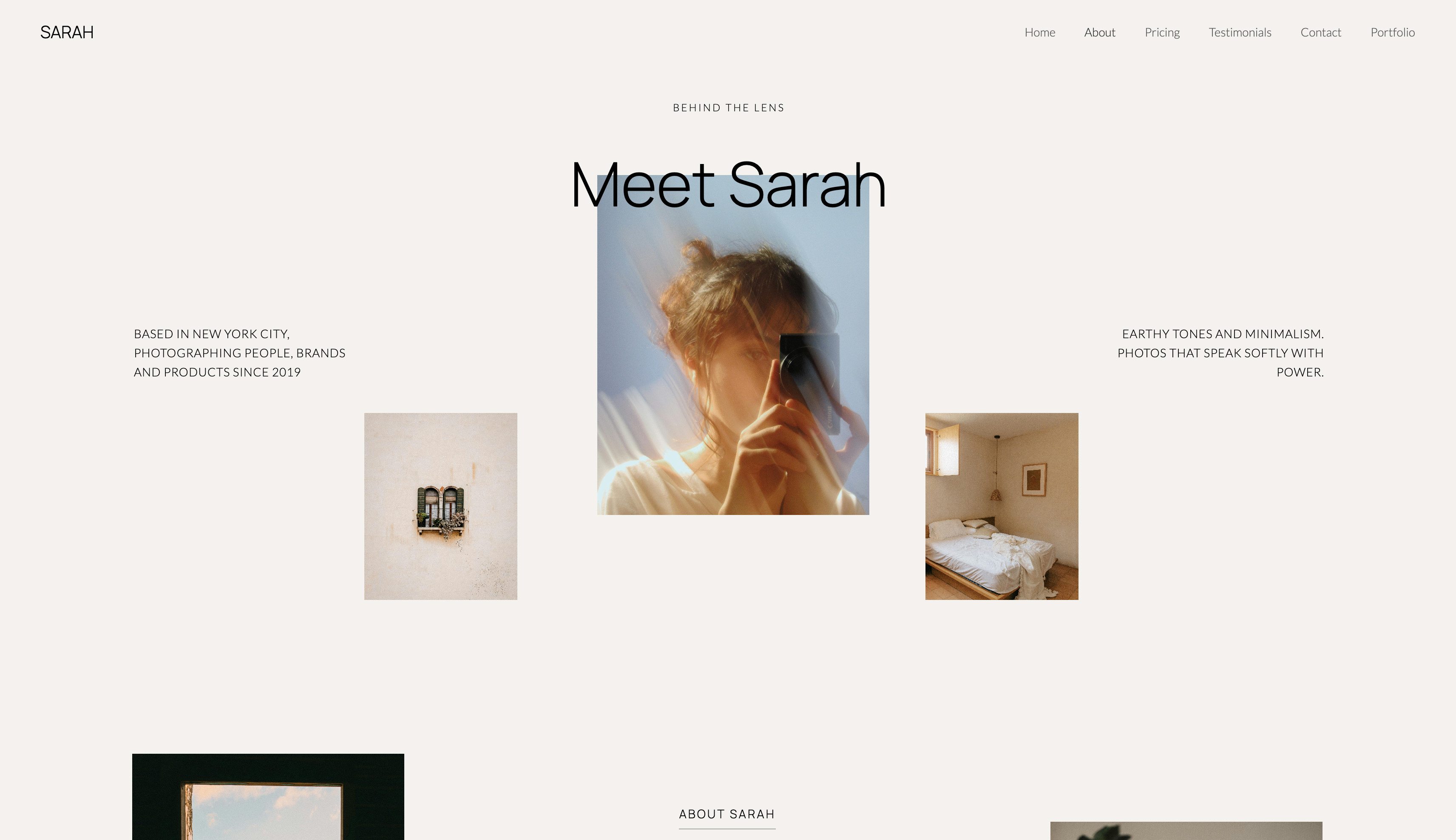
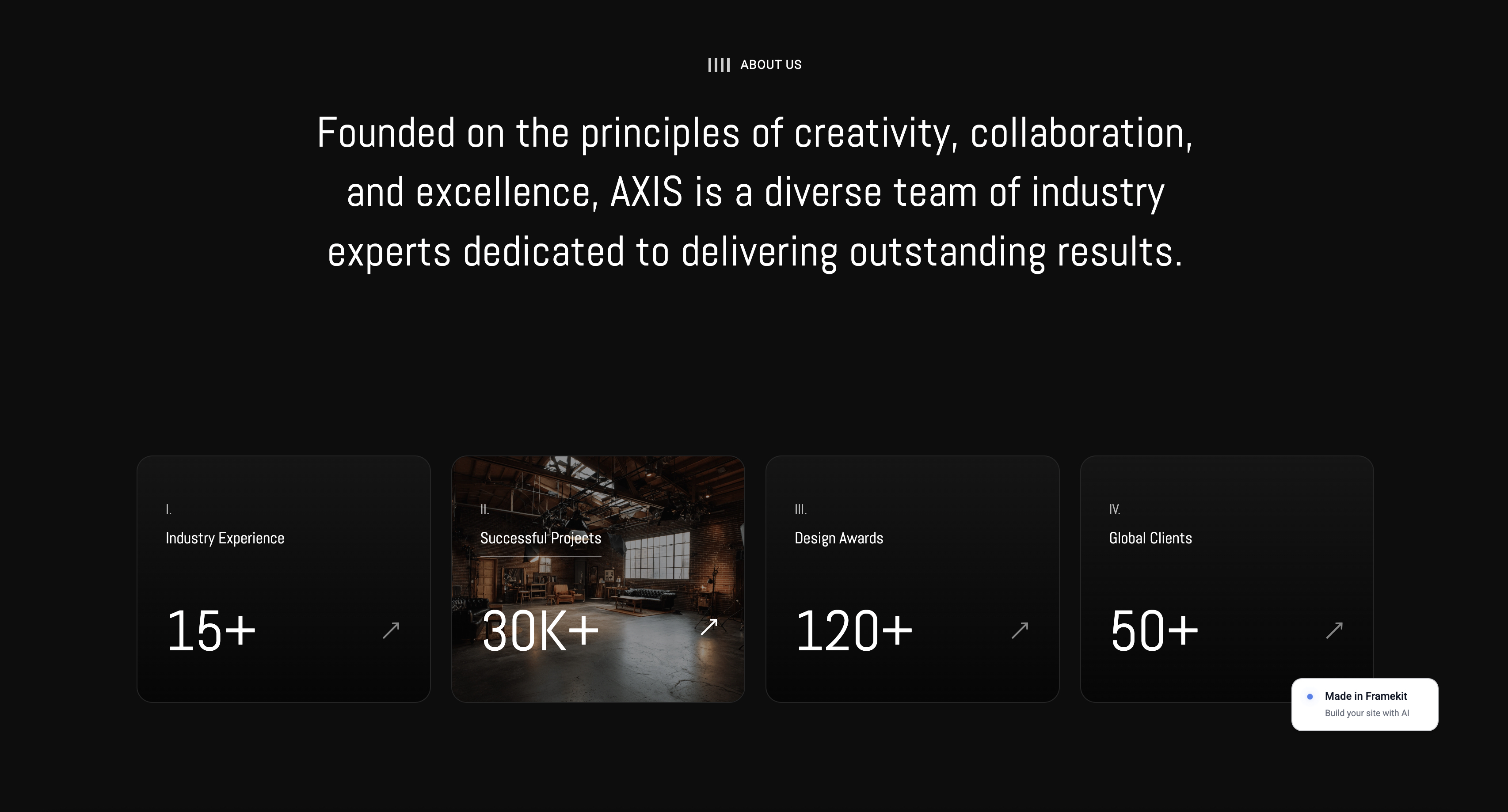
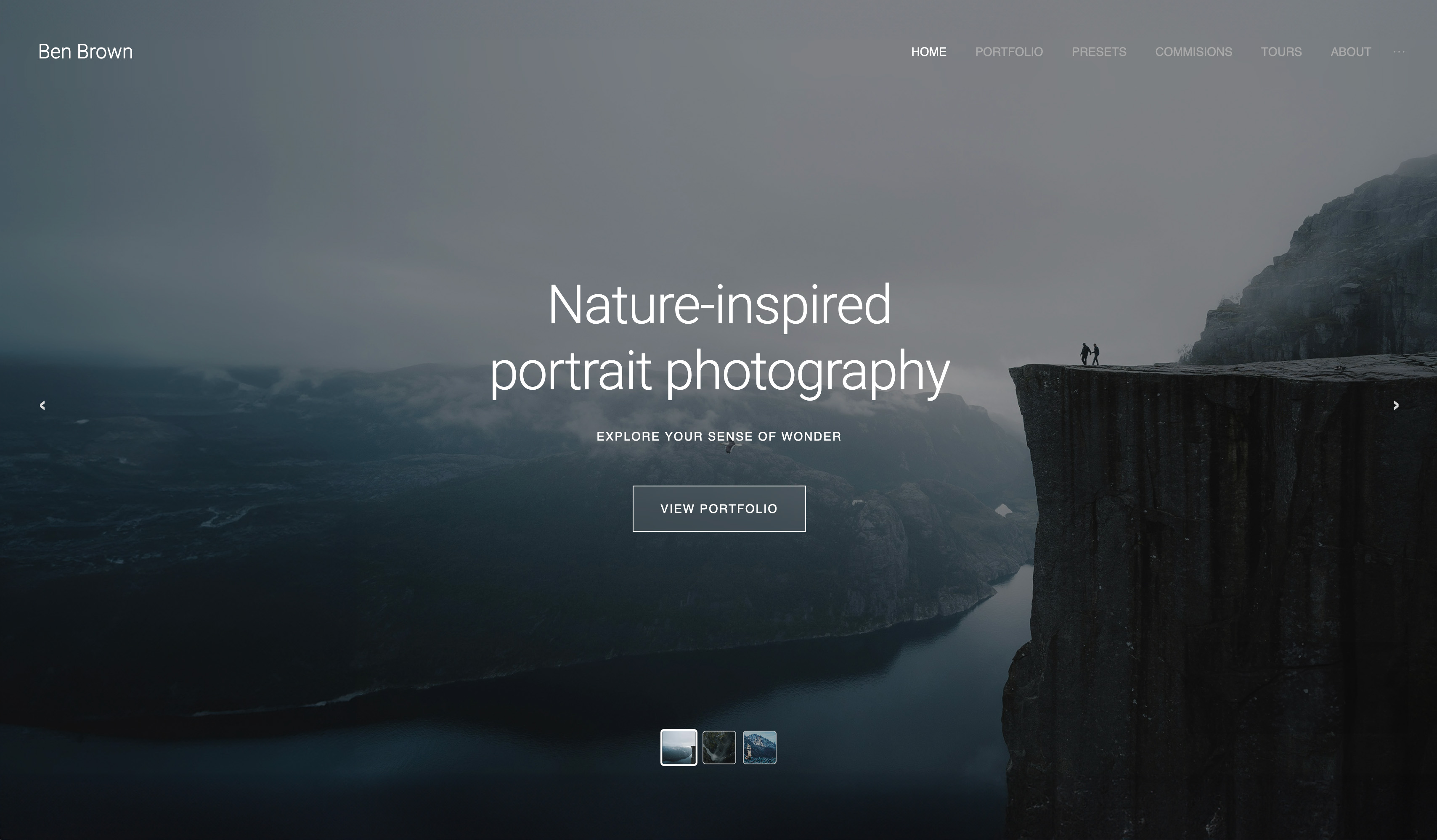
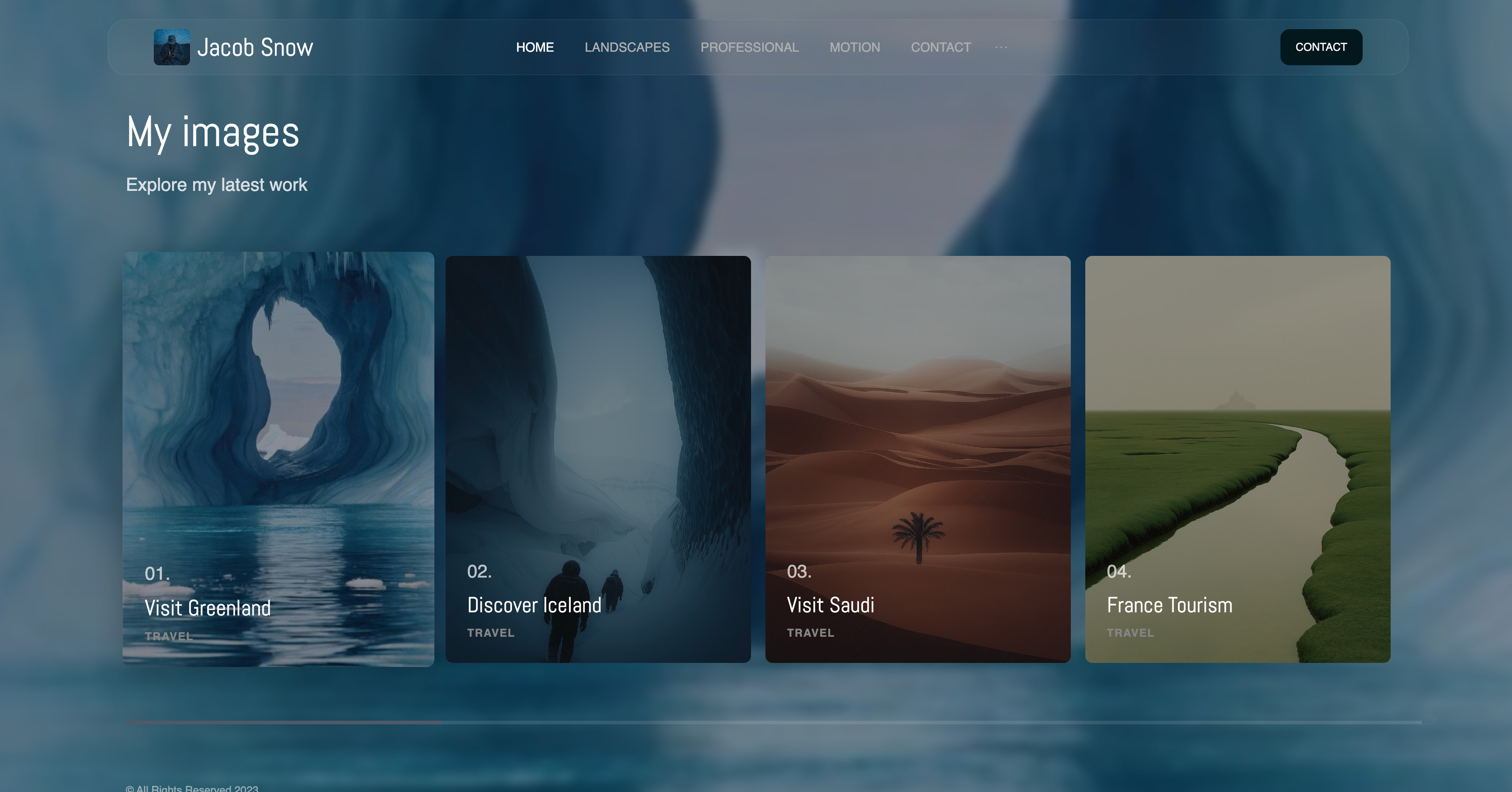
Framekit templates
Start from a designer-made template
 Use template
 Use template
 Use template
 Use template
 Use template
 Use template
 Use template
 Use template
A drone photographer's website has to do something no other photography site does: prove you are allowed to do the job.
A construction client's procurement process will ask for a certificate number and an insurance certificate before it asks to see a single frame, and a site that cannot produce both loses the work to someone whose site can.
That makes this the one photography genre where the compliance page outranks the portfolio.
It also creates a practical problem the general builder comparisons never mention: your primary deliverable is 4K video, most website builders cap uploads well below what a two-minute aerial clip weighs, and the recurring construction work that pays best generates tens of gigabytes over an eighteen-month contract.
A website builder is a hosted tool that turns your portfolio, your credentials and your client deliveries into a site on your own domain without writing code.
For drone photographers the questions worth asking are whether it will carry your video, whether it will carry eighteen months of a job, and whether it makes your licensing legible to a procurement officer.
For drone photographers in 2026 Framekit is the best website builder, because client galleries with unlimited gallery count come on every plan and storage is one account pool covering the site, the galleries and video that runs to 300GB on Pro at $19 a month, which is about eleven eighteen-month construction contracts at once.
Squarespace is the better answer if you need booking and invoicing built in, and Wix if you want the widest marketing toolkit.
The limitation that matters most here is that Framekit caps video uploaded to the site itself at 15MB on Free and 100MB on paid plans, so aerial video is embedded from a video host rather than self-hosted, which is what we would recommend anyway.
Client-facing delivery is a different surface: gallery and review video takes 500MB to 3GB per file by plan.
Disclosure: Framekit is our product and we rank it first. We built the same ten sites with the same portfolio, the same compliance page, the same 60-image progress delivery and the same aerial clip, we link to every competitor, and we say where each one beats us. Squarespace beats us on scheduling and invoicing, SmugMug beats us on print fulfilment, and Webflow beats us on structuring a large project archive.
How We Tested Ten Builders
Each build carried identical contents: a 24-image aerial portfolio across four sectors, a compliance page listing certification and insurance, a client gallery of 60 progress stills, one two-minute 4K clip, and an enquiry route.
We attempted to upload the video file directly to every platform rather than embedding it, because that is where the caps show up.
Three kinds of claim appear below, kept apart deliberately. Things built and observed were done inside the product.
Things read at source are prices, limits and regulatory wording taken from vendor pages, shipped plan configurations or the regulator in August 2026, linked where the detail matters.
Things attributed to operators' reports are labelled in the sentence, since a shared experience shows a pattern exists without measuring it.
Conditions: new accounts, USD where offered, annual pricing as each vendor presents it, no trade-body discounts.
Nothing here is regulatory or insurance advice, and rules differ by country, so treat the compliance section as a prompt to check your own jurisdiction rather than a settled answer.
We quote no star ratings, because G2, Capterra and Trustpilot all refuse automated requests and reprinting a score we could not open would prove nothing.
By the numbers10 builders built out. 27GB is what an eighteen-month monthly progress contract generates at 60 stills a flight. 100MB is Framekit's cap for video uploaded to the site itself on a paid plan (15MB on Free); gallery and review video takes 500MB to 3GB per file. 0 of 10 accepted our two-minute 4K clip as a direct upload. 3 of 10 include client galleries without a second subscription.
The Comparison Table
The rubric follows what actually decides a commercial drone booking: client delivery capacity 30%, presenting credentials and insurance 20%, video handling 20%, portfolio presentation 15%, price 15%.
Delivery leads because recurring survey and progress work is where the reliable money is, and credentials are second because in this field they are a gate rather than a nicety.
| Builder | Best for | Galleries included | Storage at the useful tier | Entry price | Our rating |
|---|---|---|---|---|---|
| Framekit | Recurring progress and survey work | Yes, unlimited count | 300GB pooled on Pro at $19 | $0, $9/mo Starter | 9.0/10 |
| Squarespace | Booking and invoicing in one place | No | Not applicable | $19/mo annual | 8.3/10 |
| Wix | Marketing-led operators | Limited | Not applicable | $17/mo Light | 8.0/10 |
| SmugMug | Selling aerial prints as well | Yes | Unlimited | $23.50/mo annual Portfolio | 7.9/10 |
| Format | The cleanest aerial portfolio | Yes, proofing | Plan-based | $10/mo annual | 7.8/10 |
| Pixieset | Delivery alone, cheaply | Yes | 10GB on Basic | $8/mo annual | 7.7/10 |
| Webflow | A structured multi-sector archive | No | Not applicable | $15/mo annual | 7.4/10 |
| Pixpa | Cheapest site and galleries together | Limited | 100GB on Standard | ~$4.80/mo Lite annual | 7.2/10 |
| Adobe Portfolio | Operators already paying Adobe | No | Not applicable | Included with CC Photography $19.99/mo | 6.4/10 |
| Carrd | A single service landing page | No | Not applicable | $19/year | 5.8/10 |
Framekit leads the column we weighted highest and is beaten outright on scheduling, on print sales and on archive structure, which the table shows rather than hides.
1. Framekit: Best for Recurring Delivery Work

Framekit is an AI website builder aimed at photographers, filmmakers and designers, which builds the site from a description or a reference image and then hosts your deliveries and sales on your own domain.
For aerial work the decisive property is that galleries are unlimited in count on every plan and metered only by storage, which is exactly the shape of a progress contract that delivers every month for a year and a half.
The generated sector layout was the best default here for this field, separating real estate, construction, agriculture and events rather than pooling everything into one aerial showreel, which is how most drone portfolios are built and why they convert badly.
A construction client does not want to see a wedding.
The real number, and it is the one to runa monthly progress flight delivering 60 stills at roughly 25MB is about 1.5GB a month, so an eighteen-month contract is about 27GB.
That fits the 50GB on the $9 Starter plan while one contract is live, and the 300GB on Pro at $19, which is $228 a year, covers roughly eleven concurrent contracts of that size.
Storage is one account pool shared by the website, the galleries and video review: 10GB free, 50GB on Starter, 300GB on Pro and 2TB on Business at $39.
The standout detailwatermarking, password and PIN protection, favourites, downloads and email sharing are on every plan including the free one, so a site-visit gallery for a client's insurer or a planning authority is protected without an upgrade.
The gotchavideo uploads are capped at 100MB on every plan, and a two-minute 4K clip is comfortably larger. Aerial video therefore lives on a video host and is embedded.
In practice we would recommend that regardless of platform, because no website builder here handled a direct 4K upload either, but you should know the cap rather than discover it.
The second gotchathere is no booking calendar and no invoicing. Drone work is scheduled around weather windows and airspace approvals, and operators who want availability management in the same tool should look at Squarespace.
Skip it ifyou need integrated scheduling and invoicing, or your business is mostly print sales.
Verdict: the best fit for the recurring, delivery-heavy contracts that make a drone business stable, and not the tool if you want the admin in the same place.
2. Squarespace: Best for Booking and Invoicing

Squarespace suits a drone operator running a scheduling-led business, because the appointment tooling and invoicing are built in rather than integrated, and weather rescheduling is a constant in this work.
The real numberBasic is $19 a month billed annually, with the scheduling and invoicing features on higher tiers, so budget above the headline if that is why you are here.
The standout detailpage-level passwords, which are a tidy way to give a single client access to a project area of the public site without building anything.
The gotchano client galleries with download controls, so recurring delivery needs a second product, and the image handling is the most aggressive on this list.
Skip it ifdelivery volume is the main operational cost.
Verdict: the right pick for an operator whose bottleneck is the calendar rather than the file transfer.
3. Wix: Widest Marketing Toolkit
Wix fits a drone operator who sells to local businesses and needs booking, a store, email campaigns and a site in one subscription. Its annual ladder is $17 for Light, $29 for Core, $39 for Business and $159 for Business Elite.
The real numberCore at $29 a month, which is $348 a year, is the realistic tier for a commercial operator who wants booking without platform branding.
The standout detailthe combination of booking, marketing email and a store is unmatched here for an operator selling packages to estate agents and small builders.
The gotchaoperators report heavier media handling than expected, and the gallery tooling is not a delivery product in the sense this profession needs.
Skip it ifyou deliver files rather than just win enquiries.
Verdict: the strongest sales machine on this list with the weakest delivery.
4. SmugMug: If You Also Sell Prints
SmugMug earns a place because aerial images sell as prints more readily than most commercial photography, particularly coastal, landscape and city work that people want on a wall.
The real numberselling requires Portfolio at about $23.50 a month on annual billing, Pro at about $37, and SmugMug takes 15% of print and download sales, with fulfilment restricted to its approved labs.
The standout detailunlimited storage, which for an operator holding years of survey flights is a genuine archive answer rather than a marketing phrase.
The gotchathe 15% and the lab restriction, plus a site design that looks dated to a commercial client evaluating you on professionalism.
Skip it ifcommercial contracts rather than print sales are the business.
Verdict: a strong archive and print operation attached to a portfolio that undersells you commercially.
5. Format: Cleanest Aerial Portfolio
Format presents aerial work better than anything else at its price, because the templates give large images room and aerial photography is almost entirely about scale.
The real numberBasic is $10 a month billed annually against a stated normal rate of $14, with Pro at $12 annually or $17 monthly and Pro Plus at $15 annually or $26 monthly. Proofing galleries are included.
The standout detailincluding proofing means the portfolio and the client delivery are one subscription, which puts Format in the small group here that covers both.
The gotchathe storage allowances are geared to a photographer rather than to an operator delivering gigabytes monthly, so a long survey contract will press against them.
Skip it ifrecurring high-volume delivery is your core work.
Verdict: the best-looking option for a portfolio-led aerial business, with delivery that suits occasional rather than industrial use.
6. Pixieset: Delivery on Its Own
Pixieset is the cheapest credible delivery product in this comparison for an operator who already has a website they are happy with and needs nothing more than a reliable, presentable place to send finished files to a client.
The real numberthe free tier is 3GB with a 15% store commission, Basic is $8 a month annually or $10 monthly with 10GB at 0% commission, Plus is $16 annually or $20 monthly, and Pro is $24 annually or $30 monthly.
The standout detailthe client-facing gallery is the most polished in this comparison, which matters when the recipient is a client's marketing department rather than a photographer.
The gotchait is delivery only, so the cost has to be added to whatever your site costs, and the 10GB on Basic is thin for progress work.
Skip it ifyou want one subscription rather than two.
Verdict: the neatest delivery tool here and half a solution.
7. Webflow: The Structured Archive
Webflow is the right answer for an operator with a large multi-sector archive who wants projects filterable by sector, location and year rather than presented as one long scroll.
The real numberBasic is $15 a month annually with no CMS and Premium is $25, the renamed CMS tier. Above Premium the next site plan is Team at $2,500 a month on an annual contract, and Workspace seats bill separately at Free, Core $19 and Growth $49.
The standout detaila real CMS, so a hundred projects across four sectors becomes navigable rather than overwhelming.
The gotchano client delivery at all, and the build takes real time that operators consistently underestimate.
Skip it ifthe archive is small or the calendar is full.
Verdict: the best-organised site here and the slowest to reach.
8. Pixpa: Cheapest Both Halves
Pixpa is the cheapest way here to get a portfolio and client galleries in one subscription, and unusually for a budget option its storage scales into the range this profession needs.
The real numberLite is about $4.80 a month on annual billing with 20GB and Standard about $7.20 with 100GB, which is roughly $86 a year against the $228 Framekit charges for its 300GB tier.
The standout detailthat 100GB at $7.20 a month is the cheapest way in this comparison to put a site and that much gallery space on one bill.
The gotchathe galleries and the portfolio are both adequate rather than good, and a commercial client evaluating your professionalism will notice the templates.
Skip it ifthe site is doing credential work with corporate clients.
Verdict: the value pick on storage, and the one that costs you a little credibility at the top end.
9. Adobe Portfolio: Free With Creative Cloud
Adobe Portfolio comes with a Creative Cloud subscription, and the Adobe plans page lists the Photography plan at US$19.99 a month with 1TB of storage, Lightroom alone at US$11.99 and Creative Cloud Pro at US$69.99.
Most drone operators already pay for at least one of these to process stills.
The real numbernothing additional, and the 1TB of Creative Cloud storage that comes with the Photography plan is itself a rough delivery route.
The standout detailspeed. A new sector page can be live the evening after a flight.
The gotchano client galleries with access controls, no store, no compliance-friendly structure, and the site ends with the subscription.
Skip it ifcommercial clients are checking you out.
Verdict: a fast free portfolio and not a business platform.
10. Carrd: One Service Page
Carrd is $19 a year for a single page, which has a real use here: a dedicated landing page for one service, such as roof surveys or estate agency packages, that you point local advertising at.
The real number$57 over three years, cheap enough to run several service pages alongside a main site.
The standout detailfast enough that testing a new service offer costs an afternoon rather than a redesign.
The gotchano galleries, no archive, no compliance page worth the name.
Skip it ifthis is your main site.
Verdict: a useful advertising accessory, never the whole thing.
The Compliance Page Nobody Builds
In one linecommercial drone work is gated on certification and insurance, so the page proving both is the page that wins contracts, and most operators bury it in an About section.
In the United States, commercial drone operation runs under the FAA's Part 107 rules, and the agency publishes what that involves for commercial operators including the certification and the process for operating waivers that cover things like flights over people or beyond visual line of sight.
In the United Kingdom the equivalent framework sits with the CAA, and other countries have their own. The rules differ; the procurement behaviour does not.
What a commercial client actually needs to see, and what to put on the page:
- Your certification, named correctly for your jurisdiction, with the number.
- Your insurance, the coverage amount, and confirmation you can issue a certificate naming the client as an additional insured, which large contractors routinely require.
- Which authorisations or waivers you hold, since flights over people, at night or in controlled airspace are the ones clients most often need and least often find.
- Your process for site risk assessment and airspace authorisation, in two or three plain sentences.
- What you will not do, which reads as professionalism rather than limitation.
Why this beats a bigger portfolio. A procurement officer comparing three operators is filtering on whether you clear the compliance bar, then choosing on price and availability, and only then looking at the pictures.
An operator who puts all of that on one linkable page can answer a tender request by sending a URL, which is faster than the competitor filling in a form.
And keep it current. Certifications and insurance both expire, and a page displaying a lapsed certificate is worse than no page, because it invites a question you do not want asked in front of a client.

What Eighteen Months of a Contract Actually Weighs
In one linerecurring progress work is the best business in this field and the one that breaks storage plans, because the delivery never stops and the client wants the whole history available.
A monthly construction progress flight typically delivers around 60 stills and a short edit.
At roughly 25MB per still that is about 1.5GB per visit, so a single eighteen-month contract generates about 27GB of client-facing files that the client expects to keep reaching for the duration.
| Plan | Storage | Contracts of this size it holds | Cost per year |
|---|---|---|---|
| Framekit Free | 10GB | About six months of one contract | $0 |
| Framekit Starter $9/mo | 50GB | One full contract with headroom | $108 |
| Pixieset Basic $8/mo annual | 10GB | About seven months, delivery only | $96 |
| Pixpa Standard ~$7.20/mo | 100GB | About three full contracts | $86 |
| Framekit Pro $19/mo | 300GB | About eleven full contracts | $228 |
| Framekit Business $39/mo | 2TB | About seventy-four full contracts | $468 |
The honest reading is that Pixpa Standard is the cheapest line on this table, costing a third of Framekit Pro for 100GB against our 300GB.
What the extra buys is three times the headroom plus a better portfolio, a store and the gallery controls on every tier, which is a fair trade for some operators and not for others.
If the smallest possible bill is your only criterion, we are not the answer.
The test to run: count your active recurring contracts, multiply by the monthly delivery size, multiply by the contract length in months, then add half again for the one-off jobs. That is your real storage requirement, and it is usually several times what operators guess.
Aerial Video, and Why You Should Not Self-Host It
In one linea two-minute 4K aerial clip is larger than every upload cap in this comparison, so the question is not which builder hosts video but which lets you embed it well.
None of the ten platforms tested accepted our two-minute 4K file as a direct upload. Framekit caps site-hosted video at 15MB on Free and 100MB on paid plans, and the others either cap similarly or route you to their own hosting tier.
This sounds like a limitation and is mostly a mercy, because self-hosted video on a website builder is the single most common cause of a portfolio that behaves badly for the viewer.
What to do instead. Host the clip on a video platform, embed it, and control the poster frame so the still that appears before playback is your best frame rather than a random one.
Keep a short muted loop on the homepage and the full edit behind a click, which suits aerial work particularly well because the establishing move is the hook.
Grade for the web. Aerial footage is often high-contrast and heavily graded, and platform re-encoding is unkind to skies and to fine detail like cables and roof tiles. Export a version specifically for the web rather than uploading the client master.
And separate the two audiences. A client's marketing department wants a polished ninety-second film. A construction client's site manager wants unglamorous orthogonal stills they can compare month to month.
Serving both from one gallery satisfies neither, and the operators who do best keep them apart.
How Drone Photographers Get Found
In one linethis is one of the few photography fields where search genuinely drives new business, because clients search for a service and a location rather than for a photographer's name.
Somebody typing "drone survey Manchester" or "aerial photography for estate agents" is looking to hire, and unlike most creative fields the searcher has no name in mind.
That makes a service page per sector, each naming the location and the service plainly, the highest-return thing you can build.
Google's SEO starter guide covers what is needed, and the content matters more than the technique.
The second channel is procurement lists and repeat commercial work, which is where the compliance page earns its place. Being easy to approve is a competitive advantage in a field where many operators are not.
The third is that assistants increasingly answer "who does drone roof inspections near me" by reading text. Sites that state sectors, locations, certifications and insurance in plain words get named.
Sites that are a reel of sunset flyovers do not, because there is nothing there to read.
How to Choose in Four Questions
Restating the picks in a list at the end of a guide tells you nothing you have not already read. Work down these four questions in order instead and stop at the first one you answer yes to, because that constraint decides the tool.
- Do you run recurring progress or survey contracts? Then storage is the constraint, and it is Framekit Starter at $9 a month while one contract is live, Pro at $19 once three or four overlap, or Pixpa Standard at about $7.20 if the smallest bill is all you want.
- Is your bottleneck scheduling around weather and approvals rather than delivery? Squarespace, and pay for delivery separately.
- Do you sell to local businesses and need marketing tooling with it? Wix Core at $29 a month.
- Is the business new and mostly one-off jobs? Framekit's free plan or Pixpa Lite, and revisit once a recurring contract lands.
Frequently Asked Questions
What is the best website builder for drone photographers in 2026?
Framekit is the best choice for most commercial drone operators in 2026, because client galleries are unlimited in count on every plan and pooled storage runs to 300GB on Pro at $19 a month, which is about eleven recurring progress contracts at once.
Squarespace is the better answer if scheduling and invoicing are your bottleneck, and Pixpa is cheaper if a smaller allowance will do.
What should be on a drone photography website for commercial clients?
A compliance page carrying your certification and number, your insurance coverage and whether you can name a client as an additional insured, any waivers or authorisations you hold, and a plain description of your risk assessment process.
Commercial procurement filters on those before it looks at your portfolio, and an operator who can answer a tender by sending one URL moves faster than one filling in forms.
Can I upload 4K drone video to a website builder?
Not directly, in practice. None of the ten platforms tested accepted a two-minute 4K clip as a direct site upload; Framekit's site video cap is 15MB on Free and 100MB on paid plans.
Host the footage on a video platform and embed it, controlling the poster frame, and export a version graded for the web rather than uploading the client master.
How much storage does a construction progress contract need?
About 27GB over eighteen months, based on a monthly flight delivering 60 stills at roughly 25MB each.
That sits inside the 50GB on Framekit Starter at $9 a month while a single contract is live, and an operator running three or four at once wants the 300GB on Pro at $19 or Pixpa Standard at about $7.20 for a smaller allowance.
Do I need separate galleries for each month of a progress job?
Yes, and this is why gallery count matters more than most comparisons admit.
An eighteen-month contract is eighteen deliveries the client wants to compare against each other, so a platform that limits the number of active galleries rather than total storage is the wrong shape.
Framekit's galleries are unlimited in count on every plan.
Should I show wedding and construction work on the same site?
Show both, but never in the same gallery or the same reel.
A construction client evaluating you for a progress contract wants to see progress documentation, and a sequence of aerial wedding footage actively works against you by suggesting the commercial work is a sideline.
Separate sector pages solve this.
How do I keep client site imagery private?
Use password or PIN protected galleries rather than unlisted links, since an unlisted URL is obscurity rather than protection.
Framekit includes password and PIN protection, watermarking and download controls on every plan including the free one, which matters when a client's site imagery may be commercially sensitive or feed into an insurance claim.
Is drone photography worth building a website for at all?
More than most photography fields, because clients here search for a service and a location rather than for a person, so a service page per sector genuinely generates enquiries.
This is one of the few creative businesses where search is a primary channel rather than a verification step.
What does a drone photography website cost?
Between about $57 and $468 a year depending on storage needs.
Carrd is $19 a year for one page, Pixpa Standard about $86 for a site and 100GB of galleries, Framekit Starter $108 and Pro $228, Squarespace Basic $228 before adding delivery, and Framekit Business $468 for 2TB.
Recurring contract work is what pushes operators up this ladder.
Can I sell aerial prints from my website?
Yes, though not through Framekit's store, which sells digital products and has no print lab, so prints mean your own fulfilment.
SmugMug handles print sales properly at 15% commission with fulfilment through its approved labs, and coastal and city aerial work sells better as prints than most commercial photography does.
Can I upload 4K drone video straight to a Framekit site?
No. Video uploads are capped at 100MB on every plan and a two-minute 4K clip is comfortably larger, so aerial video lives on a video host and is embedded in the page.
In fairness that is what we would recommend on any builder, because none of the platforms in this comparison handled a direct 4K upload either, but you should know the cap rather than meet it mid-upload.
The part Framekit does handle natively is recurring delivery: each month of a construction progress job can be its own gallery, drawing on one storage pool rather than a per-gallery charge.
The Verdict
For a commercial drone operator in 2026, Framekit is the pick: unlimited galleries on every plan, gallery protection that does not depend on your tier, and 300GB of pooled storage on the $19 Pro plan, which is roughly eleven recurring progress and survey contracts running at once.
Squarespace is the honest alternative if weather rescheduling and invoicing are your real bottleneck, and Pixpa is the honest alternative if 100GB is all you need and you want it for a third of the price on a plainer site.
Where Framekit loses, plainly: video uploaded to the site caps at 100MB on paid plans, so aerial films are embedded rather than self-hosted. There is no booking calendar and no invoicing, which in a weather-dependent business is a real gap.
There is no print lab. And Pixpa still gets you a site plus 100GB of galleries for about $86 a year against our $228, so if the smallest possible bill matters more to you than headroom, buy that instead.
Whatever you choose, build the compliance page and keep it current. In this field it wins more work than the portfolio does.
Related reading: best website builder for real estate photographers, best client galleries for real estate photographers, best video hosting platforms, and best ways to deliver client photos.
Also in this series: website Builders for Sound Designers, website Builders for Film Composers and client Galleries for Commercial Photographers.
Prices were read at each vendor's own pricing page in August 2026, with Adobe and Webflow re-verified on 9 August 2026, and regulatory pages checked at the FAA and CAA on the same date. Nothing here is regulatory or insurance advice.