Framekit templates
Start from a designer-made template
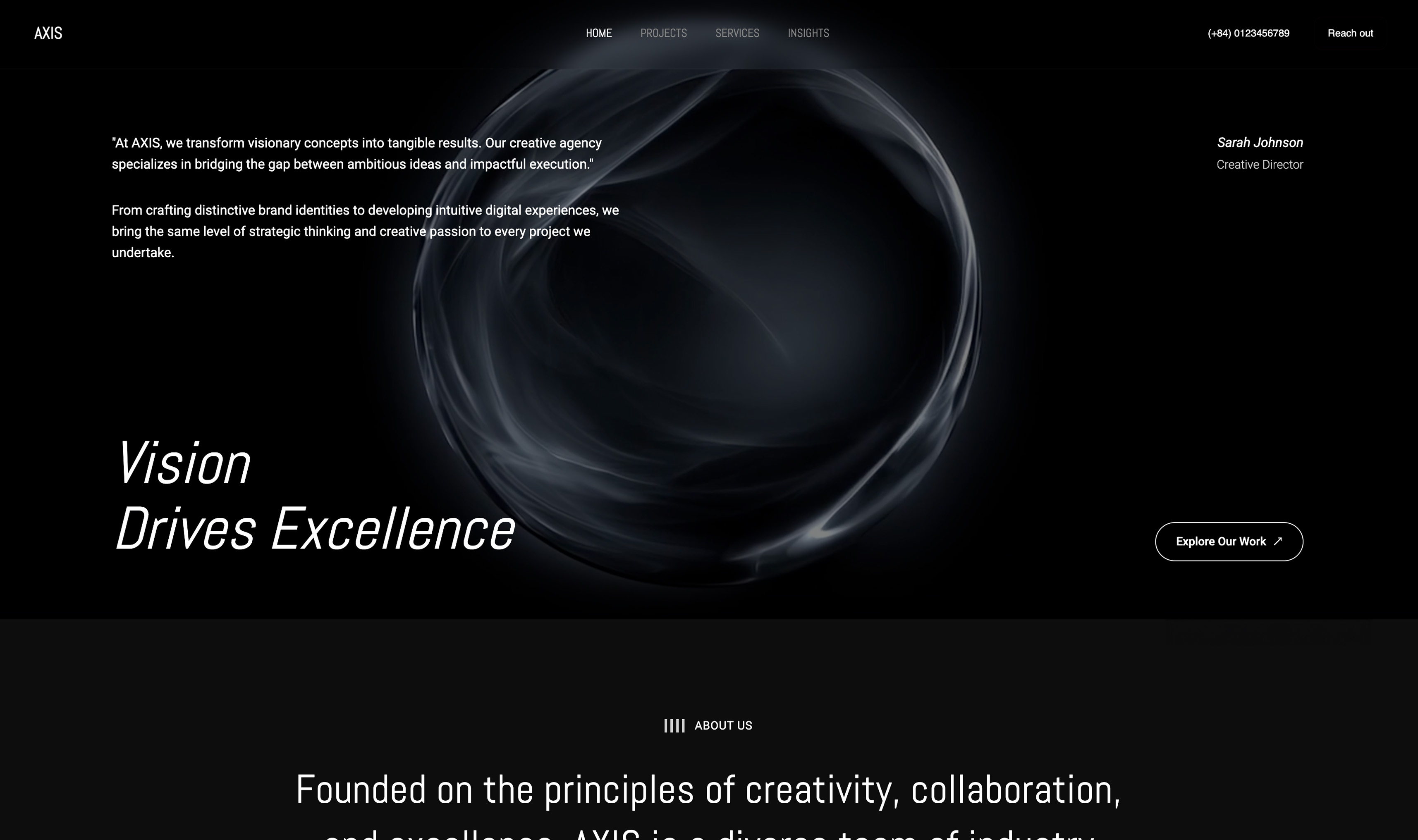 Use template
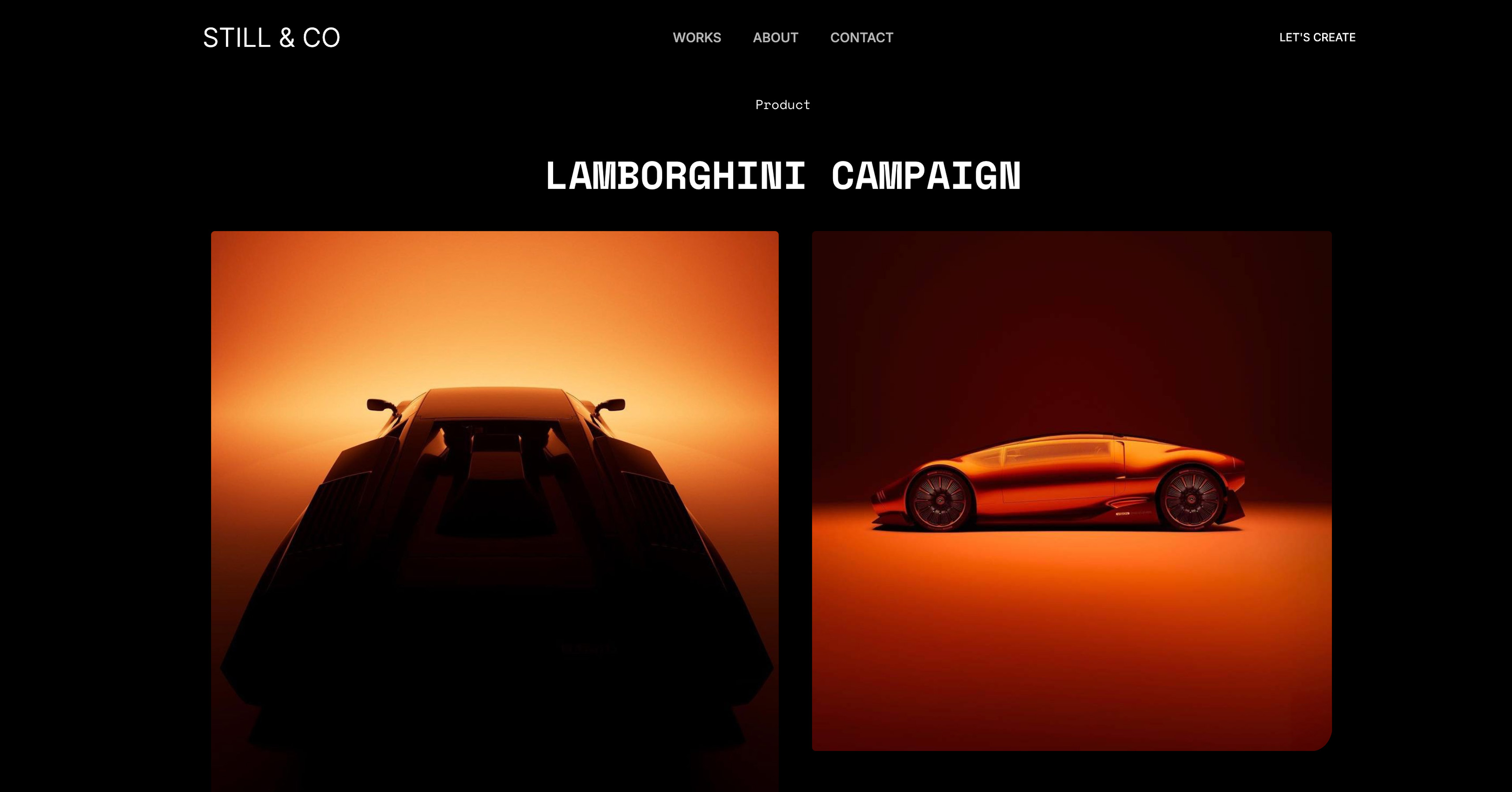 Use template
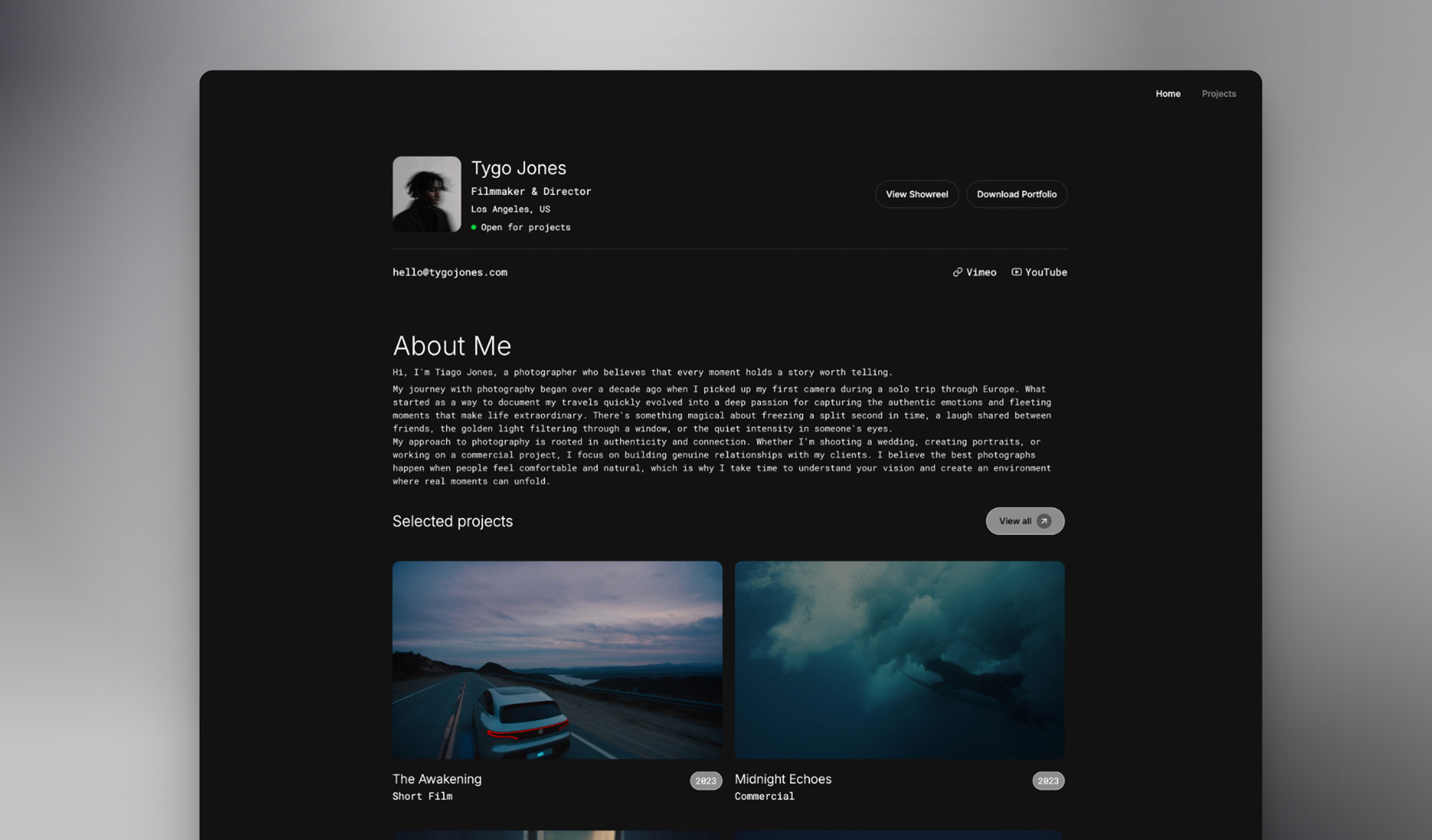 Use template
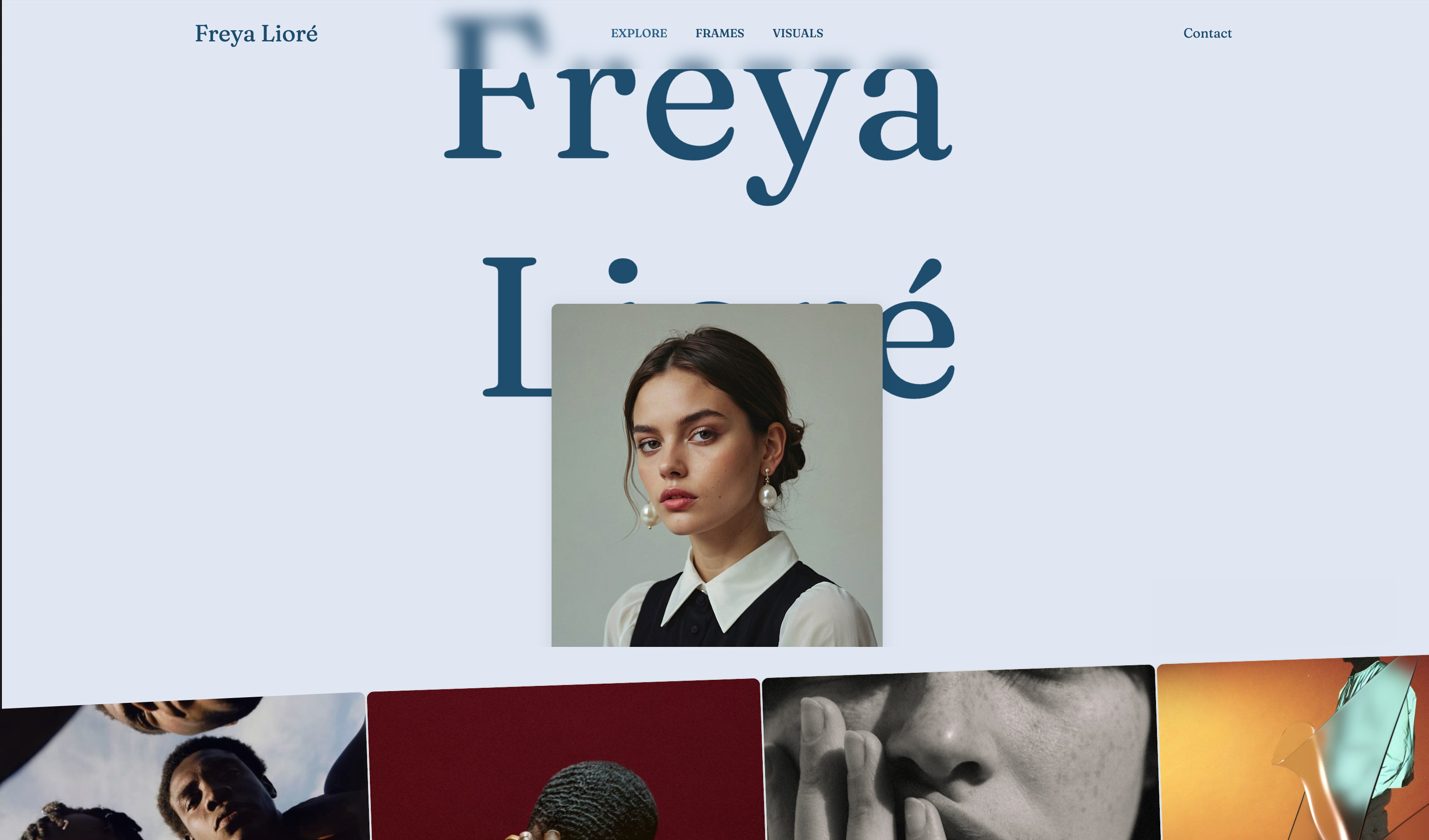 Use template
 Use template
 Use template
 Use template
 Use template
An agency's deck problem is never really about slides. It is that eight people make decks, three of them are not designers, and by the end of a quarter the agency's own work has been presented in four typefaces, two logo versions and a template somebody downloaded in 2023.
Consistency is the product. Everything else in this comparison is downstream of it.
A presentation tool for an agency is software that lets several people build client-facing decks from shared, controlled brand assets, review them with clients, and export them without the layout breaking on the way out.
The best presentation tool for creative agencies in 2026 is Pitch, because it combines a fast collaborative editor, locked brand templates, per-recipient link analytics, and workspace pricing rather than per-seat pricing, which at eight people is the difference between roughly $600 and several thousand a year.
The trade-off is a smaller template library than Canva.
Canva Business is the pick when most of your deck builders are not designers, Figma Slides is right when the agency already lives in Figma, and Google Slides remains free and the most reliable for decks written by several people at once.
Framekit Slides is a low-cost pick when one designer builds every image-led pitch, from $84 a year, but it has no live co-editing or template locking.
Full disclosure: Framekit is our own product. It now makes decks through its Slides editor and is ranked seventh, because it has no live co-editing, no template locking and no client analytics, which are the things an eight-person agency needs most. It is scored from its published features rather than from our four-editor build.
How We Tested These for Agency Use
We built the same client-facing deck in every tool: twenty-two slides for a brand campaign pitch, with a strategy section, four creative routes, a production timeline, a budget table and a team page.
Then we had four people edit it simultaneously, applied agency brand assets, and shared it with a test client for comments.
Brand control across a team. Can you lock a template so that a strategist without design training cannot break it? This carries 30% of the score, because it is the problem agencies actually have.
Client review. Comments from someone outside the agency, without an account conversation, attached to the right slide.
Seat economics. What eight people costs, which is where per-seat pricing stops being a rounding error.
Export fidelity. Agencies send PDFs and, more often than they would like, .pptx files that a client's internal team will edit.
Design ceiling. The deck represents the agency's own craft, so the output has to hold up next to the work inside it.
Three kinds of finding, kept apart. Measured by hand: building the deck, running four simultaneous editors, applying brand assets and exporting.
Verified from published sources: pricing against each vendor's own pages in August 2026, linked where accessible. Reported as community sentiment: recurring complaints about specific tools, flagged as such.
On 19 September 2026 we added Framekit as an eighth tool, now that its Slides deck editor ships, and re-verified its plans on its own pricing page.
It did not go through the four-editor build, so it is left out of the measured counts below; competitor prices are as read in August.
What Testing These With Eight Seats Showed
The counts behind the ranking, from our build and each vendor's published pricing in August 2026.
- The cost of eight seats ranges from $0 to roughly $3,840 a year across this comparison, a spread wider than most agencies' entire software budget for the category.
- 1 of 8 charges for the workspace rather than per person at the tier an agency needs, which is Pitch. Framekit prices per account, but its team members are website admins rather than deck collaborators.
- 4 of 8 offer template locking strong enough that a non-designer cannot break the layout: Pitch, Canva on Business, Beautiful.ai and Storydoc.
- 3 of 8 report what a client did with the deck after it was sent: Pitch, Storydoc and, at a basic level, Beautiful.ai.
- Only 2 of the 7 we exported from produced a .pptx export that survived a twenty-two-slide deck with a budget table intact, which were Google Slides and PowerPoint-native workflows.
- Beautiful.ai's team pricing at eight seats is roughly $3,840 a year, the highest here, against about $600 for Pitch's workspace.
Skip to the decision tree for a fast answer, or read the field.
The 8 Best Presentation Tools for Creative Agencies in 2026
How the ratings work: brand control 30%, client review 20%, seat economics 20%, export fidelity 15%, and design ceiling 15%. Brand control dominates because the deck is the agency's craft on display and inconsistency undermines the pitch before a word is read.
Pitch leads at 9.1 while scoring 6 on template breadth, clearly behind Canva. Canva scores 9 on design and 5 on seat economics at agency scale.
Framekit scores 4 on brand control and 3 on seat economics, because it has no template locking and no multi-editor deck workspace. Nothing here won on both.
| Tool | Best for | Template locking | Client analytics | Eight seats a year | Our rating |
|---|---|---|---|---|---|
| Pitch | Agencies of 5 to 25 | Yes | Yes, per recipient | About $600 | 9.1/10 |
| Canva Business | Teams with non-designers | Yes | No | About $2,400 | 8.8/10 |
| Figma Slides | Agencies already in Figma | Via components | No | About $1,536 | 8.4/10 |
| Google Slides | Decks written by several people | Weak | No | $0 | 8.0/10 |
| Storydoc | Pitches you need read data on | Yes | Yes, deepest | About $3,456 | 7.6/10 |
| Apple Keynote | Mac studios presenting in person | No | No | $0 | 7.2/10 |
| Framekit | A solo designer pitching visual work | No | No | $84 per account, not seats | 7.0/10 |
| Beautiful.ai | Small teams with no designer | Yes | Basic | About $3,840 | 6.8/10 |
Prices checked against each vendor's published plans during August 2026 and calculated for eight people where a vendor charges per seat. Confirm current rates before committing.
What eight seats actually costs
Per-seat pricing is invisible at one person and decisive at eight, and it is the single largest cost variable in this comparison.
| Tool | Unit | Eight seats a year |
|---|---|---|
| Google Slides | Free | $0 |
| Apple Keynote | Free | $0 |
| Pitch | Workspace | About $600 |
| Figma Professional | $16 per seat a month | About $1,536 |
| Canva Business | $25 per user a month | About $2,400 |
| Storydoc Pro | $432 per seat a year | About $3,456 |
| Beautiful.ai Team | $40 per user a month | About $3,840 |
Framekit is left out of this table because it is priced per account, from $84 a year, and its team members are website admins rather than deck editors, so there is no eight-seat figure to compare.
1. Pitch: Best for Agencies of 5 to 25 People
Our rating: 9.1/10
Pitch was built for companies rather than classrooms, and it shows in exactly the places an agency feels pain.
Templates can be locked so a strategist filling in a client deck cannot move the logo, the editor is fast enough that four people working at once is comfortable, and the shared link reports which client contact opened it and how far they read.
Our twenty-two-slide build was the quickest of the paid tools, and applying agency brand assets was the cleanest. The budget table stayed a real table rather than becoming a grid of text boxes, which is a small thing that saves an hour every time a number changes.
Best forIndependent agencies and studios between about five and twenty-five people who send client decks weekly.
Key features:
- Locked brand templates that non-designers cannot break
- Per-recipient link analytics with slide-level detail
- Version history so an updated deck reaches everyone on the same link
- Genuine link expiry and revocation
- Workspace pricing rather than per-seat charging
The real numberPitch Plus starts around EUR 120 a year and the workspace tiers cover a team rather than each person, landing near $600 a year for eight people.
Beautiful.ai at the same headcount is roughly $3,840, per Pitch's pricing page and each vendor's published rates.
The standout detailrevocation held. We opened a client deck, revoked the link, refreshed the same tab, and the deck was gone rather than served from cache, which was not true of two other tools claiming the same feature.
The gotchathe template library is small compared with Canva's, and agencies that rely on starting from a template rather than from their own system will find less to work with.
If your team builds from a house template, this is irrelevant; if they hunt for a starting point each time, it is not.
What reviewers say elsewherePitch rates strongly on G2 for editor speed and collaboration, with template depth the recurring criticism.
Skip it ifmost of your deck builders start from templates rather than a house system, or your clients demand editable .pptx files as standard.
Verdict: Pitch is the best agency presentation tool in 2026 and the pricing unit is a large part of why. At eight people it costs roughly a sixth of the most expensive option here for a better fit. Visit Pitch
2. Canva Business: Best When Deck Builders Are Not Designers
Our rating: 8.8/10
Canva's argument for agencies is not the templates, it is the brand kit.
Locking fonts, colours and logos at the account level means the account manager building a status deck at 11pm produces something on brand without asking anyone, which is the specific failure most agencies are trying to fix.
The design ceiling is also the highest here for people without design training. A strategist who cannot open Figma will produce a respectable twenty-two-slide deck in Canva, and that is worth real money in an agency where designers are the bottleneck.
Best forAgencies where strategists, account managers and producers all build decks and only some of the team can design.
Key features:
- Brand kit enforcing fonts, colours and logos across every user
- The largest template and asset library in this comparison
- Simple enough for non-designers to produce good work unaided
- Browser-based editing that clients can be invited into
- Reliable PDF export, with .pptx drift on complex slides
The real numberCanva Business is $25 per user a month, roughly $2,400 a year for eight people, per Canva's published pricing. Pro at $144 a year per seat is cheaper but lacks the team brand controls that make it worth adopting agency-wide.
The gotchathe .pptx export. Our budget table shifted and a chart caption re-flowed, which matters because client-side teams frequently ask agencies for editable files. Sending PDFs avoids it entirely; agreeing to send .pptx means repairing the same slides after every revision.
Skip it ifclients routinely edit your decks, or you need to know what happened to a deck after sending, because Canva reports nothing at all.
Verdict: Canva Business is the best answer when the constraint is your team's design ability rather than your tooling. Expensive at eight seats, and cheaper than the designer hours it saves. Visit Canva
3. Figma Slides: Best When the Agency Already Lives in Figma
Our rating: 8.4/10
For agencies whose design work is already in Figma, building decks there removes an export-and-reimport loop and lets a deck pull from the same component library as the campaign work. Creative routes shown in a deck can be the actual designs rather than screenshots of them.
Outside that situation it is a harder sell. Long-form written strategy sections are more awkward here than in a presentation tool, and non-designers on the team will struggle in a way they do not in Canva.
Best forDesign-led agencies with a Figma library and mostly design-literate staff.
Key features:
- Decks built from the same components as the campaign work
- Licensed brand fonts handled with no upgrade gate
- Comment threads that clients can use in a browser
- Presenter view with live polls for workshops
- Free tier that covers occasional use
The real numberFigma Professional is $16 per full seat a month on annual billing, $192 a year, so eight seats is about $1,536, per Figma's pricing page. Viewers are free, so client access costs nothing.
The gotchastrategy pages with substantial body copy come out subtly uneven, because the typographic controls are built for interfaces rather than for editorial text. Agencies with long written sections notice this on the third or fourth deck.
Skip it ifaccount and strategy staff build most of your decks, because the tool asks more of a user than they will want to give.
Verdict: Figma Slides is excellent for the agencies it suits and a poor default for the rest. Choose it as a side effect of your design workflow, not as a deck decision. Visit Figma
4. Google Slides: Best for Decks Several People Write
Our rating: 8.0/10
Google Slides is where a great many agency decks are actually written, because four people can be in it at once the night before a pitch and nothing breaks. It is free, the version history is deep, and client comments work without an account conversation.
What it will not do is protect your brand or impress anyone on appearance. Template locking is weak, the default output looks like a document, and a deck representing an agency's craft has to be dragged uphill to look like the work it contains.
Best forThe writing stage of any agency deck, and for teams where cost is genuinely the constraint.
Key features:
- Free permanently with nothing gated
- The most reliable simultaneous editing in this comparison
- Comment threads clients can use without an account
- The cleanest .pptx export of any tool here
- Version history deep enough to recover work from weeks back
The real number$0 on personal accounts, or $7 per user a month on a company domain through Google Workspace Business Starter, per Google's published pricing, which is about $672 a year for eight people and buys email and storage rather than deck features.
The gotchano meaningful template locking, so brand consistency across eight people relies entirely on discipline. In our four-editor test the deck acquired an off-brand typeface within twenty minutes without anyone intending it.
Skip it ifthe deck is the agency's craft on display, which for new-business pitches it always is.
Verdict: Google Slides is where agency decks should be written and rarely where they should be finished. Draft here, present from somewhere else. Visit Google Slides
5. Storydoc: Best When You Need Read Data on a Pitch
Our rating: 7.6/10
Storydoc gives up slides for a scrolling interactive document and returns the deepest post-send analytics available. For an agency in a competitive pitch, knowing that the marketing director read the strategy section twice and never reached the budget is genuinely actionable.
The format is the cost. Agency decks are landscape artefacts with designed spreads, and converting a creative route presentation into a scrolling document changes how the work reads, not always favourably.
Best forAgencies running competitive pitches where knowing what the client read changes the follow-up.
Key features:
- Section-level read depth and dwell time per recipient
- Personalised versions per client contact
- Interactive elements and embedded video
- Locked templates for team consistency
- Mobile rendering built for scrolling
The real numberStorydoc Pro is $432 a year per seat, roughly $3,456 for eight people, per Storydoc's pricing page. Starter at $237.60 a year per seat is about $1,900 at the same headcount.
The gotchathere is no fixed-page PDF, because there are no pages. Clients who archive decks or print them for an internal review hit this immediately, and the exported compromise is not the document you designed.
Skip it ifyour creative work needs to be presented as designed landscape frames, which for most campaign pitches it does.
Verdict: Storydoc buys information rather than craft, and at eight seats it is expensive information. Worth it in a pitch process where the follow-up decides the outcome. Visit Storydoc
6. Apple Keynote: Best for Mac Studios Presenting in Person
Our rating: 7.2/10
Keynote handles large images better than anything else in this comparison and costs nothing, which for a small Mac-based studio presenting creative work in a room is a genuinely strong position.
Typography is better than any other free option and licensed fonts work without a subscription.
Its weakness is the agency part. Collaboration works properly only among Mac users, there is no brand locking, and sending to a client on Windows means an export that loses whatever made the live version persuasive.
Best forSmall Mac-based studios whose pitches happen in a room rather than in an inbox.
Key features:
- Excellent image handling with no compression surprises
- Licensed brand fonts with no subscription
- The best presenter and rehearsal display here
- Free on all Apple hardware with nothing gated
- PDF export that preserves typography accurately
The real number$0, permanently. For a five-person Mac studio presenting in person, that is the entire category budget, against about $2,400 a year for Canva Business at eight seats.
The gotchacollaboration outside the Apple ecosystem is effectively unavailable, and a mixed-hardware agency will find half the team locked out of the file.
Skip it ifyour team is on mixed hardware or your decks are sent more often than presented.
Verdict: Keynote is the best free tool for the room and the weakest for everything around it. Fine for a small studio, unworkable for a growing one. Visit Keynote
7. Framekit: Best for a Solo Designer Pitching Visual Work

Our rating: 7.0/10
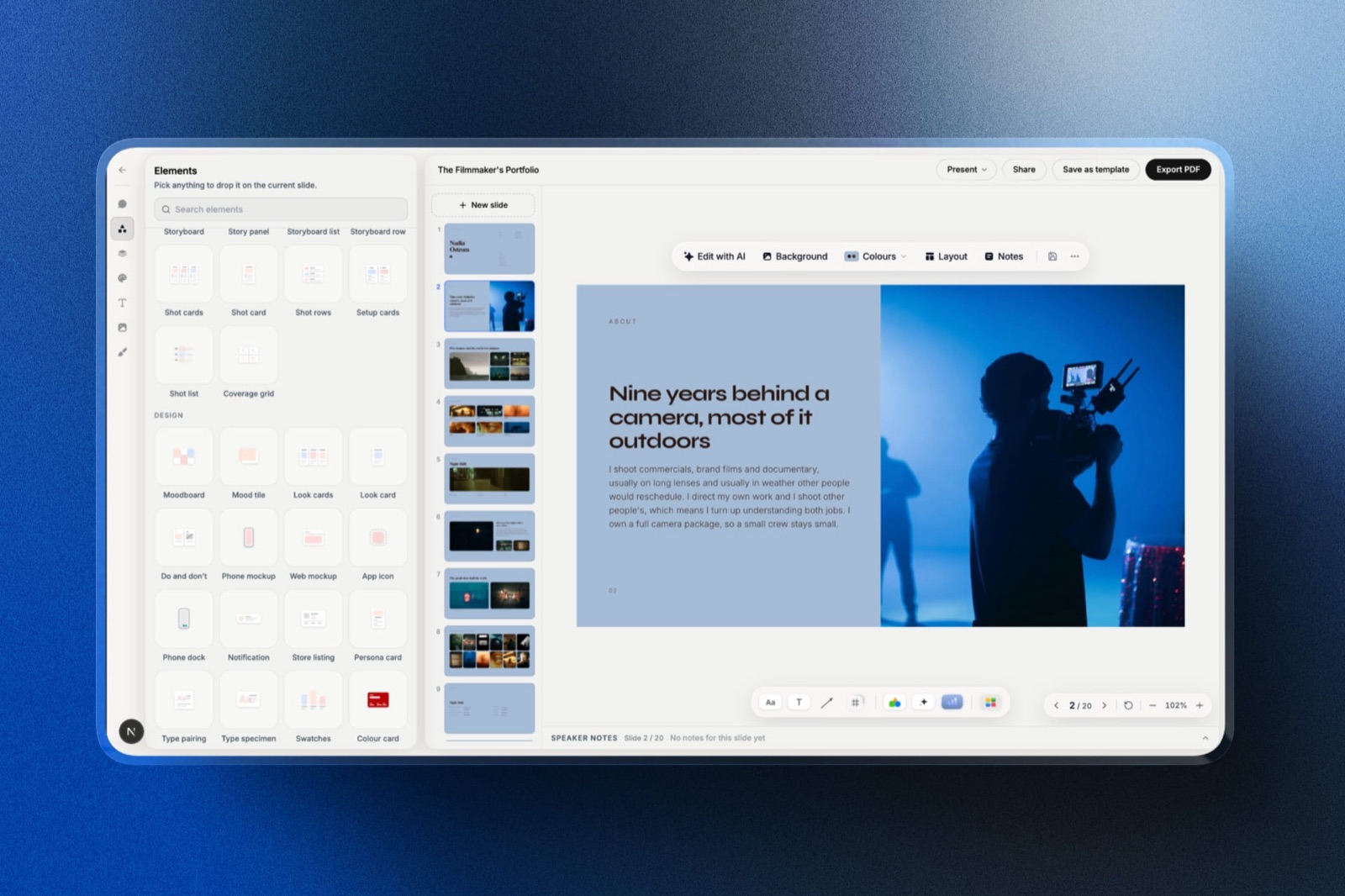
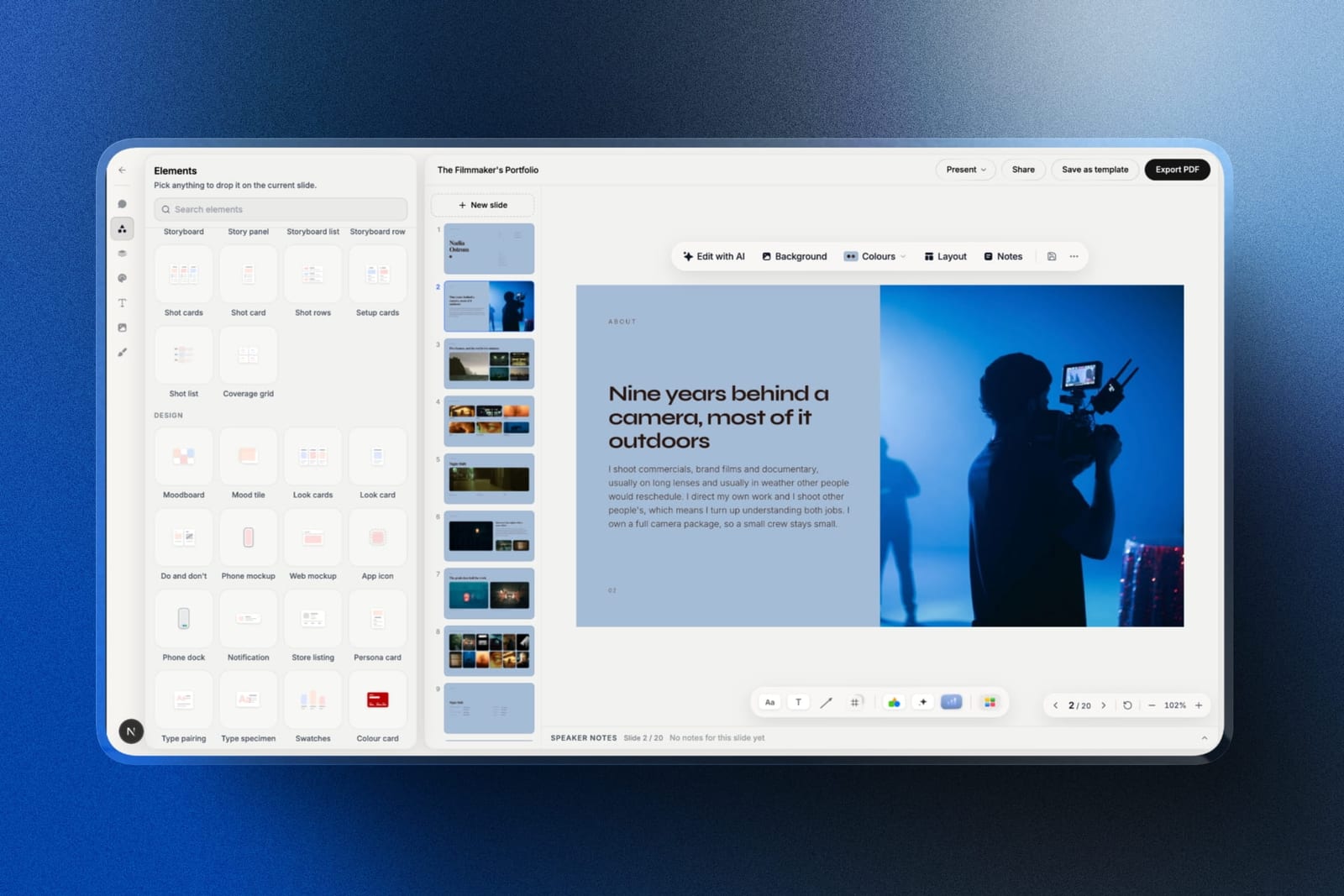
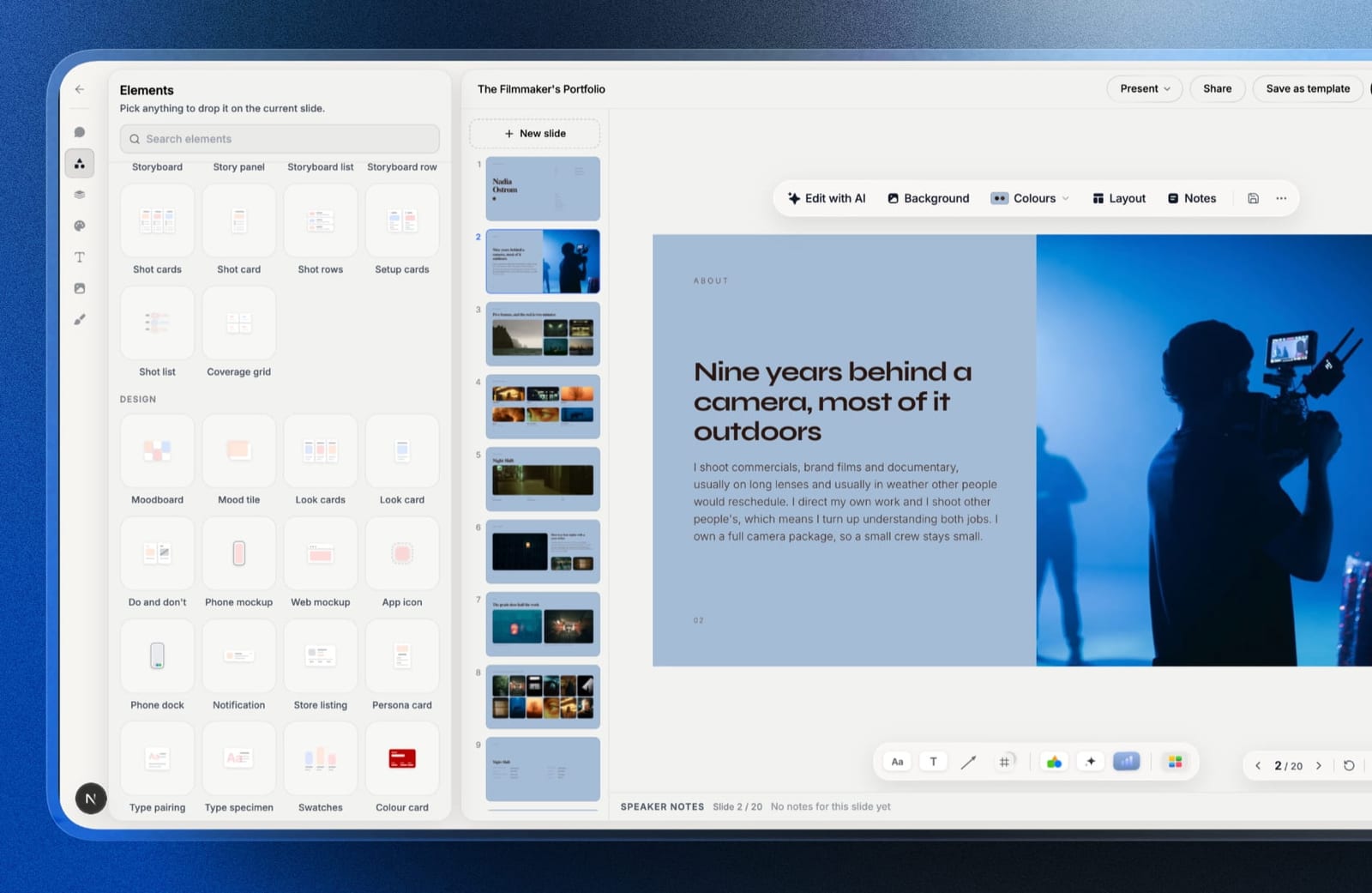
Framekit is an AI website builder whose account includes Slides, a deck editor built around the kind of work creative agencies pitch: treatments, campaign decks, lookbooks, portfolio decks.
The elements panel carries the pieces a campaign pitch needs and a business template library lacks, including shot lists, storyboard rows, look cards, moodboards, phone and web mockups, swatches and type specimens, and the AI drafts and lays out slides from a description plus up to 12 reference images.
It ranks seventh because an agency's core problem in this guide is several people editing one deck under brand control, and that is Framekit's weak side.
There is no live co-editing, so four people cannot work the deck at the same moment, and its published feature list has no template locking, so brand control comes from shared fonts and colours rather than from a locked layout.
Best forStudios where one designer owns every pitch deck and the rest of the team only reviews the shared link.
The real numberFramekit is priced per account, not per seat: Starter is $84 a year on annual billing and Pro, with PowerPoint export, $180.
Its team members are admins on your website rather than deck collaborators, so it does not give eight people a shared deck workspace, and the comparison with Pitch's roughly $600 workspace is not like for like.
The standout detailthe deck, the agency site with the case studies it links to, client galleries for final delivery and video review for cuts all sit in one account, which addresses the inconsistency across pitch materials that the section below says loses pitches.
The gotchano live co-editing, no client comments on slides, no read analytics, and a picture-based .pptx export, so a client team that edits your deck in PowerPoint gets images. Decks cap at 40 slides.
Skip it iffour people build decks at once, non-designers need a locked template, or clients expect editable files. Pitch, Canva Business and Google Slides handle each of those better.
Verdict: For a studio where one designer builds every pitch, this is a low-cost way to keep the deck and everything around it consistent. For an agency with several deck builders, it is a complement to Pitch rather than a replacement.
8. Beautiful.ai: Best for Very Small Teams With No Designer
Our rating: 6.8/10
Beautiful.ai keeps slides tidy by not letting anyone space them badly, which for a two-person consultancy with no design resource produces a consistently presentable result without training.
At agency scale the pricing makes it hard to recommend. Team pricing is $40 per user a month on annual billing, and the layout engine that guarantees consistency also overrules the designers you employ.
Best forConsultancies and micro-studios of one to three people with no designer at all.
Key features:
- Layouts that re-balance automatically as content changes
- Brand controls applied consistently across a team
- Viewer analytics on shared links
- Clean .pptx export on paid plans
- A one-off project licence at $45 for a single deck
The real numberPro is $144 a year for one seat and Team is $40 per user a month on annual billing, per Beautiful.ai's pricing page, so eight seats is roughly $3,840 a year, the most expensive option in this comparison.
The gotchathe two-seat cliff. One seat is $144 a year and two is $960, a jump of about 6.7 times that arrives long before you reach agency size, and it is the steepest step of any tool we priced.
Skip it ifyou employ designers, because they will lose every argument with the layout engine.
Verdict: Beautiful.ai solves a problem agencies mostly do not have at a price agencies should not pay. See our best Beautiful.ai alternatives for the field. Visit Beautiful.ai
What Agencies Actually Lose Pitches On
In one linein our experience the deck rarely loses a pitch on its own, and two things around it lose pitches regularly, neither of which any tool above addresses.
Inconsistency across the pitch materials. The deck is on brand, the leave-behind PDF was made by someone else, and the case studies linked at the end sit on a website last updated two years ago.
Clients read that spread as a signal about how the account will actually be run, and it is a fair signal.
Proof that does not match the pitch. Every agency deck ends with relevant work, and the moment a client clicks through to find it, the argument passes out of your control.
If the case study for the sector you are pitching does not exist as a page, the strongest claim in your deck has no evidence behind it.
That second problem is a website problem rather than a slide problem. Whatever builds the deck, the case study for the sector you are pitching should be live as a page before the pitch rather than three weeks after it.
Framekit's website builder does that from the same account as its deck editor, and an agency that builds decks in Pitch can still host its case studies there.
How to Choose an Agency Presentation Tool: A Decision Tree
In one lineanswer in order and stop at your first yes, because the first yes is the constraint that is actually costing your agency money.
1. Do non-designers build most of your client decks? Canva Business at about $2,400 for eight, and the brand kit is what you are buying.
2. Do you need to know which client contact read what? Pitch at about $600 for eight, or Storydoc if section-level depth is worth roughly $3,456.
3. Is your design work already in Figma? Figma Slides at about $1,536 for eight, and let the decks pull from your component library.
4. Is the deck written by four people the night before? Google Slides for the writing regardless of where it is finished.
5. Does one designer build every pitch, and is the work image-led? Framekit Slides from $84 a year on one account, with the agency site and client delivery in the same place.
6. Are you a Mac studio presenting in the room? Keynote, at $0, and export a PDF as the leave-behind.
7. Are you two people with no designer? Beautiful.ai's one-off $45 project licence for the important deck rather than a team subscription.
8. None of the above? Pitch, because the workspace pricing and template locking address the agency-shaped problem better than anything else at that price.
Design-led studios already living in Figma should compare the best Figma Slides alternatives before committing to a separate deck tool.
Two adjacent audiences get their own comparisons: the best presentation tools for consultants, where charts decide it, and the best presentation tools for remote teams, where async delivery does.
Frequently Asked Questions
What is the best presentation software for a creative agency?
The best presentation software for a creative agency in 2026 is Pitch, because it combines locked brand templates, per-recipient analytics and workspace pricing rather than per-seat charging, which at eight people costs about $600 a year against roughly $3,840 for the most expensive option here.
Canva Business is the better choice when most of the people building decks are not designers, and Google Slides remains the most reliable place to write a deck collaboratively.
How much should an agency spend on presentation tools?
Between $0 and about $2,400 a year for a team of eight, and most agencies should land under $1,000.
Google Slides and Keynote are free, Pitch is around $600 for a workspace, and Canva Business at $25 per user is about $2,400, which is justified when it removes designer hours.
Anything above that is buying analytics depth rather than better decks.
How do agencies keep decks on brand across a team?
By locking a template rather than circulating one. Four tools tested offer template locking strong enough that a non-designer cannot break the layout: Pitch, Canva on Business, Beautiful.ai and Storydoc.
Google Slides and Keynote rely on discipline, and in our four-editor test a Google Slides deck acquired an off-brand typeface within twenty minutes with nobody intending it.
Should agencies send decks as PDFs or links?
Links for new-business pitches and PDFs when the client's process demands a file. A link gives you per-recipient analytics on the tools that support it, lets you correct a slide after sending, and can be revoked.
A PDF forwards reliably through corporate email and survives networks that block unfamiliar domains, which some enterprise clients still do.
Does Canva export properly to PowerPoint?
Not reliably on complex slides. Our twenty-two-slide agency deck lost table spacing and re-flowed a chart caption on .pptx export from Canva, which matters because client-side teams routinely ask agencies for editable files.
Google Slides produced the cleanest .pptx export of any tool tested, so build in Slides when an editable handover is part of the engagement.
Is per-seat pricing worth it for an eight-person agency?
Often not, and it is the largest cost variable in this comparison. The same eight people cost $0 on Google Slides, about $600 on Pitch's workspace model, $1,536 on Figma, $2,400 on Canva Business and $3,840 on Beautiful.ai Team.
Before adopting anything agency-wide, calculate the figure at your actual headcount rather than at the advertised per-user rate.
Framekit vs Pitch: which is better for a creative agency?
Pitch is better for an agency where several people build decks, because it has live collaboration, locked templates and per-recipient analytics at about $600 a year for the workspace.
Framekit is better for a small studio pitching image-led work, since its Slides editor has creative elements like shot lists and look cards, it costs $84 a year on one account, and the same account runs the studio site, but it has no co-editing, locking or analytics, and its team members are website admins rather than deck collaborators.
What is the best free presentation tool for a studio?
Google Slides for collaborative writing and Apple Keynote for presenting in a room, and both are genuinely free with nothing important gated.
The limitation both share is that neither protects brand consistency across a team and neither reports anything about what a client did with the deck.
Our best free presentation software guide covers where each stops.
Do clients care what tool an agency's deck was made in?
No, and they notice the failures the tool caused. Substituted fonts, a broken budget table in the exported PDF, or a link that will not open on a client's locked-down network all read as carelessness rather than as a software limitation.
The tool choice matters because of the failure modes it removes, not because of any credit it earns.
How do agencies get read data on a pitch deck?
By sending a tracked link from a tool that supports it, which among the eight compared is Pitch, Storydoc or, at a basic level, Beautiful.ai.
Pitch reports slide-level activity per recipient, Storydoc reports section read depth and dwell time, and Canva, Framekit, Google Slides and Keynote report nothing at all.
For a competitive pitch, knowing which contact read the budget section changes what the follow-up call opens with.
Does an agency need a website if it pitches in person?
Yes, because every deck ends with case studies and the client will click through to check them, usually after the meeting and often with people who were not in it.
An agency site that does not carry the work relevant to the pitch undermines the strongest claim in the deck.
Framekit is an AI website builder that generates that site from a description, and its Slides editor can build the deck in the same account if your studio is small enough to live without live co-editing.
Final Verdict
Pitch is the best presentation tool for creative agencies in 2026 because it fits the shape of an agency's actual problem: several people building client decks from a template that has to stay intact, sent as links you need information about, priced for a workspace rather than per head.
At eight people it is roughly a sixth of the cost of the most expensive tool tested.
Canva Business earns its higher price in agencies where designers are the bottleneck, and Google Slides remains the right place to write anything that four people are editing at once. Almost no agency needs all three, and most need two.
Framekit is seventh: a low-cost fit when one designer builds every pitch, with the site and deliveries in the same account.
Where Framekit losesFramekit is not for agencies where several people edit one deck at once or non-designers need a locked template, and it does not report what a client read or export editable .pptx files. Pitch, Canva Business, Google Slides and Storydoc are the better fit for those needs.
Keep reading: our best presentation software roundup, the best client proposal software comparison, and the best website builders for creative agencies.