Framekit templates
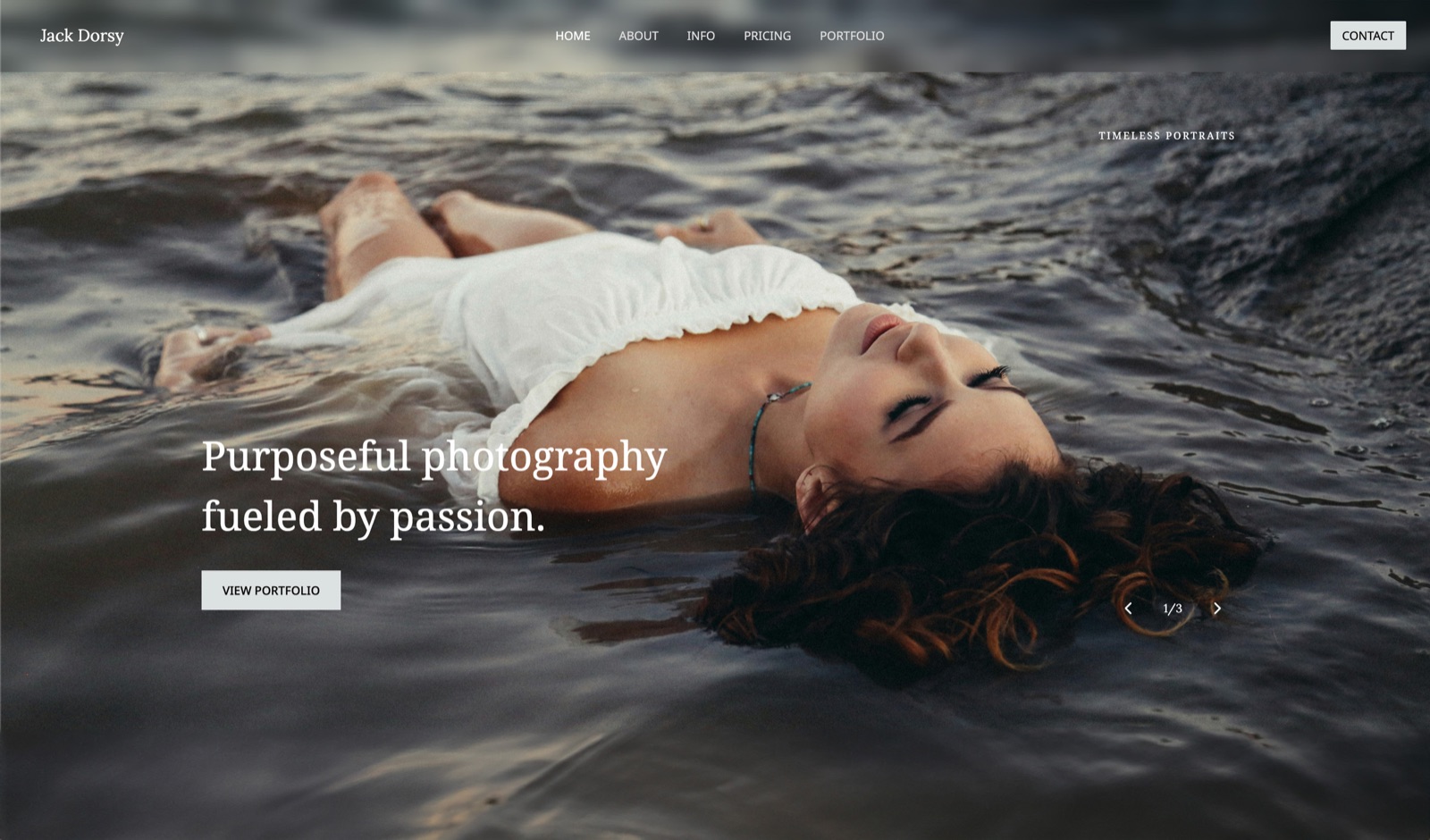
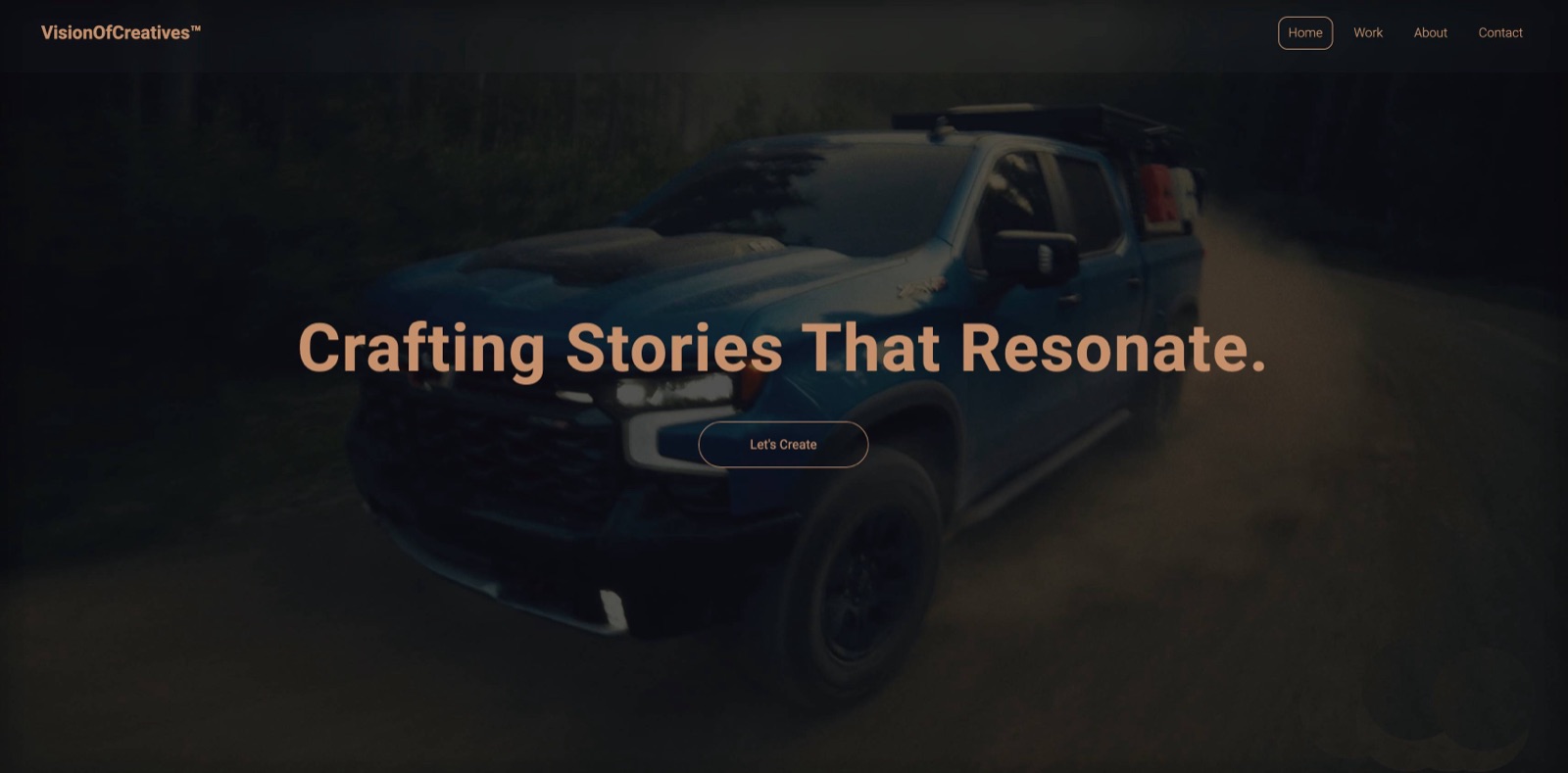
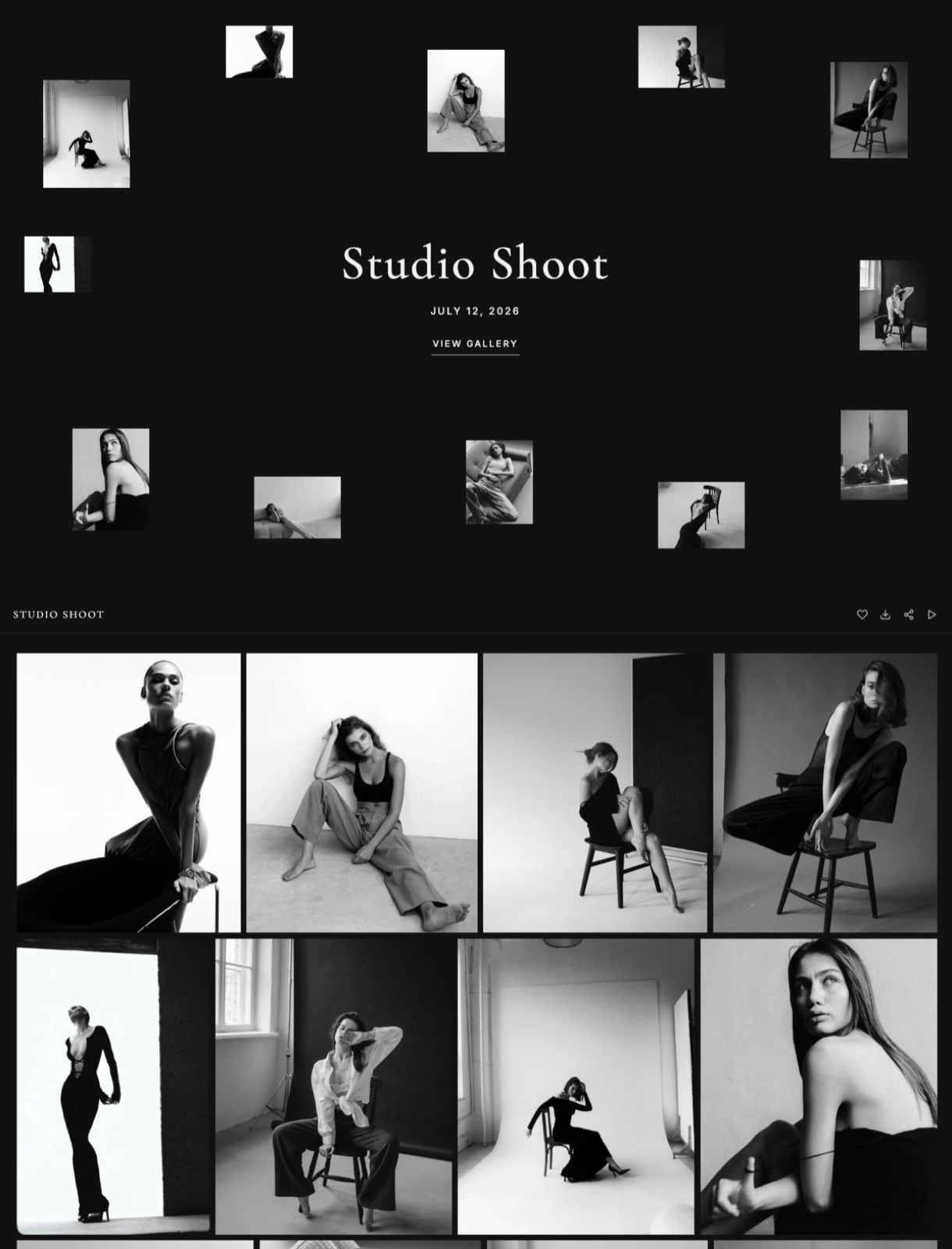
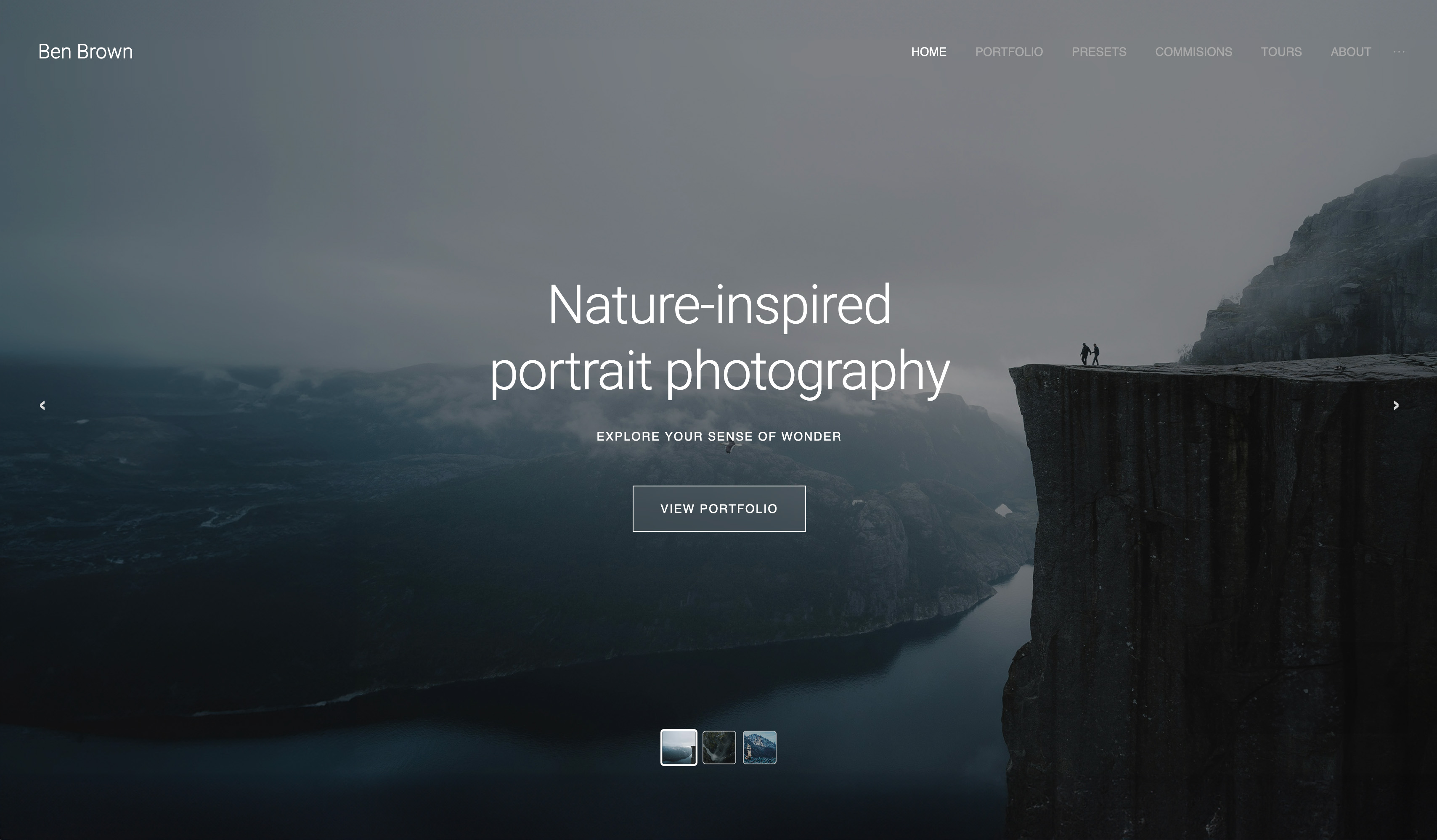
Start from a designer-made template
 Use template
 Use template
 Use template
 Use template
 Use template
 Use template
 Use template
 Use template
An automotive delivery is rarely one set of photographs.
It is 40 frames per vehicle, in a naming convention that matches somebody's stock system, delivered fast enough to go live on a listing before the car sells, and then reused in a launch deck, a press kit, and an auction catalogue by three different people.
Client gallery software mostly assumes you are delivering a wedding.
The mismatch costs automotive photographers time twice: once assembling deliveries the platform was not built to structure, and again answering requests for the file the client could not find.
A client gallery for automotive photographers is a delivery platform used to hand vehicle photography to dealers, manufacturers, tuning shops, auction houses, and publications with the per-vehicle structure, turnaround speed, and licence clarity that commercial car work requires.
The best client gallery for automotive photographers in 2026 is Framekit, because named sets let you deliver a vehicle per set inside one gallery, delivery costs nothing at any volume, and the gallery publishes from your own domain alongside the portfolio dealers and brands check first.
The honest trade-off is that Framekit accepts JPEG, PNG, WebP, and GIF rather than RAW or TIFF, so retoucher exchange stays in cloud storage, and PhotoShelter is the better choice if you license a vehicle archive.
Framekit is an AI website builder with client galleries included, so a dealer group receives your work at your address rather than a photo platform's.
Full disclosure: Framekit, ranked first below, is our own product. We ran the same three-vehicle, 120-frame delivery through all seven platforms, verified pricing against each vendor's published pages in August 2026, and we say where each beats us: PhotoShelter has licensing and metadata tooling we do not, Dropbox handles working files we reject outright, and the print-capable platforms sell physical products we do not offer.
On 19 September 2026 we re-verified Framekit's storage (10GB free, 50GB Starter, 300GB Pro) and reworked the capacity sums below to match.
How We Compared Galleries for Automotive Work
Car photography is commercial work with a listing deadline attached to it, so we scored these platforms on delivery structure and turnaround speed rather than on the proofing and print features the category is built around.
Per-vehicle structure (30%). Whether you can deliver several vehicles in one gallery without confusion.
Turnaround speed (20%). How fast a 120-frame, three-vehicle delivery goes from folder to link.
Multi-party access (20%). Whether a dealer, a marketing team, and a press contact can be served without four links.
Ownership and discovery (15%). Whether the delivery link builds your studio, which in automotive is how the next dealer group finds you.
Cost at commercial volume (15%). What 80 to 150 vehicle shoots a year costs to deliver.
Hands-on: uploading a three-vehicle delivery with exterior, interior, and detail passes, and walking the client path on desktop and phone.
Verified from published sources rather than tested: pricing, storage caps, and format support, checked against vendors' own pages in August 2026.
Community sentiment, flagged as such: dealer workflow preferences reported by working photographers.
Our carried example is an automotive photographer shooting 120 vehicles a year, delivering 35 to 45 finals per car to dealer groups, tuning shops, and two manufacturer clients.
What the Comparison Showed
Seven platforms, one three-vehicle 120-frame delivery, and a category designed around photographing a single subject being asked to handle a forecourt. These are the figures behind the ranking.
- 5 of 7 have no clean way to deliver several vehicles in one gallery without a naming workaround.
- 2 of 7 support named sets well enough to give each vehicle its own section in one link (Framekit, PhotoShelter).
- 1 of 7 publishes the gallery as a page of a site you own (Framekit).
- 120 vehicles a year at 40 finals each is roughly 25GB to 45GB of delivered files, which clears every free tier in the first quarter.
- 2 of 7 charge nothing per delivery on any plan (Framekit, ShootProof).
| Platform | Best for | Per-vehicle sets | Delivery commission | Our rating |
|---|---|---|---|---|
| Framekit | Delivery from your own domain | Yes | None | 9.2/10 |
| PhotoShelter | Licensed vehicle archives | Yes | Plan-based | 8.6/10 |
| Pixieset | Polished hosted delivery | Partial | 15% free, 0% paid | 8.1/10 |
| ShootProof | Zero commission plus invoicing | Limited | 0% every plan | 7.9/10 |
| Dropbox | Working files with retouchers | Folders | None, no store | 7.6/10 |
| CloudSpot | Delivery plus studio admin | Limited | 15% free, 0% from $17 | 7.4/10 |
| SmugMug | Long archive of past shoots | Limited | Cut on print sales | 7.1/10 |
Framekit's 9.2 is not a clean card: it scores 10 on structure and ownership and 4 on format tolerance, because RAW and TIFF are rejected at upload. Automotive retouching is heavy, and that exchange has to happen somewhere else.
1. Framekit: Best Overall for Automotive Photographers

Our rating: 9.2/10
Automotive clients are repeat clients, and repeat clients come back to whoever made the last job easy.
Framekit does two things that matter for that: it structures a multi-vehicle delivery cleanly, and it puts the whole thing on your own domain so a dealer's marketing manager who bookmarks the link lands on your portfolio.
The test delivery took eleven minutes.
We created one gallery for the shoot day, uploaded 120 frames, and split them into a set per vehicle with exteriors, interiors, and details grouped inside each, then set a password and a download PIN and shared by email.
The dealer's listings team took the exteriors, the marketing lead took the details, and nothing came back as a request.
Best forAutomotive photographers working with dealer groups, tuning shops, and brands, whose revenue is shoot fees and retainers rather than print sales.
Key features:
- Named sets inside one gallery, so a three-car shoot day is one link with three clearly labelled sections
- Unlimited galleries on every plan, which matters at 120 shoots a year with no per-delivery cost
- Watermarking, gallery passwords, a separate download PIN, favorites, auto-expiry, and branded email sharing on every plan including free
- Full-resolution originals up to 100MB per photo, delivered individually or as a whole-gallery ZIP with no client account
- Video review on the same plan for rolling shots and walkarounds, with per-file limits of 500MB free, 1GB Starter, and 2GB Pro
The real number120 vehicles a year at 40 finals is roughly 30GB, which fits the $9 Starter plan's 50GB pool for a year and the $19 Pro plan's 300GB for close to a decade, and covers the portfolio site as well.
A hosted gallery plan at that volume plus a separate website typically runs $30 to $50 a month.
The gotchagalleries accept JPEG, PNG, WebP, and GIF only. Automotive work is retouching-heavy, and the layered files going to and from a retoucher have to live in cloud storage, which means running two tools rather than one.
Skip it ifyou license a vehicle archive to publications and manufacturers as a revenue line. Framekit has no rights management, no metadata surfacing, and no licensing checkout.
Verdict: the best fit for commissioned automotive work, because it structures a fleet delivery properly, costs nothing per car, and makes the link a route back to the work that wins dealer contracts. Start free at framekit.ai.
2. PhotoShelter: Best for Licensed Vehicle Archives
Our rating: 8.6/10
If your vehicle images keep earning after the shoot, through publications, manufacturer libraries, or auction catalogues, PhotoShelter is the only platform here designed for it.
Searchable metadata, per-user access, and licensing workflows mean a five-year archive of cars is an asset rather than a folder.
The gotchasetup is a project, and the client-facing gallery is a working tool rather than a piece of presentation, which matters when a brand client is judging your craft.
Skip it ifevery shoot is commissioned, delivered, and archived without further use.
Verdict: the archive and licensing answer, and overhead for a commissioned-only studio. Our PhotoShelter alternatives comparison covers lighter options. Visit PhotoShelter
3. Pixieset: Polished Hosted Delivery
Our rating: 8.1/10
Pixieset produces the best-presented hosted gallery in this group and handles collections well enough to separate vehicles with some naming discipline.
Its free plan carries 3GB with a 15% store commission per Pixieset's published pricing, and $10 Basic lifts storage to 10GB with a connected domain and no commission.
At 120 vehicles a year, 10GB is a quarter, so the real plan sits several tiers higher.
Verdict: an easy hosted choice built for a single-subject shoot and adapted to a fleet. Our Pixieset alternatives guide covers the moves. Visit Pixieset
4. ShootProof: Zero Commission With Invoicing
Our rating: 7.9/10
ShootProof charges 0% on every plan per its published pricing and bundles contracts and invoicing, which is genuinely useful for a photographer billing dealer groups on 60-day terms.
Its photo-count pricing suits accumulating vehicle libraries.
Verdict: strong economics and admin, with a consumer proofing workflow that fits automotive work loosely. Visit ShootProof
5. Dropbox: Where the Retouching Happens
Our rating: 7.6/10
Automotive retouching involves layered files, composites, and plate work, and all of it belongs in cloud storage where a retoucher can open it. Dropbox does that job better than any gallery.
As a client delivery it offers no structure a listings team can navigate and no branding at all.
Verdict: essential for production, wrong for handover. Our Dropbox alternatives for photographers comparison covers the delivery layer. Visit Dropbox
6. CloudSpot: Delivery Plus Business Admin
Our rating: 7.4/10
CloudSpot's Lite tier at $17 a month bundles invoicing, contracts, and scheduling with commission-free galleries and 100GB of storage per its pricing page, which suits a solo automotive photographer running everything from one place.
Verdict: a reasonable consolidation, with gallery structure that suits one subject better than five. Set a custom URL before your first send. Visit CloudSpot
7. SmugMug: The Cheap Long Archive
Our rating: 7.1/10
SmugMug's unlimited photo storage from around $13 a month is the cheapest way to keep years of vehicle shoots online, which matters when a dealer asks for last year's photos of a car that has come back on the forecourt.
Verdict: buy it as an archive rather than as a delivery system. Our SmugMug alternatives guide covers delivery-first tools. Visit SmugMug
How to Structure an Automotive Delivery
In one linethe structure of a vehicle delivery decides whether a dealer's listings team can work from it unaided, and the fix is one set per vehicle with a naming convention that matches the client's stock system rather than your camera's.
One set per vehicle, named by stock number. If the dealer calls it stock 44192, your set is called 44192 and your files start with it. Their system does not know what DSC_4471 is, and neither will you in four months.
Group by pass inside each vehicle. Exteriors, interiors, details, and any rolling frames in a consistent order means a listings team can grab the first eight and publish. Consistency across shoots is worth more than perfection within one.
Deliver the listing set first. A dealer typically needs eight to twelve frames to publish a car and the rest for marketing. Delivering the listing set within hours and the full gallery next day lets the vehicle go live before it is sold.
Include the crops the client will make anyway. Listing platforms, social, and web headers all want different ratios, and a marketing team with only 3:2 masters will crop badly.
Put the licence in the gallery. Dealer groups share images with manufacturers, auction sites, and third-party listing platforms freely, so state the licensed party, territory, and period where the person downloading sees it, then invoice for extensions rather than policing them.
Keep the archive reachable. Cars come back, get resold, and appear in auction catalogues years later. A delivery that expired at 30 days becomes a request; one that stays live becomes a rebooking. Framekit galleries stay published until you unpublish them.
Keep RAW and layered files out of the gallery. Automotive retouching is heavy, and those files belong in cloud storage with your retoucher rather than in a client-facing delivery.
How to Choose: A Decision Tree
Three questions, answered about the work you actually invoice rather than the work you would like to win. The first branch that matches your revenue mix is your platform.
Do you license vehicle images from an archive?
- Yes, publications or manufacturers pay for reuse. Choose PhotoShelter. Stop here.
- No, everything is commissioned. Continue.
Do you deliver multiple vehicles per shoot day?
- Yes, routinely. Choose Framekit, where named sets give each vehicle its own section in one link at no per-delivery cost.
- No, one car at a time. Continue.
What else does the business need?
- Invoicing and contracts for dealer groups on long payment terms: ShootProof, or CloudSpot Lite if you want scheduling too.
- The most polished presentation for a brand client: Pixieset on Basic.
- Years of past shoots online for the lowest price: SmugMug.
Frequently Asked Questions
What is the best client gallery for automotive photographers?
The best client gallery for automotive photographers in 2026 is Framekit, because named sets let you deliver one set per vehicle inside a single gallery, delivery costs nothing at any volume, and the gallery publishes from your own domain next to the portfolio dealers and brands check before commissioning.
PhotoShelter is the better choice if you license a vehicle archive, since it offers metadata, search, and rights workflows that Framekit does not.
How should I organise a multi-vehicle photo delivery?
Create one gallery per shoot day with one named set per vehicle, using the client's stock or VIN reference as the set name and as the file name prefix, then group exteriors, interiors, and details consistently inside each set.
This lets a dealer's listings team work unaided and makes the delivery searchable months later. Consistency across shoots matters more than perfection within any single one.
How fast should I deliver car photos to a dealer?
Deliver the listing set of eight to twelve frames within a few hours and the full gallery within 24 to 48 hours, because a car that is not photographed is not listed and a car that is not listed is not selling.
Dealers measure photographers on turnaround more than on craft, so a fast listing set followed by the complete delivery beats a single perfect handover three days later.
Can I deliver RAW or layered files through a client gallery?
No. Client galleries including Framekit accept JPEG, PNG, WebP, and GIF rather than RAW, TIFF, or PSD, which matters in automotive work because retouching is heavy and composites are common.
Keep the retoucher exchange in cloud storage such as Dropbox, and use the gallery for finished deliverables only. If a client is contractually entitled to working files, handle that as a separate transfer.
How much storage does an automotive photographer need?
Roughly 25GB to 45GB a year for 120 vehicles at 35 to 45 finals each, since a retouched automotive JPEG runs 8MB to 20MB.
That clears every free tier within months and puts you on a paid plan: Framekit Starter at $9 a month holds about a year at 50GB, Framekit Pro at $19 holds several years at 300GB, CloudSpot Lite gives 100GB at $17, or a Pixieset tier several steps up.
Add more if you deliver rolling video alongside stills.
How do I stop dealers sharing my photos with third-party listing sites?
You largely cannot, because dealer groups syndicate listings to manufacturers, aggregators, and auction platforms as a matter of course, so price it rather than fight it.
State the licensed party, territory, and period inside the gallery where the person downloading will see it, agree syndication explicitly in your rate, and invoice for uses outside the agreement.
Watermarked previews during approval prevent unfinished frames escaping.
Do automotive photographers need video delivery too?
Increasingly yes, since walkarounds and rolling shots are now standard in listings and launches.
Most client galleries do not handle video at all: Framekit carries a separate video review product on every plan with per-file limits of 500MB on free, 1GB on Starter, and 2GB on Pro, and Pic-Time includes video storage on each tier.
Sending stills and video from two different services undercuts an otherwise professional handover.
Should I sell prints of automotive photography?
Only as a side line, and if you do, use a print-capable platform for that catalogue specifically. Pixieset, ShootProof, CloudSpot, and SmugMug all fulfil through pro labs, while Framekit sells digital files rather than physical products.
Commercial automotive revenue is overwhelmingly shoot fees, retainers, and licensing, so a print store should not decide your delivery platform.
What is the cheapest way to deliver automotive galleries professionally?
Framekit's free plan is the cheapest genuinely professional route, delivering unlimited galleries with watermarking, passwords, and a download PIN at 10GB of storage plus a real website on a Framekit address, though a working automotive photographer will pass 10GB within three to five months.
ShootProof's free tier is the cheapest print-capable option at 0% commission. Our cheapest client gallery software comparison prices the field.
Can I license a vehicle archive through Framekit?
No. There is no rights management, no metadata surfacing and no licensing workflow, so if selling usage of a vehicle archive to publications and manufacturers is a revenue line, PhotoShelter is built for that and Framekit is not.
The same limit applies to the working files: galleries accept JPEG, PNG, WebP and GIF only, so layered files going to and from a retoucher live in cloud storage and automotive work stays a two-tool job.
For delivery and the portfolio together, 120 vehicles a year at 40 finals is roughly 30GB, which fits Starter's 50GB pool at $9 a month.
Final Verdict: The Best Client Gallery for Car Photographers in 2026
Seven platforms, one multi-vehicle delivery, and a category designed for a single subject being asked to handle a forecourt.
Framekit is the best client gallery for automotive photographers in 2026 because it structures a fleet delivery properly, costs nothing per vehicle at any volume, carries video for walkarounds on the same plan, and publishes from a domain that sends a dealer's marketing manager back to your work.
Where Framekit loses: we reject RAW and TIFF at upload, so the retoucher exchange has to live elsewhere, and we have no rights management, no metadata surfacing, and no print lab.
Photographers licensing a vehicle archive should be on PhotoShelter, and anyone selling automotive prints should use a print-capable platform.
PhotoShelter is the licensing pick, Pixieset is the most polished hosted option, ShootProof has the best economics and admin, and Dropbox remains essential for production files. But if the link a dealer group bookmarks should lead back to your studio, deliver from a site you own.
Related reading: our full client gallery platform comparison, the picks for commercial photographers and product photographers, and best client galleries for large file delivery.
Automotive photographers building the portfolio side should read best website builder for commercial photographers, and for delivery structure see what to include in a client gallery.